
Opinion & Analysis
The guide to working in a big-box golf store

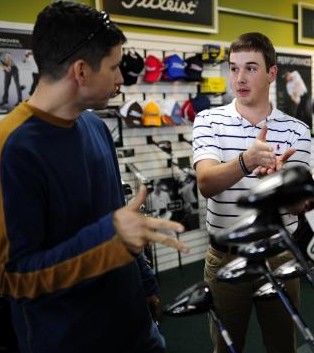
Working at a big box store is a thankless job. The pay isn’t great, the characters you meet can be difficult and every so often you are the subject of an online golf forum thread claiming you boost your monitor numbers or have committed the most heinous crime of all: not having heard of the new product that Bridgestone just submitted a patent on and will be releasing in 2016.
We understand that you are in a tough position. You’ve gotta pay those college bills and make a few bucks to take your girlfriend on a date. To you, knowing the difference between a Matrix Code 7 and the Matrix Reloaded seems inconsequential, and a “deep impact” is an asteroid movie starring Elijah Wood. You are a decent guy just trying to earn a living and we are here to help. Read the below guide to working in a big box store and you will be ready to sell clubs to anyone who walks in that door. You will be such a closer that Alec Baldwin will let you drink coffee and maybe even share with you the Glengarry leads. You will not just sell balls but you will have brass ones. Here is a step-by-step guide to the characters you will face in a big box golf store, and how to cut through their defenses:
The guy who wants what he saw on TV
How to recognize him: He hasn’t left the section of the same manufacturer for 25 minutes, except to pick up a hat of that manufacturers brand.
Obvious giveaway: He has what he wants written down.
How to sell: He probably saw Bubba Watson carry a drive 325 yards over the water of a dogleg par 5 and must have it. He probably Googled “Bubba Watson’s driver” and now thinks that a G20 with a BiMatrix is the key to booming drives. You could sell him that club, no problem. But remember, keeping a client is way easier then signing up a new one. So before you sell him that badboy whose only use for this gentlemen will be burning worms, try and do what’s right. Make sure he doesn’t storm back in two weeks asking for a refund.
Here’s what you say:
“I totally understand you want this driver, but you know what? We aren’t that busy right now, so why don’t you hit it a few times just to get acquainted with this beast? And while you’re here I’ll even grab a few others off the shelf for you to mess around with just for fun. I mean why not, right?”
Then do a friendly job of pointing out his launch and spin numbers with each driver. Throw in a casual “Wow, that one is really working for you” for whatever driver puts up the best numbers. Like we learned in Inception, planting an idea is difficult but it’s the only way to make it stick. Give it a try! It’s a lot easier then flat out telling him he’s wrong.
Click here for more discussion in the “Equipment” forum.
The guy who knows everything about clubs
How to recognize him: He is in the store the first day a new club gets released, every time.
Obvious giveaway: “When is the Nike Covert hitting the shelves? What do you mean you haven’t heard of it, they just launched it on YouTube man!”
How to sell to him: You don’t need to tell this guy anything about clubs he doesn’t already know. The only thing lingering around this guy will do is make you the subject of a new forum thread where you are portrayed as some sort of salesman version of Forrest Gump.
This guy knows everything about clubs and shafts, so just let him be left alone to ogle the stuff on the rack. Trying to “sell” him will lose a sale faster then earning one. Here’s what you do, say:
“Hi sir, I just want to let you know that if you need anything taped up or need me to fetch a headcover for you, my name is John. I’ll be around if you need me.”
Then politely keep your distance while still being in the area. Pretend you are an undercover cop trailing a perp. Keep a couple of car lengths between you and him and don’t be too noticeable. When he is ready he will find you.
Click here for more discussion in the “Equipment” forum.
Guy who thinks he knows everything about clubs
How to recognize him: He is hanging around the launch monitors, but everything he is saying to testers is wrong.
Obvious giveaway: He was overheard saying, “Have you tried it in X flex? X flex helps you hit it longer.”
How to sell to him: This is a tricky one. The guy who thinks he knows everything is the single toughest client you will face. He obviously needs your help, but telling him the truth can cost you a sale. These guys are among the most pigheaded and stubborn clients out there. So you face a decision: Do you try and get him to the launch monitors and put his theories to the test, or do you just go along with everything he says and make the sale?
You are probably thinking, similar to “The Guy Who Wants What He Saw on TV” that you should figure out a way to get him on a monitor, right? Sure, in a perfect world. But this guide is about you, Mr. Salesman. This is about you making some green. The best thing to do with this client is to just sell him whatever he wants. Finding out that he is wrong about things on a monitor will lead to him accusing you of messing with the settings. Either that or he’ll get so upset he’ll walk out and not buy from you out of spite. Just sell him what he wants. Don’t worry about returns or business down the road. A guy like this will find the next latest and greatest club and think THAT is what will fix everything, and then you can sell him that too.
Click here for more discussion in the “Equipment” forum.
The expensive car, one-brand guy
How to recognize him: He pulls up in a Bentley Continental and is wearing a hat from a particular brand (let’s call it Titloast).
Obvious giveaway: “Hey kid, where are the ‘Titloast’ clubs?”
How to sell to him: This guy is probably a VP at some Fortune 500 company in the area, so he is used to being answered instantly. To him, you are the guy who works in the mailroom or the cafeteria. You are the waiter at the fancy restaurant who needs to be invisible, but still refills the wineglass whenever it gets close to empty.
First off, don’t bother trying to convince him to use the monitor or buy a different brand. This guy probably doesn’t even play good golf. The clubs are more about the image of class and excellence then about function. He can’t show up to the course to play a round with the executives at the company he’s buying and have a bag full of rusty Northwesterns, can he? Just stay fairly close, answer every question quickly and confidently and when he commits to buy, run like the wind to get him his headcovers. Remember, say please and thank you a lot and you will be golden. It is totally OK that you ignore every other customer in the store for this guy because when he buys, he buys A LOT.
Click here for more discussion in the “Equipment” forum.
(Non-golfing) Wife with a golfer husband
How to recognize her: She looks completely lost in the store.
Obvious giveaway: Says, “Excuse me, do you work here?” Even though you are wearing a shirt with the store name on it.
How to sell to her: “A Scotty Cameron and Pro V1s? Yes we have those. Let me get them for you.”
Click here for more discussion in the “Equipment” forum.
Wise graybeard who is obviously a +3 index
How to recognize him: You might not know him, but every big box store has a top amateur golfer working there and he will know him. They’ll have a quick chat.
Obvious giveaway: It’s not tournament season (he won’t buy a new club in July). Also, he’ll:
- Have a particular individual club off the rack he wants to hit. It won’t even be a particular make and model, but a particular unit of that make and model that just looks “right” at address.
- He’ll just waggle it,while inspecting the club closely. That will be enough
How to sell to him: This is the type of guy that you need to feel out. He will probably be immediately skeptical of any new technology you mention. This is a guy who just finished third in the State Amateur using a five-year-old driver, so he’s not going to rush to buy a new club just because it’s adjustable or has a slot or some other doo-dad on it.
This type of golfers wants something that looks good to his eye and will be completely OEM agnostic. In fact, it’s a safe bet that he owns a wedge or 2 iron that is a knock off brand and is 20 years old. So take it easy on the new terminology that OEMs are using in commercials. Talk more about how the club looks at address then about how “hot” it is. Show him some of the discounted models just so he doesn’t think you are trying to sell him the most expensive thing on the floor. The thing is, this guy actually CAN use your help because he probably knows little about the new tech or new models. You just need to be careful how you go about it.
This is the type of guy that walks out the door with the discounted Cleveland TL310 because it just looks right and he figures it will work as well as anything new. So make a few suggestions here and there. He may want to hit the club he may not. I’ve seen guys who will buy a club just because it looks right. They figure the rest out on the course.
Click here for more discussion in the “Equipment” forum.
The obvious tour poser
How to recognize him: Is that Rickie Fowler? No it’s not, but for a second you weren’t sure.
Obvious giveaway: It’s January, the courses aren’t open and it’s snowing, but he looks like he’s on his way to a tour event and is wearing a name brand baseball hat that matches perfectly to his shirt and trousers.
How to sell to him: Answer every question he asks with:
“Yes, that is the [insert equipment/garment] that he used for the final round at Quail Hollow!”
That’s what is most important to this guy — owning what tour pros use and wear, especially if it was done in a significant tournament. Generally speaking, selling to this guy is extremely easy, so the only extra advice is that you shouldn’t stop at clubs and clothes. This guy is a prime candidate to buy a bag, rangefinder, new expensive shoes, belts, etc. You are doing yourself a disservice if you don’t show him the belt Brian Gay wore when he won at Hilton Head. You know which one, right?
Click here for more discussion in the “Equipment” forum.
The regular guy
How to recognize him: He looks like a regular guy.
Obvious giveaway: Nothing.
How to sell to him: Juice the monitor.
Now, as they would say in Glengarry Glen Ross. I can go out there and sell….Tonight! Go and do likewise gentleman. You can thank me later.
Click here for more discussion in the “Equipment” forum.



Aronimink is not a storied club, but when Donald Ross himself proclaimed it to be as good as he can design and build, one had to take notice. Jay Sigel was the pre-eminent male amateur golfer from the mid-1970s to the mid-1990s. He might have called any number of Philadelphia clubs home, but he chose Aronimink. It served him well. Gary Player won a PGA Championship here in 1962, and was followed by the 1993 winner … nobody. Aronimink gave that event away to Inverness, for reasons of which it is certainly not proud. So be it. We had to wait sixty-four years for the PGA to return to Newtown Square, but here we are. Aronimink has been neo-restored by Gil Hanse and team, to return Ross features with an eye toward defense against the dark arts, errrr, high-tech equipment.
Day one saw Rory McIlroy and Bryson DeChambeau dig big holes, to the tune of plus-four and plus-six, respectively. Since the first-round lead will be minus-three at worst, many shots will need to be made up for the power couple to reach contention. By nightfall, seven golfers held the day-one lead at three-under par 67. Shots and sticks caught our attention, and we are proud to present Five Things We Learned on Tech Thursday at the 2026 PGA Championship. Thanks to InsideTourGolfer, Today’s Golfer, and GolfWRX for initial equipment research.
First, meet Min Woo Lee
Min Woo Lee, aka Dr. Chipinski, has once again thrust himself into the conversation of Can he, will he, when will he? Lee has so much talent, wins not nearly as often as we believe that he should, and has no major near-misses (much less titles) on his wiki. The young Aussie is getting older and wiser, but is he able to avoid the scarring that holds the older and wiser back from breaking through? Philadelphia offers another opportunity. Min Woo signed for five birdies and two bogeys on day one, and grabbed a share of the opening-day lead at Aronimink. Winners transcend history and the moment, and Lee will need that sort of ascent to lift the Wannamaker on Sunday.
Second, meet Aldrich Potgeiter
The young South African golfer can rip driver with the best of them. Aronimink tips out at nearly 7400 yards, but beyond the fairway bunkers that ensnare only the mortals, Potgeiter can take his chances with wedge from the rough. On Thursday, he spent plenty of time in the spinach. Like Popeye, he used his muscles to gouge and thrash and dig his way out. Six birdies against three bogeys on the card brought AP in a three deep.
Third, meet Martin Kaymer
Not a major event takes place without a where’s he been throwback moment. We know that Martin Kaymer left the PGA and DP World tours for LIV golf, but the two-time (US Open and PGA) major winner has a lifetime exemption into at least one major event, and he seizes the opportunity each May. Kaymer joined the six-seven brigade with four birdies and a solitary bogey on day one. Kaymer was never a long hitter, and the years are kind to no golfer. The German champion will need to uncork every bottle of guile and strategy in his cabinet to remain in contention. For today, though, he occupies a rung on the ladder of Tour Tech.
Fourth, meet Scottie Scheffler
Let’s see, he’s the defending champion at the PGA, and he found his way back to the top tier with five birdies against two bogeys. To be a favorite and then play up to that stature and expectation is quite difficult. Just ask Rory, Bryson, and some of the other pre-tournament heartthrobs. Scheffler’s game is complete, and to knock him off the OWGR #1 pedestal, one needs to defeat him at the majors. Aronimink is the sort of course that fits Scheffler’s game. Better yet, it unfits the game of many of his challengers. Don’t expect Scheffler to go away anytime soon. Come Sunday, he’ll be around.
Fifth, meet Stephan Jaeger
Clocking in for the unheralded players shift are Ryo Hisatsune and Stephan Jaeger. Hisatsune logged seven birdies on day one, but gave most of them back with four bogeys. Still, he’s tied at the top for a time. Jaeger pitched five birdies against two bogeys, including a run of three consecutive, from holes four through six. Odds are that one of the two will hang around through 36 holes. Odds also suggest that both will be gone by Saturday evening. Still, the PGA Championship has historically been the major most likely to be won by an under-known. Both Hisatsune and Jaeger feature on that list, so good luck, lads!

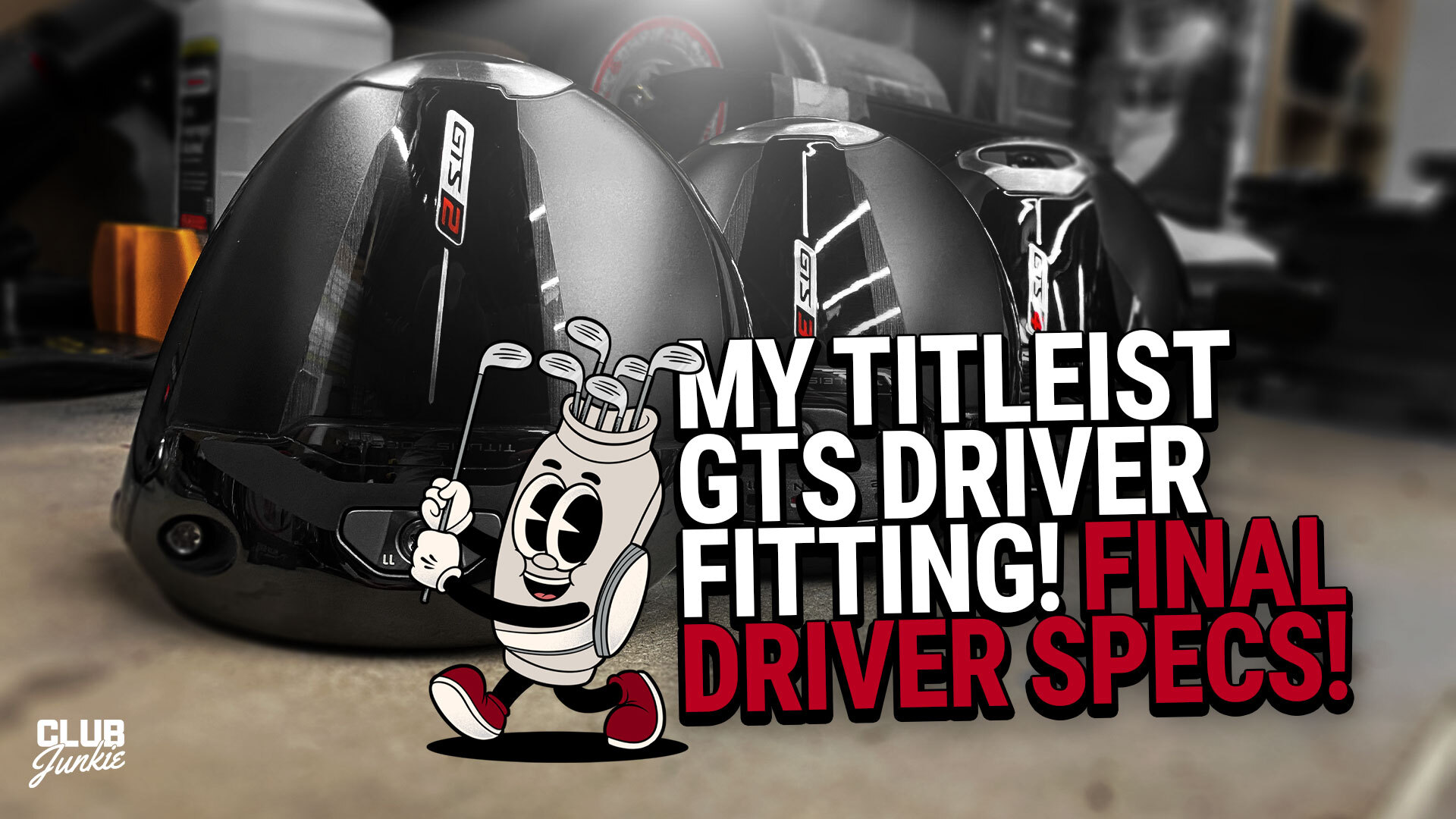
On this episode of the Club Junkie Podcast, I head to the Titleist Performance Institute for a full driver fitting with the new Titleist GTS lineup. We dive into the fitting process, talk about what made the biggest difference in performance, and break down how the different GTS heads and shaft combinations compare on the launch monitor. If you are thinking about a new driver setup for this season, there is a lot to take away from this one.
I also get into Brooks Koepka and the gear setup he brought to the PGA Championship, including the putters that caught my eye during the week. There are some interesting equipment trends showing up at the highest level right now and we break down what stands out.
To wrap things up, I talk about reshafting a few wedges, what I learned during the process, and swapping an adaptor onto a new shaft for another build project in the shop. A gear packed episode from start to finish for anyone who loves golf equipment and club building.
Follow Club Junkie everywhere:
Instagram: https://www.instagram.com/clubjunkiepod/
X: https://x.com/ClubJunkiePod
TikTok: https://www.tiktok.com/@clubjunkiepod
Threads: https://www.threads.com/@clubjunkiepod
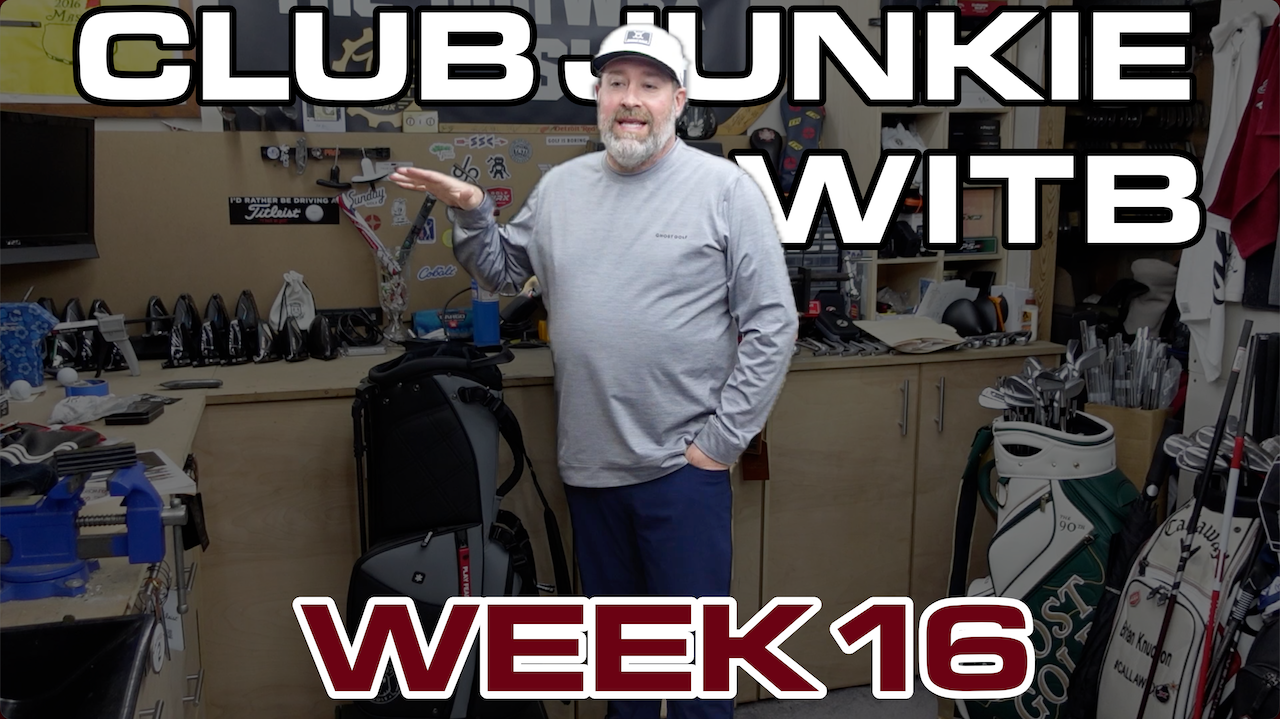
Excited for this week’s WITB as we get to add the new Titleist GTS woods to the bag! I was fit at Titleist’s TPI facility in Oceanside California a few weeks ago and my new clubs just showed up. I am also adding a cool set of irons that I built last year some wild custom wedges into a new golf bag. Speaking of the bag I have a new Ghost Anyday Black Ops stand bag that I will be using on my Motocaddy Remote M7 electric cart.
Driver: Titleist GTS3 (11 degrees @ 10.25)
Shaft: Fujikura Ventus Red 6s
3-wood: Titleist GT1 3Tour (14.5 degrees)
Shaft: Graphite Design Tour AD CQ-7s
5-wood: Titleist GTS (18 degrees)
Shaft: Fujikura Ventus Red 7s
9-wood: Titleist GT1 (24 degress)
Shaft: Fujikura Ventus Red 7s
Irons: Bettinardi CB24 (5-PW)
Shafts: KBS C-Taper Lite 110 stiff
Wedge: TaylorMade MG5 (50-09 SB)
Shaft: Mitsubishi MMT 125 Stiff
Wedge: TaylorMade MG5 (56-12 SB)
Shaft: Mitsubishi MMT 125 Stiff
Wedge: TaylorMade MG5 (60-08 LB)
Shaft: Mitsubishi MMT 125 Stiff
Putter: Dan Carraher ZT Proto
Ball: Callaway Chrome Tour
Bag: Ghost Anyday Black Ops Stand Bag

Justin Rose WITB 2026 (April): Full WITB breakdown with new McLaren irons

RBC Heritage Tour Report: More minis, course-specific setups, Spider & GTS launches

What’s the story behind Webb Simpson’s custom-stamped irons?

Cadillac Championship Tour Report: Spieth’s sizable changes, McLaren Golf launches, and more

Kristoffer Reitan’s winning WITB: 2026 Truist Championship

Cameron Young’s winning WITB: 2026 Cadillac Championship

Aaron Rai’s winning WITB: 2026 PGA Championship

Nelly Korda WITB 2026 (April)

Justin Rose on the switch to McLaren Golf, learnings from previous equipment moves

Photos from the 2026 PGA Championship


Patrick Reed WITB 2026 (May)
Driver: Titleist GT3 (9 degrees) Buy here. Shaft: Aldila Rogue Silver 130 M.S.I. 70 TX 3-wood: TaylorMade Qi35 (15 degrees)...

Aaron Rai’s winning WITB: 2026 PGA Championship
Driver: TaylorMade M6 (9 degrees) Shaft: Aldilda Synergy Blue 70 TX 3-wood: TaylorMade Qi10 (15 degrees) Shaft: Fujikura Ventus Blue...


Michael Block WITB 2026 (May)
Driver: TaylorMade Qi4D (9 degrees) Shaft: Fujikura Ventus Black VeloCore+ 5 X 3-wood: TaylorMade Qi4D (15 degrees @14.25) Shaft: Mitsubishi...


Bryson DeChambeau WITB 2026 (May)
Driver: Krank Formula Fire Pro (6 degrees) Shaft: Project X Prototype 3-wood: Krank Formula Fire (10 degrees) Shaft: LA Golf BAD...
-
 Whats in the Bag3 weeks ago
Kristoffer Reitan’s winning WITB: 2026 Truist Championship
-
Whats in the Bag2 weeks ago
Aaron Rai’s winning WITB: 2026 PGA Championship
-
 Tour Photo Galleries3 weeks ago
Photos from the 2026 PGA Championship
-
 Equipment2 weeks ago
GolfWRX Launch Report: 2026 Titleist GTS drivers
-

 Equipment2 weeks ago
PGA Championship Tour Report: Fitzpatrick, Koepka among big-name putter switches for Aronimink
-

 News2 weeks ago
WITB Time Machine: Phil Mickelson’s winning WITB, 2021 PGA Championship
-

 Equipment2 weeks ago
Which of Tiger’s major winning irons are your favorite? – GolfWRXers discuss
-

 Equipment2 weeks ago
Lead Tape Report: Adjusting the swingweight of the Wanamaker Trophy


mike
Jan 15, 2013 at 1:35 am
funny stuff. good read
Gary Hansberger
Nov 28, 2012 at 11:49 am
Good stuff. Having been on both sides of this isle it’s great to see how both customers and staff relate to the extreme issues of equipment vs real performance.
killerbgolfer
Nov 26, 2012 at 11:25 pm
The writing on Golfwrx is getting really solid. Well played sir.
josh
Nov 25, 2012 at 2:16 pm
loved it!!
Birdielab
Nov 25, 2012 at 11:27 am
This pretty much sums it up – I would include “The guy who shows up once every two weeks to try out equipment that he then buys on ebay” and “The guy who doesn’t trust anything salespeople say and thinks you are always trying to separate him from his money, even though you are actually trying to help him solve whatever problem he is there to fix”, oh and “the guy who waaaay overestimates his talent (“I hit a 9 iron about 180-185”) – not judging, but all three are a very tough sell. I worked at a big box for a few months and learned a LOT about the mentality of golfers and our equipment. I have my own opinions but that’s whats great about golf – everyone gets something different out of it.
Blopar
Nov 25, 2012 at 9:01 am
I am the 61 y.o. + 3 index— but know this, I’m a plus 3 because I’m gaming the latest high tech stuff and I’m obsessive about fitting–that’s what keeps me on top.
Don’t characterize everyone over 35 as out of date and ignorant about their equipment!
paul
Nov 21, 2012 at 10:35 pm
I would be the customer that wants to know everything. keep the educational articles coming guys 🙂
Flanman
Nov 21, 2012 at 3:40 pm
I like this! I work at a big box retailer, and this seems to cover all the demographics walking through our store… This is my secret, being the best salesman in the store is about honesty, professionalism and talent. Rather than “juicing the simulator”, I prefer to let the client warm up, then maybe make one or two simply suggestions in relation to maximizing their current golf swing. If I can cure a hook/ slice and correct the clients ball flight too, chances are that they will be honestly gaining some distance. They walk out with the club 9/10 times and the 1/10 that doesn’t buy the club, is leaving with a shirt/ balls/ hat whatever!!
nate
Nov 24, 2012 at 1:39 pm
Flanman – quick question for ya. How are you measured against your peers as the ‘best’ salesman at your store?