
Opinion & Analysis
A response to Jessica Korda’s criticism of the U.S. junior development system


Last week, professional golfer Jessica Korda made headlines with her comments about a lack of developmental pathways in the U.S. and how this was leading to an LPGA Tour dominated by Asian players.
After reviewing the story, I wanted to respond to her comments based on my own background which includes coaching women’s college golf, studying long term player development, and working closely with many national teams around the world.
Development models
When speaking about this issue, it is important to remember that only one country in the world has a written policy on long term development in golf: Canada. This document titled “The Long-Term Player Development Guide” outlines the basics on players entry into golf through eight phases, ending in what is termed ‘compete to win’. While the guide is an outstanding document, little of the document is based on golf-specific research. Instead, the document synthesizes work within other sport domains, along with the expertise of Canadian golf experts like Henry Brunton.
It is also important to remember that golf-specific research on development is very limited. At this time, I am involved in a project with Dr. Joe Baker and Master’s candidate Aaron Koenigsberg which seeks to validate much of the information in the plan, as well as explore other aspects of development including a better examination of practice allocation, access and quality of facilities and environmental factors like home environment and coaching.
The Korean Way
The root of the growing talent disparity between Asian and Western countries in women’s golf may boil down to a couple of fundamental philosophical differences. Let’s take South Korea (the current undisputed golf hotbed in Asia) as a prime example. It goes without saying that family support and expectations in Korea have been noted to drastically contrast those displayed in current Western cultures (generally speaking). For example, women in Korea are expected to adopt their parent’s expectations and internalize them. As well, Korean culture seems to elicit an “all-in” mentality, where both parents and children committed to being successful in a domain of choice, dive in head first without considering other options or potential negative consequences.
It therefore comes as no surprise that among Korean LPGA professionals, overall work ethic (including but not limited to; commitment to long hours of high quality/deep practice, exercise, and proper nutrition), family support, and personal motivation/goal setting have been rated as the top factors that contribute to their professional success (regardless of the support given by Korean sporting officials. In one study investigating Korean LPGA players’ success factors, government support ranked eighth out of a possible nine factors).
Now that the broad cultural motivations for success among Koreans have been defined, where does this desire to succeed in golf stem from? Many pinpoint the start of the Korean golf craze to 1998 when Se Ri Pak became the first South Korean LPGA player to win an LPGA major championship. With the help of intense Korean media coverage, Pak became an icon, while also allowing thousands of young South Korean girls’ and their parents alike to be inspired and motivated to achieve the same success for themselves and their daughters.
Once the motivation is in place, the desire and “all-in” mentality of both the family and athlete to succeed take over. Parental support in all aspects allows the athlete to focus solely on golf from a very young age. Parents will invest all their available resources (time and monetary) into their child, often putting intense pressure on the adolescence to succeed in the short-term. As well Korean parents are more than willing to pull their child out of school with no signs of a normal childhood, to fully pursue this early specialization pathway and train as rigorously as possible, while many parents in the U.S. are not willing to take this route.
However, research has shown that early specialization can be potentially harmful to the positive long-term development of athletes. As early specialization reduces the opportunity for growth in other areas of life, this developmental pathway has been shown to lead to potential physical/mental burnout, and non-desirable social and psychological outcomes. On the other hand, participating in other sports and leisure activities (diversification) has been shown to foster more positive long-term outcomes for athletes.
Essentially there are three stages in the diversification pathway. During the sampling years (6-12) the main emphasis should be on enjoyment and developing overall motor skills throughout a variety of sport. The specializing years (13-15) mark a period where athletes gradually decrease their involvement in other sports. While the investment years (16+) are when an athlete commits fully to their main sport and starts to incrementally increase overall practice time.
However, more research does need to be carried out, as these guidelines are not sport specific. Certain sports may require different guidelines both for the ages of specialization and the type of other sports that in the future could potentially transfer best to an athlete’s main sport (for example baseball a rotational sport may transfer better to golf skills, then cross-country an endurance sport). While one can appreciate that the combination of a genuine love for golf and the Korean mentality may be a major key to success, one also must question if it is the right way to properly develop an athlete and most importantly the person who that athlete will become.
The U.S. System
Although the U.S. system does not have an official national team, I would argue that it offers better access to the components necessary for success than any other country. This includes unmatched coaching (including both technical instruction and fitness), weekly competition and feedback, merit-based entry and cheap golf memberships. There is also a lot of pretty good weather in different regions including areas like the South East, South West and West Coast. Together these components likely make up much of what is important in a person’s development and right now are being offered to anyone who wishes to pursue golf.
The system has worked perfectly for men for decades and has done well with women, what needs to change? Consider over the history of the PGA Tour, eight of every ten players who play over 200 events have been born American. Seven of the last 30 LPGA major championships have been won by U.S. players.
The U.S. system also played some part in the development of four other major participants: Pernille Lindberg and Anne Nordquist–who both played college golf in the U.S.–and Brooke Henderson and Ariya Jutanugarn–who both played at least 2 years of junior golf in the US prior to turning professional.
When examining the last nine U.S.-born major champions, it has taken them an average of 7.1 years from the time they got their tour card to the time they won. Of these, only two players: Lexi Thompson and Stacey Lewis have done it in less than five years. It took nine or more years for Michelle Wie, Mo Martin, Christie Kerr, and Brittany Lang. While this might seem slow, it seems that between four and six years is in line with other players like Annika Sorenstam and Ariya Jutanuagrn.
On a junior level, the U.S. continues to produce several players with significant promise including 75 current junior golfers which according to Junior Golf Scoreboard have scoring differentials (essentially handicaps) of -3 or better. Of these, approximately 35 have scoring differentials of -5 or better. This is extremely impressive and certainly demonstrates they have the scoring potential to make an impact in women’s professional golf, if they want to.
The Path Forward
It has been about two decades since the arrival of the first wave of Korean born players, and the steady stream has continued. Today seven of the top ten players in the world are Asian. Does this mean it is time to panic? No. It does however mean that women golfers who wish to pursue a professional career should take notice; being good enough is no longer the only prerequisite to playing women’s professional golf.
Players from outside Asia must really examine how they are going to prepare for the LPGA while remembering that there is no magic recipe for success. Instead, each player must look towards a process they can trust and continue to have the grit and determination to chase their dream of being an LPGA Tour player.



Aronimink is not a storied club, but when Donald Ross himself proclaimed it to be as good as he can design and build, one had to take notice. Jay Sigel was the pre-eminent male amateur golfer from the mid-1970s to the mid-1990s. He might have called any number of Philadelphia clubs home, but he chose Aronimink. It served him well. Gary Player won a PGA Championship here in 1962, and was followed by the 1993 winner … nobody. Aronimink gave that event away to Inverness, for reasons of which it is certainly not proud. So be it. We had to wait sixty-four years for the PGA to return to Newtown Square, but here we are. Aronimink has been neo-restored by Gil Hanse and team, to return Ross features with an eye toward defense against the dark arts, errrr, high-tech equipment.
Day one saw Rory McIlroy and Bryson DeChambeau dig big holes, to the tune of plus-four and plus-six, respectively. Since the first-round lead will be minus-three at worst, many shots will need to be made up for the power couple to reach contention. By nightfall, seven golfers held the day-one lead at three-under par 67. Shots and sticks caught our attention, and we are proud to present Five Things We Learned on Tech Thursday at the 2026 PGA Championship. Thanks to InsideTourGolfer, Today’s Golfer, and GolfWRX for initial equipment research.
First, meet Min Woo Lee
Min Woo Lee, aka Dr. Chipinski, has once again thrust himself into the conversation of Can he, will he, when will he? Lee has so much talent, wins not nearly as often as we believe that he should, and has no major near-misses (much less titles) on his wiki. The young Aussie is getting older and wiser, but is he able to avoid the scarring that holds the older and wiser back from breaking through? Philadelphia offers another opportunity. Min Woo signed for five birdies and two bogeys on day one, and grabbed a share of the opening-day lead at Aronimink. Winners transcend history and the moment, and Lee will need that sort of ascent to lift the Wannamaker on Sunday.
Second, meet Aldrich Potgeiter
The young South African golfer can rip driver with the best of them. Aronimink tips out at nearly 7400 yards, but beyond the fairway bunkers that ensnare only the mortals, Potgeiter can take his chances with wedge from the rough. On Thursday, he spent plenty of time in the spinach. Like Popeye, he used his muscles to gouge and thrash and dig his way out. Six birdies against three bogeys on the card brought AP in a three deep.
Third, meet Martin Kaymer
Not a major event takes place without a where’s he been throwback moment. We know that Martin Kaymer left the PGA and DP World tours for LIV golf, but the two-time (US Open and PGA) major winner has a lifetime exemption into at least one major event, and he seizes the opportunity each May. Kaymer joined the six-seven brigade with four birdies and a solitary bogey on day one. Kaymer was never a long hitter, and the years are kind to no golfer. The German champion will need to uncork every bottle of guile and strategy in his cabinet to remain in contention. For today, though, he occupies a rung on the ladder of Tour Tech.
Fourth, meet Scottie Scheffler
Let’s see, he’s the defending champion at the PGA, and he found his way back to the top tier with five birdies against two bogeys. To be a favorite and then play up to that stature and expectation is quite difficult. Just ask Rory, Bryson, and some of the other pre-tournament heartthrobs. Scheffler’s game is complete, and to knock him off the OWGR #1 pedestal, one needs to defeat him at the majors. Aronimink is the sort of course that fits Scheffler’s game. Better yet, it unfits the game of many of his challengers. Don’t expect Scheffler to go away anytime soon. Come Sunday, he’ll be around.
Fifth, meet Stephan Jaeger
Clocking in for the unheralded players shift are Ryo Hisatsune and Stephan Jaeger. Hisatsune logged seven birdies on day one, but gave most of them back with four bogeys. Still, he’s tied at the top for a time. Jaeger pitched five birdies against two bogeys, including a run of three consecutive, from holes four through six. Odds are that one of the two will hang around through 36 holes. Odds also suggest that both will be gone by Saturday evening. Still, the PGA Championship has historically been the major most likely to be won by an under-known. Both Hisatsune and Jaeger feature on that list, so good luck, lads!


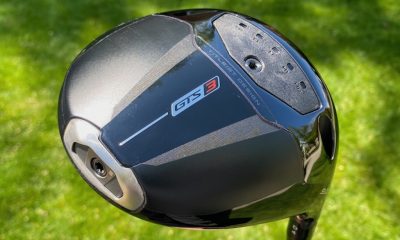
On this episode of the Club Junkie Podcast, I head to the Titleist Performance Institute for a full driver fitting with the new Titleist GTS lineup. We dive into the fitting process, talk about what made the biggest difference in performance, and break down how the different GTS heads and shaft combinations compare on the launch monitor. If you are thinking about a new driver setup for this season, there is a lot to take away from this one.
I also get into Brooks Koepka and the gear setup he brought to the PGA Championship, including the putters that caught my eye during the week. There are some interesting equipment trends showing up at the highest level right now and we break down what stands out.
To wrap things up, I talk about reshafting a few wedges, what I learned during the process, and swapping an adaptor onto a new shaft for another build project in the shop. A gear packed episode from start to finish for anyone who loves golf equipment and club building.
Follow Club Junkie everywhere:
Instagram: https://www.instagram.com/clubjunkiepod/
X: https://x.com/ClubJunkiePod
TikTok: https://www.tiktok.com/@clubjunkiepod
Threads: https://www.threads.com/@clubjunkiepod

Excited for this week’s WITB as we get to add the new Titleist GTS woods to the bag! I was fit at Titleist’s TPI facility in Oceanside California a few weeks ago and my new clubs just showed up. I am also adding a cool set of irons that I built last year some wild custom wedges into a new golf bag. Speaking of the bag I have a new Ghost Anyday Black Ops stand bag that I will be using on my Motocaddy Remote M7 electric cart.
Driver: Titleist GTS3 (11 degrees @ 10.25)
Shaft: Fujikura Ventus Red 6s
3-wood: Titleist GT1 3Tour (14.5 degrees)
Shaft: Graphite Design Tour AD CQ-7s
5-wood: Titleist GTS (18 degrees)
Shaft: Fujikura Ventus Red 7s
9-wood: Titleist GT1 (24 degress)
Shaft: Fujikura Ventus Red 7s
Irons: Bettinardi CB24 (5-PW)
Shafts: KBS C-Taper Lite 110 stiff
Wedge: TaylorMade MG5 (50-09 SB)
Shaft: Mitsubishi MMT 125 Stiff
Wedge: TaylorMade MG5 (56-12 SB)
Shaft: Mitsubishi MMT 125 Stiff
Wedge: TaylorMade MG5 (60-08 LB)
Shaft: Mitsubishi MMT 125 Stiff
Putter: Dan Carraher ZT Proto
Ball: Callaway Chrome Tour
Bag: Ghost Anyday Black Ops Stand Bag

Justin Rose WITB 2026 (April): Full WITB breakdown with new McLaren irons

RBC Heritage Tour Report: More minis, course-specific setups, Spider & GTS launches

What’s the story behind Webb Simpson’s custom-stamped irons?

Cadillac Championship Tour Report: Spieth’s sizable changes, McLaren Golf launches, and more

Kristoffer Reitan’s winning WITB: 2026 Truist Championship

Cameron Young’s winning WITB: 2026 Cadillac Championship

Aaron Rai’s winning WITB: 2026 PGA Championship

Nelly Korda WITB 2026 (April)

Justin Rose on the switch to McLaren Golf, learnings from previous equipment moves

Photos from the 2026 PGA Championship


Patrick Reed WITB 2026 (May)
Driver: Titleist GT3 (9 degrees) Buy here. Shaft: Aldila Rogue Silver 130 M.S.I. 70 TX 3-wood: TaylorMade Qi35 (15 degrees)...

Aaron Rai’s winning WITB: 2026 PGA Championship
Driver: TaylorMade M6 (9 degrees) Shaft: Aldilda Synergy Blue 70 TX 3-wood: TaylorMade Qi10 (15 degrees) Shaft: Fujikura Ventus Blue...


Michael Block WITB 2026 (May)
Driver: TaylorMade Qi4D (9 degrees) Shaft: Fujikura Ventus Black VeloCore+ 5 X 3-wood: TaylorMade Qi4D (15 degrees @14.25) Shaft: Mitsubishi...


Bryson DeChambeau WITB 2026 (May)
Driver: Krank Formula Fire Pro (6 degrees) Shaft: Project X Prototype 3-wood: Krank Formula Fire (10 degrees) Shaft: LA Golf BAD...
-
 Whats in the Bag3 weeks ago
Kristoffer Reitan’s winning WITB: 2026 Truist Championship
-
Whats in the Bag2 weeks ago
Aaron Rai’s winning WITB: 2026 PGA Championship
-
 Tour Photo Galleries3 weeks ago
Photos from the 2026 PGA Championship
-
 Equipment2 weeks ago
GolfWRX Launch Report: 2026 Titleist GTS drivers
-

 Equipment2 weeks ago
PGA Championship Tour Report: Fitzpatrick, Koepka among big-name putter switches for Aronimink
-

 News2 weeks ago
WITB Time Machine: Phil Mickelson’s winning WITB, 2021 PGA Championship
-

 Equipment2 weeks ago
Which of Tiger’s major winning irons are your favorite? – GolfWRXers discuss
-

 Equipment2 weeks ago
Lead Tape Report: Adjusting the swingweight of the Wanamaker Trophy


Paul
Aug 8, 2018 at 1:36 pm
The “prime” for the best female golfers is now 15-27 years old. Morgan Pressel peaked at 17-20. Paul Creamer won 9 of her ten events between 17 and 24. A female player seeking to be a top 25 player in the world must be on a path to be their best by their 16th birthday; not to begin the “investment” stage on their 16th birthday.
Scooter
Aug 8, 2018 at 12:09 pm
I found the part of the article talking about the “specializing years” being 13-15 and the “investment years” being 16+to be interesting and odd at the same time. Those seem way late for developing top-tier athletes in a given sport. We’ve all seen the tapes of Tiger Woods, Rory McIlroy, and Justin Thomas with golf clubs in their hands at a very young age and with parental support very early. I grew up with my Dad giving me a baseball mitt at a very early age, and that was my best/favorite sport. My home course has a First Tee program and it’s great to see young golfers … I think the earlier the child is introduced to a sport, has support to play that sport, and grows to love the sport, the better (no research required).
Scott Pogue
Aug 8, 2018 at 10:30 am
There are cultural differences which have nothing to do with racism. This is a discussion about providing realistic development opportunities, not a “win-at-all-costs”, success-based performance model. I choose balance, not zeal for winning.
The Infidel
Aug 8, 2018 at 4:25 am
Proper nutrition – lol
Mat
Aug 7, 2018 at 6:22 pm
That’s a lot of ink to spill on casual racism.
ridiculous
Aug 8, 2018 at 7:42 am
Explaining cultural norms is now racism? Oh yeah, I forgot, everything is racism now.
Ronald Montesano
Aug 7, 2018 at 6:05 pm
Brittany or Brooke?
Francis
Aug 7, 2018 at 5:00 pm
“Parents will invest all their available resources (time and monetary) into their child, often putting intense pressure on the adolescence to succeed in the short-term. As well Korean parents are more than willing to pull their child out of school with no signs of a normal childhood”
Um… that’s a pretty broad generalization. Where did you even pull this from?
NTL
Aug 7, 2018 at 9:13 pm
There was a documentary on this. I wish I could remember the name. I don’t think it racism to say that Korean parental involvement is different in the lives of their children than most American parents. It is what it is.
Brian K
Aug 8, 2018 at 8:31 pm
I am Korean-Canadian. Most of any sports elite athletes in Korea have same problems.This is article is just the fact.
millennial82
Aug 7, 2018 at 4:18 pm
Good Article. Show’s we are the type of people who blame everything on the government, while others are working hard as if their lives depended on winning.
alexdub
Aug 7, 2018 at 3:46 pm
A line-item attack on Korda’s off-the-cuff comments seems to be a little unfair. She was fulfilling her press duties, asked a random question, and responded with a general synopsis on the development system of US juniors. She wasn’t condemning the entire system; only stating that Korean players have pre-LPGA Tour professional experience, and that USTA has a good camp system for juniors—and that if those could be adopted in the US, it might not be a bad thing.