
Instruction
Why you must practice under pressure if you want to play better golf

Practice, as most of us employ it, is borderline worthless. This is because most of the practices, if you will, typically employed during practice sessions have little chance of improving our performance under pressure.
The type of practice that improves performance is, for the most part, rarely engaged in because practicing under typical “practice” conditions does very little to simulate the thoughts, feelings, and emotions we deal with once our performance actually means something. If we want to really improve our performance when it matters, we need to put ourselves in situations, often and repeatedly, that simulate the pressure we experience during competition. And nowhere is this statement more true than on the putting green.
The art and skill of putting is a funny thing. No element of the game requires less inherent hand-eye coordination or athletic talent. Putting’s simplicity makes it golf’s great equalizer. You roll a ball along the ground with a flat-faced stick in the general direction of a hole nearly three times its size. Sure, green speeds vary wildly, and there are those diabolical breaks to deal with, but despite that, putting is truly golf’s most level playing field; it’s the one element of the game where even the highest handicappers can potentially compete straight up with the game’s most skilled. At the same time, there are few other situations (other than maybe the first tee) when we feel as much pressure as we do on the putting green.
Ben Hogan, during the latter part of his career — years that were marred by poor putting — claimed that putting shouldn’t even be a part of the game because, in his words, “There is no similarity between golf and putting; they are two different games, one played in the air, and the other on the ground.”
Now, Hogan suffered a serious case of the yips later in his career, and while this statement was likely uttered following a frustrating round of missed three-footers, it serves to highlight not only the differences between putting and the rest of the game, but how taxing on the nerves it can be for even the game’s greats.
Its inherent simplicity, the slow pace of the stroke, and how much time we are given to contemplate it, are in truth what sets us up. It’s golf’s free throw. We very often know exactly what to do, and how to do it, like when we’re faced with one of those straight three-footers, but with more time to think, it opens the door wide for the type of second-guessing that arises during those moments we feel a bit of pressure. And that’s the biggest part of the problem.
The self-sabotage that leads to missing relatively short easy putts, the reasons behind it, and practices to overcome it is something for a different article. What I really want to get into at the moment is a practice that I think can help ensure you never end up in that desperate place to begin with.
Most of us rarely practice our putting, and when we do, it’s in about the most useless way we can. We’ve all done it. You grab a sleeve of balls just prior to the round, head to the practice green, and begin rolling them from hole to hole around the typical nine-hole route. Now I could go into a whole host of reasons why this isn’t very helpful, but the No. 1 reason it’s such a pitifully poor practice is this: there is no pressure.
Early in my career, I worked at a club where there was at least one money game on the putting green every day, and many nights too. The members (and staff) putted aces, 5 for $5, rabbits, and many other games for hours on end, and when the sun went down they often switched on the clubhouse roof-mounted floodlights and continued into the wee hours. Many days (and nights) I witnessed hundreds of dollars change hands on that putting green, occasionally from my own, but in my younger days, that was fortunately an infrequent occurrence.
Those money games were a cherished part of the culture of that club and an incredibly good arena in which to learn to practice under pressure. To this day, I’ve never seen as many really good pressure putters (many of very average handicaps) as I did during that period, and when I think back, it’s no small wonder either.
The problem with practicing golf, or just about any other sport for that matter, is that it’s difficult to practice under the types of pressure we compete in. In 4 or 5 hours on the golf course we might only have a half dozen putts that really mean something, and maybe only 2 or 3 of those knee-knocking 3 footers with the match on the line or the chance to win a bet.
When I was younger and playing in those money games on the putting green, I had a meaningful putt every minute or two, for hours on end, and you either learned to handle that pressure pretty quickly or your hard-earned paycheck was being signed over to someone else. Now I’m not bringing this up to encourage gambling, as I know for some people that can become a serious issue, but rather to point out how the opportunity to practice repeatedly under pressure helped me learn to deal with those situations. And with how infrequently we even get the opportunity to face that same pressure when we actually play, it’s important to try do our best to simulate it as often as we can during practice.
So when it comes to my own students these days, I don’t necessarily encourage gambling (I don’t discourage a little bit of it either), but I do encourage putting and practicing for something. I’ll get three of my students together on the putting green and say “look, you guys putt for 30 minutes and the loser has to do 100 push-ups” or something similar. I’ll tell students to putt against a parent for who has to mow the lawn, do the dishes, or some other mundane household chore neither of them really wants to do. The point is to have something on the line, something that will make it really hurt to lose.
You can even do it by yourself. Wait to practice putting right before lunch or dinner and make a pact with yourself that you can’t eat until you make 15 three-footers in a row. Until you find a way to practice under pressure all that practice is really just that: practice. You shouldn’t be surprised if, when the chips are down, mindless practice doesn’t translate to improved performance. Hopefully, by learning to simulate pressure during practice, you’ll play better when the heat is really on.



The LPGA Tour is kicking off its 2026 season this week at Lake Nona Golf and Country Club in Orlando, and the pros are dealing with something most Florida golfers rarely face: freezing temperatures.
“It’s colder here than in the UK at the minute, which is a first,” said England’s Charley Hull during Wednesday’s media day at the Hilton Grand Vacations Tournament of Champions.
Even Lydia Ko, who lives at Lake Nona, seemed surprised by the cold snap. “We’re pretty much getting to below zero in celsius here, which maybe in other parts of the country they would be thankful, but when you’re in Florida it is a little bit of a surprise,” she said.
If the world’s best players are adjusting their games for cold weather, recreational golfers should, too. Here’s how to play smart when the mercury drops.
Understand What Cold Does to Your Game
Before you change anything, you need to know what you’re fighting against. Cold air is denser than warm air, which means your ball won’t fly as far. Period.
Hull noticed this immediately during practice rounds at Lake Nona. She mentioned hitting a gap wedge into the 18th hole during a previous win but needing a 4-iron during Tuesday’s practice round. That’s a difference of four or five clubs for the same shot.
Action item: Expect to lose 5-10 yards on every club in your bag when temperatures dip below 50 degrees. Plan accordingly and don’t be stubborn about club selection.
Layer Up Without Restricting Your Swing
Hull admitted she wore three pairs of pants during practice. While that might be extreme for most of us, staying warm is critical to playing well in cold conditions.
Your muscles need warmth to function properly. When you’re cold, your body tightens up and your swing gets shorter and faster. Neither of those things help you hit good golf shots.
Action item: Wear multiple thin layers instead of one bulky jacket. Look for golf-specific cold weather gear that stretches with your swing. Keep hand warmers in your pockets between shots. And don’t forget a good hat because you lose significant body heat through your head.
Take More Club Than You Think You Need
This is where ego gets in the way of good scores. When it’s cold, the ball doesn’t compress as well off the clubface. Combined with denser air, you’re looking at serious distance loss.
The pros at Lake Nona are dealing with a course that measures 6,642 yards but plays much longer this week. If they’re adjusting, you should too.
Action item: Take at least one extra club on every approach shot. In temperatures below 40 degrees, consider taking two extra clubs. It’s better to fly the ball to the back of the green than to come up short in a bunker.
Adjust Your Expectations on the Greens
Cold weather affects putting in ways most golfers don’t consider. The ball is harder and doesn’t roll as smoothly. Your hands are cold, making it harder to feel the putter. And if there’s any moisture on the greens, they’ll be slower than normal.
Ko mentioned that she still sometimes reads the greens wrong at Lake Nona despite being a member for years. Cold weather makes that challenge even tougher.
Action item: Hit putts more firmly than usual. The ball needs extra speed to hold its line on cold greens. Take a few extra practice strokes to get a feel for the speed before you putt.
Embrace the Mental Challenge
Hull said something interesting about cold weather golf: “I like the mental toughness of it.”
That’s the right attitude. Everyone on the course is dealing with the same conditions. The player who stays patient and doesn’t get frustrated by the extra difficulty will come out ahead.
Action item: Lower your expectations by a few strokes. If you normally shoot 85, accept that 90 might be a good score in 40-degree weather. Focus on solid contact and smart decisions rather than perfect shots.
Warm Up Longer and Smarter
This might be the most important tip of all. Cold muscles are tight muscles, and tight muscles get injured easily.
World No. 1 Jeeno Thitikul revealed she’s been protecting a wrist injury that bothered her late last season. Cold weather makes those kinds of injuries more likely if you don’t prepare properly.
Action item: Spend at least 20 minutes warming up before your round. Start with stretching, then hit easy wedge shots before working up to your driver. Keep moving between shots on the course to maintain body heat and flexibility.
The pros at Lake Nona this week will adapt and compete at the highest level despite the cold. You can do the same at your local course by following these tips and keeping a positive attitude.
PGA Professional Brendon Elliott is an award-winning coach and golf writer. You can check out his writing work and learn more about him by visiting BEAGOLFER.golf and OneMoreRollGolf.com. Also, check out “Playing Through” now on R.org, RG.org’s partner site, each Monday.
Editor’s note: Brendon shares his nearly 30 years of experience in the game with GolfWRX readers through his ongoing tip series. He looks forward to providing valuable insights and advice to help golfers improve their game. Stay tuned for more tips!
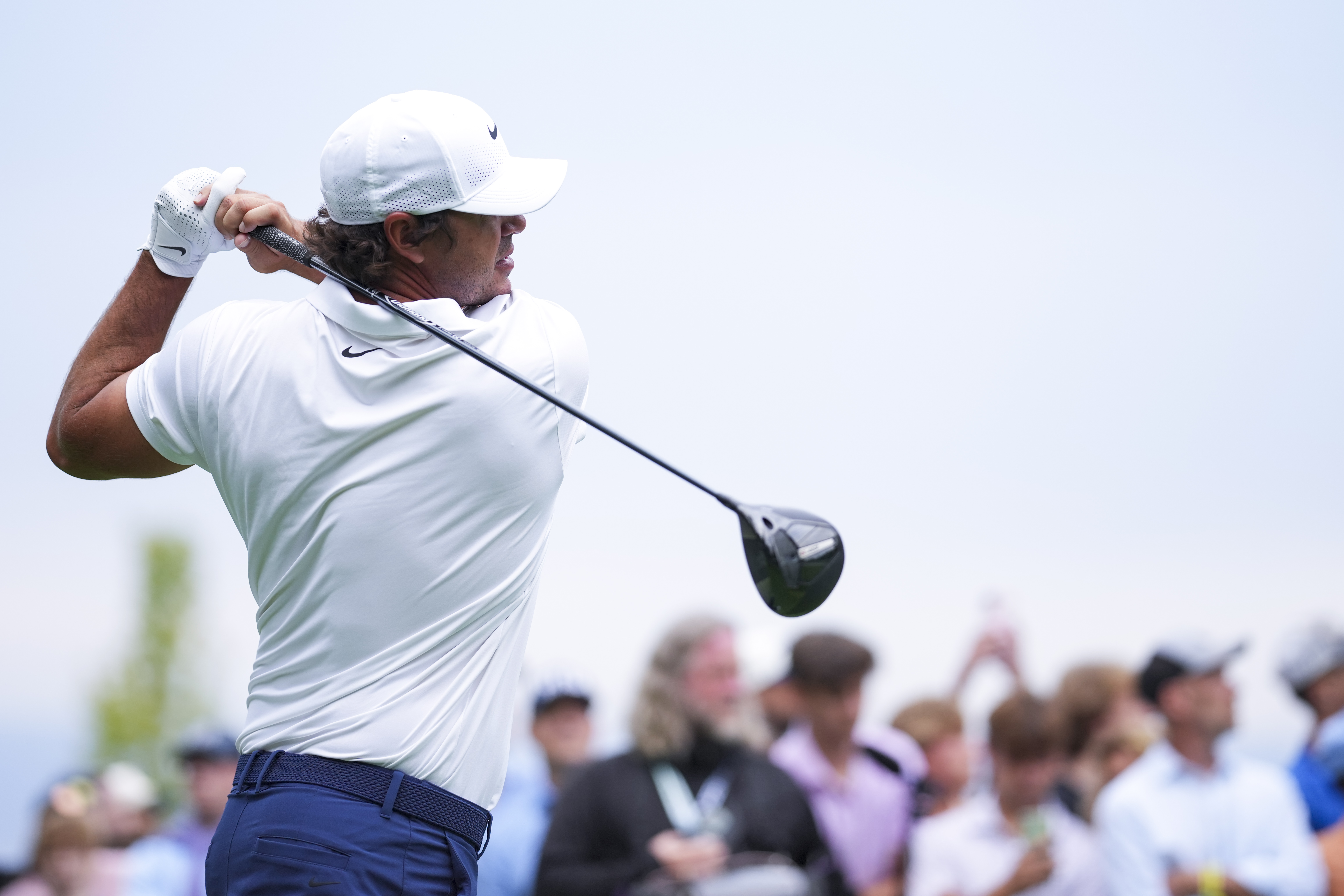
Brooks Koepka is back on the PGA Tour, and whether you love him or hate him, the guy knows how to win when it matters. After his LIV Golf stint, the five-time major champion returns this week at the Farmers Insurance Open.
What makes Koepka fascinating? He doesn’t fit the mold. His swing isn’t textbook. He doesn’t obsess over mechanics. Yet he’s won three PGA Championships and two U.S. Opens, regularly making it look easier than guys with prettier swings.
So, what can average golfers learn from someone who treats the game so differently? Quite a bit.
Stop Overthinking Every Shot
Koepka describes his approach as “reactionary” rather than mechanical. While most tour pros grind over swing thoughts, Brooks sees the target and hits it. No mental checklist.
This might be the most valuable lesson for weekend golfers who’ve watched too many YouTube swing videos.
How to actually do this:
On the range, hit five balls where you stare at the target for three seconds prior to addressing the ball. Don’t think about grip or stance. Just burn that target into your brain. You’ll be shocked at how pure you hit it when your brain focuses on where the ball is going instead of how you’re swinging.
Next time you play, give yourself a rule: Once you pull the club, you’ve got 15 seconds to hit. Koepka is one of the fastest players on tour because he doesn’t give his brain time to sabotage him.
If you feel tension in your hands at address, you’re trying to control too much. Koepka’s grip pressure is famously light. Loosen up until the club almost feels like it might slip, then add just enough pressure to hold on. That’s your swing thought: soft hands, see the target.
This approach works better under pressure. When you’re standing over that shot with water left and OB right, the last thing you need is a mental checklist. See it, feel it, hit it.
Play to Your Strengths (Even If They’re Not Pretty)
Koepka uses a strong grip that wouldn’t pass muster in some teaching circles. But he’s built his game around what works for him, elite driving distance and recovery skills. He doesn’t try to be someone he’s not.
Here’s how to build your game like Brooks:
Look at your last five rounds and figure out where you’re actually gaining strokes. Bombing it off the tee, but can’t hit greens? Lean into it. Play courses where distance matters more than precision. On tight holes, grip down on your 3-wood instead of trying to thread a driver through a keyhole you’ll miss seven times out of ten.
Koepka knows he can scramble, so he’s not afraid to miss greens. If you’re deadly from 50 to 75 yards, start leaving yourself those distances on the par 5’s instead of going for them in two every time.
Know when to take your medicine. Koepka in the trees at the PGA? He’s punching out to 100 yards, not trying to bend a 6-iron around three oaks. You’re in the rough with a flyer lie and water short? Hit your 8-iron to the middle and move on. That’s not playing scared, that’s playing smart.
Save Your Best for When It Counts
Here’s a wild stat: Koepka’s putting average in majors is often more than a full stroke better per round than in regular events. He elevates when pressure is highest.
How does an amateur tap into that gear? It’s not about trying harder, it’s about caring differently.
Here’s what actually works:
Decide which rounds matter to you. Club championship? Member-guest? That annual trip with college buddies? Circle those dates and treat them differently. Koepka doesn’t care much about regular tour events, but majors? That’s when he locks in.
Two weeks before your big round, change your practice. Stop beating balls mindlessly. Play nine holes in which every shot has consequences. Miss the fairway? Hit from the rough on the next hole too. Three-putt? Twenty push-ups. Koepka’s practice intensity ramps up before majors because he’s rehearsing pressure, not just swings.
Develop a between-shot routine that resets your brain. Koepka is famous for his blank expression after bad shots. Try this: After any shot, take three deep breaths while walking, then find something specific to notice, a tree, a cloud, someone’s shirt. That’s your reset button. By the time you reach your ball, the last shot is gone.
The Bottom Line
Brooks Koepka’s return reminds us there’s no single path to success in golf. His “substance over style” approach proves that results matter more than looking good.
You don’t need a perfect swing; you need a reliable one that holds up under pressure. You don’t need to hit every shot in the book; you need the shots you can count on. And you don’t need to play great every time; you need to play great when it matters.
Welcome back, Brooks. Thanks for the reminder that golf is ultimately about getting the ball in the hole, not winning style points.
PGA Professional Brendon Elliott is an award-winning coach and golf writer. You can check out his writing work and learn more about him by visiting BEAGOLFER.golf and OneMoreRollGolf.com. Also, check out “Playing Through” now on R.org, RG.org’s partner site, each Monday.
Editor’s note: Brendon shares his nearly 30 years of experience in the game with GolfWRX readers through his ongoing tip series. He looks forward to providing valuable insights and advice to help golfers improve their game. Stay tuned for more tips!

Blades Brown made a big impression last week in the California desert, and not just because he’s only 18. He put up numbers that would catch any weekend golfer’s attention. Most of us won’t hit 317-yard drives or find 86% of our greens in regulation, but there’s a lot to learn from how Brown managed his game at The American Express.
Here are three practical lessons from his performance that you can use on your own course this weekend.
Step 1: Give Priority to Accuracy Over Distance Off The Tee
Brown’s driving stats are impressive. He averaged almost 318 yards off the tee, ranking 12th in the field. More importantly, he hit 76.79% of his fairways, tying for fourth place in the tournament.
Think about that ratio for a second. Brown could have swung harder, chased more distance and tried to overpower the course. Instead, he played smart golf and kept his ball in play.
Your Action Item: Next time you’re on the tee box, ask yourself a simple question before pulling the driver. Do you need maximum distance here, or do you need to be in the fairway? If there’s trouble lurking or the hole doesn’t demand every yard you can muster, take something off your swing. Grip down an inch. Make a three-quarter swing. Do whatever it takes to find the short grass. Brown’s approach illustrates that fairways lead to greens, and greens lead to birdies. He made 22 of them last week, along with an eagle.
The math is simple. When you’re hitting three out of every four fairways like Brown did, you’re giving yourself legitimate looks at the green with your approach shots. That’s when scoring happens.
Step 2: Commit To Hitting More Greens
This is where Brown really separated himself. He hit 62 of 72 greens in regulation, an 86.11% clip that tied for first in the entire field. Read that again. An 18-year-old kid tied for the lead in one of the most important ball-striking statistics in professional golf.
How did he do it? By keeping his ball in the fairway (see Step 1) and giving himself clean looks with mid-irons and wedges.
Your Action Item: Start tracking your greens in regulation. You don’t need a fancy app or a statistics degree. Just mark down whether you hit the green in the regulation number of strokes. Par 3s in one shot. Par 4s in two shots. Par 5s in three shots.
Once you know your baseline, set a goal to improve it by 10%. If you’re currently hitting five greens per round, aim for six. The beauty of this approach is that it forces you to think strategically about club selection and shot shape. Brown’s strokes gained approach number was positive (0.179), meaning he was better than the field average. You don’t need to be perfect. You just need to be on the dance floor more often.
When you hit more greens, you eliminate the need for heroic short game shots. Brown only had to scramble 10 times all week, and he got up and down 70% of the time. That’s solid, but the real story is that he rarely put himself in scrambling situations to begin with.
Step 3: Minimize Mistakes And Stay Patient
Here’s the stat that jumps off the page: Brown made only three bogeys all week. Three. In four rounds of professional golf against the best players in the world.
He also made just one double bogey. That kind of clean card doesn’t happen by accident. It happens when you play within yourself, avoid the big miss and trust that pars are never bad scores.
Your Action Item: Before your next round, decide that you’re going to play boring golf. No hero shots over water. No driver on tight holes just because you can. No aggressive pins when there’s a safe side of the green.
Brown’s performance shows us that consistency beats flash every single time. He didn’t lead the field in any single strokes gained category, but he was solid across the board. That’s how you post numbers and cash checks.
Give these three steps a try. Your scorecard will thank you.
PGA Professional Brendon Elliott is an award-winning coach and golf writer. You can check out his writing work and learn more about him by visiting BEAGOLFER.golf and OneMoreRollGolf.com. Also, check out “The Starter” now on R.org, RG.org’s partner site, each Monday.
Editor’s note: Brendon shares his nearly 30 years of experience in the game with GolfWRX readers through his ongoing tip series. He looks forward to providing valuable insights and advice to help golfers improve their game. Stay tuned for more tips!

RBC Heritage Tour Report: More minis, course-specific setups, Spider & GTS launches

Justin Rose WITB 2026 (April): Full WITB breakdown with new McLaren irons

Best fairway woods of 2026: The most versatile fairway woods + the most forgiving fairway woods

What’s the story behind Webb Simpson’s custom-stamped irons?

Cadillac Championship Tour Report: Spieth’s sizable changes, McLaren Golf launches, and more

The 24 players who can win the Masters

Rory McIlroy’s winning WITB: 2026 Masters

Kristoffer Reitan’s winning WITB: 2026 Truist Championship

J.J. Spaun’s winning WITB: 2026 Valero Texas Open

Cameron Young’s winning WITB: 2026 Cadillac Championship


Alex Fitzpatrick WITB 2026 (May)
Driver: Ping G440 LST (9 degrees) Shaft: Fujikura Ventus Black 6 X 3-wood: TaylorMade Qi4D (15 degrees) Shaft: Fujikura Ventus...

Kristoffer Reitan’s winning WITB: 2026 Truist Championship
Driver: Ping G440 Max (9 degrees) Shaft: Mitsubishi Tensei 1K White 60 TX 3-wood: Ping G440 Max (15 degrees) Shaft:...


WITB Time Machine: Rory McIlroy’s winning WITB, 2021 Truist Championship
Rory McIlroy’s victory at the 2021 Wells Fargo Championship 2021 (now the Truist Championship) marked a significant return to form,...


Collin Morikawa WITB 2026 (May)
Driver: TaylorMade Qi4D LS (8 degrees) Shaft: Mitsubishi Diamana D+ Limited 60 TX 3-wood: TaylorMade SIM Tour (14 degrees) Shaft:...
-
 Equipment2 weeks ago
Justin Rose WITB 2026 (April): Full WITB breakdown with new McLaren irons
-
 Equipment1 week ago
What’s the story behind Webb Simpson’s custom-stamped irons?
-
 Equipment2 weeks ago
Cadillac Championship Tour Report: Spieth’s sizable changes, McLaren Golf launches, and more
-
Whats in the Bag3 days ago
Kristoffer Reitan’s winning WITB: 2026 Truist Championship
-
 Whats in the Bag1 week ago
Cameron Young’s winning WITB: 2026 Cadillac Championship
-

 Whats in the Bag3 weeks ago
Nelly Korda WITB 2026 (April)
-

 Equipment2 weeks ago
Justin Rose on the switch to McLaren Golf, learnings from previous equipment moves
-

 Tour Photo Galleries2 weeks ago
Photos from the 2026 Cadillac Championship


geohogan
Oct 29, 2018 at 1:26 pm
Francesco Molinara’s performance coach, Dave Alred
contends golf performance is dependent upon ability to perform , ONE SHOT,ONE TIME;
therefore practicing a shot or putt over and over again becomes meaningless, mostly detrimental.
Rather duplicate a shot with a club or a putt no more than 3 or 4 times in a row. Golf is about ONE SHOT, ONE TIME.
Tyler
Oct 22, 2018 at 9:47 pm
Eerily weird timing. I just tried out a new amazon Alexa skilled called “Pressure Putt”, that does this exact thing. Makes you put a couple quarters on the line to sink putts. If you miss, you “use” your tokens. The money collected from missed putts goes to a local First Tee organization..I found it actually added some artificial pressure on me.
TONEY P
Oct 22, 2018 at 4:53 pm
I remember playing with my father on Fridays and we would play an adjusted game for my allowance. That was pressure then and being able to grind out a win made taught me a lot as about me. Putting is it’s own game, but you got to get there.
Bruce
Oct 22, 2018 at 10:10 am
I oppose the gambling to add pressure practice. Gambling simply leads to bad feelings,lost friends, and brings out the worst in people.
Add personal challenges to add pressure.
Obee
Oct 22, 2018 at 1:28 pm
If one has thin-skinned friends who can’t separate friendship from money, then you’re right. If one can’t gamble with friends on golf, then one likely needs new friends … or needs to take a good look in the mirror at oneself.
Dodney Rangerfield
Oct 22, 2018 at 4:42 pm
What are you? Religious or something?
Funkaholic
Oct 24, 2018 at 12:34 pm
You might have bigger problems.
Norm Platt
Oct 21, 2018 at 8:02 am
I agree 100% with the author when he states that you must learn to putt under pressure to get better. If you go to YouTube and watch how pros warm up before they play a tournament, they all first hit the green, the range and then the green. The majority of their warmup is spent on the putting green.
My other observation, when most of us play with our friends , there are many gimme 3-4 footers which eliminates the pressure “ par saver”. I know for many of you , having to make that 3 footer for par or bogey seems like a time waster, but you’ll need to make those eventually. My advice is to quickly follow up the missed 3 footer with a subsequent hole out.
ogo
Oct 21, 2018 at 1:38 am
“Practice, as most of us employ it, is borderline worthless.”
… and 95% of all 50 million ‘golfers’ can’t break 100… per PGA statistics. Talk about ‘worthless’!