
Opinion & Analysis
The endangered state of Scottish golf


Florida. May 1993. That is the moment I really got into golf. Sure, like most youngsters of that time, I’d had my dad’s old clubs, shafts cut down with insulating tape acting as the grip, and I belted balls around the back garden with no thought of what I was doing. But that family vacation really made it sink in how good this game is. Round-the-clock coverage on cable, golf shops everywhere, and sunshine–what more can you ask for?
My parents bought me my first set of clubs, we had a couple of trips to the range, a quick nine holes, and a lifelong golfer was born. So why did it take a trip to the United States for a nine-year-old from the home of golf, from the relative golfing mecca of Ayrshire, to take notice of this great sport?
It wasn’t as if it wasn’t booming in the UK at that time. Troon and Turnberry, 15 minutes in either direction, had hosted the Open within five years of each other around that time. Englishman Nick Faldo had won 2 Open Championships in ‘90 and ‘92. He successfully defended the Masters in 1990–Ian Woosnam from Wales succeeded him. And more importantly a Scot, Sandy Lyle, had collected his second major in just three years at Augusta in 1988–after becoming the first Scot since the 1920s to win the Open in 1985. Golf in the UK was in a great place, and Scotland had its fair share of success at the time with Torrance and Montgomerie joining Lyle at golf’s top table.
If it took that family intervention for me during that period of golfing supremacy, what hope do the children of today have 25 years on?
I imagine the vast majority that play the game took it up in similar fashion to myself. A push from a playing family member or close friend. Different circumstances or timing perhaps, but similar nonetheless. Some will have looked at Montgomerie, Lyle et al and have taken inspiration from them.
So with participation numbers dwindling and clubs struggling, are the kids now having less influence from within the family to take up the game? Is the drop in adult participation affecting the influx from the juniors? That’s worrying, as it’s never been easier, or more affordable (relatively speaking) to get into a golf club. 25 years ago there was waiting lists and huge joining fees. Not now. You can pretty much join up anywhere with little or no joining fee. This trend looks like continuing with the variety of alternatives out there – with little or no encouragement, what incentive is there for a junior to go out in the wind and rain to learn a game that it is deemed expensive and time consuming, and one that takes years to learn when you know you’ll never master it?
Hopefully some of Scotland’s youngsters could take inspiration from the Scots at the elite level of the game – but who exactly would that be? At the time of writing there is ONE Scot in the top 100 of the official golf world rankings. Russell Knox at 59. The next best placed is Martin Laird who isn’t even in the top 150 at present. Both of these guys are based in the US but their skills were honed in Inverness and Glasgow respectively. In the cold and wet. Like the Lyle’s, Torrance’s and Montgomerie’s before them. We invented this game and that is what we have to show for it?
Can you imagine the outcry if the United States stopped producing football players, the Canadians gave up on their ice hockey, or heaven forbid, the All Blacks became an also ran in the Rugby world? So why do we accept it?
Our best golfing achievement of recent times was Paul Lawrie’s Open Championship at Carnoustie in 1999–recent being 19 years ago–an indication of how far we have fallen. In the period between then and now, only two Scots have even made a top 10 in a major–Montgomerie on three occasions and Alastair Forsyth in the 2008 PGA. Four top 10s in 53 events since Lawrie’s success. Majors are hard. Only a select few can win one, or even contend in one, but four in 53 is poor when countries such as Sweden, Germany, New Zealand, Canada and Fiji–none of which have the history and tradition in the game as Scotland–have produced winners. Take nothing away from those guys, but we must produce more players with better quality to compete again at that level.
We haven’t even fared well as a nation in regular events on the European or PGA Tours in that time. Only 13 players since Carnoustie ‘99 have even been in the winner’s circle, combining for 34 wins in total over the two main tours – Montgomerie claiming a third of those himself. 34 wins in 1,686 events (including co-sanctioned events) since Lawrie lifted the Claret Jug.

The home of golf, the country that has given this wonderful sport to the world has combined to win one in every 50 events, or worse, just two percent of the tournaments played on the two main tours. To further highlight the issue, Only Montgomerie since Lyle has reached the OWGR top 10, peaking at No. 2. Russell Knox is the only other to even breach the top 20, briefly hitting 18th.
Kudos to all of these guys who have got the job done. They’ve achieved what we all dream of. But we need to do more. We have a duty to do more. So how do we achieve that?
We hosted the first ever Open Championship at Prestwick Golf Club and we currently have five of the ten Open Championship courses on the rota. We have staged two of the best Open Championships in recent memory in our country–the Tom Watson story, albeit without the fairytale ending in 2009 and the epic Stenson/Mickelson duel at Troon in 2016. Between them, we’ve hosted a successful Ryder Cup and despite all the buzz around these events, our participation levels haven’t dramatically risen.
That’s the first step–getting more people, primarily juniors, started in the game. Golf is the most frustrating game in the world. Can you imagine trying to start playing now, as an adult? How much more frustrated you would be if you were picking up a club for the first time? The vast majority of people, myself included, would give up not long after starting. As a kid you don’t. It’s enjoyable, you’re more patient and you’re playing with kids of similar ages and skill sets. By the time that youngster develops into a teenager or a young adult, they know the basics, they can understand the game and all its quirks, and they can get round the course with their friends. Simple when you put it like that. How does it work in practice?
Every child in primary school should have free access to golf. It’s that easy. We invented a game which has developed into a multi-billion dollar industry, why can’t we find ways to encourage our own to have the chance to play? Why are we not immensely proud of what we have given to the world? And why as a nation are we not embarrassed about our lack of success at the top in recent times?
According to the Scottish Government, there are 2,056 primary schools in the country, teaching 377,382 kids. Every single one of them should have the chance to play. Many will simply not like it–that’s not surprising, but as the saying goes, you won’t know until you try it. So if even one percent of them continue in the game, that’s nearly 4,000 extra participants. It can be included as part of the curriculum, used as an after school or holiday club negating or at least reducing the childcare commitments and at the very least it keeps kids active–aren’t we always hearing about our obesity and health problems? As they progress, secondary school golf can become a fixture the way soccer or rugby are, local and national competitions can become the norm as it is in other countries. Why can’t we even go even further and include university courses within the golf industry, the way Burnley Football Club are doing within the soccer industry. After all, there is more to golf than teeing it up.
Practically, it needs buy in from the key bodies. Scottish Golf are and should be key. They have appointed a new CEO this year in Andrew McKinlay. Unfortunately their achievements have been tarnished due to previous appointments, and Andrew’s past in the Scottish Football Association will not do much to raise optimism with the average Scottish golf enthusiast. While not trying to decry the new man before he’s finished his first year in office, appointing another executive, rather than someone with imagination and innovation seems counterproductive to the goals we should look to achieve.
There must be enough “executives” within the organization (and generally across the golfing industry in all national programs) to cover executive roles and allow the opportunity for someone younger with fresh, achievable goals in driving forward ideas from the golfing majority which benefit the golfing majority–not the elite level few. Regardless who that person is, engagement should be sought with the Local and National Government on how to best promote it. Local governments should be included to represent their schools, as should great programmes such as Clubgolf who do so much good work with youngsters in Scotland.
A prevalent media marketing campaign wouldn’t go a miss either, perhaps some endorsements and appraisals from the countries golfing legends would help make some noise. At least engage those professionals who’ve risen to the top of the game and seek advice on how to begin addressing the issue. Colin Montgomery and Paul Lawrie in particular have raised this exact issue recently in the media. These guys have traveled the world, competed against and beaten the best of the best and have seen how developing markets, particularly in Asia, are growing the game. It would be foolish not to tap into their experiences.
As with everything, it comes down to who pays the bills. Supply of equipment and facilities would be the main issue. UK Sport is committed to spending £340 million plus ahead of the Olympics in Tokyo. This includes £10 million for Taekwondo, £15 million for equestrian and £84 million on rowing, sailing and canoeing combined – can anyone name more than two participants in each discipline? If Team GB comes back with a similar medal haul (67) than those won in Rio–which included Justin Rose’s golfing gold–that works out as around £5 million per medal. Staggering. Add in the £30m for this years’ Winter Olympics where Team GB won five medals: £6m per medal. What’s the legacy for the outlay here? There aren’t thousands lining up around the local swimming pools or the nearest ski slope.
London 2012 is enough evidence that the effect is short term and for the elite few. This money is earmarked for Olympic sports, that’s fine, but surely a discussion should be had with how this pot of money, dedicated for sport in the whole of the UK, is better spent amongst those who’ve helped raise it? Scottish Government spending on sport this year is increasing to £30m–or to put it into perspective, the equivalent of an Olympic rowing budget. Increased participation and being active should be the key goals in all sport funded schemes, not paying for a handful of elite athletes to bring home a couple of medals.
Taxes imposed on manufacturers selling products on these shores could be ring-fenced to return to the grass roots of the game, and advertising is always a way of adding revenue to the pot. Local and national club makers could be approached to look at ways to introduce to this gap in the market–it can’t hurt these small businesses get a foothold in a market that they will never conquer against the major brands. And it can’t hurt the major brands to be involved in promoting and sponsoring these schemes – it’s small potato for the biggest brands in the world. Think of the visitors alone who flock to Scotland to play and the advertising for these brands would more than pay for any outlay to provide equipment for juniors. Sponsorship of the scheme from a number of sources can be investigated. There are huge companies all over the country sponsoring events and individuals. Approach some of these to see if they wish to be involved in a national scheme – the worst they can say is no. And think how many sets of clubs are lying around the country in garages, closets, lockers and the like: a donation scheme could be investigated.
The benefits are endless. Fitter, more engaged pupils–this goes someway to addressing the health problem we keep hearing of in this country. Kids from a more deprived background have an opportunity to play a game they may never have had previously. And lifelong friendships are formed on the course. It can even be argued that discipline and focus for some children that golf provides is exactly the outlet they need. Additional jobs will be created as a result. Teachers, greenskeepers, course marshals, catering staff–that’s just the start. Approach teaching pros or assistant pros looking to gain some teaching experience–these pupils may be their future. Driving ranges and municipal courses up and down the country are quiet for large periods of the day–make them available for school use, even just for a few hours and you may just have increased your future customer base. It’s not like many of the council run courses (or even private clubs) are thriving at the minute so what is there to lose? Clever marketing, which has started in a few courses, increases interest–free adult with a child, two season tickets for the price of one, there’s plenty that can be done. Again, this isn’t a scheme that can be limited to Scotland–participation around the vast majority of the world needs addressed.
And for children wishing to progress beyond the school programs: give them incentives to make it affordable. If we don’t, some of the good work this scheme could bring will be undone, and these kids will be lost to the game forever. There is a real opportunity here to make a difference, and while all the answers aren’t immediately available, the right people with right attitude will soon come up with them. What a legacy that could be to our game.
We are already at a watershed moment for Scottish golf, with decreasing numbers, clubs closing or fighting for their existence, and elite level Scottish golfers at a premium. Where will be in another 10 years time? Other countries, are thriving off the back of our game; it’s time we at least tried catch up–before it’s forgotten where golf came from.




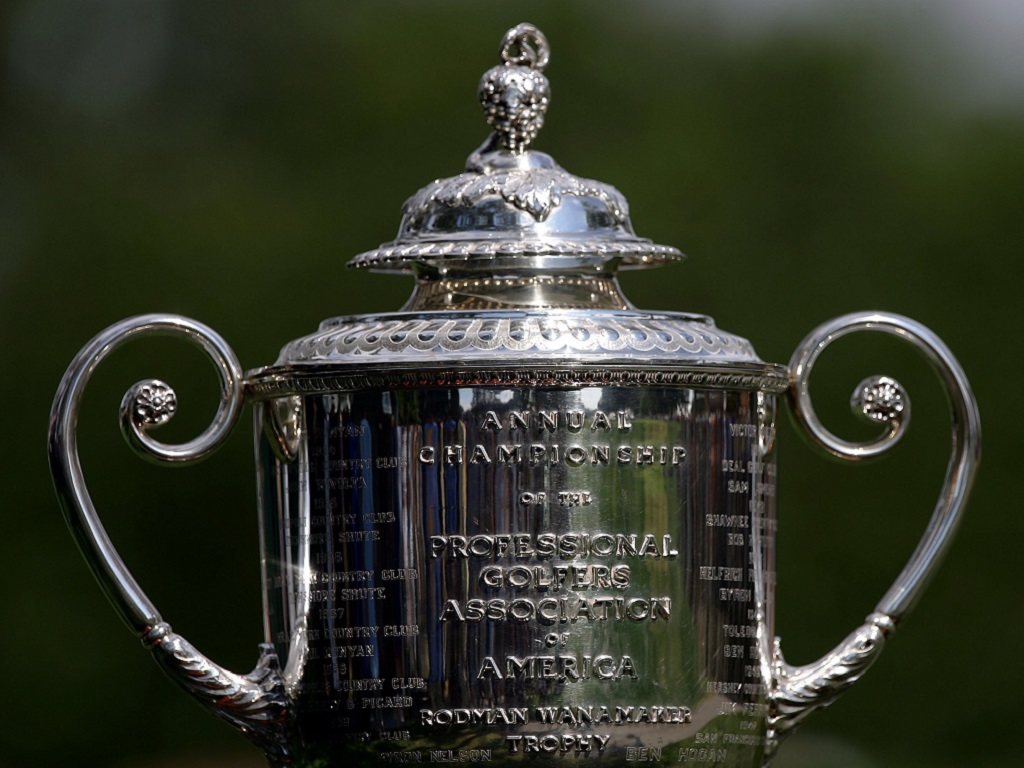
Aronimink is not a storied club, but when Donald Ross himself proclaimed it to be as good as he can design and build, one had to take notice. Jay Sigel was the pre-eminent male amateur golfer from the mid-1970s to the mid-1990s. He might have called any number of Philadelphia clubs home, but he chose Aronimink. It served him well. Gary Player won a PGA Championship here in 1962, and was followed by the 1993 winner … nobody. Aronimink gave that event away to Inverness, for reasons of which it is certainly not proud. So be it. We had to wait sixty-four years for the PGA to return to Newtown Square, but here we are. Aronimink has been neo-restored by Gil Hanse and team, to return Ross features with an eye toward defense against the dark arts, errrr, high-tech equipment.
Day one saw Rory McIlroy and Bryson DeChambeau dig big holes, to the tune of plus-four and plus-six, respectively. Since the first-round lead will be minus-three at worst, many shots will need to be made up for the power couple to reach contention. By nightfall, seven golfers held the day-one lead at three-under par 67. Shots and sticks caught our attention, and we are proud to present Five Things We Learned on Tech Thursday at the 2026 PGA Championship. Thanks to InsideTourGolfer, Today’s Golfer, and GolfWRX for initial equipment research.
First, meet Min Woo Lee
Min Woo Lee, aka Dr. Chipinski, has once again thrust himself into the conversation of Can he, will he, when will he? Lee has so much talent, wins not nearly as often as we believe that he should, and has no major near-misses (much less titles) on his wiki. The young Aussie is getting older and wiser, but is he able to avoid the scarring that holds the older and wiser back from breaking through? Philadelphia offers another opportunity. Min Woo signed for five birdies and two bogeys on day one, and grabbed a share of the opening-day lead at Aronimink. Winners transcend history and the moment, and Lee will need that sort of ascent to lift the Wannamaker on Sunday.
Second, meet Aldrich Potgeiter
The young South African golfer can rip driver with the best of them. Aronimink tips out at nearly 7400 yards, but beyond the fairway bunkers that ensnare only the mortals, Potgeiter can take his chances with wedge from the rough. On Thursday, he spent plenty of time in the spinach. Like Popeye, he used his muscles to gouge and thrash and dig his way out. Six birdies against three bogeys on the card brought AP in a three deep.
Third, meet Martin Kaymer
Not a major event takes place without a where’s he been throwback moment. We know that Martin Kaymer left the PGA and DP World tours for LIV golf, but the two-time (US Open and PGA) major winner has a lifetime exemption into at least one major event, and he seizes the opportunity each May. Kaymer joined the six-seven brigade with four birdies and a solitary bogey on day one. Kaymer was never a long hitter, and the years are kind to no golfer. The German champion will need to uncork every bottle of guile and strategy in his cabinet to remain in contention. For today, though, he occupies a rung on the ladder of Tour Tech.
Fourth, meet Scottie Scheffler
Let’s see, he’s the defending champion at the PGA, and he found his way back to the top tier with five birdies against two bogeys. To be a favorite and then play up to that stature and expectation is quite difficult. Just ask Rory, Bryson, and some of the other pre-tournament heartthrobs. Scheffler’s game is complete, and to knock him off the OWGR #1 pedestal, one needs to defeat him at the majors. Aronimink is the sort of course that fits Scheffler’s game. Better yet, it unfits the game of many of his challengers. Don’t expect Scheffler to go away anytime soon. Come Sunday, he’ll be around.
Fifth, meet Stephan Jaeger
Clocking in for the unheralded players shift are Ryo Hisatsune and Stephan Jaeger. Hisatsune logged seven birdies on day one, but gave most of them back with four bogeys. Still, he’s tied at the top for a time. Jaeger pitched five birdies against two bogeys, including a run of three consecutive, from holes four through six. Odds are that one of the two will hang around through 36 holes. Odds also suggest that both will be gone by Saturday evening. Still, the PGA Championship has historically been the major most likely to be won by an under-known. Both Hisatsune and Jaeger feature on that list, so good luck, lads!


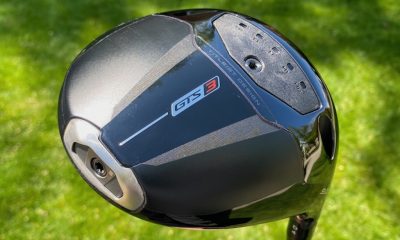
On this episode of the Club Junkie Podcast, I head to the Titleist Performance Institute for a full driver fitting with the new Titleist GTS lineup. We dive into the fitting process, talk about what made the biggest difference in performance, and break down how the different GTS heads and shaft combinations compare on the launch monitor. If you are thinking about a new driver setup for this season, there is a lot to take away from this one.
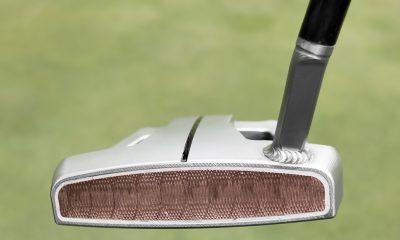
I also get into Brooks Koepka and the gear setup he brought to the PGA Championship, including the putters that caught my eye during the week. There are some interesting equipment trends showing up at the highest level right now and we break down what stands out.
To wrap things up, I talk about reshafting a few wedges, what I learned during the process, and swapping an adaptor onto a new shaft for another build project in the shop. A gear packed episode from start to finish for anyone who loves golf equipment and club building.
Follow Club Junkie everywhere:
Instagram: https://www.instagram.com/clubjunkiepod/
X: https://x.com/ClubJunkiePod
TikTok: https://www.tiktok.com/@clubjunkiepod
Threads: https://www.threads.com/@clubjunkiepod

Excited for this week’s WITB as we get to add the new Titleist GTS woods to the bag! I was fit at Titleist’s TPI facility in Oceanside California a few weeks ago and my new clubs just showed up. I am also adding a cool set of irons that I built last year some wild custom wedges into a new golf bag. Speaking of the bag I have a new Ghost Anyday Black Ops stand bag that I will be using on my Motocaddy Remote M7 electric cart.
Driver: Titleist GTS3 (11 degrees @ 10.25)
Shaft: Fujikura Ventus Red 6s
3-wood: Titleist GT1 3Tour (14.5 degrees)
Shaft: Graphite Design Tour AD CQ-7s
5-wood: Titleist GTS (18 degrees)
Shaft: Fujikura Ventus Red 7s
9-wood: Titleist GT1 (24 degress)
Shaft: Fujikura Ventus Red 7s
Irons: Bettinardi CB24 (5-PW)
Shafts: KBS C-Taper Lite 110 stiff
Wedge: TaylorMade MG5 (50-09 SB)
Shaft: Mitsubishi MMT 125 Stiff
Wedge: TaylorMade MG5 (56-12 SB)
Shaft: Mitsubishi MMT 125 Stiff
Wedge: TaylorMade MG5 (60-08 LB)
Shaft: Mitsubishi MMT 125 Stiff
Putter: Dan Carraher ZT Proto
Ball: Callaway Chrome Tour
Bag: Ghost Anyday Black Ops Stand Bag

Justin Rose WITB 2026 (April): Full WITB breakdown with new McLaren irons

RBC Heritage Tour Report: More minis, course-specific setups, Spider & GTS launches

What’s the story behind Webb Simpson’s custom-stamped irons?

Cadillac Championship Tour Report: Spieth’s sizable changes, McLaren Golf launches, and more

Kristoffer Reitan’s winning WITB: 2026 Truist Championship

Cameron Young’s winning WITB: 2026 Cadillac Championship

Aaron Rai’s winning WITB: 2026 PGA Championship

Nelly Korda WITB 2026 (April)

Justin Rose on the switch to McLaren Golf, learnings from previous equipment moves

Photos from the 2026 PGA Championship


Patrick Reed WITB 2026 (May)
Driver: Titleist GT3 (9 degrees) Buy here. Shaft: Aldila Rogue Silver 130 M.S.I. 70 TX 3-wood: TaylorMade Qi35 (15 degrees)...

Aaron Rai’s winning WITB: 2026 PGA Championship
Driver: TaylorMade M6 (9 degrees) Shaft: Aldilda Synergy Blue 70 TX 3-wood: TaylorMade Qi10 (15 degrees) Shaft: Fujikura Ventus Blue...


Michael Block WITB 2026 (May)
Driver: TaylorMade Qi4D (9 degrees) Shaft: Fujikura Ventus Black VeloCore+ 5 X 3-wood: TaylorMade Qi4D (15 degrees @14.25) Shaft: Mitsubishi...


Bryson DeChambeau WITB 2026 (May)
Driver: Krank Formula Fire Pro (6 degrees) Shaft: Project X Prototype 3-wood: Krank Formula Fire (10 degrees) Shaft: LA Golf BAD...
-
 Whats in the Bag3 weeks ago
Kristoffer Reitan’s winning WITB: 2026 Truist Championship
-
Whats in the Bag2 weeks ago
Aaron Rai’s winning WITB: 2026 PGA Championship
-
 Tour Photo Galleries3 weeks ago
Photos from the 2026 PGA Championship
-
 Equipment2 weeks ago
GolfWRX Launch Report: 2026 Titleist GTS drivers
-

 Equipment2 weeks ago
PGA Championship Tour Report: Fitzpatrick, Koepka among big-name putter switches for Aronimink
-

 News2 weeks ago
WITB Time Machine: Phil Mickelson’s winning WITB, 2021 PGA Championship
-

 Equipment2 weeks ago
Which of Tiger’s major winning irons are your favorite? – GolfWRXers discuss
-

 Equipment2 weeks ago
Lead Tape Report: Adjusting the swingweight of the Wanamaker Trophy


Coop
Nov 13, 2018 at 10:13 am
A good article Stuart. However, the decline has little to do with either accessibility or cost. Scotland has plenty of courses (probably too many) and all but a few are welcoming to juniors – more so than ever. Many clubs offer memberships at very low rates (less than £100 a year) and many are even offering free junior membership (and often free coaching too). There are many reasons why kids aren’t playing golf in the numbers they once did, but Scotland remains one of the cheapest places to play the game.
Dave C.
Nov 13, 2018 at 7:58 am
Golf is a game you either love it or not.
Children are more into computers, social media, stuff that provides instant gratification, so are adults.
There will always be golf. Just not the related industries feeding off it.
Coop
Nov 13, 2018 at 2:48 am
Stewart, a very good and thoughtful article. The decline of the game in the home of golf is very sad, however, it has little to do with cost or accessibility. Few if any country in the world has as many golf courses per head of population and clubs that juniors can join for little (and often zero) cost. On top of that many club will subsidise or even offer free tuition. Generally, clubs are desperate to attract new young golfers but, for all sorts of reasons, it’s a struggle to do so.
CaoNiMa
Nov 13, 2018 at 2:08 am
So, you were in Florida, were you? Enjoying the sunshine and warm weather? And thought golf is great. Wow what a surprise. And you wonder why Scotland is the toilet you always thought it was when it pours and is grey and cold for 300 days of the year. Duh
Johnny Penso
Nov 12, 2018 at 7:35 pm
Never thought I’d see the day someone would be advocating for bringing socialism to golf.
Scott Ivlow
Nov 12, 2018 at 2:57 pm
It sounds like Scotland is in need of the First Tee Programs. Maybe that is why. If The First Tee had a program in every Elementary School. That would be a start. Even in the States it cost $3250 for every school to get started.
As for the weather in Scotland I can see why kids don’t want play Golf. I hate being in rain so I agree about the weather. Why would any kid want to play golf in the cold and and rain if they don’t have to? The average temperature in Scotland is less than 67°year round including the windy days and having a kid hacking a golf balls around a course for a couple of hours doesn’t seem like much fun on link style golf courses.
This leads to another problem Scotland prides itself in links golf courses but really there needs a number of Par 3 courses there to. Look at America a Par 3 course is a very good way to get youth in into golf because they don’t have to worry about being in the way of adults or intimidated by long courses. Even in America we have Executive 9 hole courses that makes it easier for kids and adults to play golf. Also in America there are many golf courses where you can play 18 holes under $50.
I take issue that adults can’t learn the game of golf. With many golf instruction videos it’s easier to learn to fix a golf swing than it was years ago. Also adults have jobs so it’s hard for many that careers and family to devote the time it takes to practice at golf range. I hate the Florida heat and humidity so how really wants to spend hours practicing in it. I took up Golf in 2011 at the age 43 I dispute that adults can’t learn the game as fast kids. Also Topgolf is also getting adults into the sport faster than a pubic golf course. Including beginners who never swung a golf club. So maybe in a few years Topgolf will grow in the UK.
Scheiss
Nov 12, 2018 at 8:43 pm
Topgolf isn’t bringing more people to the game. It’s bringing more drinkers and bowling hacker types, the movie goer types who enjoy guzzling jugs of beer and eat masses of chicken wings while they hack a few hits out to the range that is so wide and without real penalty scoring other than not getting point when hitting certain targets as opposed to the other way around of trying to score as low as possible.
Then they get out to a real golf course and realise they have to walk a little, be in the sun or inclement weather, can’t have their jugs of beer nor chicken wings, and see how narrow the courses are with hazards and see that it’s really penalising when their hacker swings that work 1 in 10 that they thought is good to move the ball forward in a giant range and not sideways is enough, they just quit the game and go back to TopGolf and stay fixed in the bays guzzling more beer like it’s their happy hour.
Wr
Nov 12, 2018 at 8:45 pm
Topgolf isn’t bringing more people to the game. It’s bringing more drinkers and bowling hacker types, the movie goer types who enjoy guzzling jugs of beer and eat masses of chicken wings while they hack a few hits out to the range that is so wide and without real penalty scoring other than not getting point when hitting certain targets as opposed to the other way around of trying to score as low as possible.
Then they get out to a real golf course and realise they have to walk a little, be in the sun or inclement weather, can’t have their jugs of beer nor chicken wings, and see how narrow the courses are with hazards and see that it’s really penalising when their hacker swings that work 1 in 10 that they thought is good to move the ball forward in a giant range and not sideways is enough, they just quit the game and go back to TopGolf and stay fixed in the bays guzzling more beer like it’s their happy hour.
Scheiss
Nov 13, 2018 at 2:03 am
Topgolf isn’t bringing more people to the game. It’s bringing more drinkers and bowling hacker types, the darts playing pool playing types who enjoy guzzling jugs of beer and eat masses of chicken wings while they hack a few hits out to the range that is so wide and without real penalty scoring other than not getting points when missing certain targets as opposed to the other way around of trying to score as low as possible.
Then they get out to a real golf course and realise they have to walk a little, be in the sun or inclement weather, can’t have their jugs of beer nor chicken wings, and see how narrow the courses are with hazards and see that it’s really penalising when their hacker swings that work 1 in 10 that they thought is good to move the ball forward in a giant range and not sideways is enough, they also don’t want the hassle of raking bunkers or ballmarks nor fill in divots, so they just quit the game and go back to TopGolf and stay fixed in the bays guzzling more beer like it’s their happy hour.
mike
Nov 12, 2018 at 2:32 pm
We suffer the same problems here in the USA. There are so many other media distractions that it is difficult for golf to attract players. Now we have top golf centers which seem to emphasize food and drink over golfing at a very expensive price point which in turn leaves you with little disposable income for playing golf. I though do believe that the key to making the game survive is through the golf powers showing golf courses that they need to bring juniors to the game through free golf and free instruction by professionals. They are our future customers, but they need good instruction so as to enjoy the game. Golf courses, and it has fallen on deaf ears at many courses, should work towards attracting more women and beginners with series of free lessons again by professionals. In my area I see little advertising for these class of golfers. I also see high green fees especially during the weekdays as a major deterrent. The new dynamic tee time model is also a big turnoff to everyone. Why should you pay higher price for a item on Tuesday versus Friday. The cost to the seller is the same. The courses are only gouging consumers. The same issue occurs with visitors to vacation areas where visitors pay more than locals. I don’t understand why I can spend $100s or $1000 to visit your area and then you want to charge me even more for golf. We do not play any courses which use dynamic or price inflation for visitors.
Joseph Greenberg
Nov 12, 2018 at 11:02 am
having been fortunate to spend a fortnight in St
Andrews this summer and having been in the golf industry this last decade, i humbly offer this:
1) St. Andrews Academy should be modeled across Scotland’s clubs. Free range balls are a modest, minimal cost start.
2) The Academy gratefully accepted my set of clubs.
More should donate unused, moderately valued equipment
3) the margins for golf equipment in the UK are so high that a tithe/assessment from distributors to youth golf initiatives are a reasonable and wise cost of business
4) The St. Andrews Links Trust system of concession points makes golf exceedingly affordable, especially on the Strathyrum and Eden courses. Juniors should be able to pay these rates at their town’s clubs, if not less.
5) Juniors only windows for play after school hours
6) R&A works with Augusta National to spread its wildly successful Drive/Chip/Putt events (a recent visit to TPC Sawgrass saw hundreds of kids both participating and having fun). Scottish championship could be the at 1st tee/Himalayas of the Old Course
Greg V
Nov 12, 2018 at 9:05 am
You forgot to mention the success that Scotswoman Catriona Matthew has had.
Scheiss
Nov 12, 2018 at 1:47 am
https://www.standrews.com/play/green-fees
Um, those prices during the winter are ridiculous for the Old Course. In fact, it’s ridiculous during the summer, even. No wonder the kids don’t want to play, they get no discounts. Those prices should be half that for the adults and quarter that for the kids.
Doesnotno
Nov 12, 2018 at 8:33 am
Locals get a discount, but even if they didn’t, the Old Course is a special case – the Links Trust may well be justified in charging a premium /tourist surcharge for playing such an in-demand course, and using at least part of the proceeds to subsidise golf for juniors and locals on the other 6 courses they run in the area. There are also plenty of courses in St Andrews and the surrounding areas not associated with the trust.
I’d worry less about getting new or young golfers onto the Old Course and more about charging people wanting to play the Old Course a premium that I could pump into the facilities and other courses to encourage the new golfers to play and keep playing.
The practice and coaching facilities at St Andrews, and soon to be at Carnoustie, are fantastic, and you’d never struggle to get out on a course. It’s not Old Course prices that’s stopping youngsters from taking the game up or persevering with it.
JThunder
Nov 12, 2018 at 1:04 am
How about this for an article:
“The endangered state of positive headlines in golf” … or even “The endangered state of positive headlines in media”?
Do you ever consider that, with a headline which essentially says “no one in Scotland is playing golf anymore” (which would be a pretty typical blog headline), maybe you’re actually telling people they *shouldn’t* be playing golf? Don’t most people follow trends rather than set them?
Do headlines like this ever encourage change?
Consider looking for something positive happening – somewhere – in Scottish golf, and report on that. If there isn’t anything, then use .wrx’s clout to start something – get sponsors involved.
Stuart
Nov 12, 2018 at 8:23 am
JThunder,
With regards to your last comment, I’d love to get something started and I’ve a couple of draft proposals sitting ready to go. It’s something that’s important to me, and even from my own starting point in the game 25 years ago, participation has diminished at at alarming rate. Follow the trend and performance at the elite level is falling way behind where we were in the 80’s and 90’s and I don’t believe it’s a coincidence.
It’s staggering that as a nation that invented the game, and continues to draws visitors from around the world to play, that some of the kids born in this country will never touch a golf club – that can’t be right.
As for the headline, I’m sure you know how editing works 😉
Thanks,
duffer987
Nov 11, 2018 at 2:07 pm
Nice change of pace article. Few points:
“25 years ago there was waiting lists and huge joining fees. Not now. You can pretty much join up anywhere with little or no joining fee.”
Can you point to some independent studies which back up this claim?
“Can you imagine the outcry if the United States stopped producing football players, the Canadians gave up on their ice hockey, or heaven forbid, the All Blacks became an also ran in the Rugby world? So why do we accept it?”
Individual sports and team sports are not the same thing.
“Can you imagine trying to start playing now, as an adult? ”
Actually, doesn’t that occur quite often? I’d assume the 25+ category of new joiners would be something to focus on, no?
“The vast majority of people, myself included, would give up not long after starting. As a kid you don’t. It’s enjoyable, you’re more patient and you’re playing with kids of similar ages and skill sets.”
Can you point to some evidence that you trying to equate “myself” with “vast majority” as being a valid equation. Kids are more patient than adults?
“Every child in primary school should have free access to golf. It’s that easy.”
That’s not easy.
“While not trying to decry the new man…”
But you go ahead and do exactly that.
“UK Sport is…”
Total red herring. I’m sure you know the remit of UK Sport. If not you should read it. Why zero mention of Sport Scotland? The actual grass roots organization that should surely be the initial target of getting any governmental assistance.
Begbie
Nov 11, 2018 at 11:40 am
Well, if you can change the weather in Scotland, you’d have more players lmao
Andrue
Nov 11, 2018 at 10:57 am
“Can you imagine trying to start playing now, as an adult?”
Um, yes. I took up golf 8 years ago aged 42. I love it. Most people I’ve met took up golf as adults. Okay so I’m not a professional and will only ever be a keen amateur but if you think golf should only be taken up by children I think you’re missing a significant demographic.
Unlike a child I have quite a decent disposable income 😉
Stuart
Nov 12, 2018 at 8:30 am
Andrue,
That’s great. Golf should absolutely be inclusive and anyone of any age should be able to take it up. I’d like kids in Scotland to get the opportunity to play for free at school – you’re right, they don’t have disposable income and some will never get the opportunity to play as a result.
The main point of the article was to highlight the lack of participation (or decline in participation) at young age groups in Scotland, which I believe is now having an effect in the professional game. Not many adults who take up the game will go on to forge successful pro careers – it’s just the way it goes unfortunately.
Steve
Nov 11, 2018 at 10:00 am
Any kid under 10 should play for free if golf has any chance of growing. Then again, I took my kids to the schoolyard to hit around this weekend and they had a blast without some ranger getting on their case.
Simms
Nov 12, 2018 at 5:42 pm
Need some truth about those first tee programs…I mean the average public first tee, not the uppity Country Club kids first tee..Kids 10 to 16, free range balls, free instruction, even some free rounds…kid turns 16 or so, goes to the driving range $12 for a bucket of balls, or $40 for 18 without a cart..last time you see that kid….besides teaching kids about golf need to make sure they understand it does cost a good deal to practice and play.
Mike
Nov 11, 2018 at 9:16 am
Sad commentary but unfortunately all sports at the school age level are competing against a rising addiction to social media and video games.