
Opinion & Analysis
The Frost Delay: Building a fitness routine


So I’d better start this out with an admission: I’m a pre-Tiger golfer. While he’s only one year my junior, anyone who learned the game before the aforementioned Mr. Woods took over understands just how different of a game golf used to be.
When I played the majority of my competitive rounds, Nike was a company that made basketball shoes. More than $25 was a lot to pay for a round, and most importantly, golfers didn’t workout.
This came from the top down. The tour was full of a bunch of skinny dudes (Paul Azinger, Payne Stewart, Corey Pavin), the occasional fat dude (Craig Stadler) and one dude who looked like he could beat them all up (Fred Couples). These were not “athletes” in the traditional sense. These were “golfers,” and until Tiger came into prominence, other “golfers” seemed totally cool with it.
In fact, after following a terribly unsuccessful freshman football season with a reasonably accomplished freshman golf season, my high school coach sat me down and had a heart to heart.
“Danny,” he said, “I talked to your football coach. We both agree that you’re never going to be Mike Singletary, and you’d probably be better served to spend your falls pounding range balls than getting slaughtered on his football field.”
Looking back, the man had a point.
However, the second I dropped football, I also dropped any sort of formal strength training — coach’s orders. As far as we knew back then, weight training was bad for a “golfer.” The logic was that the reduced flexibility and added strength would make it harder to maintain a consistent swing. The only strong dude I had ever played golf with was the late Derrick Thomas (who was a member at my country club), and to be honest, his muscles really did get in the way of his golf swing.
Obviously, the game has changed tremendously since then. My attitude toward fitness, however, has not. Don’t get me wrong, I love athletic activities — I used to ski 40 to 50 days a year when I lived in Denver. And I’ll happily play the Stockton to your Malone in a pick up game of hoops and, if it’s below 90 degrees outside I’d rather walk than ride. But I’d never spent an minute in the gym until last year.
I’m not sure if it was the realization that I was about to go from “a little doughy” to fat, or maybe it was in an effort to keep myself alive for a couple more years, but I the notion of getting my self in a bit better shape became non-negotiable. And to be honest, for the first three months of the year last year, I was really enjoying it. I felt stronger, slept better, tended to eat healthier and had a ton more energy — all good things for a father of three. But alas, life and work got in the way, and after a couple horrible weeks I fell off the wagon.
Getting back on the wagon
As I’ll be working out toward something this year (a better golf game versus general health), I’m going to separate my exercise into two separate types this go round: The first type is pretty obvious—it’s the kind of general health and fitness we should all seek and it will be the focus of this column. There are, however, some things we should look for as golfers when we design even a general workout. While this isn’t universal, I believe golfers should workout for strength and tone rather than to “bulk up.” This means lifting less weight and doing more reps. I’m sure that there’s an exception for every rule, but I’ve never played with a giant muscle head dude who could
- Break 80, or
- Hit the ball further than me at my skinniest
In my honest opinion, I don’t believe that giant pecs and arms that are so big that they can no longer lay static next to your body are conducive to a “proper” golf swing. I made a couple call to some instructors I know, and I didn’t hear anything that changed that assertion.
Now, back to the matter at hand. I consulted with a trainer last year and we settled into a circuit-based workout. This provides a couple of advantages for me: First, I have limited time, and I can generally get one of these workouts in over a lunch break. Second, I have the attention span of a gnat, so long cardio sessions are out for me. By combining strength training with my cardio I tend to keep more engaged and am less inclined to spend my hour at the gym staring at random shiny things.
Here’s my general strength/fitness program:
I start with a 5-to-10 minute warmup. I had a back surgery 15 years ago, so the treadmill tends to tear me up a bit. I’ll generally run one of the “programs” on the bike — usually something that has to do with a heartrate.
I move to the bench machine. I do three quick reps of 10 at 75 percent weight, monitoring my heart rate. The whole point of the circuit idea is to keep your heart pumping like you’re doing cardio.
The next step is the bicep machine. Again, I do three quick reps of 10 at 75 percent. Then I move to the shoulder press machine. Again, three reps of 10 at 75 percent.
My final upper body station is the lat bar. I tend to alternate between lat pulls and tricep push downs, each 10 at 75 percent.
Abs are next. I hate sit ups and crunches — I mean I seriously hate them. I find them both boring and miserable, so I tend to do less of the more difficult inverted situps. If it’s a day where I’m doing legs as well, I’ll generally do them to burnout (which is generally less than 50 if the bench is steep enough). Afterward, I do my leg excercises, and then do my abs to burnout again. If I’m not doing legs, I do them to burnout, give myself a minute, and do it again.
As I mentioned before, sometimes my schedule works out better to do a full workout three days a week, and sometimes it works out better to do six shorter workouts (alternating between upper and lower body with abs being the only constant). In the case of the latter, I’d hop back on the bike, ride it 5-10 more minutes, stretch and hit the shower. If it’s the former, we move on to legs.
I start out on the leg press. Back to the three reps of 10 at 75 percent.
I move on to the quad machine. Three of 10 at 75 percent.
I move to the inner thigh machine. Three of 10 at 75 percent
I then move to the hip flexor machine (this one beats me up for some reason). Three of 10 at 75 percent.
I finish with leg curls. Three of 10 at 75 percent.
I then cool down with 5-10 minutes on the bike, and finish with a five-minute general stretching session.
A couple additional notes on this workout:
I’m certain you could do a full circuit workout with free weights, and I’d be very surprised if you couldn’t do it all kinetically. I personally don’t like free weights (I’m always nervous some chic next to me is going to be lifting more) and don’t understand enough about the kinetic thing to have any advice on it, so this is what works best for me. Your milage my vary.
Sometimes I mix it up — I’ll do more weight with less reps, or less weight and more reps. I can’t tell you this is for any important reason other than sometimes I have a little less/more time and sometimes I just get bored.
Finally, it’s critical to let your muscles rest, as strength is essentially built by tearing up your muscles and letting them heal stronger. If you want to workout every day, you’ll need to either alternate from upper to lower body or one day of full-body and one day of cardio.
With all this being said, an exercise routine is a lot like a golf swing. Sometimes it’s cool to learn stuff on the Internet, but often it’s better to enlist the help of a professional (or in this case a trainer). I’d highly suggest at least a fitness consultation before starting a new workout program.
Click here for more discussion in the “Instruction & Academy” forum.
Next column: Golf specific flexibility and using training aids to increase “golf” strength.



Aronimink is not a storied club, but when Donald Ross himself proclaimed it to be as good as he can design and build, one had to take notice. Jay Sigel was the pre-eminent male amateur golfer from the mid-1970s to the mid-1990s. He might have called any number of Philadelphia clubs home, but he chose Aronimink. It served him well. Gary Player won a PGA Championship here in 1962, and was followed by the 1993 winner … nobody. Aronimink gave that event away to Inverness, for reasons of which it is certainly not proud. So be it. We had to wait sixty-four years for the PGA to return to Newtown Square, but here we are. Aronimink has been neo-restored by Gil Hanse and team, to return Ross features with an eye toward defense against the dark arts, errrr, high-tech equipment.
Day one saw Rory McIlroy and Bryson DeChambeau dig big holes, to the tune of plus-four and plus-six, respectively. Since the first-round lead will be minus-three at worst, many shots will need to be made up for the power couple to reach contention. By nightfall, seven golfers held the day-one lead at three-under par 67. Shots and sticks caught our attention, and we are proud to present Five Things We Learned on Tech Thursday at the 2026 PGA Championship. Thanks to InsideTourGolfer, Today’s Golfer, and GolfWRX for initial equipment research.
First, meet Min Woo Lee
Min Woo Lee, aka Dr. Chipinski, has once again thrust himself into the conversation of Can he, will he, when will he? Lee has so much talent, wins not nearly as often as we believe that he should, and has no major near-misses (much less titles) on his wiki. The young Aussie is getting older and wiser, but is he able to avoid the scarring that holds the older and wiser back from breaking through? Philadelphia offers another opportunity. Min Woo signed for five birdies and two bogeys on day one, and grabbed a share of the opening-day lead at Aronimink. Winners transcend history and the moment, and Lee will need that sort of ascent to lift the Wannamaker on Sunday.
Second, meet Aldrich Potgeiter
The young South African golfer can rip driver with the best of them. Aronimink tips out at nearly 7400 yards, but beyond the fairway bunkers that ensnare only the mortals, Potgeiter can take his chances with wedge from the rough. On Thursday, he spent plenty of time in the spinach. Like Popeye, he used his muscles to gouge and thrash and dig his way out. Six birdies against three bogeys on the card brought AP in a three deep.
Third, meet Martin Kaymer
Not a major event takes place without a where’s he been throwback moment. We know that Martin Kaymer left the PGA and DP World tours for LIV golf, but the two-time (US Open and PGA) major winner has a lifetime exemption into at least one major event, and he seizes the opportunity each May. Kaymer joined the six-seven brigade with four birdies and a solitary bogey on day one. Kaymer was never a long hitter, and the years are kind to no golfer. The German champion will need to uncork every bottle of guile and strategy in his cabinet to remain in contention. For today, though, he occupies a rung on the ladder of Tour Tech.
Fourth, meet Scottie Scheffler
Let’s see, he’s the defending champion at the PGA, and he found his way back to the top tier with five birdies against two bogeys. To be a favorite and then play up to that stature and expectation is quite difficult. Just ask Rory, Bryson, and some of the other pre-tournament heartthrobs. Scheffler’s game is complete, and to knock him off the OWGR #1 pedestal, one needs to defeat him at the majors. Aronimink is the sort of course that fits Scheffler’s game. Better yet, it unfits the game of many of his challengers. Don’t expect Scheffler to go away anytime soon. Come Sunday, he’ll be around.
Fifth, meet Stephan Jaeger
Clocking in for the unheralded players shift are Ryo Hisatsune and Stephan Jaeger. Hisatsune logged seven birdies on day one, but gave most of them back with four bogeys. Still, he’s tied at the top for a time. Jaeger pitched five birdies against two bogeys, including a run of three consecutive, from holes four through six. Odds are that one of the two will hang around through 36 holes. Odds also suggest that both will be gone by Saturday evening. Still, the PGA Championship has historically been the major most likely to be won by an under-known. Both Hisatsune and Jaeger feature on that list, so good luck, lads!

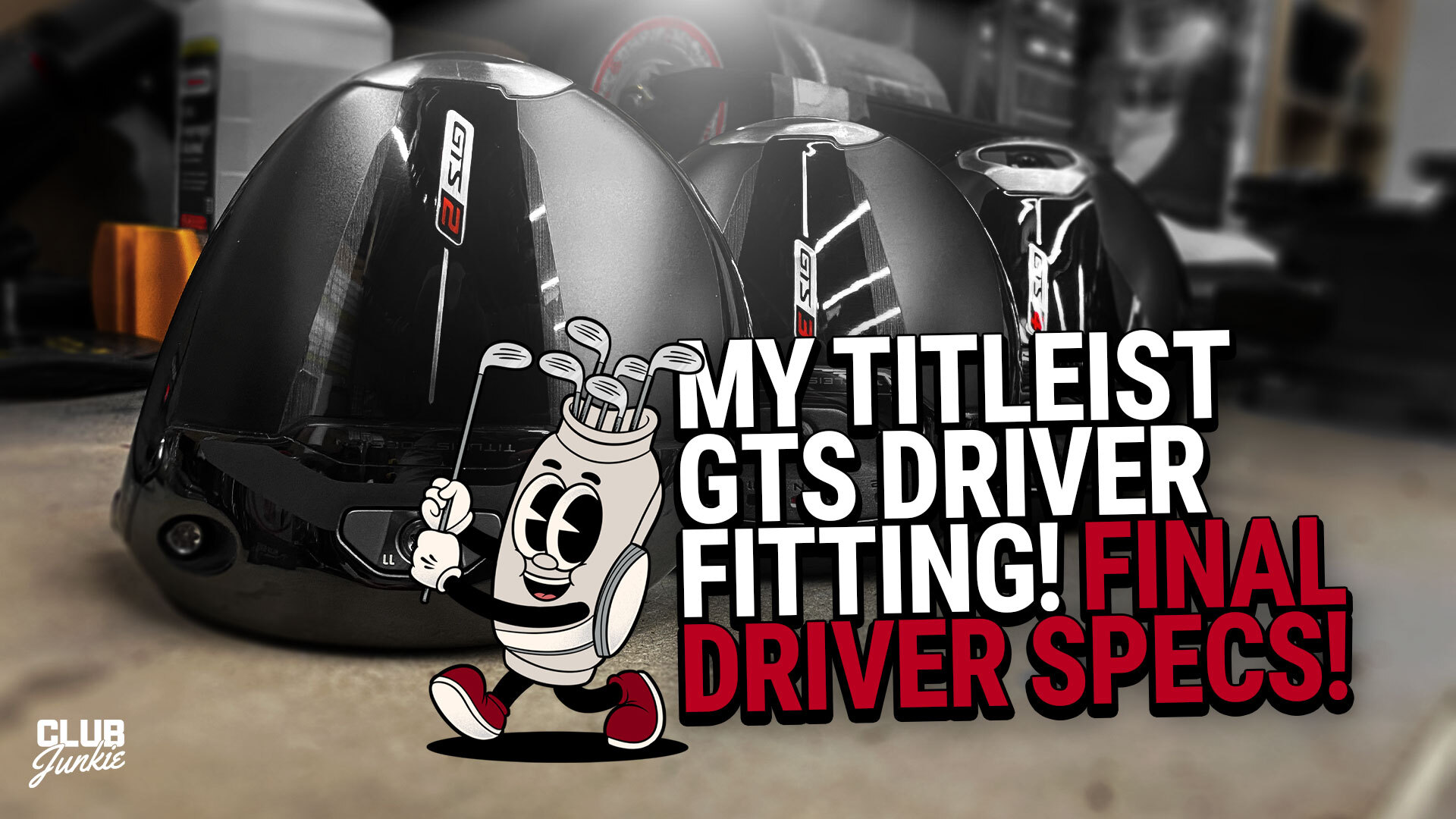
On this episode of the Club Junkie Podcast, I head to the Titleist Performance Institute for a full driver fitting with the new Titleist GTS lineup. We dive into the fitting process, talk about what made the biggest difference in performance, and break down how the different GTS heads and shaft combinations compare on the launch monitor. If you are thinking about a new driver setup for this season, there is a lot to take away from this one.
I also get into Brooks Koepka and the gear setup he brought to the PGA Championship, including the putters that caught my eye during the week. There are some interesting equipment trends showing up at the highest level right now and we break down what stands out.
To wrap things up, I talk about reshafting a few wedges, what I learned during the process, and swapping an adaptor onto a new shaft for another build project in the shop. A gear packed episode from start to finish for anyone who loves golf equipment and club building.
Follow Club Junkie everywhere:
Instagram: https://www.instagram.com/clubjunkiepod/
X: https://x.com/ClubJunkiePod
TikTok: https://www.tiktok.com/@clubjunkiepod
Threads: https://www.threads.com/@clubjunkiepod
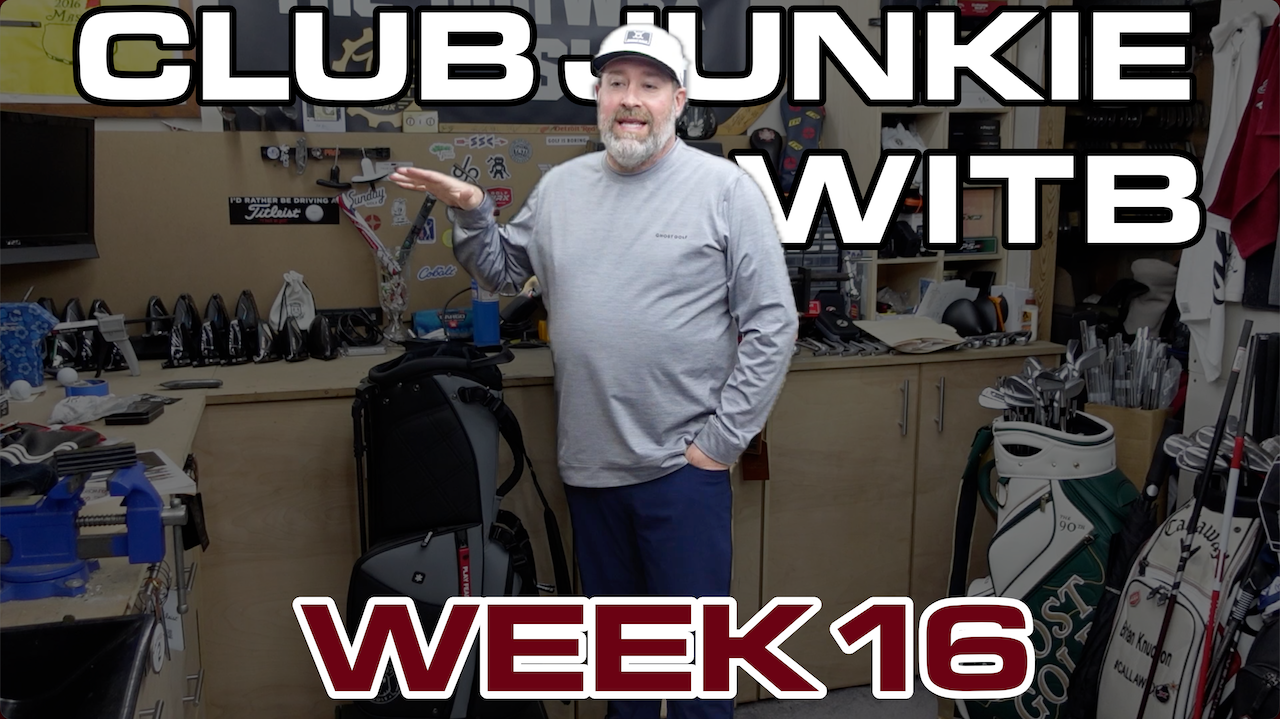
Excited for this week’s WITB as we get to add the new Titleist GTS woods to the bag! I was fit at Titleist’s TPI facility in Oceanside California a few weeks ago and my new clubs just showed up. I am also adding a cool set of irons that I built last year some wild custom wedges into a new golf bag. Speaking of the bag I have a new Ghost Anyday Black Ops stand bag that I will be using on my Motocaddy Remote M7 electric cart.
Driver: Titleist GTS3 (11 degrees @ 10.25)
Shaft: Fujikura Ventus Red 6s
3-wood: Titleist GT1 3Tour (14.5 degrees)
Shaft: Graphite Design Tour AD CQ-7s
5-wood: Titleist GTS (18 degrees)
Shaft: Fujikura Ventus Red 7s
9-wood: Titleist GT1 (24 degress)
Shaft: Fujikura Ventus Red 7s
Irons: Bettinardi CB24 (5-PW)
Shafts: KBS C-Taper Lite 110 stiff
Wedge: TaylorMade MG5 (50-09 SB)
Shaft: Mitsubishi MMT 125 Stiff
Wedge: TaylorMade MG5 (56-12 SB)
Shaft: Mitsubishi MMT 125 Stiff
Wedge: TaylorMade MG5 (60-08 LB)
Shaft: Mitsubishi MMT 125 Stiff
Putter: Dan Carraher ZT Proto
Ball: Callaway Chrome Tour
Bag: Ghost Anyday Black Ops Stand Bag

Justin Rose WITB 2026 (April): Full WITB breakdown with new McLaren irons

RBC Heritage Tour Report: More minis, course-specific setups, Spider & GTS launches

What’s the story behind Webb Simpson’s custom-stamped irons?

Cadillac Championship Tour Report: Spieth’s sizable changes, McLaren Golf launches, and more

Kristoffer Reitan’s winning WITB: 2026 Truist Championship

Cameron Young’s winning WITB: 2026 Cadillac Championship

Aaron Rai’s winning WITB: 2026 PGA Championship

Nelly Korda WITB 2026 (April)

Justin Rose on the switch to McLaren Golf, learnings from previous equipment moves

Photos from the 2026 PGA Championship


Patrick Reed WITB 2026 (May)
Driver: Titleist GT3 (9 degrees) Buy here. Shaft: Aldila Rogue Silver 130 M.S.I. 70 TX 3-wood: TaylorMade Qi35 (15 degrees)...

Aaron Rai’s winning WITB: 2026 PGA Championship
Driver: TaylorMade M6 (9 degrees) Shaft: Aldilda Synergy Blue 70 TX 3-wood: TaylorMade Qi10 (15 degrees) Shaft: Fujikura Ventus Blue...


Michael Block WITB 2026 (May)
Driver: TaylorMade Qi4D (9 degrees) Shaft: Fujikura Ventus Black VeloCore+ 5 X 3-wood: TaylorMade Qi4D (15 degrees @14.25) Shaft: Mitsubishi...


Bryson DeChambeau WITB 2026 (May)
Driver: Krank Formula Fire Pro (6 degrees) Shaft: Project X Prototype 3-wood: Krank Formula Fire (10 degrees) Shaft: LA Golf BAD...
-
 Whats in the Bag3 weeks ago
Kristoffer Reitan’s winning WITB: 2026 Truist Championship
-
Whats in the Bag2 weeks ago
Aaron Rai’s winning WITB: 2026 PGA Championship
-
 Tour Photo Galleries3 weeks ago
Photos from the 2026 PGA Championship
-
 Equipment2 weeks ago
GolfWRX Launch Report: 2026 Titleist GTS drivers
-

 Equipment2 weeks ago
PGA Championship Tour Report: Fitzpatrick, Koepka among big-name putter switches for Aronimink
-

 News2 weeks ago
WITB Time Machine: Phil Mickelson’s winning WITB, 2021 PGA Championship
-

 Equipment2 weeks ago
Which of Tiger’s major winning irons are your favorite? – GolfWRXers discuss
-

 Equipment2 weeks ago
Lead Tape Report: Adjusting the swingweight of the Wanamaker Trophy


Cris
Feb 19, 2014 at 1:54 pm
This is one of the most ill-informed articles I’ve ever read. We should start asking for specific credentials before we allow nonsense like this to be posted. It can really hurt people. The comment below from Ryan is substantially more accurate.
kcslonghitter
Jan 30, 2013 at 5:12 pm
Great Article it helped me understand that some of me problems may not be another swing lesson, but an increase in Body mobility
Ryan
Nov 30, 2012 at 12:32 pm
I think a lot of people are misinformed on this subject. I agree that bulky muscles are not ideal for golf but in order to get stronger you should be working with more weight and less reps, and not circuit training. Strength training will not give you bulky muscles. Strength is largely due to training your nervous system to send stronger signal to your muscles and muscle size is largely down to hypertrophy, the breaking down and regrowth of muscle you mentioned.
I believe anyone serious about improving their athletic ability should fragment their training. Strength training separately in order to get the most return for your time invested. Proper stretching routines to stay flexible and then separate cardio if they feel fitness is an issue.
It’s a myth that the above cannot be achieved without a large amount of time invested. The focus should be on quality not quantity; proper warm-ups and one or two intense working sets. This approach will get you in and out of the gym faster, stop you getting bored and keep you coming back, improving.
Circuit training is fine if you just want a generic workout but it won’t allow you to focus enough on each component (strength, power, cardio, flexibility) or let you have the energy to commit to each component 100% and progress as quickly as you should be in each separate area.
I would also avoid ‘golf-specific’ training if you’re trying to hit the ball further. I guarantee you ‘ll hit the ball further if you increase your deadlift or squat by 50 lbs than if you can do 100 press ups on a Bosu ball and pull a cable to mimick your golf swing. Lower body strength is the key.
Everyone needs to find what works for them based on their personal preference, goals and limitations, but I submit that circuit training is second to a number of other methods in the pursuit of athletic improvement.
Having said all that, improving your physique is 90% diet, exercising is the easy part!
fitnessforever
Nov 29, 2012 at 9:51 pm
While I commend you on working out, your workouts are as pretty old school and don’t do much service to your body. Routines like you posted become tiresome, repetitive, and will NOT provide the results your are looking for after your body gets used to the workouts. There’s plenty of research out there that shows after repeating the same workout a few times, it becomes ineffective. This type of training will undoubtably lead to plateauing.
To be more effective, look for workouts that use plenty of energy within a short timespan, require more explosive movements (pushups, burpees, squat jumps, etc), use body weight and weighted movements, and utilize aerobics during and in-between sets. Otherwise, you’ll end up where you started if you continue to do the old school “circuit training.”