
Equipment
Ben Hogan Golf unveils new putter lineup


The Ben Hogan Golf Equipment Company debuted its new line of putters today via a press release on their social media platforms and website.
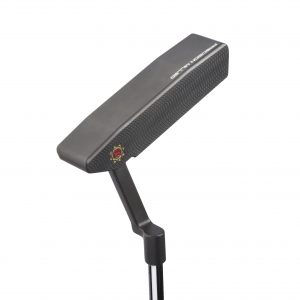
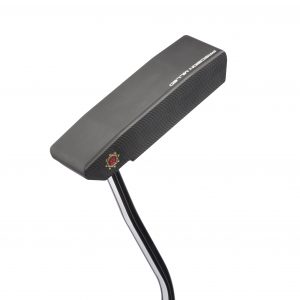
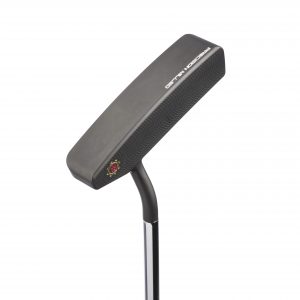
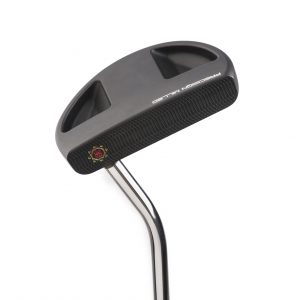
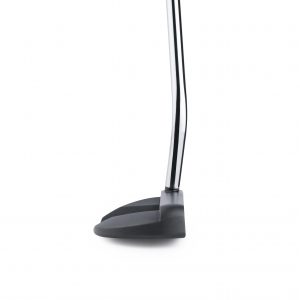
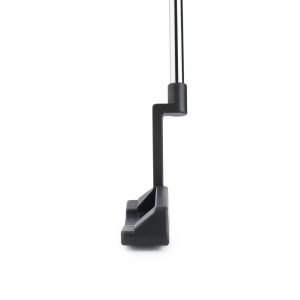
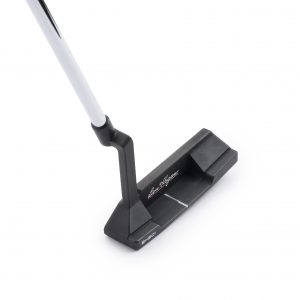
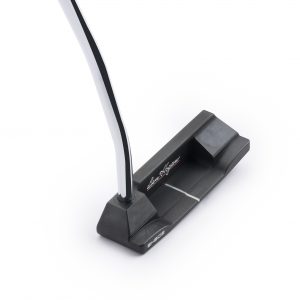
Unveiling four new putter models, the flatsticks are each priced at $250.00 apiece and can be bought exclusively on the Ben Hogan website as a part of their direct-to-consumer business model. Each putter is milled in a black metal finish and the length, lie, and grip are all customizable online.
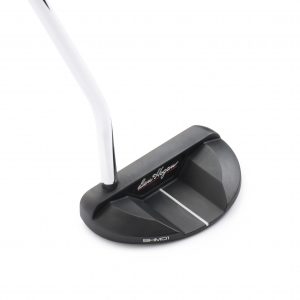
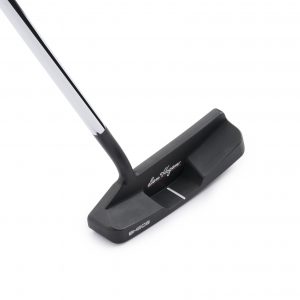
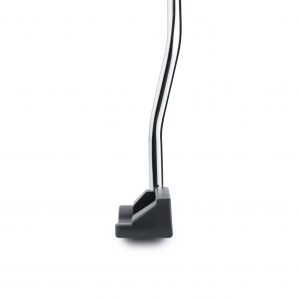
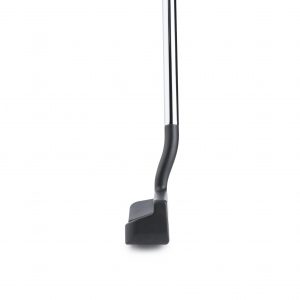
Photos, and a portion of the official statement from Ben Hogan, below
“The new CNC precision milled putters are crafted from soft, 1020 carbon steel in a multi-step forging process that strengthens and purifies the molecular structure of the metal. True forging refines and tightens the grain structure of the steel and provides for uniform density across the entire face. This eliminates hot spots, or dead areas, and results in unparalleled feel, consistent distance control and “trueness” on every roll.”
“Complementing the unique design features of the new Ben Hogan Precision Milled FORGED Putters, which are available in four (4) traditional head models with clean, elegant lines, is a proprietary DBM (Diamond Black Metal) finish. The most durable black finish on the market, DBM eliminates glare and generates more contrast with the ball and putting surface to promote better alignment. Additionally, the face of every Ben Hogan Precision Milled FORGED putter is CNC milled for perfect flatness from heel to toe.”
“A 100% forged, CNC precision milled putter is not the least expensive nor the easiest way to make a putter by any means, but at Ben Hogan Golf we believe it is the best way,” said Scott White, CEO, Ben Hogan Golf Equipment Company. “Serious golfers demand precision and performance on the greens, and the new Ben Hogan Precision Milled Forged putters deliver. They look great, but perform even better.”
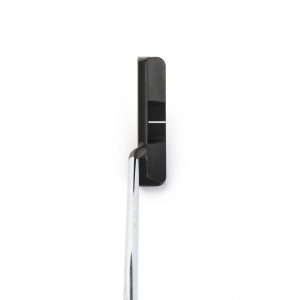
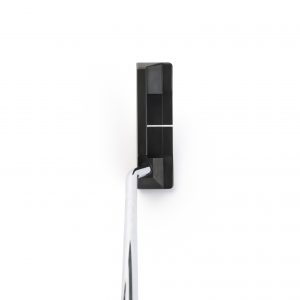
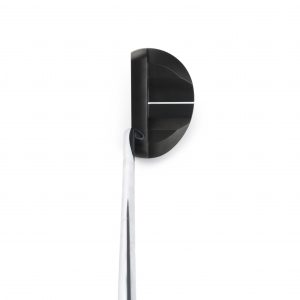
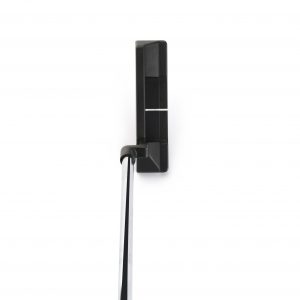
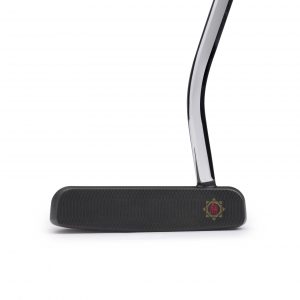
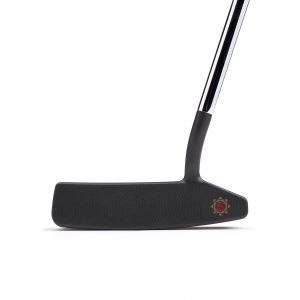
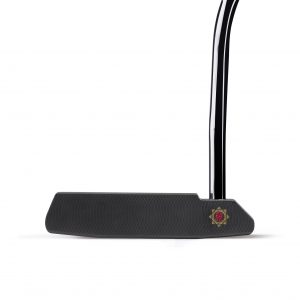
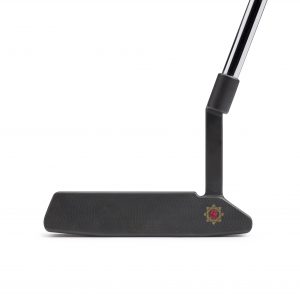
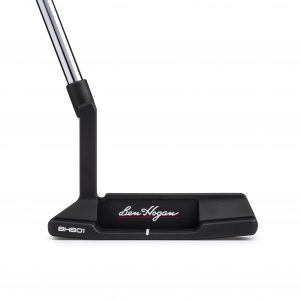
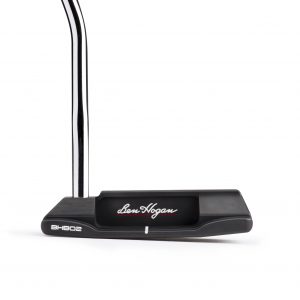
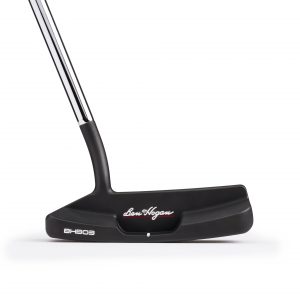
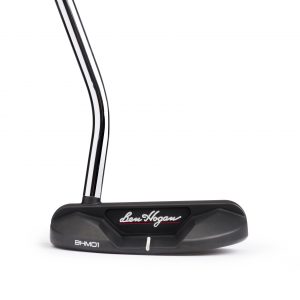
The four models in the new line of Ben Hogan Golf Precision Milled Forged Putters include
- Plumber’s Neck Blade
- 1 shaft offset, 2° loft and 355 gram head weight
- 43° toe hang to promote an active gate-swing putting stroke
- Player’s Blade with a double bend shaft
- 1 full shaft offset, 2° loft and 355 gram head weight
- Face balanced for those who putt with a straight-back, straight-through stroke
- Iconic Player’s Blade with a flowing neck
- 1 shaft offset, 2° loft and 355 gram head weight
- 50° of toe hang, ideal for an active open/close stroke
- Player’s Mallet
- Single bend shaft and ½ shaft offset, 2° loft and 370 gram head weight
- Face balanced for those who putt with a straight-back, straight-through stroke
Additionally, Ben Hogan Golf has partnered with SuperStroke to offer golfers a choice of three popular grip styles: Flatso 1.0, MidSlim 2.0, Slim 3.0
Ben Hogan Golf’s line-up of Precision Milled Forged Putters, which sell for $250 each, are available for purchase exclusively at www.BenHoganGolf.com.




Equipment
Putters that never made it: Check out some of the best tour builds that didn’t make the cut

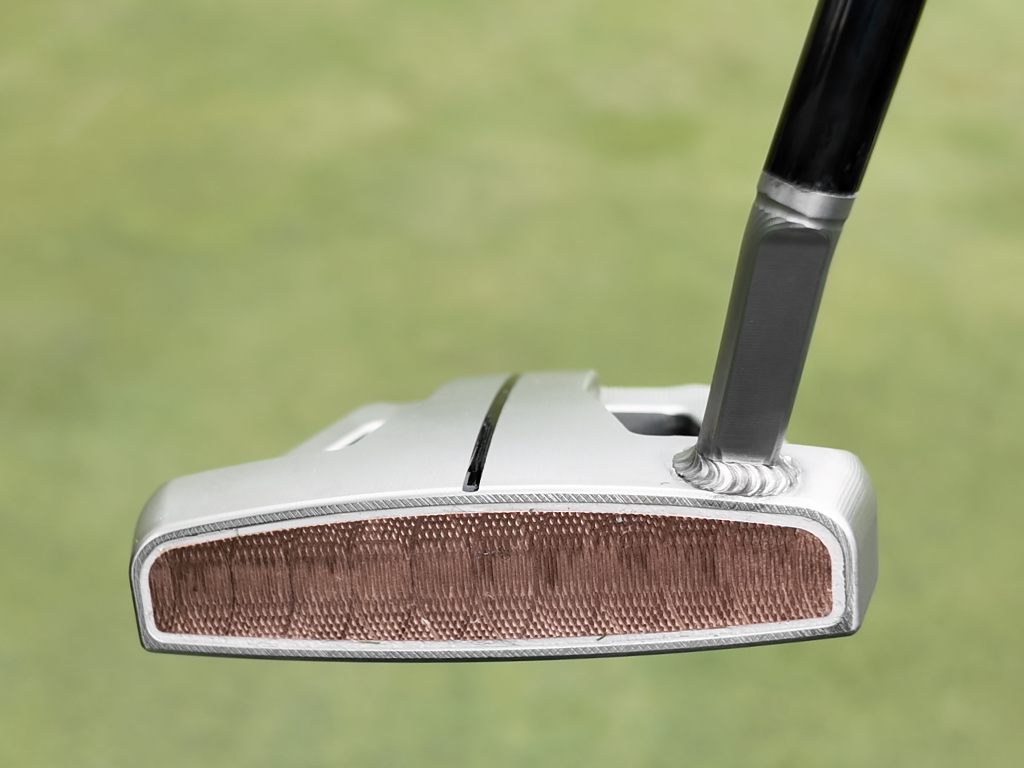
Arguably, the best perk of being a professional golfer on the PGA Tour is the ability to request or even just be handed pretty much any club you could think of. It happens more often than you think, usually with putters around the practice green from one event to the next. Come Wednesday, the Tour bags lining the edge of the putting surface become resting places for fallen flatsticks that never made the cut.
So let’s take a look at some of the best we’ve seen out on Tour this year that never made it to the competition. (You may notice none of Hideki Matsuyama’s custom Scotty Cameron putters made this list. There are too many.)
Let’s start with this custom Damascus Milled Odyssey Rossie made for Ryo Hisatsune. Featuring a single line and the short-slant hossel, we’ve seen plenty of Number 7 and jailbird heads featuring the Damascus Milled insert, but this is the first and only one we’ve spotted in a Rossie. Hisatsune primarily putts with an Odyssey Black Series iX #9, but we have seen him recently with a TaylorMade TP Collection SOTO, so there could be potential that the Damascus Milled Rossie could end up in the bag.

Everyone wants to be Cameron Young right now. We’ve had Justin Thomas and Tom Hoge both game the Scotty Cameron 9.5R prototype. Well, for the PGA Championship, Brooks Koepka nearly joined that list after requesting the same style of putter, with the full-length alignment line. But the Scotty Cameron reps took the request a step further and made one specially for Koepka with a Teryllium insert, similar to one in his previous Newport 2 gamers. The reason why this one didn’t go into play, though? Because it was too heavy.

Harry Hall was the third-best putter on Tour last year, so when Bettinardi made him a custom proto, you know it was going to be good. The custom BB28 blade features VDF face milling, a custom-welded single-bend shaft, and the owner’s initials – HH – on the sole of the putter. Hall, who usually games an Odyssey O-Works #7 W, has dabbled with a TaylorMade Spider Tour X already this year. Maybe there’s a chance this Bettinardi might make his bag.

Honestly, this one doesn’t need a description. It’s Kieth Mitchell’s custom Scotty Cameron Napa. One Scotty Cameron face stamp, two Scotty Dogs, two Scotty Cameron 7-Point Crowns and one Circle T. That is all. Oh, except for the Cashmere Cameron headcover.

Finally, and just for fun, how about we pour one out for this TaylorMade Spider Tour X made for Scottie Scheffler in its new torched finish. It’s unlikely we’ll see a putter change anytime soon from the best golfer in the world. In fact, he hit just two putts with it on the Harbour Town practice before going back to his trusty gamer.


Driver: Titleist GT3 (9 degrees) Buy here.
Shaft: Aldila Rogue Silver 130 M.S.I. 70 TX


3-wood: TaylorMade Qi35 (15 degrees)
Shaft: Fujikura Ventus Blue 7 X

7-wood: TaylorMade Qi35 (21 degrees)
Shaft: Fujikura Ventus Blue 8 X

Irons: Grindworks PR-202 (4), Grindworks PR-101A (5-PW)
Shafts: True Temper Dynamic Gold Tour Issue X100


Wedges: Cleveland RTX6 Tour Rack (52-10 Mid), Titleist Vokey Design SM10 (56-08M), SM11 (60-04T)
Shafts: True Temper Dynamic Gold Tour Issue S400


Putter: Scotty Cameron Tour Rat 1.5 Tour Prototype


Ball: Titleist Pro V1x
Grips: Golf Pride MCC


In our forums, our members have been discussing their favorite major winning irons used by Tiger Woods. WRXer ‘golferdude54’ kicks off the thread saying:
“Mizuno MP 14/29. Titleist 681T. Nike Forged Blades. TaylorMade P7TW.
Among these irons that helped Tiger win 15 majors, which is your favorite in terms of looks?”
And our members have been naming their favorites and why in response.
Here are a couple of posts from the thread, but make sure to check out the entire discussion and have your say at the link below.
- SwingBlade: “I prefer the early blades he played and the more recent TM TW’s especially because after Tiger had his major behavioral setbacks, part of Nikes support payback was making Tiger play a Nike putter and cease using his beloved uniquely customized Scotty putter.”
- ProjectX: “This (Nike Forged Blades) and there’s not even a close second.”
Entire Thread: “Which of Tiger’s major winning irons are your favorite? – GolfWRXers discuss”

Justin Rose WITB 2026 (April): Full WITB breakdown with new McLaren irons

RBC Heritage Tour Report: More minis, course-specific setups, Spider & GTS launches

What’s the story behind Webb Simpson’s custom-stamped irons?

Cadillac Championship Tour Report: Spieth’s sizable changes, McLaren Golf launches, and more

Kristoffer Reitan’s winning WITB: 2026 Truist Championship

Cameron Young’s winning WITB: 2026 Cadillac Championship

Aaron Rai’s winning WITB: 2026 PGA Championship

Nelly Korda WITB 2026 (April)

Justin Rose on the switch to McLaren Golf, learnings from previous equipment moves

Photos from the 2026 PGA Championship


Patrick Reed WITB 2026 (May)
Driver: Titleist GT3 (9 degrees) Buy here. Shaft: Aldila Rogue Silver 130 M.S.I. 70 TX 3-wood: TaylorMade Qi35 (15 degrees)...

Aaron Rai’s winning WITB: 2026 PGA Championship
Driver: TaylorMade M6 (9 degrees) Shaft: Aldilda Synergy Blue 70 TX 3-wood: TaylorMade Qi10 (15 degrees) Shaft: Fujikura Ventus Blue...


Michael Block WITB 2026 (May)
Driver: TaylorMade Qi4D (9 degrees) Shaft: Fujikura Ventus Black VeloCore+ 5 X 3-wood: TaylorMade Qi4D (15 degrees @14.25) Shaft: Mitsubishi...


Bryson DeChambeau WITB 2026 (May)
Driver: Krank Formula Fire Pro (6 degrees) Shaft: Project X Prototype 3-wood: Krank Formula Fire (10 degrees) Shaft: LA Golf BAD...
-
 Whats in the Bag3 weeks ago
Kristoffer Reitan’s winning WITB: 2026 Truist Championship
-
Whats in the Bag2 weeks ago
Aaron Rai’s winning WITB: 2026 PGA Championship
-
 Tour Photo Galleries3 weeks ago
Photos from the 2026 PGA Championship
-
 Equipment2 weeks ago
GolfWRX Launch Report: 2026 Titleist GTS drivers
-

 Equipment2 weeks ago
PGA Championship Tour Report: Fitzpatrick, Koepka among big-name putter switches for Aronimink
-

 News2 weeks ago
WITB Time Machine: Phil Mickelson’s winning WITB, 2021 PGA Championship
-

 Equipment2 weeks ago
Which of Tiger’s major winning irons are your favorite? – GolfWRXers discuss
-

 Equipment2 weeks ago
Lead Tape Report: Adjusting the swingweight of the Wanamaker Trophy


J3
Mar 20, 2019 at 4:02 am
BH may want 2 consider that this feedback is coming from the super users. Demand is LOW, perceived value is incongruent w/pricing, but we’re here talking about yr product still. Bully for that! Secret is in the dirt you say? Maybe promote traditional way? Senior tour players & team up w/artisan club makers, demonstrative tech or all of the above? Hope this helps Jamho3
Rich Douglas
Mar 19, 2019 at 12:59 am
What, pray tell, do these putters bring to the fray?
I bought a Heavy Putter because I was intrigued by the super swing weight. I bought a Happy Putter because I was intrigued by how it was adjustable all over the place. And I recently bought a Bloodline putter because the stand-up capability is really unique.
All three–which represent my whole putter purchasing history for the past decade or so–were innovative beyond belief. But these? Meh.
J3
Mar 19, 2019 at 4:42 am
To quote Big Boi & 3Stax “Never ever.”
Rich Douglas
Mar 19, 2019 at 12:53 am
Named after a notoriously bad putter. Yeah, that’ll work.
Doug Richlas
Mar 19, 2019 at 11:09 am
Lol. Count this as a reply to both your comments. If you are looking for gimmicks in your putters, you probably just need to work on your putting. I’m sure these are simple, great quality putters. Just as good as scotty without the inflated ego “look at me” price behind it.
Sam Walton
Mar 18, 2019 at 10:51 pm
Sold exclusively at Walmart
Dave r
Mar 18, 2019 at 10:22 pm
Why is 250 a bad price ? Scottys are 600 and do not look any better , and probably do not put any better.
Just one persons opinion!
The dude
Mar 18, 2019 at 7:04 pm
Nice looking……pass
Joe
Mar 18, 2019 at 7:00 pm
Let’s say these putters are pro line golf equipment. Today it sells for $250; buy it; next day it’s $20 per the PGA value guide.
Geoffrey Holland
Mar 18, 2019 at 6:11 pm
Very boring looking putters nothing new at all to see there. Certainly not worth $250.
Simms
Mar 18, 2019 at 6:49 pm
I will second that…just like Cleveland did in the past, same old PING copies form the 60’s just do something fancy with the paint, or face..or like these forged instead of cast….at least Cleveland held the price down…a $129 putter for $250…TRADE IN VALUE WILL BE LESS THEN $50 IN LESS THEN A YEAR.
Tom54
Mar 18, 2019 at 5:08 pm
Not sure that the $250 price is a deterrent in as much as whether the putter market needs another company joining in. They probably are nice putters but odyssey has some nice ones in the $200 range that are hard to beat. Ping too for that matter.
DB
Mar 18, 2019 at 1:59 pm
They look really nice but it’s an awkward price point. Maybe it will work for them, who knows.
I’m curious how they came up with weights in the 355-370 range. Seems a bit heavy to me but maybe they have some reason behind it.
Robert
Mar 18, 2019 at 1:57 pm
Would like to see adjustable weights at bottom on a $250 putter.
stimpmeterp
Mar 18, 2019 at 1:29 pm
I agree that the price point seems very high. I am curious to know what the difference is between these Hogan putters and say the new Wilson Staff Milled series or even the Cleveland Huntington Beach series?
BigTeddySkinny
Mar 18, 2019 at 12:16 pm
Really disappointed with the $250 price tag. I was excited up until that part
R
Mar 18, 2019 at 12:16 pm
They should have at least tried to mimic the Rife/Evnroll grooves, instead of this bad Scotty rip off face milling
RM
Mar 18, 2019 at 11:22 am
$250! That is an absurd price.
Bill
Mar 18, 2019 at 11:07 am
Quality looks top notch but really, the asking price is too much. Given that the ‘variable’ groove technology were shown to give improved putting result, I cannot see a reason why they were not included in the face milling.
gunmetal
Mar 18, 2019 at 11:30 am
Anything can be “shown” to make improvements. I should be about 40 yards longer than I was 10 years ago with all of the 3-4 yards I’m told I’ll get every year going from one years’ model to the next. C’mon. On the course, can you tell a difference between two putters with the exact same loft, lie, weight, length, etc but one with grooves and one without?