
Opinion & Analysis
A few thoughts on the distance debate

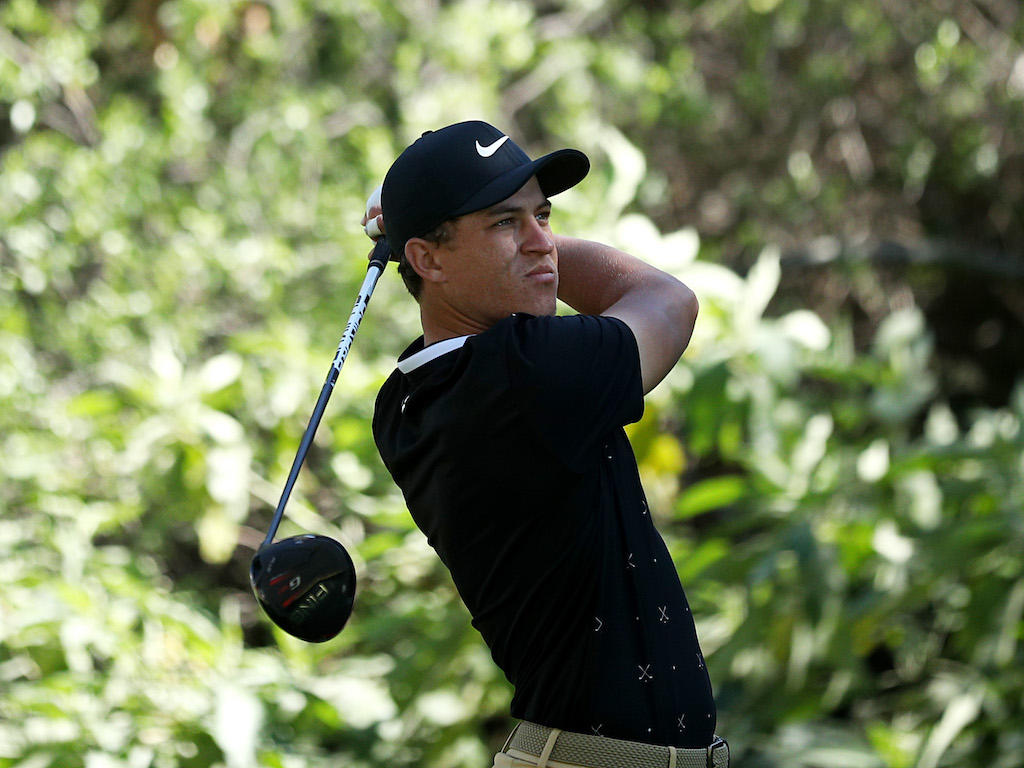
The USGA and the R&A seem to be determined to limit the distance a player can hit the ball. They seem to be driven mad when they see Dustin Johnson or Brooks Koepka hit a ball that lands at 270-280 and rolls out to 315. I sometimes wonder if I could actually watch the members of the rules committee as their faces turned red when one of these shots takes place.
I think it has reached a boiling point and something has to give. I have read the opinions of golfers from all over the world, and most don’t think it’s a problem, but there are a few who want the USGA/R&A to step in. The argument is always the same, and to me it doesn’t hold water. The people that are pro-regulation always cite the fact that many players on the pro tours hit driver and then a wedge into greens, and it makes the game too easy or makes a mockery of the golf course.
My reaction to this is twofold. For the USGA/R&A to step in and use heavy-handed tactics to force the manufactures to make a ball that doesn’t go as far is nuts. It goes against everything that the free market stands for. If this was only one company that had done something so different that it made their product 50 yards longer, I could almost understand, but that is not the case. I would be willing to bet that if you got the Ping robot out and hit all four of the major brands premium balls they would all go about the same distance. The backspin off a wedge or 7-iron would be close as well, so I think they are all quality products.
In addition: how are you going to regulate this new rule? With drivers, you can set a size limit at 460CC, or in the Ping case from 1990, you can say that it must have a specific type of groove. In the case of the ball, you can’t do that because of the swing speed difference in each player. With the big hitters having a swing speed above the 120 MPH mark they will naturally hit the ball further. If a player like Jordan Spieth that has an average swing speed of 114 mph he won’t hit it as far so how do you create a ball that is fair for everyone? It’s not the ball: it’s the physics of the game that we have to look at. Do modern tour balls go further than 25 years ago? No question. But I don’t think you can regulate this.
So, the second part of my argument is: make the courses penalize someone for hitting it 280 on the carry. It is possible, and I point out two holes on the PGA tour. Number 10 at Riviera, and Number 10 at Colonial. In both cases, the hole is built to keep people from hitting driver. At Riviera, the shape of the hole along with the bunkers guarding the green make it a hole that you can hit driver to (but don’t count on a good score). At Colonial, you simply run out of fairway and have a ditch that you would end up in if you take driver off the tee. This is the answer to this issue not a series of rules on how the ball is built. Let the rough grow in at that 275-320 yard landing spot. Maybe put bunkers there or in the southwest, zero scape that area so your ball would land out there with the scorpions and rattlesnakes. If we take a page from some of the great English courses and have tall thick grass that you need a machete to get through, you will find players hitting it to a safe spot and then playing up from there.
The other thing this will do is add to the excitement of playing and watching that hole as it’s played. If the wind is behind the player and they are down two strokes do they try and go for it or will they play it safe? Will a player make the mistake of hitting it into that area and then risk a bad second shot that goes over the green? This is how you solve this issue, not with legislation. I am not saying we rip up Augusta and rebuild it or give Pebble Beach a Hollywood-style makeover. I am saying add subtle changes to the areas where most players land to make it a real tough choice to pull out that driver. This is also not something that has to be done on every hole of a course either. Just a few holes and I think this issue would go away.


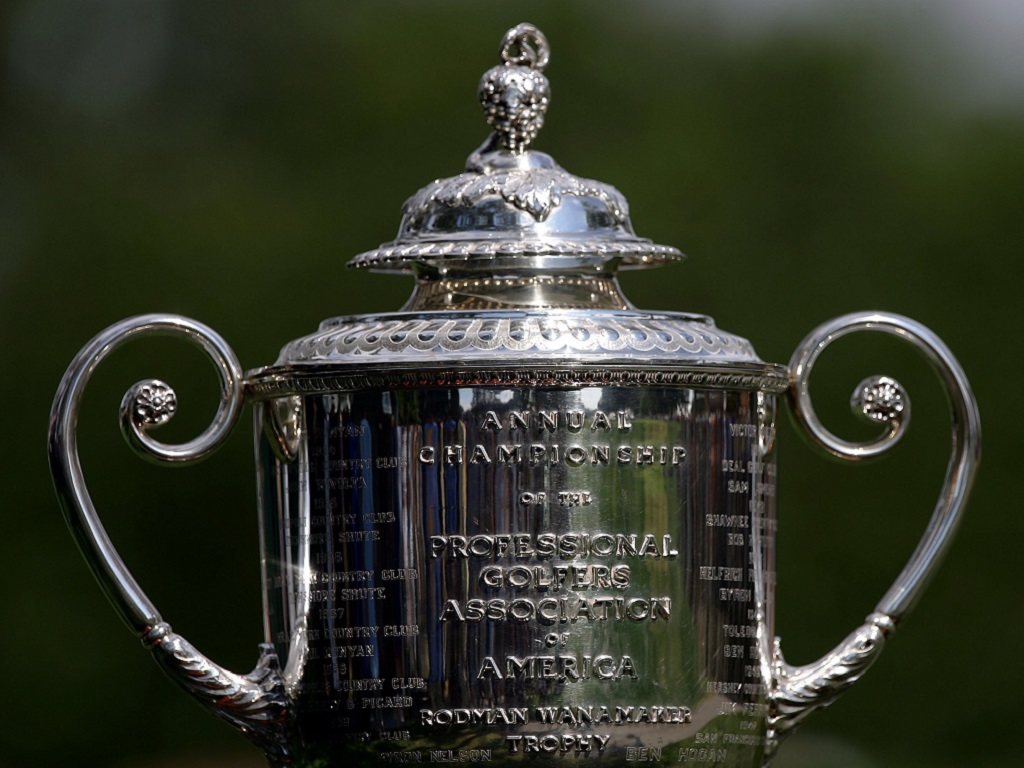
Aronimink is not a storied club, but when Donald Ross himself proclaimed it to be as good as he can design and build, one had to take notice. Jay Sigel was the pre-eminent male amateur golfer from the mid-1970s to the mid-1990s. He might have called any number of Philadelphia clubs home, but he chose Aronimink. It served him well. Gary Player won a PGA Championship here in 1962, and was followed by the 1993 winner … nobody. Aronimink gave that event away to Inverness, for reasons of which it is certainly not proud. So be it. We had to wait sixty-four years for the PGA to return to Newtown Square, but here we are. Aronimink has been neo-restored by Gil Hanse and team, to return Ross features with an eye toward defense against the dark arts, errrr, high-tech equipment.
Day one saw Rory McIlroy and Bryson DeChambeau dig big holes, to the tune of plus-four and plus-six, respectively. Since the first-round lead will be minus-three at worst, many shots will need to be made up for the power couple to reach contention. By nightfall, seven golfers held the day-one lead at three-under par 67. Shots and sticks caught our attention, and we are proud to present Five Things We Learned on Tech Thursday at the 2026 PGA Championship. Thanks to InsideTourGolfer, Today’s Golfer, and GolfWRX for initial equipment research.
First, meet Min Woo Lee
Min Woo Lee, aka Dr. Chipinski, has once again thrust himself into the conversation of Can he, will he, when will he? Lee has so much talent, wins not nearly as often as we believe that he should, and has no major near-misses (much less titles) on his wiki. The young Aussie is getting older and wiser, but is he able to avoid the scarring that holds the older and wiser back from breaking through? Philadelphia offers another opportunity. Min Woo signed for five birdies and two bogeys on day one, and grabbed a share of the opening-day lead at Aronimink. Winners transcend history and the moment, and Lee will need that sort of ascent to lift the Wannamaker on Sunday.
Second, meet Aldrich Potgeiter
The young South African golfer can rip driver with the best of them. Aronimink tips out at nearly 7400 yards, but beyond the fairway bunkers that ensnare only the mortals, Potgeiter can take his chances with wedge from the rough. On Thursday, he spent plenty of time in the spinach. Like Popeye, he used his muscles to gouge and thrash and dig his way out. Six birdies against three bogeys on the card brought AP in a three deep.
Third, meet Martin Kaymer
Not a major event takes place without a where’s he been throwback moment. We know that Martin Kaymer left the PGA and DP World tours for LIV golf, but the two-time (US Open and PGA) major winner has a lifetime exemption into at least one major event, and he seizes the opportunity each May. Kaymer joined the six-seven brigade with four birdies and a solitary bogey on day one. Kaymer was never a long hitter, and the years are kind to no golfer. The German champion will need to uncork every bottle of guile and strategy in his cabinet to remain in contention. For today, though, he occupies a rung on the ladder of Tour Tech.
Fourth, meet Scottie Scheffler
Let’s see, he’s the defending champion at the PGA, and he found his way back to the top tier with five birdies against two bogeys. To be a favorite and then play up to that stature and expectation is quite difficult. Just ask Rory, Bryson, and some of the other pre-tournament heartthrobs. Scheffler’s game is complete, and to knock him off the OWGR #1 pedestal, one needs to defeat him at the majors. Aronimink is the sort of course that fits Scheffler’s game. Better yet, it unfits the game of many of his challengers. Don’t expect Scheffler to go away anytime soon. Come Sunday, he’ll be around.
Fifth, meet Stephan Jaeger
Clocking in for the unheralded players shift are Ryo Hisatsune and Stephan Jaeger. Hisatsune logged seven birdies on day one, but gave most of them back with four bogeys. Still, he’s tied at the top for a time. Jaeger pitched five birdies against two bogeys, including a run of three consecutive, from holes four through six. Odds are that one of the two will hang around through 36 holes. Odds also suggest that both will be gone by Saturday evening. Still, the PGA Championship has historically been the major most likely to be won by an under-known. Both Hisatsune and Jaeger feature on that list, so good luck, lads!

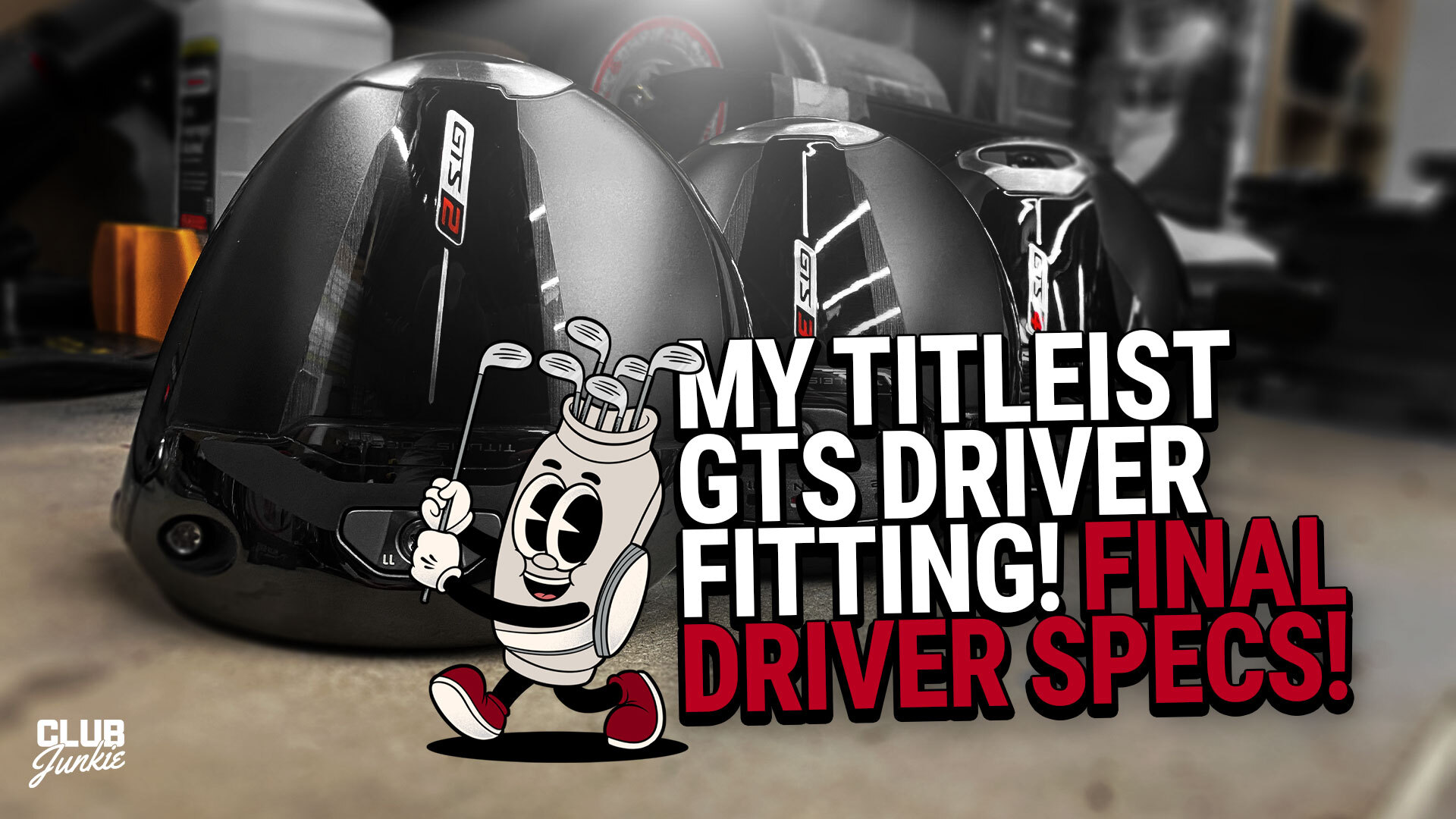
On this episode of the Club Junkie Podcast, I head to the Titleist Performance Institute for a full driver fitting with the new Titleist GTS lineup. We dive into the fitting process, talk about what made the biggest difference in performance, and break down how the different GTS heads and shaft combinations compare on the launch monitor. If you are thinking about a new driver setup for this season, there is a lot to take away from this one.
I also get into Brooks Koepka and the gear setup he brought to the PGA Championship, including the putters that caught my eye during the week. There are some interesting equipment trends showing up at the highest level right now and we break down what stands out.
To wrap things up, I talk about reshafting a few wedges, what I learned during the process, and swapping an adaptor onto a new shaft for another build project in the shop. A gear packed episode from start to finish for anyone who loves golf equipment and club building.
Follow Club Junkie everywhere:
Instagram: https://www.instagram.com/clubjunkiepod/
X: https://x.com/ClubJunkiePod
TikTok: https://www.tiktok.com/@clubjunkiepod
Threads: https://www.threads.com/@clubjunkiepod
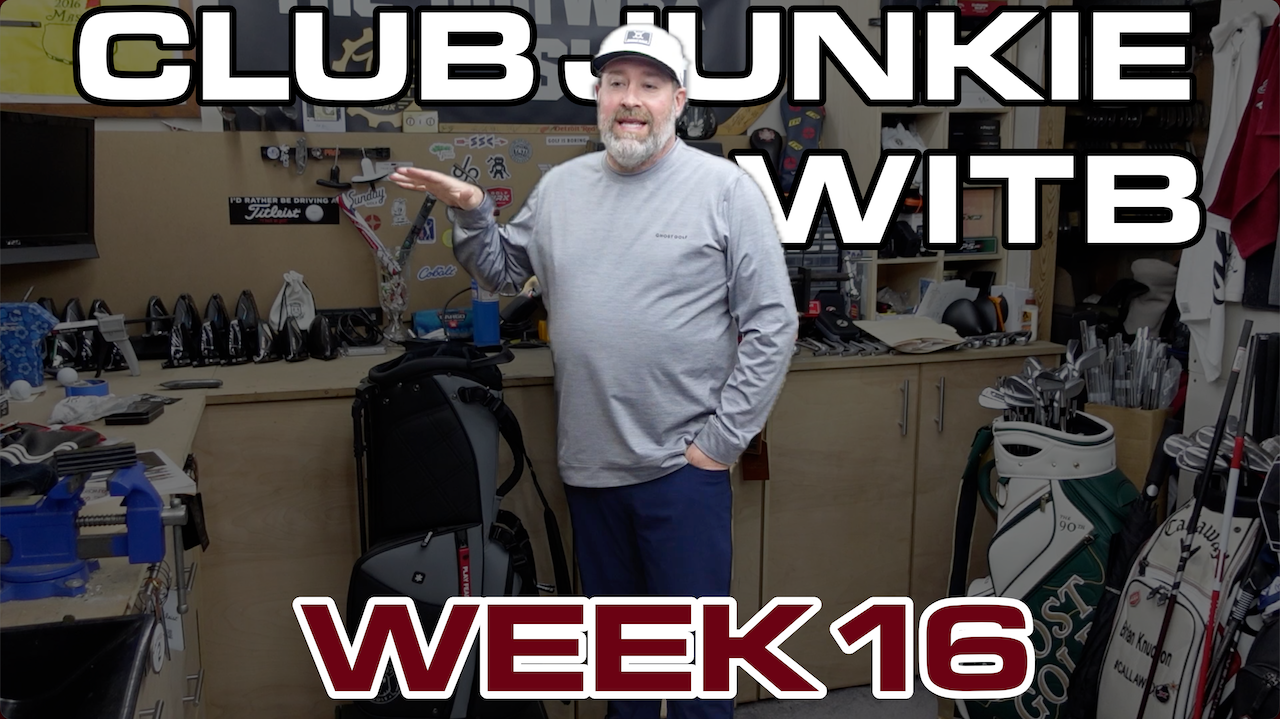
Excited for this week’s WITB as we get to add the new Titleist GTS woods to the bag! I was fit at Titleist’s TPI facility in Oceanside California a few weeks ago and my new clubs just showed up. I am also adding a cool set of irons that I built last year some wild custom wedges into a new golf bag. Speaking of the bag I have a new Ghost Anyday Black Ops stand bag that I will be using on my Motocaddy Remote M7 electric cart.
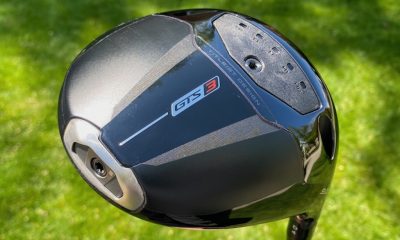
Driver: Titleist GTS3 (11 degrees @ 10.25)
Shaft: Fujikura Ventus Red 6s
3-wood: Titleist GT1 3Tour (14.5 degrees)
Shaft: Graphite Design Tour AD CQ-7s
5-wood: Titleist GTS (18 degrees)
Shaft: Fujikura Ventus Red 7s
9-wood: Titleist GT1 (24 degress)
Shaft: Fujikura Ventus Red 7s
Irons: Bettinardi CB24 (5-PW)
Shafts: KBS C-Taper Lite 110 stiff
Wedge: TaylorMade MG5 (50-09 SB)
Shaft: Mitsubishi MMT 125 Stiff
Wedge: TaylorMade MG5 (56-12 SB)
Shaft: Mitsubishi MMT 125 Stiff
Wedge: TaylorMade MG5 (60-08 LB)
Shaft: Mitsubishi MMT 125 Stiff
Putter: Dan Carraher ZT Proto
Ball: Callaway Chrome Tour
Bag: Ghost Anyday Black Ops Stand Bag

Justin Rose WITB 2026 (April): Full WITB breakdown with new McLaren irons

RBC Heritage Tour Report: More minis, course-specific setups, Spider & GTS launches

What’s the story behind Webb Simpson’s custom-stamped irons?

Cadillac Championship Tour Report: Spieth’s sizable changes, McLaren Golf launches, and more

Kristoffer Reitan’s winning WITB: 2026 Truist Championship

Cameron Young’s winning WITB: 2026 Cadillac Championship

Aaron Rai’s winning WITB: 2026 PGA Championship

Nelly Korda WITB 2026 (April)

Justin Rose on the switch to McLaren Golf, learnings from previous equipment moves

Photos from the 2026 PGA Championship


Patrick Reed WITB 2026 (May)
Driver: Titleist GT3 (9 degrees) Buy here. Shaft: Aldila Rogue Silver 130 M.S.I. 70 TX 3-wood: TaylorMade Qi35 (15 degrees)...

Aaron Rai’s winning WITB: 2026 PGA Championship
Driver: TaylorMade M6 (9 degrees) Shaft: Aldilda Synergy Blue 70 TX 3-wood: TaylorMade Qi10 (15 degrees) Shaft: Fujikura Ventus Blue...


Michael Block WITB 2026 (May)
Driver: TaylorMade Qi4D (9 degrees) Shaft: Fujikura Ventus Black VeloCore+ 5 X 3-wood: TaylorMade Qi4D (15 degrees @14.25) Shaft: Mitsubishi...


Bryson DeChambeau WITB 2026 (May)
Driver: Krank Formula Fire Pro (6 degrees) Shaft: Project X Prototype 3-wood: Krank Formula Fire (10 degrees) Shaft: LA Golf BAD...
-
 Whats in the Bag3 weeks ago
Kristoffer Reitan’s winning WITB: 2026 Truist Championship
-
Whats in the Bag2 weeks ago
Aaron Rai’s winning WITB: 2026 PGA Championship
-
 Tour Photo Galleries3 weeks ago
Photos from the 2026 PGA Championship
-
 Equipment2 weeks ago
GolfWRX Launch Report: 2026 Titleist GTS drivers
-

 Equipment2 weeks ago
PGA Championship Tour Report: Fitzpatrick, Koepka among big-name putter switches for Aronimink
-

 News2 weeks ago
WITB Time Machine: Phil Mickelson’s winning WITB, 2021 PGA Championship
-

 Equipment2 weeks ago
Which of Tiger’s major winning irons are your favorite? – GolfWRXers discuss
-

 Equipment2 weeks ago
Lead Tape Report: Adjusting the swingweight of the Wanamaker Trophy


joe
Mar 27, 2019 at 7:02 pm
If a player like Jordan Spieth that has an average swing speed of 114 mph he won’t hit it as far so how do you create a ball that is fair for everyone?
huh? what?
Greg V
Mar 26, 2019 at 12:36 pm
More and more Americans have come to believe in climate change caused by greenhouse gasses, and yet we continue to buy more and more trucks (unnecessarily) and larger SUVs. It would be better for the environment to go back to smaller, more gas efficient cars. But few people will do that when everyone else is driving a monster mobile.
It is the same in golf. But if we all played a shorter ball and less COR efficient drivers, it would be better for the footprint of the game. And for those who feel that the short hitting recreational golfer would suffer – we can move up a set or two of tees.
MT
Mar 26, 2019 at 10:35 am
Funny that Gil Hanse tried this on 12 at TPC Boston (added a centerline bunker in the landing area to add some strategy to the tee shot) and the pros whined so much they got rid of the bunker the following year.
James Miller
Mar 26, 2019 at 9:37 am
I agree with the author. If distance were “making a mockery” of the courses, we’d see much lower scores winning tournaments. Really, the scores are no lower than they were 25 years ago. Yes, the courses are longer, but as long as there are tees we hacks can play at 6200 yards, I see no problem.
And another thing, when you’re talking about distance, the proper word is farther, not further.
Richard Douglas
Mar 26, 2019 at 3:15 am
Go ahead. Dial back the ball. Make it spin more like a Titleist (wound, liquid center, balata cover). That’s fine. It will hold back the professionals.
Oh, and they’ll be easy to find. The woods will be filled with them, launched on a slicing trajectory by every hacker around.
Team sports are not plagued by this problem. A football field has been 100 yards (sorry, Canada) for all time. Even baseball parks are essentially the same–a little longer down the lines and a little shorter in the alleys and in center. Even basketball–with almost every NBA player being able to dunk–has been able to keep the rim height and court size the same.
But individual sports are another matter. Tennis had to put a limit on racquet size. Swimming banned full-body suits that acted like a shark’s skin. Bowling has long wrestled with limits on making the ball hook, from the hardness of the shell to total ball weight and weight distribution. (It lost. Throwing strikes is so common and so boring it killed the sport.) But golf?
Golf used to be able to keep the ball tamed. This was largely due to limited technology. You could hit a distance ball, but it was hard as a rock and didn’t perform on or around the greens. Or you could hit a spinny balata. Not much in between. Spin or distance was the dilemma. Top Flite began ending that with the Strata and Titleist shut it down with the ProV1.
When titanium made other-worldly things possible, the USGA stepped in and limited COR and clubhead size and club length. It can certainly revisit the ball.
Tiger Noods
Mar 25, 2019 at 9:27 pm
Everyone wants to watch pros make a mockery of courses. That’s the point; they’re pros.
It’s like saying “we don’t want race cars to go that fast because most people don’t drive so fast”.
Don’t act like there aren’t already ball regulations. If we all wait 5 years, you’ll look back and see that it’s maxed out. Athletes figured out that bomb and gouge works. Now if you want to be more penal at 300yds, then you’ll remove the advantage.
Change the lawnmower settings, people.
James
Mar 25, 2019 at 7:19 pm
here’s the funny thing about driving distance, it varies. From last year to this year the avg drive has actually decreased slightly
Gerard
Mar 25, 2019 at 6:40 pm
The average carry on tour hasn’t went up a ton in the past 20 years, maybe 5-10 yards. The problem is every PGA/USGA/R&A tournament is played on fast firm courses due to better maintenance practices. Everything is sand based and drains well. They schedule events around the country based on weather. When things are warm and dry. They don’t play in the midwest until late June. Courses need to be set up without being firm and fast(fairways). Amateurs play on normal courses in normal conditions not dry and stressed out. We get average 10-15 yards of roll.With average roll on tour when hitting a fairway being between 30-40+ yards it makes a 7300 yard course play like a 6800 yard course. Trackman data shows PGA tour average carry at 275yds but average total driving distance around 304. The USGA are idiots if they try to dial back the ball. It is simply the way courses are set up that is allowing the guys on tour to stretch their drives not any equipment. The USGA is to blame for the distance debate because how they set up courses not equipment companies.
Terry, this is not a Game
Mar 25, 2019 at 4:27 pm
Adjust course setups. Thicker rough, narrower landing areas, etc. But why not have all member tours of the IGF have different equipment? The ball should not change as it will affect the amateur game and that’s not good, but how about all card carrying pros use blades? How about their drivers/woods becoming very unforgiving? MLB/MILB uses wooden bats across the board. When a college kid turns pro in baseball, he knows what changes and adjustments he’s going to have to make in order to play at the next level.
Guys will ALWAYS figure out how to bomb it. Let’s just see mishits become punishing.
Nathan
Mar 25, 2019 at 3:35 pm
280 carry? Try 320 on the fly! Even Jordan can carry it 300.
Gerard
Mar 25, 2019 at 6:44 pm
Speith’s average carry is 279.6
Ccshop
Mar 25, 2019 at 3:31 pm
USGA trying to regulate golf balls based on Tour player numbers is only going to hurt the amateur level. Leave the ball alone. This won’t help grow the game.
Greg V
Mar 25, 2019 at 2:29 pm
Tom,
The USGA and R&A already limit the distance the ball can go through an initial velocity limit, and limits on the size and COR of the driver.
What’s wrong with tweaking the limits so that the elite players can go back to playing 6,500 yard courses instead of 7,500 yard courses?
Josh L.
Mar 25, 2019 at 3:24 pm
Limiting ball flight penalizes everyone, what about the guy who only drives it 230? If he loses 10 yards because of a roll back on balls thats huge for him, especially when the rollback is meant for the top 1% of players who can actually overpower courses.
Jagon D.
Mar 25, 2019 at 2:27 pm
While I also think that the ball should be rolled back, I do tend to agree that once it is where it is — we can only limit it from this point. I have no problem with physically gifted athletes launching shots, but it’s the course set-ups that have me scratching my head.
If pros want fast surfaces around the green complexes, that’s fine, but carrying a driver 285 that rolls out to 330, because the fairway is essentially an airport landing strip with grass shavings, is ridiculous.
Bring in the fairways, actually put some water on them, make the rough penal, and we’re good to go. However, you can’t punish guys like DJ, Cameron Champ, and the like, outright — just because they’re beasts in terms of length.
Jim
Mar 25, 2019 at 3:55 pm
Jagon states what actually needs to be done. Fairway grass needs to be longer, less roll, softer conditions and have fairways narrow after 280 or create actual strategic holes. The Valspar showed that when they actually play a tough narrow golf course, the winning score doesn’t hit 10 under.
A. Commoner
Mar 27, 2019 at 10:19 am
Good points, jag. I only disagree with ‘rolling back’ anything or keeping all ‘as is’. When talking applied technology, we’re either all-in or all-out. The potential problems underneath Pandora’s box lid would be migraine magnified with a pick and choose approach.
DB
Mar 25, 2019 at 2:14 pm
You’re suggesting common sense ?!?