
Opinion & Analysis
Slow down!

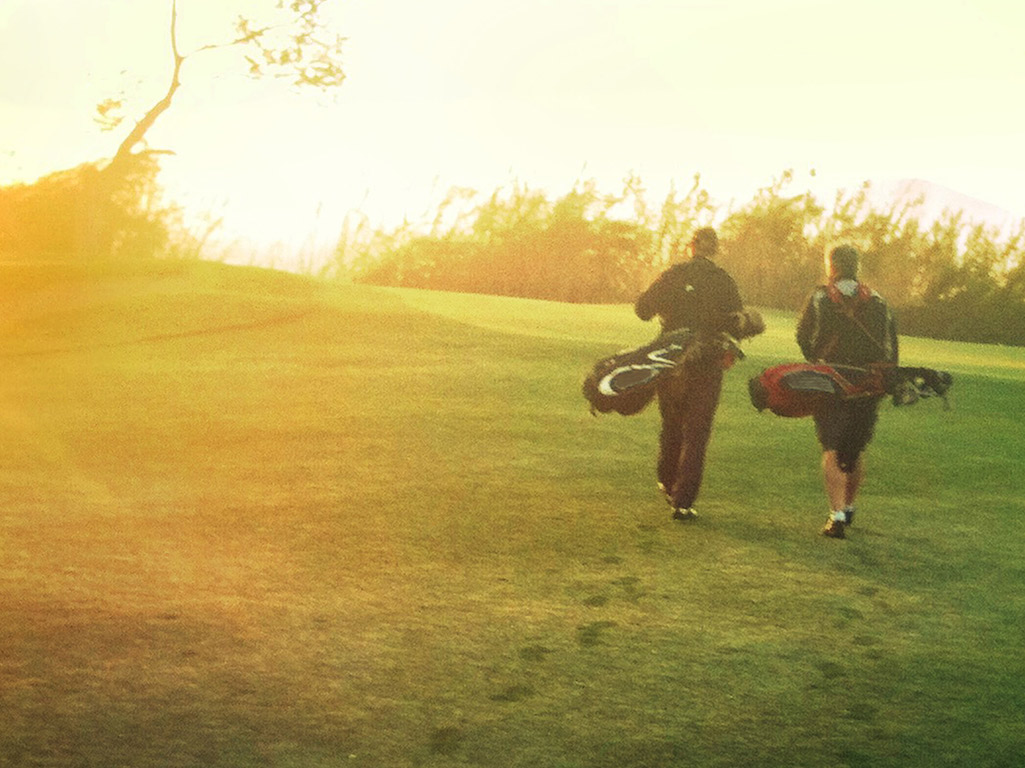
“All truly great thoughts are conceived by walking.” – Friedrich Nietzsche
You’d have to live under a rock, or maybe in another country, to not have noticed how in vogue it is to rant about the ills of slow play these days, and how it’s absolutely killing our industry. With feuds between players on the PGA Tour, campaigns like the USGA’s “While We’re Young,” “Play 9,” and this year’s wholesale changes to the game’s centuries-old rules just to combat it, the casual observer could easily get the impression that modern golf has somehow evolved into a proverbial death march. Not so.
The truth is, golf has always been a slow game, and these reactions are nothing more than predictable responses to the perceived time famine of today’s constantly connected, fast-than-ever-paced lifestyles. That, and the fear amongst those in positions of authority that we may actually someday soon stop setting aside the necessary time to play this interminably slow game. But could it be that the pace of the game is perfectly appropriate? And are those trying to get it over with as quickly as possible, possibly missing the entire point? And might the real answer to our current predicament be that we all need to take a collective breath, chill out, and actually SLOW DOWN? Now I’m sure there are those out there who think I’ve gone over to the dark side for even suggesting that slow play isn’t on par with a communicable disease, but walk with me a moment, and I think you might arrive at the end of your next round with a slightly different perspective.
Despite golf’s governing bodies’ best efforts, the average round on a regulation par-72 course still clocks in around four hours, even though we actually only engage in the playing part of the game for a mere 15 to 20 minutes of that time. The rest of that round is in-between time, time spent getting from Point A to Point B over that near five-mile landscape, looking for errant shots, deliberating over the merits of a 7-Iron or a 6-Iron (when most of us should probably hit a 5-hybrid), doing business deals, rekindling dormant friendships, arguing about whether the Democrats or the Republicans are to blame for the mess in Washington, or discussing the health of aging parents whose futures we must now decide upon in one of life’s most tragic role reversals. And in today’s busy life, a round of golf is often one of the few times and places we actually slow down long enough to have these conversations without an intervening digital device of some sort.
Now, the majority of those conversations in this country are had while playing in golf carts. And as a result, a great many of us have all but forgotten what it’s like to walk a round, if we ever even knew. The proliferation of golf carts that began in the 1950’s, and our increasing desire for a faster round of golf, was not only the death knell for caddies, but seemingly for the experience of walking a round of golf in general. But instead of making the game faster, those carts are often only fueling our misperception of how slow the game is. Sure, they get us from that Point A to Point B faster, but that’s created a hurry-up-and-wait type pace that for centuries didn’t exist. And so it should come as no surprise that our game’s caretakers are doing all they can to speed up the rest of the game, even going so far as to change its rules and traditions in desperate hopes of lopping off a few seconds here and there. But have we even considered that it might instead be high time the pace of our busy lifestyles adapts to the game, rather than trying to force the pace of the game adapt to our lifestyles?
The overwhelming preference we have for riding in carts in the U.S. isn’t the case everywhere, though. A decade ago, I spent some time in England and Scotland, playing a few rounds with locals, on courses where it is still far more common to walk, than ride in buggies, as they called them, and it quickly became apparent that walking said as much about how they valued the experience, and their time on the course, as it did their level of physical conditioning. We played in roughly the same amount of time we do here (a little less actually), and when we got to our balls, amazingly, with very few exceptions, the group in front was nowhere to be seen. Is it any wonder they claim not to have near the same issues with slow play over there that we do here?
Now, I definitely don’t want to bad-mouth golf carts altogether, because they allow untold millions to enjoy this great game who would physically be unable to do so otherwise. But at least consider for a moment the physical effects of walking. Golfers who walk nine holes burn an average of 721 calories, while their buggy-bound counterparts weigh in at a mere 411. Walking strengthens the heart, helps the lungs work more efficiently, boosts both the immune and nervous systems, and even helps cognitive function. One study from a Swedish medical university done in 2008 with a sample size of over 300,000 golfers even found the life expectancy of walking golfers to be five years longer than their cart-riding counterparts. So, the sad fact is, if we all slowed down, and walked the course a bit more, we likely wouldn’t be buggy-bound quite so early in our golfing careers. And those careers would certainly last quite a bit longer.
Aside from the physical, walking offers stress-relieving mental and spiritual benefits that might not only improve your score, but how you experience your time playing. With practices like mindfulness and meditation becoming almost as in vogue as ranting about slow play, I’m surprised walking a round of golf isn’t more prescribed, and more practiced, by more gurus everywhere. It provides a much-needed break from that aforementioned fast-paced and stress-filled lifestyle when you slow down, breath deep, and relax, while looking at a familiar course with fresh eyes. It brings your mind, body, and spirit into balance, enlivens your senses, making colors more vibrant and the sounds and smells more alive. You smell the fresh-cut grass, hear the birds more clearly, the rustle of the leaves on the trees, and the crunch of the fallen ones under foot. The babble of the brook, that of your playing partners, and even that of that little voice in your head can sound different while walking, and you remember them all in much greater clarity.
I can recall elements of the courses I walked in England those many years ago, and some of the conversations I had then, in far greater detail than many of the ones I have played much more recently while riding. It reminds me of a passage from the immortal book Golf in the Kingdom, by Michael Murphy, where the Scottish Golf Pro Shivas Irons claimed, “The gemme was meant for walkin’,” upon describing a former club member that it was said for whom the walkin’ sometimes got so good he forgot to even hit his shots, and that a walk around the course was as good for the soul as a day spent in church. Hopefully this is at least some solace to those of us who’ve skipped more than one Sunday service for the lure of the links.
In the end, though, I want you to play golf in whatever way allows you to enjoy the experience most. And if walking’s not possible, or practical, I hope you at least slow down enough to take a hard look at why you’re playing in the first place, and where you’re in such a hurry to get to. Isn’t being on the golf course, after all, one of those well-earned rewards that we all work so hard for? Have the demands of our modern lifestyle become so great that we can’t at least mentally step off the merry-go-round during those times we’ve set aside to do just that? And has the thought of walking, or at least stopping to smell the roses (or fresh cut grass) become so cliché that we merely nod and pay homage to them as the quaint notions of a time long past? I hope not, for as Shivas Irons ultimately said, “If ye’ can enjoy the walkin’, ye can probably enjoy the other times in life when ye’re in between. And that’s most o’ the time’ wouldn’t ye say?”
In the spirit of that, the following is my adaptation of a little poem titled “Slow Dance,” by psychologist David L. Weatherford. I call it “Slow Down.” And for your sake, I hope it doesn’t resonate too loudly.
Do you race through each round, in your cart on the fly? Ask a partner how are you, but not hear their reply?
You better slow down, don’t play so fast. Time is short, this round won’t last.
Ever followed your ball’s erratic flight? Or do you just look away, disgusted at the sight?
When the round is done, do you lie awake in bed, with only bad shots, running through your head?
You’d better slow down, don’t play so fast. Time is short, this round won’t last.
Ever told your child, I’m late for my game, we’ll play tomorrow? And in your haste, not see their sorrow?
Ever lost touch, let your old foursome die? Cause you couldn’t find the time, and now you wonder why?
You’d better slow down, don’t play so fast. Time is short, this round won’t last.
When you try to play fast, just to get somewhere, you’ll miss most of the fun of getting there.
When you worry and hurry, through your round each day, it’s like an un-opened gift thrown away.
This game is not a race, so do take it slower, and figure out why you’re out there, before the round is over.
And Slow Down… Don’t play so fast… Our time is short… And this round won’t last…


Opinion & Analysis
Brandel Chamblee PGA Championship Q&A: Rose’s huge McLaren risk, distracted LIV pros and why Aronimink suits the bombers


PGA Championship week is here, and Brandel Chamblee did not hold back in our latest discussion ahead of the season’s second major.
In our 2026 PGA Championship Q&A, golf’s leading analyst made the case that PIF pulling LIV’s funding has left its players competing in a state of confusion, called Justin Rose’s mid-season equipment switch a huge risk at 45, and explained why Aronimink will be a bombers’ delight this week.
Check out the full Q&A below.
Gianni: With the PIF confirming that they’re pulling funding from LIV at the end of the season, what impact do you expect that to have on the LIV players competing at the PGA Championship?
Brandel: I would imagine that they have all been thrown into a state of confusion, and will be distracted, not knowing where they are going to play next year and not knowing exactly their road back to either the DP World Tour or the PGA Tour. Or in Rahm’s case, being tied to a sinking ship for the next few years, likely playing for pennies on the dollar in events that no one cares about or watches.
I doubt this would put him in the best frame of mind to compete at his highest level. Keeping in mind, however, that majors are the only time that LIV disciples get to play in events that matter, so never disregard the motivation they have to prove to the world they are still relevant.
Gianni: Justin Rose switched to McLaren Golf equipment mid-season while playing some of the best golf of his career. What do you make of the change?
Brandel: I don’t really know what to make of Rose switching equipment. It seems a huge risk on his part, even though it is likely, in my opinion, that the clubs he’s playing are similar, if not the exact grinds, to what he was playing previously, with a McLaren stamp on them.
Having said that, at best, it is a distraction when he seemed to be as dialed in with his game as any 45-year-old could be and trending in the majors to perhaps do something that would definitely put him in the Hall of Fame. At worst, given the possibility that these clubs aren’t just duplicates of his old set stamped with McLaren on them, he’s made an equipment change that would take time, and 45-year-old athletes don’t have the time to do such things.
Gianni: Aronimink has only hosted a handful of professional events since it hosted the 1962 PGA Championship. What kind of test does it present, and does a course with less recent major championship history tend to level the playing field?
Brandel: Even though Aronimink has only hosted a handful of meaningful professional events, it has been fairly discerning in who can win there. When Keegan Bradley won the BMW Championship on the Donald Ross masterpiece in 2018, he was the 2nd best iron player on tour coming into that week. When Nick Watney won the AT&T at Aronimink in 2011, he was 2nd in strokes gained total coming into the week.
In 2020, Aronimink hosted the KPMG Championship, and Sei Young Kim won. On the LPGA that year, she was first in greens in regulation, putts per green in regulation, and scoring average on the way to being the LPGA player of the year. And then there is the 1962 PGA Championship won by Gary Player, who eventually became just one of a few players to win the career grand slam on the way to winning 9 majors. It is a formidable test, and if it’s not softened by rain, it will bring out the best in the upper echelons of the game.
Gianni: Is there a specific hole at Aronimink that you think will do the most to decide the winner?
Brandel: The hardest hole at Aronimink in each of the three tour events that have been played there since 2010 has been the long par-3 8th hole, with the par-4 10th being the second hardest, so most of the carnage will happen around the turn, but with the par-5 16th offering opportunities for bold plays and the tough closing holes at 17 and 18, the finish is likely to be frenetic.
Gianni: The PGA Championship has always sat in the shadow of the other majors. What does the ideal PGA Championship look like in your eyes, and what would it take for it to carve out its own identity?
Brandel: The PGA Championship, to whatever degree it suffers from the comparison to the other three majors, is still counted just as much when adding them up at the end of one’s career. Almost 1/3 of Nicklaus’ major wins were the five PGA Championships he won. Walter Hagen won 11 majors, five of which were PGA Championships.
Tiger Woods twice in his career won back-to-back PGA Championships, and those four majors count just as much as the other 11 he won. The PGA may not have the prestige of the other three, but it carries the same weight. Having said that, I preferred the identity that it had as the last major of the year.
Gianni: You nailed your Masters picks. Rory won, Scottie finished solo second, and Morikawa surged to a tie for seventh. Who are your top 3 picks for the PGA Championship and why?
Brandel: I am not a huge fan of majors played on golf courses that have been shorn of most of the trees, although I understand some of the agronomic reasons for doing so and of course the ease with which it allows members to play after errant drives. However, at the highest level, it all but eliminates any strategy off the tee and turns professional golf into an even bigger slugfest. That means that it will likely be a bomber’s delight this week, but fortunately, Scottie Scheffler is long enough to play that game and straight enough to play it better than anyone else.
The major championships give us very few surprises anymore, going back to the beginning of 2012, so the last 57 majors played, the average world rank of the winners has been better than 15th in the world. So look at the highest ranked and longest drivers who are on form coming into the PGA Championship who also have great short games as the surrounds at Aronimink are very challenging. That’s Scottie Scheffler by a mile and then McIlroy and Cameron Young with a far bigger nod towards DeChambeau than I gave him at the Masters.


In this episode of the Club Junkie Podcast, we dive into one of the most interesting flatstick releases of the year with a full review of the new TaylorMade SYSTM 2 putters. After spending time on the greens, I break down what makes this design stand out, where it performs, and why it has me completely torn between loving it and fighting it. If you are into feel, alignment, and consistency, this is one you will want to hear about.
We also take a look at some of the putters in play on the PGA Tour last week. From familiar favorites to a few surprising setups, there is always something to learn from what the best players in the world are rolling with under pressure.
To wrap things up, I walk through the process of building a set of JP Golf Prime irons paired with Baddazz Gold Series shafts. From component selection to performance goals, this is a deep dive into what goes into creating a unique custom set and why this combo has been so intriguing.


This year my 50th birthday. Gosh, where has the time gone?
As a teenager in rural Missouri, some of my junior high and high school years felt interminable. Graduation seemed light years away. But the older I get, the faster life seems to fly by.
I’m also increasingly aware of my mortality. My dad died recently. Earlier this year, a friend and fellow PGA of America professional and I were texting about our next catch-up. The next message I received was news of his unexpected passing at 48. Shortly after, a woman I dated in college succumbed to cancer at 51.
Certainly, one can share perspective at any age. Seniors help freshmen, veterans guide rookies. But reaching this milestone feels like as good a time as any to do one of those “what would I tell my younger self?” articles.
I’ve had a uniquely varied career in golf. I started as a 27-year-old, average-length-hitting, 14-handicap computer engineer and somehow managed to turn pro before running out of money, constantly bootstrapping my way forward. I’ve won qualifiers and set venue records in the World Long Drive Championships, finished fifth at the Speedgolf World Championships, coached all skill levels as a PGA of America professional, built industry-leading swing speed training programs for Swing Man Golf, helped advance the single-length iron market with Sterling Irons®, caddied on the PGA TOUR and PGA TOUR Champions, and played about 300 courses across 32 countries.
It’s been a ride, and I’ve gone both deep and wide.
So while I can consult and advise from a lot of angles, let me keep it to a few things I’d tell the average golfer who wants to improve.
1. Think About What You Want
Everyone has their own reason for picking up a golf club.
Oddly, as a professional athlete, I’m not internally driven by competition. That can be challenging, as the industry currently prioritizes and incentivizes competition over the love of the game.
For me, I love walking and being outdoors. Nature helps balance my energy. I prefer courses that are integrated into the natural beauty of their surroundings. I’m comfortable practicing alone. I’m a deep thinker, and I genuinely enjoy investigating the game, using data and intuition to unearth unique, often innovative insights. I’m fortunate to be strong and athletic, so I appreciate the chance to engage with my abilities. Traveling feels adventurous. I could go on.
You don’t have to overthink it like I do. For you, it might be as simple as hitting balls to escape work, hanging out with friends, and playing loosely with the rules and the score.
The point is to give yourself permission to play for your own reasons, and let that be enough.
But if improvement is your goal, thinking about your destination—and when you want to get there—is important, because it dictates the steps you need to take. When I set out to go from a 14-handicap to the PGA TOUR as quickly as possible, the steps I needed were very different from those of a working golfer trying to break 90 in six months. That’s also different from someone who just wants a few peaceful hours outside each week, away from work or family.
None of these goals are better than the others, but each requires a different plan that you can work backward from.
2. There Are Lots of Things That Can Work
One of the challenges of golf is that, although there are rules for playing, there aren’t clear, industry-wide standards for how to best play the game. There’s a lot of gray area.
You might hear a top coach or trainer insist that a certain move is the best way to swing or train. Then you dig a bit deeper and, much to your confusion and frustration, another respected coach or trainer says something completely different. I don’t think anyone is trying to confuse you—at least I hope not. It’s just where the industry is right now.
You have to be careful with advice from tournament pros, too. They might be great at scoring, but they’re also human and sometimes just as susceptible as amateurs to believing things that don’t really move the needle. Tour players might describe what they feel, but that’s not always what they’re actually doing when assessed with technology.
I recently ran a test on my YouTube channel (which connects to my GolfWRX article “How to use your hands in the golf swing for power and accuracy”), and, interestingly, two of the most commonly taught hand actions produced the worst results in the test.
Coaches can certainly help. If you find someone you connect with to help navigate, that’s great. But there are many ways to get the ball in the hole. In the current landscape, you may need to seek multiple opinions, think critically, and use your own intuition to discern what seems true and whose advice resonates with you.
I’d recommend seeking someone who is open-minded and always learning, because things constantly change. Absolutes like “correct” or “proper” should raise a red flag. AI can be useful, but it tends to confidently repeat popular advice, so proceed with caution.
3. Get Custom Fit
If you’re serious about becoming a better player, getting custom fit is hugely important. There’s no sense fighting your equipment if you don’t have to. Most better players get fit these days and, if they don’t, they’re usually skilled enough to work around clubs that aren’t ideal.
If you plan to play for a long time, it’s worth spending a little more upfront to get something that truly fits you and your game, rather than continually buying and discarding equipment.
Equipment rules haven’t really changed significantly since the early 2000s. To stay in business, manufacturers keep pushing those limits. If you pull a bunch of clubs and balls off the rack and test them, you’ll find differences. I’ve tested two new drivers and seen a 30-yard total distance gap. Usually, the issue isn’t bad equipment; it’s that the combination of components simply isn’t the best fit.
It’s like wearing a new pair of floppy clown shoes. Sure, they’re shoes—but you won’t sprint your best in them compared to track shoes that fit perfectly.
Be wary of what’s called custom fitting, too. Sometimes the term is used as a marketing strategy rather than an actual fitting. In some retail settings, fitters may be incentivized to steer you toward higher-priced components. That doesn’t automatically mean it’s not the best fit, but you should be aware of potential biases.
I learned a version of this lesson outside of golf. Years ago, I bought a tennis racquet at a big box store from a seemingly knowledgeable employee who thought it would suit me best. The racquet gave me tennis elbow, and I spent months recovering with rest and acupuncture. The next season, I invested more time and money to find what actually fit me, and I walked away with something amazing that I still play with years later.
So if you’re going to get fit, be smart about it.
Find someone you believe has deep knowledge—possibly with certifications, but not necessarily. Make sure there’s a wide inventory across many brands. Check recent reviews for the individual fitter if possible. Make sure you trust that the fitter has your best interests at heart. If they’re wearing a hat or shirt with a specific brand’s logo, proceed with caution. Unless you specifically want a certain brand or look, be wary of upsells, especially if two options perform nearly the same.
Also, while golf is called a sport of integrity, there’s a thread of manipulation in the industry. I once drafted an equipment article for an industry magazine, structured just like one of their previous popular stories, with matching word count and great photos. The assistant editor loved it; it was useful to readers and required little work on his part. But the editor-in-chief nixed the story. When I asked why, I was told it was because I wasn’t an advertiser. It turned out the article I’d modeled mine after was a paid ad cleverly disguised as editorial content.
I really dislike games, clickbait, and fear-based manipulation. I hope this changes, but golfers deserve to know it exists.
4. Distance and Strategy Matter
There’s a real relationship between how far you hit the ball and your scoring average, even at the PGA TOUR level.
I experienced this early in my pro career. I started as a power hitter, swinging in the high 120s and breaking 200 mph ball speed with a stock driver.
Back then, some instructors advised swinging at 80%, so I tried slowing down for more accuracy. That worked fine on shorter, tighter courses. But on longer setups, I was coming into greens with too much club, and par 5s stopped being

RBC Heritage Tour Report: More minis, course-specific setups, Spider & GTS launches

Justin Rose WITB 2026 (April): Full WITB breakdown with new McLaren irons

Best fairway woods of 2026: The most versatile fairway woods + the most forgiving fairway woods

Gary Woodland’s winning WITB: 2026 Texas Children’s Houston Open

What’s the story behind Webb Simpson’s custom-stamped irons?

Cadillac Championship Tour Report: Spieth’s sizable changes, McLaren Golf launches, and more

The 24 players who can win the Masters

Rory McIlroy’s winning WITB: 2026 Masters

Kristoffer Reitan’s winning WITB: 2026 Truist Championship

J.J. Spaun’s winning WITB: 2026 Valero Texas Open


Alex Fitzpatrick WITB 2026 (May)
Driver: Ping G440 LST (9 degrees) Shaft: Fujikura Ventus Black 6 X 3-wood: TaylorMade Qi4D (15 degrees) Shaft: Fujikura Ventus...

Kristoffer Reitan’s winning WITB: 2026 Truist Championship
Driver: Ping G440 Max (9 degrees) Shaft: Mitsubishi Tensei 1K White 60 TX 3-wood: Ping G440 Max (15 degrees) Shaft:...


WITB Time Machine: Rory McIlroy’s winning WITB, 2021 Truist Championship
Rory McIlroy’s victory at the 2021 Wells Fargo Championship 2021 (now the Truist Championship) marked a significant return to form,...


Collin Morikawa WITB 2026 (May)
Driver: TaylorMade Qi4D LS (8 degrees) Shaft: Mitsubishi Diamana D+ Limited 60 TX 3-wood: TaylorMade SIM Tour (14 degrees) Shaft:...
-
 Equipment2 weeks ago
Justin Rose WITB 2026 (April): Full WITB breakdown with new McLaren irons
-
 Equipment1 week ago
What’s the story behind Webb Simpson’s custom-stamped irons?
-
 Equipment2 weeks ago
Cadillac Championship Tour Report: Spieth’s sizable changes, McLaren Golf launches, and more
-
Whats in the Bag3 days ago
Kristoffer Reitan’s winning WITB: 2026 Truist Championship
-

 Whats in the Bag1 week ago
Cameron Young’s winning WITB: 2026 Cadillac Championship
-

 Whats in the Bag3 weeks ago
Nelly Korda WITB 2026 (April)
-

 Equipment2 weeks ago
Justin Rose on the switch to McLaren Golf, learnings from previous equipment moves
-

 Tour Photo Galleries2 weeks ago
Photos from the 2026 Cadillac Championship


Myron Miller
May 14, 2019 at 12:47 pm
Actually two different subjects in this article: Pace of Play and whether to walk or ride. And contrary to Mr. Dowd, they really are totally different topics. Whether to walk or not is a multi-faceted issue with many points that Mr. Dowd totally ignores. I walked for years until age and infirmities caught up with me. And I’ve played all over the country, walking and riding. Besides the physical condition of the walker, is the outdoor conditions which Mr. Dowd totally ignores. I’ve played in Nevada where the starting temperature in the morning was 108 degrees and when we finished in 4 hours was 115 degrees. Most people cannot walk the 7-9 miles up and down hills in that temperature. In fact, once it reaches about 90 something 99% of the walkers have issues walking. Streamsong in Florida has super prices in the summer and yet almost no one plays after about 11am and 1/5 the winter numbers play even early and most of those use a cart. Did he even consider this issue. And there are other issues about carts not mentioned.
But the bigger issue and what he is totally out to lunch on in my opinion is the pace of play issues. When I was younger, an average round was about 3-3.5 hours. Rarely did a round last more then 4.25. Today, an average round is closer to 4.5 hours and often is 5.5 to 6 hours. And he is suggesting (title even implies this), to ‘SLOW DOWN’. That means that the average round now will increase even more, 10% which isn’t much will put the average over 5+ hours with many reaching 7 hours. Adding warmup times and a little time for beer with friends after the round and we’re talking 8-10 hours for the round. That’s not just slow, it’s ridiculous. Try to play 36 or 54 holes at this pace. Often I’ve played 36-54 at resorts such as Bandon Dunes (4 courses) or Whistling straits (4 courses). I can enjoy the different environment on each course and marvel how the architect routed the course thru the landscape. 36 holes is easy to walk (normally) and you still should have time to see everything and talk about a lot of things. Couple of weeks ago, a friend (dedicated walker) and myself played 36 at Streamsong in Florida in little less than 9 hours, including time between rounds. And we actually thought we were a little too slow at times, but had time to marvel at some of the features.
For me personally, 5+ hour rounds are torture chambers because of my serious arthritis that stiffens up when I can’t keep moving. So slowing down would mean I (and many other handicapped people like myself) would have to give up the game which is what all the grow the game programs are trying to avoid. Just what we need someone advocating longer rounds and making the game slower than it is in many parts of the country.
One can easily walk and enjoy the scenery and still play in under 4.5 hours.
Tom54
May 13, 2019 at 4:36 pm
The way a lot of courses have their cart paths set up with having to park so far from the greens and not being able to get too close to them from let’s say 50 yds out, I think that there is still plenty of walking going on when playing. Plus the real bonus is not having to walk so far to some of the next tees. Even though I enjoy the exercise the cart is still the way to go for me. If it gets slow, you’ve got a place to rest. The real treat is of course being outdoors and enjoying the weather and the scenery. What a great game
Brian L
May 13, 2019 at 4:28 pm
I agree with the walking component of the game (and it’s meant to be walked vs being in a cart) but disagree walking is akin to slowing down. I’d actually say most the walkers where I play are much much faster than the cart guys. And in Ireland and Scotland they play in 3.5 hours walking or you get yelled at. I think the issue is cart guys tend to be less frequent golfers who have little awareness or appreciation for the flow of the course.
So please do walk, but don’t take it for a license to play in PGA style 5 hour rounds.
Timbo
May 13, 2019 at 4:10 pm
A big cause for slow play is golf courses setting up 7 – 8 minute tee times instead of at least 10. Then you wait alot, only to hear the marshal start yelling to hurry up.
SG
May 13, 2019 at 10:50 am
I love how people automatically associate “slow down” with slow play. And 31 shanks, yikes. The best investment in golf next to lessons is a good pair of shoes and a friendly foursome.
Thomas A
May 13, 2019 at 9:31 am
I do not golf at courses that don’t allow for walking (unless I’m at my dad’s place in Kississmee). I hate that layout, some holes are 1/4 mile from green to tee. Two weeks ago I walked 18 in 3:15, got rained on for 5 holes, ran into a high school foursome, they invited me to play with them. They were great kids with course edict and having fun. That never would have happened in a cart.
Ronald Montesano
May 13, 2019 at 7:54 am
Sorry you drew the short straw and had to write this article, from this perspective. The game is hemorrhaging participants like a wound to the neck, mainly due to slow play. Golf does need its racecar drivers. The choreography of the walk is critical to effecting a properly-timed round. Citing GITK is nice, except it doesn’t refer to golf courses filled to the brim with folks who play once a week and need to get around. If you live on a remote island off Scotland’s coast, let the gemme be fer walkin slew. If you live in an area of dense golfing population and still wish to play, play quickly. Good lord, I could go on and write a total counter article to all the premises in this one. Here’s a lifted glass to the day when we can walk slowly, play quickly, and anger no one.
Juan
May 13, 2019 at 4:22 am
Slow play is awfull. But it does not mean to run over the course. A comon player with friends in a foursome should play in less the 4 hours.
You dont have to look a putt fron the 4 sides and look from behaind every shot or take 4 swings.
Golf should be a good walk a play as you arrive to the ball.
I
May 13, 2019 at 12:33 am
But nobody is going to tell all the country clubs and the whole industry and all the lazy seniors to get rid of carts and start walking. You’re all too chicken to do it. Not only that, a majority of the golf courses being played on the Tour, including the women’s, are not designed for walking. The gaps between the holes are designed to put grandstands for the fans, and some of the gaps between the 9th and 10th holes are on completely different sides of the property that it takes 30 minutes just to get to the other hole, for any normal person to be able to walk it in less than 5 hours is impossible.
James
May 12, 2019 at 8:24 pm
As I have grown up in played competitive or I have been forced to play golf on foot rather than on a cart. I enjoy my rounds far more walking than in a cart. When I am tired I will only play 9, and extend my time on the course through shortgame practice around the greens on each hole. Although it would be overly critical to make a statement such as: “nobody has time to walk a round of golf”, I still feel that the majority of people I know have time to do so somewhere throughout the week.. it’s just up to the individual whether or not they choose to spend the extra amount of time on the course walking.
Walking a course is an opportunity to be in my own thoughts. It presents me an opportunity to deal with my stresses and the challenges life are giving me at the time. Walking allows me to spend QUALITY time with people I enjoy and even with people I discover to be great playing partners.
Walking also gives me that opportunity to get out and moving. When I cant get to the gym, I still feel great about myself to walking a round. I do believe though that large part to why some may not walk is because of their skill levels and how frustrating the game can be and I can admit that it would be dreadful to walk you around if you don’t have the skills necessary to at least find your ball and play a few holes stretches without taking 3 extra shots from the rough to get to the green.
Everyone has their perspectives. Im just fortunate to have the time that allows me to walk. I appreciate what it has done for me. I am very stubborn and avoid a cart even when offered. Ill use it if im preserving energy before a tournament or just heading out for some shortgame… but thats rare.
I appreciate this article. Fresh air for me and hits home. Walk when you can!
David
May 12, 2019 at 5:32 pm
wow. i haven’t read an article in years that resonated with me so much. i had a chance to discuss my aging parents issues with my regular foursome recently. no amount of professional help could have allowed me the space or time or opportunity to discuss such a topic while feeling supported and comforted in my surroundings. Golf gives u so much that we forget what a wonderful game it is. thankyou for the reminder.
Mike Dowd
May 13, 2019 at 2:49 pm
So glad to hear you agree David, and glad you enjoyed the article. I know carts are the reality of the game today, but I can’t tell you how eye-opening it was to spend time walking a course in a country where it was pretty much the way the game was expected to be played. It was just a different feel altogether, kind of like going back in time, and with so many ancillary benefits to walking I hope we don’t completely abandon the prospect altogether chasing the illusion of a faster round because unless you’ve got the course to yourself, it just isn’t likely to happen. Cheers!
Mick
May 12, 2019 at 4:32 pm
My best rounds ever were walking. Cant do it as much as I would like, getting to old , however, this sport was really made for the player to walk. Sickening now how many young players never walk, and carts are just $$$$ to courses now. Walking a golf course is great fun and allows one to think more about their shots.
Scratchscorer
May 13, 2019 at 9:49 am
Completely agree with everything you said.
Putt Stuff
May 12, 2019 at 3:17 pm
Cart ball is a disgrace! Make Golf Great Again! Ban the “Arthritis Special” except for those that absolutely require it!
The number of golfers who have never walked 9 or 18 holes in their life would astonish most of us. How long has it been since you hoofed it? If I had my way I would never play using a golf car again. The golf car should only be used as the mean to extend our ability to enjoy the game when our bodies begin to fail. We should not be surprised about the rhythm and zen which defines the walking golfer.
The golf car is one of the reasons that the growth of the game has stagnated. Young people are no longer caddies growing up because of the golf cart. Golf professionals transferred the money paid to caddies to themselves through their ownership and subsequent promotion of their golf car fleet.
I grew up as a caddie and know many people from all socioeconomic backgrounds that used that opportunity to both earn and learn from the game. The privilege of playing and socializing with many minority golfers (mostly black men) illuminated the importance of caddying as their primary courtship in a lifelong relationship with the game. The bond created between young and old, rich and poor through a synchronized march and shared challenge is a significant and powerful testament to the game we love.
The author’s views on pace of play are in my opinion very accurate and in line with my experiences. I have played a large number of rounds both domestic and abroad where walking is required and have found Pace of Play is rarely an issue. When walking is the norm groups naturally ebb and flow at walking speeds instead of the hurry up and wait pace of golf carts. I have found it difficult when in a cart to resist other conditioned driving behaviors like the urge to pass or go as fast as possible. Carts make me impatient. For me, walking while playing golf presents a challenge that is the opposite from hurried hectic pace of our everyday rat race. I wish leaders would view the pace of the game as an opportunity instead of a threat. As the world speeds up around us golf has to own its pace as part of its identity, in the parlance of today pace is a feature and not a bug.
Sweep the dew in the morning or chase the sun down in the evening, for any number of holes, please, please, remember to enjoy the walk.
T
May 12, 2019 at 2:33 pm
Thank you for writing this article. It is written directly and elegantly, pointing a finger at the failures of the governing bodies, of the game’s so-called “leaders” who are more concerned with profit than they are quality. The constant conversation of “pace of play” directly correlates with the pace of life dilemma – golf was here long before we were, and believe it or not, it will be here long, long after we are gone. Everybody seems to forget that we need golf, golf doesn’t need us. Leave the game alone.
Mike Dowd
May 13, 2019 at 2:54 pm
You’re very welcome T. Glad you enjoyed it, and I hope in some small way it can at least be a conversation starter. Golf has been around more than 500 years, and I agree, it will endure, whether we leave the flagstick in or not, play in 3 hours or 5, or even spend half that time on our smartphones. And hopefully we’ll each figure out how best to enjoy it, and that time while we’re still here.
FORE!
May 12, 2019 at 1:47 pm
The yous of the world just need to let the mes play through. That’s it. If I want to smell flowers, I’ll go to a funeral. I’m there to hit the ball 95 times and go home hating myself. Not being remotely satirical BTW.
Bill Pickelson
May 12, 2019 at 2:30 pm
Spot on. There’s no problem with people playing slowly, as long as they don’t make everyone else play at their pace.
I used to work at a very famous golf course as a course marshal, and once had a group tell me they had paid their money so had the right to do whatever they wanted.
They had paid their money, but so had every other group behind them who wanted to enjoy their round too.
Don’t be selfish. Stand aside. Let naturally faster groups play through.
Thomas A
May 13, 2019 at 9:28 am
That’s frustrating. Tell them “more people have paid that are waiting on you.”
Tom
May 12, 2019 at 1:30 pm
Beautifully written article. Thank you for your work
Mike Dowd
May 13, 2019 at 2:56 pm
Thank you Tom. So glad you appreciated it, and hope it helps at least provide some perspective. Keep swinging!
Nack Jicklaus
May 12, 2019 at 12:59 pm
I grew up walking my local 9 hole course in the 1990’s. Nowadays, the only course that exists within a 30 minute drive of me does not allow walking. It makes me sad…
Radim Pavlicek
May 13, 2019 at 9:37 am
Move to Europe. Exactly the opposite here.
Acemandrake
May 12, 2019 at 12:55 pm
I do what I can to enable & motivate myself to walk: Carry 6 clubs, play during off-peak hours and allow myself to play as few or as many holes as I want to play that day.
The stress relief from walking is real as you feel more connected to nature.
This is the best way to practice.
Chris Kilmer
May 12, 2019 at 12:30 pm
Couldn’t agree more!
Max
May 12, 2019 at 12:15 pm
I’m a walker 90pct of the time. Mostly carry with some push cart and caddy rounds thrown in. My home course is older and walks quite well. About half the rounds played are walk or pushcart at this course.
I recently played 3 rounds at some newer housing development centric courses. Walking them would have been a real pain and there would have been some between hole traverses that would have added maybe 30min to the round. Modern course economics are probably half of the problem.
I chalk up the other half to modern equipment. The member tees at most courses today have to play over 6200yds because most men can hit it 240yds. Even the 20hdcp guys. Of course the extra 20-30yds also means wilder and harder to find shots. That just adds more time. I would say that for most 10hdcp+, modern drivers have made them score worse.
I grew up playing a course that was 6500 from the tips back in the persimmon and balata days. I played with the occasional tour pro. They shot low scores but nothing obscene. Today, as a 5 index I can shoot around par from 7300yds on an otherwise similar course. I’m 40 years old and can carry driver 300yds+. With my old steel shaft Ping Eye2 wood driver, I would top out at maybe 265yds in high school.
If you want to see rounds pick up the pace without running between shots, have people play from one tee forward and leave their driver in the trunk. It will shorten the walk/drive along with eliminating the 240yd drive that goes 100yd right.