
Opinion & Analysis
The Wedge Guy: Is your driver the first “scoring club”?

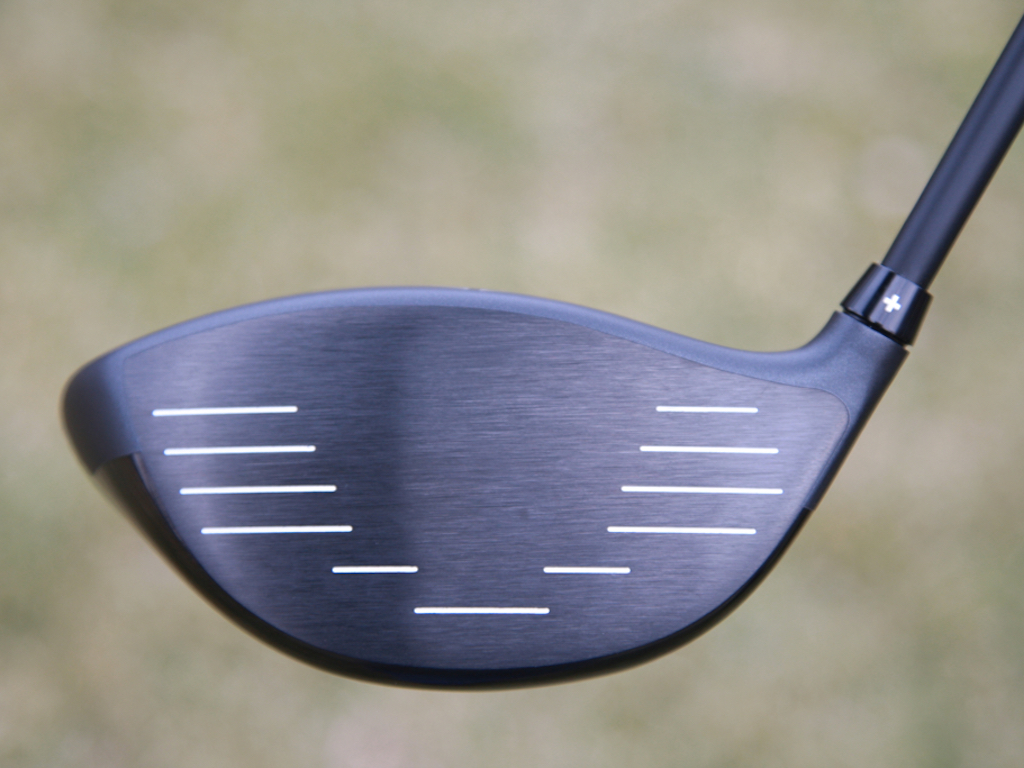
I was traveling Sunday and didn’t get to watch the end of the PGA Championship, so imagine my shock Monday morning when I read what had happened on that back nine. Like most everyone, I figured Brooks Koepka had his game and his emotions completely under control and Sunday’s finish would be pretty boring and anti-climactic. Man, were we wrong!!?
As I read the shot-by-shot, disaster-by-disaster account of what happened on those few holes, I have to admit my somewhat cynical self became engaged. I realize the conditions were tough, but it still boils down to the fact that Koepka nearly lost this PGA Championship because he couldn’t execute what I call “basic golf” – hitting fairways and greens – when it counted. And Dustin Johnson lost his ability to do the same just as he got within striking distance.
I’ve long been a critic of the way the game has come to be played at the highest levels; what we used to call “bomb and gouge” has become the norm at the professional tour level. These guys are big strong athletes, and they go at it harder than anyone ever did in “the old days”. Watch closely and you’ll see so many of them are on their toes or even off the ground at impact, especially with the driver. Call me old-fashioned, but I just don’t see how that can be the path to consistent shotmaking.
So, my curiosity then drove me to the year-to-date statistics on the PGA Tour website to dive into this a bit deeper. What I found was quite interesting, and I believe can be helpful to all of you readers as you think about how to lower your handicap this season. Follow me here, as I think there are some very helpful numbers from the PGA Tour.
I’ve long contended that golf is a game of ball control . . . let’s call it shotmaking. Your personal strength profile will determine whether you are a long hitter or not, and there’s probably not a lot you can do (or will do) to change that dramatically. But PGA Tour statistics indicate that accuracy, not distance, is the key to better scoring.
The Tour leader in driving accuracy is Jim Furyk, the only guy who is hitting more than 75% of the fairways. The Tour average is under 62%, or not even 2 out of 3. That means the typical round has the tour professional playing at least 4-5 approach shots from the rough. I’m going to come back to that in just a moment and explore the “cost” of those missed fairways.
The Tour leader in greens-in-regulation is Tiger Woods at 74%, almost 3-out-of-4 . . . but the Tour average is less than 66%, or just under 2-out-of-3. I believe enlightenment comes by breaking that GIR statistic down even further.
From the fairway, the Tour leader in GIR is Justin Thomas at 85% and the worst guy at 65%, three points better than the tour average for GIR overall. Hmmmmm. From the rough, however, the best guy on Tour is Taylor Gooch at 63.4%, which is not as good as the very last guy from the fairway.
But let’s dive even a bit deeper to better understand the importance of driving accuracy. Is it true these guys are so good from the rough that hitting fairways doesn’t matter? Not according to the numbers.
From the rough in the range of 125-150 yards – a wedge for most of these guys – the tour’s best hit it 25-27 feet from the hole and only 30 tour pros are averaging inside 30 feet from that distance. But from the fairway, 25 yards further back – 150-175 yards – the tour’s best hit it inside 21-23 feet, and 160 guys are getting closer than 30 feet on average. Even from 175-200 in the fairway, the best on tour hit it closer than the best on tour from the rough 50 yards closer.
So, what do you do with this information? I encourage any serious golfer to really analyze your own rounds to see the difference in your scoring on holes where you find the fairway versus those where you don’t. I feel certain you’ll find throttling back a bit with your driver and focusing more on finding the fairway, rather than trying to squeeze a few more yards of the tee will help you shoot lower scores.
If you have the inclination to see what more fairways can do to your own scores, here’s a little experiment for you. Get a buddy or two for a “research round” and play this game: When you miss a fairway, walk the ball straight over to the fairway, and then 15 yards back. So, you’ll hit every approach from the fairway, albeit somewhat further back – see what you shoot.
Next week I’m going to follow up this “enlightenment” with some tips and techniques that I feel certain will help you hit more fairways so you can take this to the bank this season.


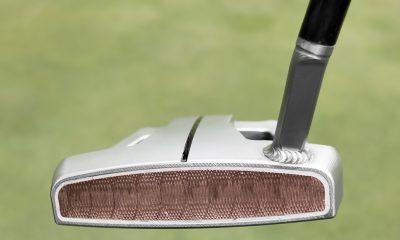


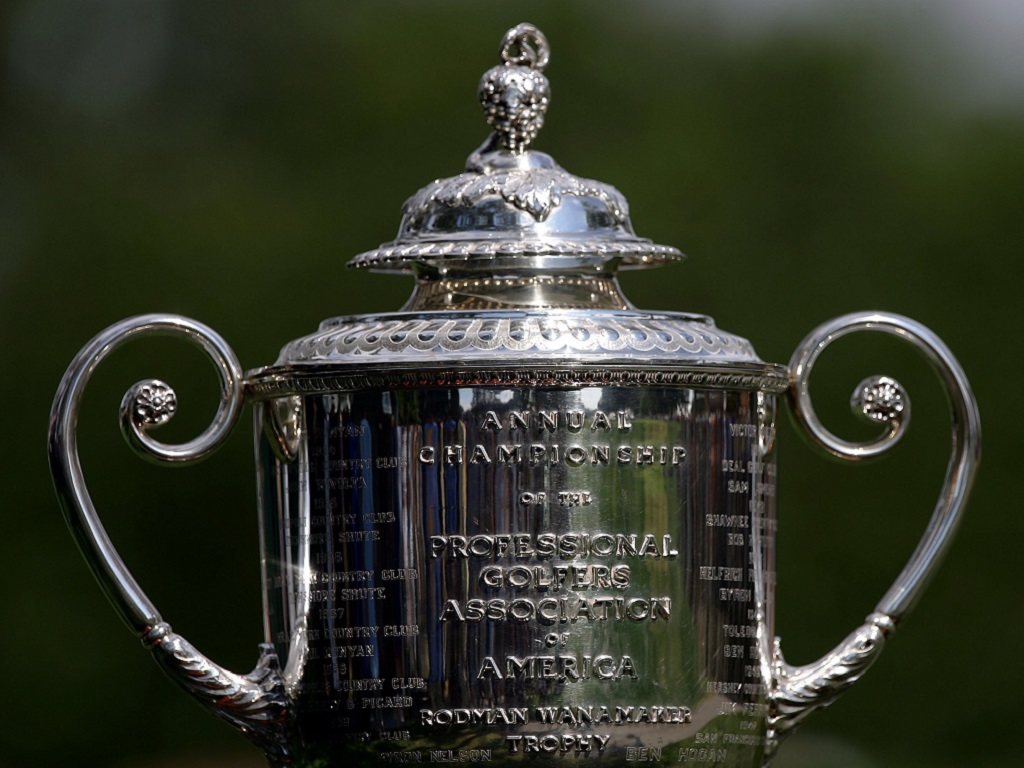
Aronimink is not a storied club, but when Donald Ross himself proclaimed it to be as good as he can design and build, one had to take notice. Jay Sigel was the pre-eminent male amateur golfer from the mid-1970s to the mid-1990s. He might have called any number of Philadelphia clubs home, but he chose Aronimink. It served him well. Gary Player won a PGA Championship here in 1962, and was followed by the 1993 winner … nobody. Aronimink gave that event away to Inverness, for reasons of which it is certainly not proud. So be it. We had to wait sixty-four years for the PGA to return to Newtown Square, but here we are. Aronimink has been neo-restored by Gil Hanse and team, to return Ross features with an eye toward defense against the dark arts, errrr, high-tech equipment.
Day one saw Rory McIlroy and Bryson DeChambeau dig big holes, to the tune of plus-four and plus-six, respectively. Since the first-round lead will be minus-three at worst, many shots will need to be made up for the power couple to reach contention. By nightfall, seven golfers held the day-one lead at three-under par 67. Shots and sticks caught our attention, and we are proud to present Five Things We Learned on Tech Thursday at the 2026 PGA Championship. Thanks to InsideTourGolfer, Today’s Golfer, and GolfWRX for initial equipment research.
First, meet Min Woo Lee
Min Woo Lee, aka Dr. Chipinski, has once again thrust himself into the conversation of Can he, will he, when will he? Lee has so much talent, wins not nearly as often as we believe that he should, and has no major near-misses (much less titles) on his wiki. The young Aussie is getting older and wiser, but is he able to avoid the scarring that holds the older and wiser back from breaking through? Philadelphia offers another opportunity. Min Woo signed for five birdies and two bogeys on day one, and grabbed a share of the opening-day lead at Aronimink. Winners transcend history and the moment, and Lee will need that sort of ascent to lift the Wannamaker on Sunday.
Second, meet Aldrich Potgeiter
The young South African golfer can rip driver with the best of them. Aronimink tips out at nearly 7400 yards, but beyond the fairway bunkers that ensnare only the mortals, Potgeiter can take his chances with wedge from the rough. On Thursday, he spent plenty of time in the spinach. Like Popeye, he used his muscles to gouge and thrash and dig his way out. Six birdies against three bogeys on the card brought AP in a three deep.
Third, meet Martin Kaymer
Not a major event takes place without a where’s he been throwback moment. We know that Martin Kaymer left the PGA and DP World tours for LIV golf, but the two-time (US Open and PGA) major winner has a lifetime exemption into at least one major event, and he seizes the opportunity each May. Kaymer joined the six-seven brigade with four birdies and a solitary bogey on day one. Kaymer was never a long hitter, and the years are kind to no golfer. The German champion will need to uncork every bottle of guile and strategy in his cabinet to remain in contention. For today, though, he occupies a rung on the ladder of Tour Tech.
Fourth, meet Scottie Scheffler
Let’s see, he’s the defending champion at the PGA, and he found his way back to the top tier with five birdies against two bogeys. To be a favorite and then play up to that stature and expectation is quite difficult. Just ask Rory, Bryson, and some of the other pre-tournament heartthrobs. Scheffler’s game is complete, and to knock him off the OWGR #1 pedestal, one needs to defeat him at the majors. Aronimink is the sort of course that fits Scheffler’s game. Better yet, it unfits the game of many of his challengers. Don’t expect Scheffler to go away anytime soon. Come Sunday, he’ll be around.
Fifth, meet Stephan Jaeger
Clocking in for the unheralded players shift are Ryo Hisatsune and Stephan Jaeger. Hisatsune logged seven birdies on day one, but gave most of them back with four bogeys. Still, he’s tied at the top for a time. Jaeger pitched five birdies against two bogeys, including a run of three consecutive, from holes four through six. Odds are that one of the two will hang around through 36 holes. Odds also suggest that both will be gone by Saturday evening. Still, the PGA Championship has historically been the major most likely to be won by an under-known. Both Hisatsune and Jaeger feature on that list, so good luck, lads!

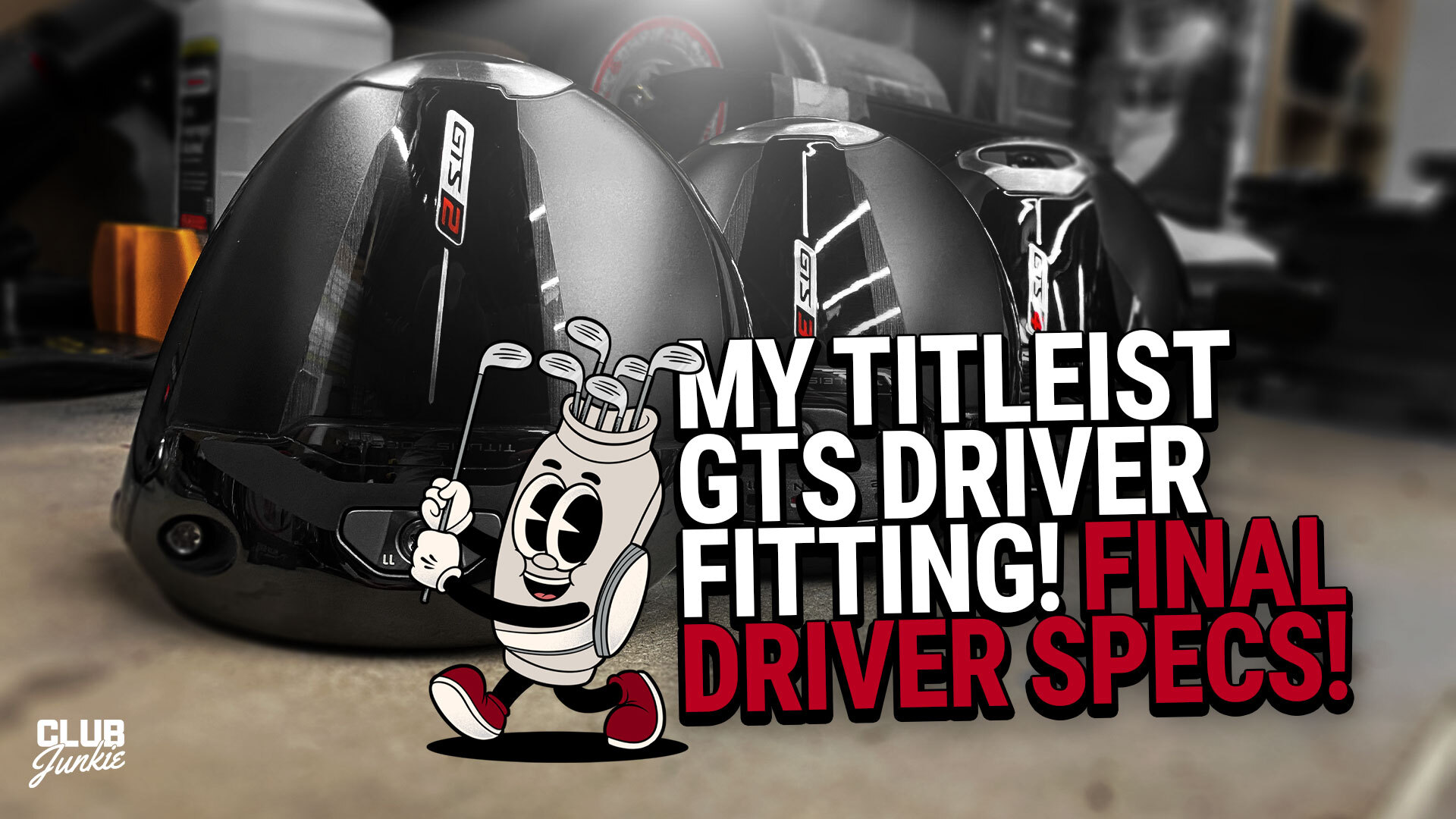
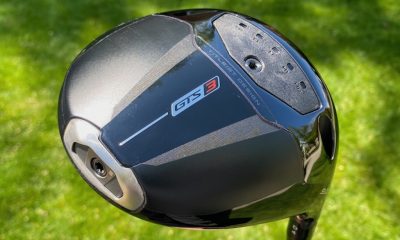
On this episode of the Club Junkie Podcast, I head to the Titleist Performance Institute for a full driver fitting with the new Titleist GTS lineup. We dive into the fitting process, talk about what made the biggest difference in performance, and break down how the different GTS heads and shaft combinations compare on the launch monitor. If you are thinking about a new driver setup for this season, there is a lot to take away from this one.
I also get into Brooks Koepka and the gear setup he brought to the PGA Championship, including the putters that caught my eye during the week. There are some interesting equipment trends showing up at the highest level right now and we break down what stands out.
To wrap things up, I talk about reshafting a few wedges, what I learned during the process, and swapping an adaptor onto a new shaft for another build project in the shop. A gear packed episode from start to finish for anyone who loves golf equipment and club building.
Follow Club Junkie everywhere:
Instagram: https://www.instagram.com/clubjunkiepod/
X: https://x.com/ClubJunkiePod
TikTok: https://www.tiktok.com/@clubjunkiepod
Threads: https://www.threads.com/@clubjunkiepod

Excited for this week’s WITB as we get to add the new Titleist GTS woods to the bag! I was fit at Titleist’s TPI facility in Oceanside California a few weeks ago and my new clubs just showed up. I am also adding a cool set of irons that I built last year some wild custom wedges into a new golf bag. Speaking of the bag I have a new Ghost Anyday Black Ops stand bag that I will be using on my Motocaddy Remote M7 electric cart.
Driver: Titleist GTS3 (11 degrees @ 10.25)
Shaft: Fujikura Ventus Red 6s
3-wood: Titleist GT1 3Tour (14.5 degrees)
Shaft: Graphite Design Tour AD CQ-7s
5-wood: Titleist GTS (18 degrees)
Shaft: Fujikura Ventus Red 7s
9-wood: Titleist GT1 (24 degress)
Shaft: Fujikura Ventus Red 7s
Irons: Bettinardi CB24 (5-PW)
Shafts: KBS C-Taper Lite 110 stiff
Wedge: TaylorMade MG5 (50-09 SB)
Shaft: Mitsubishi MMT 125 Stiff
Wedge: TaylorMade MG5 (56-12 SB)
Shaft: Mitsubishi MMT 125 Stiff
Wedge: TaylorMade MG5 (60-08 LB)
Shaft: Mitsubishi MMT 125 Stiff
Putter: Dan Carraher ZT Proto
Ball: Callaway Chrome Tour
Bag: Ghost Anyday Black Ops Stand Bag

Justin Rose WITB 2026 (April): Full WITB breakdown with new McLaren irons

RBC Heritage Tour Report: More minis, course-specific setups, Spider & GTS launches

What’s the story behind Webb Simpson’s custom-stamped irons?

Cadillac Championship Tour Report: Spieth’s sizable changes, McLaren Golf launches, and more

Kristoffer Reitan’s winning WITB: 2026 Truist Championship

Cameron Young’s winning WITB: 2026 Cadillac Championship

Aaron Rai’s winning WITB: 2026 PGA Championship

Nelly Korda WITB 2026 (April)

Justin Rose on the switch to McLaren Golf, learnings from previous equipment moves

Photos from the 2026 PGA Championship


Patrick Reed WITB 2026 (May)
Driver: Titleist GT3 (9 degrees) Buy here. Shaft: Aldila Rogue Silver 130 M.S.I. 70 TX 3-wood: TaylorMade Qi35 (15 degrees)...

Aaron Rai’s winning WITB: 2026 PGA Championship
Driver: TaylorMade M6 (9 degrees) Shaft: Aldilda Synergy Blue 70 TX 3-wood: TaylorMade Qi10 (15 degrees) Shaft: Fujikura Ventus Blue...


Michael Block WITB 2026 (May)
Driver: TaylorMade Qi4D (9 degrees) Shaft: Fujikura Ventus Black VeloCore+ 5 X 3-wood: TaylorMade Qi4D (15 degrees @14.25) Shaft: Mitsubishi...


Bryson DeChambeau WITB 2026 (May)
Driver: Krank Formula Fire Pro (6 degrees) Shaft: Project X Prototype 3-wood: Krank Formula Fire (10 degrees) Shaft: LA Golf BAD...
-
 Whats in the Bag3 weeks ago
Kristoffer Reitan’s winning WITB: 2026 Truist Championship
-
Whats in the Bag2 weeks ago
Aaron Rai’s winning WITB: 2026 PGA Championship
-
 Tour Photo Galleries3 weeks ago
Photos from the 2026 PGA Championship
-
 Equipment2 weeks ago
GolfWRX Launch Report: 2026 Titleist GTS drivers
-

 Equipment2 weeks ago
PGA Championship Tour Report: Fitzpatrick, Koepka among big-name putter switches for Aronimink
-

 News2 weeks ago
WITB Time Machine: Phil Mickelson’s winning WITB, 2021 PGA Championship
-

 Equipment2 weeks ago
Which of Tiger’s major winning irons are your favorite? – GolfWRXers discuss
-

 Equipment2 weeks ago
Lead Tape Report: Adjusting the swingweight of the Wanamaker Trophy


SteelyDan
May 23, 2019 at 12:30 pm
Tour players are not trying to maximize distance. They make concessions for accuracy. On average, they hit down with the driver. Great article.
Daniel Kidd
May 23, 2019 at 6:08 am
I see both sides of the debate. From experience, I see what you are saying Terry, but I also agree with some of the naysayers in the comments too. On the one hand, I have almost always found a 330 yd hole more difficult when I bash driver as hard as I can, rather than hitting to the 100 yd marker and wedging in. It’s rare when laying back that I make worse than par, and I make about the same number of birdies. Definitely make more bogeys when hammering away.
On the flip side, the pro game is different from ours, and their skill with the half shots and from the rough is so good they can get away with bashing it off the tee and attacking all the par 5’s (even if they can’t reach them all in two). Plus, the rough at the courses we usually play isn’t as penal as tour rough.
I did find it fascinating that the worst GIR player from the fairway is better at hitting greens than the best player from the rough. You’d think that stat would have some of the pros thinking of placing more emphasis on finding fairways.
Sahil
May 23, 2019 at 2:50 am
I get what Terry is saying. To discount the driver, in my opinion can hinder your game, although at my club games there are few guys who use only an iron of the tee and they play off a 10 H.I and less but none are less than 7. The guys who really play well (H.I of 8 and less) hit driver consistently and fairly accurately. But I think “do what ever it takes to keep your ball in play”.
The consistent club winners do this consistently.
Bob Jones
May 22, 2019 at 7:23 pm
Terry, accurate is good, but so is long. It is not true that if you hit the ball farther you will always be in the weeds.
I can dial back my tee shots so I always land them in the fairway. But if I hit my normal tee shot and miss four fairways, and am 25-50 yards longer every time (to use your yardage), I am going to shoot a lower score because on those ten holes I hit the fairway I will be using an easier club to hit into the green, and that more than makes up for the fairways I miss, which will not always cost me the loss of a stroke anyway. I keep records. Of the holes were I get a par or birdie, I miss the fairway about half the time. I get away with it because I don’t miss by much and the rough we play from on recreational courses isn’t punitive.
As for hitting greens, I score lots of pars by getting up and down from greenside. GIR is overrated, if you ask me.
Jamie Collis
May 22, 2019 at 7:18 pm
I learnt to play golf in Canada and the US and the rough is manicured compared to the Australian courses I now play. The Australian rough consists of gras tuffs, bare lies and uneven ground and as a HC 9 I find it difficult to hit greens from these lies. For this reason, the foundation for my best rounds are long drives in the middle of the fairway which makes it easier to hit greens in the 2 club winds we typically play in.
Pelling
May 22, 2019 at 6:06 pm
Brooks Koepka hit a gap wedge 160 yards to one foot on #10 for birdie. That seemed to be his scoring club. The ball goes too far.
Drew
May 22, 2019 at 2:34 pm
I find it comical that many GolfWRXers apply articles they read about statistical analysis on the tour to their own game, as if they are playing “the same” game. Realistically, as pointed out many times in these comments, you are not playing the same game as the pros. You are playing shorter courses, you are playing shorter/thinner rough, you are not as precise with your ball striking, you are not as accurate with your distance control, and you are not as accurate in general at navigating your shots as the Pros.
I’d like to add a couple points to Terry’s case about the advantages of hitting the fairways that he didn’t touch on, but I feel greatly affect the recreational golfer’s success on the course because of our lack of precision and accuracy compared to the pros. From the fairway, the impedance of overhanging trees is dramatically eliminated, our angle to the pin is greatly improved, and the visual aesthetics of the hole are generally better (for example seeing the front of the green instead of only a giant bunker). These are all things that improve a recreational golfers confidence when standing over the ball for their second shot, and confidence is something all recreational golfers need more of. Outside of the fact that we cannot shape the ball left or right to miss a tree and still hit the green, or flight a punch out to roll up accurately from 150 away, or be assured we are going to get enough club on the ball out of the rough to carry the bunker 125 yards away like the pros can, we just simply do not play the same game as them. We need clean, confidence inspiring looks.
As a more general statement to take away from all this, off the tee you should hit the absolute longest club you can that will not get you into trouble a significant portion of the time. If Driver could roll through the fairway and put you under a tree, take 3W and assure yourself you will have a look at the green. If rolling through the fairway still gives you an unimpeded shot to the green, then take driver. Manage your game, do not just think because Brooks and DJ can bomb and gouge that you should too.
Terry B Koehler
May 22, 2019 at 10:12 am
Thank you all for sounding off and “taking it to me”. I apparently did not make my point as I had intended. I agree with all the comments that the long hitters on tour are dominating, and probably will from now on. And I have great respect for Mark Brodie’s work. But our games are a far cry from theirs, and the courses we play are much different, as several of you pointed out. The point I was trying to make — and apparently did not do very well — is that even tour professionals are not nearly as good at hitting greens and getting it close from the rough as they are from the fairway even 25-50 yards further back. Given that statistical insight, it would make sense that this would apply to us recreational golfers as well, wouldn’t it? From my personal observations, scoring is just easier for all of us when we keep the drives in the fairway, just as it is for tour players. And that we probably suffer more from errant drives than they do, because we do not have their skills around the greens. Finally, I was trying to communicate that most recreational golfers are not going to make the physical commitment to change their body with lots of gym work to continually add yards; given that, working on hitting more fairways would probably help lower scores.
Thanks again to all of you for sounding off, though. That keeps me on my toes.
Barney Puttick
May 23, 2019 at 3:43 am
Great article Terry, and as a coach I will use your thoughts with my recreational students , as I agree the fairway is the way to go !
jgpl001
May 22, 2019 at 5:43 am
The wedge guy is correct but the the ave club player and the ave tour pro was never further apart – in 1970 the ave club hcp was 18 and today it is 18, but the stats on tour across this period is startling
On the PGA tour short hitters rarely win – a wedge from the rough for these guys is preferable to 6 iron from the fairway
I don’t see any new OEM drivers boast about more “accuracy” or talk about “dialling it back a little”
We have been conditioned for “more speed”, “everyone gets faster”, etc.
For me I know if I keep it in play I score well, if not I don’t – simple, but as a dedicated ho I will always looks for anything that give me an extra yard….and I am not a short hitter…
JP
May 21, 2019 at 10:59 pm
Terry K got schooled here.
Stephen Peltier
May 21, 2019 at 10:36 pm
I’ve actually done a lot of deep analysis on this, even threw some AI machine learning at it and my conclusions are as follows. People that can hit the golf ball well score better than people who suck at hitting the golf ball.
Steve Wozeniak PGA
May 21, 2019 at 10:10 pm
Terry,
Golf wrks readers know a little more than you thought huh!!!!!!
No worries you will do better next time.
Steve Wozeniak PGA
Alex
May 21, 2019 at 6:20 pm
Because you’ll win your club championship in a scratch division going 69, 70 or something like that on a course that rates out at 74 or so. On a PGA tour course that rates out 78 or 79 at least with way faster green, more tucked pins, and even longer rough a 69 and 70 will make cut but thats about it most likely. I agree to the average or even club scratch golfer being “long enough” and hitting fairways and greens is the way to go…most of us don’t have the 63 gear in us even at our own home comfy track. The sport the guys on tv play might as well be another sport. Every week somebody gets hot and goes low 60’s and its a birdie fest. If we go out and got 69 70 in a 2 day tournament thats probably 7/10 birdies depending how you attack par 5s. Every week somebody has one round that they make that many birdies and they sit atop the leaderboard and so on and so forth and it becomes a tournament for racehorses and we see them get deeper than 15 most weeks. The way they are doing that is basically putting all their eggs in the basket of attacking par 5’s the random short par 4 and rolling the dice that the driver makes more birdies happen and worry about worse results later. The majority of us are trying to post scores to get a better handicap, the majority of them are trying to make money and either win majors and be hall of famers, win tournaments and then a major, finish top 10 and then a win, make cuts and ultimately keep their card. There is some young bomber waiting on the Web that is capable of shooting 62 and taking a journey man’s card. They are full sprint all the time on tour cause if its their week they go all out to win because it might not happen ever again. Us mere mortals will shoot another 71 or 69 or whatever before summers end and the way to shoot a bunch of low to mid 70’s doing it is fairways and greens. They are also just a lot more talented than all of us and that’s a hard pill for most of us to swallow, but the truth hurts.
PSG
May 21, 2019 at 6:16 pm
*sighs*
Basic things seem somewhat beyond this guy.
Why would a guy playing to shoot the best score he can use the same strategy as a pro who either wins the tournament or doesn’t care?
The pros play bomb and gauge because there is a 70 person field and somebody in that field who plays bomb and gauge will win. We don’t have a 70 person field, Terry. The two goals are completely different. The pros are not trying to shoot their best average score over time, they’re trying to spike a tournament.
Zach
May 21, 2019 at 5:22 pm
I agree with the people saying to A) read Every Shot Counts and B) that you need to consider the courses most Ams play vs. the ones PGA tour pro’s play. The greens that probably 90% of us play on are slow, maybe the nicest ones stimp around 9 or 10; Those greens are much slower and softer than what is on tour. I can afford to bomb the ball into the rough at my courses because I can easily hold a green with a wedge from the rough, whereas guys on Tour still might see significant run out on firm and fast greens, even from 130 yards away.
Also consider the rough on most courses that the Tour stops at is much thicker and longer than what majority of us see. The rough at Bethpage was unreal…and how many courses have fescue like that? Only in certain areas.
DJ and Brooks vs guys like Chez Reavie and Furyk … Who are you betting on to win the next major? Tiger literally made a career out of being the longest guy out there, fairways were an after thought. He was so good from the rough it didn’t matter.
T
May 21, 2019 at 7:34 pm
Eldrick was able to escape from the rough because of square grooves. Yes he thrived in that era.
What was the one complaint from that time? That the rough didn’t mean anything as they could gouge it out and the ball still stayed on the green.
Don’t let his supposed skill fool you.
gery katona
May 21, 2019 at 4:59 pm
I’m just a 66 year old 15 handicapper that used to hit my drives about 220yds. But I changed my strategy and swing after reading some stats that show there isn’t very much correlation between fairways hit and GIR, or more importantly, scoring. I mainly apply lag with the driver as opposed to trying to muscle, or push the club into the ball and gained at least 20 yards, I would say more than that. The longer the drive, the easier all the rest of the shots are. Less club into the green means closer to the hole. Closer to the hole means fewer putts needed. The drive sets up the hole and distance cannot be ignored. Also, I play mostly public courses and a fair number of private ones as well. On most of those courses, the rough is not very consequential anyway, so just rip it the best you can. Now matter how weak you are, a longer drive helps anyone.
D
May 21, 2019 at 1:48 pm
Complete and utter tosh.
Where are the Stats singling out Bethpage, Shinnecock, Erin Hills or even Chambers Bay? Where are the driving stats and GIR stats from those majors?
The reason is obvious as to why I would talk about those: the Rough is more than twice as thick as at regular Tour stops.
Even the week before Bethpage. That Trinity Forest course has NO rough. None. Wide open fairway. The penalty was missing greens, greens that have rolling drop offs and slick slopes al around.
Your article is shyte.
The reason why the feet have to come off the ground for the driver compared to the old days of Persimmon is because the ball is 2 inches off the ground on a tee now, when the ball was barely ¼ inch off the ground in the old days.
Doug
May 21, 2019 at 1:35 pm
Mr Koehler, read “Every Shot Counts” by Mark Broadie to see how to actually apply the math you are speaking of and realize it supports the opposite of your conclusion. Within the skill range of PGA tour players, distance is one of the biggest determining factors of success.
Leave actual math analysis to trained professionals. This opinion piece degrades your credibility.
Jack Attack
May 21, 2019 at 4:23 pm
I’ll second Doug’s comments. Broadie’s book provides a framework on how to accurately breakdown and understand where players are better or worse than the field. The speculation in this article is just wrong and a waste of time.
Do us all a favor and read Mark Broadie’s book, and then come back with a new & informed piece for WRX.
Scratchscorer
May 21, 2019 at 5:13 pm
I’ll third that. Read the book and you will have an understanding of how much distance matters.
Kyle
May 21, 2019 at 5:37 pm
Yep. The math doesn’t lie. There is a reason these “bomb and gougers” are so successful.
Payton
May 21, 2019 at 1:21 pm
You forgot to account for the fact nobody hits 100% fairways. Missing 2 more fairways and having wedge instead of 7 iron means you will make up strokes through your round. The biggest gains for average players isn’t squeezing out a few more yards, unless your hard swings squeeze 10+ more yards, it’s about not hitting 3 wood or other shorter clubs. The 20+ yards lost by clubbing down are a significant loss if it’s not required by the hole.
Bones
May 21, 2019 at 12:25 pm
People have already done the math on this and this isn’t exactly the result. Maybe read what Mark Broadie & Scott Fawcett have to say on the subject…
Scratchscorer
May 21, 2019 at 5:17 pm
Exactly. I don’t understand how articles that contradict the statistics are still being perpetuated as true. This is golf propaganda.
NYCBethpageBlack
May 21, 2019 at 11:55 am
Reality is most of the courses on the PGA allow for bomb and gouge. They are typically very long and many are fairly open with relatively wide fairways and the rough/trees don’t really destroy your scoring ability until you are way out of the fairway. Take the TPC courses for example. I have played 6 different TPC courses, and even when on my bad driving days, I still shoot in the mid-low 80s from the tips (Registered HCP is ~10).
And then there is Bethpage black. I play there 2-3x yearly and while trees are rarely in play, the deep rough is 3 feet or less from the fairway. If I don’t drive the ball well on the Black course, I will not break 90. Period.
We all saw that second shot DJ hit on #1 this weekend that went about 40 yards, right? That ball was less that 12 feet from being in the fairway. On most TPC courses he can still hit that shot on the green with some spin to boot; on the black course, he couldn’t even get it halfway to the hole.
The reason guys play golf the way they do now is that the majority of the courses got longer after the Tiger era, but only some punish missing fairways. Sure, if you hit it into the woods or 20 yards off the fairway, all the PGA courses play difficult, but few will punish you like bethpage black if you are not flat on target.
Benny
May 21, 2019 at 11:00 am
TK15 Bad math and anedotal proof, you can do better.
Jeff
May 21, 2019 at 10:55 am
This may be true for amateur golfers but is far from the truth on the PGA. The longest players are far and away the best. You may not lose strokes from the fairway at 175 yds but the difference from being in the rough at 175 vs 125 is extremely different. If the best guy on tour is still only 3/4 fairways, that means 1/4 times he’s losing almost a full stroke by being 50 yds further back. There’s a reason why all the best players in the world are bombers. The misconception is that making the rough longer and the fairways narrower hurts those guys. It actually helps them because of how much larger a penalty it is to miss a fairway at 175 out vs 125 out.
Tom
May 21, 2019 at 10:29 am
Yeah, This is exactly why Chez Reavie is winning so many events… Oh… wait… Nevermind. If you look at the top ten in accuracy off the tee. you have 1 win in the last 2 years. If you look at the top 10 in distance you have 5. I think I would take the distance…
if you go out to top 20 in distance you have a lot more wins in the last two years. I counted 15 in think. If you go out to the top 20 in driving accuracy, the number is still 1.
So the money goes to distance.
Tom
May 21, 2019 at 10:31 am
correct that, you have 3 wins if you go out to the top 20 in accuracy, but distance still has it, by a long distance.
Luke
May 21, 2019 at 10:51 am
I think their has to be some correlation between the stronger drivers also having the strength and clubhead speed being able to get the ball out of the wicked lies in the rough they face more often.
Doesn’t mean the average golfer shouldn’t prioritize being in the short stuff.
Jeff
May 21, 2019 at 10:58 am
it’s more just that it’s easier to get the ball out of the rough with a wedge than it is with a 6i. I mean strength helps but loft makes the bigger difference here, imo.
Juststeve
May 21, 2019 at 10:12 am
Reality has been somewhat distorted by the way the governing bodies pick courses and set them up. Last week at the Black is a perfect example. By selecting that course the PGA eliminated about half the field, the half who are not bombers. The course conditions, damp and soft eliminated another 20%, those who can’t carry the ball a long way. As a result only a relative handful of golfers were really in it to win. Koepka was the best of that handful last week.
Consider now the results on a hypothetical different course, a Harbor Town or a Colonial for example. Now we have a tournament where most of the field has a real chance to compete, not just the longest hitter. We have a tournament where whoever has the best game throughout the bag has a shot at winning. More interesting in my opinion, but the networks like chicks did the big hitters.
I’d like to see courses that are more available to all first class golfers. Marion is a great example. Difficult to be sure, fair, and the best overall golfer of the week has a real chance to win.
Joe
May 21, 2019 at 9:20 am
I completely agree with this. Of course strong wedge play within 75 yards can certainly help “save” strokes, but for the purpose of scoring better I agree hitting fairways are more important. My lowest rounds this year have all come when ive hit 10+ fairways in a round.
When the driver hasn’t worked for me, I’ve “scored” better when I put the driver away and hit a 2 iron in the fairway much more consistently.
tom
May 21, 2019 at 7:54 pm
Your best round may come from when you hit the most fairways of course, what you don’t understand though is that these bombers are only hitting 1 or maybe 2 less fairways but are 40 yards ahead of you every time when they in the fairway. Sure they may make bogey on that 1 extra hole they miss the fairway on, but they are going to make a hell of a lot more birdies from 40 yards up when they are in the fairway.
A second point is also that when you are 40 yards ahead (in the fairway or the rough it applies to both), you are reducing your chance of making a bogey by a significant amount when comparing it to being further back, so its a double winner.