
Opinion & Analysis
The Wedge Guy: Building your “team” – Part 1


Golf is a funny game, especially when it comes to the way most golfers buy equipment and put their sets together. It’s fun to review and explore the constant stream of new technologies offered by the club companies, as we are all constantly searching for that new ‘secret weapon’ that will make the difference in our scoring. Somewhere behind each purchase you make – whether it be a new driver, fairway, hybrid, irons, wedges, putter, balls, etc. – you have hope that this is another piece of the puzzle that will help lower your handicap.
But as you evaluate any new individual bits of technology, it is a great idea to pause and look at the entire arsenal of clubs you carry to assess them as your “team”. Each club in your bag is used one-at-a-time for the shot at hand, but collectively our clubs represent the “players” we’ve assembled to go into battle with the golf course, right?
As we approach the finale of the NCAA football championship game, think of your set make-up like a football team. Great coaches look for chemistry and compatibility, for sure, but they also must make sure they have balance. To have a bunch of big men and no speed doesn’t work. Nor can you have a bunch of defensive specialists and no offensive firepower. Almost every year, the team that wins the Championship has balance. Certainly, there are always areas that are stronger than others, but championship teams typically have no real weaknesses.
I’ve come to believe your “team” in your golf bag should follow the same strategy of balance . . . but in my observation, very few golfers approach it this way.
The most common set make-up I see includes a driver, a couple of fairways, 2-3 hybrids, and irons from 4 or 5 through P. Some golfers still carry a 3-iron, and some extend hybrids all the way to the 5 or 6; that’s a personal thing for your ‘team’. I think it fair to say that nearly all golfers have gained distance with the new club technologies, but in my observation, this too often results in a team that is unbalanced. Let me explain.
Let’s take a “typical” male golfer who hits his 5-iron 165-170 yards and shoots 85. Some of you are longer, some of you shorter, and some of you score better or worse than that, but please follow along with me here. That golfer probably hits a driver somewhere around 235-250, and 9-iron 120-125 or so. Let’s say he carries a 3- and 5-wood, a couple of hybrids, 5-PW and two more wedges. Adding the driver and putter, that gives him 14. With this set make-up, therefore, he has five clubs for all his shots that are 165-170 or longer (not counting the driver), and another 4-5 clubs for all his shots from 120-125 and in (not counting the putter).
If this golfer is a typical 85-shooter, he’s hitting driver 12-14 times and averaging +/- 32 putts; that means he has 12 clubs for the other 40 or so shots. If he’s playing the right tees for his skill level, he shouldn’t have more than 8-10 of those that are outside 5-iron range, so nearly half of his “team” is allocated for what likely amounts to about 25% of these non-drive/non-putt shots.
That same golfer will have as many as 15-20 shots from inside 9-iron range, including short-range approaches and recovery shots. That means he has five clubs for what amounts to as much as 50% of his non-drive/non-putt shots.
Please think about this line of logic, because I’m going to continue this discussion on Tuesday. If you would like to offer your thoughts and suggestions for that follow-up, please add your comments below and I’ll build them in to “Building Your Team – Part 2” next week.



Aronimink is not a storied club, but when Donald Ross himself proclaimed it to be as good as he can design and build, one had to take notice. Jay Sigel was the pre-eminent male amateur golfer from the mid-1970s to the mid-1990s. He might have called any number of Philadelphia clubs home, but he chose Aronimink. It served him well. Gary Player won a PGA Championship here in 1962, and was followed by the 1993 winner … nobody. Aronimink gave that event away to Inverness, for reasons of which it is certainly not proud. So be it. We had to wait sixty-four years for the PGA to return to Newtown Square, but here we are. Aronimink has been neo-restored by Gil Hanse and team, to return Ross features with an eye toward defense against the dark arts, errrr, high-tech equipment.
Day one saw Rory McIlroy and Bryson DeChambeau dig big holes, to the tune of plus-four and plus-six, respectively. Since the first-round lead will be minus-three at worst, many shots will need to be made up for the power couple to reach contention. By nightfall, seven golfers held the day-one lead at three-under par 67. Shots and sticks caught our attention, and we are proud to present Five Things We Learned on Tech Thursday at the 2026 PGA Championship. Thanks to InsideTourGolfer, Today’s Golfer, and GolfWRX for initial equipment research.
First, meet Min Woo Lee
Min Woo Lee, aka Dr. Chipinski, has once again thrust himself into the conversation of Can he, will he, when will he? Lee has so much talent, wins not nearly as often as we believe that he should, and has no major near-misses (much less titles) on his wiki. The young Aussie is getting older and wiser, but is he able to avoid the scarring that holds the older and wiser back from breaking through? Philadelphia offers another opportunity. Min Woo signed for five birdies and two bogeys on day one, and grabbed a share of the opening-day lead at Aronimink. Winners transcend history and the moment, and Lee will need that sort of ascent to lift the Wannamaker on Sunday.
Second, meet Aldrich Potgeiter
The young South African golfer can rip driver with the best of them. Aronimink tips out at nearly 7400 yards, but beyond the fairway bunkers that ensnare only the mortals, Potgeiter can take his chances with wedge from the rough. On Thursday, he spent plenty of time in the spinach. Like Popeye, he used his muscles to gouge and thrash and dig his way out. Six birdies against three bogeys on the card brought AP in a three deep.
Third, meet Martin Kaymer
Not a major event takes place without a where’s he been throwback moment. We know that Martin Kaymer left the PGA and DP World tours for LIV golf, but the two-time (US Open and PGA) major winner has a lifetime exemption into at least one major event, and he seizes the opportunity each May. Kaymer joined the six-seven brigade with four birdies and a solitary bogey on day one. Kaymer was never a long hitter, and the years are kind to no golfer. The German champion will need to uncork every bottle of guile and strategy in his cabinet to remain in contention. For today, though, he occupies a rung on the ladder of Tour Tech.
Fourth, meet Scottie Scheffler
Let’s see, he’s the defending champion at the PGA, and he found his way back to the top tier with five birdies against two bogeys. To be a favorite and then play up to that stature and expectation is quite difficult. Just ask Rory, Bryson, and some of the other pre-tournament heartthrobs. Scheffler’s game is complete, and to knock him off the OWGR #1 pedestal, one needs to defeat him at the majors. Aronimink is the sort of course that fits Scheffler’s game. Better yet, it unfits the game of many of his challengers. Don’t expect Scheffler to go away anytime soon. Come Sunday, he’ll be around.
Fifth, meet Stephan Jaeger
Clocking in for the unheralded players shift are Ryo Hisatsune and Stephan Jaeger. Hisatsune logged seven birdies on day one, but gave most of them back with four bogeys. Still, he’s tied at the top for a time. Jaeger pitched five birdies against two bogeys, including a run of three consecutive, from holes four through six. Odds are that one of the two will hang around through 36 holes. Odds also suggest that both will be gone by Saturday evening. Still, the PGA Championship has historically been the major most likely to be won by an under-known. Both Hisatsune and Jaeger feature on that list, so good luck, lads!

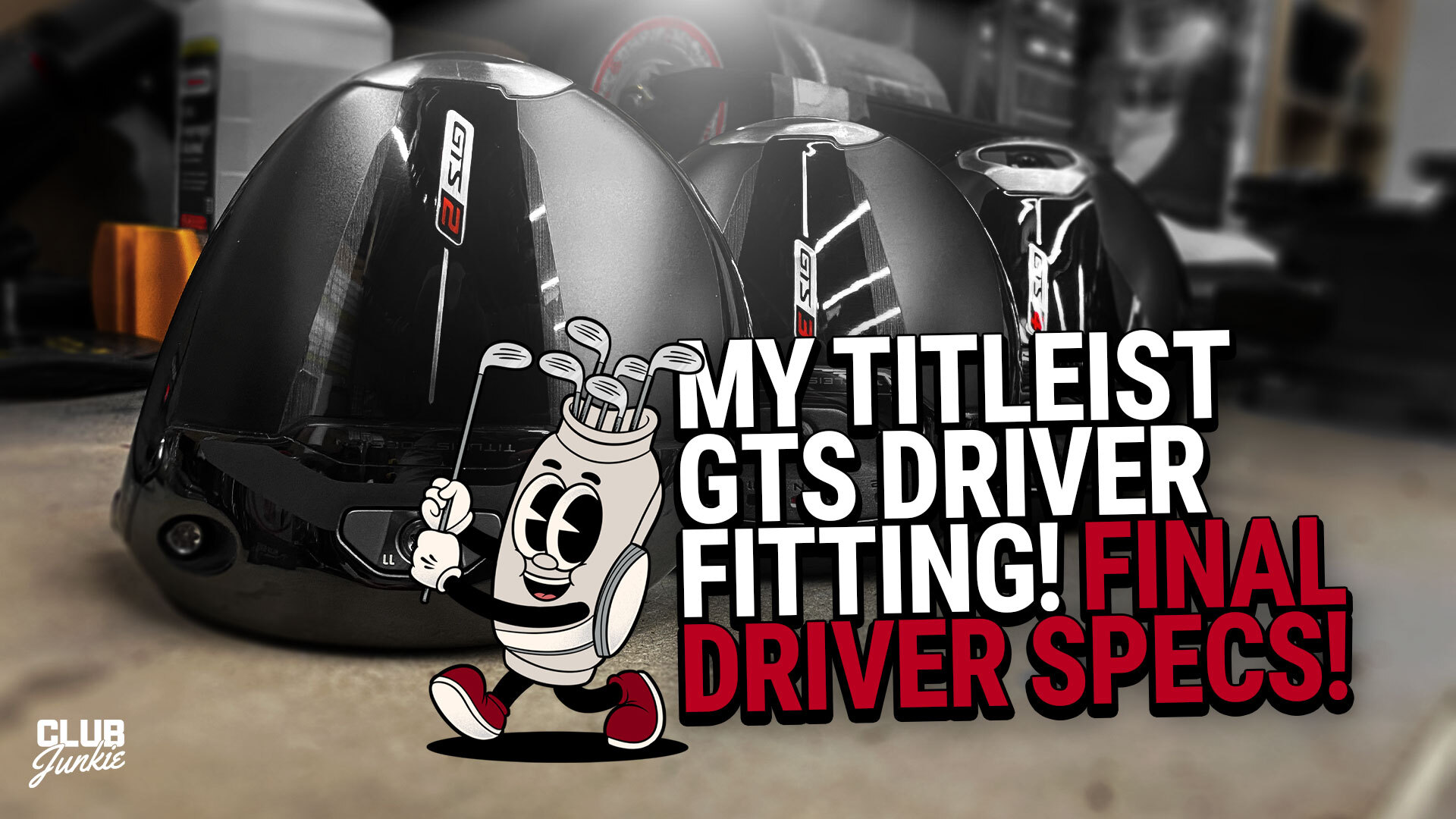
On this episode of the Club Junkie Podcast, I head to the Titleist Performance Institute for a full driver fitting with the new Titleist GTS lineup. We dive into the fitting process, talk about what made the biggest difference in performance, and break down how the different GTS heads and shaft combinations compare on the launch monitor. If you are thinking about a new driver setup for this season, there is a lot to take away from this one.
I also get into Brooks Koepka and the gear setup he brought to the PGA Championship, including the putters that caught my eye during the week. There are some interesting equipment trends showing up at the highest level right now and we break down what stands out.
To wrap things up, I talk about reshafting a few wedges, what I learned during the process, and swapping an adaptor onto a new shaft for another build project in the shop. A gear packed episode from start to finish for anyone who loves golf equipment and club building.
Follow Club Junkie everywhere:
Instagram: https://www.instagram.com/clubjunkiepod/
X: https://x.com/ClubJunkiePod
TikTok: https://www.tiktok.com/@clubjunkiepod
Threads: https://www.threads.com/@clubjunkiepod
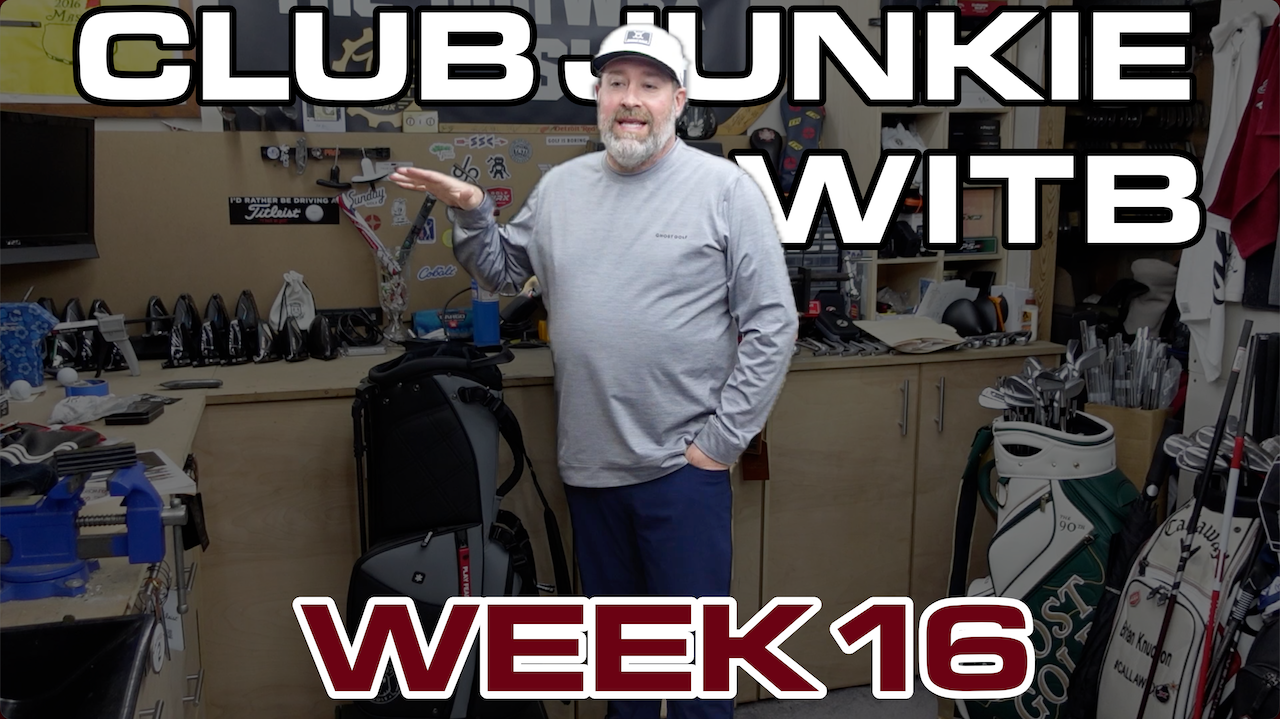
Excited for this week’s WITB as we get to add the new Titleist GTS woods to the bag! I was fit at Titleist’s TPI facility in Oceanside California a few weeks ago and my new clubs just showed up. I am also adding a cool set of irons that I built last year some wild custom wedges into a new golf bag. Speaking of the bag I have a new Ghost Anyday Black Ops stand bag that I will be using on my Motocaddy Remote M7 electric cart.
Driver: Titleist GTS3 (11 degrees @ 10.25)
Shaft: Fujikura Ventus Red 6s
3-wood: Titleist GT1 3Tour (14.5 degrees)
Shaft: Graphite Design Tour AD CQ-7s
5-wood: Titleist GTS (18 degrees)
Shaft: Fujikura Ventus Red 7s
9-wood: Titleist GT1 (24 degress)
Shaft: Fujikura Ventus Red 7s
Irons: Bettinardi CB24 (5-PW)
Shafts: KBS C-Taper Lite 110 stiff
Wedge: TaylorMade MG5 (50-09 SB)
Shaft: Mitsubishi MMT 125 Stiff
Wedge: TaylorMade MG5 (56-12 SB)
Shaft: Mitsubishi MMT 125 Stiff
Wedge: TaylorMade MG5 (60-08 LB)
Shaft: Mitsubishi MMT 125 Stiff
Putter: Dan Carraher ZT Proto
Ball: Callaway Chrome Tour
Bag: Ghost Anyday Black Ops Stand Bag

Justin Rose WITB 2026 (April): Full WITB breakdown with new McLaren irons

RBC Heritage Tour Report: More minis, course-specific setups, Spider & GTS launches

What’s the story behind Webb Simpson’s custom-stamped irons?

Cadillac Championship Tour Report: Spieth’s sizable changes, McLaren Golf launches, and more

Kristoffer Reitan’s winning WITB: 2026 Truist Championship

Cameron Young’s winning WITB: 2026 Cadillac Championship

Aaron Rai’s winning WITB: 2026 PGA Championship

Nelly Korda WITB 2026 (April)

Justin Rose on the switch to McLaren Golf, learnings from previous equipment moves

Photos from the 2026 PGA Championship


Patrick Reed WITB 2026 (May)
Driver: Titleist GT3 (9 degrees) Buy here. Shaft: Aldila Rogue Silver 130 M.S.I. 70 TX 3-wood: TaylorMade Qi35 (15 degrees)...

Aaron Rai’s winning WITB: 2026 PGA Championship
Driver: TaylorMade M6 (9 degrees) Shaft: Aldilda Synergy Blue 70 TX 3-wood: TaylorMade Qi10 (15 degrees) Shaft: Fujikura Ventus Blue...


Michael Block WITB 2026 (May)
Driver: TaylorMade Qi4D (9 degrees) Shaft: Fujikura Ventus Black VeloCore+ 5 X 3-wood: TaylorMade Qi4D (15 degrees @14.25) Shaft: Mitsubishi...


Bryson DeChambeau WITB 2026 (May)
Driver: Krank Formula Fire Pro (6 degrees) Shaft: Project X Prototype 3-wood: Krank Formula Fire (10 degrees) Shaft: LA Golf BAD...
-
 Whats in the Bag3 weeks ago
Kristoffer Reitan’s winning WITB: 2026 Truist Championship
-
Whats in the Bag2 weeks ago
Aaron Rai’s winning WITB: 2026 PGA Championship
-
 Tour Photo Galleries3 weeks ago
Photos from the 2026 PGA Championship
-
 Equipment2 weeks ago
GolfWRX Launch Report: 2026 Titleist GTS drivers
-

 Equipment2 weeks ago
PGA Championship Tour Report: Fitzpatrick, Koepka among big-name putter switches for Aronimink
-

 News2 weeks ago
WITB Time Machine: Phil Mickelson’s winning WITB, 2021 PGA Championship
-

 Equipment2 weeks ago
Which of Tiger’s major winning irons are your favorite? – GolfWRXers discuss
-

 Equipment2 weeks ago
Lead Tape Report: Adjusting the swingweight of the Wanamaker Trophy


ChipNRun
Jan 2, 2020 at 11:10 pm
My set-up includes…
Driver
4W + 7W (going into 9th season with this mix)
4H
4i-9i (4i refitted with hybrid shaft)
Wedges 48* / 54* / 58* (58* replaces 60*)
Putter
Two seasons ago I had 46-50-54-58, but found the 46 and 50 duplicated each other on shorter shots. And, three wedges easier to manage (9i also part of wedge matrix)… only a couple of gaps in 3x matrix
I can hit 4W longer than 3W (extra loft helps) and the 7W is really versatile: blows ball out of rough with distance, easy hit around 200 yds., and good on longish par 3 holes.
4H more versatile, 4i more accurate (tight line for fairway on evil short Par 4s)… if I add fourth wedge one of these would stay home.
May need to reshaft my irons as lighter from KBS Tour 90 to Recoil… something (maybe either Recoil 95 or ES780 in F3 flex). With old irons, dumped PX 5.0 in 2014. Need graphite so my my elbows don’t ache after consecutive golf days.
May also need to reduce my D and FW shafts to below 60 grams; falloff last year especially in FW wood distance.
I retired in May, but due to transition activities had a pretty lean golf season. Hope to have bag tweaked and ready by March.
Also getting my right hip tweaked with rehab sessions to increase strength/flexibility to counter arthritis.
freowho
Jan 1, 2020 at 4:09 am
I would add that a lot of par 3’s are 140m to 180m and this is often a poor spot for many club golfers with a big gap between a hybrid and their longest iron. You need clubs that you can hit a good three quarter shot with and this would be with a heavier shaft and a non tapered grip you can grip down on.
William Terry
Dec 31, 2019 at 9:14 pm
Ive been thinking a ton about my bag this season… I’m a decently hard swinger, driver goes 290+. I am planning on rebuilding my entire set based on the course I play most frequently.
Here is my current plan:
Driver for maximized distance on holes I can chase. That’s about eight holes. Well struck drives put me under 150 from my usual tees.
4 par fours between 150 and 180
6 holes left… 260+ three wood works on all but one. Two are par fives where driver can put me into trouble and I can still get home with three wood. One is a long par five with no upside to driver. Two are short par fours I can get inside 150 with a three wood. Last one is 350 uphill, so 250 straight is the smart play.
Low lofted hybrid for that. Club number three. Have an Adams hybrid in this slot… will hopefully replace with something built for me.
3 clubs for tee shots, add putter… I’m at 4. So let’s move to the other side.
I hit my pitching wedge 150. I carry a gap, sand and lob wedge. This is where I should be doing most of my work… I replaced my gap wedge this year with a vokey… I’m thinking about going a different route now. I use my wedges a ton and mostly on 1/2 swing shots. I’m not as good at distance control as I need to be to really score. It might make more sense to go with a glide setup for the last three… my mizuno hot metal pro pitching wedge has been good… I built it to get a feel for the mizunos but then hit a cash hiccup.
So that’s 8 clubs. Covers the majority of my round when things go right. 6 left to cover 100 yards, I can go 225 and then 200, and leave myself 4 clubs 190, 180, 170 & 160… I could bump that to 13 yards and add a fifth wedge.
With modern lofting, 46 pitching wedge, 50 gap, 54 sand, 58 lob in forgiveness and then a work horse wedge at 60 with an aggressive grind to use for tricky stuff around the greens.
I don’t know, I’ve been building and rebuilding this set for years… hopefully I’ll have the cash this year… be nice to replace my 22 year old irons!
Tom Watson
Dec 31, 2019 at 6:16 pm
I’m a low single digit hdcp but I play with quite a few 10-20hdcps. The club I usually see as a waste in their bags is the 3 wood. Short of some odd match scenario, it pretty much never makes sense for these players to try to reach par 5s in two. They simply bring too many disasters into it with their poor ballstriking.
I would say most avg male 15 hdcps should go driver (likely a 12deg) then 3/4 hybrid with hybrids down to 5 or 6 depending on swing speed.
D
3h
4h
5H
6H
7i
8i
9i
Pw 44
48
52
56
60
That is a full set with no useless clubs in theory. The 3h might actually be useless to be honest.
I’m not a fan of going to wedges more lofted than a 60. This tightly spaced set of wedges might also be tough to gap on full swings for these mid cappers.
Deacon Blues
Dec 31, 2019 at 9:34 pm
I agree completely that going for par-5 greens in two with a fairway wood is unwise for hackers like me. Over the years, it’s resulted in far more triples and quads than birdies and eagles. It’s been years since I regularly bagged a fairway wood, and I don’t miss them at all.
About a year ago I downsized my bag to 11 clubs: driver, 18 and 24 degree hybrids, 6i-PW, 52 and 58 degree wedges, putter. All clubs are reliable and forgiving, yardage gaps are manageable, and decision-making is much easier.
Chelsea’s Dad
Dec 31, 2019 at 10:30 am
Good points. I’m a single digit myself (bounces from 5 to 9) that hits ball decent length (driver 250 -260 carry, 7 iron 160-165) and I’ve realized changing the gaps at the top of my bag has helped. Go driver, 3 wood, 18 degree hybrid, 4 iron or 20 degree hybrid depending on course needs, then 5-Pw, 50, to, and 60. I found that by leaving 15 yard gaps from 3 wood-hybrid-4 iron that I can make any shot and just need to determine if I need to miss short or long. Having the extra wedge available gives me many more options on full shots and green side shots. Sometimes I can even remove a hybrid or 4/driving iron and add a 62 wedge if the course will provide opportunities.
Joel
Dec 31, 2019 at 1:39 pm
I’m similar to you, albeit not quite as good. I typically shoot about 80 on my two courses, par 68 and 70. They aren’t long either so I don’t really need too much just below the driver. Coupled with the fact that hitting the green from over 200y away is somewhat hit and miss, I much prefer having more options at the bottom end. I hit my 7I about 160y, driver 250y total unless it’s really dry.
So my set-up is usually:
Driver
3 or 5 Wood
4I
4H or 5I
6I-UW
54
58
64
Putter
Wedges are of far more use than another club at the top, a 64* is a godsend.