
Opinion & Analysis
The Wedge Guy: Has the game gotten too hard?

Shortly after I started writing my blog as “The Wedge Guy” back in 2004, I created my “alter ego” so that I could occasionally pontificate on things that were outside my regular discussions that were focused on helping my readers hit better golf shots more often. Those “other” columns were penned under the pseudonym, “The Texas Wedge Hog: Rootin’ Out The Truth,” and I had fun sharing some opinions and observations and hearing from my readers.
So, in the spirit of The Texas Wedge Hog, I offer this observation for our discussion: I think the game has gotten too darn hard to be enjoyed as it should.
Let me begin by agreeing that golf is a hard enough game as it is. If you’ve ever seen Robin Williams routine on golf, it is side-splitting…but amazingly true. Think about it. We have this small white ball and a 4-1/4” hole somewhere a quarter mile or so away. We have these implements to strike the ball with, after we wrap that implement around behind us and attempt to deliver it back to the ball with accuracy and power, so that we can propel that ball toward the target. And we have this concept of “par” that allows us 3, 4, or 5 strokes to get from tee to hole at various ranges that average out to about a stroke for each 100 yards. But this concept of par allows that half of our strokes will be taken on the greens, after the long shots have gotten us there.
Please understand that my perspective on golf begins with an introduction to the game nearly as soon as I could walk (68 years ago next month). I began playing nine holes by myself or with my friends at the age of 6 or 7 years. I distinctly remember how the par-4 holes evolved from three 2-wood shots and a chip and putt (or two) and 54 was a good score. Then, I began to be able to reach some holes with two shots, and the goal became 45—then 40 as I gained enough strength to be able to achieve greens-in-regulation.
I grew up on a little 9-hole municipal course, and we were taught the game from the hole backwards. We were taught that way because of the relative difficulty of the game back then. Putting was the easiest skill to master, so we were taught that first. Greens rolled about 5-7 back then I suppose, but the Stimpmeter hadn’t been invented yet. Greens were relatively flat and simple.
Once we kind of had putting down, we progressed to learning chipping and pitching the ball, then short irons. Those skills evolved into middle iron play, and the long part of the game. In general, the closer you were to the hole, the easier the game got. Chipping was harder than putting, but easier than full iron shots. Mastering long irons and fairway woods was very difficult and driving not far behind with the old persimmon drivers.
My observation is that we (whoever “we” are) have flipped this upside down, and now the closer you get to the hole, the harder mastery becomes. With equipment and teaching technology, we can get a beginning golfer to efficient execution of the full shots pretty quickly. But there are simply no shortcuts to learning how to putt on and chip/pitch to today’s greens, which are firmer, faster and more undulating than those of the past.
As I understand it, the USGA adopted the Stimpmeter as a “standard” measurement of green speed back in the 1980s. So, they benchmarked green speeds on several hundred courses across the country and found those at Oakmont Country Club to be the fastest in the U.S— at something under 9! Augusta National wasn’t far behind, and those two have long earned the reputations for speed. But today you would be hard pressed to find any quality golf course with green speeds under 10 or 11, and many surpass 12 or 13. They get there by rolling the greens firmer, so they can cut them closer. Hybrid grass development is constant, so golfers can have as smooth a putting surface as possible. And this makes putting and greenside play more difficult than ever.
I personally do not believe this is good for golf. I love this game and all it has given me over this lifetime of playing and being fortunate enough to earn a living within it. But I don’t see juniors and beginners having much fun. And I don’t either when our course greens go dormant through the winter and greens that were designed in the 1980s for Stimp speeds of 8-9 now run off the chart. Many pin positions leave you looking for the windmill or clown’s mouth.
I do agree that the difficulty of golf is one of the appealing aspects of this game. But that difficulty should be mostly about making an airborne ball do what you want—not figuring out whether this 12 foot putt is going to break two feet or more—and wondering how the hell you are going to stop it close if you miss.
Next week: A radical idea for making the game inviting to beginners and juniors again.




Aronimink is not a storied club, but when Donald Ross himself proclaimed it to be as good as he can design and build, one had to take notice. Jay Sigel was the pre-eminent male amateur golfer from the mid-1970s to the mid-1990s. He might have called any number of Philadelphia clubs home, but he chose Aronimink. It served him well. Gary Player won a PGA Championship here in 1962, and was followed by the 1993 winner … nobody. Aronimink gave that event away to Inverness, for reasons of which it is certainly not proud. So be it. We had to wait sixty-four years for the PGA to return to Newtown Square, but here we are. Aronimink has been neo-restored by Gil Hanse and team, to return Ross features with an eye toward defense against the dark arts, errrr, high-tech equipment.
Day one saw Rory McIlroy and Bryson DeChambeau dig big holes, to the tune of plus-four and plus-six, respectively. Since the first-round lead will be minus-three at worst, many shots will need to be made up for the power couple to reach contention. By nightfall, seven golfers held the day-one lead at three-under par 67. Shots and sticks caught our attention, and we are proud to present Five Things We Learned on Tech Thursday at the 2026 PGA Championship. Thanks to InsideTourGolfer, Today’s Golfer, and GolfWRX for initial equipment research.
First, meet Min Woo Lee
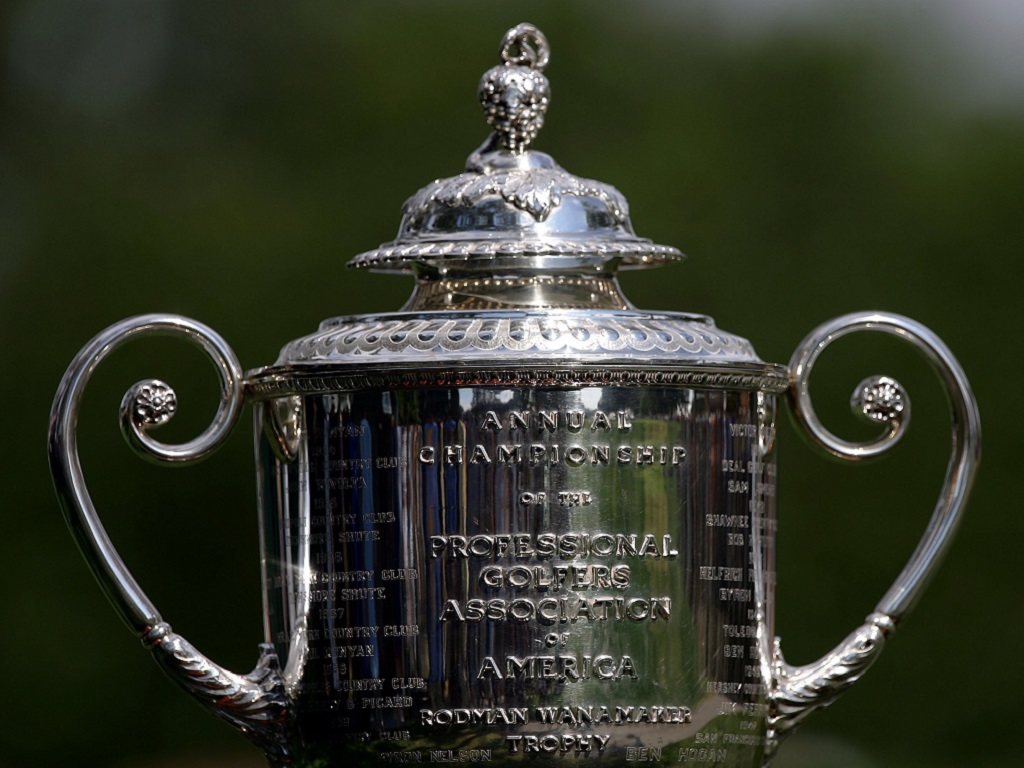
Min Woo Lee, aka Dr. Chipinski, has once again thrust himself into the conversation of Can he, will he, when will he? Lee has so much talent, wins not nearly as often as we believe that he should, and has no major near-misses (much less titles) on his wiki. The young Aussie is getting older and wiser, but is he able to avoid the scarring that holds the older and wiser back from breaking through? Philadelphia offers another opportunity. Min Woo signed for five birdies and two bogeys on day one, and grabbed a share of the opening-day lead at Aronimink. Winners transcend history and the moment, and Lee will need that sort of ascent to lift the Wannamaker on Sunday.
Second, meet Aldrich Potgeiter
The young South African golfer can rip driver with the best of them. Aronimink tips out at nearly 7400 yards, but beyond the fairway bunkers that ensnare only the mortals, Potgeiter can take his chances with wedge from the rough. On Thursday, he spent plenty of time in the spinach. Like Popeye, he used his muscles to gouge and thrash and dig his way out. Six birdies against three bogeys on the card brought AP in a three deep.
Third, meet Martin Kaymer
Not a major event takes place without a where’s he been throwback moment. We know that Martin Kaymer left the PGA and DP World tours for LIV golf, but the two-time (US Open and PGA) major winner has a lifetime exemption into at least one major event, and he seizes the opportunity each May. Kaymer joined the six-seven brigade with four birdies and a solitary bogey on day one. Kaymer was never a long hitter, and the years are kind to no golfer. The German champion will need to uncork every bottle of guile and strategy in his cabinet to remain in contention. For today, though, he occupies a rung on the ladder of Tour Tech.
Fourth, meet Scottie Scheffler
Let’s see, he’s the defending champion at the PGA, and he found his way back to the top tier with five birdies against two bogeys. To be a favorite and then play up to that stature and expectation is quite difficult. Just ask Rory, Bryson, and some of the other pre-tournament heartthrobs. Scheffler’s game is complete, and to knock him off the OWGR #1 pedestal, one needs to defeat him at the majors. Aronimink is the sort of course that fits Scheffler’s game. Better yet, it unfits the game of many of his challengers. Don’t expect Scheffler to go away anytime soon. Come Sunday, he’ll be around.
Fifth, meet Stephan Jaeger
Clocking in for the unheralded players shift are Ryo Hisatsune and Stephan Jaeger. Hisatsune logged seven birdies on day one, but gave most of them back with four bogeys. Still, he’s tied at the top for a time. Jaeger pitched five birdies against two bogeys, including a run of three consecutive, from holes four through six. Odds are that one of the two will hang around through 36 holes. Odds also suggest that both will be gone by Saturday evening. Still, the PGA Championship has historically been the major most likely to be won by an under-known. Both Hisatsune and Jaeger feature on that list, so good luck, lads!

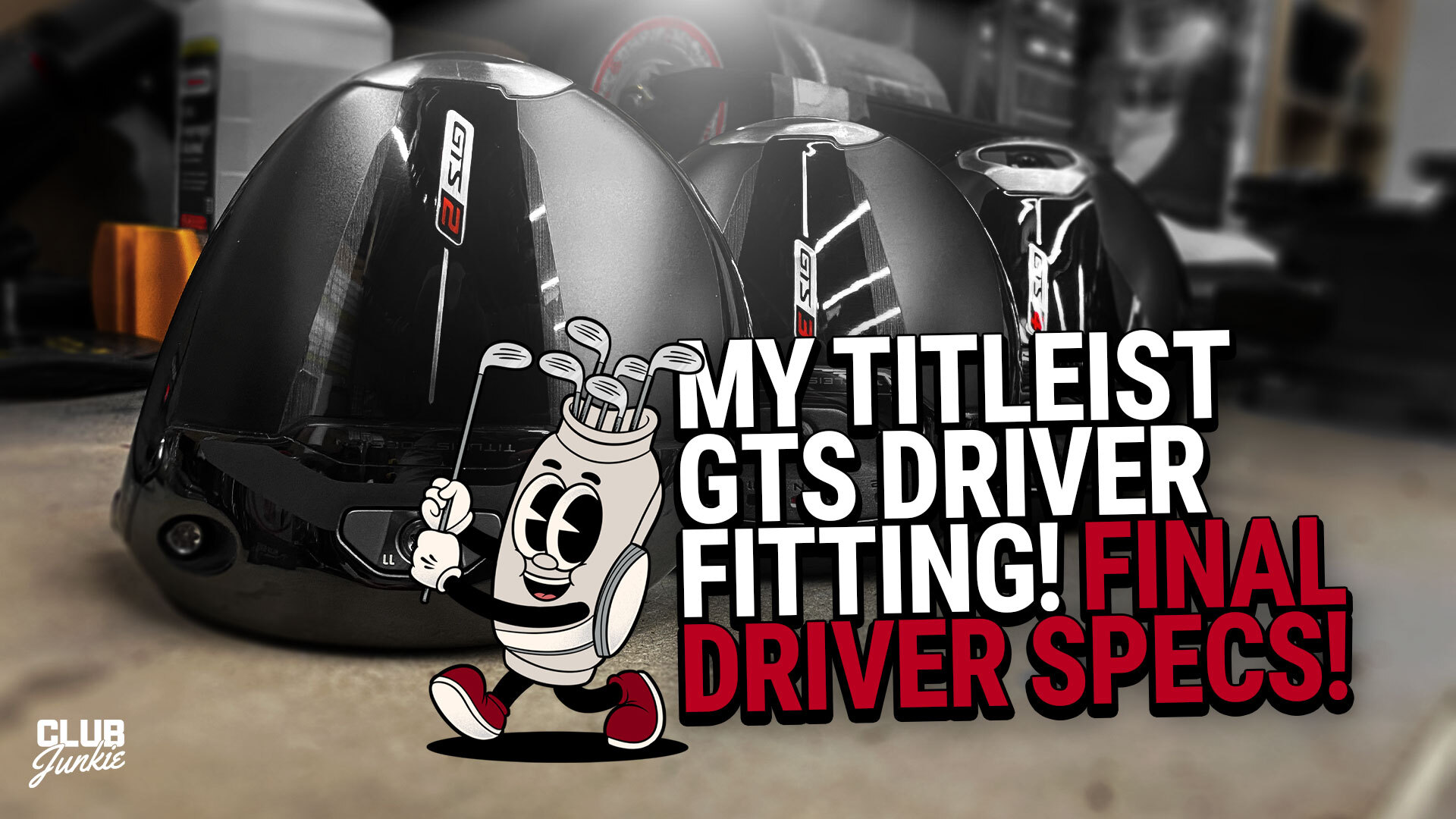
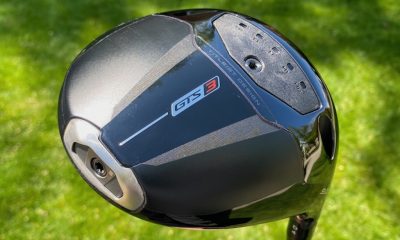
On this episode of the Club Junkie Podcast, I head to the Titleist Performance Institute for a full driver fitting with the new Titleist GTS lineup. We dive into the fitting process, talk about what made the biggest difference in performance, and break down how the different GTS heads and shaft combinations compare on the launch monitor. If you are thinking about a new driver setup for this season, there is a lot to take away from this one.
I also get into Brooks Koepka and the gear setup he brought to the PGA Championship, including the putters that caught my eye during the week. There are some interesting equipment trends showing up at the highest level right now and we break down what stands out.
To wrap things up, I talk about reshafting a few wedges, what I learned during the process, and swapping an adaptor onto a new shaft for another build project in the shop. A gear packed episode from start to finish for anyone who loves golf equipment and club building.
Follow Club Junkie everywhere:
Instagram: https://www.instagram.com/clubjunkiepod/
X: https://x.com/ClubJunkiePod
TikTok: https://www.tiktok.com/@clubjunkiepod
Threads: https://www.threads.com/@clubjunkiepod

Excited for this week’s WITB as we get to add the new Titleist GTS woods to the bag! I was fit at Titleist’s TPI facility in Oceanside California a few weeks ago and my new clubs just showed up. I am also adding a cool set of irons that I built last year some wild custom wedges into a new golf bag. Speaking of the bag I have a new Ghost Anyday Black Ops stand bag that I will be using on my Motocaddy Remote M7 electric cart.
Driver: Titleist GTS3 (11 degrees @ 10.25)
Shaft: Fujikura Ventus Red 6s
3-wood: Titleist GT1 3Tour (14.5 degrees)
Shaft: Graphite Design Tour AD CQ-7s
5-wood: Titleist GTS (18 degrees)
Shaft: Fujikura Ventus Red 7s
9-wood: Titleist GT1 (24 degress)
Shaft: Fujikura Ventus Red 7s
Irons: Bettinardi CB24 (5-PW)
Shafts: KBS C-Taper Lite 110 stiff
Wedge: TaylorMade MG5 (50-09 SB)
Shaft: Mitsubishi MMT 125 Stiff
Wedge: TaylorMade MG5 (56-12 SB)
Shaft: Mitsubishi MMT 125 Stiff
Wedge: TaylorMade MG5 (60-08 LB)
Shaft: Mitsubishi MMT 125 Stiff
Putter: Dan Carraher ZT Proto
Ball: Callaway Chrome Tour
Bag: Ghost Anyday Black Ops Stand Bag

Justin Rose WITB 2026 (April): Full WITB breakdown with new McLaren irons

RBC Heritage Tour Report: More minis, course-specific setups, Spider & GTS launches

What’s the story behind Webb Simpson’s custom-stamped irons?

Cadillac Championship Tour Report: Spieth’s sizable changes, McLaren Golf launches, and more

Kristoffer Reitan’s winning WITB: 2026 Truist Championship

Cameron Young’s winning WITB: 2026 Cadillac Championship

Aaron Rai’s winning WITB: 2026 PGA Championship

Nelly Korda WITB 2026 (April)

Justin Rose on the switch to McLaren Golf, learnings from previous equipment moves

Photos from the 2026 PGA Championship


Patrick Reed WITB 2026 (May)
Driver: Titleist GT3 (9 degrees) Buy here. Shaft: Aldila Rogue Silver 130 M.S.I. 70 TX 3-wood: TaylorMade Qi35 (15 degrees)...

Aaron Rai’s winning WITB: 2026 PGA Championship
Driver: TaylorMade M6 (9 degrees) Shaft: Aldilda Synergy Blue 70 TX 3-wood: TaylorMade Qi10 (15 degrees) Shaft: Fujikura Ventus Blue...


Michael Block WITB 2026 (May)
Driver: TaylorMade Qi4D (9 degrees) Shaft: Fujikura Ventus Black VeloCore+ 5 X 3-wood: TaylorMade Qi4D (15 degrees @14.25) Shaft: Mitsubishi...


Bryson DeChambeau WITB 2026 (May)
Driver: Krank Formula Fire Pro (6 degrees) Shaft: Project X Prototype 3-wood: Krank Formula Fire (10 degrees) Shaft: LA Golf BAD...
-
 Whats in the Bag3 weeks ago
Kristoffer Reitan’s winning WITB: 2026 Truist Championship
-
Whats in the Bag2 weeks ago
Aaron Rai’s winning WITB: 2026 PGA Championship
-
 Tour Photo Galleries3 weeks ago
Photos from the 2026 PGA Championship
-
 Equipment2 weeks ago
GolfWRX Launch Report: 2026 Titleist GTS drivers
-

 Equipment2 weeks ago
PGA Championship Tour Report: Fitzpatrick, Koepka among big-name putter switches for Aronimink
-

 News2 weeks ago
WITB Time Machine: Phil Mickelson’s winning WITB, 2021 PGA Championship
-

 Equipment2 weeks ago
Which of Tiger’s major winning irons are your favorite? – GolfWRXers discuss
-

 Equipment2 weeks ago
Lead Tape Report: Adjusting the swingweight of the Wanamaker Trophy


84425
Feb 12, 2020 at 6:56 am
Reading the title of the story I thought “is this guy nuts: harder? It’s become easier!” But upon reading it I think you might be right for the general masses. Those that have a good short game will not be affected too much, or might be even better of with faster greens. But if your short game is not great, you will strugle.
Where it has become easier (too easy imho) to cross the first 300 yards of a hole, the last 50 yards have become harder (if you play where conditions are like you state). While both long and short game require practice, short game requires continuous practice. Hours and hours on the putting green, which is something not everyone has the time for.
Jim Berry
Feb 6, 2020 at 8:49 am
Golf has always been hard. One thing that I have noticed about the better players have in common is a short game. When I score well, the putting and chipping are working. Many of the people that I see struggling with chipping and pitching have only one shot with their wedges. I never see them around the chipping practice area trying different shots and lies. The touch part of the game, chipping and putting, takes practice and attention to get better. I am 71 now, and am scoring better than I ever have. I love a course that is in great condition, and am willing and eager to deal with the challenges.
Pelling
Feb 5, 2020 at 10:23 pm
Golf is much easier now than it has ever been. The ball goes straight and doesn’t cut on mishit shots. The clubs are huge with sweet spots the size of diner plates. Wedges are versatile and putters are almost automatic, especially from five feet and closer. Lasers yield exact distances. Shoes are lightweight and fabrics conform to the elements. When I started the game, at age 10 in 1963, I inherited my dad’s Spaulding Top Flight irons and his Kenneth Smith 4 wood with a tear drop shaft. I caddied and got to play the local country club on Mondays at 7:00 AM. My hand me down leather Footjoys were immediately soaking wet from the heavy dew and weighed about 10 lbs. I had a heavy leather bag with a thin terrible strap. Modern technology at the time was a Hogan Sure Out sand wedge with a flange the size of a quartered orange.
My brass headed Billy Casper Wilson putter had a sweet spot the size of a pea. There was no club fitting, golf ball covers cut violently on mishits, and I had a nine iron that I learned to open up and play all sorts of lobs, cuts, and pitches with in my back yard. It was my scoring club. Oh, and left handlers were out of luck as there were very few clubs, let alone good ones, available.
Bob Jones
Feb 5, 2020 at 9:26 pm
I play on a course occasionally that has very good greens most of the time. It is a tournament course, and the rest of the time they are in tournament condition. Then they are fast, but true, and I can’t believe how much better of a putter that makes me.
Red Nelson
Feb 5, 2020 at 6:53 pm
Hi Terry,
I’m going off-topic in order to reprimand you. Get off the fence, man. Only Jack Nicklaus, the ultimate White Bread, says “darn.” Man-up Texas-style and let your inner animal cut loose! Say “Damn, this game is hard.” I’m pretty sure no one will be offended. If they are, well, they can darn well fornicate themselves. Verdad, amigo?
Chuck Urwin
Feb 5, 2020 at 6:38 pm
My old boss kept his 36 greens under 10! I realized as I got older he was trying to help the public golfer enjoy golf more! Low hdcp players did not like them that slow but they were in the minority of players, so it was slow as you go! I believe public greens are too fast now & should be slowed down! Private clubs who have always had fairly fast greens should continue to do as they like!
Rob
Feb 5, 2020 at 12:57 pm
I’ll take super fast and smooth greens over slower but bumpy greens all the time. I can adjust to speed, there’s no way to adjust to bumpy. I play 90% of my golf on public courses and whenever I get the opportunity to play a private course with fast greens I find myself making more putts.
Mark M
Feb 5, 2020 at 11:00 am
You’re right, that Robin Williams bit on golf is hilarious!
I can see where Terry is coming from, golf can be especially hard for the beginner, the once a month player or the average weekend golfer. But there ARE courses with slower, flatter greens, wide open fairways and a lack of penalty areas. There are par 3 courses for those who need shorter courses, with less difficulty. Are those people playing these courses? Do they move up to a teebox suitable for their games?
I see this whole idea of growing the game by making things easier as antithetical to the game of golf. I don’t think that golf is a game for the masses. Golf is inherently difficult. Golf is not bowling. You can’t just go out and play this game without any training, practice or work and expect to do anything but struggle.
I think Jimmy Dugan said it best: “It’s supposed to be hard. If it wasn’t hard, everyone would do it. The hard is what makes it great.”
Tim
Feb 5, 2020 at 10:04 am
I agree. Green speeds are getting nuts. Ridiculously fast greens are creeping into the local course, not just the high end ones. It seems to me that the the traffic jams around the course are being caused by groups spending too much time on the greens- plumb bobbing and walking around and around like they do on TV. Slowing down the greens will make wedges stop faster and putts roll straighter. The short game will be far easier and less touchy – as a result – faster.
The other truth of the matter is that people are imitating what they see on tv. People need to realize that what the guys on TV are doing is very different from what we are doing on a saturday morning. Golf is really akin to bowling. Its a silly little pass-time game, nothing more. So lighten up, hit the ball and move on.
Mat
Feb 5, 2020 at 4:02 am
I would invite Americans to putt on “British” greens that are 8-9 on the Stimp. It is much more enjoyable.
Every time I come back to the States and play, it’s just idiotic. The misses are so punishing, it’s clear that the game slows down from the putting. No wonder everyone takes a lot of time! It’s like putting on linoleum.
No course should ever be over 10 unless the heat were to dry it out. No greenskeeper should ever want something higher than 10.0.
Again, USGA is out of touch here. Just because you can make a 13 doesn’t mean it’s a good idea.
JThunder
Feb 4, 2020 at 8:51 pm
This article seems to posit that putting is ruining golf. Is Terry Koehler a pseudonym for Johnny Miller?
yip yip yip
Alex
Feb 4, 2020 at 6:40 pm
Stop playing boxes that overmatch you and equipment that doesn’t fit you. The ball goes so much straighter and longer than ever and is so much easier to control than years before. It’s also not a game you can just pick up and be scratch overnight no matter how much of an athlete you think you are. The attention span and ability to work towards a goal being next to nothing nowadays and wanting instant gratification is why people perceive golf as hard.
Rick
Feb 4, 2020 at 3:32 pm
I’ve been playing for 40 years, the game was harder playing with blades, persimmon woods and no 60 degree wedge! The ball goes farther the club’s are easier to hit and I’m hitting it just as far as I did in my 20s. Golf is and always will be for the few who have perseverance! The desire to compete and enjoy what it gives you. You can’t keep trying to force people to adopt the idea that everybody is a right to be good! Stop the insanity!
Shallowface
Feb 4, 2020 at 2:59 pm
“Many pin positions leave you looking for the windmill or clown’s mouth.”
The USGA suggests that pins only be set in positions that are as flat as possible three feet around the cup. Most superintendents that I speak to about this are completely unaware of that suggestion.
Augusta National has its reputation for fast undulating greens, but truth is when you watch The Masters putts of that length are rarely played outside the hole. They follow the USGA’s practice.
I’ve been playing nearly 50 years, and I think the game is the easiest its ever been. 460cc Drivers. Balls that don’t spin and therefore fly straight. Hybrids. Wedges available in a myriad of grinds. Putters that are impossible to mishit.
And that’s why people drop out. They know the above is true. And they can’t help but think that if a person can’t play with this equipment, there must be something wrong with them. Just the opposite effect one would think modern equipment would have.
Rich Douglas
Feb 4, 2020 at 1:40 pm
I’m with Hogan: putting is boring and a completely different game. I’m tired of seeing the groups ahead of me slowing the pace while they 4-putt all day. (The fourth putt just scraped away from 6 feet after the first three.)
Juststeve
Feb 4, 2020 at 11:49 am
I think the game is a lot easier than it was when I first started playing in the 1960’s. The modern ball goes further and straighter. Modern clubs are much easier to hit and vastly more forgiving of minor mistakes. Today’s greens are so smooth and true that you can actually expect the ball to go in if you get the line and speed correct. When I started playing even at elite clubs putts over 15 feet were basically crap shoots.
DB
Feb 4, 2020 at 10:44 am
I agree that the greens make the game VERY difficult for beginners. I see them getting frustrated when they 3-4 putt every single green. And I’m not talking about fancy courses either, these are public courses that were designed decades ago and now the greens run 10-11 like you mentioned. Some of the slopes and tiers that might have been challenging decades ago are now brutally punishing if you misjudge.
dat
Feb 4, 2020 at 9:46 am
Bomb & gouge is boring. Creative golf is basically dead.
Moosejaw McWilligher
Feb 4, 2020 at 8:48 pm
The vast majority of golfers cannot “bomb”, and cannot “gouge” anywhere near the green. The vast majority of golfers don’t have the skill to be *deliberately* “creative”, which is even harder than the first two things.
For the 0.1% of golfers who compete for big money at the elite level, “boring” will earn them more money in the long run than “creative”.
Rascal
Feb 11, 2020 at 7:27 pm
Very astute.
Ryan
Feb 4, 2020 at 9:36 am
I think the Wedge guy hit the nail on the head with this one. I coach HS golf at a very inner city school. Golf has gotton to hard. We now make courses for those who are really good and there just are not that many of those golfers out there. We need to get back to shorter golf courses with less challenges. This will speed up play as well as get more people out there.