
Opinion & Analysis
The Wedge Guy: Has the game gotten too hard? (Part 2)


First of all, thanks to all of you who chimed in on this discussion I began in last week’s post. In general, the comments seemed to fall into two groups—those who agreed that the game has gotten too difficult around the greens, and those who stated that modern equipment has made the game easier, and that fast, smooth greens are a godsend.
To those who espoused that latter position, I don’t totally disagree with you…but only for more accomplished players (but I do think green difficulty has gone too far). I guess I missed making my key point, which was that too many modern green complexes have shifted the historic challenge of golf from the full swing striking of a golf ball to make it go where you want, to the highly sophisticated skillset required to pitch, chip and putt around and on these
heavily protected, super-fast and mostly undulating greens.
It seems most of us agree that modern equipment and teaching technologies have dramatically streamlined the learning process so that achieving quasi-mastery of making a golf ball get airborne in the general direction you want it to go has been made more efficient. My point was that while striking the golf ball has become exponentially easier, the act of making it go in the hole from the last 20-30 yards has become exponentially harder. And I don’t think this
is good for the game as a whole.
It’s no secret that golf participation is not enjoying any positive vibes. Not enough new golfers are taking up the game, the majority of courses are struggling to stay viable, and many are even closing. I would even suggest that Topgolf and its clones are enjoying success because their activity is totally focused on hitting golf shots…and the challenges of finishing the hole are not part of the picture.
But for all of us who love golf, recruitment of new players is crucial to continued access to our favorite courses. If the game cannot attract and retain new participants, those of us who must support any given club or public course is a declining population. And that can only lead to closures and loss of facilities that we enjoy. So, I contend that if you love golf, you simply have to be part of the solution.
The USGA initiated the “Tee It Forward” campaign, which was certainly a step in the right direction. Who wants to play a course where you cannot reach the par-4 holes in two shots or the par 5’s in three? I am a huge proponent of every golfer choosing a set of tees that allow them to do that, and it has nothing to do with “Ladies” or “Seniors” tees. It only has to do with your own physical abilities – how far can you hit driver, 5-iron, etc. For Pete’s sake, play the tees that make the game play like it should.
But teeing it forward doesn’t address the topic I have put forth for discussion: Even if that lady/senior/beginner plays the forward-most tees to match their strength profile, they still have to contend with the same heavily bunkered, undulating, lightning-fast green complexes as the championship golfer. That makes no sense if we are trying to attract new players.
I watched a few holes of a high school girls’ tournament Sunday, with some of the top teams in South Texas in the field. On a windy weekend, scores ranged from (+6) 148 for the eventual 36-hole champion to several scores over 300 for two rounds; what we should be concerned about is that well over half the field did not shoot under 200 for the two rounds.
Many of these young ladies exhibited very functional tee-to-green skill sets, but they got killed by our green complexes, taking 4-5 strokes to navigate from greenside more often than not. And I have witnessed the same disparity between the elite players and the bulk of the field in boys’ tournaments as well.
If we think any of these kids are going to continue to play golf recreationally after high school, we are delusional. Very simply, this cannot be fun. In fact, it is downright humiliating to take two swings to move the ball 250-350 yards or more, then twice that many–or more–to get the ball in the hole from there.
So, here is my offer of a solution…Green it forward.
If courses would construct a very simple, un-bunkered, relatively flat “beginners’ green” somewhere out front and/or to the side of the regular green, with a speed that runs 5-7 at the most, and maybe even with a larger cup of 6-8”, beginners and less skilled players could enjoy a day of golf without fear and frustration. When their skills have advanced sufficiently to play the regular greens, they can take them on. This just might be a way to reverse the trend of losing players, or not getting them at all.
We let little kids graduate from tricycles to training wheels before we turn them loose on a bike. We let them play soccer with much fewer rules to get them into the game. We lower the basket to 7-8 feet for youth basketball. We let the tykes play T-ball, then coach pitch, to get them ready for Little League baseball.
Why can’t we do the same to get them into golf?





Aronimink is not a storied club, but when Donald Ross himself proclaimed it to be as good as he can design and build, one had to take notice. Jay Sigel was the pre-eminent male amateur golfer from the mid-1970s to the mid-1990s. He might have called any number of Philadelphia clubs home, but he chose Aronimink. It served him well. Gary Player won a PGA Championship here in 1962, and was followed by the 1993 winner … nobody. Aronimink gave that event away to Inverness, for reasons of which it is certainly not proud. So be it. We had to wait sixty-four years for the PGA to return to Newtown Square, but here we are. Aronimink has been neo-restored by Gil Hanse and team, to return Ross features with an eye toward defense against the dark arts, errrr, high-tech equipment.
Day one saw Rory McIlroy and Bryson DeChambeau dig big holes, to the tune of plus-four and plus-six, respectively. Since the first-round lead will be minus-three at worst, many shots will need to be made up for the power couple to reach contention. By nightfall, seven golfers held the day-one lead at three-under par 67. Shots and sticks caught our attention, and we are proud to present Five Things We Learned on Tech Thursday at the 2026 PGA Championship. Thanks to InsideTourGolfer, Today’s Golfer, and GolfWRX for initial equipment research.
First, meet Min Woo Lee
Min Woo Lee, aka Dr. Chipinski, has once again thrust himself into the conversation of Can he, will he, when will he? Lee has so much talent, wins not nearly as often as we believe that he should, and has no major near-misses (much less titles) on his wiki. The young Aussie is getting older and wiser, but is he able to avoid the scarring that holds the older and wiser back from breaking through? Philadelphia offers another opportunity. Min Woo signed for five birdies and two bogeys on day one, and grabbed a share of the opening-day lead at Aronimink. Winners transcend history and the moment, and Lee will need that sort of ascent to lift the Wannamaker on Sunday.
Second, meet Aldrich Potgeiter
The young South African golfer can rip driver with the best of them. Aronimink tips out at nearly 7400 yards, but beyond the fairway bunkers that ensnare only the mortals, Potgeiter can take his chances with wedge from the rough. On Thursday, he spent plenty of time in the spinach. Like Popeye, he used his muscles to gouge and thrash and dig his way out. Six birdies against three bogeys on the card brought AP in a three deep.
Third, meet Martin Kaymer
Not a major event takes place without a where’s he been throwback moment. We know that Martin Kaymer left the PGA and DP World tours for LIV golf, but the two-time (US Open and PGA) major winner has a lifetime exemption into at least one major event, and he seizes the opportunity each May. Kaymer joined the six-seven brigade with four birdies and a solitary bogey on day one. Kaymer was never a long hitter, and the years are kind to no golfer. The German champion will need to uncork every bottle of guile and strategy in his cabinet to remain in contention. For today, though, he occupies a rung on the ladder of Tour Tech.
Fourth, meet Scottie Scheffler
Let’s see, he’s the defending champion at the PGA, and he found his way back to the top tier with five birdies against two bogeys. To be a favorite and then play up to that stature and expectation is quite difficult. Just ask Rory, Bryson, and some of the other pre-tournament heartthrobs. Scheffler’s game is complete, and to knock him off the OWGR #1 pedestal, one needs to defeat him at the majors. Aronimink is the sort of course that fits Scheffler’s game. Better yet, it unfits the game of many of his challengers. Don’t expect Scheffler to go away anytime soon. Come Sunday, he’ll be around.
Fifth, meet Stephan Jaeger
Clocking in for the unheralded players shift are Ryo Hisatsune and Stephan Jaeger. Hisatsune logged seven birdies on day one, but gave most of them back with four bogeys. Still, he’s tied at the top for a time. Jaeger pitched five birdies against two bogeys, including a run of three consecutive, from holes four through six. Odds are that one of the two will hang around through 36 holes. Odds also suggest that both will be gone by Saturday evening. Still, the PGA Championship has historically been the major most likely to be won by an under-known. Both Hisatsune and Jaeger feature on that list, so good luck, lads!

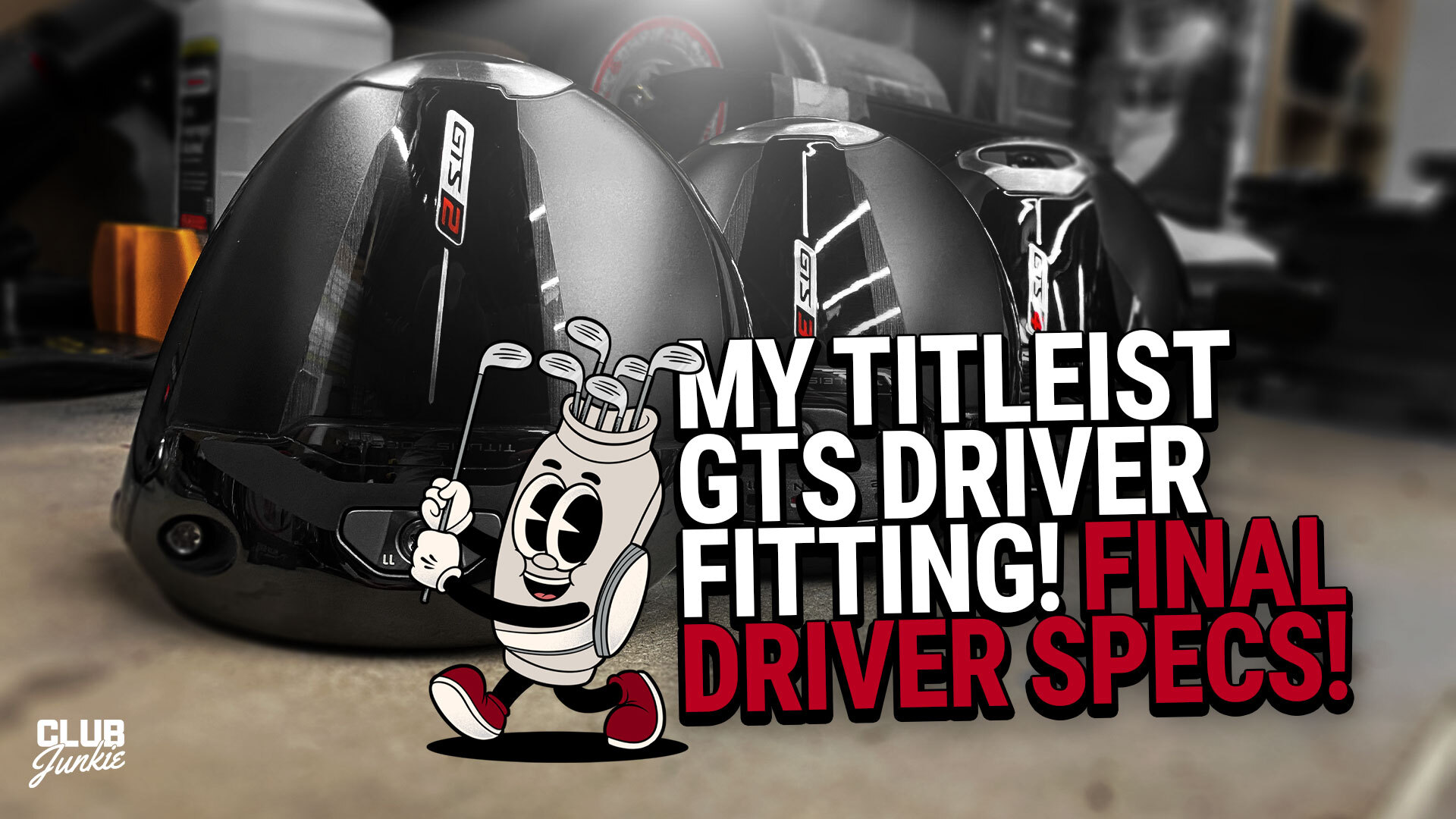
On this episode of the Club Junkie Podcast, I head to the Titleist Performance Institute for a full driver fitting with the new Titleist GTS lineup. We dive into the fitting process, talk about what made the biggest difference in performance, and break down how the different GTS heads and shaft combinations compare on the launch monitor. If you are thinking about a new driver setup for this season, there is a lot to take away from this one.
I also get into Brooks Koepka and the gear setup he brought to the PGA Championship, including the putters that caught my eye during the week. There are some interesting equipment trends showing up at the highest level right now and we break down what stands out.
To wrap things up, I talk about reshafting a few wedges, what I learned during the process, and swapping an adaptor onto a new shaft for another build project in the shop. A gear packed episode from start to finish for anyone who loves golf equipment and club building.
Follow Club Junkie everywhere:
Instagram: https://www.instagram.com/clubjunkiepod/
X: https://x.com/ClubJunkiePod
TikTok: https://www.tiktok.com/@clubjunkiepod
Threads: https://www.threads.com/@clubjunkiepod

Excited for this week’s WITB as we get to add the new Titleist GTS woods to the bag! I was fit at Titleist’s TPI facility in Oceanside California a few weeks ago and my new clubs just showed up. I am also adding a cool set of irons that I built last year some wild custom wedges into a new golf bag. Speaking of the bag I have a new Ghost Anyday Black Ops stand bag that I will be using on my Motocaddy Remote M7 electric cart.
Driver: Titleist GTS3 (11 degrees @ 10.25)
Shaft: Fujikura Ventus Red 6s
3-wood: Titleist GT1 3Tour (14.5 degrees)
Shaft: Graphite Design Tour AD CQ-7s
5-wood: Titleist GTS (18 degrees)
Shaft: Fujikura Ventus Red 7s
9-wood: Titleist GT1 (24 degress)
Shaft: Fujikura Ventus Red 7s
Irons: Bettinardi CB24 (5-PW)
Shafts: KBS C-Taper Lite 110 stiff
Wedge: TaylorMade MG5 (50-09 SB)
Shaft: Mitsubishi MMT 125 Stiff
Wedge: TaylorMade MG5 (56-12 SB)
Shaft: Mitsubishi MMT 125 Stiff
Wedge: TaylorMade MG5 (60-08 LB)
Shaft: Mitsubishi MMT 125 Stiff
Putter: Dan Carraher ZT Proto
Ball: Callaway Chrome Tour
Bag: Ghost Anyday Black Ops Stand Bag

Justin Rose WITB 2026 (April): Full WITB breakdown with new McLaren irons

RBC Heritage Tour Report: More minis, course-specific setups, Spider & GTS launches

What’s the story behind Webb Simpson’s custom-stamped irons?

Cadillac Championship Tour Report: Spieth’s sizable changes, McLaren Golf launches, and more

Kristoffer Reitan’s winning WITB: 2026 Truist Championship

Cameron Young’s winning WITB: 2026 Cadillac Championship

Aaron Rai’s winning WITB: 2026 PGA Championship

Nelly Korda WITB 2026 (April)

Justin Rose on the switch to McLaren Golf, learnings from previous equipment moves

Photos from the 2026 PGA Championship


Patrick Reed WITB 2026 (May)
Driver: Titleist GT3 (9 degrees) Buy here. Shaft: Aldila Rogue Silver 130 M.S.I. 70 TX 3-wood: TaylorMade Qi35 (15 degrees)...

Aaron Rai’s winning WITB: 2026 PGA Championship
Driver: TaylorMade M6 (9 degrees) Shaft: Aldilda Synergy Blue 70 TX 3-wood: TaylorMade Qi10 (15 degrees) Shaft: Fujikura Ventus Blue...


Michael Block WITB 2026 (May)
Driver: TaylorMade Qi4D (9 degrees) Shaft: Fujikura Ventus Black VeloCore+ 5 X 3-wood: TaylorMade Qi4D (15 degrees @14.25) Shaft: Mitsubishi...


Bryson DeChambeau WITB 2026 (May)
Driver: Krank Formula Fire Pro (6 degrees) Shaft: Project X Prototype 3-wood: Krank Formula Fire (10 degrees) Shaft: LA Golf BAD...
-
 Whats in the Bag3 weeks ago
Kristoffer Reitan’s winning WITB: 2026 Truist Championship
-
Whats in the Bag2 weeks ago
Aaron Rai’s winning WITB: 2026 PGA Championship
-
 Tour Photo Galleries3 weeks ago
Photos from the 2026 PGA Championship
-
 Equipment2 weeks ago
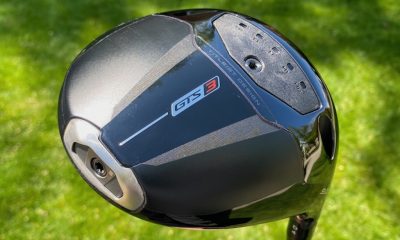
GolfWRX Launch Report: 2026 Titleist GTS drivers
-

 Equipment2 weeks ago
PGA Championship Tour Report: Fitzpatrick, Koepka among big-name putter switches for Aronimink
-

 News2 weeks ago
WITB Time Machine: Phil Mickelson’s winning WITB, 2021 PGA Championship
-

 Equipment2 weeks ago
Which of Tiger’s major winning irons are your favorite? – GolfWRXers discuss
-

 Equipment2 weeks ago
Lead Tape Report: Adjusting the swingweight of the Wanamaker Trophy


Carl
Feb 13, 2020 at 8:23 am
Making new greens is an expensive proposition, in a game that is already getting too expensive. I’m 65 years old and whe we need are greens a little slower and not quite so undulating. We also need affordable golf. When I was growing up, golf was a rich mans sport and it’s getting back to that again. You need kids to play and to bring in new people, make it affordable and playable. Everyone wants a tour caliber course, why? I was a top amateur in my day and the course I played on was enjoyable for all. All this extra bunkering and super slope greens came in during the Pete Dye era… ridiculous golf. I prefer the older architects, but we shouldn’t be taking Donald Ross greens and making them a 12 on the stomp meter! They weren’t designed for that. We need to make golf affordable and fun for beginners. I started my kids off at the 150 yard markers of each hole and halfway close on par 3’s. I taught them the etiquette of the game and to respect the course. We let faster groups through and fixed divots and ball marks. I had them play a nice little 9 hole course that wasn’t too hard and had moderate greens.
Then I played with them! Most kids want to be with their parents and golf is a good game to do that! Spend time together. Make it fun!!
Michael
Feb 12, 2020 at 9:58 pm
I know this is a little off the topic but addresses part of the question of getting new golfers in the game. One of the problems I found for young players is that all kids golf clinics in my area are during the week at hours that people work. Most kids would rather learn in a group setting with other kids.
8thehardway
Feb 12, 2020 at 7:11 pm
Build one nice, easy green; mark distances of 5 to 30 feet to the hole in chalk and reserve it for those who want this option 30 minutes prior to their tee time. They can record their putts on a hole-by-hole basis prior to their round and avoid on-course greens once reaching them unless their approach shot lands close to the hole, in which case they have the option to attempt the putt.
Dedicate part of the existing putting green to this or computerize putting if building a green dedicated to beginners isn’t feasible. With any of these setups, beginners could come any day prior to their round and record their efforts.
Rascal
Feb 12, 2020 at 5:23 pm
Just setup some temporary courses in big spaces not being used, like stadiums or sports fields. Don’t need that much room, but perhaps insurance will be the real obstacle.
Acemandrake
Feb 12, 2020 at 1:49 pm
Let play/practice be determined by the time spent rather than the number of holes played.
I like to play between 2 & 3 hours and then I want to go do something else. I’ve been playing for 50 years and at various levels of the game.
There are a lot of formalities in golf that are intimidating and unwelcoming to non-golfers. “How many hours do you want?” vs. the standard “9 or 18?” might be an enticement.
Loosen up and play the way you want.
G
Feb 12, 2020 at 12:47 pm
Obviously, courses can’t build 18 new green complexes.They could simply mow an area near the green down to a 7 stimp length and let those that want to, play out there. As one of the above commenters noted, he has his beginner children putt out on the foot golf green. The problem is human nature, most people want to play a championship course, regardless if their skill. They want to play like the pros from the back tees on fast greens. It’s stupid, but that’s how most people think-its ego. I really feel like making greens slower would help tremendously. It would also lower costs. I had a friend who owned a course, he was struggling to keep it open. And his biggest expense was the chemicals for greens. As greens get faster more chemicals are needed to keep those greens healthy. The cost from a 9 green to a 12 aporox.doubles just in the chemicals. He eventually closed his course.
myron miller
Feb 12, 2020 at 12:41 pm
I play a moderate amount and a fairly large number of different courses each year (50-75) different each year so I see a lot of differences. I see very very few super quick greens, maybe under 5 a year at pro speeds and twice that number at under 7 stimp. There’s one course locally that regularly is at 4-6. Do you really understand how hard you have to hit a ball with a stimp of 5? I can’t do it with a putter. I had to use a wood to get the ball going fast enough to roll to the hole from 30-40 feet away. From what I’ve seen a stimp of 7-10 is adequate for the average golfer and that’s what is found at a lot of courses, especially muni’s. And for resort type courses in Florida that range is pretty much most of them try to keep the courses. I’ve been told by many greenskeepers at resort courses that when they speed them up the average resort golfer has problems and then 4-5 putt and that’s 5-6 hour rounds on the average. Remember the average resort player in Florida probably hasn’t played in 1-3 months (it’s winter up north and generally they can’t). SO they haven’t had a chance to play due to one reason or another.
Better players don’t encounter fast greens so they struggle for their first round or two on them. But most can adjust somewhat. Now I can’t speak for that tournament in Texas but I’ve seen a number of junior tournaments in Florida, including state high school and there are very very few players that don’t break 90. Most are breaking 75 with the leaders somewhere in the low-mid 60s almost without exception. In fact, at the high school level there are very few kids not breaking 50 for 9 holes with most in the lower 40s.
I’ve played courses with two pins and they are a major pain the posterior to putt on. Usually one or the other unused pin is in the way and people have to take drops to avoid the wrong pin.
But moving up is very doable. Most in Florida have senior tees at 5100-5500 which are reasonable for most seniors, even if they can’t reach all the par 4s in 2. On One course I play a moderate amount and regularly shoot a low 18-20s index which gives me a course handicap of 9. Now I know I’m NOT a 9 handicap now, I’m a 18-20 realistically if not more, but courses like these are easy enough (or at least the USGA thinks so) to be very playable. And the course is pretty busy and has a lot of events where players with minimal skills are playing and having fun. But the key is not a gimmicked course but one that is playable for everyone.
So I strongly disagree with many of his suggestions. Besides the old school teaching was to teach putting and then chipping/pitching and not until the student was comfortable with those go to the longer clubs. Also the suggestion not to move back until one broke 80 consistently at that tee box still makes sense.
J. Arnold
Feb 12, 2020 at 11:34 am
Played a fun event a while ago, and each green had 2 holes cut; one reg size, one 12″ and everyone loved it. The 0-10 hdcp players loved the faster play, and the 11+ hdcp ‘newbies’ could sink some putts!
Took some new players to a local course, and told them they could a) tee up on the fairway only play or count shots starting from the 150yd marker. More enjoyable for them (they could hit greens in 2 shots) and me too (faster play).
Golf is one of the few sports that asks everyone to play the ‘pro’ rules. Baseball has slow pitch and aluminum bats, men’s hockey has no hitting and no slapshots, skiers don’t learn on double black diamond ‘Olympic’ caliber runs, there are ‘touch’ or flag football leagues, Pickleball (small court tennis) is booming.
None of the above is costly and it brings more people into the sport, which helps pay to keep courses from closing.
Bob Jones
Feb 12, 2020 at 10:01 am
I can’t identify with this problem, because the daily fee courses where I play (NW Oregon), even the recent constructions, are nothing like the ones you’re describing. The problem sounds like designers wanting to make their reputation designing Tour-quality courses and not realizing? caring? that golf is played by millions of people who are anything but Tour quality. But maybe there’s no money in designing courses that can be played by the masses. Or course owners demand a difficult course instead of a playable one.
As for all those high school and junior tournaments, I just wouldn’t hold tournaments on courses that beat up and probably discourage hard-working young players like that. Is that so hard for adults to figure out?
PSG
Feb 12, 2020 at 9:31 am
This guy always has awesome solutions to problems nobody wants solved. I don’t even know where to start with this “take”. Let’s spend millions of dollars on this nonsense.
Terry, the best way to research an article is to do research. Do you have anything at all to back up your claim that greens are harder now than before? Make sure your hands and brain are connected before you type another one of these.
Greg
Feb 12, 2020 at 9:05 am
Shawn
Agreed
Probably the least costly and objectionable would be two separate pin placements per green. Additionally, fill in a few of the needless, penalizing bunkers. Two cost effective measures which simplify and speed up play would be the first steps at progressing our game.
Fiorenzo
Feb 14, 2020 at 11:23 am
I agree with the placement of two separate pins. Players can decide which pin to play for at the start of the round. I presume that the use of these tees will mean that the round would not be acceptable for handy capping purposes but casual golfers and beginners , I am sure, would not be phased.Filling in bunkers I am not so sure, even if they are the bane of my life.
sroooooch
Feb 12, 2020 at 7:54 am
1) Stop making golf 18 holes, real people do not have time or money to play that long. Don’t even make them 9, make places that have 5,6,or 7 holes. Who cares? Just make them short and quick, blue collar people have a lot on their plate. Golf doesn’t fit in.
2) Build pitch-n-putt courses in urban areas all across the country. The PGA has no problem buying courses that no realistic person is ever going to play and then have the nerve to say they’re “growing the game”. Take the game to kids and stop trying to take kids to the game. It will never grow with that mindset.
You don’t need to make the game easier, just more accessible, the more people who start at a young age makes the game easier for a lot of people. Building muscle memory at youth is far easier than at an older age. People in golf don’t understand the real world and have made no actual attempts to grow the game. Even the first tee is a flawed system that will not grow the game.
Cheers
MP Fritze
Feb 12, 2020 at 7:43 am
I watch the Pro’s on weekends. I really have nothing in common with them, not clubs, balls,etc. i do have the same enthusiasm, though.
I’m 76 and shoot to a 16 on public courses. All the new equipment that will come out will not help me get better, but its fun to think it will. Love this game.
Vincent Collier
Feb 12, 2020 at 7:25 am
Unworkable… the average cost of adding a green to an existing course is over $75k. So that is a $1.3m improvement before the annual cost of fertilizer and reseeding.
Shallowface
Feb 12, 2020 at 7:11 am
Not sure why, but my comments don’t seem to post on this section of the website on a consistent basis. Trying again.
As I mentioned in my comment on Part 1, the onus is on the people setting the hole locations to put them in places that are flat as possible for three feet around the cup. Often times the guy cutting the holes (who often times doesn’t even play golf except for the kind with clown mouths and dinosaurs) thinks it’s cute or funny to put them in places that are impossible. At one course I frequent, they were sending out a couple of teenagers who were visibly gleeful at the places they were cutting the holes. That stopped after I threw a fit in the clubhouse. If a course doesn’t have flat spots available for pin placements, it deserves to go out of business.
Dan’s post above was spot on as well. It’s a golf course, not a grass farm.
Tim Kozlow
Feb 12, 2020 at 6:28 am
We have a bunch of Muni Courses around my area. Easier wide-open courses with no sand. They have a decent length to them but not too many hazards.
They are always crowded. There are several 60 and 70-year-old men and women who play these courses and maintain single-digit handicaps on them.
During the summer, tons of younger kids flock to these courses also.
This is how I started. I played a par three course for a year until I got the guts to play a bigger course which looking back on this it was an easy course but I didn’t know it.
I’m a single-digit player and I can tell you my club’s course is difficult. Greens are tough to hit. Most are surrounded by hazards. They putt tough and have tons of break.
Half the people there cannot break 100 or 90 ever. I wonder what they get out of it?
One of the issues besides what was said above is to maintain a 3 handicap I have to practice and play an awful lot to the downfall of doing other things in life.
The game is just too hard for most people. Many do not have the time to put into it. It is also to dam expensive. That is another reason these muni courses are always busy. You can get a summer pass there for less than 1000 dollars for the whole season.
Kids pay 300 for a summer pass and go out there all day.
I can’t imagine what I have spent on golf in the past 40 years since I was 16.
Half the kids on these courses spend half the day in the woods looking for balls because they are too expensive.
The equipment companies, Ball companies and all of the rest of this industry have no perspective besides catering to the affluent rich. That is what it is all geared toward.
Look at the Pebble Beach pro-am over last weekend. Playground for the rich. It doesn’t promote the game. It just tells all the regular joes that you can watch but don’t touch.
Maybe it would be nice if they let regular people play for free!!! Talk about promoting the game.
Golf is a joke the way it is marketed.
It’s too late for me at 56. This is the game I play but if I was young again and knew what I knew now. I would never play. I would find something else to do.
Moritz
Feb 12, 2020 at 4:34 am
The problem is that many courses (at least over here in central europe) are already fighting financial troubles. 18 extra greens (which equal a LOT of maintenance costs) might kill them entirely. Plus: around here, too fast greens are very rare. Most of them could be a bit quicker for my taste
Radim
Feb 12, 2020 at 3:29 am
I let my children putt into those footgolf holes. They are usually on the side, no hazards around.
Putt Stuff
Feb 11, 2020 at 10:06 pm
The game used to be taught and learned from the green to tee. Now we focus too much on tee to green. Turning three shots into two is attainable for players of all shapes, sizes, and athletic aptitudes when done greenside.
Golf professionals that focus on the short game are always in demand and can charge a premium compared to full swing only teachers. Teaching players a short game technique will always result in better full swing impact whereas working on the full swing will rarely directly influence short game performance.
Public facilities also lack good short game learning areas because they are difficult to monetize.
Cory
Feb 11, 2020 at 8:20 pm
I think these ideas are great. I bet if you took a few muni golf courses in any city and turned them into beginner courses with no bunkers, no rough, and larger and flatter greens people would be lining up to play it. Even better, make it three 6 hole loops so people could play 6 holes in under an hour or tackle all 18 if they’re feeling up to it.
Jesse
Feb 11, 2020 at 7:26 pm
The Superintendent at my course needs to hear about the 3 foot flat area. The Sadist at my club loves to put holes in places that if you are above the hole and miss the putt the ball rolls off the green.
Agreed – The green complexes at the local clubs not hosting PGA/LPGA/Korn Ferry Tournaments need to be designed in such a way that the local sadist cannot have a laugh at those of us who are looking for the clowns mouth and windmills on the holes he has setup
JThunder
Feb 11, 2020 at 5:32 pm
It sounds like the author is referring to specific greens on a specific course. Does this “problem” exist everywhere? If so, I haven’t seen it on the dozens of courses in my area. But I do not have access to private courses.
Private courses have a long, long history of disproportionate ego. “Protecting par”, as a concept, most often stems from these locations – Augusta National is a perfect example. Between the membership, the designers and the record holders, they constantly and consistently want to make courses tougher. This is a constant direction of discussion at the pro and top amateur levels.
I don’t tend to see it reflected at public courses, where the management is in more direct contact with their clientele, and they see and hear every day whether people are “having fun” or not. And they receive feedback that gets the attention of their wallet before their ego.
On the other hand – look at all the “elders” of golf talking about how golf is “too difficult”, and how “everyone is leaving the sport”. Have you ever heard the phrase “self-fulfilling prophecy”?
Maybe these “elders” should be finding a way to present the *challenge* of golf as “the fun”, and presenting the rewards of golf as overcoming those challenges. Though many will refuse to believe it, young people are ready and willing to accept challenges – assuming those challenges are within the realm of fairness and equity.
A non-challenging game will lose players faster than a challenging one.
All that said, golf is NOT for everyone. The early years of Tiger Woods gave the golf industry a taste of ludicrous “growth” and a lot of cash. That is over and we cannot expect it again in our lifetime. Golf is time-consuming, expensive, and – at it’s very heart – difficult and challenging. It also survived for hundreds of years before Tiger, and will after him too.
Shallowface
Feb 11, 2020 at 4:09 pm
As I mentioned in my comment on Part 1, the onus is on the people setting the hole locations to put them in places that are flat as possible for three feet around the cup. Often times the guy cutting the holes (who often times doesn’t even play golf except for the kind with clown mouths and dinosaurs) thinks it’s cute or funny to put them in places that are impossible. At one course I frequent, they were sending out a couple of teenagers who were visibly gleeful at the places they were cutting the holes. That stopped after I threw a fit in the clubhouse. If a course doesn’t have flat spots available for pin placements, it deserves to go out of business.
Dan’s post above was spot on as well. It’s a golf course, not a grass farm.
Shallowface
Feb 11, 2020 at 4:00 pm
As I mentioned in my comment on Part 1, the onus is on the people setting the hole locations to put them in places that are flat as possible for three feet around the cup. Often times the guy cutting the holes (who often times doesn’t even play golf except for the kind with clown mouths and dinosaurs) thinks it’s cute or funny to put them in places that are impossible. At one course I frequent, they were sending out a couple of teenagers who were visibly gleeful at the places they were cutting the holes. That stopped after I threw a fit in the clubhouse. If a course doesn’t have flat spots available for pin placements, it deserves to go out of business.
Dan’s post above was spot on as well. It’s a golf course, not a grass farm.
Golf is golf
Feb 11, 2020 at 3:53 pm
That s why cooking, cleaning or kniting exist …people who shoot 300 for 36 holes can go play putt putt after a nice day shopping at the mall
Cory
Feb 11, 2020 at 8:14 pm
Based on that comment, I’m guessing you
A) don’t have daughters, or even a wife
B) don’t remember what it’s like to begin learning a new skill
His ideas are fantastic and would create a path for beginners to graduate to more challenging courses as their skills improve without the fear of being shamed by douchebags.
Flog You
Feb 12, 2020 at 3:38 pm
Wow, just wow. I am glad those of your viewpoint are becoming fewer and fewer everyday. I hope you enjoy your mom’s basement, neckbeard.
Jesse
Feb 11, 2020 at 3:36 pm
There should be easy courses and hard courses and it seems to me we already have that. I’m a 6 handicap and I play a lot of my golf at a relatively easy muni course. The green’s aren’t blazing. The only forced carries are in the <100 yard range… and if you plunk it in the river you can drop on the other side.
I've really only played on one course in the past 3-5 years where I felt it was tricked out too much and honestly, of the 12 people who were on the golf trip, most were pissed about the ridiculous number of fairway bunkers making it feel unfair to get penalized for piping one down the middle.
I do not think tricked out greens are a big problem. If some course did that to a bunch of high school girls for a tournament, well, that's on the course superintendent for being an idiot.
Kumat63
Feb 11, 2020 at 3:13 pm
I agree with you Wedge Guy on all points! I’m an accomplished player, competitive junior golf, some amateur tournaments over the years, low single digit HC, been playing 50 years now so I can affirm what you say: in the 60’s-70’s greens were rarely over 5-8 on the modern stimp. Most were flat, gentle bunkering if any (exceptions being the major hosting venues, Augusta, Winged Foot, etc.). Even the green speeds at Augusta in the 70’s were rarely over 10 for normal play as my late father could attest (he was a fabulous putter, great short game, former college golfer scratch to plus HC). The game was about striking the ball and if you hit the green in reg you were thinking birdie and par was virtually assured for a decent player. But today… even the top country club courses and better public courses in my area (North Carolina) run 12+ on the Stimp! Regularly! Even in the winter! And the greens on newer course are huge and undulating. I played a local public course recently (Tobacco Road, Sanford NC) with a friend who is a top amateur (played in US Senior Open not long ago) and he figured the greens that day (it was December!) were running 13 on the Stimp. We each 3 putted from 25 or 30 feet a couple times. There were some short shots that were simply impossible to get close. And I’m a good putter! It took a lot of the fun out of the game. You hit an excellent drive, solid approach and walk away with bogey? And we’re accomplished scratch or near scratch players! It’s certainly part of the reason I practice much more than I play these days. I saw my father nearly stop playing in his mid-late 60’s (early 2000’s) because lightning fast greens helped him develop the yips and the game went from joy to torture for him. You see so many pros with claw, arm lock, weird grips. That didn’t used to happen. We wouldn’t need long putters or arm locks if the greens were never over 10 Stimp. Ben Hogan thought the hole should be 8″ pack in the 50’s! I don’t disagree! For everyone! Love your idea of beginner greens. I think I’d play them myself though, so maybe we should just tone down the madness of lighting fast huge, undulating greens insanely bunkered and make the game fun for everyone again.
Tom S.
Feb 11, 2020 at 2:41 pm
Meh. You could just design the greens to have some easy pin placements instead.
I find heavily protected elevated dome greens on every hole where any shot not on target is punished pretty severely followed by a required mastery of a high and soft pitch shot (where you have to make a pretty high risk hardish swing) to be no fun to play. I’m sure it separates the really good players from the just good players but it punishes everyone else. These courses have their place. Good golf course design for the rest of us can have bail out areas on most holes, the ability to run it up onto long par 4’s, and non-psychotic pin placements on flat areas.
Bob Evans
Feb 11, 2020 at 2:29 pm
There is a significant difference between everyday recreational golf and tournament golf. Adding a second set of greens would create an environment of additional expense to the golf course, added sustainability issues, and potentially confusion by the player as to which green to play. There are several things that can be done to make daily play easier without major alterations to the course. First, the superintendents can make the greens easier by using more forgiving pin placements on the existing greens and using lower stimpmeter readings (i.e slow-medium) for recreational play. Second, the superintendent can lower the grass height and width of the second cut of rough for the fairways and around the greens (but leaving the third cut as punitive as required to maintain the integrity of the course). This would have the effect of making iron and wedge shots easier and potentially helping hold the greens better. Finally, you can have a local rule regarding the sandtraps to augment the latest USGA rules to make them less punitive for recreational play. All these can be adjusted for more challenging play by the superintendent for tournament or championship play without much additional cost or effort.
Cletus
Feb 11, 2020 at 2:12 pm
Yeah, I think this is the point of muni golf courses. At least where I live there are plenty of options for beginner golfers with slow easy greens. As a scratch golfer I would never play a gimmicky course like stated above with the two sets of greens. Also, in my experience there are plenty of beginner golfers that like being challenged and play the wrong sets of tees. I think it would be difficult to get them to not want to play the faster more difficult greens when they’re right there.
Thomas Steed
Feb 11, 2020 at 8:23 pm
You, my friend are an ostrich with its head buried in the ground. There are some players who want to be challenged at the start, but a majority won’t. If you don’t agree m, you lack experience in managing millennials and gen z.
SV
Feb 11, 2020 at 2:11 pm
I agree that new green complexes have gotten out of hand. However, with faster greens older courses not designed for these speeds have gotten harder also. Adding to the problem is beginners starting out playing the harder courses. It seems no one starts on Par 3 courses and works their way up to a full size course any more. If they did they would have less frustration, enjoy the game more and continue to play.
Dan
Feb 11, 2020 at 2:01 pm
Another thing I’ve noticed is that it seems like ever practice green anymore has a no chipping sign up! If the the superintendents had their way, the course would be closed 6 days a week. You wonder why people can’t hit wedge shots from 30 yards in these days?
Shallowface
Feb 11, 2020 at 8:54 pm
As I mentioned in my comment on Part 1, the onus is on the people setting the hole locations to put them in places that are flat as possible for three feet around the cup. Often times the guy cutting the holes (who often times doesn’t even play golf except for the kind with clown mouths and dinosaurs) thinks it’s cute or funny to put them in places that are impossible. At one course I frequent, they were sending out a couple of teenagers who were visibly gleeful at the places they were cutting the holes. That stopped after I threw a fit in the clubhouse. If a course doesn’t have flat spots available for pin placements, it deserves to go out of business.
Dan’s post above was spot on as well. It’s a golf course, not a grass farm.
Tacklingdummy
Feb 11, 2020 at 1:47 pm
Golf has gotten harder with tougher tracks and tougher green complexes. However, tougher tracks have their place. As your skills progress, you move to tougher courses. If the scores are getting to high at some tracks for some tournaments, then they should move them to easier courses.
Beginner golfers get eaten up by tough tracks and really good players would eat up easier tracks too much. So it is best to have a good balance of difficulty of courses in every area. Then golfers can play more difficult courses as their skills progress.
Shawn
Feb 11, 2020 at 12:11 pm
My first thought to this is how would the standard muni get this done? Our local is already struggling to find enough people to mow and maintain the current course, and now building 18 entirely new greens plus having to maintain them? I don’t see that happening. I heard another idea from an older guy at our course one day- cut two holes on each green. Put one in the easiest location on each green, and one in a more difficult location. Players can decide at the beginning of the round which hole locations they’ll play that day, much like they decide which tee boxes to play.
As for the state of golf for younger players, I completely agree. I have coached high school golf for 20 years now and we constantly tell kids the quickest way to move up the leaderboard is through short game improvement (especially for the girls). They just nod and spend the next hour trying to sneak back to the driving range with their driver…