
Equipment
Top 5 modern glued-hosel drivers


Modern adjustable drivers are a marvel of engineering and something we now take for granted—considering every OEM utilizes some type of adjustable system to assist with fitting and dialing in launch conditions.
However, as every WRXer knows, before we had these tools to our disposal, we had to rely on the good old-fashion glued-in shaft drivers.
These five models are among the best from the recent past.
TaylorMade Burner SuperFast TP

Released in the fall of 2010, the Burner SuperFast TP was the undisputed king of ball speed for a very long time. Many will default to thinking the R510 TP was one of TaylorMade’s best, but for both the average golfer and for tour pros, this 460cc driver offered a lot more forgiveness than the R510 thanks to its size and aerodynamics. For those who had one, it stayed in the bag for a long time if you got the shaft right.
Adams Insight Tech a4 Prototype 9015D

Adams. Really?
It was a question a lot of people asked when these started showing up in golfer’s bags.
The 9015D was the brother to the original Adams 9016D, which was specifically built for the long drive circuit when Adams Golf was the official sponsor. It had a high toe profile and sat open at address—something that was often hard to come by in the glued hosel era of driver design.
One fun thing to consider when looking back at this driver is the protruding mass towards the back of the head to lower the center of gravity—vaguely similar to the TaylorMade SIM’s Inertia Generator and Cobra’s SpeedBack—minus the multi-material construction. Those Adams engineers were onto something!
Titleist 905R

Titleist’s very first 460cc driver was introduced not long after the 400cc 905S and the 905T (made famous by the notorious old-club using Steve Stricker) hit the scene.
The 905R stayed in some player’s bag for an extended period of time, including the bag of Adam Scott, who didn’t switch until the 910 came along. Many golfers referred to the 905R as a big version of the famous 975J, and from address it’s hard to argue.
Callaway FT Tour

One of Callaway’s first “tour” style drivers. The original version of the FT Tour was called the FT-9 Tour Authentic and was Callaway’s attempt to compete with the popular Tour Preferred line from TaylorMade. The price tag was high but so was the performance.
The FT Tour was a workable low spin driver and the grandchild of the FT-5 TH—a tour only driver that offered Callaway’s very first traditional-style hosel and got them away from the S2H2 designs that built the brand in the 90s. At 460cc’s, it still looks small by today’s standards, but if you can find one give it a hit.
Bridgestone J33R 460

The J33R 460 will go down as one of the all-time best drivers of its era. Its popularity even made trying to find one more difficult than it should have been at the time because Bridgestone struggled to find brick and mortar stores to carry their hard goods (beyond golf balls) at a time when big-box was the king of golf retail. The J33R was the third generation of the J33 driver line that included the J33P (375cc) and the original J33R (420cc).
Stuart Appleby famously hit a 426-yard tee shot at the 2006 Mercedes Championships (Tournament of Champions in Hawaii) that nearly went over the green of the par-4 12th hole with the J33P—now imagine the punch of the 460 version!
What do you think of these selections, WRXers? Any drivers you’d add?




Equipment
Putters that never made it: Check out some of the best tour builds that didn’t make the cut

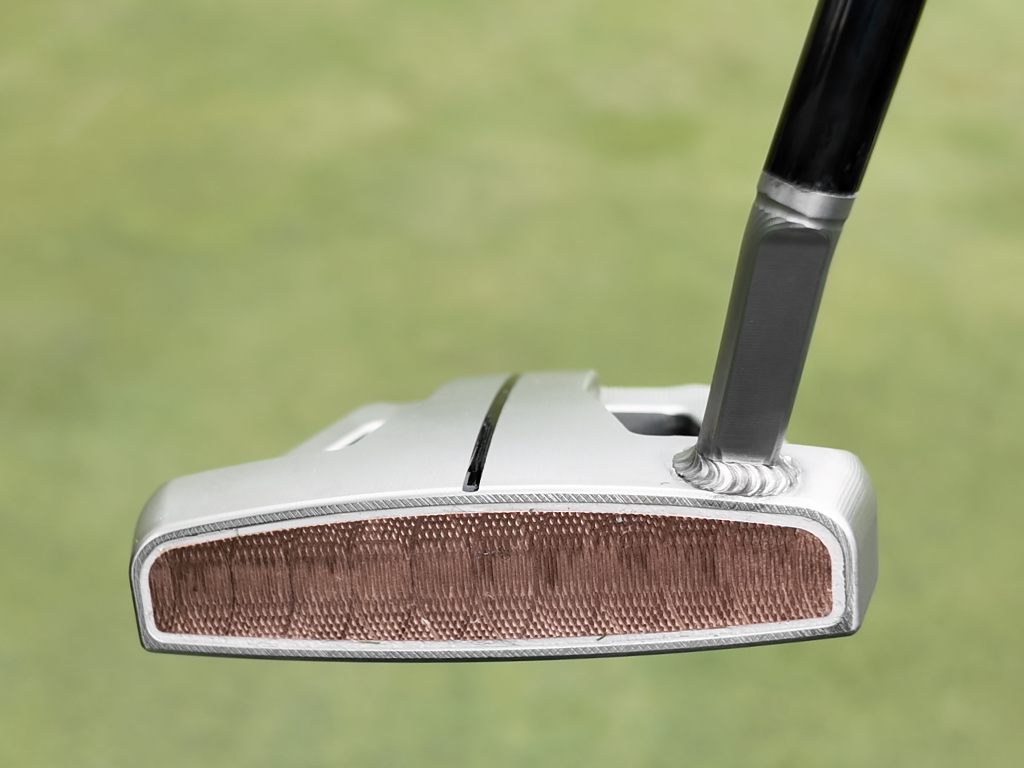
Arguably, the best perk of being a professional golfer on the PGA Tour is the ability to request or even just be handed pretty much any club you could think of. It happens more often than you think, usually with putters around the practice green from one event to the next. Come Wednesday, the Tour bags lining the edge of the putting surface become resting places for fallen flatsticks that never made the cut.
So let’s take a look at some of the best we’ve seen out on Tour this year that never made it to the competition. (You may notice none of Hideki Matsuyama’s custom Scotty Cameron putters made this list. There are too many.)
Let’s start with this custom Damascus Milled Odyssey Rossie made for Ryo Hisatsune. Featuring a single line and the short-slant hossel, we’ve seen plenty of Number 7 and jailbird heads featuring the Damascus Milled insert, but this is the first and only one we’ve spotted in a Rossie. Hisatsune primarily putts with an Odyssey Black Series iX #9, but we have seen him recently with a TaylorMade TP Collection SOTO, so there could be potential that the Damascus Milled Rossie could end up in the bag.

Everyone wants to be Cameron Young right now. We’ve had Justin Thomas and Tom Hoge both game the Scotty Cameron 9.5R prototype. Well, for the PGA Championship, Brooks Koepka nearly joined that list after requesting the same style of putter, with the full-length alignment line. But the Scotty Cameron reps took the request a step further and made one specially for Koepka with a Teryllium insert, similar to one in his previous Newport 2 gamers. The reason why this one didn’t go into play, though? Because it was too heavy.

Harry Hall was the third-best putter on Tour last year, so when Bettinardi made him a custom proto, you know it was going to be good. The custom BB28 blade features VDF face milling, a custom-welded single-bend shaft, and the owner’s initials – HH – on the sole of the putter. Hall, who usually games an Odyssey O-Works #7 W, has dabbled with a TaylorMade Spider Tour X already this year. Maybe there’s a chance this Bettinardi might make his bag.

Honestly, this one doesn’t need a description. It’s Kieth Mitchell’s custom Scotty Cameron Napa. One Scotty Cameron face stamp, two Scotty Dogs, two Scotty Cameron 7-Point Crowns and one Circle T. That is all. Oh, except for the Cashmere Cameron headcover.

Finally, and just for fun, how about we pour one out for this TaylorMade Spider Tour X made for Scottie Scheffler in its new torched finish. It’s unlikely we’ll see a putter change anytime soon from the best golfer in the world. In fact, he hit just two putts with it on the Harbour Town practice before going back to his trusty gamer.


Driver: Titleist GT3 (9 degrees) Buy here.
Shaft: Aldila Rogue Silver 130 M.S.I. 70 TX


3-wood: TaylorMade Qi35 (15 degrees)
Shaft: Fujikura Ventus Blue 7 X

7-wood: TaylorMade Qi35 (21 degrees)
Shaft: Fujikura Ventus Blue 8 X

Irons: Grindworks PR-202 (4), Grindworks PR-101A (5-PW)
Shafts: True Temper Dynamic Gold Tour Issue X100


Wedges: Cleveland RTX6 Tour Rack (52-10 Mid), Titleist Vokey Design SM10 (56-08M), SM11 (60-04T)
Shafts: True Temper Dynamic Gold Tour Issue S400


Putter: Scotty Cameron Tour Rat 1.5 Tour Prototype


Ball: Titleist Pro V1x
Grips: Golf Pride MCC


In our forums, our members have been discussing their favorite major winning irons used by Tiger Woods. WRXer ‘golferdude54’ kicks off the thread saying:
“Mizuno MP 14/29. Titleist 681T. Nike Forged Blades. TaylorMade P7TW.
Among these irons that helped Tiger win 15 majors, which is your favorite in terms of looks?”
And our members have been naming their favorites and why in response.
Here are a couple of posts from the thread, but make sure to check out the entire discussion and have your say at the link below.
- SwingBlade: “I prefer the early blades he played and the more recent TM TW’s especially because after Tiger had his major behavioral setbacks, part of Nikes support payback was making Tiger play a Nike putter and cease using his beloved uniquely customized Scotty putter.”
- ProjectX: “This (Nike Forged Blades) and there’s not even a close second.”
Entire Thread: “Which of Tiger’s major winning irons are your favorite? – GolfWRXers discuss”

Justin Rose WITB 2026 (April): Full WITB breakdown with new McLaren irons

RBC Heritage Tour Report: More minis, course-specific setups, Spider & GTS launches

What’s the story behind Webb Simpson’s custom-stamped irons?

Cadillac Championship Tour Report: Spieth’s sizable changes, McLaren Golf launches, and more

Kristoffer Reitan’s winning WITB: 2026 Truist Championship

Cameron Young’s winning WITB: 2026 Cadillac Championship

Aaron Rai’s winning WITB: 2026 PGA Championship

Nelly Korda WITB 2026 (April)

Justin Rose on the switch to McLaren Golf, learnings from previous equipment moves

Photos from the 2026 PGA Championship


Patrick Reed WITB 2026 (May)
Driver: Titleist GT3 (9 degrees) Buy here. Shaft: Aldila Rogue Silver 130 M.S.I. 70 TX 3-wood: TaylorMade Qi35 (15 degrees)...

Aaron Rai’s winning WITB: 2026 PGA Championship
Driver: TaylorMade M6 (9 degrees) Shaft: Aldilda Synergy Blue 70 TX 3-wood: TaylorMade Qi10 (15 degrees) Shaft: Fujikura Ventus Blue...


Michael Block WITB 2026 (May)
Driver: TaylorMade Qi4D (9 degrees) Shaft: Fujikura Ventus Black VeloCore+ 5 X 3-wood: TaylorMade Qi4D (15 degrees @14.25) Shaft: Mitsubishi...


Bryson DeChambeau WITB 2026 (May)
Driver: Krank Formula Fire Pro (6 degrees) Shaft: Project X Prototype 3-wood: Krank Formula Fire (10 degrees) Shaft: LA Golf BAD...
-
 Whats in the Bag3 weeks ago
Kristoffer Reitan’s winning WITB: 2026 Truist Championship
-
Whats in the Bag2 weeks ago
Aaron Rai’s winning WITB: 2026 PGA Championship
-
 Tour Photo Galleries3 weeks ago
Photos from the 2026 PGA Championship
-
 Equipment2 weeks ago
GolfWRX Launch Report: 2026 Titleist GTS drivers
-

 Equipment2 weeks ago
PGA Championship Tour Report: Fitzpatrick, Koepka among big-name putter switches for Aronimink
-

 News2 weeks ago
WITB Time Machine: Phil Mickelson’s winning WITB, 2021 PGA Championship
-

 Equipment2 weeks ago
Which of Tiger’s major winning irons are your favorite? – GolfWRXers discuss
-

 Equipment2 weeks ago
Lead Tape Report: Adjusting the swingweight of the Wanamaker Trophy


Project X
Jun 5, 2020 at 11:02 am
The Ping G15 was a really good driver that made it into a lot of bags as well.
LoPro
Feb 28, 2020 at 8:09 pm
Cobra S91 Pro D, best sounding, longest and original Carbon headed driver!!!
Pity I had to replace every 3-6 months due to the cracked top of the heads near the heel……
Dave
Feb 28, 2020 at 3:35 pm
Ping Rapture V2 with the Diamana Blue was a game changer for me
90TforME
Feb 28, 2020 at 2:09 pm
I would’ve said 905T, not R. And the T was much closer in shape to the 975J or the 983K. I’m not sure what the author is smoking.
Ryebread
Feb 28, 2020 at 1:19 pm
It is hard to believe the Cleveland Hibores didn’t make the list. I still see them in a lot of bags (more than anything on this list outside of possibly the TM). My testing suggests that nothing new is actually better. A certain high profile TV personality seemingly agrees as a Hibore is still their gamer.
Brandon
Feb 28, 2020 at 11:24 am
Great reminder on what I had in my bag back then – almost all of them at one time.
Great suggestions from the other comments as well. I’ll throw in some I liked a lot around that time that produced good results for me. Nickent 3DX and 4DX (before the revolver) and the Dot-Com-This from Geek Golf. Thoughts?
Funkaholic
Feb 28, 2020 at 9:54 am
This is a stupid list. If you are gaming a driver more than 5 years old, you are losing distance and accuracy.
Philippe Longpre
Feb 28, 2020 at 10:03 am
Then why did you click on the link? The list is awesome and all 5 drivers would gladly find a home in my shop.
Michaele
Feb 28, 2020 at 11:15 am
Not too sure about the level of your reading comprehension skills. T/he artile makes it very clear on multiple occasions that it’s about equipment from a past era.
Your comment is far more stupid than the list. Next time you feel the urge to comment, do us all a favor and don’t.
Golfiswayfun
Feb 28, 2020 at 2:08 pm
Well said, Michaele!
Jack Randalls
Feb 28, 2020 at 6:59 pm
How long into the “modern driver era” did Snedeker use the Burner? Guess he was stupid too. Some of his best years.
Frederick
Feb 27, 2020 at 9:44 am
I’m surprised no one has mentioned the Nike VR Tour. The first successful implementation of the compression channel still alive and well in drivers today. At 420cc it was still forgiving and very long for it’s time.
Joe
Feb 28, 2020 at 4:54 pm
I still game the VR tour. I cant find anyhting that looks better from the top, and its super long.
Bobarino
Feb 27, 2020 at 8:06 am
Current model Srixon Z585. Excellent driver.
Biblegolfer
Feb 26, 2020 at 7:02 pm
Definitely 905R even today and Adams was ahead of the curve. Those drivers were awesome. Thanks for that article.
Michael Rohmann
Feb 26, 2020 at 4:43 pm
I think I would add the Taylormade SuperQuad to this list. Especially the 282 version. They were awesome and very popilar on tour for many years
Shallowface
Feb 26, 2020 at 4:09 pm
Ping G10. I’m still using mine, and I know it took Ping a long time to get Lee Westwood to switch from his.
Terry
Feb 26, 2020 at 4:02 pm
905R is the only 460cc that I have used and it was the best driver I ever played.
Charlie Waffles
Feb 26, 2020 at 1:37 pm
I really wonder how many people actually fiddle with an adjustable driver after it’s set?
LoPro
Feb 28, 2020 at 8:13 pm
Ummmm, 95%
2putttom
Feb 26, 2020 at 1:22 pm
Honorable mention, Cleveland Classic 290.
Curt
Feb 26, 2020 at 1:04 pm
Had every one of these drivers except the 905R, and they truly are the best from the past. The 9015D being my all time favorite which is why I still own it. Don’t play it but still own it.
Jason
Feb 26, 2020 at 1:04 pm
Taylormade Burner 07 driver. Still use it. In my opinion, the sound and feel is the best.
Mike
Feb 26, 2020 at 12:58 pm
Bagged the Bridgestone J33R 460 for several years,first 460 driver I could play, hid the size well and still to me one of the best feeling of all the modern drivers. Also had the Burner SuperFast TP for a couple of years, it was a beast.
martin
Feb 26, 2020 at 12:51 pm
I think the FT Tour was 440cc. I games the FT9 tour, best driver Ive ever had. It cracked on my in the end and Cally gave me a Razr fit instead, hated that driver. haha
Ryan
Feb 26, 2020 at 12:39 pm
Nike VR Pro and Ping G20 are up there too.
Chris
Feb 26, 2020 at 1:33 pm
2nd the Ping G20
DH
Feb 27, 2020 at 11:49 am
G20 was probably one of the greatest drivers ever made!!
LoPro
Feb 28, 2020 at 8:16 pm
Very forgiving but way to much spin for the stronger player
Robert
Feb 26, 2020 at 11:40 am
Callaway FT5 -very good distance but harsh sound.
Tony Wright
Feb 26, 2020 at 11:38 am
Thanks for the article Ryan. You should consider adding the Wishon 919 THI driver. Fully customizable for loft lie and face angle and has a face that is as hot as another other available driver.
TacklingDummy
Feb 26, 2020 at 11:32 am
I’m waiting for irons with removable shafts. Not necessarily for adjustment, but the ability to swap out shafts easily. Then you can change if wanting or needing different flex, flight pattern, or weight.
Mike
Feb 26, 2020 at 11:37 am
Cobra has the adjustable hosels on their urility irons; I really don’t understand why it wouldn’t be more readily available on all irons.
Nate
Feb 27, 2020 at 2:15 pm
Most likely because it increases the weight of the iron head and changes the swing weight. It typically increases by 2 swing weights. So if the glued head is a D2, then removable head is a D4.
gwelfgulfer
Feb 28, 2020 at 3:46 pm
Then set it up yourself, because the OEM’s will never do it… Or, learn to reshaft irons yourself… It’s easy…
Peter Sarro
Feb 26, 2020 at 10:59 am
Have been looking for the Bridgestone driver for years, but I haven’t ever seen one, wish some golf shops would carry more Bridgestone equipment
Joe
Feb 28, 2020 at 12:00 pm
Dude there’s a bunch of them on eBay right now.
Yotrepo
Feb 26, 2020 at 10:26 am
Would love to see the years these are produced. Anyone have that info?
Marty
Feb 26, 2020 at 10:14 am
Wishon 919THI needs to be on this list. Glued bendable hosel allows for adjustment up to 4* in any direction. Design hasn’t changed in years and still sells today.