
Equipment
The “real” firsts of the golf industry


Any time a new club is introduced, the phrase “for the first time ever…” is usually not far behind. In some groundbreaking cases, the statement is completely true and applies to the entirety of the modern golf industry, while in other cases it’s only a “first” for that particular manufacturer—so watch for the asterisk.
This ultimately begs the question: What were the true firsts of modern golf technology, and how did they change the direction of design?
After some in-depth research here is my list of true firsts.
The first metal driver: TaylorMade Original (1979)
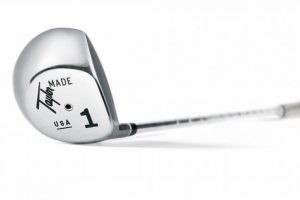
As the story goes, Gary Adams took out a $24,000 loan against his house to found TaylorMade Golf. The focus of this new endeavor was to create a driver made from metal and to make persimmon a thing of the past. The first product to market was a 12-degree metal driver; the very first of it’s kind. It still took more than a decade to make persimmon obsolete, but as they say, the rest is history.
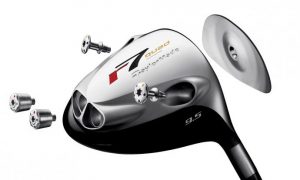
Moveable weight: TaylorMade R7 (2004)
TaylorMade engulfed the driver space when it launched the 300 Series metal woods and went on an ever further tear when it introduced the 500 series (they skipped the 400 names). Interesting fact—the number four is mostly avoided in global marketing because “four” is pronounced almost exactly the same as the word “death” in Chinese. It’s the same reason Callaway went from FT3 to FT5.
When the R7 Quad debuted, it was a game-changer because it was the very first driver to offer the consumer easily adjustable weights to help golfers fine-tune ball flight. I say “consumer” because club builders and tour vans had been using hotmelt to adjust CG for some time, but on a consumer level, the ability to tweak your driver on the range was unheard of. It was a lot of weight too: 24g total—more than 10 percent of the clubhead’s mass. After the R7 Quad, drivers would never be the same!
Sliding weight: Mizuno MP-600 (2007)
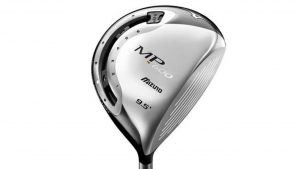
When it comes to drivers, Mizuno’s reputation for irons overshadows its history of producing innovation in the metal woods space. The MP-600 was the very first driver to offer a sliding weight track to fine-tune CG. Although the weights were only 8g a piece is was extremely innovative at the time and created new options for OEMs to help reposition mass around larger heads.
They have utilized the technology on and off over the years, but the newest ST200G is by far the most adjustable Mizuno driver yet.
Graphite (composite) shaft: Golfcraft (1954)
In 1954, Golfcraft (the same Golfcraft discussed here: Greatest Titleist Irons of all Time) announced a breakthrough in golf shaft technology: a shaft made from fiberglass that could one-day make steel obsolete, the same way steel made wood obsolete.
Beyond just the promise of more consistent shots, Golfcraft also declared the shaft vibration-proof, rust-proof, and almost unbreakable, something that modern club throwers would know is quite untrue. Although they never took off like the steel they promised to replace, it was the very first non-steel shaft to enter the market.
Soon after, a few other companies started to enter the market to offer these new fiberglass shafts for golfers, but it wasn’t until the late 1960s when Frank Thomas (yes, the same Frank Thomas that went on to be the technical director of the USGA ) used graphite to produce shafts for Shakespeare—the fishing rod company.
This is when the market completely evolved, and not long after its introduction, graphite shaft manufactures started to pop up to get into the game. Thanks to a better understanding of materials, and the physics of the golf swing with the help of highspeed camera and tracking tools, graphite shafts have never been more advanced than they are today.
Carbon composite crown: Mizuno MP-001 (2003)
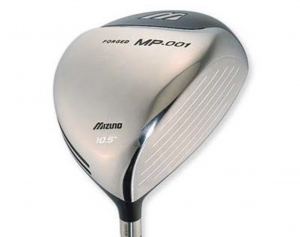
The Mizuno MP-001 was released the year after the much talked about, but often ridiculed, Callaway C4—the very first (and only) carbon composite driver. It came in three different models released in succession; 360cc, 400cc, and then eventually 460cc, which if you are on the lookout for a value, the 460cc driver is still high on the list.
Beyond what Callaway was up to with Fusion Technology, the MP-001 was the very first driver to utilize a multi-material crown to save weight, and the results speak for themselves. It sounds extremely solid, offered low spin, boosted MOI—and looked really cool too.
Multilayer solid core urethane ball
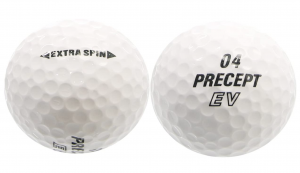
This is the one breakthrough that has a hard-to-find solid start date—no pun intended. The first multilayer performance balls were the Precept (Bridgestone brand) EV Extra Spin and Extra Distance. At the time of its introduction around 1995, the Precept EV was competing against the Titleist Professional, which was still a wound ball. The EV offered more distance and great control while still not quite competing from a short game control perspective.

The biggest mainstream change came when Mark O’Meara won the 1998 Masters with a multi-layer Strata ball and then went on to win the Open Championship the same year. Many attribute his win in part to the fact that he was using a new Strata multi-layer urethane ball that offered less spin off the driver and more spin around the greens.
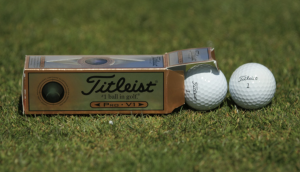
A year later, in 1999, a year before Titleist introduced the Pro V1 (October 2000), Nike launched the Tour Accuracy ball (manufactured by Bridgestone), and with it came this…
Soon after, the Pro V1 arrived, and as the market leader, the impact was a seismic shift. The wound ball was officially dead, but we can’t forget the change that Precept/Bridgestone pioneered half a decade before.
What other “firsts” of the golf industry do you think are notable, GolfWRXers?




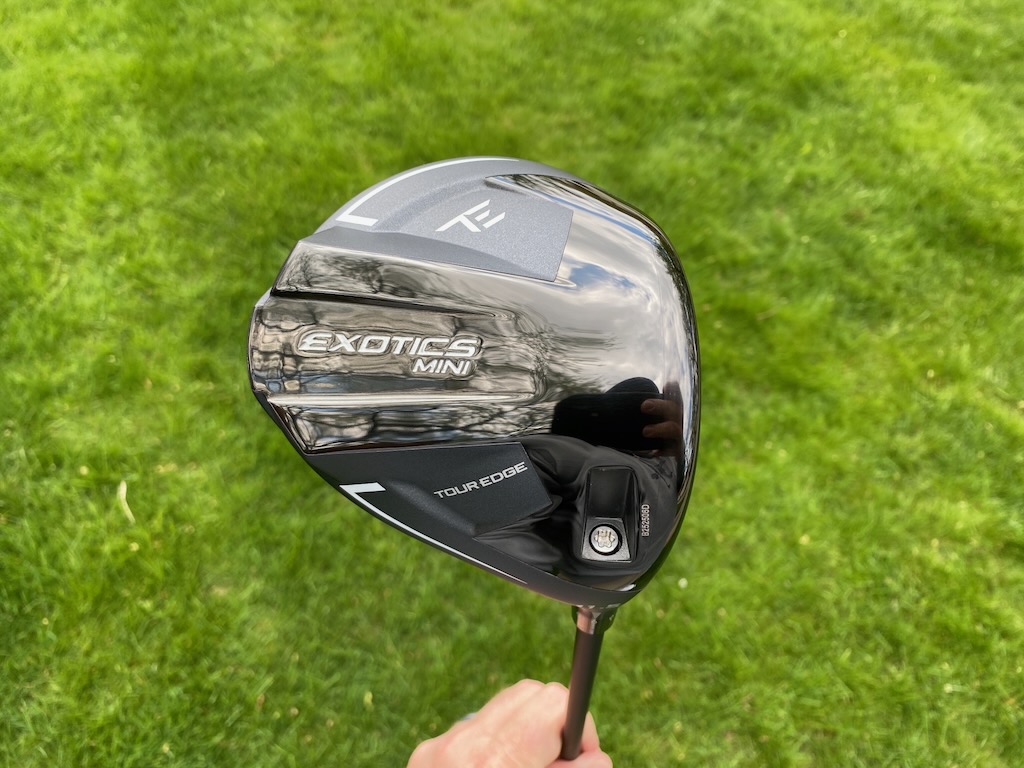
Tour Edge Golf has today introduced the all-new Exotics mini driver, engineered to deliver a powerful combination of speed, control, and versatility in the long game.
The Exotics Mini combines a titanium face with a stainless-steel body in design to balance ball speed with stability and control, creating a versatile option at the top end of the bag.

At the core of the design is Tour Edge’s proprietary Combo Brazing technology, a high-precision thermal bonding process that seamlessly fuses a titanium cup face to a stainless-steel body into a single, continuous structure. By eliminating energy loss found in traditional multi-piece constructions, Combo Brazing is designed to deliver faster face response, more efficient energy transfer, and a uniquely powerful yet controlled feel.

The multi-material construction also allows mass to be positioned lower and deeper in the head in a bid to increase stability, while the thin titanium face is engineered to maintain ball speed across a wider impact area.

“While the initial goal was to enhance control and versatility in the long game, Combo Brazing ultimately drove measurable gains in ball speed and distance within the mini driver category. In robot testing, we’ve documented higher ball speeds, higher launch, reduced spin, and increased carry and total distance compared to leading models.” – Vice President of R&D Matt Neeley

In addition to distance performance, the Exotics mini emphasizes forgiveness through a heavier stainless-steel body that shifts mass toward the perimeter. This configuration increases MOI relative to traditional all-titanium mini drivers, helping preserve ball speed and directional stability on off-center strikes. Paired with Pyramid Face Technology from the Exotics metalwood line, the design is intended to support consistent speed across the face.

To further enhance MOI, a lightweight carbon fiber crown frees additional mass that is strategically repositioned low and deep in the head in design to improve stability and promote optimal launch with controlled spin.

“We designed the Mini to be about five millimeters shallower than other mini drivers on the market. That change improves playability off the deck. From a clean fairway lie, it can function as a strong 3-wood alternative while still providing control off the tee.” – Tour Edge CEO David Glod
An adjustable hosel system allows for loft and lie tuning to dial in trajectory and shot shape, while a fixed 13-gram rear weight helps stabilize the head through impact to improve dispersion consistency. The Exotics Mini Driver is available in 11.5 and 13.5-degree lofts in right-handed models.

Pricing & Availability
The Exotics Mini Driver is available for pre-order beginning today for $399.99 USD at touredge.com, and will be available for purchase at retail outlets worldwide on May 22, 2026.

In our forums, our members have been pitting a Srixon ZXi combo against a TaylorMade P7CB/770 combo. WRXer ‘edutch22’ is on the hunt for a new set of irons and kicks off the thread saying:
“Looking at picking up a new set of irons and think I’ve narrowed it down to Srixon ZXi combo or Taylormade P7CB/770 combo. I am currently a 5 cap and allbeit I feel irons are my weakness. My miss is a little to the toe side. I am decently steep at 4-5 down. Always thought I am high spin but recently on trackman my 7 was spinning at 5800 roughly.
My question or looking for thoughts on which one would benefit me more from a forgiveness standpoint? Or is there another iron is should be looking at entirely? I only get to play about once or twice a week, if I am not playing a 2-3 day event. Thanks in advance.”
And our members have been sharing their thoughts and suggestions in response.
Here are a few posts from the thread, but make sure to check out the entire discussion and have your say at the link below.
- manima1: “You just can’t go wrong with Srixon ZXi7.”
- MattM97: “You have to hit them to know, the V-Sole on the Srixon can be make or break for many.”
- dmeeksDC: “P7CB is more forgiving for me than ZXi7 because my main miss is low middle and the P7CB still flies and spins great on that miss. These are both really nice irons but I like the P7CB more than the Zxi7 and the P770 (or P790) more than the Zxi5. The Srixons are larger so if that gives you confidence that is the way to go. I don’t feel like I get any benefit from the V-sole and the P7CBs live up to their high Maltby forgiveness rating so the TaylorMades have been great for me.”
Entire Thread: “Srixon ZXi combo or TaylorMade P7CB/770 combo? – GolfWRXers discuss”

At GolfWRX, we are a community of like-minded individuals who all experience and express our enjoyment of the game in many ways.
It’s that sense of community that drives day-to-day interactions in the forums on topics that range from best driver to what marker you use to mark your ball. It even allows us to share another thing we all love – buying and selling equipment.
Currently, in our GolfWRX buy/sell/trade (BST) forum, @pianoman0123 has a 2024 Wilson Staff CB/Blade combo up for grabs.

From the listing: “2024 Wilson Staff CB/Blade Combo. 4-8 irons are CB’s and the 9,PW are Blades. 5-PW have Project X 6.0 Shafts and the 4 Iron has a Steelfiber CW110 Stiff Shaft. Standard Length, Lie and Lofts. These are in very good condition the shafts just don’t work for me. Like new Lamkin Grips on the 5-PW and a stock Golf Pride on the 4 Iron. $525 OBO.”
To check out the full listing in our BST forum, head through the link. If you are curious about the rules to participate in the BST Forum, you can learn more here: GolfWRX BST Rules

RBC Heritage Tour Report: More minis, course-specific setups, Spider & GTS launches

Justin Rose WITB 2026 (April): Full WITB breakdown with new McLaren irons

Best fairway woods of 2026: The most versatile fairway woods + the most forgiving fairway woods

What’s the story behind Webb Simpson’s custom-stamped irons?

Cadillac Championship Tour Report: Spieth’s sizable changes, McLaren Golf launches, and more

The 24 players who can win the Masters

Rory McIlroy’s winning WITB: 2026 Masters

Kristoffer Reitan’s winning WITB: 2026 Truist Championship

J.J. Spaun’s winning WITB: 2026 Valero Texas Open

Cameron Young’s winning WITB: 2026 Cadillac Championship


Alex Fitzpatrick WITB 2026 (May)
Driver: Ping G440 LST (9 degrees) Shaft: Fujikura Ventus Black 6 X 3-wood: TaylorMade Qi4D (15 degrees) Shaft: Fujikura Ventus...

Kristoffer Reitan’s winning WITB: 2026 Truist Championship
Driver: Ping G440 Max (9 degrees) Shaft: Mitsubishi Tensei 1K White 60 TX 3-wood: Ping G440 Max (15 degrees) Shaft:...


WITB Time Machine: Rory McIlroy’s winning WITB, 2021 Truist Championship
Rory McIlroy’s victory at the 2021 Wells Fargo Championship 2021 (now the Truist Championship) marked a significant return to form,...


Collin Morikawa WITB 2026 (May)
Driver: TaylorMade Qi4D LS (8 degrees) Shaft: Mitsubishi Diamana D+ Limited 60 TX 3-wood: TaylorMade SIM Tour (14 degrees) Shaft:...
-
 Equipment2 weeks ago
Justin Rose WITB 2026 (April): Full WITB breakdown with new McLaren irons
-
 Equipment1 week ago
What’s the story behind Webb Simpson’s custom-stamped irons?
-
 Equipment2 weeks ago
Cadillac Championship Tour Report: Spieth’s sizable changes, McLaren Golf launches, and more
-
Whats in the Bag3 days ago
Kristoffer Reitan’s winning WITB: 2026 Truist Championship
-
 Whats in the Bag1 week ago
Cameron Young’s winning WITB: 2026 Cadillac Championship
-

 Whats in the Bag3 weeks ago
Nelly Korda WITB 2026 (April)
-

 Equipment2 weeks ago
Justin Rose on the switch to McLaren Golf, learnings from previous equipment moves
-

 Tour Photo Galleries2 weeks ago
Photos from the 2026 Cadillac Championship


Delbert
May 31, 2020 at 10:45 pm
The first sand wedge by Gene Sarazen
Psarro
May 29, 2020 at 11:15 pm
I would think range finders should be on the list?
storm319
May 18, 2020 at 11:40 pm
Correction: The Precept EV Extra Spin was a 2-piece with a TPU cover. The first multilayer solid core ball was the Top Flite Strata in 1996 (cover was synthetic, but not urethane).
arnaud
May 16, 2020 at 4:28 pm
Tom Wishon (for SNAKE EYES, GOLFSMITH then WISHON GOLF) :
1st driver with adjustable hosel sleeve (1994)
1st heel weighted / draw bias driver (1996)
1st metal wood with cup face construction (1997)
1st driver with moveable weight for CG / draw / fade bias (2005)
1st illegal driver to achieve a COR of 0.900 (2006)
1st fairway wood to achieve a COR of 0.830 (2004)
1st hybrid to achieve a COR of 0.830 (2008)
1st set of irons to achieve a COR of 0.830 (2009)
and this is a short list …
andrew_s
May 14, 2020 at 5:18 am
COBRA E9 face technology (dual roll)
ColinKelvin
May 13, 2020 at 11:54 am
Ping Anser – a headshape with bumpers and a plumber’s neck which has been #1 in golf ever since, copied by all the leading putter makers over and over and over again.
Ping irons – peripheral weighting / game improvement through the ages.
Jin Teh
May 13, 2020 at 9:40 am
You missed the world’s first two piece ball…the first non core wound golf ball…Dunlop
DDH around 1980…I was the first to break the ball in half on with a driver!!!
Another first bring launched today…Face thickness fitting…drivers with different face thickness for different swing speeds 20-40 yards more 1st swing..who cares if they are not USGA Conforming…go to http://www.krankgolf.com
Delbert
May 31, 2020 at 10:41 pm
My college golf team was given the DDH. They were workin out great until some started break in half.
D
May 13, 2020 at 9:21 am
Ping putters
Ping irons
Adjustable hosels, who started that?
Ping Hoofer with dual strap
J-Dog
May 12, 2020 at 7:08 pm
I thought the Callaway C4 would technically be the first driver to have a carbon crown.
Nicklaus#1
May 12, 2020 at 1:09 pm
I could of sworn Northwestern made the 1st metal driver.
alexva
May 12, 2020 at 11:51 am
Precept Flying Lady was hot for a while among better men players
matt
May 14, 2020 at 7:43 am
haha i remember that
Brandon
May 11, 2020 at 11:23 pm
How about that powerbilt driver with the nitrogen inside?
Stanley
May 11, 2020 at 10:52 pm
Pxg and their foam filled irons
Jack
May 12, 2020 at 8:20 am
Not a first . Taylor made , and maybe even someone before that.
Nack Jicklaus
May 31, 2020 at 4:35 pm
And their woods were foam filled before they made the foam filled irons too.
C
May 11, 2020 at 9:52 pm
Scotty Cameron Putter Headcovers changed everything in what a headcover could be…seems trivial but he certainly upped the ante…Inspired a whole new generation of designers over the years in the process!
Holla
May 11, 2020 at 7:47 pm
Pedersen began making metal headed woods back in 1927.
KP
May 11, 2020 at 7:45 pm
Let’s not forget PING and the innovation of perimeter weighted irons!
Steve
May 13, 2020 at 9:24 am
This!!
Daniel Howard
May 11, 2020 at 7:22 pm
Spalding Tour Edition
Gary
May 13, 2020 at 11:46 am
Yep, first urethane cover.
Think A. Little
May 11, 2020 at 6:12 pm
First driver with removable/sliding weight???
Whoever used lead tape first on whatever they were using.
Eric Seatvet
May 11, 2020 at 6:05 pm
Adams Golf – Hybrids. They may have not been the first, but they made category big.
BodineJCS
May 11, 2020 at 5:51 pm
Taylormade Golf …founded in Mchenry Illinois , my hometown were I still live … Those were the days …
Lou Cesarek
May 11, 2020 at 2:55 pm
Investment cast irons.
Titleist AC 108 and Ram Accubar .
The Accubar had the largest sweet spot of irons during this time frame .
Regis
May 11, 2020 at 2:50 pm
First rescue (hybrid for non TMAG) Taylormade
Richard Douglas
May 11, 2020 at 2:29 pm
Hogan Edge: the first perimeter-weighted, forged iron
Cleveland VAS 792: the first set of garden tools to be converted into golf clubs
Ping Anser
TM Rocketbladz
Polara Ball
SoftSpikes
Nack Jicklaus
May 11, 2020 at 9:53 pm
I think I was one of about 10 people who thought the VAS irons were beautiful back then! I still laughed out loud when I read your comment though…
dwayne bretzky
May 11, 2020 at 2:18 pm
tough luck for Mizuno making those great innovative moves in the driver industry and really never getting a hold of the market share at all over the years. I have used multiple mizuno drivers over the years and they were all great..I guess this really proves how marketing campaigns help a product.
Nick
May 11, 2020 at 1:29 pm
I think you’d have to include the r11. First white driver, sparked a market frenzy. This club and Taylormade’s marketing made everyone seriously question “Should I be playing a white driver?” It allowed companies to see the success that selling a product predominantly a different color than black or grey. This same idea holds true to Taylormade’s red putters…now Odyssey had their own line of red putters too.
The thing that always makes me chuckle is how they are such masterful marketers. Not only did they convince the golfers around the world that the coolest drivers are white, they flip the market on it’s head and come out with the R1 SPECIAL EDITION BLACK DRIVER! I mean how genius…like it or not they know how to play the game, literally and figuratively!
stam
May 11, 2020 at 6:10 pm
COBRA made the first white driver..
Holla
May 11, 2020 at 7:30 pm
MacGregor made a white driver in the 50’s
Kep
May 11, 2020 at 1:12 pm
I have an old Yonex Super ADX 0 driver with a pressure molded graphite head. I believe this was before the composite Callaway C4 mentioned here but i cant seem to find any info about it.
JIM
May 11, 2020 at 6:21 pm
My wife still has a C4 sitting in the garage, I know for a fact it lasted 2 rounds in her bag….I had to take her out to buy a new driver right away. Also the instructor at the range I use was the first to show us that grip pressure took most of the good away from movable weights in driver heads….his slog-gen the tighter the grip the more money you waste on movable weights in your driver.
Mark M
May 13, 2020 at 9:21 am
That’s exactly the club I was thinking of when I read the C4 listing. I think it was mid to late 90s – came out the same time as the Yonex Super ADX tour Forged cavity back irons which were magic.