
Equipment
Wunder: The longest irons I’ve hit this year

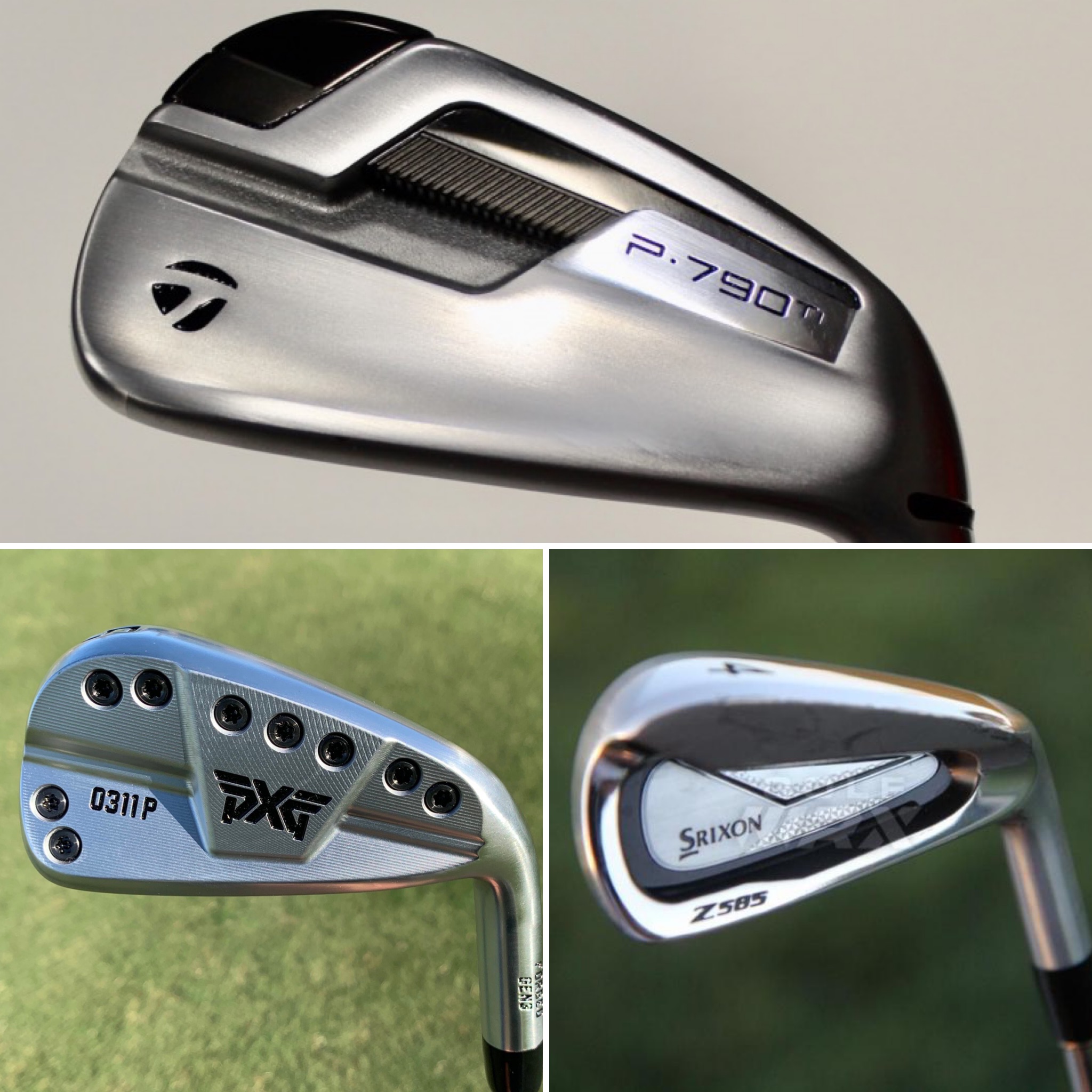
I’ve hit a ton of stuff the past 12 months, and with the amount of “what’s the longest iron” questions I get on my Friday Instagram Q&A, I thought I’d just break it down. Not by category or anything like that, just the straight-up “holy s$$t that went a long way” list. Take the info in. Use it. Discard it. It’s just my opinion on what I’ve experienced over the past year.
There was a consideration to use data. However, I hit all the irons on different launch monitors under different conditions, so I’ll base the performance on my baseline 5-iron.
Gamer 5-iron specs
(25 degrees) w/ Dynamic Gold Tour Issue X100 (soft stepped) 38 inches, 62 lie @ D3
Baseline numbers per Foresight (TXG Toronto)
- Swing Speed: 92 MPH
- Ball Speed: 131 MPH
- Spin: 4300 RPM
- Carry: 199 yds
Make sense?
All irons tested were with True Temper Dynamic Gold Tour Issue shafts
#4 Srixon Z585
Long. Long. Long. Especially on the thin shots. I found these irons to not only feel solid but they flew like my gamers—but just flat out went further at the same loft. If I could change anything about them is the sound, they do sound a little hollow to me, but you can’t have everything perfect.

- Loft (25)
- Data Gathered (Foresight Indoors)
- Swing Speed: 94 MPH
- Ball Speed: 132 MPH
- Spin: 4,500 RPM
- Carry: 205 yds
#3 Cobra Forged Tec
The Forged Tec from Cobra is an iron set that I believe will become a cult classic. They are just something you have to play around with a little, but once you get comfortable, the distance and forgiveness are not only compelling but also very playable. Sound and feel don’t necessarily match up to P790 or PXG P. However, of that class, they are the most forgiving in my opinion.
Truth be told, in regards to distance, I could swap 2 and 3 on this list quite easily as I experienced very similar results. The Forged Tec spun a little bit more and went a little bit higher. These irons are a fantastic long-to-mid-iron replacer, if you like to combo.

- Loft (23)
- Data Gathered (TrackMan Indoors)
- Swing Speed: 92MPH
- Ball Speed: 133 MPH
- Spin: 4500 RPM
- Carry: 207 yds
#2 PXG 0311 P GEN3
I tested these in early October 2019 at Scottsdale National and out of the middle of the face, I hit them even further than PXG’s distance iron the XP. I’m not sure how or why, but these things go a mile with very little spin. For a hollow body construction, they do sound solid and the turf interaction is quite good. As a set, the PXG 0311 P GEN3 is the most playable without any combo swaps. I understand why guys like Pat Perez are comfortable using it 3-PW.

- Loft (23.5)
- Data Gathered (TrackMan outdoors)
- Swing Speed: 94 MPH
- Ball Speed: 134 MPH
- Spin: 4100 RPM
- Carry: 209 yds
#1 TaylorMade P790 TI
Quite frankly, I’ve never seen anything like it. Let’s get this part out of the way. Yes, it’s built for distance (i.e. structure, materials, lofts, etc). So point there is, TaylorMade set out to do something, and they did it. Build an AMG Mercedes in an iron.
For me, they went wayyyy too far. It was the same reaction I got from Pro V1, RocketBallz, or Callaways Epic w/Jail Break, my jaw hit the floor. In an age where 10 yards is a marketer’s dream, these irons were a club longer on the mishits!

- Loft (22)
- Data Gathered (TrackMan outdoors)
- Swing Speed: 94 MPH
- Ball Speed: 136 MPH
- Spin: 4100 RPM
- Carry: 219 yds
There you have it. Critique. Debate. Do what you must. Just one man’s opinion on my gear nerd travels. I’m sure there are some super game improvement sticks that could have found their way in but honestly, I didn’t try many of them in earnest, and these were the ones I was able to spend a significant amount of time with.
Let me know what you think and what you’ve found in your testing this year.


Equipment
Putters that never made it: Check out some of the best tour builds that didn’t make the cut

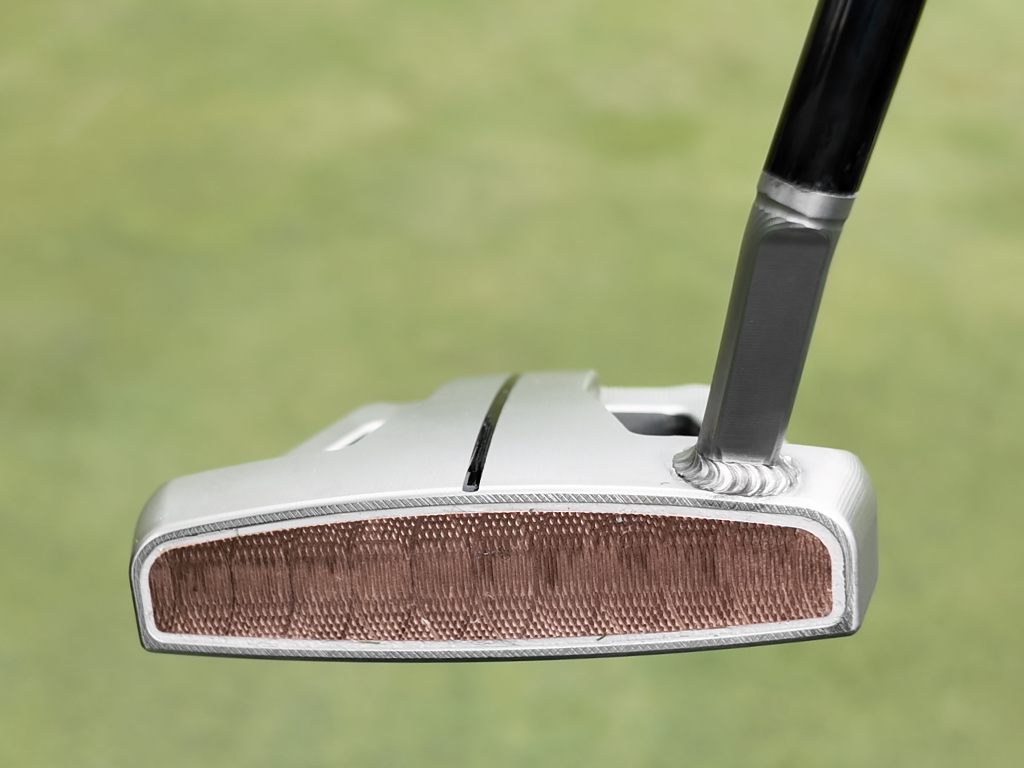
Arguably, the best perk of being a professional golfer on the PGA Tour is the ability to request or even just be handed pretty much any club you could think of. It happens more often than you think, usually with putters around the practice green from one event to the next. Come Wednesday, the Tour bags lining the edge of the putting surface become resting places for fallen flatsticks that never made the cut.
So let’s take a look at some of the best we’ve seen out on Tour this year that never made it to the competition. (You may notice none of Hideki Matsuyama’s custom Scotty Cameron putters made this list. There are too many.)
Let’s start with this custom Damascus Milled Odyssey Rossie made for Ryo Hisatsune. Featuring a single line and the short-slant hossel, we’ve seen plenty of Number 7 and jailbird heads featuring the Damascus Milled insert, but this is the first and only one we’ve spotted in a Rossie. Hisatsune primarily putts with an Odyssey Black Series iX #9, but we have seen him recently with a TaylorMade TP Collection SOTO, so there could be potential that the Damascus Milled Rossie could end up in the bag.

Everyone wants to be Cameron Young right now. We’ve had Justin Thomas and Tom Hoge both game the Scotty Cameron 9.5R prototype. Well, for the PGA Championship, Brooks Koepka nearly joined that list after requesting the same style of putter, with the full-length alignment line. But the Scotty Cameron reps took the request a step further and made one specially for Koepka with a Teryllium insert, similar to one in his previous Newport 2 gamers. The reason why this one didn’t go into play, though? Because it was too heavy.

Harry Hall was the third-best putter on Tour last year, so when Bettinardi made him a custom proto, you know it was going to be good. The custom BB28 blade features VDF face milling, a custom-welded single-bend shaft, and the owner’s initials – HH – on the sole of the putter. Hall, who usually games an Odyssey O-Works #7 W, has dabbled with a TaylorMade Spider Tour X already this year. Maybe there’s a chance this Bettinardi might make his bag.

Honestly, this one doesn’t need a description. It’s Kieth Mitchell’s custom Scotty Cameron Napa. One Scotty Cameron face stamp, two Scotty Dogs, two Scotty Cameron 7-Point Crowns and one Circle T. That is all. Oh, except for the Cashmere Cameron headcover.

Finally, and just for fun, how about we pour one out for this TaylorMade Spider Tour X made for Scottie Scheffler in its new torched finish. It’s unlikely we’ll see a putter change anytime soon from the best golfer in the world. In fact, he hit just two putts with it on the Harbour Town practice before going back to his trusty gamer.


Driver: Titleist GT3 (9 degrees) Buy here.
Shaft: Aldila Rogue Silver 130 M.S.I. 70 TX


3-wood: TaylorMade Qi35 (15 degrees)
Shaft: Fujikura Ventus Blue 7 X

7-wood: TaylorMade Qi35 (21 degrees)
Shaft: Fujikura Ventus Blue 8 X

Irons: Grindworks PR-202 (4), Grindworks PR-101A (5-PW)
Shafts: True Temper Dynamic Gold Tour Issue X100


Wedges: Cleveland RTX6 Tour Rack (52-10 Mid), Titleist Vokey Design SM10 (56-08M), SM11 (60-04T)
Shafts: True Temper Dynamic Gold Tour Issue S400


Putter: Scotty Cameron Tour Rat 1.5 Tour Prototype


Ball: Titleist Pro V1x
Grips: Golf Pride MCC


In our forums, our members have been discussing their favorite major winning irons used by Tiger Woods. WRXer ‘golferdude54’ kicks off the thread saying:
“Mizuno MP 14/29. Titleist 681T. Nike Forged Blades. TaylorMade P7TW.
Among these irons that helped Tiger win 15 majors, which is your favorite in terms of looks?”
And our members have been naming their favorites and why in response.
Here are a couple of posts from the thread, but make sure to check out the entire discussion and have your say at the link below.
- SwingBlade: “I prefer the early blades he played and the more recent TM TW’s especially because after Tiger had his major behavioral setbacks, part of Nikes support payback was making Tiger play a Nike putter and cease using his beloved uniquely customized Scotty putter.”
- ProjectX: “This (Nike Forged Blades) and there’s not even a close second.”
Entire Thread: “Which of Tiger’s major winning irons are your favorite? – GolfWRXers discuss”

Justin Rose WITB 2026 (April): Full WITB breakdown with new McLaren irons

RBC Heritage Tour Report: More minis, course-specific setups, Spider & GTS launches

What’s the story behind Webb Simpson’s custom-stamped irons?

Cadillac Championship Tour Report: Spieth’s sizable changes, McLaren Golf launches, and more

Kristoffer Reitan’s winning WITB: 2026 Truist Championship

Cameron Young’s winning WITB: 2026 Cadillac Championship

Aaron Rai’s winning WITB: 2026 PGA Championship

Nelly Korda WITB 2026 (April)

Justin Rose on the switch to McLaren Golf, learnings from previous equipment moves

Photos from the 2026 PGA Championship


Patrick Reed WITB 2026 (May)
Driver: Titleist GT3 (9 degrees) Buy here. Shaft: Aldila Rogue Silver 130 M.S.I. 70 TX 3-wood: TaylorMade Qi35 (15 degrees)...

Aaron Rai’s winning WITB: 2026 PGA Championship
Driver: TaylorMade M6 (9 degrees) Shaft: Aldilda Synergy Blue 70 TX 3-wood: TaylorMade Qi10 (15 degrees) Shaft: Fujikura Ventus Blue...


Michael Block WITB 2026 (May)
Driver: TaylorMade Qi4D (9 degrees) Shaft: Fujikura Ventus Black VeloCore+ 5 X 3-wood: TaylorMade Qi4D (15 degrees @14.25) Shaft: Mitsubishi...


Bryson DeChambeau WITB 2026 (May)
Driver: Krank Formula Fire Pro (6 degrees) Shaft: Project X Prototype 3-wood: Krank Formula Fire (10 degrees) Shaft: LA Golf BAD...
-
 Whats in the Bag3 weeks ago
Kristoffer Reitan’s winning WITB: 2026 Truist Championship
-
Whats in the Bag2 weeks ago
Aaron Rai’s winning WITB: 2026 PGA Championship
-
 Tour Photo Galleries3 weeks ago
Photos from the 2026 PGA Championship
-
 Equipment2 weeks ago
GolfWRX Launch Report: 2026 Titleist GTS drivers
-

 Equipment2 weeks ago
PGA Championship Tour Report: Fitzpatrick, Koepka among big-name putter switches for Aronimink
-

 News2 weeks ago
WITB Time Machine: Phil Mickelson’s winning WITB, 2021 PGA Championship
-

 Equipment2 weeks ago
Which of Tiger’s major winning irons are your favorite? – GolfWRXers discuss
-

 Equipment2 weeks ago
Lead Tape Report: Adjusting the swingweight of the Wanamaker Trophy


James
Aug 16, 2020 at 11:30 pm
Yea, I hit my PW 180? Nevermind that it’s 30 degrees.
Unless lofts and shafts are equalized, this is a fool’s exercise.
Dave
Aug 10, 2020 at 2:31 pm
I was lucky enough to get fitted by Mike T at Asrtisan. I rolled in with my Gen2 PXG 0311T’s. Conversation went like this:
Mike – how far do you hit your 7-iron?
Me – 205
Mike – why?
Gery Katona
Aug 7, 2020 at 10:57 pm
“distance” should be measured in part by per degree of loft.
Je
Aug 4, 2020 at 2:06 pm
Nice read. I thought loft and length are the only two things that determine distance. Now I feel like I should try new irons after staying with the same set for a decade. Thanks!!
Matthew
Jul 29, 2020 at 9:07 pm
I don’t understand what the manufacturers are accomplishing. There is no point in making a five iron have the loft of a three iron and pretending it goes super far. Irons are about controlling distance, it’s not a tee shot. When you hit an iron you’re trying to keep it pin high. Irons should spin more and hit controlled shots. All this does is force you to have several gap wedges because those are the distances you’re more likely to score birdies from and rather than have a club for those yardages you have an enormous gap there instead. Yikes, oem’s continue to appeal to ego, and ego driven golfers continue to make the game more difficult for themselves on the actual course.
Bas
Jul 29, 2020 at 4:29 am
I would argue the Srixon Z585 is the most impressive of this list, since the loft is 25 degrees. The others are 23, 23.5 and 22 respectively. And the Srixon holds its own among the jacked up lofts. Now that’s impressive.
roy
Jul 28, 2020 at 11:45 am
Good info – if you take it with the “warnings” he gives.
thanks for posting
Would love to see a iron test where instead of comparing 5 irons, you compared clubs of samle loft even if you had to bend then to get them all to say 25 degrees….
FlGlfrG
Jul 28, 2020 at 3:39 am
I can see your point that this is NOT a test. I also believe you awakened the sleeping (or not so sleeping)loft debate. Yes I am one of those people who believes we should standardize lofts for all clubs. I am not a fan of taking a 4 iron and calling it a 6 just because you can. IMHO, it is and has been time to hold the mfgr’s feet to the fire with de-lofting. That said, as long as you have people who want to hit a 7 iron 200 yards, the de-lofting issue is going to rear its ugly head and discussions such as this will continue.
And we didn’t even get into shafts!
jgpl001
Jul 27, 2020 at 7:27 pm
It’s hard to see the point of any of this, and in reality its quite boring
Steve O
Jul 27, 2020 at 12:05 am
“The longest irons I’ve hit this year?” What’s the point Or comparing if the lofts aren’t the same? I’ll bet you hit tour 4 iron farther than your 5 iron. Wouldn’t that then be longer?
John Wunder
Jul 27, 2020 at 8:06 am
Read the article. I was very clear about not only the variables that were constant but also the difference in launch monitors/indoor/outdoor and I even put up the lofts of each. I wrote this to share my experience that’s it.
A. Commoner
Jul 28, 2020 at 2:40 pm
Your article is well written, coherent, and ‘read worthy.’ It is indeed sad some people can not gin up the comprehension skills or to set aside their inherent nastiness to appreciate the plain concepts you put forth.
Benny
Aug 2, 2020 at 7:10 pm
Well said. Great read JW. It’s fun and when websites are trying to uncover everything you have to invent.
But for arguments sake aren’t all of these irons made to play “skinny” shafts?
They are supposed to go high and spin a LOT. Otherwise they just get ridiculous with low launch/low spin shafts.
This is why TT made their X100 105/120’s all to keep weight but add much more spin. So that these new “hollow forged/face flexing” long irons don’t go too far.
Thoughts?
Benny
Aug 4, 2020 at 7:15 am
“Spinny” sorry
DL
Aug 11, 2020 at 8:04 pm
Then why write it?
Seve44
Jul 26, 2020 at 11:56 am
The test would be serious if all were tested on the launch monitor, and under the same conditions.
Brad Lawrence
Jul 25, 2020 at 9:39 am
Great Article John!
Still can’t get over that people don’t understand more loft doesn’t equal more distance ???????
Christian
Jul 24, 2020 at 10:11 pm
In a comparison like this lofts MUST be identical (and checked pre-test) and shafts MUST be the same model and length.
John Wunder
Jul 26, 2020 at 9:42 am
Agreed if it was a pure test. This was just experiences from my travels. Gave the numbers of my gamer so you could compare from a fixed point.
benseattle
Jul 24, 2020 at 4:47 pm
Interesting, isn’t it, how a guy hosting something called “The Gear Dive” could be so clueless, so wildly off base when it comes to branding a club The Longest Iron…blithely ignoring the varying lofts in his so-called “test.” Wasn’t it just a few years ago that Ben Hogan irons stamped their clubs with the actual loft number instead of a ‘club number?’ That didn’t go over well with the public but the company had a valid point. Sure, new technology will result in distance gains but if all you care about is winning this battle, first and foremost just label your 5-iron a 4-iron. “Clubtests?” Sheesh… a joke no matter the source.
David
Jul 24, 2020 at 8:20 pm
You mean label your 4-iron a 5-iron.
John Wunder
Jul 26, 2020 at 9:45 am
Thanks for the comment. Read the article, im very clear that low lofts and tech will make the ball go further. At no point in the article do I refer to any of it as a test. I fully explained, ive hit some stuff, and these were the longest i hit. Thats it.
Roddy
Jul 30, 2020 at 2:47 am
Would it be a 4 iron if it’s the same length as a traditional 5 iron? There’s more to club design than loft. This is why there’s no “standardisation” of loft. Different iron models are designed for different purposes. CG location in a head will dictate the loft.
Todd
Jul 24, 2020 at 4:35 pm
How about the New Callaway Epic irons? Not hit those yet? We don’t believe what we see.
John Wunder
Jul 26, 2020 at 9:46 am
Hit em but didnt hit em as far as the others. Could be me who knows. I know players that LOVE them and hit em a mile.
James Awad
Jul 24, 2020 at 4:21 pm
Bunch of whiners.
Does the ball get up in the air enough to land soft enough to stick – or come in like a screamer. I’m a 60 yr old Class A award winning pro & Master fitter & builder. I was pretty ‘broken from the miitary; healed up enough to go from a JSOC Medic to civilian FD Paramedic. I broke 2 vertebrae & herniated 3 discs in 1989. After going back to school & much PT, I relearned a better swing and turned pro in ’95.
“When I WAS playing the B & C league winter tours – and cashing just enough checks to cover entry fees & bar tabs, my NET driving avg was 296 25 years ago – with a 7° GBB and AJ Tech shaft. My T-Zoid irons were bumped only one degree hot. I used a GBB 3 iron 7.0 Rifle, and GBB 1 Iron (also w/ AJ Tech). My 9 went 150. Twenty years before all that coolness, still using the first ‘Real Set’ of Irons my Dad got me – ordered from our Pro – Maxfli
‘Tour’ Blades (everything was a blade then) and I would hit that std 1974 PW to the middle of our 150ish 2nd hole unless it was windy. Big Deal.
I tried DIAWA Pro-Comp irons in 1997 w/straight factory S graphite – they looked like spatulas! But THEY were the first to use Titanium in irons the RIGHT WAY – Holy crap! The COG was so low, the face was a thin Ti insert into a soft stainless shell (early version of FUSION irons – without the elastomer insert, and I picked up 20+ yards on a 6 iron that would ‘drop n stop’ with EV Extra Spin – or my just discontinued ???? Spalding Tour Edition balls. The 6 iron was literally 30 yds longer than the new Ping (yeah, not known for distance) I-3’s my Asst Pro just got… scary.
Anyway; it’s all BS JACK could’ve hit 200yd 7irons 50 years ago. The ball the clubhead,the grooves & the shafts just never would’ve produced a ‘tour trajectory’ or drop n stop ball flight.
7 orthoaedic surgeries – after falling off ‘The WTC Pile after 9/11 – yeah, I’d “retired from that shit” – but NO WAY I wasn’t ‘goin’ – 14 broken bones now & 36 screws & 2015 Shoulder repairs; I’m looking at a 7ir Callaway Apex for 155.
If YOU ARE LOOKING For new clubs, you like the look & feel AND the trio of shaft kick, COG & loft – mated to YOUR predominant impact position by a great fitter yields 20 more yards? ONLY an idiot would say no
Benny
Aug 4, 2020 at 7:14 am
Thanks for sharing James. You are a hero and appreciate the story and background.
Paulo
Jul 24, 2020 at 3:47 pm
What’s happened here? It used to be a great place but now it just feels like a load of radically different sponsored adverts
John Wunder
Jul 26, 2020 at 9:47 am
How so? Someone giving their experience on what was hit and informing you on what I found is in now way an advert, read the article. Not all articles with multiple clubs referenced are “tests”. I hit stuff, I journal and I try to share what I found with you all.
David Langley
Jul 24, 2020 at 3:16 pm
Lofts and swing speeds aren’t the same it’s pretty obvious why they went further
JP
Jul 24, 2020 at 1:44 pm
I recently tested automobiles in the same way. All identical.
4 wheels
Glass windows
Used the EXACT SAME fuel
All had headlights
And ALL cars were painted red
Can we agree I tested basically the same vehicles?
.
In order of beat acceleration:
Bugatti
Chevy Corvette
Ford Fusion
Nissan Altima
Broton
Jul 24, 2020 at 12:45 pm
Great article thanks for the info. “Jacked lofts” ha. It’s like saying well in my day no one had unleaded gas or a smartphone. It is what it is. Can’t wait to see those PXGs land on eBay in a year or two and get 50% off retail. Meanwhile I’ll be here with my Maxfli Revolutions having just as much fun.
Donn Rutkoff
Jul 24, 2020 at 11:14 am
What was a 5 iron loft in the long forgotten eras of say, Nicklaus, Snead, Hogan, and even Johnny Miller? And for that matter, how many yards long was Augusta Nat and Colonial in 1950? What was the loft on Corey Pavin’s famous 4 wood that won him the US Open in 1995, and what shaft? I’m just wondering.
Pelling
Jul 25, 2020 at 7:23 pm
Corey Pavin played the Cleveland VAS 792 iron at Shinnecock, possibly the ugliest iron in history.
Carl
Jul 23, 2020 at 7:05 pm
Only in golf is a comparison with half a dozen variables considered legitimate.
John Wunder
Jul 26, 2020 at 9:54 am
Not a formal test by any stretch. The article clearly states that im just sharing my experience with you. If you think MY experience isnt legitimate than im not sure how to help there.
Carl
Jul 28, 2020 at 7:18 pm
Then what’s the point? I’m sure nobody cares which pair of my underwear I find most comfortable.
Dave Mackay
Jul 23, 2020 at 5:31 pm
I’m not as long as you gentlemen are. On a good day my 5 iron carry is 185ish. I agree with one of the earlier comments regarding the gap between the 43 degree PW and your gap wedge. That is an issue.
And II’m not shelling out close to 4K (with sales tax) for a set of irons.
Cristián Mardones
Jul 23, 2020 at 10:05 am
The problem with all long hitting irons, regardless if they are strong lofted or not, is the huge gap they create between pitching wedge and your next longest wedge going up in loft. You will found myself trying to cover up to a 30 or 40 yards gap. For me, consistent progression throughout the whole set is way more important than hitting a 5 iron 220 yards for show.
Brandon
Jul 23, 2020 at 11:56 pm
Exactly. Most of these distance sets would require carrying a second gap wedge that is the loft of a normal pitching wedge. What is the point? Is it an ego thing to hit a 5 iron at 22 degrees 220 yards instead of a 22 degree 4 iron? If you are hitting a 42 degree pitching wedge 160 you are really just hitting a 9 iron 160. And the 46 degree gap wedge that replaces your pitching wedge to hit the 140 shot is just a pitching wedge. I don’t get the benefits of lying to yourself about your distance when the only difference is the number on the club, not the loft.
Mike
Jul 24, 2020 at 1:39 pm
So the lofts are so strong, I’ll need a second gap wedge. Tell me how that scenario helps my game, I’m still carrying the same number of irons. Oh, I guess it’s just down to ego.
leftienige
Jul 25, 2020 at 4:27 am
Just.pick.the.one.that’s.a.bit.long,,and.go.1″down.the.shaft.
Juan
Jul 23, 2020 at 1:03 am
Buenos días:Mi nombre es Juan.
Que precio tienen los palos de TaylorMade P790 TI. 4-P..
Mi velocidad es de 89
BeastBoy
Jul 23, 2020 at 12:25 am
I’m surprised the Cobra irons were more forgiving than the PXG P’s…..sorry I know it wasn’t that kind of test, but that was the pearl that I got from it.
Bill
Jul 22, 2020 at 8:44 pm
I’ve heard the SUB70 699 pro is a far iron. Have you tried those yet?
John Wunder
Jul 22, 2020 at 10:18 pm
I heard that as well!! Have yet to try them but will check in when I do;)
Gianni Sucks
Jul 22, 2020 at 4:48 pm
22 degree 5i? And we’re shocked it flew 220? its 22 degrees.
John Wunder
Jul 22, 2020 at 5:48 pm
Point is its long. Not as simple as loft = ball go far.
Gianni Sucks
Jul 23, 2020 at 12:22 am
You’re right, its not like a 8 degree club hits the ball further than a 60 degree club.
Your mom
Jul 23, 2020 at 10:13 am
Nope.. it’s literally that simple. My 5 iron is 27°, I hit it 200yds. My 4 iron is 24°, I hit it 220.
Dave
Jul 22, 2020 at 4:03 pm
We saw you get fitted… No way you hit it that far.
John Wunder
Jul 22, 2020 at 5:49 pm
You must know my game more than I do. Dad is that you?!
joro
Jul 24, 2020 at 11:20 am
Brilliant, so you hit a jacked up 5 iron far. That 5 is yesterdays 3, so what. Clubs today should not have numbers, they should have lofts. Your kidding yourself if you think you can hit a real 5 iron that far.
John Wunder
Jul 26, 2020 at 9:50 am
Im not kidding myself. I’m well aware of how far I hit it, and also well aware of modern technology. So when referencing a club that says 5 iron I need to put an asterik to signify *old 3 iron? I rely on the masses to do the math on that.
dave
Jul 29, 2020 at 5:10 pm
It ain’t Dad..it’s the guy that watched you get fitted at PXG…you were kinda short … not much game really.