
Opinion & Analysis
A tournament’s right to choose: The David Duval saga

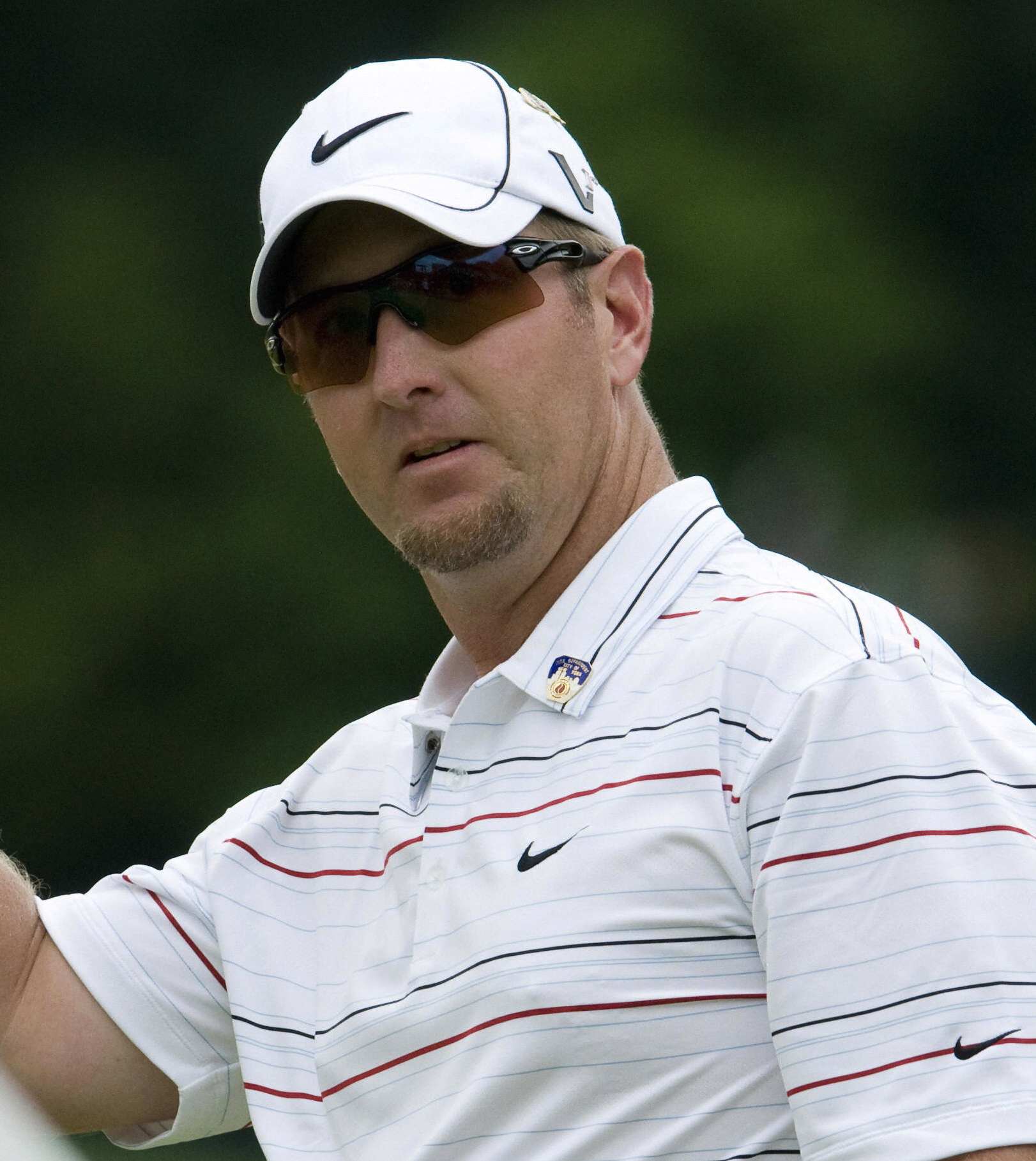
In a bit of breaking news, this week David Duval took to Twitter to voice his displeasure at not being included in the Humana Challenge on a sponsors exemption. The tournament, slated to take place the week of January 14th to 20th, had apparently notified him of this recently as the following was posted to Twitter on January 7th:
“So it’s official. I will not get a spot at the Humana. I guess having the defining moment in the history (of) the event doesn’t matter.”
Fellow pros and fans have jumped to his defense, including John Cook and Steve Flesch, the latter going as far as to accuse the tournament of political BS. The outpouring of support led Mr. Duval to respond by posting another comment asking people to stop hating on the tournament as it still holds a special place in his heart.
Watching David Duval’s comeback attempts over the years have stirred a whirlwind of emotions for his fans, hoping that he will break through and show the form of the man who shot 59 to win the Bob Hope Chrysler tournament in 1999. This author is no exception, once taking a day off from work to watch the 2009 final round at Bethpage Black and finding myself rooting for Duval even more then my fellow lefty and favorite player, Phil Mickelson. It is certainly OK to like David Duval or even be totally fine with the Humana granting him the exemption he sought. Unrestricted sponsors exemptions are exactly that, unrestricted. But before we jump on the tournament, ask yourself: What, really, would David Duval in 2013 have added to it?
The Humana Challenge is not the most star studded field of the year — a quick look at the participants this year and you will notice some top ranked players like Phil Mickelson, Zach Johnson, Matt Kuchar, and FedexCup winners Brant Snedeker and Bill Haas. These guys are mixed in with a mostly emerging field of youngsters and up and comers. A WGC event this is not, and I guess pro ams and multiple courses will do that. But is that a reason to give an invite to Duval?
An argument could be made that Duval would help ratings as he’s a recognizable face. But that is really only going to benefit a tournament if he plays the weekend. In 12 sponsors exemptions in 2012, David Duval only made two cuts and did not finish higher then 60th. In fact, in all of 2012 he only broke 70 three times in official rounds. He was not near the top of the leader boards in a real position to help the tournaments attract viewers, and there wasn’t much evidence to say he would be this time. You might also think that tournaments have a bunch of these things to give away, but that isn’t really the case either.
There were some rule changes in 2013 that reduced the amount of unrestricted invitations sponsors could give. Historically, there have usually been four players that could be chosen this way, along with two spots that had to be given to Web.com or Q-School participants. This year those numbers have flipped, and four spots must be given to the Web.com or Q-School participants. That leaves only two positions left to decide on Mr. Duval, someone who has not had a lot of success lately.
Would the tournament be better off taking a chance on someone else, like tournaments did in 2012 choosing Patrick Cantlay (5 of 7 cuts made on exemptions), Boo Weekley (5 of 10), Joe Durant or Erik Compton (3-5 and 3-4), or even Ryo Ishikawa, who turned a sponsors exemption into a 2nd place finish in Puerto Rico? Duval had a very tough year in 2012 and in 2011 missed 15 of 24 cuts, finishing 171st in the Fedex standings. I’m not trying to slam Duval. He seems like a really likeable guy, but 1999 was a long time ago.
In 1999, Tiger had one major, was coached by Butch Harmon and was single (well, I guess some things are the same). The tournament wasn’t called the Humana, and Twitter wasn’t even invented yet. Heck, Facebook wasn’t even invented yet. Not to mention the Humana is already getting a bump publicity wise with the return of the popular Phil Mickelson (in 2012 they said attendance went up and the tournament was watched in more households then 2011).
It’s been a while and I can understand the tournament wanting to give someone else a chance, maybe a young guy as oppose to a veteran with far more missed cuts then made ones in the past five years. That isn’t necessarily political BS, just the feelings of a tournament and itss sponsors who have the right to feel however they want about two people a year. David Duval’s miracle 59 to win the tournament will live on — this doesn’t take that away from him. I hope we will see him back there soon, as a qualifier.


Opinion & Analysis
Brandel Chamblee PGA Championship Q&A: Rose’s huge McLaren risk, distracted LIV pros and why Aronimink suits the bombers


PGA Championship week is here, and Brandel Chamblee did not hold back in our latest discussion ahead of the season’s second major.
In our 2026 PGA Championship Q&A, golf’s leading analyst made the case that PIF pulling LIV’s funding has left its players competing in a state of confusion, called Justin Rose’s mid-season equipment switch a huge risk at 45, and explained why Aronimink will be a bombers’ delight this week.
Check out the full Q&A below.
Gianni: With the PIF confirming that they’re pulling funding from LIV at the end of the season, what impact do you expect that to have on the LIV players competing at the PGA Championship?
Brandel: I would imagine that they have all been thrown into a state of confusion, and will be distracted, not knowing where they are going to play next year and not knowing exactly their road back to either the DP World Tour or the PGA Tour. Or in Rahm’s case, being tied to a sinking ship for the next few years, likely playing for pennies on the dollar in events that no one cares about or watches.
I doubt this would put him in the best frame of mind to compete at his highest level. Keeping in mind, however, that majors are the only time that LIV disciples get to play in events that matter, so never disregard the motivation they have to prove to the world they are still relevant.
Gianni: Justin Rose switched to McLaren Golf equipment mid-season while playing some of the best golf of his career. What do you make of the change?
Brandel: I don’t really know what to make of Rose switching equipment. It seems a huge risk on his part, even though it is likely, in my opinion, that the clubs he’s playing are similar, if not the exact grinds, to what he was playing previously, with a McLaren stamp on them.
Having said that, at best, it is a distraction when he seemed to be as dialed in with his game as any 45-year-old could be and trending in the majors to perhaps do something that would definitely put him in the Hall of Fame. At worst, given the possibility that these clubs aren’t just duplicates of his old set stamped with McLaren on them, he’s made an equipment change that would take time, and 45-year-old athletes don’t have the time to do such things.
Gianni: Aronimink has only hosted a handful of professional events since it hosted the 1962 PGA Championship. What kind of test does it present, and does a course with less recent major championship history tend to level the playing field?
Brandel: Even though Aronimink has only hosted a handful of meaningful professional events, it has been fairly discerning in who can win there. When Keegan Bradley won the BMW Championship on the Donald Ross masterpiece in 2018, he was the 2nd best iron player on tour coming into that week. When Nick Watney won the AT&T at Aronimink in 2011, he was 2nd in strokes gained total coming into the week.
In 2020, Aronimink hosted the KPMG Championship, and Sei Young Kim won. On the LPGA that year, she was first in greens in regulation, putts per green in regulation, and scoring average on the way to being the LPGA player of the year. And then there is the 1962 PGA Championship won by Gary Player, who eventually became just one of a few players to win the career grand slam on the way to winning 9 majors. It is a formidable test, and if it’s not softened by rain, it will bring out the best in the upper echelons of the game.
Gianni: Is there a specific hole at Aronimink that you think will do the most to decide the winner?
Brandel: The hardest hole at Aronimink in each of the three tour events that have been played there since 2010 has been the long par-3 8th hole, with the par-4 10th being the second hardest, so most of the carnage will happen around the turn, but with the par-5 16th offering opportunities for bold plays and the tough closing holes at 17 and 18, the finish is likely to be frenetic.
Gianni: The PGA Championship has always sat in the shadow of the other majors. What does the ideal PGA Championship look like in your eyes, and what would it take for it to carve out its own identity?
Brandel: The PGA Championship, to whatever degree it suffers from the comparison to the other three majors, is still counted just as much when adding them up at the end of one’s career. Almost 1/3 of Nicklaus’ major wins were the five PGA Championships he won. Walter Hagen won 11 majors, five of which were PGA Championships.
Tiger Woods twice in his career won back-to-back PGA Championships, and those four majors count just as much as the other 11 he won. The PGA may not have the prestige of the other three, but it carries the same weight. Having said that, I preferred the identity that it had as the last major of the year.
Gianni: You nailed your Masters picks. Rory won, Scottie finished solo second, and Morikawa surged to a tie for seventh. Who are your top 3 picks for the PGA Championship and why?
Brandel: I am not a huge fan of majors played on golf courses that have been shorn of most of the trees, although I understand some of the agronomic reasons for doing so and of course the ease with which it allows members to play after errant drives. However, at the highest level, it all but eliminates any strategy off the tee and turns professional golf into an even bigger slugfest. That means that it will likely be a bomber’s delight this week, but fortunately, Scottie Scheffler is long enough to play that game and straight enough to play it better than anyone else.
The major championships give us very few surprises anymore, going back to the beginning of 2012, so the last 57 majors played, the average world rank of the winners has been better than 15th in the world. So look at the highest ranked and longest drivers who are on form coming into the PGA Championship who also have great short games as the surrounds at Aronimink are very challenging. That’s Scottie Scheffler by a mile and then McIlroy and Cameron Young with a far bigger nod towards DeChambeau than I gave him at the Masters.


In this episode of the Club Junkie Podcast, we dive into one of the most interesting flatstick releases of the year with a full review of the new TaylorMade SYSTM 2 putters. After spending time on the greens, I break down what makes this design stand out, where it performs, and why it has me completely torn between loving it and fighting it. If you are into feel, alignment, and consistency, this is one you will want to hear about.
We also take a look at some of the putters in play on the PGA Tour last week. From familiar favorites to a few surprising setups, there is always something to learn from what the best players in the world are rolling with under pressure.
To wrap things up, I walk through the process of building a set of JP Golf Prime irons paired with Baddazz Gold Series shafts. From component selection to performance goals, this is a deep dive into what goes into creating a unique custom set and why this combo has been so intriguing.


This year my 50th birthday. Gosh, where has the time gone?
As a teenager in rural Missouri, some of my junior high and high school years felt interminable. Graduation seemed light years away. But the older I get, the faster life seems to fly by.
I’m also increasingly aware of my mortality. My dad died recently. Earlier this year, a friend and fellow PGA of America professional and I were texting about our next catch-up. The next message I received was news of his unexpected passing at 48. Shortly after, a woman I dated in college succumbed to cancer at 51.
Certainly, one can share perspective at any age. Seniors help freshmen, veterans guide rookies. But reaching this milestone feels like as good a time as any to do one of those “what would I tell my younger self?” articles.
I’ve had a uniquely varied career in golf. I started as a 27-year-old, average-length-hitting, 14-handicap computer engineer and somehow managed to turn pro before running out of money, constantly bootstrapping my way forward. I’ve won qualifiers and set venue records in the World Long Drive Championships, finished fifth at the Speedgolf World Championships, coached all skill levels as a PGA of America professional, built industry-leading swing speed training programs for Swing Man Golf, helped advance the single-length iron market with Sterling Irons®, caddied on the PGA TOUR and PGA TOUR Champions, and played about 300 courses across 32 countries.
It’s been a ride, and I’ve gone both deep and wide.
So while I can consult and advise from a lot of angles, let me keep it to a few things I’d tell the average golfer who wants to improve.
1. Think About What You Want
Everyone has their own reason for picking up a golf club.
Oddly, as a professional athlete, I’m not internally driven by competition. That can be challenging, as the industry currently prioritizes and incentivizes competition over the love of the game.
For me, I love walking and being outdoors. Nature helps balance my energy. I prefer courses that are integrated into the natural beauty of their surroundings. I’m comfortable practicing alone. I’m a deep thinker, and I genuinely enjoy investigating the game, using data and intuition to unearth unique, often innovative insights. I’m fortunate to be strong and athletic, so I appreciate the chance to engage with my abilities. Traveling feels adventurous. I could go on.
You don’t have to overthink it like I do. For you, it might be as simple as hitting balls to escape work, hanging out with friends, and playing loosely with the rules and the score.
The point is to give yourself permission to play for your own reasons, and let that be enough.
But if improvement is your goal, thinking about your destination—and when you want to get there—is important, because it dictates the steps you need to take. When I set out to go from a 14-handicap to the PGA TOUR as quickly as possible, the steps I needed were very different from those of a working golfer trying to break 90 in six months. That’s also different from someone who just wants a few peaceful hours outside each week, away from work or family.
None of these goals are better than the others, but each requires a different plan that you can work backward from.
2. There Are Lots of Things That Can Work
One of the challenges of golf is that, although there are rules for playing, there aren’t clear, industry-wide standards for how to best play the game. There’s a lot of gray area.
You might hear a top coach or trainer insist that a certain move is the best way to swing or train. Then you dig a bit deeper and, much to your confusion and frustration, another respected coach or trainer says something completely different. I don’t think anyone is trying to confuse you—at least I hope not. It’s just where the industry is right now.
You have to be careful with advice from tournament pros, too. They might be great at scoring, but they’re also human and sometimes just as susceptible as amateurs to believing things that don’t really move the needle. Tour players might describe what they feel, but that’s not always what they’re actually doing when assessed with technology.
I recently ran a test on my YouTube channel (which connects to my GolfWRX article “How to use your hands in the golf swing for power and accuracy”), and, interestingly, two of the most commonly taught hand actions produced the worst results in the test.
Coaches can certainly help. If you find someone you connect with to help navigate, that’s great. But there are many ways to get the ball in the hole. In the current landscape, you may need to seek multiple opinions, think critically, and use your own intuition to discern what seems true and whose advice resonates with you.
I’d recommend seeking someone who is open-minded and always learning, because things constantly change. Absolutes like “correct” or “proper” should raise a red flag. AI can be useful, but it tends to confidently repeat popular advice, so proceed with caution.
3. Get Custom Fit
If you’re serious about becoming a better player, getting custom fit is hugely important. There’s no sense fighting your equipment if you don’t have to. Most better players get fit these days and, if they don’t, they’re usually skilled enough to work around clubs that aren’t ideal.
If you plan to play for a long time, it’s worth spending a little more upfront to get something that truly fits you and your game, rather than continually buying and discarding equipment.
Equipment rules haven’t really changed significantly since the early 2000s. To stay in business, manufacturers keep pushing those limits. If you pull a bunch of clubs and balls off the rack and test them, you’ll find differences. I’ve tested two new drivers and seen a 30-yard total distance gap. Usually, the issue isn’t bad equipment; it’s that the combination of components simply isn’t the best fit.
It’s like wearing a new pair of floppy clown shoes. Sure, they’re shoes—but you won’t sprint your best in them compared to track shoes that fit perfectly.
Be wary of what’s called custom fitting, too. Sometimes the term is used as a marketing strategy rather than an actual fitting. In some retail settings, fitters may be incentivized to steer you toward higher-priced components. That doesn’t automatically mean it’s not the best fit, but you should be aware of potential biases.
I learned a version of this lesson outside of golf. Years ago, I bought a tennis racquet at a big box store from a seemingly knowledgeable employee who thought it would suit me best. The racquet gave me tennis elbow, and I spent months recovering with rest and acupuncture. The next season, I invested more time and money to find what actually fit me, and I walked away with something amazing that I still play with years later.
So if you’re going to get fit, be smart about it.
Find someone you believe has deep knowledge—possibly with certifications, but not necessarily. Make sure there’s a wide inventory across many brands. Check recent reviews for the individual fitter if possible. Make sure you trust that the fitter has your best interests at heart. If they’re wearing a hat or shirt with a specific brand’s logo, proceed with caution. Unless you specifically want a certain brand or look, be wary of upsells, especially if two options perform nearly the same.
Also, while golf is called a sport of integrity, there’s a thread of manipulation in the industry. I once drafted an equipment article for an industry magazine, structured just like one of their previous popular stories, with matching word count and great photos. The assistant editor loved it; it was useful to readers and required little work on his part. But the editor-in-chief nixed the story. When I asked why, I was told it was because I wasn’t an advertiser. It turned out the article I’d modeled mine after was a paid ad cleverly disguised as editorial content.
I really dislike games, clickbait, and fear-based manipulation. I hope this changes, but golfers deserve to know it exists.
4. Distance and Strategy Matter
There’s a real relationship between how far you hit the ball and your scoring average, even at the PGA TOUR level.
I experienced this early in my pro career. I started as a power hitter, swinging in the high 120s and breaking 200 mph ball speed with a stock driver.
Back then, some instructors advised swinging at 80%, so I tried slowing down for more accuracy. That worked fine on shorter, tighter courses. But on longer setups, I was coming into greens with too much club, and par 5s stopped being realistic opportunities. Later, when I tested the “80%” idea with a radar, it wasn’t 80% at all. For me, and for most golfers I’ve tested, it was more like going above 92 to 96% of max before full swing control started to noticeably drop off.
If you want more distance, there are swing technique changes that can help. See my author profile for previous articles. Technical changes can be dangerous to play with, though. A lot of golfers want consistency too, and it can be disruptive when you constantly change swing thoughts and mechanics.
The low hanging fruit is usually custom fitting, as mentioned above.
From there, if you have a big banana ball swing that’s fairly reliable but you just need more distance, consider swing speed training at Swing Man Golf. If you’re starting from zero, the first level program using driver swings, a radar to measure speed, and simple resistance bands can move the needle quickly to the tune of 12 to 16 mph and 30 to 40 yards, plus what you gain on iron distance as well.
Strategy matters too. For a golfer shooting in the 90 to 100 range, I’ll share a demo I’ve done when golfers have hired me for their golf vacations. I’d play at average golfer speeds and distances, hitting a smooth hybrid off the tee, maybe 190 yards. I wouldn’t aim at the fairway. Instead I’d aim between the biggest trouble, like the center of the tree line. Then I’d cruise a 6-iron about 160 to a safer area short of greenside bunkers or other major trouble. From there it might be a wedge or a simple pitch, depending on hole length. Go middle unless you are almost 100% confident you will keep it on the green by aiming closer. Then it’s a lag putt for par, followed by a tap-in.
It’s not flashy, but if you want to break 90 or 100 more regularly, something that keeps you out of big trouble like this can be super effective.
This is also where a playing lesson can help. If a coach tells you what to do and where to aim, you’d be surprised at how many shots can get dropped just having the coach be your decision maker until you get the hang of it. In some of those cases, you don’t even need to make much if any technical changes. You might already be there with a playable swing. It could just be better decision making that gets you around the course with a lower score.
Okay, I hope something here was useful for you.
Thanks for being with me all these years, and I wish you and your game the best.

RBC Heritage Tour Report: More minis, course-specific setups, Spider & GTS launches

Justin Rose WITB 2026 (April): Full WITB breakdown with new McLaren irons

Best fairway woods of 2026: The most versatile fairway woods + the most forgiving fairway woods

What’s the story behind Webb Simpson’s custom-stamped irons?

Cadillac Championship Tour Report: Spieth’s sizable changes, McLaren Golf launches, and more

The 24 players who can win the Masters

Rory McIlroy’s winning WITB: 2026 Masters

Kristoffer Reitan’s winning WITB: 2026 Truist Championship

J.J. Spaun’s winning WITB: 2026 Valero Texas Open

Cameron Young’s winning WITB: 2026 Cadillac Championship


Alex Fitzpatrick WITB 2026 (May)
Driver: Ping G440 LST (9 degrees) Shaft: Fujikura Ventus Black 6 X 3-wood: TaylorMade Qi4D (15 degrees) Shaft: Fujikura Ventus...

Kristoffer Reitan’s winning WITB: 2026 Truist Championship
Driver: Ping G440 Max (9 degrees) Shaft: Mitsubishi Tensei 1K White 60 TX 3-wood: Ping G440 Max (15 degrees) Shaft:...


WITB Time Machine: Rory McIlroy’s winning WITB, 2021 Truist Championship
Rory McIlroy’s victory at the 2021 Wells Fargo Championship 2021 (now the Truist Championship) marked a significant return to form,...


Collin Morikawa WITB 2026 (May)
Driver: TaylorMade Qi4D LS (8 degrees) Shaft: Mitsubishi Diamana D+ Limited 60 TX 3-wood: TaylorMade SIM Tour (14 degrees) Shaft:...
-
 Equipment2 weeks ago
Justin Rose WITB 2026 (April): Full WITB breakdown with new McLaren irons
-
 Equipment1 week ago
What’s the story behind Webb Simpson’s custom-stamped irons?
-
 Equipment2 weeks ago
Cadillac Championship Tour Report: Spieth’s sizable changes, McLaren Golf launches, and more
-
Whats in the Bag4 days ago
Kristoffer Reitan’s winning WITB: 2026 Truist Championship
-
 Whats in the Bag2 weeks ago
Cameron Young’s winning WITB: 2026 Cadillac Championship
-

 Whats in the Bag3 weeks ago
Nelly Korda WITB 2026 (April)
-

 Equipment2 weeks ago
Justin Rose on the switch to McLaren Golf, learnings from previous equipment moves
-

 Tour Photo Galleries2 weeks ago
Photos from the 2026 Cadillac Championship


donald davis
Jan 12, 2013 at 3:11 am
move on. get a card.david duval is old news. give the exemptions to people who can compete. he can always try to monday qualify. he had his day and it sure seems like he was more interested in his time away form the game , injuries and lack of focus.