
Equipment
Fujikura launches new Ventus TR Blue shafts for 2022 (plus a deep Q&A)


Fujikura’s family of Ventus shafts is undoubtedly one of the company’s best-performing, most popular and best-selling shaft lineups ever.
Back in September 2018, Fujikura launched the Ventus Blue shaft on the PGA Tour, finding immediate success for its ability to create speed without sacrificing stability. The secret sauce was a technology called “VeloCore,” which is a multi-material construction that uses ultra-stiff Pitch 70 Ton carbon fiber to increase stiffness.
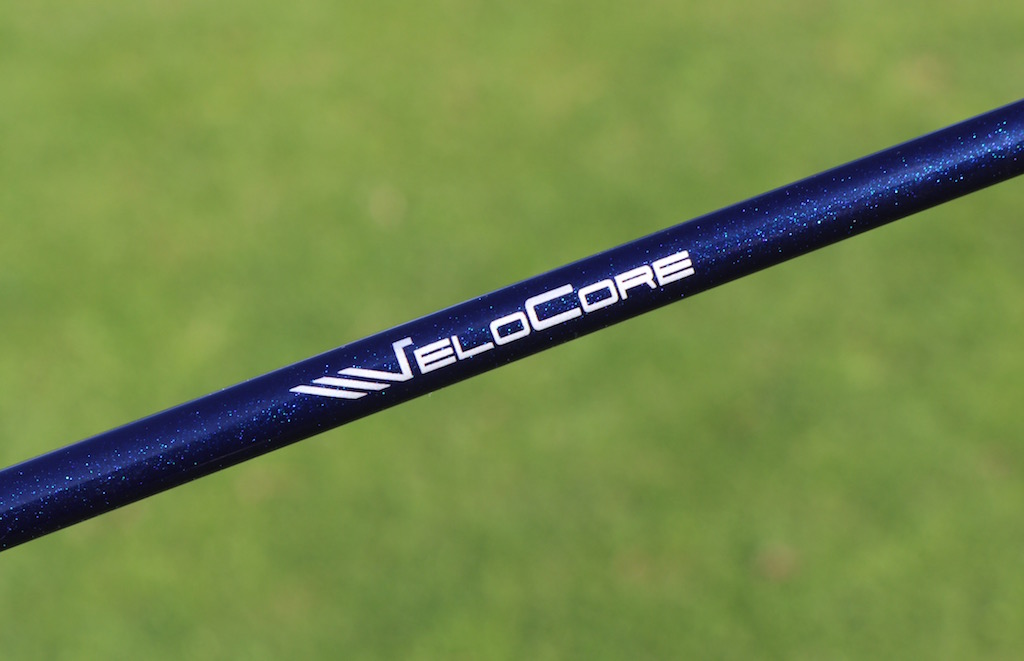
The Ventus Blue allowed players to hit the center of the face more often due to a reduction in twisting and droop on the downswing.
As a mid-launch and mid-to-low launch shaft that provided speed and stability, the Ventus Blue fit the swings of most players. But, of course, there was demand for other models both in the market and on Tour. So, in September of the following year, Fujikura launched the Red (higher launch/higher spin) and Black (lower launch/lower spin) versions to appeal to the needs of different swings.
Fujikura’s arsenal of Ventus shafts allowed nearly any golfer across the swing spectrum to fit into one of the three options, including top tour players.
Although the Ventus shafts remain in the bags of tour players and perform well in the market, Fujikura has been working behind the scenes over the last several years to enhance performance.
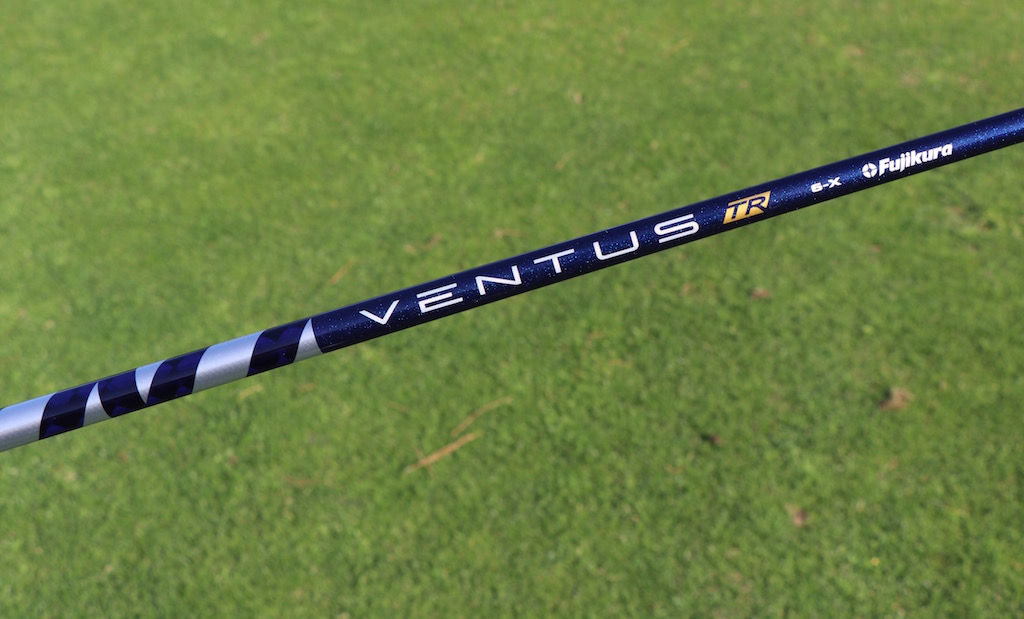
After using its in-depth ENSO analytics and working closely with tour players, Fujikura has developed a new Ventus TR Blue shaft. Like the original Ventus Blue, the TR version is a mid-launch shaft, except it’s stiffer in the mid/handle section to improve stability and consistency of strike.
While VeloCore is still used throughout the Ventus TR shaft, the new construction features “Spread Tow” fabric in the butt-end section to increase torsional stiffness. Spread Tow, essentially, is a checkerboard-like design that weaves fibers together to increase strength and reduce weight. According to Fujikura, the torque is 10 percent stiffer in the section that uses this design.
Fujikura’s Product Marketing Manager, Spencer Reynolds, explains exactly what Spread Tow is and why it’s effective
“Essentially, there’s a standard carbon weave and then there’s a Spread Tow carbon weave. What a Spread Tow does is it takes all these individual strands of carbon and irons them flat into a tape, and then weaves those over-under, over-under almost like a checkerboard pattern. So there’s very little space for resin to accumulate, you get super low resin content, and then you also get a lot of strength in varying directions. It can take pull and load in multiple directions. Another benefit is that it’s super lightweight. You’re getting an incredible amount of strength, in an ultra-lightweight package.” (Read the Q&A later in the piece for way more insight from Reynolds on the Ventus TR).
For golfers, the new Ventus TR construction will lead to more stability at impact and during the backswing-downswing transition. In comparison to the original Ventus Blue, the Ventus TR will play slightly stiffer for lower spin but not quite as stiff as the Ventus Black.
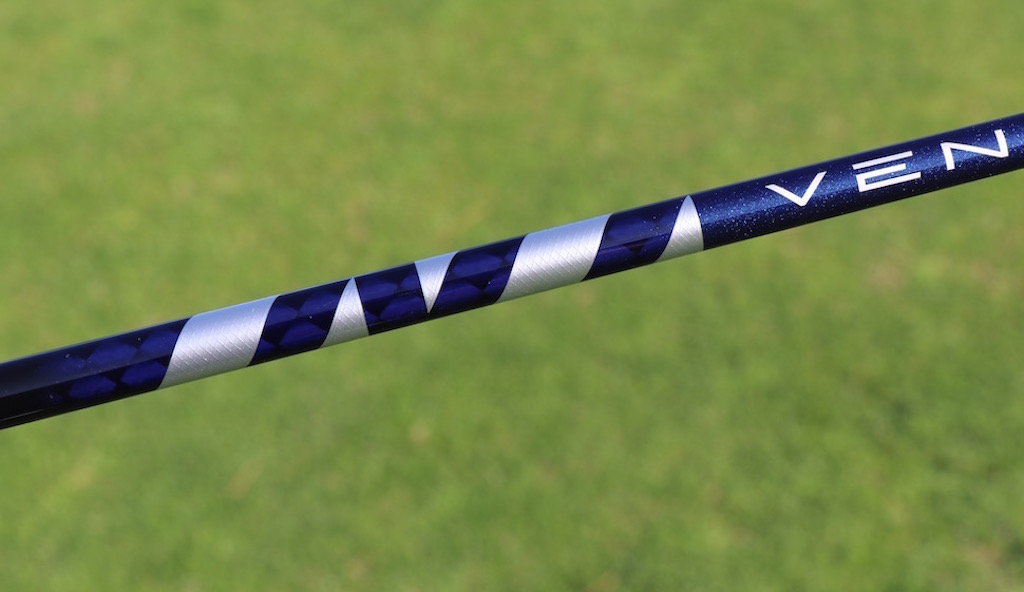
Debuting a slightly new look, the Ventus TR has a lightweight phantium paint finish that glistens in the sunlight, and it has a gold “TR” block. Also, if you look closely at the butt-end section of the shaft, you can visibly see the Spread Tow woven technology. Fujikura has confirmed that the checkered design isn’t just a graphic — that’s a look into the real technology through the paint finish.
Described by Fujikura as a mid-launch, low-spin shaft, the Ventus TR comes in the following options: Ventus TR Blue 50 (R2, R and S flex), Ventus TR Blue 60 (R, S and X flex), Ventus TR Blue 70 (S and X flex) and Ventus TR Blue 80 (S and X flex), each of which are available at 46 inches.
Fujikura’s new Ventus TR Blue shafts will be available at over 600+ authorized retailers starting Feb. 1, 2022, selling for $350 apiece.
Fujikura Ventus TR: The inside story
For more on the Ventus TR, how it was designed, what it’s designed to do, and what the “TR” actually stands for, we talked with Spencer Reynolds, Product Marketing Manager at Fujikura.
Tursky: Simple question to start, what exactly is the Ventus TR shaft? What’s different about the new design?
Reynolds: Yeah, so on our end, for the last three years, really, people have been asking us what’s going to be next for Ventus, right? That’s kind of the curse and the blessing of having a really successful part. And the cool thing about Ventus is that it’s successful from the amateur level all the way to the PGA Tour. So you get tasked with these three things. 1) They want something new, 2) it needs to be better and 3) don’t change it. It’s kind of an awkward recipe to make new product.
So what we find is it’s a bit of a three-step process. It starts with taking a successful part and profile, and let’s listen to feedback. So we talk to tour pros, we’ll talk to charter dealers, we’ll talk to players and say, ‘Alright, if there was something about a particular profile that you’d want to change or enhance, what would it be?’
The luxury that we have is we take that feedback, and then we can kind of pair that up with our ENSO analytics. We have thousands of lines of different data and combinations of shaft builds, and how that interacts with different players, so we can pretty confidently say if we take this feedback, we make this change here, we make this section different, we make it softer or stiffer, whatever it is, we can look at an algorithm and look and past data and get a pretty good feel for how this is going to play out.
Then step three is, we find the right recipe, build prototypes, test it to death, and then roll it out to market. And that’s the super simplified version of it.
We got really nitpicky with Ventus, and one of the things we realized was that VeloCore technology is still an incredibly stable platform. So combine that incredibly stable core, incredibly ultra-stiff tip section, we have a lot of stability there. But what ENSO analytics showed us was, when a shaft goes into transition on the downswing, especially at higher swing speeds, but really for all swing speeds, that’s where a shaft takes on a lot of stress – unwanted stress, anytime there’s a quick change in direction. And we see that happen in the mid-handle section. That’s really where that occurs a lot.
Anytime we see that inconsistency in a shaft build, it can lead to unnecessary twist or unwanted twist. We want this piece from grip to tip to be as consistent as possible. So you start to look at specific sections now, and if this is a weak section or a section that can be compromised, how can we beef it up. Easy thing is we strap a bunch of material to it, right? But that doesn’t work because now you’re compromising swing weight, overall weight, and in a profile like a mid-launch, low-spin profile shaft like this, you’re really starting to compromise feel. You’re starting to push it much more into that handle-stiff, rebar, high swing speed space. This can live there with stiffer flexes and higher weights, but in that mid-low spin range, you want to maintain some of that feel.
So it leads us down a rabbit hole, how can we source new composites? How can we source new materials? How can we solve this problem? Well, we integrated a new Spread Tow carbon fabric.
Essentially, there’s a standard carbon weave and then there’s a Spread Tow carbon weave. What a Spread Tow does is it takes all these individual strands of carbon and irons them flat into a tape, and then weaves those over-under, over-under almost like a checkerboard pattern. So there’s very little space for resin to accumulate, you get super low resin content, and then you also get a lot of strength in varying directions. It can take pull and load in multiple directions. Other benefit is that it’s super lightweight. You’re getting an incredible amount of strength, in an ultra lightweight package.
Now we get away from that idea of compromising swing weight or overall weight, but when we measure this – we have a proprietary measurement system where we don’t just look at torque overall. We look at torque in every section of the shaft specifically. So what is the handle torque? What is the mid torque? What is the tip torque? And we compare that section to a Ventus Blue, and it jumps the torsional stiffness almost 10 percent in that specific section, which is a big chunk.
Tursky: What do these benefits equate to in real life for a golfer?
Reynolds: The basic way to look at it is, you’re increasing consistency by that much more by increasing stability that much in a shaft. So any increase we see in stability, especially getting into double digits, it’s a huge gain.
What it really gives players, though, is you’re not really compromising player feel. So you’ve increased torsional stiffness in that section and made the shaft that much more consistent, without it feeling boardy or stiff in a particular section.
Tursky: So, in the handle section, you can see a checkerboard style graphic. Those are just graphics, right? You’re just highlighting the technology underneath?
Reynolds: No, you’re seeing the material. That’s the material showing through, so you can actually see that under the Ventus decal, especially in the sunlight. When you see the checkerboard popping at you, there’s just a touch of paint over it. That’s the actual material on the part. So you will see some cool cosmetic changes on this, you will see a kind of sparkly blue finish that you can see when we’re in the sunshine. It’s got the added “TR” graphic to go in the label.
Tursky: What does the “TR” stand for?
Reynolds: It really doesn’t have a necessary meaning, but it has cool company history. We’ve had a TR part in the past in the Speeder TR. So, to us, it kind of means a lot of different things. In the past we’ve called the TR, we’ve called it tour rated, torsionally reinforced, we’ve come up with a million different acronyms, but truthfully it’s just kind of a brand name for us that has cool company history.
Tursky: I always thought it was “tour ready”…
Reynolds: Yeah, tour ready. We’ve gone through a litany of things. But for us, it’s kind of just a nod to our company history. And it helps it stand out just a little bit, too. As easy as the Ventus 2.0 would have been, we wanted to add some substance with it with a cool nod.
Tursky: In general, if I’m hitting an original Ventus against a Ventus TR, what are some things I can expect?
Reynolds: Yeah, you’ll start to see some slight changes. We have integrated some stiffness to the profile. I would say that apples-to-apples, compared to a Blue, you may see some lower spin, certainly not as aggressive as Ventus Black. But it’s player dependent. We can look at a player profile on a spec chart and have a good idea of how it’s going to perform, but if you really want to know how it works for you, it’s always best case scenario to get fit, try it, try different combinations, and see what really sings for you.
Tursky: So, at least for now, there’s just a TR Blue?
Reynolds: There is. I know what your next question is. I’ll tell you this. Anytime we integrate a new technology that we see great success with, we absolutely explore it into other profiles. It’s absolutely in the consideration. And the cool things really from a design perspective with the TR, and we talked about this a little bit in a product last year, which was Speeder NX, we talked about a thing called variable torque. And we’ve really done a lot in that design space that we’re targeting these specific sections. What we found is that really is a powerful lever in adjusting shaft performance. Really targeting specific sections and talking about twisting profiles versus just E.I. profiles, whether that’s adding or subtracting material. Whatever it is, that idea of varying toque in specific sections is a space that we feel we’re just dipping our toe into and we’re really excited to run with. We’ve seen really cool results so far with the Ventus TR and we’re psyched about it.




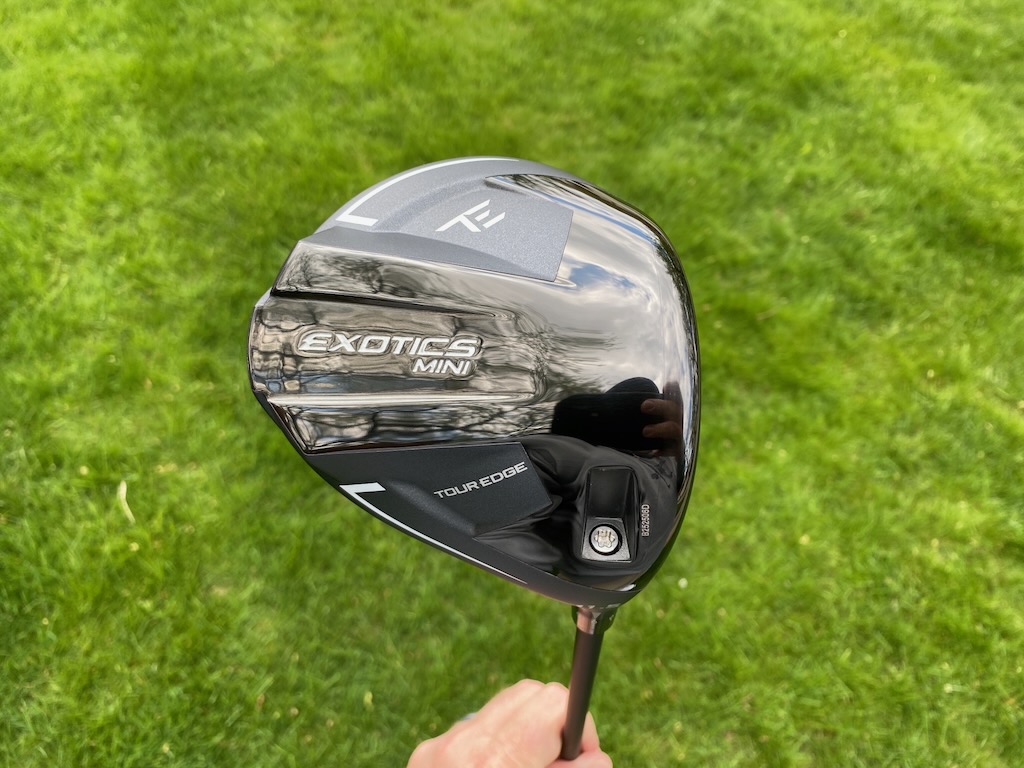
Tour Edge Golf has today introduced the all-new Exotics mini driver, engineered to deliver a powerful combination of speed, control, and versatility in the long game.
The Exotics Mini combines a titanium face with a stainless-steel body in design to balance ball speed with stability and control, creating a versatile option at the top end of the bag.

At the core of the design is Tour Edge’s proprietary Combo Brazing technology, a high-precision thermal bonding process that seamlessly fuses a titanium cup face to a stainless-steel body into a single, continuous structure. By eliminating energy loss found in traditional multi-piece constructions, Combo Brazing is designed to deliver faster face response, more efficient energy transfer, and a uniquely powerful yet controlled feel.

The multi-material construction also allows mass to be positioned lower and deeper in the head in a bid to increase stability, while the thin titanium face is engineered to maintain ball speed across a wider impact area.

“While the initial goal was to enhance control and versatility in the long game, Combo Brazing ultimately drove measurable gains in ball speed and distance within the mini driver category. In robot testing, we’ve documented higher ball speeds, higher launch, reduced spin, and increased carry and total distance compared to leading models.” – Vice President of R&D Matt Neeley

In addition to distance performance, the Exotics mini emphasizes forgiveness through a heavier stainless-steel body that shifts mass toward the perimeter. This configuration increases MOI relative to traditional all-titanium mini drivers, helping preserve ball speed and directional stability on off-center strikes. Paired with Pyramid Face Technology from the Exotics metalwood line, the design is intended to support consistent speed across the face.

To further enhance MOI, a lightweight carbon fiber crown frees additional mass that is strategically repositioned low and deep in the head in design to improve stability and promote optimal launch with controlled spin.

“We designed the Mini to be about five millimeters shallower than other mini drivers on the market. That change improves playability off the deck. From a clean fairway lie, it can function as a strong 3-wood alternative while still providing control off the tee.” – Tour Edge CEO David Glod
An adjustable hosel system allows for loft and lie tuning to dial in trajectory and shot shape, while a fixed 13-gram rear weight helps stabilize the head through impact to improve dispersion consistency. The Exotics Mini Driver is available in 11.5 and 13.5-degree lofts in right-handed models.

Pricing & Availability
The Exotics Mini Driver is available for pre-order beginning today for $399.99 USD at touredge.com, and will be available for purchase at retail outlets worldwide on May 22, 2026.

In our forums, our members have been pitting a Srixon ZXi combo against a TaylorMade P7CB/770 combo. WRXer ‘edutch22’ is on the hunt for a new set of irons and kicks off the thread saying:
“Looking at picking up a new set of irons and think I’ve narrowed it down to Srixon ZXi combo or Taylormade P7CB/770 combo. I am currently a 5 cap and allbeit I feel irons are my weakness. My miss is a little to the toe side. I am decently steep at 4-5 down. Always thought I am high spin but recently on trackman my 7 was spinning at 5800 roughly.
My question or looking for thoughts on which one would benefit me more from a forgiveness standpoint? Or is there another iron is should be looking at entirely? I only get to play about once or twice a week, if I am not playing a 2-3 day event. Thanks in advance.”
And our members have been sharing their thoughts and suggestions in response.
Here are a few posts from the thread, but make sure to check out the entire discussion and have your say at the link below.
- manima1: “You just can’t go wrong with Srixon ZXi7.”
- MattM97: “You have to hit them to know, the V-Sole on the Srixon can be make or break for many.”
- dmeeksDC: “P7CB is more forgiving for me than ZXi7 because my main miss is low middle and the P7CB still flies and spins great on that miss. These are both really nice irons but I like the P7CB more than the Zxi7 and the P770 (or P790) more than the Zxi5. The Srixons are larger so if that gives you confidence that is the way to go. I don’t feel like I get any benefit from the V-sole and the P7CBs live up to their high Maltby forgiveness rating so the TaylorMades have been great for me.”
Entire Thread: “Srixon ZXi combo or TaylorMade P7CB/770 combo? – GolfWRXers discuss”

At GolfWRX, we are a community of like-minded individuals who all experience and express our enjoyment of the game in many ways.
It’s that sense of community that drives day-to-day interactions in the forums on topics that range from best driver to what marker you use to mark your ball. It even allows us to share another thing we all love – buying and selling equipment.
Currently, in our GolfWRX buy/sell/trade (BST) forum, @pianoman0123 has a 2024 Wilson Staff CB/Blade combo up for grabs.

From the listing: “2024 Wilson Staff CB/Blade Combo. 4-8 irons are CB’s and the 9,PW are Blades. 5-PW have Project X 6.0 Shafts and the 4 Iron has a Steelfiber CW110 Stiff Shaft. Standard Length, Lie and Lofts. These are in very good condition the shafts just don’t work for me. Like new Lamkin Grips on the 5-PW and a stock Golf Pride on the 4 Iron. $525 OBO.”
To check out the full listing in our BST forum, head through the link. If you are curious about the rules to participate in the BST Forum, you can learn more here: GolfWRX BST Rules

RBC Heritage Tour Report: More minis, course-specific setups, Spider & GTS launches

Justin Rose WITB 2026 (April): Full WITB breakdown with new McLaren irons

Best fairway woods of 2026: The most versatile fairway woods + the most forgiving fairway woods

What’s the story behind Webb Simpson’s custom-stamped irons?

Cadillac Championship Tour Report: Spieth’s sizable changes, McLaren Golf launches, and more

The 24 players who can win the Masters

Rory McIlroy’s winning WITB: 2026 Masters

Kristoffer Reitan’s winning WITB: 2026 Truist Championship

J.J. Spaun’s winning WITB: 2026 Valero Texas Open

Cameron Young’s winning WITB: 2026 Cadillac Championship


Alex Fitzpatrick WITB 2026 (May)
Driver: Ping G440 LST (9 degrees) Shaft: Fujikura Ventus Black 6 X 3-wood: TaylorMade Qi4D (15 degrees) Shaft: Fujikura Ventus...

Kristoffer Reitan’s winning WITB: 2026 Truist Championship
Driver: Ping G440 Max (9 degrees) Shaft: Mitsubishi Tensei 1K White 60 TX 3-wood: Ping G440 Max (15 degrees) Shaft:...


WITB Time Machine: Rory McIlroy’s winning WITB, 2021 Truist Championship
Rory McIlroy’s victory at the 2021 Wells Fargo Championship 2021 (now the Truist Championship) marked a significant return to form,...


Collin Morikawa WITB 2026 (May)
Driver: TaylorMade Qi4D LS (8 degrees) Shaft: Mitsubishi Diamana D+ Limited 60 TX 3-wood: TaylorMade SIM Tour (14 degrees) Shaft:...
-
 Equipment2 weeks ago
Justin Rose WITB 2026 (April): Full WITB breakdown with new McLaren irons
-
 Equipment1 week ago
What’s the story behind Webb Simpson’s custom-stamped irons?
-
 Equipment2 weeks ago
Cadillac Championship Tour Report: Spieth’s sizable changes, McLaren Golf launches, and more
-
Whats in the Bag3 days ago
Kristoffer Reitan’s winning WITB: 2026 Truist Championship
-
 Whats in the Bag1 week ago
Cameron Young’s winning WITB: 2026 Cadillac Championship
-

 Whats in the Bag3 weeks ago
Nelly Korda WITB 2026 (April)
-

 Equipment2 weeks ago
Justin Rose on the switch to McLaren Golf, learnings from previous equipment moves
-

 Tour Photo Galleries2 weeks ago
Photos from the 2026 Cadillac Championship


Pingback: GolfWRX Members Choice presented by 2nd Swing: Best graphite wood shaft of 2024 – GolfWRX
Pingback: Limited-edition Fujikura Ventus TR Blue Patriot Edition shaft announced - Fly Pin High
Pingback: Limited-edition Fujikura Ventus TR Patriot Edition shaft announced - Fly Pin High
Pingback: GolfWRX Members Choice presented by 2nd Swing: Best graphite wood shaft of 2023 - Fly Pin High
Pingback: GolfWRX Members Choice presented by 2nd Swing: Best graphite wood shaft of 2023 – GolfWRX
Pingback: Axiom: Fujikura’s all-new iron shaft with VeloCore - Fly Pin High
Pingback: Axiom: Fujikura’s all-new iron shaft with VeloCore – GolfWRX
Pingback: Rounding out the lineup: Fujikura Ventus TR Red, Black – GolfWRX
Pingback: Here’s why Jordan Spieth switched into a new Fujikura Ventus TR Blue shaft at Pebble Beach – GolfWRX
Pingback: Tour Report: 9 burning gear topics from the 2022 American Express – GolfWRX
Skip
Jan 20, 2022 at 1:50 pm
“the torque is 10% stiffer”? that makes no sense. Also stiffer doesn’t always equal lower spin.
Pingback: Photos from the 2022 American Express – GolfWRX
John
Jan 17, 2022 at 11:47 am
Can we expect to see a price reduction on the original Ventus blue then? Or is the old model going to stay the same price as this new model
nicelife
Jan 17, 2022 at 11:24 am
Weldon back!