
Instruction
Stickney: Balance in golf — the forgotten fundamental

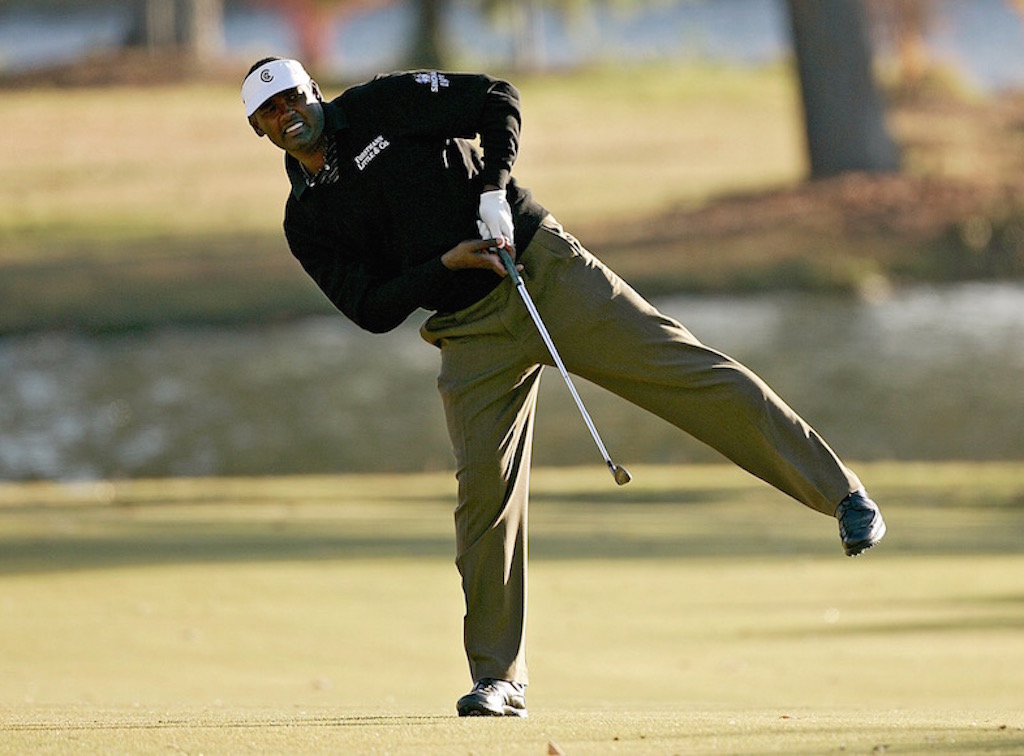
Dr. James Spencer, Lance Gill, and Jason Baile (with Tom Stickney)
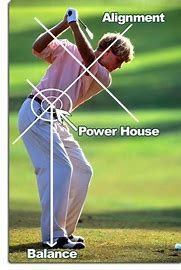
Can you imagine placing almost total disregard on a particular function of the body that can halt, hamper, or disrupt your golf swing instantly? If you knew of such a thing in your swing, wouldn’t you run to your local professional and make sure it was handled and “in-check?” I know I would, but sadly 95 percent of the teachers/players in the world hardly even think about their balance outside of their set up or you finish position.
Balance is literally the most overlooked physical characteristic known to golfers and is something that our bodies rely on in order to walk, move, or do any type of sports activity. Do you remember “homeostasis” from junior high science — the ability to keep your body upright and from falling down? Yes, this is an aspect of balance and it, like your golf swing, can be improved through practice.
Balance is defined by Webster as, “the ability to move or to remain in a position without losing control or falling.”
Balance is controlled by 3 factors of the human body. The 3 factors are vision, vestibular and proprioception.
• Vision – our eyes play an integral role into the world of balancing. The eyes are constantly supplying the brain with feedback on where our body is, within the space surrounding us. Moreover, vision is the main operator for balance and takes over when all other balance systems fail.
• Vestibular – there are three canals filled with fluid inside your inner-ear, and each canal is oriented in a different direction. When you move your head, the fluid in the ear shifts inside of these canals and it flows over receptors that send message to your brain. “You are tilting to the RIGHT, you are tilting BACKWARDS…etc.” The vestibular system is our main motion sensor, specifically linear movement, and rotational acceleration. It helps the brain orient positional information.
• Proprioception – this is probably the most mis-understood and overlooked of all three of the BALANCE centers. Basically stated, this is the internal GPS built into your body that helps you understand where you are in space. Think about how you reach for a glass of water, your body knows where to go and how much to extend your arm as you are walking forward etc.
So, what happens if you don’t have one, two, or all three of these systems working correctly? What factors can it control, hamper, or disrupt? Think of balance like the governor on a car for the nervous system. The nervous system will not allow maximum output for any of the described movements below; thus, balance is the glue that holds the entire body system together:
- Mobility – tends to be reduced when you lack balance
- Stability – tends to be lower with lack of balance
- Strength – will be lower when balance is challenged
- Power – definitely lower when balance is not functioning
- Speed – markedly lower with lower balance ratings
- Endurance – will be limited due to balance restrictions
Now that we can see what factors can be altered within our motion what would be the baseline of balance that we could audit to see where we fall? The average human balance time based on a research study conducted by Walter Reed – Dept of Orthopedics and Rehab, Springer & Gill et al. states that average human balance times with eyes closed on a single leg balance test) is 10.3 seconds.
The average of our golfers over the past 20+ years of doing the same test is the following;
- Professional Golfers – 15+ seconds bilaterally (each leg)
- Amateur Golfers – between 2 to 3 seconds bilaterally (each leg)
And this can be broken down further by age groups as well. Sadly our balance gets worse as we get older.
- Ages 18-39 = 13.3 seconds eyes closed average
- Ages 40-49 = 12.9 seconds eyes close average
- Ages 50-59 = 8.4 seconds eyes close average
- Ages 60-69 = 5.1 seconds eyes closed average
- Ages 70-79 = 4.5 seconds eyes closed average
- Ages 80-89 = 1.0 seconds eyes closed average
Now that we can see what the norms are for professionals and by age as well, let’s dive into how to test your own balance in front of a mirror so you can see where YOU fit into this balance equation.
To test your balance we are going to perform a simple test on both your right leg and left leg- the SINGLE LEG BALANCE TEST-
- Begin test with shoes on or shoes off, standing on a firm surface. Raise one leg/thigh to parallel (or as close as you can get it), and simply hold for up to 20 seconds with eyes open. This is phase 1 of the test. Can you balance on one leg with your EYES OPEN. We didn’t include the eyes open data to this point but the human average for Eyes Open is 17 seconds – which by the way is approximately PGA/LPGA tour average for Eyes Closed). Repeat the same process on opposite side in same format. Note your numbers for both legs.
- The clock starts when your raised leg is in place. Your arms will remain at your side during the entire exam and are not to be outstretched to the front or side. The clock stops when any of the following happens:
- Arms raise
- Leg lowers
- Shoulders tilt out of vertical column
- Hips kick forward backward or laterally to either side
- Foot loses contact with the floor (hopping or rolling)
- Raised leg touches stance leg
Phase 2 of the test is with your eyes closed.
This is the official form of the test BUT ONLY IS TO BE PEFORMED IF YOU ARE SAFE IN YOUR ABILITY TO BALANCE WITH EYES CLOSED.
To test your balance with eyes closed, you will follow the same protocol as above with the following additions.
Perform the eyes open component to gain “bearings” and then simply close your eyes for 1-second as a test run. If nothing majorly uncomfortable occurs in that 1-seconds test run you may proceed to the actual test.
Begin test with shoes on, standing on a firm surface. Raise one leg/thigh to parallel (or as close as you can get it), and simply hold for up to 20 seconds with eyes closed. This is phase 2 of the test. Can you balance on one leg with your EYES CLOSED? Average tour time on this test is approximately 15-20 seconds and average human times is averaging 10 seconds. The clock starts when your raised leg is in place, and your eyes CLOSE. Your arms will remain at your side during the entire exam and are not to be outstretched to the front or side.
The clock stops when any of the following happen
- Arms raise
- Leg lowers
- Shoulders tilt out of vertical column
- Hips kick forward backward or laterally to either side
- Foot loses contact with the floor (hopping or rolling)
- Raised leg touches stance leg
There are three basic categories you can fall into during this stage:
- ELITE – PGA/LPGA level (15+ seconds)
- AVERAGE – human normal via medical science (10 seconds)
- SUB-PAR – into the category we have been watching since before this Millenia
If you happen to fall into this category three (SUB-PAR), do NOT fret. We have recently tested over 250+ members at an elite club in South Florida where golf is a religion and here are our current stats from said members;
- Average eyes closed balance time < than 2 seconds
- Best of entire club – 10 seconds
- Worry level for lance at results – SUPER HIGH
Keep in mind, golf is the religion by which these golfers survive. Now, that is a tongue in cheek comment, but the truth is the following. If something very small goes wrong in their balance and something catastrophic occurs as a result (ie fall or ankle sprain or hip fracture etc.), golf is now a thing of the past. This simple fact of this is enough to drive members into depression. Remember, this problem is solvable and manageable.
Now let’s begin our journey into the solution for your balance woes!
We will break this journey down into 3 simple steps or levels if you will. These levels will be progressing from the easier level all the way up to the hardest level of achieving your pinnacle of balance. Please keep in mind that you are on a journey for yourself and will not be compared against what Dustin Johnson or Jessica Korda can accomplish. This is simply – You vs You.
LEVEL 1 BALANCE OBJECTIVE – you failed the criteria for normal human balance averages after scoring a 2.1 second average on both feet with eyes closed. Where do you start this journey? We would suggest starting with the fundamental concepts of balance. Let’s begin by taking two golf clubs and turning them over so the butt of the grip is into the ground. Try to get two clubs similar in length and my most sincere desire is to AVOID using Autoflex shafts in this process (they sometimes tend to crack when excessive pressure is added to them).
Holding the clubhead in each hand and the butt of the grip into the ground, we would like you to repeat the balance test with eyes open. In this portion of the drill we are determine how much better your balance and proprioception is when you have two object helping support you. We suggest standing on a harder surface to begin with as this will give you the best chance at supporting yourself. During your balance time, please note how much pressure you are exerting through the shafts and the butt of the grips. As you can try to slowly lighten the pressure you are putting through the golf club. This indicates you are using less and less of a support mechanism and relying more and more on your own body parts to obtain optimal balance and this is the safest way to begin your journey into balance retraining.
During this period you may find yourself staring at your feet during the balance training. We want you to understand the following crystal clear, “your feet are not going anywhere and you do not need to give them your ocular (eyes) attention.” Please try and trust us on this, and look at the horizon or the tv or the fine golf tips you have playing on YouTube which are 100% most certainly suited towards your swing and body…… The eyes to the horizon is a major step in this process as it forces your body to rely on the other pathways of vestibular and proprioceptive systems. While these pathways might be a touch sluggish at the start, it will start to awaken and respond the more you require it to do so. Good luck on phase one, have fun with it and enjoy the journey you are on. You wont be perfect but no one truly is. Please try and remember this….(also try to not neglect the other foot/leg)
LEVEL 2 BALANCE OBJECTIVE – we have mastered the art of single leg balance using assisted devices (in a lessening manner of course). It is time to take this balance game to the next level. In this level we will use a majorly overlooked training aid, a 2×4. Yes we said it, a common 2×4 found at any major home goods store such as Lowes or Home Depot. We suggest making sure you get a 2×4 with as smooth of a surface as possible so as to avoid “splinters.” We will often sand my 2×4’s down prior as this gives us piece of mind (or if you are interested in pre-fabricated options we can discuss those also). Why are we worried so much about splinters? Oh did I forget to mention that LEVEL 2 is barefoot. Heck you can do LEVEL 1 barefoot if you wish also. The barefoot premise allows your proprioceptors to fully experience the tactile (touch) of the object of which you are focusing on, and in this case it is your feet.
Next step is; what are we going to do on this 2×4? Lets start with the basics, begin by stepping onto the 1.5” raised piece of lumbar and try to put your opposite foot in front of the down foot. We like the heel to toe concept. Now walk across the 4-6 foot section of board you have purchased. In a heel to toe fashion, can you walk across the board without stepping into the “LAVA” on each side of the board? Oh you are anti-lava rhetoric? Ok then, we hear you…..avoid stepping off the board as there are hungry alligators who are interested in eating your feet once you hit their waters to each side of the board. Is that better? The purpose of our childhood analogies is the following; HAVE FUN with this process. Re-Learn to PLAY during this time of balance training. In fact, maybe we shouldn’t call it training at all. BALANCE PLAY is our new reference term.
During your Level 2 – Balance Playtime, begin to notice which foot is not up to par with the other and give it some extra love during the beam walking. Pay close attention again to where your eyes and head are. If you are looking at the lava or alligators then shame on you. Look towards the horizon and walk tall. The balance beam isn’t going anywhere and it is time you learn to trust your bodies internal GPS system. If you need assisted devices for this portion of the Balance Playtime, you are at a level which is too high for you.
During Level 2 playtime we will create different demands within the structure of walking on the beam:
- Forward walking eyes on horizon
- Backward walking eyes on horizon
- Side walking on beam
- Placing a ball on beam and asking client to bend down (while maintaining heel/toe relationship and mark their ball, come back to standing position and then return to unmark and replace their ball using opposite hand)
- Playing red light/green light game while walking on beam
- Placing beam on a slightly undulated surface outside. We tend to start at <5 degree slopes for training the bodies awareness levels of contours.
LEVEL 3 BALANCE OBJECTIVE – take your balance playtime to a whole new level using the expertise of professionals who train in this arena daily. Fitness is overall too “sexy” of a profession when we look at the social media depictions, as well as the magazine articles written on specific focuses of fitness. Let us state clearly and for the record, Balance is not one of those entities. There is nothing sexy about balance to most people. Yet the last time we checked, bigger pecs and biceps doesn’t tend to reduce death rates…..whereas training your balance does.
NOTE
If you would like to learn more about golf, balance, and how you can improve your game and/or overall performance, please reach out to Lance Gill and Jason Baile at info@lgperformance.com. Their facility is located in Jupiter, Florida and they also offer ONLINE consultations/lessons accepting clients of all levels.
You can reach Dr. James Spencer- “the Balance and Movement Doc” directly at drjspence@me.com. His office is located in Wellington, Florida and accepts new patients as well.
Questions or comments? Tomstickneygolf@gmail.com


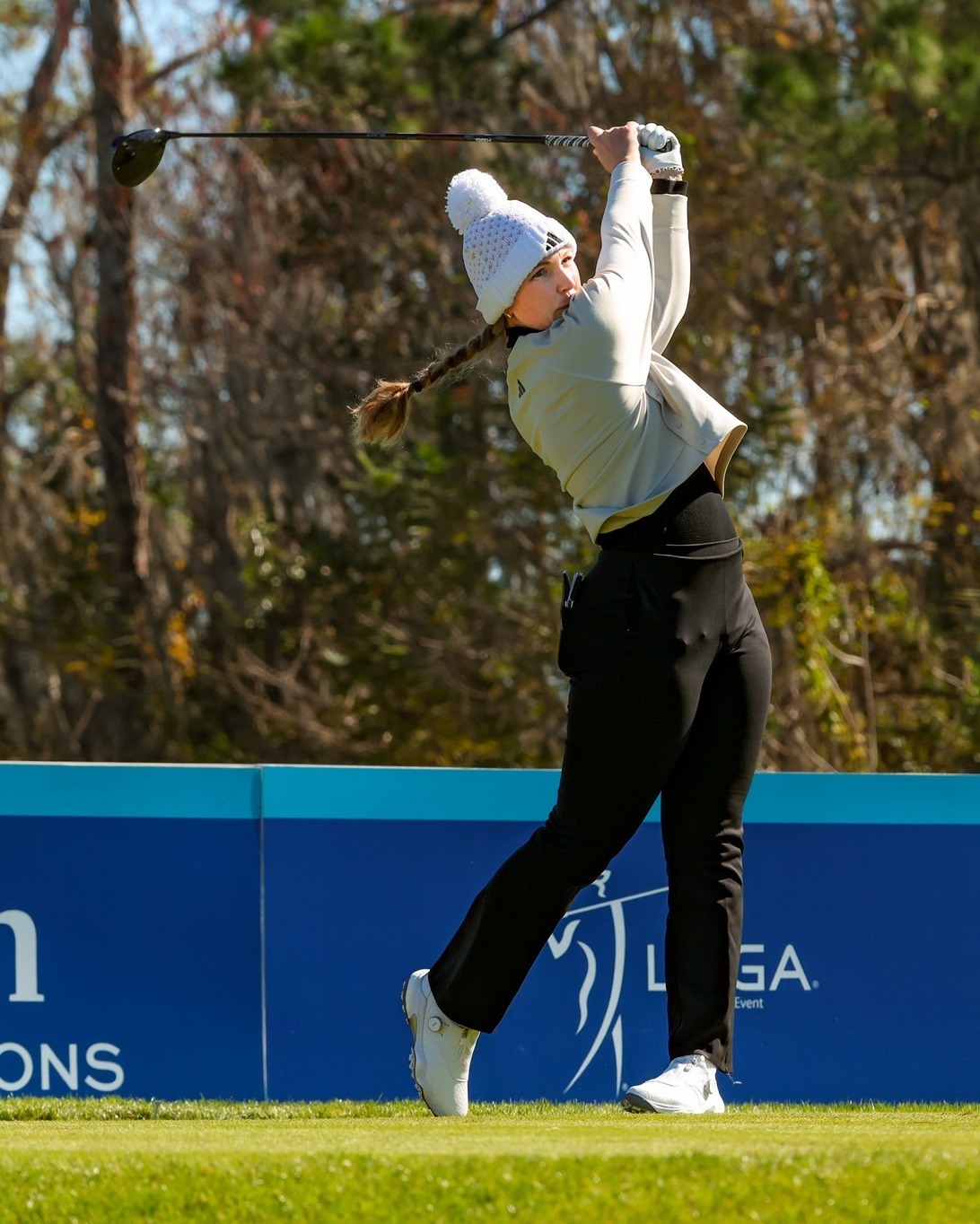
The LPGA Tour is kicking off its 2026 season this week at Lake Nona Golf and Country Club in Orlando, and the pros are dealing with something most Florida golfers rarely face: freezing temperatures.
“It’s colder here than in the UK at the minute, which is a first,” said England’s Charley Hull during Wednesday’s media day at the Hilton Grand Vacations Tournament of Champions.
Even Lydia Ko, who lives at Lake Nona, seemed surprised by the cold snap. “We’re pretty much getting to below zero in celsius here, which maybe in other parts of the country they would be thankful, but when you’re in Florida it is a little bit of a surprise,” she said.
If the world’s best players are adjusting their games for cold weather, recreational golfers should, too. Here’s how to play smart when the mercury drops.
Understand What Cold Does to Your Game
Before you change anything, you need to know what you’re fighting against. Cold air is denser than warm air, which means your ball won’t fly as far. Period.
Hull noticed this immediately during practice rounds at Lake Nona. She mentioned hitting a gap wedge into the 18th hole during a previous win but needing a 4-iron during Tuesday’s practice round. That’s a difference of four or five clubs for the same shot.
Action item: Expect to lose 5-10 yards on every club in your bag when temperatures dip below 50 degrees. Plan accordingly and don’t be stubborn about club selection.
Layer Up Without Restricting Your Swing
Hull admitted she wore three pairs of pants during practice. While that might be extreme for most of us, staying warm is critical to playing well in cold conditions.
Your muscles need warmth to function properly. When you’re cold, your body tightens up and your swing gets shorter and faster. Neither of those things help you hit good golf shots.
Action item: Wear multiple thin layers instead of one bulky jacket. Look for golf-specific cold weather gear that stretches with your swing. Keep hand warmers in your pockets between shots. And don’t forget a good hat because you lose significant body heat through your head.
Take More Club Than You Think You Need
This is where ego gets in the way of good scores. When it’s cold, the ball doesn’t compress as well off the clubface. Combined with denser air, you’re looking at serious distance loss.
The pros at Lake Nona are dealing with a course that measures 6,642 yards but plays much longer this week. If they’re adjusting, you should too.
Action item: Take at least one extra club on every approach shot. In temperatures below 40 degrees, consider taking two extra clubs. It’s better to fly the ball to the back of the green than to come up short in a bunker.
Adjust Your Expectations on the Greens
Cold weather affects putting in ways most golfers don’t consider. The ball is harder and doesn’t roll as smoothly. Your hands are cold, making it harder to feel the putter. And if there’s any moisture on the greens, they’ll be slower than normal.
Ko mentioned that she still sometimes reads the greens wrong at Lake Nona despite being a member for years. Cold weather makes that challenge even tougher.
Action item: Hit putts more firmly than usual. The ball needs extra speed to hold its line on cold greens. Take a few extra practice strokes to get a feel for the speed before you putt.
Embrace the Mental Challenge
Hull said something interesting about cold weather golf: “I like the mental toughness of it.”
That’s the right attitude. Everyone on the course is dealing with the same conditions. The player who stays patient and doesn’t get frustrated by the extra difficulty will come out ahead.
Action item: Lower your expectations by a few strokes. If you normally shoot 85, accept that 90 might be a good score in 40-degree weather. Focus on solid contact and smart decisions rather than perfect shots.
Warm Up Longer and Smarter
This might be the most important tip of all. Cold muscles are tight muscles, and tight muscles get injured easily.
World No. 1 Jeeno Thitikul revealed she’s been protecting a wrist injury that bothered her late last season. Cold weather makes those kinds of injuries more likely if you don’t prepare properly.
Action item: Spend at least 20 minutes warming up before your round. Start with stretching, then hit easy wedge shots before working up to your driver. Keep moving between shots on the course to maintain body heat and flexibility.
The pros at Lake Nona this week will adapt and compete at the highest level despite the cold. You can do the same at your local course by following these tips and keeping a positive attitude.
PGA Professional Brendon Elliott is an award-winning coach and golf writer. You can check out his writing work and learn more about him by visiting BEAGOLFER.golf and OneMoreRollGolf.com. Also, check out “Playing Through” now on R.org, RG.org’s partner site, each Monday.
Editor’s note: Brendon shares his nearly 30 years of experience in the game with GolfWRX readers through his ongoing tip series. He looks forward to providing valuable insights and advice to help golfers improve their game. Stay tuned for more tips!
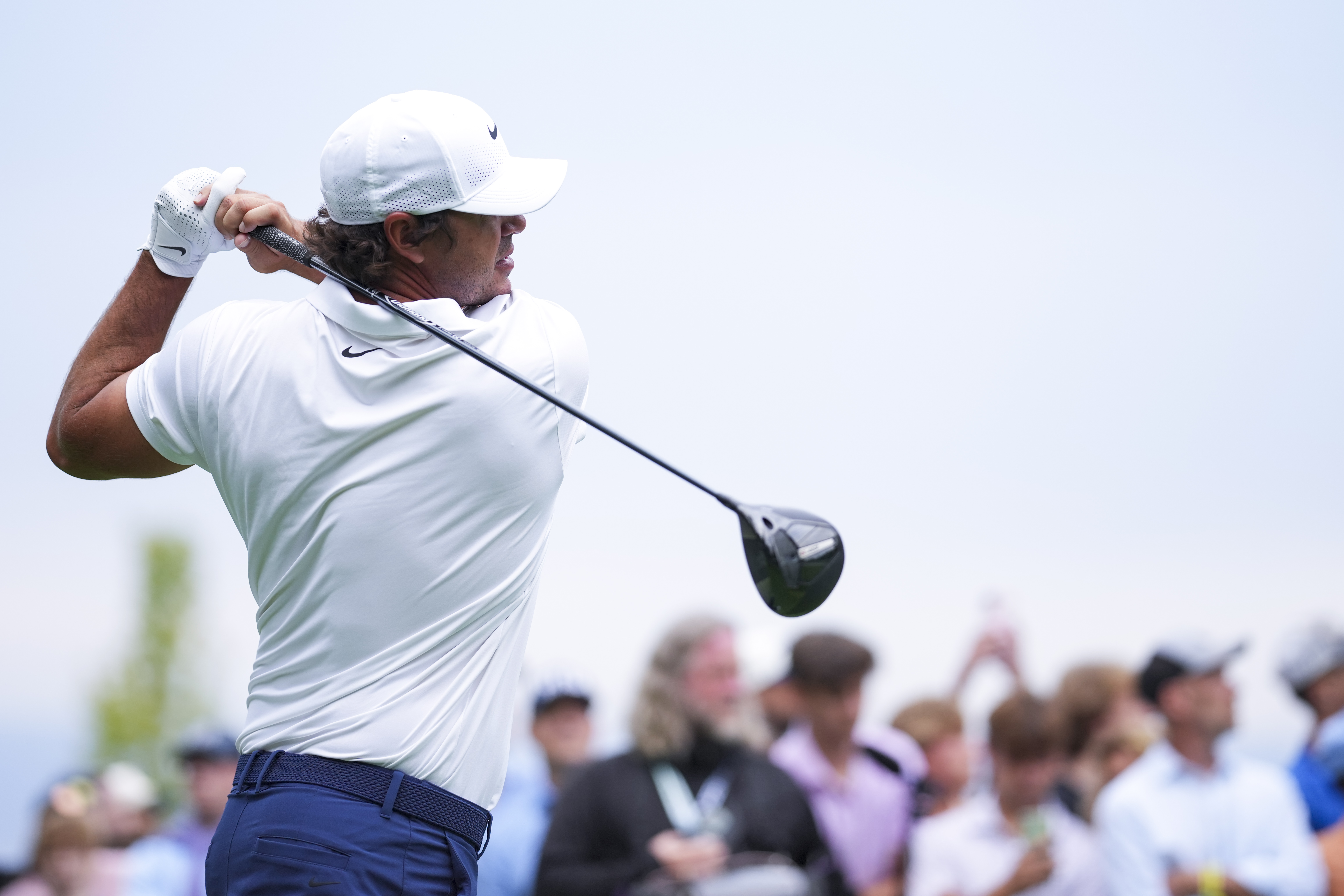
Brooks Koepka is back on the PGA Tour, and whether you love him or hate him, the guy knows how to win when it matters. After his LIV Golf stint, the five-time major champion returns this week at the Farmers Insurance Open.
What makes Koepka fascinating? He doesn’t fit the mold. His swing isn’t textbook. He doesn’t obsess over mechanics. Yet he’s won three PGA Championships and two U.S. Opens, regularly making it look easier than guys with prettier swings.
So, what can average golfers learn from someone who treats the game so differently? Quite a bit.
Stop Overthinking Every Shot
Koepka describes his approach as “reactionary” rather than mechanical. While most tour pros grind over swing thoughts, Brooks sees the target and hits it. No mental checklist.
This might be the most valuable lesson for weekend golfers who’ve watched too many YouTube swing videos.
How to actually do this:
On the range, hit five balls where you stare at the target for three seconds prior to addressing the ball. Don’t think about grip or stance. Just burn that target into your brain. You’ll be shocked at how pure you hit it when your brain focuses on where the ball is going instead of how you’re swinging.
Next time you play, give yourself a rule: Once you pull the club, you’ve got 15 seconds to hit. Koepka is one of the fastest players on tour because he doesn’t give his brain time to sabotage him.
If you feel tension in your hands at address, you’re trying to control too much. Koepka’s grip pressure is famously light. Loosen up until the club almost feels like it might slip, then add just enough pressure to hold on. That’s your swing thought: soft hands, see the target.
This approach works better under pressure. When you’re standing over that shot with water left and OB right, the last thing you need is a mental checklist. See it, feel it, hit it.
Play to Your Strengths (Even If They’re Not Pretty)
Koepka uses a strong grip that wouldn’t pass muster in some teaching circles. But he’s built his game around what works for him, elite driving distance and recovery skills. He doesn’t try to be someone he’s not.
Here’s how to build your game like Brooks:
Look at your last five rounds and figure out where you’re actually gaining strokes. Bombing it off the tee, but can’t hit greens? Lean into it. Play courses where distance matters more than precision. On tight holes, grip down on your 3-wood instead of trying to thread a driver through a keyhole you’ll miss seven times out of ten.
Koepka knows he can scramble, so he’s not afraid to miss greens. If you’re deadly from 50 to 75 yards, start leaving yourself those distances on the par 5’s instead of going for them in two every time.
Know when to take your medicine. Koepka in the trees at the PGA? He’s punching out to 100 yards, not trying to bend a 6-iron around three oaks. You’re in the rough with a flyer lie and water short? Hit your 8-iron to the middle and move on. That’s not playing scared, that’s playing smart.
Save Your Best for When It Counts
Here’s a wild stat: Koepka’s putting average in majors is often more than a full stroke better per round than in regular events. He elevates when pressure is highest.
How does an amateur tap into that gear? It’s not about trying harder, it’s about caring differently.
Here’s what actually works:
Decide which rounds matter to you. Club championship? Member-guest? That annual trip with college buddies? Circle those dates and treat them differently. Koepka doesn’t care much about regular tour events, but majors? That’s when he locks in.
Two weeks before your big round, change your practice. Stop beating balls mindlessly. Play nine holes in which every shot has consequences. Miss the fairway? Hit from the rough on the next hole too. Three-putt? Twenty push-ups. Koepka’s practice intensity ramps up before majors because he’s rehearsing pressure, not just swings.
Develop a between-shot routine that resets your brain. Koepka is famous for his blank expression after bad shots. Try this: After any shot, take three deep breaths while walking, then find something specific to notice, a tree, a cloud, someone’s shirt. That’s your reset button. By the time you reach your ball, the last shot is gone.
The Bottom Line
Brooks Koepka’s return reminds us there’s no single path to success in golf. His “substance over style” approach proves that results matter more than looking good.
You don’t need a perfect swing; you need a reliable one that holds up under pressure. You don’t need to hit every shot in the book; you need the shots you can count on. And you don’t need to play great every time; you need to play great when it matters.
Welcome back, Brooks. Thanks for the reminder that golf is ultimately about getting the ball in the hole, not winning style points.
PGA Professional Brendon Elliott is an award-winning coach and golf writer. You can check out his writing work and learn more about him by visiting BEAGOLFER.golf and OneMoreRollGolf.com. Also, check out “Playing Through” now on R.org, RG.org’s partner site, each Monday.
Editor’s note: Brendon shares his nearly 30 years of experience in the game with GolfWRX readers through his ongoing tip series. He looks forward to providing valuable insights and advice to help golfers improve their game. Stay tuned for more tips!

Blades Brown made a big impression last week in the California desert, and not just because he’s only 18. He put up numbers that would catch any weekend golfer’s attention. Most of us won’t hit 317-yard drives or find 86% of our greens in regulation, but there’s a lot to learn from how Brown managed his game at The American Express.
Here are three practical lessons from his performance that you can use on your own course this weekend.
Step 1: Give Priority to Accuracy Over Distance Off The Tee
Brown’s driving stats are impressive. He averaged almost 318 yards off the tee, ranking 12th in the field. More importantly, he hit 76.79% of his fairways, tying for fourth place in the tournament.
Think about that ratio for a second. Brown could have swung harder, chased more distance and tried to overpower the course. Instead, he played smart golf and kept his ball in play.
Your Action Item: Next time you’re on the tee box, ask yourself a simple question before pulling the driver. Do you need maximum distance here, or do you need to be in the fairway? If there’s trouble lurking or the hole doesn’t demand every yard you can muster, take something off your swing. Grip down an inch. Make a three-quarter swing. Do whatever it takes to find the short grass. Brown’s approach illustrates that fairways lead to greens, and greens lead to birdies. He made 22 of them last week, along with an eagle.
The math is simple. When you’re hitting three out of every four fairways like Brown did, you’re giving yourself legitimate looks at the green with your approach shots. That’s when scoring happens.
Step 2: Commit To Hitting More Greens
This is where Brown really separated himself. He hit 62 of 72 greens in regulation, an 86.11% clip that tied for first in the entire field. Read that again. An 18-year-old kid tied for the lead in one of the most important ball-striking statistics in professional golf.
How did he do it? By keeping his ball in the fairway (see Step 1) and giving himself clean looks with mid-irons and wedges.
Your Action Item: Start tracking your greens in regulation. You don’t need a fancy app or a statistics degree. Just mark down whether you hit the green in the regulation number of strokes. Par 3s in one shot. Par 4s in two shots. Par 5s in three shots.
Once you know your baseline, set a goal to improve it by 10%. If you’re currently hitting five greens per round, aim for six. The beauty of this approach is that it forces you to think strategically about club selection and shot shape. Brown’s strokes gained approach number was positive (0.179), meaning he was better than the field average. You don’t need to be perfect. You just need to be on the dance floor more often.
When you hit more greens, you eliminate the need for heroic short game shots. Brown only had to scramble 10 times all week, and he got up and down 70% of the time. That’s solid, but the real story is that he rarely put himself in scrambling situations to begin with.
Step 3: Minimize Mistakes And Stay Patient
Here’s the stat that jumps off the page: Brown made only three bogeys all week. Three. In four rounds of professional golf against the best players in the world.
He also made just one double bogey. That kind of clean card doesn’t happen by accident. It happens when you play within yourself, avoid the big miss and trust that pars are never bad scores.
Your Action Item: Before your next round, decide that you’re going to play boring golf. No hero shots over water. No driver on tight holes just because you can. No aggressive pins when there’s a safe side of the green.
Brown’s performance shows us that consistency beats flash every single time. He didn’t lead the field in any single strokes gained category, but he was solid across the board. That’s how you post numbers and cash checks.
Give these three steps a try. Your scorecard will thank you.
PGA Professional Brendon Elliott is an award-winning coach and golf writer. You can check out his writing work and learn more about him by visiting BEAGOLFER.golf and OneMoreRollGolf.com. Also, check out “The Starter” now on R.org, RG.org’s partner site, each Monday.
Editor’s note: Brendon shares his nearly 30 years of experience in the game with GolfWRX readers through his ongoing tip series. He looks forward to providing valuable insights and advice to help golfers improve their game. Stay tuned for more tips!

RBC Heritage Tour Report: More minis, course-specific setups, Spider & GTS launches

Justin Rose WITB 2026 (April): Full WITB breakdown with new McLaren irons

Best fairway woods of 2026: The most versatile fairway woods + the most forgiving fairway woods

What’s the story behind Webb Simpson’s custom-stamped irons?

Cadillac Championship Tour Report: Spieth’s sizable changes, McLaren Golf launches, and more

The 24 players who can win the Masters

Rory McIlroy’s winning WITB: 2026 Masters

Kristoffer Reitan’s winning WITB: 2026 Truist Championship

J.J. Spaun’s winning WITB: 2026 Valero Texas Open

Cameron Young’s winning WITB: 2026 Cadillac Championship


Alex Fitzpatrick WITB 2026 (May)
Driver: Ping G440 LST (9 degrees) Shaft: Fujikura Ventus Black 6 X 3-wood: TaylorMade Qi4D (15 degrees) Shaft: Fujikura Ventus...

Kristoffer Reitan’s winning WITB: 2026 Truist Championship
Driver: Ping G440 Max (9 degrees) Shaft: Mitsubishi Tensei 1K White 60 TX 3-wood: Ping G440 Max (15 degrees) Shaft:...


WITB Time Machine: Rory McIlroy’s winning WITB, 2021 Truist Championship
Rory McIlroy’s victory at the 2021 Wells Fargo Championship 2021 (now the Truist Championship) marked a significant return to form,...


Collin Morikawa WITB 2026 (May)
Driver: TaylorMade Qi4D LS (8 degrees) Shaft: Mitsubishi Diamana D+ Limited 60 TX 3-wood: TaylorMade SIM Tour (14 degrees) Shaft:...
-
 Equipment2 weeks ago
Justin Rose WITB 2026 (April): Full WITB breakdown with new McLaren irons
-
 Equipment1 week ago
What’s the story behind Webb Simpson’s custom-stamped irons?
-
 Equipment2 weeks ago
Cadillac Championship Tour Report: Spieth’s sizable changes, McLaren Golf launches, and more
-
Whats in the Bag3 days ago
Kristoffer Reitan’s winning WITB: 2026 Truist Championship
-
 Whats in the Bag1 week ago
Cameron Young’s winning WITB: 2026 Cadillac Championship
-

 Whats in the Bag3 weeks ago
Nelly Korda WITB 2026 (April)
-

 Equipment2 weeks ago
Justin Rose on the switch to McLaren Golf, learnings from previous equipment moves
-

 Tour Photo Galleries2 weeks ago
Photos from the 2026 Cadillac Championship


geohogan
Mar 30, 2022 at 12:05 pm
Homo sapiens have evolved with an autonomic system of balance to
maintain us on two feet, to protect our head, the cpu (most sophisticated survival apparatus on earth) from injury.
It is in our DNA, not a learned skill.
If and when we introduce something in our golf swing that threatens our balance, the autonomic system overrides the golf swing intent with a balance correction. The key becomes understanding what does and does not cause our balance to go off. Have to understand physiology to understand complex movements like golf swing.
geohogan
Mar 23, 2022 at 7:32 pm
Another exercise with the 2×4. Standing to the right of the 2×4 balance and brace to jump over the 2×4 that is on your left… brace balance ..now jump to the right. Did you do it or did you freeze as if paralized?
Similiar happens when while addressing the ball we concentrate on the through swing…. with little but a notion for the backswing. BS comes first so 100% of attention, at address should be for the BS.. IMO
Woke GWRX Staffer
Mar 17, 2022 at 4:42 pm
The best article I have read in this worthless site in quite some time. Bravo!
Matt
Mar 17, 2022 at 2:13 pm
Do you lift your thigh with your foot hanging down or whole leg straight out?