
Opinion & Analysis
Curved or straight? How should you hit the golf ball

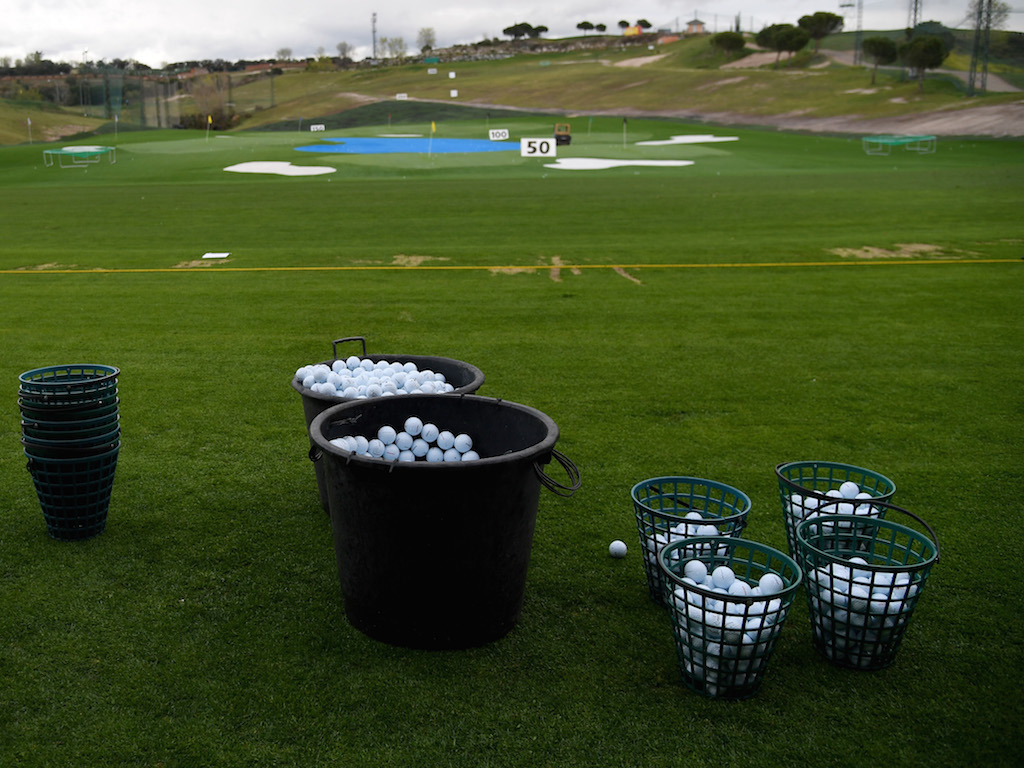
When you hit the golf ball close to the hole and have a short birdie putt, we call that positive variance. When you hit a less than ideal shot that curves into the woods, we call that negative variance. They both represent the same thing, a change in the average or normal outcome. With that said, almost every first coaching experience begins with an athlete wanting to become more consistent, but once shown how consistently they curve the ball, they quickly change their answer to wanting the ball to land closer to the hole on average.
There are only two ways to help the golfer. Either change the motion pattern to produce a different ball flight that better matches their intent, or help the athlete better understand their pattern and learn to use this consistency to their advantage when it comes to the formation of their strategy for maneuvering the golf ball around the course safely. Both options are valid with one requiring more “work” in the short-term than the other.
Is there a way in which we could use both strategies to improve performance faster, you bet! This is where we learn that aiming the face of the club head exactly at your target and expecting the ball to have zero curvature is an option, but probably not a likely outcome. Therefore, if we know the ball is likely to have some curvature, then we want to make sure that the ball is always curving towards the target, and not away from the target line and towards trouble.
Keep in mind you don’t hit it solid and straight when you hit it out-of-bounds and into the hazard, you hook and slice it into the out-of-bounds and the hazard, therefore learning to minimize curvature is the easiest way for a golfer to improve their score and save money on golf balls.
The Nine Ball Flights from a Physics Perspective
In general, we can swing the golf club head in three directions; left of target (out-to-in), at the target (square-to-square), or right of the target (in-to-out). Similarly, we can only point the face of the club head in three directions; left of the target, at the target, or right of the target. Understanding that we can swing the club head and point the face of the club head in different directions at the same time is key and explains why curvature happens.
If you assume center contact between the golf ball and the club head, the only thing the golf ball is aware of is which direction the club head is traveling in, and in which direction the club face is pointing. Transitioning away from a linear model of the golf swing motion, we now understand that angular momentum is needed to create maximum speed, and when we apply angular momentum (the club head torquing about the mid-hand point) we introduce “twisting” of the club head face about the club shaft. This “twisting” causes a separation between the direction the club head is moving in and the direction the club head face is pointing.
If the direction of the club head (Club Path) and the direction the club head face is pointing (Face Angle) are equal, assuming centered contact between the club head and the golf ball, the ball will fly straight with zero curvature. If the direction of the club head (Club Path) and the direction the club head face points are not equal, the ball will curve.
“The Face Sends It, And The Path Bends It” -Unkown
Assuming centered contact, the golf ball will always curve the opposite direction relative to the direction the club head is moving in (Club Path). Therefore, if you have your club head moving “in-to-out” by five degrees (+) with a club head face pointing (Face Angle) directly at your target (zero degrees), the golf ball will start fairly straight and then curve to the left (away from rightward club path).
The opposite of this is also true. If the club head is moving “out-to-in” by negative five degrees (-) (Club Path) with a club head face pointing (Face Angle) directly at your target (zero degrees), the golf ball will start fairly straight and then curve to the right (away from the leftward club path).
Shallow/Steep | Fade/Slice |Draw/Hook
As learned from Dr. Kwon, the golf club head only travels on an inclined “plane” from mid-downswing to mid-follow through. What determines the pitch of that “plane” has to do with the Biomechanics and the relationships within the human anatomy. Using Mike Adams definitions, a Side-Cover style athlete is going to have a “steeper” or more upright pitched “plane” meaning that the club head (Club Path) will be traveling more leftward at impact. This will tend to produce a more downward decent into the golf ball (Attack Angle). A Side-Under style athlete is going to have a “shallower” or flatter pitched “plane” meaning that the club head (Club Path) will be traveling more rightward at impact. This will tend to produce a shallower descent into the golf ball (Attack Angle). A Side-On Style athlete is going to have a more “neutral” pitched plane meaning that the club head (Club Path) will be very neutral at impact. This will tend to produce a more “average” decent into the golf ball (Attack Angle).
When Does a Fade Become a Slice and Vice Versa?
When the golf ball crosses the target line and begins to curve away from the target, either curving leftward or rightward of the target-line, then it goes from being classified as a draw/fade to a hook/slice. For example, if you line up “straight” at your target and start the golf ball 20-feet left of your intended target line, and it begins to curve back towards the target line, as it curves the amount of lateral dispersion between begins to diminish. The entire time the golf ball is curving towards the target line the “gap” between where the ball started, and the target line decreases. In this example the golf ball is curving rightward and if that golf ball should curve right of the target line while still in the air, it has become a slice and is now increasing the amount of lateral dispersion until the golf ball comes to rest.
Pattern vs. Straight
Without getting into “rabbit-hole” Biomechanics conversations about immobilizing joint segments, we are equipped with wrist that are capable of three translational movements and three torques which creates six degrees of freedom. We also need to create acceleration and force which will require angular momentum to create maximum distance. With that said, we are going to be introducing twist about the handle which will cause the club head face (Face Angle) to rotate open during the backswing and will require “closing” during the downswing.
Due to the rotation of the club face about the club shaft, there becomes an element of timing to having the club head face (Face Angle) equal to the direction the club head is traveling (Club Path) consistently. As Humans, and not machines we have to be willing to accept a certain amount of variance in our movements. It is impossible for a Human Being with as much variation as we have to repeat the same motion time after time consistently. Therefore, attempting to create zero curvature on every shot becomes a very elusive goal and tends to make golf very difficult.
If we are attempting to hit the golf ball with the center of the club head face, create a club head movement (Club Path) of zero degrees or “straight”, and point the club head face (Face Angle) directly at your target (zero degrees), more often than not, you are going to be unaware of which way the ball is going to curve on “non-perfect” golf shots creating a two-way miss.
There are two reasons for this, one is gear-effect which is another conversation, and the second reason is due to human variance. One swing, you may accidentally rotate the club face closed relative to the club path and the ball curves leftward, on another swing, you may have learned from your previous mistake and now you leave the face open relative to the club path and the ball curves rightward.
By Owning YOUR Curve, YOU Can Eliminate the Double Cross!
“Square” is a relative term. If we understand that a contributing factor to the “shallowness/steepness” of the golf swing is the relationship that exist which would be the between the overall height of the athlete and the wingspan of the athlete, for example if the athlete has a wingspan that exceeds their height, the hands will move more away from the center of the body as the hands make the backswing. This will in turn create less hand path “depth” and the athlete will tend to have a more leftward Club Path and a more deciding strike into the ball (Attack Angle). The opposite would also be true for an athlete having a wingspan less than their height, with the hands traveling more around the body during the backswing and swinging more rightward (Club Path) with a “shallower” Attack Angle.
Armed with the knowledge that we are going to swing it either leftward, rightward, or square-to-square, we now can begin to understand where our club head face (Face Angle) needs to be at impact to get the ball to start opposite of the intended curvature. As mentioned earlier, attempting to always have the Face Angle return to zero degrees at impact and getting the golf ball to land near the target is going to be very difficult for a Human Being to accomplish consistently. Therefore, moving them away from a “linear” approach and into a “pattern” approach becomes much easier to accomplish and produces the results wanted more consistently.
Once the Club Path (combination of Swing Direction and Attack Angle) is understood from an individual Biomechanics perspective, we can create a strategy that aligns with how we are designed to move. For example, an athlete has a wingspan that exceeds their height, will create a more “negative” or leftward Club Path at impact. Understanding that the “path bends it” and assuming centered contact between the club head and the golf ball, the ball is generally going to curve rightward (away from the club path). This means that we will need the golf ball to start or launch leftward of the target. Understanding that Face Angle is the first touch point of the golf ball and represents the majority of the factor that will indicate where the golf ball will start in time and space, it now becomes paramount that the club head face (Face Angle) returns “closed” relative to the target line.
Face Angle is a measurement of where the club head face is pointed relative to “square”, which is determined by the position of the Launch Monitor relative to the Target. Face-to-Path is a calculation of the relationship between where the club head face is pointing (Face Angle) and the direction the club head is moving (Club Path). With that said, if we have a leftward Club Path and the club head face (Face Angle) is “closed” relative to the target line, the Face Angle can still be “open” relative to the Club Path which will create a positive Face to Path relationship.
Creating the patterns becomes much simpler due to the simplified approach. If you are determined to create a more leftward pattern from a Biomechanics perspective, then creating a leftward Club Path must be accompanied by a matching “closed” Club Face relative to the target line, and an “open” or positive (+) Face to Path relationship. An athlete wanting to draw the golf ball would need a more “shallow” or rightward Club Path with a matching “open” Face Angle, and a negative (-) Face to Path relationship assuming centered contact.
Consistency Through Built in Margin of Error
Keeping with the idea of creating a pattern when we discuss error, the error becomes much smaller, and it becomes easier to eliminate one of the “misses”. For example, an athlete that is predetermined to make a “shallower” club head path from a Biomechanics perspective will understand that the Face Angle needs to be “open” relative to the target line to match their naturally occurring rightward Club Path. Therefore, if they should swing a little too far rightward, assuming centered contact and the face remains “open” relative to the target line the ball may Hook (cross the target line) some but is still a very manageable miss. This pattern is easy to manage as long as the athlete stays aware that Club Path or Face Angle becoming leftward not only doesn’t fit their Biomechanics, but also produces the worst outcome.
In conclusion, while attempting to create a zero-curvature golf shot can be accomplished, over a large enough sample size is going to produce very few occurrences due to the variable nature of the Human. Also, by understanding the geometric relationships within the golf swing, we can curve the golf ball either way and still maintain efficiency and speed production. While playing from the middle of the fairway is always going to be a great position, it is also important to be able to have a good chance of landing in the fairway/on the green while taking the obstacle that leads to a higher score completely out of play.


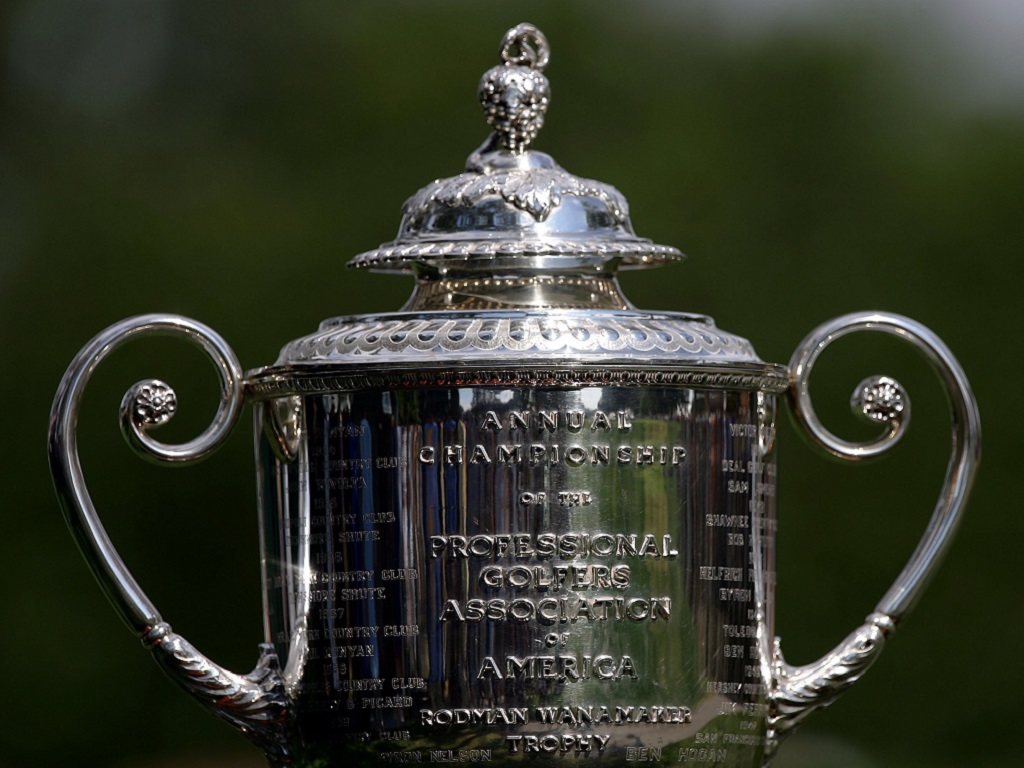
Aronimink is not a storied club, but when Donald Ross himself proclaimed it to be as good as he can design and build, one had to take notice. Jay Sigel was the pre-eminent male amateur golfer from the mid-1970s to the mid-1990s. He might have called any number of Philadelphia clubs home, but he chose Aronimink. It served him well. Gary Player won a PGA Championship here in 1962, and was followed by the 1993 winner … nobody. Aronimink gave that event away to Inverness, for reasons of which it is certainly not proud. So be it. We had to wait sixty-four years for the PGA to return to Newtown Square, but here we are. Aronimink has been neo-restored by Gil Hanse and team, to return Ross features with an eye toward defense against the dark arts, errrr, high-tech equipment.
Day one saw Rory McIlroy and Bryson DeChambeau dig big holes, to the tune of plus-four and plus-six, respectively. Since the first-round lead will be minus-three at worst, many shots will need to be made up for the power couple to reach contention. By nightfall, seven golfers held the day-one lead at three-under par 67. Shots and sticks caught our attention, and we are proud to present Five Things We Learned on Tech Thursday at the 2026 PGA Championship. Thanks to InsideTourGolfer, Today’s Golfer, and GolfWRX for initial equipment research.
First, meet Min Woo Lee
Min Woo Lee, aka Dr. Chipinski, has once again thrust himself into the conversation of Can he, will he, when will he? Lee has so much talent, wins not nearly as often as we believe that he should, and has no major near-misses (much less titles) on his wiki. The young Aussie is getting older and wiser, but is he able to avoid the scarring that holds the older and wiser back from breaking through? Philadelphia offers another opportunity. Min Woo signed for five birdies and two bogeys on day one, and grabbed a share of the opening-day lead at Aronimink. Winners transcend history and the moment, and Lee will need that sort of ascent to lift the Wannamaker on Sunday.
Second, meet Aldrich Potgeiter
The young South African golfer can rip driver with the best of them. Aronimink tips out at nearly 7400 yards, but beyond the fairway bunkers that ensnare only the mortals, Potgeiter can take his chances with wedge from the rough. On Thursday, he spent plenty of time in the spinach. Like Popeye, he used his muscles to gouge and thrash and dig his way out. Six birdies against three bogeys on the card brought AP in a three deep.
Third, meet Martin Kaymer
Not a major event takes place without a where’s he been throwback moment. We know that Martin Kaymer left the PGA and DP World tours for LIV golf, but the two-time (US Open and PGA) major winner has a lifetime exemption into at least one major event, and he seizes the opportunity each May. Kaymer joined the six-seven brigade with four birdies and a solitary bogey on day one. Kaymer was never a long hitter, and the years are kind to no golfer. The German champion will need to uncork every bottle of guile and strategy in his cabinet to remain in contention. For today, though, he occupies a rung on the ladder of Tour Tech.
Fourth, meet Scottie Scheffler
Let’s see, he’s the defending champion at the PGA, and he found his way back to the top tier with five birdies against two bogeys. To be a favorite and then play up to that stature and expectation is quite difficult. Just ask Rory, Bryson, and some of the other pre-tournament heartthrobs. Scheffler’s game is complete, and to knock him off the OWGR #1 pedestal, one needs to defeat him at the majors. Aronimink is the sort of course that fits Scheffler’s game. Better yet, it unfits the game of many of his challengers. Don’t expect Scheffler to go away anytime soon. Come Sunday, he’ll be around.
Fifth, meet Stephan Jaeger
Clocking in for the unheralded players shift are Ryo Hisatsune and Stephan Jaeger. Hisatsune logged seven birdies on day one, but gave most of them back with four bogeys. Still, he’s tied at the top for a time. Jaeger pitched five birdies against two bogeys, including a run of three consecutive, from holes four through six. Odds are that one of the two will hang around through 36 holes. Odds also suggest that both will be gone by Saturday evening. Still, the PGA Championship has historically been the major most likely to be won by an under-known. Both Hisatsune and Jaeger feature on that list, so good luck, lads!

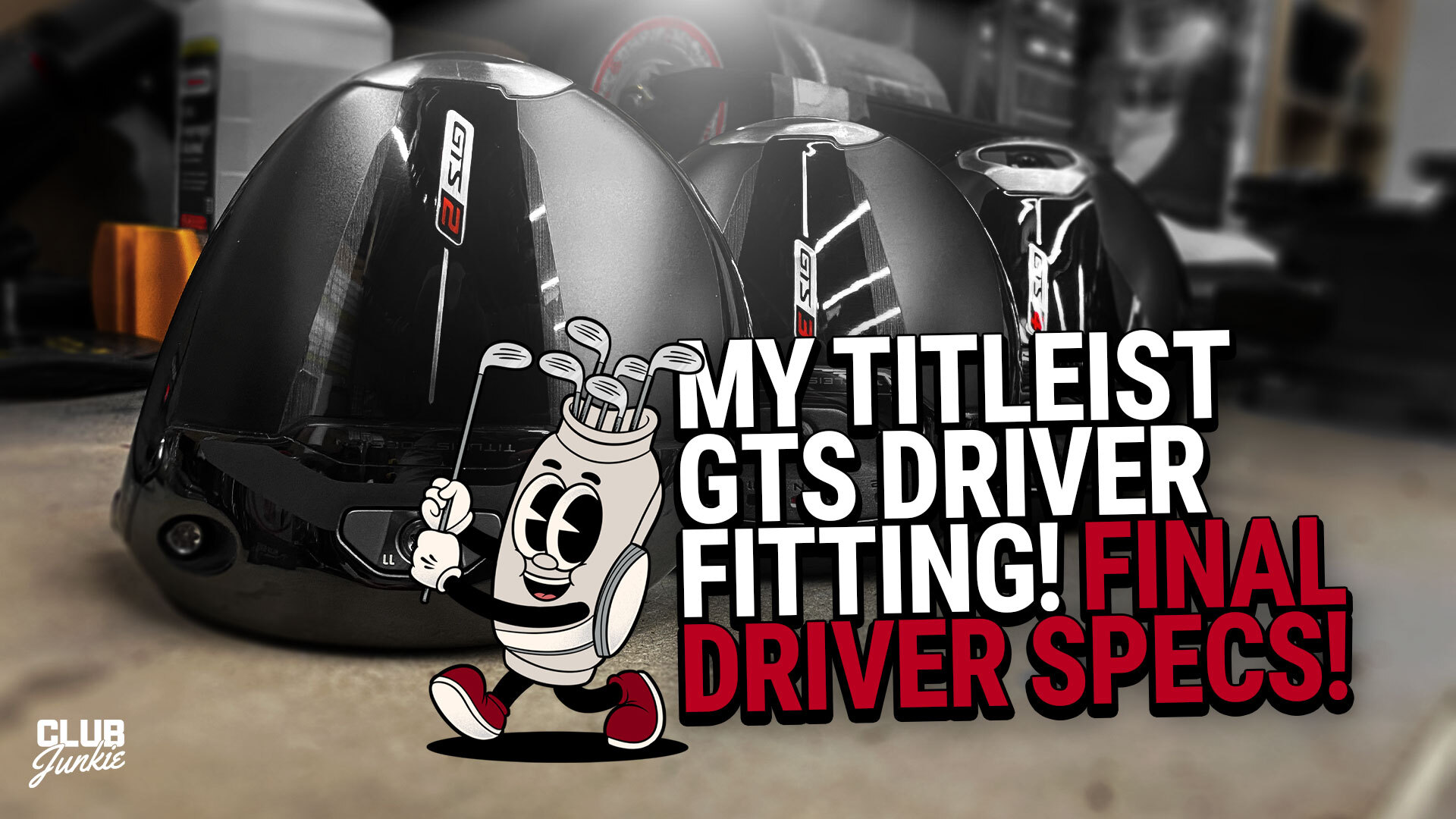
On this episode of the Club Junkie Podcast, I head to the Titleist Performance Institute for a full driver fitting with the new Titleist GTS lineup. We dive into the fitting process, talk about what made the biggest difference in performance, and break down how the different GTS heads and shaft combinations compare on the launch monitor. If you are thinking about a new driver setup for this season, there is a lot to take away from this one.
I also get into Brooks Koepka and the gear setup he brought to the PGA Championship, including the putters that caught my eye during the week. There are some interesting equipment trends showing up at the highest level right now and we break down what stands out.
To wrap things up, I talk about reshafting a few wedges, what I learned during the process, and swapping an adaptor onto a new shaft for another build project in the shop. A gear packed episode from start to finish for anyone who loves golf equipment and club building.
Follow Club Junkie everywhere:
Instagram: https://www.instagram.com/clubjunkiepod/
X: https://x.com/ClubJunkiePod
TikTok: https://www.tiktok.com/@clubjunkiepod
Threads: https://www.threads.com/@clubjunkiepod
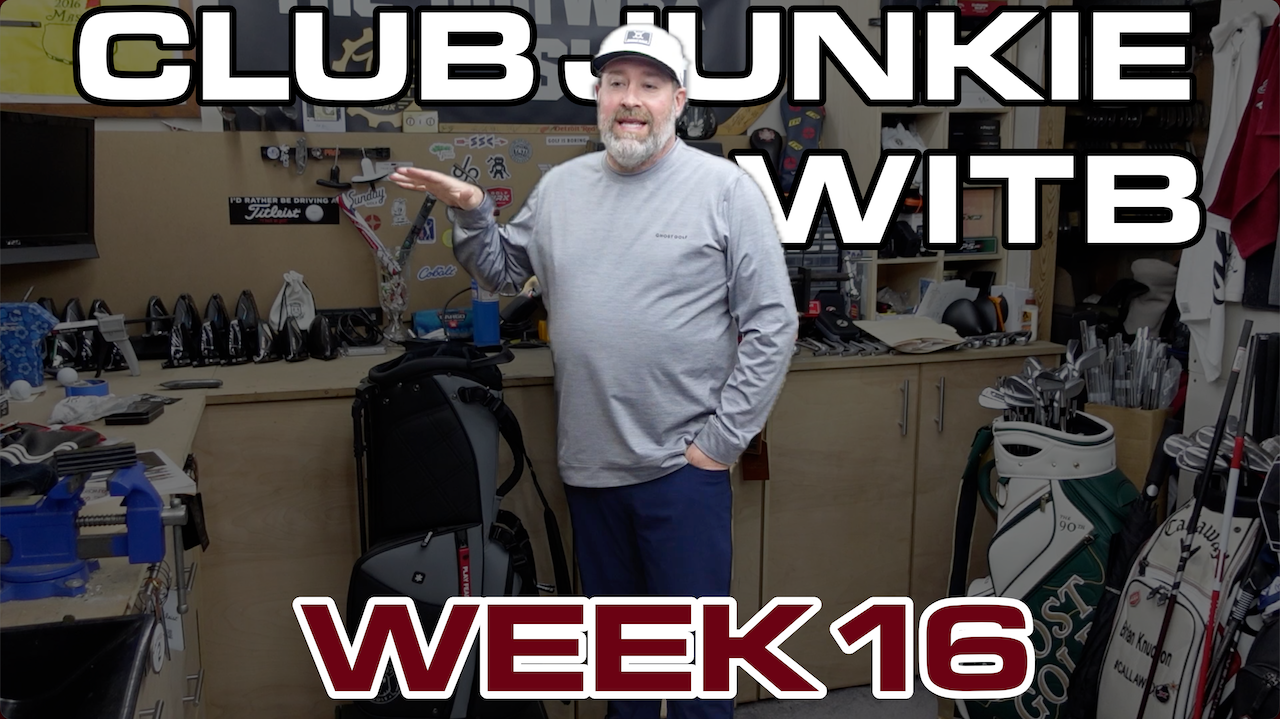
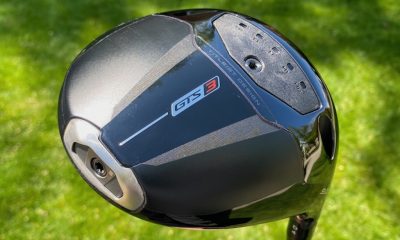
Excited for this week’s WITB as we get to add the new Titleist GTS woods to the bag! I was fit at Titleist’s TPI facility in Oceanside California a few weeks ago and my new clubs just showed up. I am also adding a cool set of irons that I built last year some wild custom wedges into a new golf bag. Speaking of the bag I have a new Ghost Anyday Black Ops stand bag that I will be using on my Motocaddy Remote M7 electric cart.
Driver: Titleist GTS3 (11 degrees @ 10.25)
Shaft: Fujikura Ventus Red 6s
3-wood: Titleist GT1 3Tour (14.5 degrees)
Shaft: Graphite Design Tour AD CQ-7s
5-wood: Titleist GTS (18 degrees)
Shaft: Fujikura Ventus Red 7s
9-wood: Titleist GT1 (24 degress)
Shaft: Fujikura Ventus Red 7s
Irons: Bettinardi CB24 (5-PW)
Shafts: KBS C-Taper Lite 110 stiff
Wedge: TaylorMade MG5 (50-09 SB)
Shaft: Mitsubishi MMT 125 Stiff
Wedge: TaylorMade MG5 (56-12 SB)
Shaft: Mitsubishi MMT 125 Stiff
Wedge: TaylorMade MG5 (60-08 LB)
Shaft: Mitsubishi MMT 125 Stiff
Putter: Dan Carraher ZT Proto
Ball: Callaway Chrome Tour
Bag: Ghost Anyday Black Ops Stand Bag

Justin Rose WITB 2026 (April): Full WITB breakdown with new McLaren irons

RBC Heritage Tour Report: More minis, course-specific setups, Spider & GTS launches

What’s the story behind Webb Simpson’s custom-stamped irons?

Cadillac Championship Tour Report: Spieth’s sizable changes, McLaren Golf launches, and more

Kristoffer Reitan’s winning WITB: 2026 Truist Championship

Cameron Young’s winning WITB: 2026 Cadillac Championship

Aaron Rai’s winning WITB: 2026 PGA Championship

Nelly Korda WITB 2026 (April)

Justin Rose on the switch to McLaren Golf, learnings from previous equipment moves

Photos from the 2026 PGA Championship


Patrick Reed WITB 2026 (May)
Driver: Titleist GT3 (9 degrees) Buy here. Shaft: Aldila Rogue Silver 130 M.S.I. 70 TX 3-wood: TaylorMade Qi35 (15 degrees)...

Aaron Rai’s winning WITB: 2026 PGA Championship
Driver: TaylorMade M6 (9 degrees) Shaft: Aldilda Synergy Blue 70 TX 3-wood: TaylorMade Qi10 (15 degrees) Shaft: Fujikura Ventus Blue...


Michael Block WITB 2026 (May)
Driver: TaylorMade Qi4D (9 degrees) Shaft: Fujikura Ventus Black VeloCore+ 5 X 3-wood: TaylorMade Qi4D (15 degrees @14.25) Shaft: Mitsubishi...


Bryson DeChambeau WITB 2026 (May)
Driver: Krank Formula Fire Pro (6 degrees) Shaft: Project X Prototype 3-wood: Krank Formula Fire (10 degrees) Shaft: LA Golf BAD...
-
 Whats in the Bag3 weeks ago
Kristoffer Reitan’s winning WITB: 2026 Truist Championship
-
Whats in the Bag2 weeks ago
Aaron Rai’s winning WITB: 2026 PGA Championship
-
 Tour Photo Galleries3 weeks ago
Photos from the 2026 PGA Championship
-
 Equipment2 weeks ago
GolfWRX Launch Report: 2026 Titleist GTS drivers
-

 Equipment2 weeks ago
PGA Championship Tour Report: Fitzpatrick, Koepka among big-name putter switches for Aronimink
-

 News2 weeks ago
WITB Time Machine: Phil Mickelson’s winning WITB, 2021 PGA Championship
-

 Equipment2 weeks ago
Which of Tiger’s major winning irons are your favorite? – GolfWRXers discuss
-

 Equipment2 weeks ago
Lead Tape Report: Adjusting the swingweight of the Wanamaker Trophy


lambs
May 1, 2022 at 4:30 am
I’m going to hang myself…straight !!!
Bob
Apr 30, 2022 at 5:04 pm
Cliff’s Notes:
Everybody needs to have and know their preferred curve. If you draw the ball, aim at the right side of the fairway. If it draws, you are in the middle of the fairway. If you hit it straight, you are on the right side of the fairway. Vice versa for a preferred fade.
Very simple.
If you hook or slice, quit.
Acemandrake
Apr 30, 2022 at 6:05 pm
True. I play a fade & my “miss” is a straight ball.