
Opinion & Analysis
Out of Bounds: Why Public Golf Has Lost Its Appeal


Are you currently satisfied with the playing conditions found at your golf course? Have you grown tired of trying to salvage par on surfaces that refuse to roll true? Maybe the course you call home has neglected the average golfer in favor of accommodating a professional tournament that never has and will never roll into town. Or maybe your course has become too expensive to continue playing on regular basis. These are just some of the reasons why golfers have been steadily abandoning the game over the last decade, raising serious questions about what the future holds for public access golf.
Granted there are certain courses that are virtually bulletproof to any mention of the word attrition. An iconic gem like a Torrey Pines, a Bethpage Black or a Brackenridge Park are never going to have trouble filling out their daily tee sheets. Courses like the Black, however, represent a fraction of the over 11,000 public facilities in the United States (21 percent of which are municipal) feeling the affects of the recession in one form or another.
According to the National Golf Foundation, nine out of every 10 golfers plays regularly at a public facility. Many of them have enjoyed the game at budget-friendly, no frills clubs. The local municipal or town course, the sort where golfers use the parking lot as a makeshift locker room, are a by-product of a 1960s golfing boom that coincided with the emergence of the middle class. These courses were the weekend battlegrounds for Arnie’s Army. They were the classrooms for fathers passing down lessons to their sons and daughters. They made a generation of kids late for dinner at a time when life moved a little slower. Now, these same courses are struggling to remain relevant within the fabric of American life.
The number of rounds logged at value courses (facilities with green and cart fees under $40 during peak season) has declined 26 percent since 1987, according to NGF. The same report predicts 5 to 10 percent of public courses will close shop within the next decade. At face value, it’s easy to categorize the trend as a market undergoing self-correction. Perhaps a number of courses deserve to be put out to pasture. But things are not that simple.
The industry as a whole is experiencing strain. A survey conducted in 2011 by Golf Course Industry (GCI) found that one-third of private facilities and more than 40 percent that are public lost money. Not surprisingly, facilities have slashed their operational budgets over the past several years with more than half of superintendents at both public and private courses indicating a reduction in labor.

By streamlining their budgets, some golf clubs have avoided the red or even turned out a profit. Other clubs battening down the hatches haven’t fared as well. As bleak as the situation may seem, you might be surprised to learn that more than half of all superintendents polled by GCI believe they will be economically viable three years from now. The reason for their optimism? With all the courses expected to close this decade (somewhere between 500 and 1,000 according to NGF) they are anticipating a spike in demand. This is a simple case of addition by subtraction and shouldn’t be interpreted as a cause for celebration. It doesn’t address the fundamental problem that golfers are packing up their stand bags and heading home.

Click here for more discussion in the “Golf Talk” forum.
Rather than use current economic conditions as a crutch and maintain a business-as-usual policy, course owners are going to have to take a hard look at their budget plans. They may have to consider refurbishing facilities that have seen better days. They may have no choice but to lower their green fees. And they will be expected to aggressively market to a new generation of Americans accustomed to finding and getting the most bang for their buck. Don’t expect a five or six hour march up and down less-than-pristine fairways and greens at a premium price to be part of any successful marketing plan aimed at generation Groupon.
“Golf is a repeat business,” said Bruce Glasco, senior vice president and managing director of Troon Golf EMA in a discussion panel coordinated by KPMG in 2010. “Forging those relationships is critical. Once you lose that trust, you lost a customer, and they don’t come back quickly. There are other options out there.”
Unfortunately, the term “other options” has over the past couple of decades meant making a tee time at either expensive daily fee courses, resort courses or private courses. Like their thrifty forebears of the 60s, these modern, upscale courses were equally driven by market forces, primarily those of real estate development in the 1990s. The NGF was particularly instrumental in spurring demand, publishing numerous reports including a “Strategic Plan for the Growth of the Game” that cited a need to build enough golf courses to meet the demands of baby boomers in their retirement years. The golf industry averaged 400 golf course openings per year throughout the decade, peaking in the year 2000. According to the NGF, more than 40 percent of these courses were tied to master planned communities and were leveraged to sell real estate at premium prices. They were also influential on public golf course construction.
“Ironically, this real estate development strategy also indirectly inspired many existing golf courses as well as many entrepreneurial developers of public golf courses that did not have a real estate tie-in, to build more costly, longer and more difficult golf courses, because they wanted to offer a ‘country club for a day’ golf experience,” wrote NGF President, David B. Hueber in August 2012. “These golf courses were too difficult for the average golfer; and, it took more time to play a round of golf. … It was a perfect storm of unintended consequences that created golf courses that did not meet the needs of its customers and that were not economically viable.”
The golf course industry of today is slowly coming around. This change in mindset is most clearly reflected by the way in which modern golf course design is beginning to assert itself, embracing a strategy that exercises restraint without sacrificing creativity.
On the north shore of Long Island, a links-inspired public course designed by famed architect Gil Hanse has thrived by delivering a picturesque, shot-making marvel at a budget-friendly price.
Located roughly 70 miles east of New York City, Tallgrass Golf Course is tucked inside a neighborhood the size of a shoebox that divides the suburban sprawl preceding it and miles of farmland to the east. Built in 2000, Hanse transformed a sod farm with just one foot of elevation change into rolling landscape of terraced fairways that play above and below each other. Although Tallgrass is situated on a 150-foot acre square-shaped parcel of land, the open nature of the layout ensures that a golfer never has the feeling of being boxed in. The course features false fronts on the greens, strategically placed pot bunkers and tall fescue grasses that should be avoided at all costs if you intend to keep your score low and your round moving.

At 6,500 yards from the tips, Tallgrass is a pleasure to walk and to play. The course itself is not especially penal but the wind makes up for that, testing golfers on their ability to keep it low and shape it both ways.
Phil Tita, general manager and head golf professional, has overseen Tallgrass for the past five years. It’s a course, he said, that fit a variety of playing styles and could be genuinely enjoyed by golfers of varying caliber.
“We want the course to play as firm and fast as we can,” Tita said. “We don’t have a lot of forced carries into greens. Better golfers can play a variety of shots including lobs into the greens. But if you don’t have that ability, you can still bounce the shot up on almost any hole.”
To keep the course playing firm and fast, Tita and his superintendent keep watering to a minimum. Approaches into greens were watered only twice in 2012. Crews will use a technique called syringing to apply a light mist of water to cool the putting surface when the heat index rises.
“It takes a higher degree of skill when drying out the place,” Tita said. “It would be much easier to dump a whole bunch of water and keep it lush.”
Not only would over-watering increase electric and fuel expenses, but it would also ruin the character of the course and make it play one-dimensionally — primarily through the air. As a good custodian, Tita has no such designs. He uses the conditioning of the course, the distinctive links-style layout and most importantly — the Gil Hanse brand — to attract new business while giving existing customers a reason to keep coming back.
During the past three years, Tallgrass has been recognized as one of the best courses in New York according to Golfweek. Not surprisingly, Bethpage Black has a strangle-hold over the coveted top spot. But the Black charges residents $75 on weekends, twice that amount for out-of-town players. By comparison, peak green fees at Tallgrass max out at $50, cart included.
Even with reduced green fees, Tallgrass remains profitable, but it’s no walk in the park. Tita and his staff are constantly scrutinizing their budget and rejecting any expenses that aren’t deemed essential to the presentation or operation of the course. Revenue was up 19 percent last year, but Tita admits the numbers could’ve been better if they raised their green fees or were less diligent about staggering tee times.
“We have 10 minute intervals between groups,” Tita said. “We try to get you in and out within four and half hours or less. We could do more intervals, but you’d have six-hour rounds.”
Sound familiar? It should be for anyone who’s ever had the misfortune of spending their Sunday morning languishing behind a foursome that’s behind another foursome. A typical municipal golf course sends out groups in six- to eight-minute intervals. Get more players on the course and bring in more revenue, or so the thought goes. But it comes at the expense of overcrowding and customer dissatisfaction. In this regard, Tita and his staff have sacrificed what they believe are short-term gains in favor of maintaining long-term engagements with their customer base.
Tallgrass may have a unique blend of factors contributing to its success, but it’s far from being a one-of-a-kind concept. Rustic Canyon, another Gil Hanse design opened in 2002 in Moorpark, Calif. — 45 miles northwest of downtown Los Angeles. Like Tallgrass, Hanse used imagination and the natural lay of the land to build another affordable, retro-style golf course.
Rustic Canyon sits at the base of Happy Camp Canyon 800 feet above sea level and is framed by mountainous terrain. The golf course originally stretched to 6,906 yards (it’s since been expanded to 7,028 yards) but hardly any earth — just 17,000 cubic yards — was moved to sculpt the layout. By comparison, around five million cubic yards was shoveled for nearby Moorpark Country Club which was constructed in the same year. The front nine at Rustic Canyon features a relatively flat walk through an area defined by a dry wash. The rest of the course climbs into the base of the mountains and is a much tougher test.

By allowing the course to follow the shape of the land and take full advantage of the natural elevation changes, Hanse was able to keep construction costs down and design Rustic Canyon on a modest budget exceeding just over $3 million. The low overhead and the universally acclaimed design has allowed the course to keep green fees low and still bring in a return. The $66 weekend rate for Rustic Canyon is about half the fee charged by neighboring Moorpark Country Club.
Golf Digest Magazine named Rustic Canyon the “Best New Affordable Public Course” back when it opened. The course has also been recently recognized by Golf Digest as one of the most fun public courses in the United States. Unfortunately, only five other golf courses with rates under $60 made the cut.
If Tallgrass and Rustic Canyon can stay busy year-round and make a profit with other courses struggling to stay open, one would think that more courses would be modeled after these two. But it seems there’s a disconnect between simply acknowledging what is necessary for the future of the game and actually making it happen on a mass scale.
If golf’s major stakeholders want to turn around their slumping numbers, they had better reclaim the public’s interest in the game. You can’t continue billing golf as a game you can play for a lifetime when so many golfers are hanging up their spikes and putting their clubs into storage.


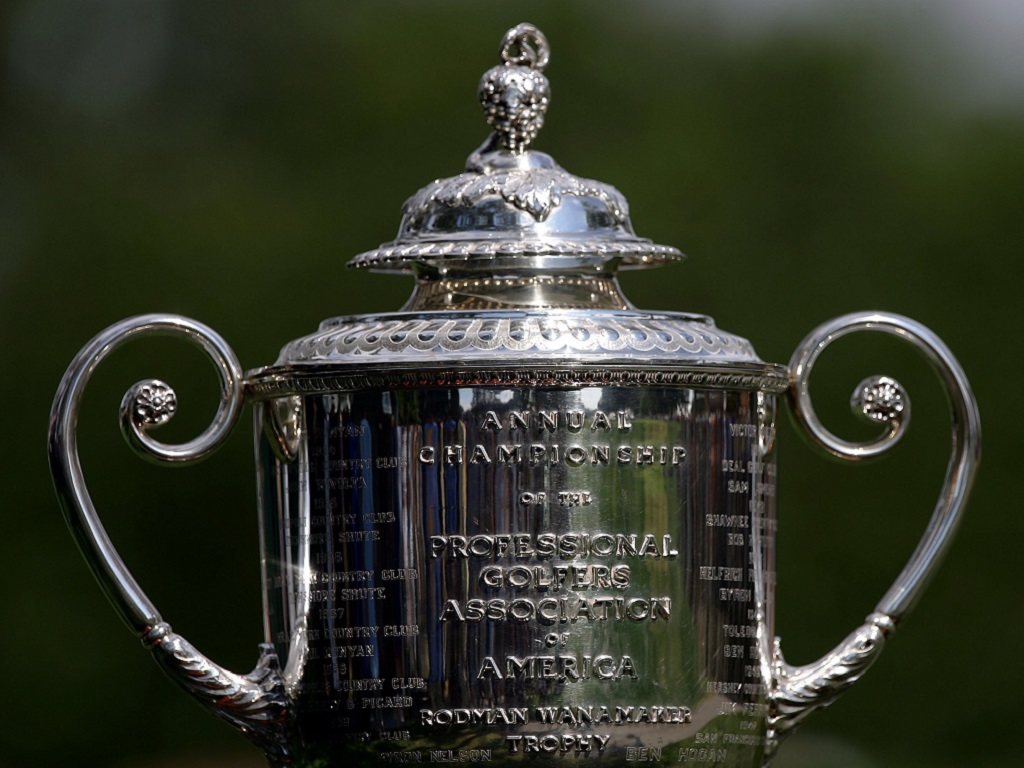
Aronimink is not a storied club, but when Donald Ross himself proclaimed it to be as good as he can design and build, one had to take notice. Jay Sigel was the pre-eminent male amateur golfer from the mid-1970s to the mid-1990s. He might have called any number of Philadelphia clubs home, but he chose Aronimink. It served him well. Gary Player won a PGA Championship here in 1962, and was followed by the 1993 winner … nobody. Aronimink gave that event away to Inverness, for reasons of which it is certainly not proud. So be it. We had to wait sixty-four years for the PGA to return to Newtown Square, but here we are. Aronimink has been neo-restored by Gil Hanse and team, to return Ross features with an eye toward defense against the dark arts, errrr, high-tech equipment.
Day one saw Rory McIlroy and Bryson DeChambeau dig big holes, to the tune of plus-four and plus-six, respectively. Since the first-round lead will be minus-three at worst, many shots will need to be made up for the power couple to reach contention. By nightfall, seven golfers held the day-one lead at three-under par 67. Shots and sticks caught our attention, and we are proud to present Five Things We Learned on Tech Thursday at the 2026 PGA Championship. Thanks to InsideTourGolfer, Today’s Golfer, and GolfWRX for initial equipment research.
First, meet Min Woo Lee
Min Woo Lee, aka Dr. Chipinski, has once again thrust himself into the conversation of Can he, will he, when will he? Lee has so much talent, wins not nearly as often as we believe that he should, and has no major near-misses (much less titles) on his wiki. The young Aussie is getting older and wiser, but is he able to avoid the scarring that holds the older and wiser back from breaking through? Philadelphia offers another opportunity. Min Woo signed for five birdies and two bogeys on day one, and grabbed a share of the opening-day lead at Aronimink. Winners transcend history and the moment, and Lee will need that sort of ascent to lift the Wannamaker on Sunday.
Second, meet Aldrich Potgeiter
The young South African golfer can rip driver with the best of them. Aronimink tips out at nearly 7400 yards, but beyond the fairway bunkers that ensnare only the mortals, Potgeiter can take his chances with wedge from the rough. On Thursday, he spent plenty of time in the spinach. Like Popeye, he used his muscles to gouge and thrash and dig his way out. Six birdies against three bogeys on the card brought AP in a three deep.
Third, meet Martin Kaymer
Not a major event takes place without a where’s he been throwback moment. We know that Martin Kaymer left the PGA and DP World tours for LIV golf, but the two-time (US Open and PGA) major winner has a lifetime exemption into at least one major event, and he seizes the opportunity each May. Kaymer joined the six-seven brigade with four birdies and a solitary bogey on day one. Kaymer was never a long hitter, and the years are kind to no golfer. The German champion will need to uncork every bottle of guile and strategy in his cabinet to remain in contention. For today, though, he occupies a rung on the ladder of Tour Tech.
Fourth, meet Scottie Scheffler
Let’s see, he’s the defending champion at the PGA, and he found his way back to the top tier with five birdies against two bogeys. To be a favorite and then play up to that stature and expectation is quite difficult. Just ask Rory, Bryson, and some of the other pre-tournament heartthrobs. Scheffler’s game is complete, and to knock him off the OWGR #1 pedestal, one needs to defeat him at the majors. Aronimink is the sort of course that fits Scheffler’s game. Better yet, it unfits the game of many of his challengers. Don’t expect Scheffler to go away anytime soon. Come Sunday, he’ll be around.
Fifth, meet Stephan Jaeger
Clocking in for the unheralded players shift are Ryo Hisatsune and Stephan Jaeger. Hisatsune logged seven birdies on day one, but gave most of them back with four bogeys. Still, he’s tied at the top for a time. Jaeger pitched five birdies against two bogeys, including a run of three consecutive, from holes four through six. Odds are that one of the two will hang around through 36 holes. Odds also suggest that both will be gone by Saturday evening. Still, the PGA Championship has historically been the major most likely to be won by an under-known. Both Hisatsune and Jaeger feature on that list, so good luck, lads!


On this episode of the Club Junkie Podcast, I head to the Titleist Performance Institute for a full driver fitting with the new Titleist GTS lineup. We dive into the fitting process, talk about what made the biggest difference in performance, and break down how the different GTS heads and shaft combinations compare on the launch monitor. If you are thinking about a new driver setup for this season, there is a lot to take away from this one.
I also get into Brooks Koepka and the gear setup he brought to the PGA Championship, including the putters that caught my eye during the week. There are some interesting equipment trends showing up at the highest level right now and we break down what stands out.
To wrap things up, I talk about reshafting a few wedges, what I learned during the process, and swapping an adaptor onto a new shaft for another build project in the shop. A gear packed episode from start to finish for anyone who loves golf equipment and club building.
Follow Club Junkie everywhere:
Instagram: https://www.instagram.com/clubjunkiepod/
X: https://x.com/ClubJunkiePod
TikTok: https://www.tiktok.com/@clubjunkiepod
Threads: https://www.threads.com/@clubjunkiepod

Excited for this week’s WITB as we get to add the new Titleist GTS woods to the bag! I was fit at Titleist’s TPI facility in Oceanside California a few weeks ago and my new clubs just showed up. I am also adding a cool set of irons that I built last year some wild custom wedges into a new golf bag. Speaking of the bag I have a new Ghost Anyday Black Ops stand bag that I will be using on my Motocaddy Remote M7 electric cart.
Driver: Titleist GTS3 (11 degrees @ 10.25)
Shaft: Fujikura Ventus Red 6s
3-wood: Titleist GT1 3Tour (14.5 degrees)
Shaft: Graphite Design Tour AD CQ-7s
5-wood: Titleist GTS (18 degrees)
Shaft: Fujikura Ventus Red 7s
9-wood: Titleist GT1 (24 degress)
Shaft: Fujikura Ventus Red 7s
Irons: Bettinardi CB24 (5-PW)
Shafts: KBS C-Taper Lite 110 stiff
Wedge: TaylorMade MG5 (50-09 SB)
Shaft: Mitsubishi MMT 125 Stiff
Wedge: TaylorMade MG5 (56-12 SB)
Shaft: Mitsubishi MMT 125 Stiff
Wedge: TaylorMade MG5 (60-08 LB)
Shaft: Mitsubishi MMT 125 Stiff
Putter: Dan Carraher ZT Proto
Ball: Callaway Chrome Tour
Bag: Ghost Anyday Black Ops Stand Bag

Justin Rose WITB 2026 (April): Full WITB breakdown with new McLaren irons

RBC Heritage Tour Report: More minis, course-specific setups, Spider & GTS launches

What’s the story behind Webb Simpson’s custom-stamped irons?

Cadillac Championship Tour Report: Spieth’s sizable changes, McLaren Golf launches, and more

Kristoffer Reitan’s winning WITB: 2026 Truist Championship

Cameron Young’s winning WITB: 2026 Cadillac Championship

Aaron Rai’s winning WITB: 2026 PGA Championship

Nelly Korda WITB 2026 (April)

Justin Rose on the switch to McLaren Golf, learnings from previous equipment moves

Photos from the 2026 PGA Championship


Patrick Reed WITB 2026 (May)
Driver: Titleist GT3 (9 degrees) Buy here. Shaft: Aldila Rogue Silver 130 M.S.I. 70 TX 3-wood: TaylorMade Qi35 (15 degrees)...

Aaron Rai’s winning WITB: 2026 PGA Championship
Driver: TaylorMade M6 (9 degrees) Shaft: Aldilda Synergy Blue 70 TX 3-wood: TaylorMade Qi10 (15 degrees) Shaft: Fujikura Ventus Blue...


Michael Block WITB 2026 (May)
Driver: TaylorMade Qi4D (9 degrees) Shaft: Fujikura Ventus Black VeloCore+ 5 X 3-wood: TaylorMade Qi4D (15 degrees @14.25) Shaft: Mitsubishi...


Bryson DeChambeau WITB 2026 (May)
Driver: Krank Formula Fire Pro (6 degrees) Shaft: Project X Prototype 3-wood: Krank Formula Fire (10 degrees) Shaft: LA Golf BAD...
-
 Whats in the Bag3 weeks ago
Kristoffer Reitan’s winning WITB: 2026 Truist Championship
-
Whats in the Bag2 weeks ago
Aaron Rai’s winning WITB: 2026 PGA Championship
-
 Tour Photo Galleries3 weeks ago
Photos from the 2026 PGA Championship
-
 Equipment2 weeks ago
GolfWRX Launch Report: 2026 Titleist GTS drivers
-

 Equipment2 weeks ago
PGA Championship Tour Report: Fitzpatrick, Koepka among big-name putter switches for Aronimink
-

 News2 weeks ago
WITB Time Machine: Phil Mickelson’s winning WITB, 2021 PGA Championship
-

 Equipment2 weeks ago
Which of Tiger’s major winning irons are your favorite? – GolfWRXers discuss
-

 Equipment2 weeks ago
Lead Tape Report: Adjusting the swingweight of the Wanamaker Trophy


Evan
Mar 25, 2013 at 9:36 am
Good article. I worked under a Master PGA professional at a public facility for years who was talking about many of the things in this article, 8 years ago.
1. Golf Courses and Golf Rounds have been in decline for the last decade. Settling of the market from the golf and Tiger booms.
2. Many operators are still in the business who got into it for the money. These operators continue to make decisions based upon simple business models that reduce the effectiveness and experience of their facility and golf in there area. Ample time between starts, informative yet polite employees/ starters, rangers on the course, tee it forward initiatives. These are all things that are sometimes overlooked because pushing the up sell of novice-foursomes on carts with a six packs of beer is the ticket to making money (as some operators think).
3. Operators and GMs need to look at what is best for the golf course now AND in the future. So often facilities make a decision based on short term goals and regional golf trends. Golf Carts are a good example of that. In my opinion, golf carts have become MUCH too big a part of the game. They are expensive to own (course or individual) and operate (gas, electric, maintenance) and are not necessary for 80-90% of golf rounds. If expendable/ entertainment money for the average American is at question then wouldn’t a golf course want the majority of the dollars the customer is going to spend to go to the courses primary product, THE GOLF. Golf carts bring in alot of revenue but are also a huge expense, building in carts into the fee just reduces the amount of that fee that should be going to the facility and maintenance and into the golf cart industry. Most of my golfing friends, 30-somes, almost always want to ride and will try to ride whenever possible. It does not speed up rounds and they quite often spend extra money on a cart to the detriment of their health and the course conditions.
Josh
Mar 1, 2013 at 12:52 pm
I think the biggest factor in decline of golfers is that golf is a difficult game. Most of the guys in my generation(I’m 29) would rather “play” golf on xbox or playstation, being instantly “good” than go spend 4 or 5 hours every saturday developing a skill.
T
Feb 21, 2013 at 2:50 am
In addition:
You cannot WALK Moorpark. You try walking that place in under 5 hours, even. It’s impossible. You wouldn’t want to carry or drag your bag in between some of those holes, let alone the stupid elevation changes.
T
Feb 21, 2013 at 2:47 am
Sorry, but this report is worthless unless you break it down REGIONALLY.
Some areas, for sure, have lost golf courses and players. But this report doesn’t really examine areas that have had an increase in the number of courses as well as players, such as the areas in the US where the weather is great, as in Southern California, Arizona and Florida. The number of courses that were built over the last 15 years or so in Southern California is immense.
There has to be a consideration that those who wanted to play more golf moved to these areas from colder climes, too. So even though overall, it looks like golf is declining, but those numbers may be correct for certain colder areas but incorrect for better weather regions.
Chris
Feb 18, 2013 at 11:07 am
Let me start out by saying that I am an apprentice assistant professional at a public facility in Kentucky. Needless to say this topic hits home for me and has been a big topic of discussion for the PGA at both a section and national level. There are a number of things that we can point fingers at as causes for slow play but at the end of the day a group of beginner golfers is going to play slower than a group of single digit handicappers, but yet it is the beginner golfers that courses are trying to attract in order to grow the game. Yes it is important to keep pace of play up but we must be careful not to treat beginner players in a manner that turns them off to the game completely because in the end that hurts all of us.
I personally feel that one avenue for courses to explore is spacing out starting times more. Instead of this idea that we can get more people on the course and make more money by having 7 minutes between groups on the first tee it is easier to stay on time and keep pace starting off on the right foot by starting groups every 10 minutes. Ultimately as you can see from other comments on this page keeping groups spaced nicely and on time keeps people on the tee sheet more than cramming as many times in as possible.
On a side note, I blame a lot of this on tv. There is no reason that people need to read putts from 3 or 4 angles, I regularly shoot par or better and I almost never read putts from anywhere except behind the ball. 9 times out of 10 your first instinct is right and going to different angles is only going to put doubt in your mind.
chuck stone
Feb 17, 2013 at 9:56 pm
forgot to add to my earlier post,, went to the cleveland golf show,, lots of $400 drivers but never saw one being sold. just how mant folks who can afford the 400 buck drivers. same as course just keep raising the prices of clubs and wonder why rock bottom golf was selling clubs where the others were not
chuck stone
Feb 17, 2013 at 9:51 pm
every year they keep raising the green fees, its no wonder that in the last 2 years we have had 3 course close up..its like the malls that keep losing stores instead of lowering rents when a store leaves they raise the rent on the others, when a course around here has a special with a lower than normal green fee day it is booked up all day. hard to figure hu
Chris mayfa
Feb 15, 2013 at 1:10 am
Coming from overseas, it’s interesting to note the plight of public access courses in the US.
The public access courses in Australia are full to the brim all weekend and then during the week they have great deals including carts and free drinks.
I came to LA late last year and played a couple of public access courses owned by the councils, I think you call them parks and recreation or municipal or something like that.
Every time I played I was very disappointed with the conditions of the courses, soft and bumpy greens, mud / dirt everywhere and 30-40 USD for green fees.
Tis just doesn’t compare to Australia, I think we have one of the highest per capita in terms of golf courses and I think that benefits this, we also have very affordable golf club memberships, generally between 1500 and 2500 AUD
T
Feb 21, 2013 at 3:20 am
I wish people would stop comparing Australia to the US. You just can’t make like-for-like comparison, when the population numbers don’t match up at all.
Australia has 23 million.
USA has 300 million.
Capisce?
ben
Feb 12, 2013 at 6:30 pm
having played both these courses numerous times (ive lived in both cities and am from nyc), theres a huge diff b/t TG and rustic canyon. rustic canyon is never a 4.5 hour round. its 5+ every time.
also tallgrass would be wise to not make carts mandatory but perhaps jack up tee time prices by say $5. the course is super walkable yet cart is included in fees. that is a mistake.
Bill
Feb 10, 2013 at 9:15 pm
In the 90’s, stories about the shortage of courses abounded. Courses were built at a furious pace with unfortunate marketing research. Difficult, expensive to maintain courses with huge opulent clubhouses were built more often than not. We all like nice courses but huge mistakes were made. Stories about all the business being transacted on courses drew both players and non players (often women taking up the game for the first time). Thing is, golf is hard and requires hard work to play well. It’s expensive. The courses were built to satisfy the better golfers. The result wasn’t surprising. When the economy dumped and Tiger mania ebbed, many put their clubs in the garage to gather dust. Many courses were far too challenging to newer players and many women enjoyed the social aspect of golf more than the challenge and were overwhelmed and discouraged. The joys of simple golf with burgers and brats and a beer afterward suffered. Drunken boorish behavior replaced self discipline (often celebrated as keeping up with the times by magazines). Seeing guys buy 12 packs on their way to the first tee was unheard of when I was starting the game. Now it’s as common as multiple wedges in the bag. The 19th hole has taken a hit because most are too blitzed by the time they finish.
Other factors already named like kids sports becoming all encompassing have cut into golf time.
The golf model needs to change. Semi private clubs that offer good golf and require a reasonable yearly fee (and then low green fees) to access the course would assure timely play and allow the courses to institute rules like fast play, appropriate dress and behavior (and assured income). More than one set of women’s tees to encourage more play by women where serious players and social or newer players are both served.
Clubhouses that invite golfers and serve the membership without spending millions.
Other non golf factors like increased work hours are valid also. 40-60 hour work weeks are far more common. The two things needed for golf (time and money) are not as prevalent these days. The rich have their private clubs, the muni’s have the occasional golfers covered but the avid golfer with families and limited time require expedient golf at a reasonable price. More than muni’s but far less than private clubs.
Allen
Feb 9, 2013 at 12:19 pm
15 years ago in college I worked at private course and we had 2 marshalls out every weekend getting after groups that were slow. I marshalled some and I knew the people and to be honest only a few got rude. Fast forward to today, I do not live in that town anymore but my good friend does and he has been a member out there for a good while. Now he tells me that the marshalls are told not to make people play faster because they do not want to make the members mad and have the quit. This town has 150000 people and 6 good private courses withing 30 minutes of each other. Compitiion if fierce and good/average golfers suffer because of it.
Kevin
Feb 9, 2013 at 9:44 am
Public courses around here are struggling because the main industry has lost half its labor force since 2008. Now the courses are in horrible shape and they are run by people who don’t know golf. They are starting groups on both tees and paying no attention to what’s happening on the course. They are city-owned and have lost millions of $$ over the last few years.
blopar
Feb 8, 2013 at 10:49 am
SLOW PLAY IS THE WHOLE PROBLEM !!!!. everyone should pick up after two putts and move on. guess what guys–you are not tour pros, you don’t need to spend 7 minutes on every putt!!!! you are not playing this game for the record books or to put bread on the table. it is for fun and recreation. it isn’t fun for me to be waiting behind you!!!
David
Feb 8, 2013 at 12:05 am
In Chicago, the main problem with the business of public golf is the fact that City, County, and State operated golf courses have hurt the Family Owned and Operated facilities. These “Government” owned facilities continue to lose hundreds of thousands of taxpayer dollars every year, yet they still remain open. Tough for Family Owned Facilities to compete!
george
Feb 8, 2013 at 12:24 am
just like long island ny same thing ,,,,,, golf is a great game but for whom ????
mike
Feb 7, 2013 at 8:05 pm
I’ve played golf now for 50 years.Played scratch to a 12.
Iam glad to be old its no longer fun anymore its just big
business.You have professional golfers making hundreds
of millions of dollars each year with the middle class supporting
them. Its time too wake people money has ruined my golf
just like it has all sports. 45 years ago my grandfather said
golf would return to a rich mans sport an its well on its way!!!!!!!
JEFF
Feb 8, 2013 at 12:28 am
PERFECTLTY PUT!ITS LIKE A CRAPPY HOLLYWOOD REALITY SHOW!
Louielouie
Feb 7, 2013 at 2:43 pm
Golf needs to change it’s business model. The 9 holes for half price of 18 is a great step. I like the idea of allowing for a handicap for 9 holes also.
I think one thing that would benefit golf would be to connect itself to a fintess club. The average joe could go with his family to the fitness club under a single family membership much like a private club except there is no manadtory restaurant fee. The wife and kids could go play in the gym or pool if they aren’t interested in golf, while the husband goes to play 5-9holes. Look at Lifetime fitness. My wife and I pay 100 a month and it has everything there. Of course there are extra fees for rock climbing, child care, and tennis lessons, but the fees are small and a la cart. Why couldn’t golf be an addon? unlimited play for an extra 100-200 a month. That way guys can get their practice in anyday of the week and not feel guilty about paying for 18 even though they only played 11 holes.
The only other option is night golf. Light up the course at night. Average people have average day time jobs. You want to make more money, find a way to get people on the course at night. They already make balls that glow in the dark so maybe just light up the fairways and greens. Look what glow-bowl or rock and bowl did for bowling? Even if you just light up the course on the weekends, how much more revenue would you earn?
Just a few ideas to put out there.
T
Feb 21, 2013 at 3:17 am
You can only do night golf at courses that are not built alongside housing estates, obviously
J
Feb 7, 2013 at 12:36 am
Private courses in my area are 50,000 plus… There are only 3. There are a good 2 dozen golf courses within an hour of home… I can play a round on a Sunday with cart for less than 50 bucks at about a dozen of these courses..a couple of them less than 30… The cheap courses are swamped with wife beater wearing drunkards… The pricier options are the final group at the masters slow… In my area price is not a problem… A-holes who think they can take as long as they want and people who have no business being in public. Think price and pretentiousness are both problems.
http://tinyurl.com/puladore52640
Feb 6, 2013 at 10:37 pm
I actually wanted to present this specific article,
“Out of Bounds: Why Public Golf Has Lost
Its Appeal – GolfWRX” together with my own good friends
on facebook. I personallymerely planned to pass on your superb posting!
Thanks a lot, Terrance
Pat McQuade
Feb 6, 2013 at 5:01 pm
I don’t know where you go the input on price for TallGrass on Long Island. Right now the green fees are $50 but that is winter rates – starting in April weekend fees are $95 on weekend before 1 PM and $50 to walk after 3.
Price is a factor on that course.
Rusty Cage
Feb 6, 2013 at 7:38 pm
Pat,
As far as winter rates at Tallgrass, they are $40 with cart on weekends in the winter. You can look it up here:
http://www.tallgrassgc.com/golf/proto/golfattallgrass/rates/rates.htm
Last summer I played at Tallgrass on the weekend for $50 with cart in the afternoon. There was a time when the course first opened where rates were $100 and were lowered according to supply / demand. As you know, rates at courses tend to fluctuate. If Tallgrass raises their rates in 2013 to higher than $50 during the height of the season than so be it. They have the discretion to do so. Bottom line is, Tallgrass is an excellent value when compared to other public courses in Suffolk County such as Long Island National.
Lastly, I never described Tallgrass as a course that will undercut the cheapest of the munis. For people who want to play golf for about the price of a night out at the movies, there are options out there. But there aren’t many that will offer the course conditioning and playing value of a Tallgrass.
Thanks again for reading and for the feedback.
Edgewood Jones
Feb 6, 2013 at 4:56 pm
I am the president of an NCGA Associate Club. Over the past several years, the number of participants in my club tournaments dropped. The main reason? Golf conflicts with youth sports.
Many of my club members are involved in coaching youth sports or have children that are active in sports. There are games every weekend, plus there are a growing number of traveling teams that play weekend tournaments that eat up Sundays as well.
However, it looks like we are going through a resurgence this year with almost double the membership from 2012.
Socorr4
Feb 6, 2013 at 4:35 pm
Something that’s not mentioned would be making offering a 9 hole outting for half the price of 18. It requires less time of participants and expenditure by participants. Courses could work on tee times (I like 10 minute intervals) and where to start each group. The USGA should make changes to allow computation of handicaps based on 9 holes so competition among players in a group or groups could continue.
I think lots of people who’ve left the game for lack of time would consider coming back, and kids might get interested knowing they’re booking an outting for slightly over two hours instead of up to five.
Goggles McGregor
Feb 10, 2013 at 9:39 am
You can play 9 for a reduced rate at most courses. As well, the USGA does count 9 hole scores toward your handicap…if you post them.
Frank Dolan
Feb 6, 2013 at 4:12 pm
Mr. Cage, great article and very informative
I started my love affair with golf about 35 years ago. At that time I was fortunate to live on Long Island New York between three county courses in Nassau County and five courses at Bethpage State Park home of the People’s US open.
When I started playing Bethpage, I would arrive at the complex about 5 o’clock in the morning during the week, to get online for a teatime behind 80 to
100 other golfers – there were no reserve tee times in the 80s. On weekends, we would arrive at midnight and sleep in our cars until the tee time coordinator came to our cars and gave us a bakery ticket. Then, when the office opened a Chinese fire drill would’ve erupt, as numbers were call to get your tee time. All five courses were in disrepair and New York State did not use the green fees, which were $11 at the time, to maintain the courses but rather put them in the state coffers. Most tee boxes were void of grass and you would have to hammer your tee into the concrete like dirt. I am now retired and a snowbird living between two county courses in Suffolk County during the summer and the golfing paradise of the villages Florida during the winter.
I’ve spent my golfing life on public courses and I’ve learned to deal with the problems. I also worked at some of the courses I have played on and realized why there are problems at the public courses – few fixable walks on the greens, few replace divots in the Fairways, few rake bunkers and few I’ll observe the 90° will with their golf carts and drive where they do not belong. In a nutshell, too much abuse and not enough respect for the public courses. In closing, those playing the public courses would find it much easier to play on the manicured semi private and private courses Where they do not have to overcome the public course inefficiencies.
Keith
Feb 6, 2013 at 2:30 pm
I enjoyed your article and the comments from your readers.
I have been in the golf business for 25+ years and have been an operator (pro/gm) for the past 15 years. I have been at municipal, private, resort and semi-private clubs. I have seen the golf boom and the golf swoon. I have worked at clubs that have gone through foreclosure and have run clubs that were on the brink of foreclosure. Couple points so you can see the other side.
1) Golfers are not schooled in etiquette as a lot of us once were by our fathers, grandfathers or pro’s that taught us through our youths. As a golf operator we try through signage, clinics and instruction both lessons or through our staff’s instruction throughout our facility. Now be honest how many times has the starter given instruction and you and your group pay him no attention?
I myself am guilty when I visit other facilities and have try to pay more attention to see what other clubs are talking about and to also show more class and respect to someone who is trying their best to improve your experience. This must spread throughout the golfing public to help educate your fellow playing partners and improve everyone’s experience.
2) Golfers need to respect staff members when they are enforcing pace of play policies. People have become so classless when it comes to respecting course marshalls and their request to pick up the pace. I can’t tell you how many times I have had to drive out and remove people from my property due to vulgar language toward my staff or other players.
3) Police yourselves!!! You and your playing partners need to be aware of your position on the course. If you haven’t seen the group ahead of you for a few holes then obviously you are falling behind. As grown men or women we should be more aware that you may be the cause of slow play. Follow this simple rule KEEP UP WITH THE GROUP AHEAD OF YOU NOT BEHIND YOU!!!!!!!
Sorry I have rambled on to long but operators must do a better job but golfers need to do their part as well!! If that happens we can keep our cost down some and also keep our prices down as well.
Marty
Feb 6, 2013 at 3:40 pm
Gimme a break. You’ll keep your prices as high as possible without causing a revolt. It’s called capitalism for a reason.
ABgolfer2
Feb 6, 2013 at 5:17 pm
Yeah, but if we play faster he can keep the rates the same by cramming more groups into the same daylight hours. Same awful experience in less time. Woot!! Just kidding. Sort of.
Keith
Feb 6, 2013 at 7:42 pm
Marty & ABgolfer,
Exactly the point I was trying to make. You try and help the problem and you get two classless responses. You are two examples of why golf is where it is. You have all your wise ass comments but you can’t present any suggestions or ideas that would help in this forum.
You obviously play somewhere where they don’t care about your input or your experience. My facility is rated in the top 15 in the state and our biggest goal everyday is customer satisfaction. We offer great rates for the value our customer is getting and are very firm with pace of play and will have slow groups skip a hole to get back into position. And yes you are correct, I will get my full rate in my prime tee times and will try to fill my course everyday. I will also run some fantastic specials for times that are not utilized that will give my guest an opportunity to enjoy the game for lees than it would cost to take a family of four to mcdonalds.
I’m sorry you guys are so bitter toward the people that run your courses and maybe you should try another facility that would appreciate your suggestions. Try a different approach rather than being loud or obnoxious pull the person aside or ask to sit down and talk rather then just complaining in front of your buddies or other guest and just trying to show the person up.
Change your stripes and help solve the problem or remain classless and enjoy your bad experience and 6 hour rounds!!!
ABgolfer2
Feb 6, 2013 at 10:14 pm
I read you first comment again. It seems even more condescending than it did the first time. You have no idea whether or not I’m an active member at my club who’s opinion is respected. You have no idea how many people I’ve introduced to the game over the years or how many new players I’ve been a role model for in the interest of etiquette and especially pace of play. Peer pressure does work. Talking down to people does not.
JEFF
Feb 6, 2013 at 2:26 pm
We played Tustin Ranch on a weekday for 98.00. I play lots of courses in the Inland Empire that average only 35.00, are in much better condition and don’t take 5 1/2 hours. When you go putting this many people on a course and have a marshal that does nothing , how can people possibly want to come back and play….. and calling it play is really not correct, more like a long day of wandering around a busy park!For some reason in this new politically correct land of ours you cant offend someone by asking them to please hurry up I guess. I see why people would give up on this game and the course management is 100% to blame!
Steve Rice
Feb 6, 2013 at 1:23 pm
The rules of golf themselves are partly to blame.
If you complain about pace of play, I would ask if you really follow the rules? Here’s a scenario:
After a blind tee shot, you go the the fairway where you expect your ball to be and fail to find it. When you hit it you had no expectation that it would be lost, so you didn’t play a provisional. Per the rules of golf, you should take a stroke and distance penalty: go back to the tee and play your third shot. Do you do that on a crowded course (i.e. one with 7.5 minute tee times and players waiting behind you)? If so, are you “part of the problem” or are you just someone who believes in playing by the rules? If you play by the rules, you *will* slow everyone down.
In a casual game, my buddies and I usually drop a ball on the fairway in this situation, count 2 stroke penalty and play from there. We also give each other short putts and are casual about our drops (don’t exactly measure club lengths, etc). As a result, our foursome can play in well under 4 hours if no one gets in our way, but in so doing we are taking many liberties with the rules. I guess that makes us good golf ‘citizens’ – we play fast and respect those around us, but to do so we must violate the rules. If we were all scratch golfers playing on our home course, maybe we wouldn’t have to do that, but that’s the way it is.
In tournament play, where everyone must strictly follow the rules, 5+ hour rounds are routine for foursomes (based on my experiences on the Am Tour).
My point is not to criticize anyone here. My point is simply that the rules of the game, coupled with short tee time spreads we see at public courses in my area, make slow rounds almost a certainty. I hate 6 hour rounds as much as the next guy, but it’s a shame that we have to ignore the rules of the game to avoid them.
justinp766
Feb 8, 2013 at 1:59 am
Rules are not to blame for 6 hour rounds.
Lets face it….Foursomes just simply take too damn long to play a round of Golf.
Especially at public courses.
T
Feb 21, 2013 at 3:12 am
Places like the Am Tour should be smart about it and set up the course and make players with handicaps above 10 play from the white tees, and the good players under 10 hcp play from the blues but not the black. And let the good players go first to set the pace and to keep those better players happy by finishing the course first before it gets backed up.
Also by allowing for a slight change in the local rules for its own tournament rules, you can set the course up easier.
But – in our modern game, if any course is playing more than 6600 yards, 5 hours should be the norm in a tournament, if the above set up is not followed.
Ben Alberstadt
Feb 6, 2013 at 11:59 am
Thought-provoking piece, Mr. Cage and good comments by all.
Rusty Cage
Feb 6, 2013 at 12:41 pm
Thanks for the nice remark, Ben. Appreciated.
mike
Feb 6, 2013 at 11:51 am
One thing everyone in the industry is overlooking is the “purist” mentality…The PGA and courses have spent the last decades catering to the purist and that has created massive competition between courses. The expansion of the golf industry has focused on nothing other than trying to make people better golfers with technology and pumping up professional lessons which might be great for the few that want to get better but does nothing for the average Joe that is being alienated.
The last decade has brought millions of golfers into the game but the disconnect between the PGA mentality of making people better golfers and the reality of most new golfers just wanting to have fun is a huge gap.
Most golfers ( not us purists on here) dont have the time and money to spend on improving their game by taking lessons and getting rounds under their belt…they want to just go out and have a good time with their buddies or families.
Facilities are failing to give people a positive entertainment experience. Look at Top Golf and its success…its based off of the “entertainment value” of the golfing experience…the competition between players…the drinking…the food…the laughs…and a 2 hour experience that most can afford on limited budgets. It also has done wonders of allowing people who feel intimidated to walk on a course. because they dont feel comfortable being around snobbish purists that ride their butts on every shot or look down on the new golfers who struggle every shot.
The new golfers of today dont care about the Etiquette of the game…dont care about the history of the game…dont care about playability. Just take a look at how spectators at events act. People just want to have a good time and until facilities figure this out they will continue to fail.
Screamin'
Feb 6, 2013 at 1:50 pm
Your last statement has touched on a big issue for me – the lack of new players knowing or caring about the etiquette of the game. Or knowing and caring about it’s history. I am not a golf snob, play a public course once a week in 3 1/2 hrs., and golf to me is all about the history and the etiquette. I put up with rude people on the roads and in the city every day, the least I could expect is a little civility while lining up a putt. When you drive up in your cart screaming and throwing beer cans I can see you are having fun, me, not so much.
mike
Feb 6, 2013 at 4:15 pm
Just to let you know I am like you in regards to the history and etiquette of the game…I honestly think etiquette is the most important part of the game that has never been taught by the PGA. I learned it from my father and grandfather and have passed that along to my son and daughter…I am a traditional purist of the game but I am also a marketing executive. I play at my club and a few public courses and have seen the shift take place with golfers at both places…
My comment was strictly from a golf marketing point of view and are spot on about why courses are losing customers…
T
Feb 21, 2013 at 3:07 am
The other part of golf “history” is that those of us who appreciate it, know its history and glamourous and nostalgic memories of the past, looking at a time like the 50s and 60s forget that back then, they didn’t have electric golf carts everywhere.
John P
Feb 6, 2013 at 3:02 am
I think many of the above comments are valid not only in the Us but we Australians have the same issues. Take private courses first.
I know one exclusive, championship course in Aus which cost 5 figures to join and no refund if you leave. Annual memberships are a healthy 5 figures. Pace of play became such an issue that the players were given a card that the starter punched into a time clock when you started and finished. 4 hours 20 mins. if you were slower than that and the group in front was clear, First time a warning, Second time 3 months suspension, third 6 months, fourth a year. This club has a waiting list to join of about 4 years.
It was not long before pace improved dramatically.
in my home club during weekend Stableford or Par competitions if you fell more than a hole behind the marshal would tell the group to walk to the next hole and you all “wiped” that hole. As you can imagine that changed some attitudes to golfers pace of play. As someone said earlier there are those who think they are playing in the “Masters” and could not care less about those behind.
The other those courses that are badly managed, seem to believe that simply increasing green fees will solve their problems and cannot understand when attendance drops, when the course has not improved, nor has the time for a round.
Public courses; Many are jammed with players on weekends and no control, some of the more enlightened clubs have given retirees free mid week golf if they act as marshals on weekends, one on each 9 holes which certainly helps, how often have we seen a group 300 yards behind still waiting, and none of the group could drive 250 on a good day wind assisted.
T
Feb 21, 2013 at 3:03 am
You only have a population of 23 million, in Australia. NOT a good example to compare to the US where the population is 300 million with similar kind of land mass.
justin
Feb 6, 2013 at 1:09 am
I payed 1000$ for Unlimited greens fee’s to great public courses in Boston and I played 150+ rounds this year. I stayed away from the course on the weekends because of …you guessed it….5-6 hour rounds.
Cost is certainly not the issue if your smart about it.
The only thing keeping better players away from public courses is …extremely slow play with no rangers keeping pace of place.
The only thing keeping new players away from the course is also extremely slow play. New players do not know how to police themselves in regards to pace of play.
I honestly think foursomes should be eliminated from rounds of golf all together. Its always a foursome…that holds everyone up.
Sometimes threesomes….but I can tolerate that because most of the time they let you play through if your 2 or less, with foursomes it takes an act of congress and an army to play through the biggest tough guys on the course.
Cost could be lower…but I think if people looked in public golf memberships they would be surprised if they “did the math” and realized that a membership is worth it even if you play once a week over the course of 6-8 months.
T
Feb 21, 2013 at 3:02 am
Are you retired or just well off? You must be wealthy. 150 rounds?! Incredible. Way beyond the average, I believe.
Harold Humphrey
Mar 3, 2013 at 9:08 am
Don’t you get tired of playing the same course?
Greg
Feb 5, 2013 at 10:21 pm
I recently decided to spend the extra money and join a private club. For me it was a no brainier. I can now play almost any time of the week in under 3 1/2 hours as opposed to the 5+ it was taking on the public courses freeing up lots of time playing 2-3 times a week. Plus the conditioning of the course and the practice facilities is far superior to any public course around. In order for me to go back to public courses I would need to see them bring up the conditioning of the courses and get serious about managing the pace of play to where it isn’t almost a full day commitment to play a round.
Sean
Feb 5, 2013 at 10:08 pm
As the middle class struggles so will all of its attributes. Golf is just one of them. I love golf and could play it everyday if I could afford it. I play every weekend with the same foresome most of the time. We are unhappy with most of the municipal corses. Memberships are too expensive and to get your money I would only be able to play one course. I am 47, and I come from a generation that expects change, service, quality and value. I believe that some of the failing courses were from delayed decisions from our previos peers that never put back into there corses allways thinking the good times would always keep rolling.
Michael
Feb 5, 2013 at 9:59 pm
I think something that is being heavily overlooked are the regional variations. For example where I live in Tennessee, I could get a membership to play golf without additional greens or cart fees at a nice public (not muni) course for $1,200 a year. That’s not $10,000! The big issue is time. To really be good you need to play a couple of rounds each week, and at 4 hours per round, that doesn’t’ work for me because I’m a husband and father to 3 children under 6.
I do think overcrowding hurts the game. When you have rounds lasting 5-6 hours, that’s no fun for anyone. I think courses should encourage 9-hole play. It’s a little less expensive, and can be done reasonably in about 2 hours. I also think golf carts should be re-evaluated. When it’s wet and cart path only, carts really slow things down more then speed them up. Why not do single-person carts, like segways, that would be lighter and wouldn’t’ tie 2 people together whose balls are in different locations?
Matt M
Feb 5, 2013 at 9:24 pm
Well written article, I do believe two thing that has slowed the growth of golf that isn’t ever discussed is the effect of stagnet wages in this country and increase in the work week. The middle class in the past 25-30 yrs has lost economical power. The first thing that a family has to cut is hobbies. The other thing hindering the growth of this great game is hours available. With work weeks increasing from an average of 40 hrs to 50+ once again a family still has sports with kids to work in. These two factors have stopped the growth of the game. It’s not just a middle class issue it’s and issue with all classes because we are all working more.
J
Feb 5, 2013 at 9:12 pm
For the serious golfer this game can easily be a 10,000 a year hobby. Equipment costs…greens fees..practice.. All of that makes this sport a tough sell to anyone without disposable income. It’s just a fact.
Andrew Stolze
Feb 5, 2013 at 8:14 pm
I think everyone has a valid point. In the northeast, as Mick stated, property taxes have killed courses. In CT alone we have seen at least 4 country clubs go public because of money issues in the last 3 years alone.
But that isn’t the only reasons, pace of play and the “Weekend Nassau” have also killed it as well. I know we don’t play certain courses because the pace of play stinks, 6 hours rounds, and some of the people that play it think they are playing the Masters every Saturday.
Lastly its poor course management whether its bad conditions, lack of rangers or rangers who are afraid to move guys along because they play with the guy and then their are the jokers who think they have the game to play from the tips because thats the way golf was intended.
3Puttnomore
Feb 6, 2013 at 12:46 pm
You’re SO right about players teeing off beyond their capabilities. But it’s an ego thing… If they weren’t called ‘ladies’ tees, there’d be no problem… (course management again!)… How about a single set of tees?
The boomers can show off, with their drivers and wedges, while the rest of us are on the fairway with our hybrids!…lol
mick2
Feb 5, 2013 at 4:24 pm
in Ct., and in the northeast, property taxes are shutting down many courses. the owners have to raise the green fees so high to pay taxes, that many players have either cut back or have quit the game.
brian
Feb 5, 2013 at 2:16 pm
“By comparison, peak green fees at Tallgrass max out at $50, cart included”….Really??? Maybe in February but in season its about $75-$80 last time I played Tallgrass. It is my favorite course out here but I do play it less because its a $100 plus day.
Nick
Feb 5, 2013 at 1:12 pm
The cost is what’s driving people away. I am a young lawyer and I gladly poor thousands into the industry each year. Like most on WRX its my passion. But I have buddies who are good sticks who don’t play because its just too expensive to keep your game at a respectable level with the cost of lessons/range balls/rounds where I live (South Florida).
tony in vantucky
Feb 5, 2013 at 1:52 pm
Your comment isn’t too far off either, I’d have to triple what I spend in play time now to be confident at any local public tournament. So maybe there are a few major items that combine into one. I don’t see any reduction in players on any course in my area, but take that with a grain of salt because I am 99% weekend warrior.
Might enflame some purists here but given all this information out there would “dumming” down the game make sense? ie the thrown around make the cup bigger idea?
T
Feb 21, 2013 at 2:58 am
I’d hate to be the one to say it –
but it is all due to the Tiger Effect.
High prices all came from the industry exploding once Tiger came in. He brought in the moneys to the prizes, the prices went up, everybody wanted to jump on the bandwagon, it happened at the same time as the DOT-COM craze and crash, but it never backed down, then the gas prices went up, everything got expensive, but even as gas prices went down, nobody wanted to put the prices back down!
Greed.
Rusty Cage
Feb 5, 2013 at 1:03 pm
I think Tony’s remark about civility and the quality of the players is a good one.
However, I do think that golf courses are at least partially responsible for the manner in which in golfers behave on the course and how they treat their facility. If the owners of the course have no rangers, no policies on acceptable behavior and noticeably treat their facility with disdain, then it shouldn’t surprise anyone if golfers exhibit boorish behavior.
3Puttnomore
Feb 6, 2013 at 12:40 pm
You’re right about waning civility at some courses. As you noted, labour is the first casualty of economics at a course, so the rangers are usually the first to go, unless they’re volunteers… more’s the pity.
It’s up to the golfers… Avoid slow play… consider those behind you… leave the course the way you’d like to find it.
T
Feb 21, 2013 at 2:56 am
@ Rusty:
“golf courses are at least partially responsible for the manner in which in golfers behave on the course and how they treat their facility. ”
Nuh uh! This is how it is from both sides of the argument:
Player: “I paid X High $ Amount to play here, why you hassling me? Let me enjoy my round!”
Course: “We can’t piss the players too much, we wouldn’t want to lose their $.”
Ah golf.
tony in vantucky
Feb 5, 2013 at 12:54 pm
I don’t think the quality of course is the main contributor. I think it’s the quality of those on the course. From down right rude to rediculous. Another 10 or 20 spot to golf alongside, in front of or behind civil human beings is well worth it.
Last time I golfed at my local fav a golfer serouisly showed up with his jogging pants and shoes and was jogging from hole to hole encroaching on players, and playing thru without notice. Jogging? Really? He should have been asked to continue his cardio elsewhere.
george
Feb 8, 2013 at 12:27 am
indeed i think ive seen that guy playing speed golf at eisenhower once – total nozzle
J Baker
Feb 10, 2013 at 9:46 am
I agree that as a whole, our society has gotten less well behaved. If we were cognizant of others, our behaviour on the course would be far better. Example…those who take forever to analyze every shot when they are not on pace to break 80. 80 is the number. If you are not going to break 80, speed up your process. Be ready to hit even if you are not away. If you can’t do this, pick up so others in your group are not having to rush for your selfish desire to “count every shot”. It really isn’t an unreasonable request to just be ready to hit.
Goggles
Feb 10, 2013 at 9:57 am
As well, courses should take note and adopt the following local rules I am proposing…
1. DO AWAY WITH OB! Paint all your white stakes red and make your ob areas a lateral hazard. However, to keep idiots from hitting from the yards of residents, you must also take away the option of “playing from within the hazard”.
2. No more stroke and distance for lost balls hit from the tee. Have a drop zone (yes, in/near the fairway), like on par 3’s with water.
3. 3 putt max rule. After 2 putts, the player MUST pick it up.
J Baker
Feb 10, 2013 at 10:24 am
I want to say this to all the slow poke golfers out there…
1. Be ready to hit.
2. Be still when the other players in your group are hitting. They are probably rushing to hit so that your group doesn’t get behind for your slow butt.
3. If you ain’t on pace for a round in the low 70’s or better, read your putts from behind the ball only.
4. Be ready to hit.
5. Get a rangefinder if you don’t have one. And when you do get one, you better not walk off yardage.
6. Be ready to hit.
7. Stop looking for your lost tee balls. You get to look for about 1 per round. If you whack another tee ball deep into the bush after that, you get about 30 seconds to scan the woodline. If you don’t see it, drop one.
8. Be ready to hit.
T
Feb 21, 2013 at 2:54 am
@ Goggles:
1. That wouldn’t work. No why? The idiots will try to go find that ball 50 yards into the red, BECAUSE it is red, thinking, if he finds it, he can play it from in the hazard! Another way to waste more time. If the dude is a bad golfer and he hits 10 balls into the red as such, and uses 5 minutes EACH time he looks for that ball – how much delay is that?
2. Why play golf?
3. Why play golf?