
News
The Wedge Guy: A defense of blades

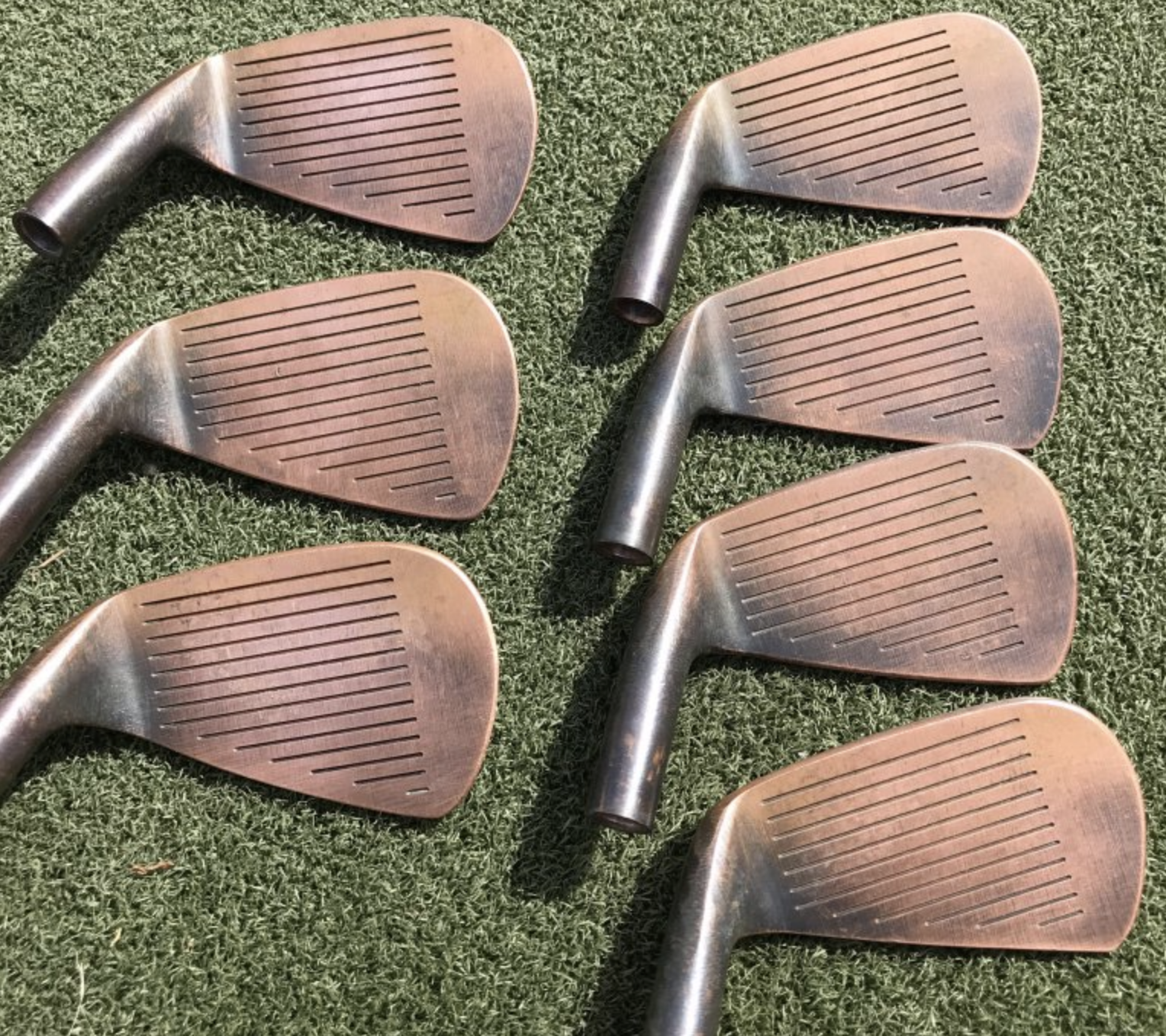
One of the longest-running and most active conversations in all of golf equipment is the subject of blades versus game improvement irons. Over the nearly 20 years I’ve been writing this blog as “The Wedge Guy,” I’ve addressed this in various ways and always stimulated a lively discussion with my readers.
I hope this angle on the conversation will do the same, so all of you please share your thoughts and observations.
In the interest of full disclosure, I have always played some kind of blade-style irons, with only a few detours along the way. But I always come back to my blades, so let me explain why.
I grew up in the 1950s and 60s when blades were all we had. As a teenager with a developing skill set, I became a devotee to those models from the old Ben Hogan Company, and played the “Bounce Sole” model, then several iterations of the Apex line after it was introduced. Those few sets served me well into my 30s, when I became involved in the golf equipment industry. Having Joe Powell Golf as a client, I switched to his pure muscle back model called the “PGI.” They were certainly sweet.
In the late 1980s, I was handling the marketing for Merit Golf, who offered a cavity back forging called the Fusion, which was inspired by the Ben Hogan Edge irons, but offered a more traditional face profile. So, I switched to them.
Playing to a low single digit handicap at the time, I really didn’t see my scores change, but I just wasn’t making as many birdies as I had before. Openly pondering why my golf felt different, a regular golf buddy noted, “You’re not knocking down pins as often as you used to,” and I realized he was right. I was hitting just as many greens as before, maybe one or two more, but I wasn’t getting those kick-in birdies nearly as often. So, I went to the closet and broke out the old Joe Powell PGI irons and had an epic day with three birdies inside five feet and a couple more in the 5-10 range.
Those blades stayed in the bag until I developed my first iron design, the “RL blades” by my first company, Reid Lockhart. By this time, I had seen enough robotic testing prove that the most penalizing mishit with a blade was a toe impact, which mirrored my own experience. So, I sculpted a pure muscle back blade, but added a bit of mass toward the toe to compensate for that deficiency of all such designs.
I played those irons for 20 years, until I created the “FT. WORTH 15” irons for the re-launch of the Ben Hogan brand in 2015. In that design, I further evolved my work to very slightly add a bit of modified perimeter weighting to a pure forged blade, taking inspiration from many of Mr. Hogan’s earlier personal designs in the Apex line of the “old” Ben Hogan Company. Those are still in my bag, going on eight years now.
So, why do I think I can make a solid defense for playing blade irons? Because of their pinpoint distance control, particularly in the short irons — those with lofts of 35 degrees or higher.
I’ll certainly acknowledge that some modern perimeter weighting is very helpful in the lower lofts . . .the mid- and long irons. In those clubs, somewhere on or near the green is totally acceptable, whether you are playing to break 90 or trying to win on the PGA Tour. [Did you know those guys are actually over par as a group outside 9-iron range?] That’s why you see an increasing number of them playing a conservative game-improvement design in those lofts. But also remember that we in the golf club design business deal with poor “hits” only . . . we have no control over the quality of your swing, so the vast majority of bad golf shots are far beyond our influence.
But what I’ve seen in repeated robotic testing and in my own play, when you get to the prime scoring clubs – short irons and wedges – having a solid thickness of mass directly behind the impact point on the face consistently delivers better distance control and spin. In my own designs of the SCOR wedges in 2010, and the Ben Hogan FT.WORTH 15 irons and TK15 wedges, I created a distribution of mass that actually placed a bit more face thickness behind the slight mishit than even in the center, and the distance consistency was remarkable.
I’ve carried that thinking to the Edison Forged wedges by positioning much more mass behind the high face and toe miss than any other wedges on the market. And in robotic testing, they deliver better transfer of energy on those mishits than any other wedge we tested.
So, back to that experience when I switched back to my Joe Powell blades from the Merit cavity back forging, I can sum it up this way.
If your pleasure from your golf is derived more from how good your worst shots turn out, then a game improvement iron is probably the way to go. But if your golf pleasure is more about how good your best shots are, I think there is a very strong case to be made for playing some kind of blade iron design, at least in your scoring clubs.
Alright, fans: sound off!







Scottie Scheffler leads the betting ahead of the second major championship of the year, with the World Number One a +345 favorite to get his hands on a second PGA Championship.
Rory McIlroy who won the Masters back in April is a +800 shot to complete half of the calendar slam at Aronimink Golf Club this week, while Jordan Spieth can be backed at +5900 to become a career grand slam winner.
Here is the full betting board for the 2026 PGA Championship courtesy of DraftKings.
Scottie Scheffler +345 – (Check 0ut his WITB here)

Rory McIlroy +800 – (Check out his WITB here)

- Jon Rahm +1300
- Cameron Young +1500
- Bryson DeChambeau +1700
- Xander Schauffele +1850
- Matt Fitzpatrick +1950
- Ludvig Aberg +2000
- Tommy Fleetwood +2600
- Collin Morikawa +3500
- Brooks Koepka +3900
- Justin Rose +4300
- Russell Henley +4600
- Si Woo Kim +4700
- Justin Thomas +4800
- Robert MacIntyre +5300
- Patrick Cantlay +5300
- Viktor Hovland +5400
- Tyrrell Hatton +5500
- Jordan Spieth +5900
- Sam Burns +6000
- Hideki Matsuyama +6200
- Adam Scott +6400
- Rickie Fowler +7000
- Chris Gotterup +7400
- Patrick Reed +7400
- Min Woo Lee +7800
- Ben Griffin +8000
- Sepp Straka +8400
- Shane Lowry +9000
- Akshay Bhatia +9200
- Maverick McNealy +9200
- Joaquin Niemann +9200
- Jake Knapp +9200
- Jason Day +9600
- Kurt Kitayama +10000
- J.J. Spaun +10000
- Harris English +10500
- Nicolai Hojgaard +11000
- Gary Woodland +11000
- David Puig +11000
- Michael Thorbjornsen +12000
- Jacob Bridgeman +12000
- Keegan Bradley +12500
- Corey Conners +14000
- Alex Fitzpatrick +15000
- Sungjae Im +15500
- Sahith Theegala +15500
- Harry Hall +15500
- Alex Noren +16000
- Thomas Detry +16500
- Marco Penge +16500
- Kristoffer Reitan +17000
- Alex Smalley +17000
- Wyndham Clark +17500
- Sam Stevens +17500
- Keith Mitchell +17500
- Daniel Berger +18500
- Ryan Gerard +20000
- Nick Taylor +20000
- Rasmus Hojgaard +21000
- Dustin Johnson +21000
- Pierceson Coody +23000
- Aaron Rai +24000
- Jordan Smith +24000
- Angel Ayora +24000
- Bud Cauley +25000
- Matt McCarty +26000
- Jayden Schaper +26000
- Brian Harman +27000
- Taylor Pendrith +27000
- Ryan Fox +27000
- J.T. Poston +27000
- Cameron Smith +29000
- Ryo Hisatsune +29000
- Michael Kim +29000
- Max Homa +29000
- Denny McCarthy +29000
- Tom McKibbin +30000
- Rico Hoey +32000
- Matt Wallace +32500
- Ricky Castillo +33000
- Haotong Li +33000
- Michael Brennan +34000
- Max Greyserman +36000
- Stephan Jaeger +37500
- Christiaan Bezuidenhout +37500
- Rasmus Neergaard-Petersen +39000
- Aldrich Potgieter +40000
- Andrew Novak +42000
- Patrick Rodgers +42500
- Daniel Hillier +42500
- Max McGreevy +46000
- Billy Horschel +48000
- Chris Kirk +48000
- Ian Holt +49000
- Casey Jarvis +49000
- William Mouw +50000
- Steven Fisk +50000
- John Parry +50000
- Nico Echavarria +52500
- Garrick Higgo +52500
- John Keefer+55000
- Matthias Schmid +57500
- Austin Smotherman +57500
- Sami Valimaki +60000
- Andrew Putnam +60000
- Lucas Glover +62500
- Daniel Brown +62500
- Jhonattan Vegas +75000
- Emiliano Grillo +80000
- Mikael Lindberg +85000
- Adrien Saddier +100000
- Bernd Wiesberger +100000
- Elvis Smylie +110000
- Stewart Cink +130000
- Kota Kaneko +130000
- David Lipsky +150000
- Chandler Blanchet +150000
- Andy Sullivan +150000
- Joe Highsmith +180000
- Adam Schenk +200000
- Travis Smyth +200000
- Davis Riley +225000
- Martin Kaymer +400000
- Brian Campbell +400000
- Padraig Harrington +450000
- Kazuki Higa +450000
- Jordan Gumberg +450000
- Ryan Vermeer +500000
- Austin Hurt +500000
- Tyler Collet +500000
- Timothy Wiseman +500000
- Shaun Micheel +500000
- Y.E. Yang +500000
- Michael Block+500000
- Mark Geddes+500000
- Luke Donald+500000
- Bryce Fisher+500000
- Jimmy Walker +500000
- Jason Dufner +500000
- Jesse Droemer +500000
- Jared Jones +500000
- Garrett Sapp +500000
- Francisco Bide +500000
- Zach Haynes +500000
- Paul McClure+500000
- Derek Berg +500000
- Chris Gabriele +500000
- Braden Shattuck +500000
- Ben Polland +500000
- Ben Kern +50000

GolfWRX is on site for the second major of 2026: The PGA Championship from Aronimink in Newtown Square, Pennsylvania.
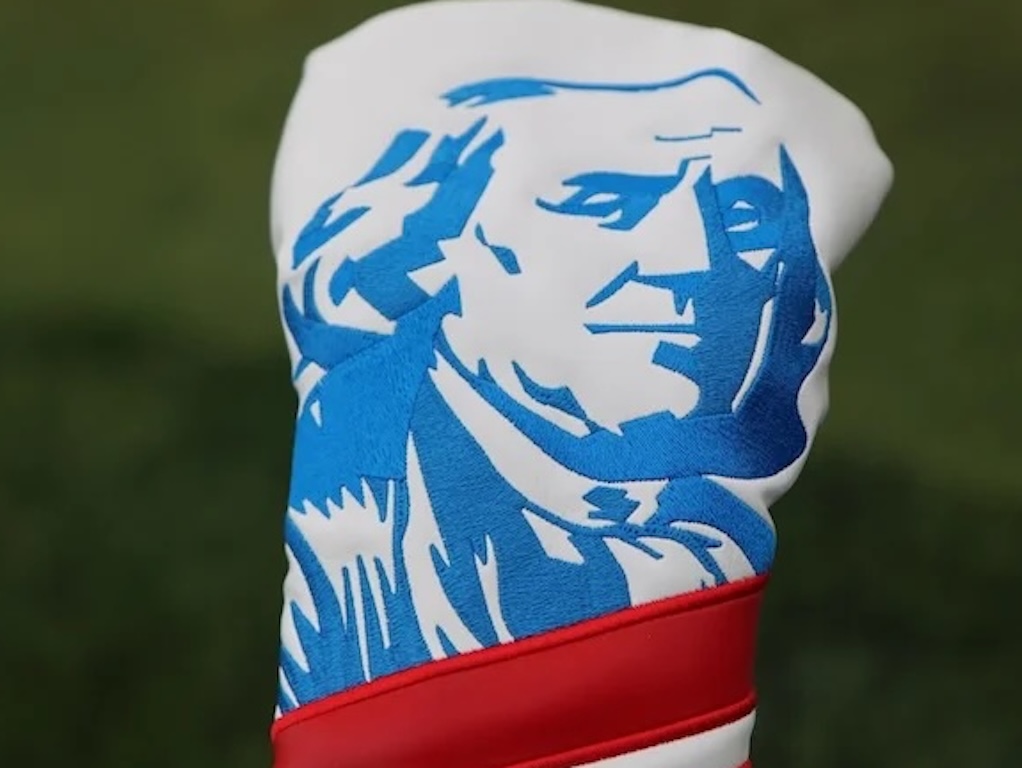
The tournament’s location, just outside Philadelphia, and its status as a major championship mean GolfWRXers are in for a treat: WITBs from a strong field, custom gear celebrating the PGA Championship, and the rich culture of the City of Brotherly Love — we have noted a relative absence of cheesesteak-themed items thus far this week, but most of the rest of the usual suspects are well represented.
Check out links to all our photos below.

General Albums
- 2026 PGA Championship – Monday #1
- 2026 PGA Championship – Monday #2
- 2026 PGA Championship – Monday #3
- 2026 PGA Championship – Monday #4
- 2026 PGA Championship – Tuesday #1
- 2026 PGA Championship – Tuesday #2
- 2026 PGA Championship – Tuesday #3

WITB Albums
- Dustin Johnson – WITB – 2026 PGA Championship
- Bryce Fisher – WITB – 2026 PGA Championship
- Brooks Koepka – WITB – 2026 PGA Championship
- Jon Rahm – WITB (mini) – 2026 PGA Championship
- Martin Kaymer – WITB – 2026 PGA Championship
- Francisco Bide – WITB – 2026 PGA Championship
- Travis Smyth – WITB – 2026 PGA Championship
- Cameron Smith – WITB – 2026 PGA Championship
- Chris Gabrielle – WITB – 2026 PGA Championship
- Jared Jones – WITB – 2026 PGA Championship
- Ian Holt – WITB – 2026 PGA Championship
- Ben Kern – WITB – 2026 PGA Championship
- Angel Ayora – WITB – 2026 PGA Championship
- Zach Haynes – WITB – 2026 PGA Championship
- Daniel Hillier – WITB – 2026 PGA Championship
- Mikael Lindburg – WITB – 2026 PGA Championship
- Paul McClure – WITB – 2026 PGA Championship
- Garrett Sapp – WITB – 2026 PGA Championship
- Austin Hurt – WITB – 2026 PGA Championship
- Mark Geddes – WITB – 2026 PGA Championship
- Adrien Saddier – WITB – 2026 PGA Championship
- Patrick Reed – WITB – 2026 PGA Championship
- Joaquin Niemann – WITB – 2026 PGA Championshi
- Derek Berg – WITB – 2026 PGA Championship
- Timothy Wiseman – WITB – 2026 PGA Championship
- Tyler Collett – WITB – 2026 PGA Championship
- Andy Sullivan – WITB – 2026 PGA Championship
- Jesse Droemer – WITB – 2026 PGA Championship
- Michael Block – WITB – 2026 PGA Championship
- Jordan Gumberg – WITB – 2026 PGA Championship
- Braden Shattuck – WITB – 2026 PGA Championship
- Elvis Smylie – WITB – 2026 PGA Championship

Pullout Albums
- Cameron putter covers – 2026 PGA Championship
- Custom Cameron made for Brooks to test – 2026 PGA Championship
- Cameron putters – 2026 PGA Championship
- Haotong Li’s custom Cameron putter – 2026 PGA Championship
- L.A.B. Golf putter covers – 2026 PGA Championship
- TaylorMade putter covers – 2026 PGA Championship
- New L.A.B. Golf VZN.1i putter for Adrien Saddier – 2026 PGA Championship
- Odyssey putter covers – 2026 PGA Championship
- TaylorMade staff bag and covers – 2026 PGA Championship
- Callaway staff bag and covers – 2026 PGA Championship
- Xander with a new Odyssey milled 7X putter – 2026 PGA Championship
- Srixon driver head cover – 2026 PGA Championship
- Bettinardi covers – 2026 PGA Championship


Kristoffer Reitan held his nerve at Quail Hollow on Sunday to claim his first PGA Tour victory and the $3.6 million winner’s check that came with it. The Norwegian fended off a packed leaderboard on a dramatic final day, with Rickie Fowler and Nicolai Højgaard both taking home $1.76 million for their runner-up finishes.
With a total prize purse of $20 million up for grabs, here’s a look at how much each player won at the 2026 Truist Championship.
1: Kristoffer Reitan, $3,600,000
T2: Rickie Fowler, $1,760,000
T2: Nicolai Hojgaard, -$1,760,000
4: Alex Fitzpatrick, $960,000
T5: Tommy Fleetwood, $730,000
T5: Sungjae Im, $730,000
T5: J.J. Spaun, $730,000
T8: Ludvig Aberg, $600,000
T8: Harry Hall, $600,000
T10: Patrick Cantlay, $500,000
T10: Matt McCarty, $500,000
T10: Cameron Young, $500,000
13: Justin Thomas, $420,000
T14: Min Woo Lee, $360,000
T14: Chris Gotterup, $360,000
T14: Nick Taylor, $360,000
T17: Alex Smalley, $310,000
T17: Gary Woodland, $310,000
T19: Austin Smotherman, $242,100
T19: Rory McIlroy, $242,100
T19: Keegan Bradley, $242,100
T19: Sudarshan Yellamaraju, $242,100
T19: Kurt Kitayama, $242,100
T24: Patrick Rodgers, $156,643
T24: Pierceson Coody, $156,643
T24: Adam Scott, $156,643
T24: Andrew Novak, $156,643
T24: Harris English, $156,643
T24: J.T. Poston, $156,643
T24: David Lipsky, $156,643
T31: Brian Harman, $114,416.67
T31: Viktor Hovland, $114,416.67
T31: Alex Noren, $114,416.67
T31: Tony Finau, $114,416.67
T31: Nico Echavarria, $114,416.67
T31: Corey Conners, $114,416.67
T37: Sam Burns, $82,187.50
T37: Maverick McNealy, $82,187.50
T37: Akshay Bhatia, $82,187.50
T37: Taylor Pendrith, $82,187.50
T37: Matt Wallace, $82,187.50
T37: Andrew Putnam, $82,187.50
T37: Bud Cauley, $82,187.50
T37: Lucas Glover, $82,187.50
T45: Justin Rose, $60,000
T45: Daniel Berger, $60,000
T45: Ryo Hisatsune, $60,000
T48: Denny McCarthy, $50,000
T48: Aldrich Potgieter, $50,000
T48: Webb Simpson, $50,000
T48: Michael Kim, $50,000
T52: Mackenzie Hughes, $45,187.50
T52: Max Homa, $45,187.50
T52: Brian Campbell, $45,187.50
T52: Jhonattan Vegas, $45,187.50
T52: Matt Fitzpatrick, $45,187.50
T52: Chandler Blanchet, $45,187.50
T52: Jordan Spieth, $45,187.50
T52: Jacob Bridgeman, $45,187.50
T60: Xander Schauffele, $42,500
T60: Robert MacIntyre, $42,500
T60: Ricky Castillo, $42,500
T63: Ben Griffin, $41,250
T63: Sepp Straka, $41,250
T65: Ryan Gerard, $40,250
T65: Si Woo Kim, $40,250
67: Ryan Fox, $39,500
68: Jason Day, $39,000
69: Sahith Theegala, $38,000

RBC Heritage Tour Report: More minis, course-specific setups, Spider & GTS launches

Justin Rose WITB 2026 (April): Full WITB breakdown with new McLaren irons

Best fairway woods of 2026: The most versatile fairway woods + the most forgiving fairway woods

What’s the story behind Webb Simpson’s custom-stamped irons?

Cadillac Championship Tour Report: Spieth’s sizable changes, McLaren Golf launches, and more

The 24 players who can win the Masters

Rory McIlroy’s winning WITB: 2026 Masters

Kristoffer Reitan’s winning WITB: 2026 Truist Championship

J.J. Spaun’s winning WITB: 2026 Valero Texas Open

Cameron Young’s winning WITB: 2026 Cadillac Championship


Alex Fitzpatrick WITB 2026 (May)
Driver: Ping G440 LST (9 degrees) Shaft: Fujikura Ventus Black 6 X 3-wood: TaylorMade Qi4D (15 degrees) Shaft: Fujikura Ventus...

Kristoffer Reitan’s winning WITB: 2026 Truist Championship
Driver: Ping G440 Max (9 degrees) Shaft: Mitsubishi Tensei 1K White 60 TX 3-wood: Ping G440 Max (15 degrees) Shaft:...


WITB Time Machine: Rory McIlroy’s winning WITB, 2021 Truist Championship
Rory McIlroy’s victory at the 2021 Wells Fargo Championship 2021 (now the Truist Championship) marked a significant return to form,...


Collin Morikawa WITB 2026 (May)
Driver: TaylorMade Qi4D LS (8 degrees) Shaft: Mitsubishi Diamana D+ Limited 60 TX 3-wood: TaylorMade SIM Tour (14 degrees) Shaft:...
-
 Equipment2 weeks ago
Justin Rose WITB 2026 (April): Full WITB breakdown with new McLaren irons
-
 Equipment1 week ago
What’s the story behind Webb Simpson’s custom-stamped irons?
-
 Equipment2 weeks ago
Cadillac Championship Tour Report: Spieth’s sizable changes, McLaren Golf launches, and more
-
Whats in the Bag3 days ago
Kristoffer Reitan’s winning WITB: 2026 Truist Championship
-
 Whats in the Bag1 week ago
Cameron Young’s winning WITB: 2026 Cadillac Championship
-

 Whats in the Bag3 weeks ago
Nelly Korda WITB 2026 (April)
-

 Equipment2 weeks ago
Justin Rose on the switch to McLaren Golf, learnings from previous equipment moves
-

 Tour Photo Galleries2 weeks ago
Photos from the 2026 Cadillac Championship


Pingback: The Wedge Guy: The critical transition factor – GolfWRX
Drew
Sep 30, 2022 at 7:22 pm
So your playing vokey wedges, but game improvement irons of a different(non Titleist) brand. How would one incorporate blades into this setup. But some Titleist 8-PW blades or go with blades of the same manufacture as your game improvement irons? I think a part 2 may be needed for this article
Pingback: The Wedge Guy: A Tale of Two Misses – GolfWRX
Not Biden
Sep 27, 2022 at 7:14 pm
What is the authors playing background? How often does he shoot under par? I take no advice from somebody who’s not scratch or better.
+3.1 myself.
Try
Sep 23, 2022 at 7:19 pm
Nonsense. Give me the largest game improvement iron you can find and you play your blades and I’ll still beat you
Brian
Sep 26, 2022 at 2:23 pm
Suuuure you will. It’s your story, tell it however you want.
MarkM
Sep 23, 2022 at 1:46 pm
I grew up with blades, as I started playing golf in the 70s. I have gone back and forth between blades and CBs but always seem to return to blades for the same reason you cited – the feeling of hitting that pure shot and knowing it will go the distance you want. Currently playing Honma T//W Rose Proto irons
Dennis
Sep 23, 2022 at 12:08 am
Don‘t you need a certain swing speed to play blades?
Brian
Sep 26, 2022 at 2:22 pm
In the 3 – 6i you do. If you don’t have enough speed, your gaps will bunch up in the mid-long irons.
Dan
Sep 22, 2022 at 10:49 pm
Thanks for An enjoyable read. I briefly had RL blades around 2003 and forgotI had them till I read this.
WYBob
Sep 22, 2022 at 7:56 pm
I agree with you 100%. I am about the same age as you and started playing forged blades in the mid-’60s on tight lies and some tough courses in Texas. As you say, they were the only thing available at the time. A modern GI club just does not fit my eye and I hit them worse than most modern MB irons. My favorite irons are still the Ben Hogan FTX from the early 2000s which was a mixed MB (E-7) and CB (6-3)set designed as an integrated set. I still have them plus several sets of Hogan Apex and a set of Hogan Fort Worth irons that I pull out from time to time to test my ball striking (and honestly for nostalgia purposes). However, as a concession to age, I have built out a combo set of irons that take advantage of current technology in an effort to regain some of the distance lost due to age. The primary difference from the FTX is that my current MBs run 8-PW. Thanks for your insights and affirmation that my current thinking about iron set makeup has some merit. cheers…
Nick
Sep 22, 2022 at 6:02 pm
This is my idea for my set of irons is to have players distance in the 4-7irons and get more blade like irons in 8-W
Karsten Solheim
Sep 22, 2022 at 1:24 pm
I had it figured out in 1982 Terry. Certain folks didn’t like it when I took their market share.
Stosh
Sep 22, 2022 at 12:46 pm
I completely agree with your argument. And during my years of trying and buying new clubs, I have found the a mixed set of clubs – blades in the short irons – gave me not only great consistency but the ability to hit a broader variety of shots with control. I encourage golfers, mid to low handicaps to try this set up.