
Opinion & Analysis
The Wedge Guy: Why modern irons don’t make sense to me

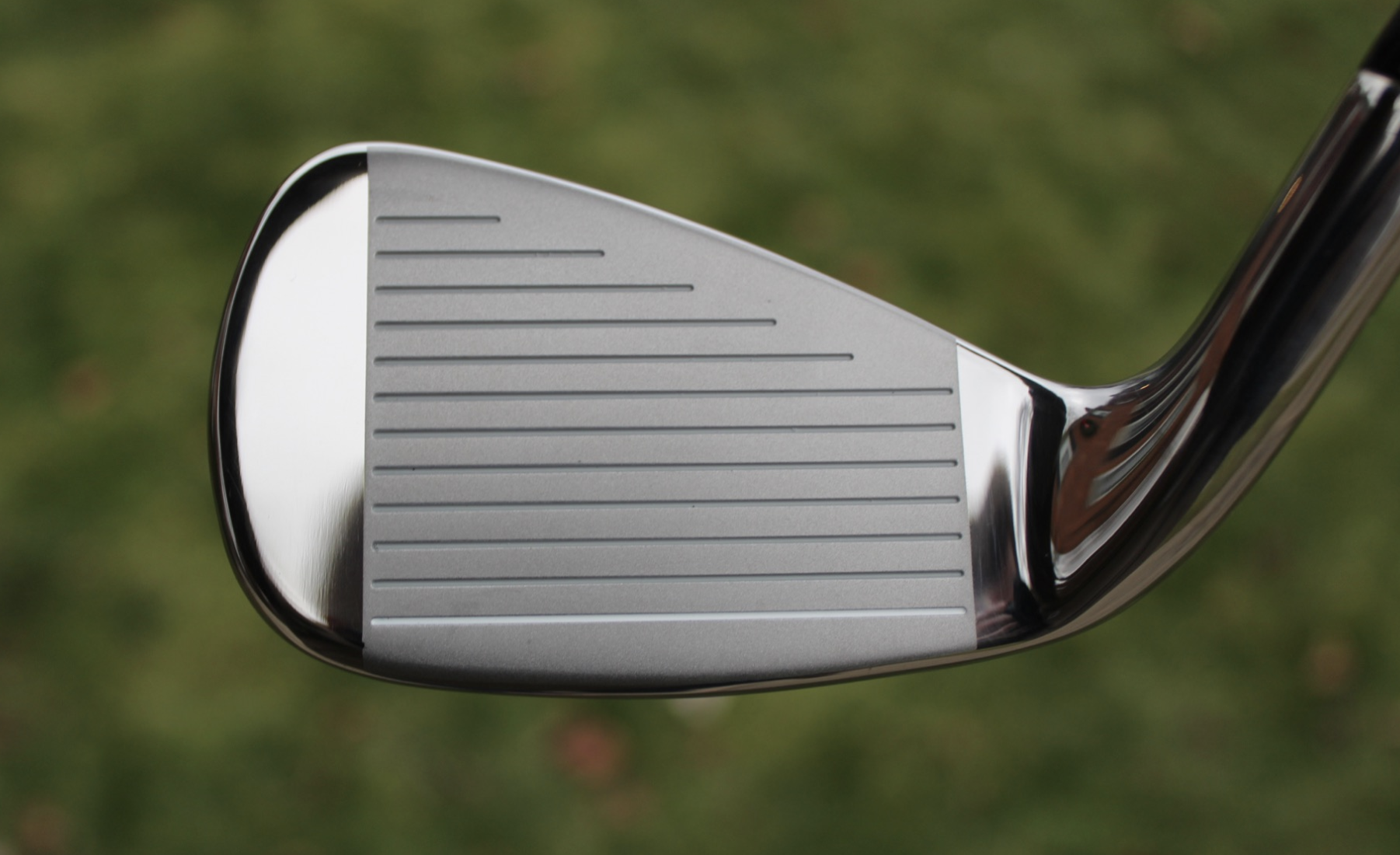
One of the things that really bothers me about most of the newer iron models that are introduced is the continued strengthening of the lofts — I just don’t see how this is really going to help many golfers. The introduction of driver and hybrid technologies into the irons – thinner faster faces, tungsten inserts and filling the heads with some kind of polymer material – is all with the goal of producing higher ball flight with lower spin. But is that what you really want?
I’ll grant you that this technology makes the lower lofts much easier to master, and has given many more golfers confidence with their 5- and 6-irons, maybe even their 4- and 5-. But are higher launch and lower spin desirable in your shorter irons? I’ve always believed those clubs from 35 degrees on up should be designed for precision distance control, whether full swings are when you are “taking something off,” and I just don’t see that happening with a hollow, low CG design.
Even worse, with lofts being continually cranked downward, most modern game improvement sets have a “P-club” as low as 42-43 degrees of loft. Because that simply cannot function as a “wedge”, the iron brands are encouraging you to add in an “A-club” to fill the distance void between that and your gap wedge.
But as you ponder these new iron technologies, here’s something to realize . . . and think about.
Discounting your putter, you have 13 clubs in your bag to negotiate a golf course. At one end, you have a driver of 10-12 degrees of loft, and at the other end your highest lofted wedge of say, 58 to 60 degrees. So, that’s a spread of 46 to 50 degrees. The mid-point of that spread is somewhere around 35 degrees, the iron in your bag that probably has an “8” on the bottom.
Now consider this: From that 35-degree 8-iron downward, you have a progression of clubhead designs, from the iron design, to hybrids, to fairway woods to your driver, maybe even a “driving iron” design as a bridge between your lowest set-match iron to your hybrids. At least four, if not five, completely different clubhead designs.
But in the other direction, from 35 degrees to that highest lofted wedge, you likely only have two designs – your set-match irons and your wedges, each of which all essentially look alike, regardless of loft.
I feel certain that no one in the history of golf ever said:
“I really like my 6-iron; can you make me a 3-wood that looks like that?”
But do you realize the loft difference between your 6-iron and 3-wood is only 12-14 degrees, even less than that between your 6-iron and “P-club”? So, if you can’t optimize an iron design to perform at both 28 and 15 degrees, how can you possibly expect to be able to optimize the performance of one design at both 28 and 43 degrees?
And you darn sure won’t get your best performance by applying 6-iron technology to an “A-club” of 48 to 50 degrees.
This fact of golf club performance is why you see so many “blended” sets of irons in bags these days, where a golfer has a higher-tech iron design in the lower lofts, but a more traditional blade or “near blade” design in the higher lofts. This makes much more sense than trying to play pure blade long irons or “techy” higher lofts.
Most of my column posts are oriented to offering a solution to a problem you might have in your game, but this one doesn’t. As long as the industry is focused on the traditional notion of “matched sets,” meaning all the irons look alike, I just don’t see how any golfer is going to get an optimum set of irons without lots of trial and error and piecing together a set of irons where each one works best for the job you give it.
If you want to see how an elite player has done this for his own game, do some reading on “what’s in the bag” for Bernhard Langer. Very interesting indeed.



Aronimink is not a storied club, but when Donald Ross himself proclaimed it to be as good as he can design and build, one had to take notice. Jay Sigel was the pre-eminent male amateur golfer from the mid-1970s to the mid-1990s. He might have called any number of Philadelphia clubs home, but he chose Aronimink. It served him well. Gary Player won a PGA Championship here in 1962, and was followed by the 1993 winner … nobody. Aronimink gave that event away to Inverness, for reasons of which it is certainly not proud. So be it. We had to wait sixty-four years for the PGA to return to Newtown Square, but here we are. Aronimink has been neo-restored by Gil Hanse and team, to return Ross features with an eye toward defense against the dark arts, errrr, high-tech equipment.
Day one saw Rory McIlroy and Bryson DeChambeau dig big holes, to the tune of plus-four and plus-six, respectively. Since the first-round lead will be minus-three at worst, many shots will need to be made up for the power couple to reach contention. By nightfall, seven golfers held the day-one lead at three-under par 67. Shots and sticks caught our attention, and we are proud to present Five Things We Learned on Tech Thursday at the 2026 PGA Championship. Thanks to InsideTourGolfer, Today’s Golfer, and GolfWRX for initial equipment research.
First, meet Min Woo Lee
Min Woo Lee, aka Dr. Chipinski, has once again thrust himself into the conversation of Can he, will he, when will he? Lee has so much talent, wins not nearly as often as we believe that he should, and has no major near-misses (much less titles) on his wiki. The young Aussie is getting older and wiser, but is he able to avoid the scarring that holds the older and wiser back from breaking through? Philadelphia offers another opportunity. Min Woo signed for five birdies and two bogeys on day one, and grabbed a share of the opening-day lead at Aronimink. Winners transcend history and the moment, and Lee will need that sort of ascent to lift the Wannamaker on Sunday.
Second, meet Aldrich Potgeiter
The young South African golfer can rip driver with the best of them. Aronimink tips out at nearly 7400 yards, but beyond the fairway bunkers that ensnare only the mortals, Potgeiter can take his chances with wedge from the rough. On Thursday, he spent plenty of time in the spinach. Like Popeye, he used his muscles to gouge and thrash and dig his way out. Six birdies against three bogeys on the card brought AP in a three deep.
Third, meet Martin Kaymer
Not a major event takes place without a where’s he been throwback moment. We know that Martin Kaymer left the PGA and DP World tours for LIV golf, but the two-time (US Open and PGA) major winner has a lifetime exemption into at least one major event, and he seizes the opportunity each May. Kaymer joined the six-seven brigade with four birdies and a solitary bogey on day one. Kaymer was never a long hitter, and the years are kind to no golfer. The German champion will need to uncork every bottle of guile and strategy in his cabinet to remain in contention. For today, though, he occupies a rung on the ladder of Tour Tech.
Fourth, meet Scottie Scheffler
Let’s see, he’s the defending champion at the PGA, and he found his way back to the top tier with five birdies against two bogeys. To be a favorite and then play up to that stature and expectation is quite difficult. Just ask Rory, Bryson, and some of the other pre-tournament heartthrobs. Scheffler’s game is complete, and to knock him off the OWGR #1 pedestal, one needs to defeat him at the majors. Aronimink is the sort of course that fits Scheffler’s game. Better yet, it unfits the game of many of his challengers. Don’t expect Scheffler to go away anytime soon. Come Sunday, he’ll be around.
Fifth, meet Stephan Jaeger
Clocking in for the unheralded players shift are Ryo Hisatsune and Stephan Jaeger. Hisatsune logged seven birdies on day one, but gave most of them back with four bogeys. Still, he’s tied at the top for a time. Jaeger pitched five birdies against two bogeys, including a run of three consecutive, from holes four through six. Odds are that one of the two will hang around through 36 holes. Odds also suggest that both will be gone by Saturday evening. Still, the PGA Championship has historically been the major most likely to be won by an under-known. Both Hisatsune and Jaeger feature on that list, so good luck, lads!

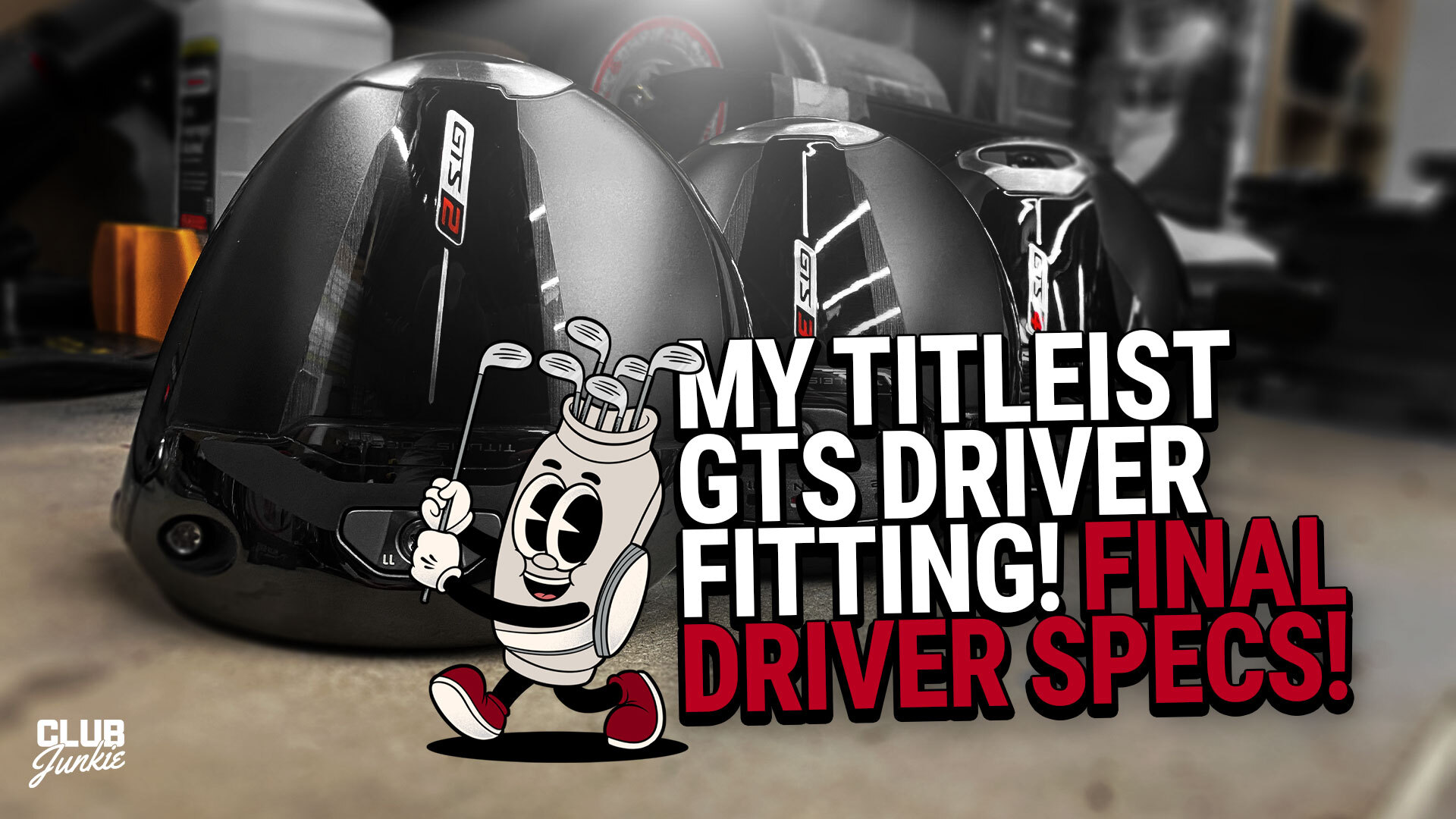
On this episode of the Club Junkie Podcast, I head to the Titleist Performance Institute for a full driver fitting with the new Titleist GTS lineup. We dive into the fitting process, talk about what made the biggest difference in performance, and break down how the different GTS heads and shaft combinations compare on the launch monitor. If you are thinking about a new driver setup for this season, there is a lot to take away from this one.
I also get into Brooks Koepka and the gear setup he brought to the PGA Championship, including the putters that caught my eye during the week. There are some interesting equipment trends showing up at the highest level right now and we break down what stands out.
To wrap things up, I talk about reshafting a few wedges, what I learned during the process, and swapping an adaptor onto a new shaft for another build project in the shop. A gear packed episode from start to finish for anyone who loves golf equipment and club building.
Follow Club Junkie everywhere:
Instagram: https://www.instagram.com/clubjunkiepod/
X: https://x.com/ClubJunkiePod
TikTok: https://www.tiktok.com/@clubjunkiepod
Threads: https://www.threads.com/@clubjunkiepod
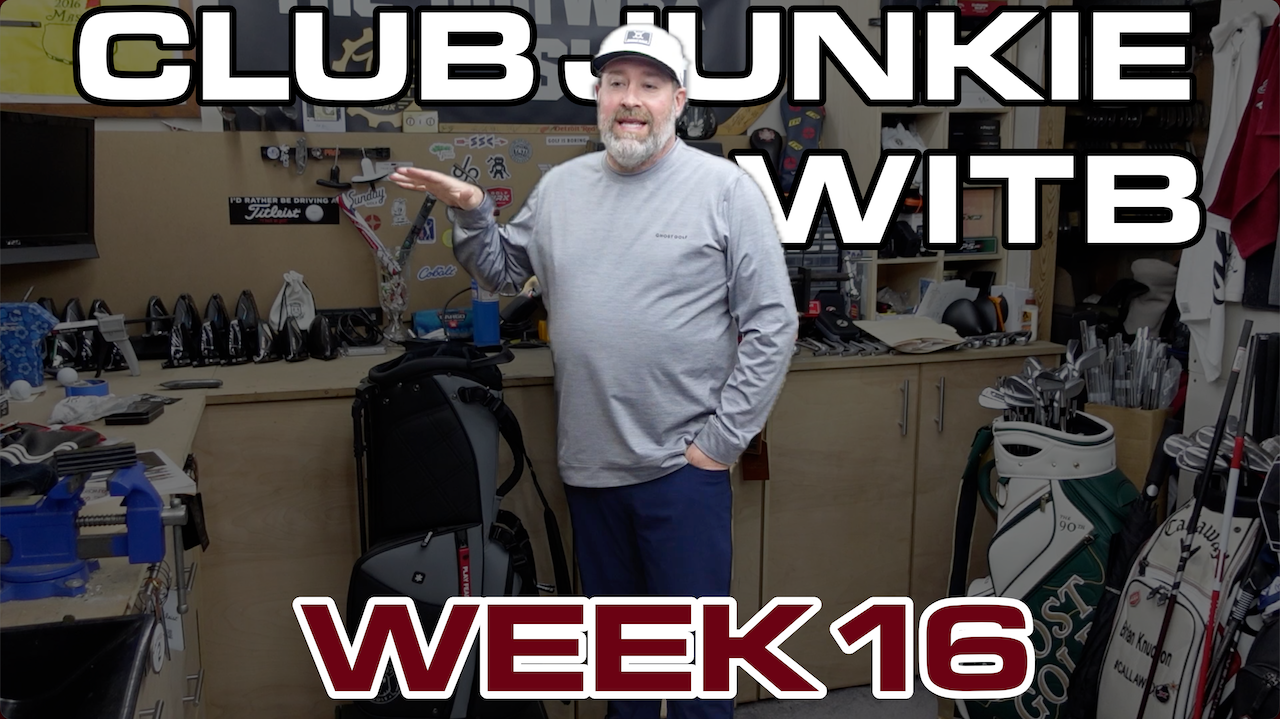
Excited for this week’s WITB as we get to add the new Titleist GTS woods to the bag! I was fit at Titleist’s TPI facility in Oceanside California a few weeks ago and my new clubs just showed up. I am also adding a cool set of irons that I built last year some wild custom wedges into a new golf bag. Speaking of the bag I have a new Ghost Anyday Black Ops stand bag that I will be using on my Motocaddy Remote M7 electric cart.
Driver: Titleist GTS3 (11 degrees @ 10.25)
Shaft: Fujikura Ventus Red 6s
3-wood: Titleist GT1 3Tour (14.5 degrees)
Shaft: Graphite Design Tour AD CQ-7s
5-wood: Titleist GTS (18 degrees)
Shaft: Fujikura Ventus Red 7s
9-wood: Titleist GT1 (24 degress)
Shaft: Fujikura Ventus Red 7s
Irons: Bettinardi CB24 (5-PW)
Shafts: KBS C-Taper Lite 110 stiff
Wedge: TaylorMade MG5 (50-09 SB)
Shaft: Mitsubishi MMT 125 Stiff
Wedge: TaylorMade MG5 (56-12 SB)
Shaft: Mitsubishi MMT 125 Stiff
Wedge: TaylorMade MG5 (60-08 LB)
Shaft: Mitsubishi MMT 125 Stiff
Putter: Dan Carraher ZT Proto
Ball: Callaway Chrome Tour
Bag: Ghost Anyday Black Ops Stand Bag

Justin Rose WITB 2026 (April): Full WITB breakdown with new McLaren irons

RBC Heritage Tour Report: More minis, course-specific setups, Spider & GTS launches

What’s the story behind Webb Simpson’s custom-stamped irons?

Cadillac Championship Tour Report: Spieth’s sizable changes, McLaren Golf launches, and more

Kristoffer Reitan’s winning WITB: 2026 Truist Championship

Cameron Young’s winning WITB: 2026 Cadillac Championship

Aaron Rai’s winning WITB: 2026 PGA Championship

Nelly Korda WITB 2026 (April)

Justin Rose on the switch to McLaren Golf, learnings from previous equipment moves

Photos from the 2026 PGA Championship


Patrick Reed WITB 2026 (May)
Driver: Titleist GT3 (9 degrees) Buy here. Shaft: Aldila Rogue Silver 130 M.S.I. 70 TX 3-wood: TaylorMade Qi35 (15 degrees)...

Aaron Rai’s winning WITB: 2026 PGA Championship
Driver: TaylorMade M6 (9 degrees) Shaft: Aldilda Synergy Blue 70 TX 3-wood: TaylorMade Qi10 (15 degrees) Shaft: Fujikura Ventus Blue...


Michael Block WITB 2026 (May)
Driver: TaylorMade Qi4D (9 degrees) Shaft: Fujikura Ventus Black VeloCore+ 5 X 3-wood: TaylorMade Qi4D (15 degrees @14.25) Shaft: Mitsubishi...


Bryson DeChambeau WITB 2026 (May)
Driver: Krank Formula Fire Pro (6 degrees) Shaft: Project X Prototype 3-wood: Krank Formula Fire (10 degrees) Shaft: LA Golf BAD...
-
 Whats in the Bag3 weeks ago
Kristoffer Reitan’s winning WITB: 2026 Truist Championship
-
Whats in the Bag2 weeks ago
Aaron Rai’s winning WITB: 2026 PGA Championship
-
 Tour Photo Galleries3 weeks ago
Photos from the 2026 PGA Championship
-
 Equipment2 weeks ago
GolfWRX Launch Report: 2026 Titleist GTS drivers
-

 Equipment2 weeks ago
PGA Championship Tour Report: Fitzpatrick, Koepka among big-name putter switches for Aronimink
-

 News2 weeks ago
WITB Time Machine: Phil Mickelson’s winning WITB, 2021 PGA Championship
-

 Equipment2 weeks ago
Which of Tiger’s major winning irons are your favorite? – GolfWRXers discuss
-

 Equipment2 weeks ago
Lead Tape Report: Adjusting the swingweight of the Wanamaker Trophy


Murv
Dec 2, 2022 at 12:52 pm
I’ll be 79 for next season. A couple of years ago I had a short trial with a 7 wood. Didn’t like it. Put it back in last fall and loved it. Looking for a 9 wood. Will go from 2 fairways and 3 hybrids to 4 woods and 1 hybrid then the 7 iron. Sad when you can’t elevate hybrids anymore. 44 set pw. 49, 54 and 58 wedges.
Neville Hubbard
Dec 2, 2022 at 11:23 am
I have 16.5° 3-wood, 19°, 23°, 25° hybrids, 27.5° 7-iron, 31° 7-iron, then conventionally lofted clubs to a 44° pitching wedge, 50° gap wedge, 56° sand wedge and, I’m ashamed to say, a chipper!!! It works for me!!!
WiTerrp
Dec 2, 2022 at 11:19 am
By trial and error, my set reflects your opinion. In the under 90 mph driver head speed, I only routinely carry 7-P irons. My gap wedge is a Vokey, not the set 48 iron. The wedge is far better at feel shots and the P can cover shots that I would use the 48. The 6 iron is replaced by a 25 hybrid. I have both the 6 and 48 irons, but only carry the 6I based on a specific par 3 distances Since adding the wedge, the 48 is pretty much just for set resale value.
Having lost club head speed, the promise of more distance doesn’t impress me much. When an iron can’t give me 10+ yards over the previous iron, time to add another hybrid.
Larry "Bud" Melman
Dec 2, 2022 at 1:41 am
Naw bruh, I want 4 irons in the bag and 7 wedges. That’s just how I roll.
David Aceto
Dec 1, 2022 at 5:48 pm
good article my irons start 31 to 33 degrees to 36 to 41 to 46 to 51 degrees 5 degree gaps due to my 65 mph clubhead speed with a iron the only speciality is i use r9 tp b irons for my 8 9 and pitching wedge works out great
Rob
Dec 1, 2022 at 5:40 pm
Overfocusing on Loft is just as bad as overfocusing on the number on the bottom of the club.
Loft, and especially static loft, is only one variable in the equation. Work backwards from your ideal ball flight, distances, forgiveness, and feel instead.
Whatever that loft, length, clubhead, and shaft is, let that be.
Jeff
Dec 3, 2022 at 10:26 pm
Many golf ball OEM’S when working with their various tour staff. Start working with their staff from the green to their drivers. The player wants the sound and feel of the ball around the green. Shows the importance of having the right ball for the short game.
Edward Gambler
Dec 1, 2022 at 5:21 pm
You loft jack complainers miss out on one important factor. Shorter shafts are easier to hit and easier to hit straight. So putting a 7 iron loft on an eight iron shaft immediately makes that distance easier to manage for the average and sub average golfer. Simple fact.
You claim we shouldn’t care what number is on the club, but it seems to me you’re the ones who get all bent out of shape with the number not meaning what you want it to. Lighten up…I went from about 6 GIR per round with my traditionally lofted irons to over ten with my new PXGs. All that extra distance with shorter shafts and more forgiveness has been an absolute Godsend.
Philip
Dec 2, 2022 at 9:33 am
You only posted to brag you paid a ridiculous amount of money for clubs made by a dope. I a 5 and he’s ? right… I even published an article about this very topic when I was marketing Director for a HIGH END boutique club maker
Brandon
Oct 23, 2025 at 4:22 pm
What? That made absolutely no sense. Oh and my “overpriced clubs made by a dope” play well, feel fantastic and only cost me $79 per club brand new with graphite MMT80 shafts and they are 0311xp not the cheaper 0211 or blackops. Prior gen is always on sale plus the heroes discount is great for military and first responders.
I dont have one but they had the 0211 driver on sale forever for $199 with your choice of about 7 or so shafts.
You just sound like a hater
They also
Brandon
Oct 23, 2025 at 4:26 pm
100% agree with you. Plus where’s this guy been? There are sets from all the OEMs (mostly GI) that have progressive sets with cavity back in the short irons and hollow in the longer, or blended sets. Adams was doing it in the mid 2000s even, this isn’t new, its just progressing.
Mark Blake
Dec 1, 2022 at 4:02 pm
The number on the club matters because 8 iron and above is a different shape to 7 iron down. i guess because 8 iron is formerly a ‘pitching’ club, and therefore is used for different shotmaking.
So yes its ridiculous to have an 8 iron at <40 deg of loft, because that means a golfer needs even more wedges.
One day golfers will be advised to drop the "hard to hit" short irons, and just use some hybrids then a 30 degree wedge, then more wedges. Then they will call it a 1 wedge and so on.
Kourt
Dec 1, 2022 at 11:13 am
This dude just loves blades, which is fine, but I’ve seen many high handicap golfers find much more joy in their games by playing game improvement irons. Even with my dad switching to cbx cavity wedges has helped him. Yes if you’re an elite striker they might not be “as precise” but for most high handicappers they are just trying to avoid bunkers and hit more greens.
Livininparadise
Dec 9, 2022 at 11:57 am
I have to agree with you. Many high handicapped golfers can’t hit blade style wedges any better than they could a 1 iron. I notice that their distance is very inconsistent with blade style wedges, which causes them more issues than direction.
This article is for some players. Most players should get fitted and not worry about what Bernhard Langer is hitting
Reality
Dec 1, 2022 at 4:29 am
I’ve never been happier than with my new Titleist T300’s. I play Driver, 23 Hybrid, 7, 8, 9, P, W1, W2, 56Vokey and 60Vokey. I am 72 years old with a handicap of 26 and am hitting my 7 iron 15 yards further than when I was 34 years old playing off 2!
sandtrap
Dec 1, 2022 at 4:11 am
Pickles I think one of the main points in this debate is that some manufacturers choose to make their 9 irons with 37 or 38deg lofts while a traditional 7 iron might be 36 or 37deg. These manufacturers know full well that the average person comes out of a club fitting thinking ‘Gee I hit those INSERT BRAND NAME HERE’s 9 iron(not knowing it is 38deg)just as far as INSERT BRAND NAME HERE’s 7 iron (nearly the same loft)… They must be the superior club!’
This is completely deceitful and all it is accomplishing is moving the goal posts. I can’t wait until the day when we are all playing bag consisting of a Driver then a 21 deg 9iron, and then F, O, E, Q, J, X, A, G, P, S and L wedge. The only realistic way to get around this would be to label every club by degrees instead of a number or have industry regulations as to what loft within a degree, belongs on each iron. Then manufacturers would actually be able to sell the clubs due to the actual characteristics and engineering of the club eg.higher launch/steeper descent angle, more forgiving etc.
One writer on WRX argued your same point just as poorly a few years ago after publishing an obvious paid advertisement/review/article by an OEM who had strengthened their lofts considerably in one line of irons and stating that they were revolutionary in terms of length.
However , the only real objective way to compare clubs from a performance perspective is to eliminate as many of the variables as possible and making a decision from there. Same shaft, same flex, same loft, same ball and even as far as same grip and number of papers. However OEM’s knowing that their 8iron is actually a 6.5 iron and still marketing it as an 8 is taking advantage of Average Joe’s ignorance of what they are ACTUALLY hitting.
FYI- I hit my F-Wedge further than your 4 iron 😉
Jeff
Dec 3, 2022 at 11:36 pm
1. Never going to get industry standards. Clubs, balls, shafts, etc. Different strokes for different fokes.
2. Stamping/loft on an iron doesn’t work! We saw that did not work a few years back. I don’t want to have to pull out a piece of paper and match the number to the iron I am playing. That will certainly slow play and we already have that problem!!
3.All OEM’s have on their web sites the specs of their irons. So they are not hiring their lofts
4. Do you only buy one shirt color or pants color?
Jeff
Dec 3, 2022 at 11:42 pm
Paper? Did you mean wraps/tape?Looks like your advocating bifurification. Typo on previous email OEM’S not hiring their specs
Jeff
Dec 4, 2022 at 12:23 pm
Hiding. Finally typed it correct!
Pickles
Dec 6, 2022 at 11:42 pm
Sandtrap, I’d guess we agree on more than disagree. Agreed, many buyers may get confused by loft changes over the last decade. But to be fair, lofts have been strengthening since the modern balata era. At one point, your “traditional” 37 degree 7 iron would’ve been considered strong.
However, you are missing the main points from my post. The author contends that consumers are hurt because OEMs design short irons exactly as they do long irons. My rebuttal was that I disagreed that OEMs do this, giving examples of specific iron sets that contradict authors point.
Additionally, I disagreed with the premise that irons should have an even spread of loft because loft’s impact on distance is correlated with speed. As speed decreases, so too does the impact of loft. Test for yourself, tweak a 64 degree wedge one degree and note the distance change. (Or go to the extreme and tweak your putter). Then tweak your driver a degree and note the change. Surely if you have access to a boutique club fitter you could obtain the data. All loft degrees are not equal, thus it is illogical to gap a set purely on loft. In my set, I don’t care what the number on the sole is, I care how far it goes. Happy to carry a 4iron as my longest, or a 2, whichever hits my number.
FYI- funny quip about your f wedge. Afraid you’re probably overconfident tho; my college degree was free thanks to golf ?
jamho3
Nov 30, 2022 at 5:20 pm
TK.
I know this matches your club making agenda, but at the same time I still appreciate your being willing to take this on and spread the truth and this perspective. Keep it up.
O_o
Nov 30, 2022 at 2:48 pm
Fittings over the last 4 years have shown me that the average golfer really isn’t interested in improving their game realistically anyway, and it’s obvious that these equipment companies know that. If hitting a 6 iron an extra 15 yards means something to Joe the 27 handicap, more power to him. Whatever makes you enjoy the game
Jeff
Dec 3, 2022 at 11:45 pm
I haven’t met anyone yet who wants to hit it shorter! Age will allow that to happen.LOL
Common sense.
Nov 30, 2022 at 2:42 pm
Ego and salesmanship is the answer. You can sell a 130 yard pitching wedge alot easier than a 110 yard pw.
Clayton
Nov 30, 2022 at 2:14 pm
I agree, but well thought out irons like my Mizuno 223 have a more “wedge like” 8 to Pw based off 46*. A bit strong but nothing crazy. That being said, I’m planning on reshafting some classic CB irons I have based off a 48* PW, bending them all a degree weak and seeing how I like that wider spread from 3 to PW, gaining a long iron slot but not losing my “GW” loft (49-51) that I use so much every round. It’ll just be called a PW again like it was in the 1990-2010s.
Matts
Nov 30, 2022 at 2:10 pm
I agree that current modern day iron sets (4 iron to PW) have too many clubs with lofts less than forty degrees and often with only three or two and a half degrees of loft between clubs, for most average golfers. If you cannot hold a green with a long iron, you should change to a hybrid or a lofted fairway wood if those clubs can.
Matts
Nov 30, 2022 at 2:21 pm
To expand further, the golfer of average driver swing speed (90 to 95 mph) needs a WITB of driver, fairway wood/s, hybrid/s, irons and specialist wedges, meaning buying a set of irons (4I through PW) is wasteful because one should not be putting some of those irons in your bag.
Pickles
Nov 30, 2022 at 1:12 pm
First, I don’t agree with the general argument because it’s circular. If loft is such a critical determinant, why should one care if their set is a 5-A instead of a 4-P? Even with your point about a 6 iron being so close to a 3 wood, why does that matter if it’s the longest iron in one’s bag (and how many people should even carry a 15 fairway anymore)?
Second, a degree of loft doesn’t have a linear impact on distance relative to speed. As clubspeed decreases, more loft is required to impact distance. A degree of loft difference with a driver could account for 20 yards, a 59 degree wedge might only carry 3 yards further than a 60 degree. Surely this should impact one’s set makeup more than sticking to an arbitrary loft spread.
Last the author argues that OEM’s make short irons the same as long. Unfortunately, OEM’s have been incorporating blended sets into one for a decade or more. Taylormade RBZ Tour, Titleist AP2, etc, have had game improvement tech in the long irons (slots, tungsten) with more basic/traditional short irons. This might not even be expressly necessary; as loft increases, the value of these game improvement aspects diminishes.
Cucumbers
Dec 1, 2022 at 3:00 am
Extremely well said
Livininparadise
Dec 9, 2022 at 12:08 pm
Pickles, yes.
Kohler should know this and any article like this that does not give a brief overview of moden club design is disingenuous.
In an effort to make clubs easier to hit, manufacturers have lowered the center of gravity. If traditional lofts were utilized, everyone would just pop the ball up, so lofts have to be dialed down. The result happens to be a club that does hit the ball further, but also is easier to hit. However, just because clubs are easier to hit does not take into consideration lack of practice and lack of overall ability. They players that have benefited from easier to hit clubs get closer to the green in regulation. However, talent gets the ball into the hole.
Raj LP
Nov 30, 2022 at 11:34 am
This quest for low spin and distance has been interesting to me as well but I am a higher swing speed player so I have P770s which are a more traditional lofted. I find those go a specific distance more consistently. Whereas, the modern lofted irons gave me a pretty big variance on distance. I guess the manufacturers point is that, by moving COG lower, the trajectory of a longer shot will give it the same height and landing iron of a shorter iron. Hence, it enables lower swing speed hitters to reach greens further away and still hold them.