
Opinion & Analysis
The Wedge Guy: Is your handicap a real reflection of your ability?

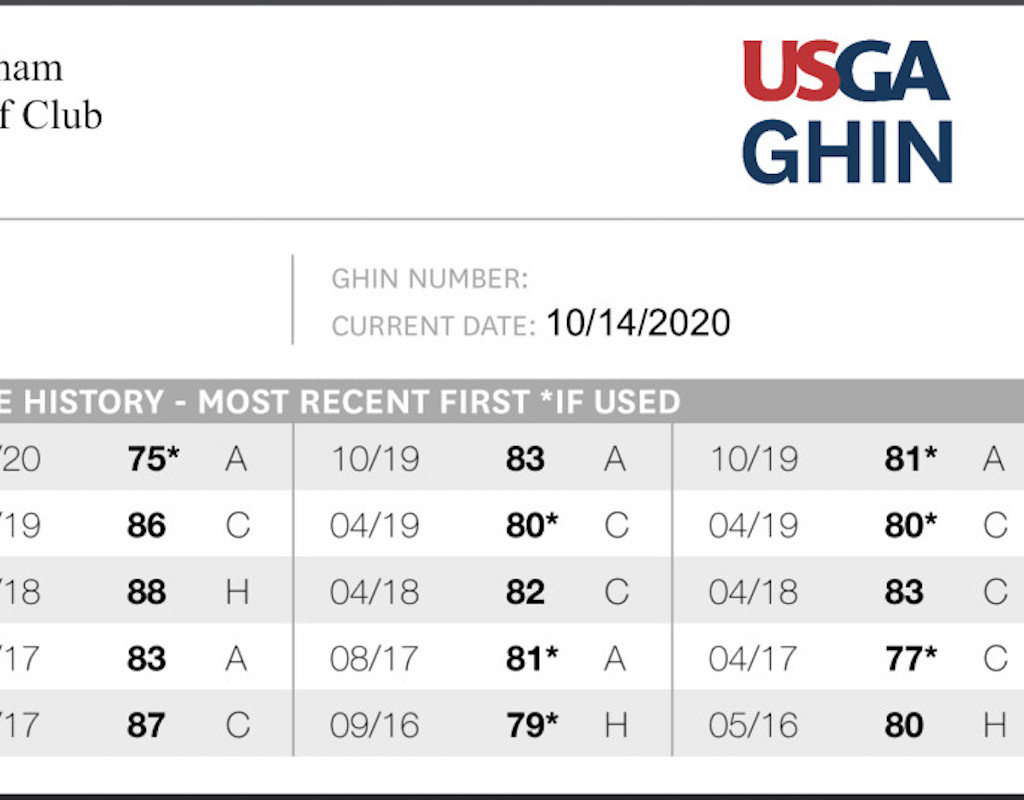
Today’s post is somewhat of a continuation of some prior writings on the subject of the relative difficulty of the courses we play versus the difficulty of the courses the tour professionals play every week. In those articles, I’ve suggested — no, declared — that most recreational golfers are playing much a much tougher game than the tour players, based solely on the difference in strength profiles.
Today’s tour professionals are big, strong athletes who have amazingly powerful swings. Because of that power, they reduce most golf courses to a display of big drives and lots of wedge shots, and there are very few legitimate par-5 holes for them – by that I mean a hole long enough to make them position a second shot to leave a preferred approach shot to the green.
In contrast, that’s just not the course set-ups most of us face when we take to the first tee.
Being 71 years old now, I still find myself desiring the challenge of our men’s regular tees. The course presents me with a through-the-bag experience, meaning all facets of my game are tested, from wedge play to short irons to mid-irons to long irons and fairway woods. It is rare that I come off the course with even one club that I did not hit that day.
I play with many friends who are older and just do not have my distance, so they tee it from the gold, or “senior” tees. But for too many of them, that’s just not enough to let them play the game as it is designed. One friend in particular is bound and determined to be a nine handicap again, though he’s currently playing to a 23. I know his game and he moves it around pretty good for 83 years old, but he just does not have the strength to get to a nine handicap from those tees.
Just last night, I was explaining to him that he’s effectively playing a par 83 to 85 golf course, so his mid-90s scores ARE making him a nine handicap. For him, our longest par five is at least driver, two 3-woods and a mid-iron. The other two par 5s require two good 3-wood shots after his best drive to even have a chance of being on or around the green. One par 3 requires his best driver shot to have a remote chance of reaching the green, and at least 10 of the par 4 holes are out of reach with his best drive and 3-wood. If tour players had to play the game that way, I don’t think you would ever see any of them break 80.
The USGA has long pushed the idea of “tee it forward,” but I don’t think most golf courses have taken that honestly to heart and set up their courses and tee locations for their members with their relative strength profiles in mind. There will always be back tees to challenge those stronger players, but why can’t every golfer find a set of tees that gives them relatively the same challenge?
And while we’re on the subject, why are the forward tees so often labeled “seniors,” “ladies” and “super seniors”? The golf ball doesn’t know anything about you. Should our young high school star — a girl who hits it about as far as I do — play the “ladies” tees? Should my friend who’s in his forties but just doesn’t hit it very far not be allowed to play the “senior” tees if that’s where the game is the most fun and challenging?
This game is supposed to be challenging, sure, but it’s also supposed to be enjoyable and fun. And it’s supposed to offer up this measure of “par” that is difficult, but reasonable to attain, whether on any given hole or any given round.
If you are playing a set of tees that makes anything close to par golf completely out of reach, then move up to a set of tees that better fits your game.





Aronimink is not a storied club, but when Donald Ross himself proclaimed it to be as good as he can design and build, one had to take notice. Jay Sigel was the pre-eminent male amateur golfer from the mid-1970s to the mid-1990s. He might have called any number of Philadelphia clubs home, but he chose Aronimink. It served him well. Gary Player won a PGA Championship here in 1962, and was followed by the 1993 winner … nobody. Aronimink gave that event away to Inverness, for reasons of which it is certainly not proud. So be it. We had to wait sixty-four years for the PGA to return to Newtown Square, but here we are. Aronimink has been neo-restored by Gil Hanse and team, to return Ross features with an eye toward defense against the dark arts, errrr, high-tech equipment.
Day one saw Rory McIlroy and Bryson DeChambeau dig big holes, to the tune of plus-four and plus-six, respectively. Since the first-round lead will be minus-three at worst, many shots will need to be made up for the power couple to reach contention. By nightfall, seven golfers held the day-one lead at three-under par 67. Shots and sticks caught our attention, and we are proud to present Five Things We Learned on Tech Thursday at the 2026 PGA Championship. Thanks to InsideTourGolfer, Today’s Golfer, and GolfWRX for initial equipment research.
First, meet Min Woo Lee
Min Woo Lee, aka Dr. Chipinski, has once again thrust himself into the conversation of Can he, will he, when will he? Lee has so much talent, wins not nearly as often as we believe that he should, and has no major near-misses (much less titles) on his wiki. The young Aussie is getting older and wiser, but is he able to avoid the scarring that holds the older and wiser back from breaking through? Philadelphia offers another opportunity. Min Woo signed for five birdies and two bogeys on day one, and grabbed a share of the opening-day lead at Aronimink. Winners transcend history and the moment, and Lee will need that sort of ascent to lift the Wannamaker on Sunday.
Second, meet Aldrich Potgeiter
The young South African golfer can rip driver with the best of them. Aronimink tips out at nearly 7400 yards, but beyond the fairway bunkers that ensnare only the mortals, Potgeiter can take his chances with wedge from the rough. On Thursday, he spent plenty of time in the spinach. Like Popeye, he used his muscles to gouge and thrash and dig his way out. Six birdies against three bogeys on the card brought AP in a three deep.
Third, meet Martin Kaymer
Not a major event takes place without a where’s he been throwback moment. We know that Martin Kaymer left the PGA and DP World tours for LIV golf, but the two-time (US Open and PGA) major winner has a lifetime exemption into at least one major event, and he seizes the opportunity each May. Kaymer joined the six-seven brigade with four birdies and a solitary bogey on day one. Kaymer was never a long hitter, and the years are kind to no golfer. The German champion will need to uncork every bottle of guile and strategy in his cabinet to remain in contention. For today, though, he occupies a rung on the ladder of Tour Tech.
Fourth, meet Scottie Scheffler
Let’s see, he’s the defending champion at the PGA, and he found his way back to the top tier with five birdies against two bogeys. To be a favorite and then play up to that stature and expectation is quite difficult. Just ask Rory, Bryson, and some of the other pre-tournament heartthrobs. Scheffler’s game is complete, and to knock him off the OWGR #1 pedestal, one needs to defeat him at the majors. Aronimink is the sort of course that fits Scheffler’s game. Better yet, it unfits the game of many of his challengers. Don’t expect Scheffler to go away anytime soon. Come Sunday, he’ll be around.
Fifth, meet Stephan Jaeger
Clocking in for the unheralded players shift are Ryo Hisatsune and Stephan Jaeger. Hisatsune logged seven birdies on day one, but gave most of them back with four bogeys. Still, he’s tied at the top for a time. Jaeger pitched five birdies against two bogeys, including a run of three consecutive, from holes four through six. Odds are that one of the two will hang around through 36 holes. Odds also suggest that both will be gone by Saturday evening. Still, the PGA Championship has historically been the major most likely to be won by an under-known. Both Hisatsune and Jaeger feature on that list, so good luck, lads!

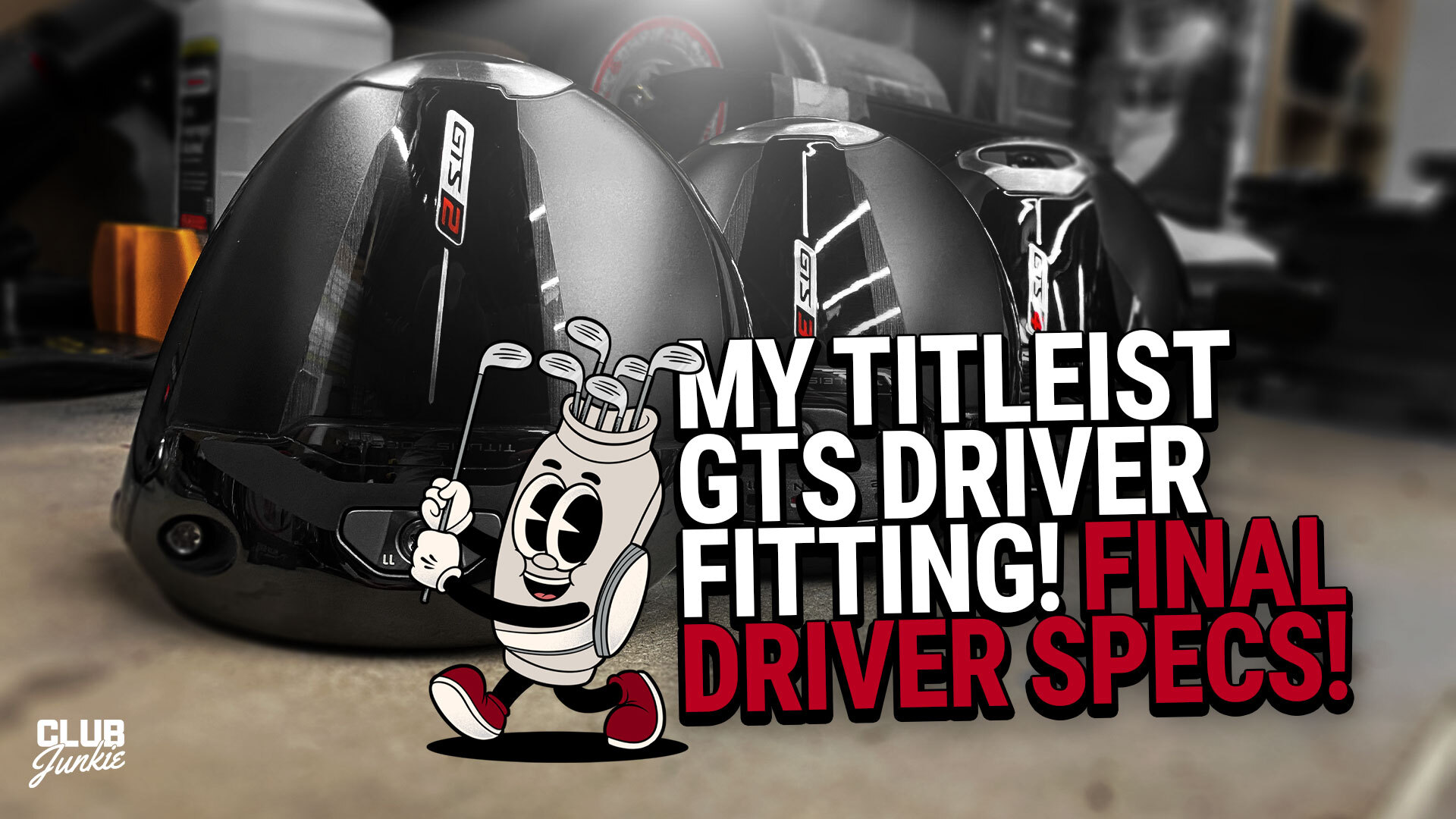
On this episode of the Club Junkie Podcast, I head to the Titleist Performance Institute for a full driver fitting with the new Titleist GTS lineup. We dive into the fitting process, talk about what made the biggest difference in performance, and break down how the different GTS heads and shaft combinations compare on the launch monitor. If you are thinking about a new driver setup for this season, there is a lot to take away from this one.
I also get into Brooks Koepka and the gear setup he brought to the PGA Championship, including the putters that caught my eye during the week. There are some interesting equipment trends showing up at the highest level right now and we break down what stands out.
To wrap things up, I talk about reshafting a few wedges, what I learned during the process, and swapping an adaptor onto a new shaft for another build project in the shop. A gear packed episode from start to finish for anyone who loves golf equipment and club building.
Follow Club Junkie everywhere:
Instagram: https://www.instagram.com/clubjunkiepod/
X: https://x.com/ClubJunkiePod
TikTok: https://www.tiktok.com/@clubjunkiepod
Threads: https://www.threads.com/@clubjunkiepod

Excited for this week’s WITB as we get to add the new Titleist GTS woods to the bag! I was fit at Titleist’s TPI facility in Oceanside California a few weeks ago and my new clubs just showed up. I am also adding a cool set of irons that I built last year some wild custom wedges into a new golf bag. Speaking of the bag I have a new Ghost Anyday Black Ops stand bag that I will be using on my Motocaddy Remote M7 electric cart.
Driver: Titleist GTS3 (11 degrees @ 10.25)
Shaft: Fujikura Ventus Red 6s
3-wood: Titleist GT1 3Tour (14.5 degrees)
Shaft: Graphite Design Tour AD CQ-7s
5-wood: Titleist GTS (18 degrees)
Shaft: Fujikura Ventus Red 7s
9-wood: Titleist GT1 (24 degress)
Shaft: Fujikura Ventus Red 7s
Irons: Bettinardi CB24 (5-PW)
Shafts: KBS C-Taper Lite 110 stiff
Wedge: TaylorMade MG5 (50-09 SB)
Shaft: Mitsubishi MMT 125 Stiff
Wedge: TaylorMade MG5 (56-12 SB)
Shaft: Mitsubishi MMT 125 Stiff
Wedge: TaylorMade MG5 (60-08 LB)
Shaft: Mitsubishi MMT 125 Stiff
Putter: Dan Carraher ZT Proto
Ball: Callaway Chrome Tour
Bag: Ghost Anyday Black Ops Stand Bag

Justin Rose WITB 2026 (April): Full WITB breakdown with new McLaren irons

RBC Heritage Tour Report: More minis, course-specific setups, Spider & GTS launches

What’s the story behind Webb Simpson’s custom-stamped irons?

Cadillac Championship Tour Report: Spieth’s sizable changes, McLaren Golf launches, and more

Kristoffer Reitan’s winning WITB: 2026 Truist Championship

Cameron Young’s winning WITB: 2026 Cadillac Championship

Aaron Rai’s winning WITB: 2026 PGA Championship

Nelly Korda WITB 2026 (April)

Justin Rose on the switch to McLaren Golf, learnings from previous equipment moves

Photos from the 2026 PGA Championship


Patrick Reed WITB 2026 (May)
Driver: Titleist GT3 (9 degrees) Buy here. Shaft: Aldila Rogue Silver 130 M.S.I. 70 TX 3-wood: TaylorMade Qi35 (15 degrees)...

Aaron Rai’s winning WITB: 2026 PGA Championship
Driver: TaylorMade M6 (9 degrees) Shaft: Aldilda Synergy Blue 70 TX 3-wood: TaylorMade Qi10 (15 degrees) Shaft: Fujikura Ventus Blue...


Michael Block WITB 2026 (May)
Driver: TaylorMade Qi4D (9 degrees) Shaft: Fujikura Ventus Black VeloCore+ 5 X 3-wood: TaylorMade Qi4D (15 degrees @14.25) Shaft: Mitsubishi...


Bryson DeChambeau WITB 2026 (May)
Driver: Krank Formula Fire Pro (6 degrees) Shaft: Project X Prototype 3-wood: Krank Formula Fire (10 degrees) Shaft: LA Golf BAD...
-
 Whats in the Bag3 weeks ago
Kristoffer Reitan’s winning WITB: 2026 Truist Championship
-
Whats in the Bag2 weeks ago
Aaron Rai’s winning WITB: 2026 PGA Championship
-
 Tour Photo Galleries3 weeks ago
Photos from the 2026 PGA Championship
-
 Equipment2 weeks ago
GolfWRX Launch Report: 2026 Titleist GTS drivers
-

 Equipment2 weeks ago
PGA Championship Tour Report: Fitzpatrick, Koepka among big-name putter switches for Aronimink
-

 News2 weeks ago
WITB Time Machine: Phil Mickelson’s winning WITB, 2021 PGA Championship
-

 Equipment2 weeks ago
Which of Tiger’s major winning irons are your favorite? – GolfWRXers discuss
-

 Equipment2 weeks ago
Lead Tape Report: Adjusting the swingweight of the Wanamaker Trophy


Wilt
Oct 22, 2023 at 9:38 am
I play a variety of courses in my area. My general observation is that a lot of people, regardless of age should be moving up. That includes a lot of young guys who swing out of their shoes trying to get enough distance and as a result are all over the course. Most people do not reach the green or somewhere around the green in regulation. That is true on most holes. Move up and speed up!
Jim Thomson
Oct 21, 2023 at 11:30 am
I’m 72 and the longest hitter in my regular foursome. Last year, at my insistence, we moved up one set of tees because they matched most of the criteria used for determining an appropriate course length for us and also because I was getting tired of wearing out my hybrids and fairway metals. The game is much more enjoyable now hitting short- and mid-irons into greens and instead of hitting 3-6 greens per round it’s now 6-12. My index has dropped from the high-12/low-13 range to the high-9s/low-10s, where it was five years ago. Unfortunately the same cannot be said for the other three guys who consistently hit their approach shots on par-4s and tee shots on par-3s 10 yards short of the green no matter the pin placement. I don’t get it. If you can hit your 140-yard approach shot 10 yards short, why can’t you hit a 130-yard approach on the green? The mind boggles.
Brandon
Oct 19, 2023 at 7:41 pm
I’m 41 and move the ball pretty well, but my short game is terrible. When I play with people who want to play the whites it puts me at a big disadvantage because I’m frequently hitting half or three quarter wedge shots into par 4s when I’m much better taking a full swing. If I was going off just handicap, I should probably play the whites. But I score better and enjoy the game more from the blues.
Stephen Lee
Oct 19, 2023 at 7:41 pm
I agree. I say golf is hard enough m, why make it harder? Lets make it easier by moving up the tee. I always encourage my group to play whites instead of blue and they are skeptical at first but at the end of the day they are all happy to have chance at par and occasional birdie. And also 3.5 hours round instead of 5 hours.
Roy
Oct 19, 2023 at 8:53 am
I appreciate your view but I think your title is a bit misleading. Play from whatever tees you want, you’re not making a paycheck from playing golf. But if you want to truly talk about handicaps, and it being a measure of playing ability then that’s a completely different discussion. It’s independent from driving distance.
Ned
Oct 19, 2023 at 6:12 am
I’m 80 and play from the senior tees but as I age and lose more distance I will move to the forward tees to keep enjoying this great game. I use a sim in my house and it has junior tees on most courses. This is a great idea for young people and super seniors as it runs about 3500 yards. My wife plays from they and can get on most par 4’s in 2. Every golfer should have a change to play the second shot on most par 4’s with a mid iron. This is how the game was meant to be played. I don’t think it would be much of an expense for the course only new tee markers and maybe a little dirt.
Golf Puff
Oct 18, 2023 at 11:26 pm
Years ago, I was asked to establish new yardages for ‘senior’ tees at the private course where I worked. One thing I never really grasped was why the green (‘senior’) tees on one hole, at a par 4 for the ‘men’, played longer than the red (‘women’s’ tees) played as a par 5. There was no possible way anyone playing from the ‘senior’ tees would get within 80 yards of the green in two strokes, yet it was still regarded as a par 4. The handicap system doesn’t help here because, as a golfer moves forward with shorter tees, the associated course rating and slope drops off and does not take into consideration how far the golfers using these tees actually hit the ball. So, the ‘senior’ golfer moves up 500+ yards on the tee markers, but his handicap goes down 3 or more shots. And, there are still holes that he can’t possible reach with two of his Sunday ‘bests’.
Chris
Oct 18, 2023 at 10:53 pm
Agree, agree, agree!! I moved up to the white tees when I turned 65 almost five years ago, and can still break 80 from there. But I know that any par 4 over 400 yards is really a par 5 for me now, and the shirt game has to save me.
But why, on a 430 yard par 4, are the white tees only 20 yards ahead of the blues? And there are courses without “senior” tees, although seniors play more golf than any other demographic.
Thanks for a great article. Golf should be fun first, challenging second.
Bob Jones
Oct 18, 2023 at 10:43 pm
Twelve years ago,when I was 62, I played to a 9.5 handicap. Now, I have the same skills. I hit the ball straight, and am just as good around the green. But because I can’t hit the ball as far anymore, my handicap makes it look like I took up the game last week because I’ve moved up to the tees that are rated much lower so I can make the same scores from as before. Something about that isn’t right.
Julia
Oct 18, 2023 at 4:58 pm
There are scammers around, but don’t panic; not everyone is dishonest. This website is really reliable and prosperous. It is greatly benefiting a lot of individuals. Visit the website bs05 for additional details and to sign up for free without using any urgent funds.
.
.
Click Here——————————–>>>https://paymoney54.blogspot.com/
Pingback: Access to Remote Destinations on a private jet - Virtual Hangar Media
Mason
Oct 18, 2023 at 3:12 pm
“he moves it around pretty good for 83 years old, but he just does not have the strength to get to a nine handicap from those tees.”
It is true that you can get potentially lower your handicap from playing a specific set of tees, but usually not by much, I’d estimate a stroke or two on average, and not much more BECAUSE THE RATING DECREASES AS THE DISTANCE OF EACH SET OF TEES DECREASES and adjusts your handicap. So yeah the author’s friend may shoot a few strokes less from the forward tees, but most of that gain will not be reflected in his handicap due to the decreased rating. In fact I wouldn’t surprise me if many golfers handicaps would actually go down if they played longer tees, couldn’t reach greens, and simply played smart. They could effectively hit easy layups, short irons/wedges on and make a lot of bogeys instead of trying to hit greens with long irons and fairway woods, putting themselves in bad spots, penalty strokes… Even if their score was a stroke or two higher, their handicap would sti
1 hcp
Oct 18, 2023 at 1:54 pm
I am a 1 hcp and I can’t remember the last time I played from the back tees. I can’t remember the last time I hit a par5 in two, so why would I add an additional 200 meters to the course length? A buddy of mine is a plus handicap and he plays solely from the longest tees because he’s capable of hitting one par5 with the driver and the hybrid. The idea I am pointing out is that everyone should play their own length so that they are reaching par3 in one shot, par4 in 2, and par5 in 3 shots. Are you a 70 years old who plays from red tees? Who cares?
Sean Gregory
Oct 18, 2023 at 12:21 pm
In addition, I regularly encounter forward tee boxes 10-20 yards ahead of the white tees. What is the point of 10-20 yards? This is no advantage. Develop tee boxes that really give an advantage to move up.
Chuck
Oct 18, 2023 at 1:11 pm
There is not supposed to be an “advantage”. The point is equity. The tees are supposed to be separated by using average driving distance. The average senior drive is about 30 yards less than the average male. The same for the forward tees. The objective is to have equitable tee shots that end up in relatively the same place, equalizing the approach.
Golf Puff
Oct 18, 2023 at 11:19 pm
No, I have to disagree. If my drives are shorter than another golfers, but the tees are only adjusted for this distance, then my approach will play 2-4 clubs longer than the other golfers. That is not equity, it is false equity. If you don’t believe me, let’s go play when I am hitting wedge approaches and you are hitting 6 irons.
James Kendzior
Oct 18, 2023 at 11:51 pm
Except that ending up in relatively the same place doesn’t equalize the approach since the person who hits it 20 or 30 yards farther than me with his driver is probably going to hit a couple of clubs less than I need for the approach shot from the same distance.
Another problem is that a lot of the courses I play have regular tees that are too long and senior tees that are too short. It’s almost like the courses don’t want you to be able to play the proper length.
garyt
Oct 19, 2023 at 9:35 am
Not true at all. If the forward tees allow a person to end up at the same place as my drive from the back tees he’s at a severe disadvantage. I may have a 7 iron into the green while he’ll have 4 hybrid. The drives of a person playing the forward tees should finish well ahead of the drive of the person playing the back tees so they both have relatively the same club in.
H
Oct 18, 2023 at 11:29 am
The handicap system is completely skewed and incorrect for the public. It doesn’t relate anywhere near to what the Pros are doing, even for scratch guys, and so the whole index and rating systems need to be revised, as do golf course set ups. But they won’t – it’s there to make money for everybody, the courses and the equipment manufacturers, is why it is the way it is. If they ball flies farther, and there is chance that you would lose more of them, then they would sell more of them. If they can write a narrative that makes people believe that the latest models are better than the previous and helps them hit them farther, they would sell more of them. They have people believing that a “nice” or “good” courses are in better condition generally, but are also more difficult with slick greens and more numerous penalty areas, but why would you pay more to lose more balls and shoot higher scores? Those are the tricks of the trade, not the things that make golf more fun to play.
Fredo
Oct 18, 2023 at 11:24 am
Praise the lord! You are absolutely correct that courses should set up tees more fairly. I will be turning 69 in a week and contend with longer approach shots that are testing my nerves LOL. It’s all about saving par with my short game now. It is difficult to increase clubhead speed so I am constantly reevaluating my swing and sticking to the basics. More often than not, as I age my swing gets sloppy, and that’s when I go deep into the weeds and try to be more efficient like the women on the LPGA do.
John Harrison
Oct 18, 2023 at 12:13 pm
Absolutely spot on. I became tired of slugging it out from the white tees all the time. I now play from the gold tees once a week and find it to be quite a bit more fun. I enjoy being able to putt for birdies on par fours that I can’t get much closer than 30 yards from the green from the white tees.
dixiedoc
Oct 18, 2023 at 10:54 am
Interesting piece. As a 78 y/o avid golfer I found it difficult to move up but as I have I have come to find that I enjoy the game more. I will never be a single digit handicapper again but that’s vanity and not reality. My one complaint is that my club caters to the “back tee” guys ever though us seniors spend vastly more money at the club. The Gold and Silver tees are not kept well and are sort of a ragtag mound of dirt on the fairway whereas the back tees are well groomed with nice grass. Clubs should pay attention to the members who actually support them.