
Courses
The Scottsdale Experience, Part II: Boulders, Troon North, and Camelback


It’s been four years since my last desert golf trip in Arizona. For an area so rich in good golf, that’s too long to wait for a return trip.
Our last visit to Scottsdale brought my family to the Fairmont Princess during the Christmas season. We just like to visit this time of year because everything is decorated for the holidays. While there, I was able to play at TPC Scottsdale, Grayhawk, and We Ko Pa–all stunning tracks for every handicap level.
For this trip, now four years removed, we wanted to experience two different types of Scottsdale resorts: The first two nights at Boulders Resort and Spa, about 30 minutes north of town, surrounded by (you guessed it) boulders and nature. For the second two nights, my wife wanted to be a bit closer to the city life so we picked the JW Marriott Camelback Inn, minutes from Old Town Scottsdale.
There are many differences between the two resorts, but both somehow maintained the vibe of being in the Valley.
BOULDERS RESORT AND SPA
The Boulders Resort and Spa sprawls out across an enormous piece of property, which includes two award-winning, Jay Morrish-designed golf courses that both rank well as playable golf courses in the state. When you check in, they give you a map and a flashlight to help you navigate the grounds at night. The rooms (or casitas) are villa-esque, complete with your own fireplace and wood to burn on cold nights. The place just smells like fresh air and chimineas.
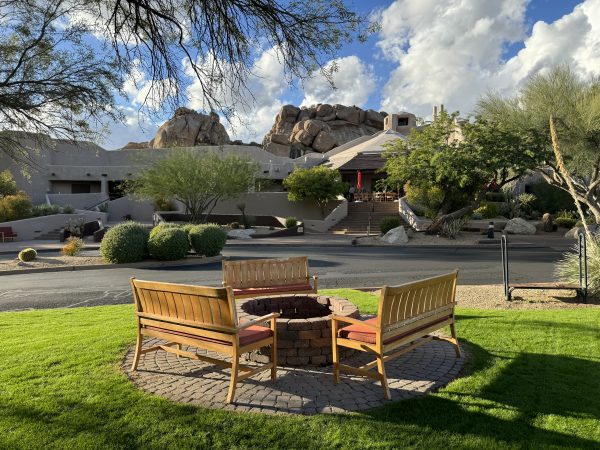
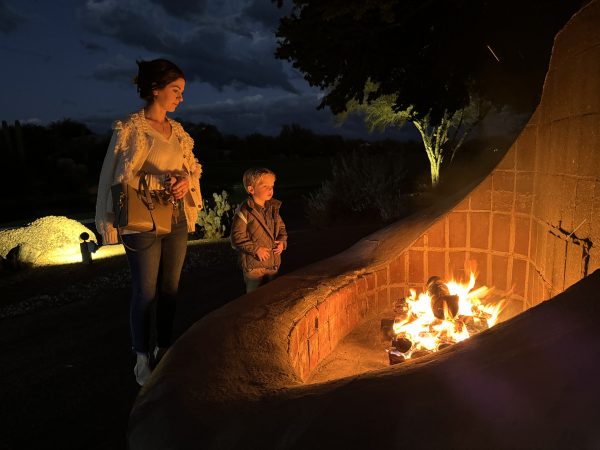
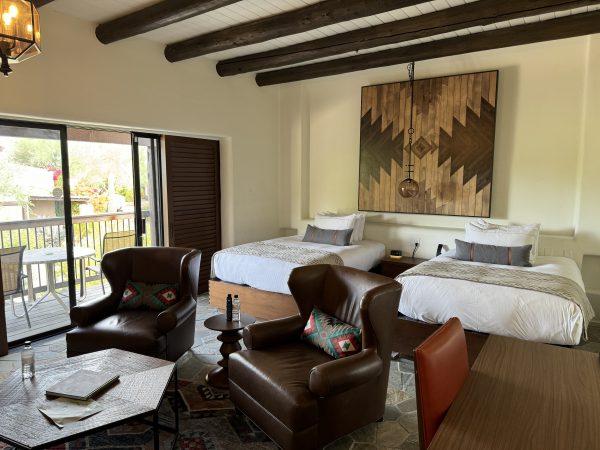
The lodge itself is nestled beneath a small mountain with accessible hiking trails along both sides. Behind the main lobby sits a good-sized pool, which was heated when we visited and allowed for swimming in November. Temperatures this time of year are typically pretty chilly, especially for early morning golf, so to be able to swim in warm water was a nice treat.
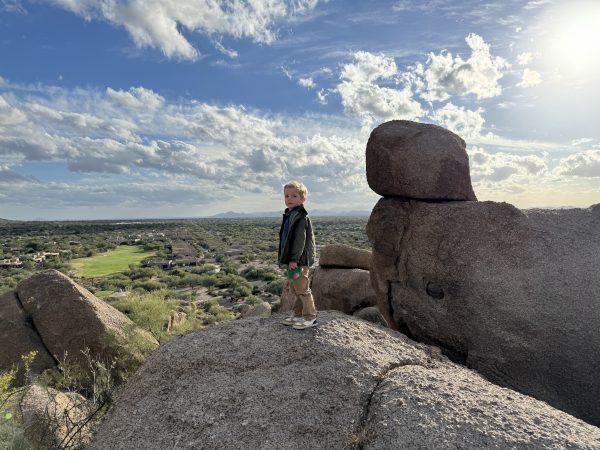
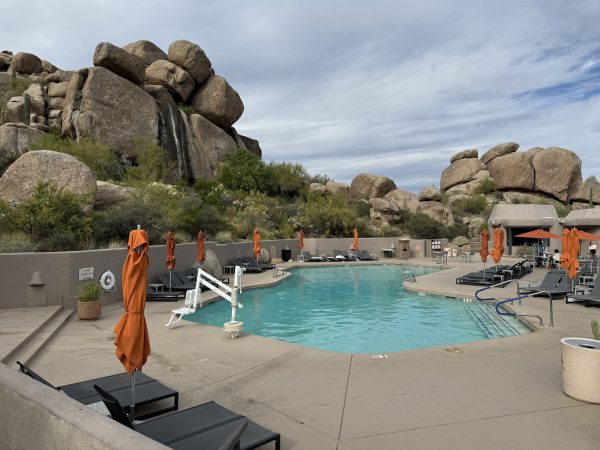
The two courses are both on the property, making Boulders Resort a truly ‘never have to leave’ type of resort. There are also multiple restaurants on-site, including Bogey’s Bar near the pro shop and 18th greens for both courses. Boulders is home to about 400 golfing membership families but also remains open for public play as well. The members and public alternate courses each day, which apparently works great and keeps a high-season traffic light on both courses. I played the North Course but also walked the South to get a good feel for each.
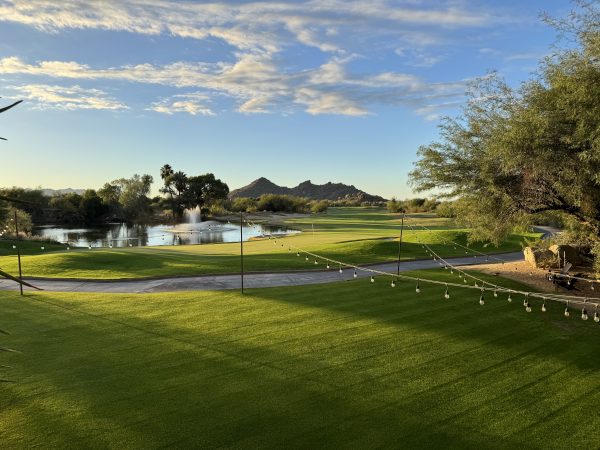
View from clubhouse over 18 of South Course

Boulders Pro Shop
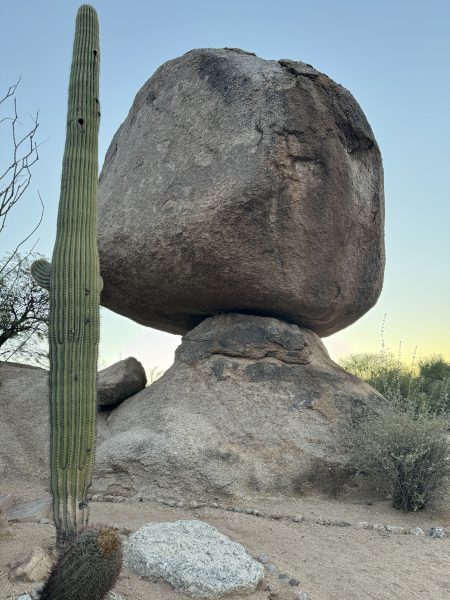
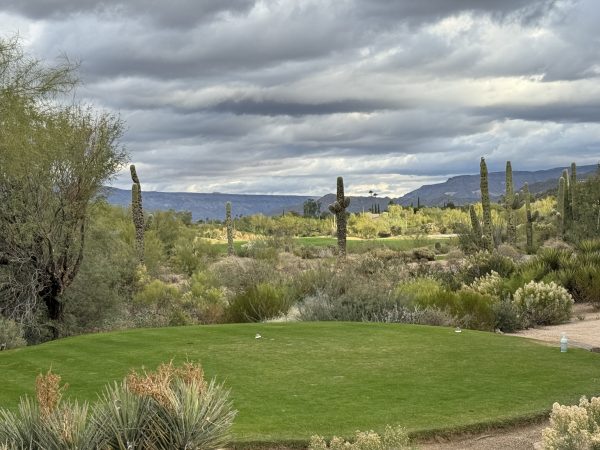
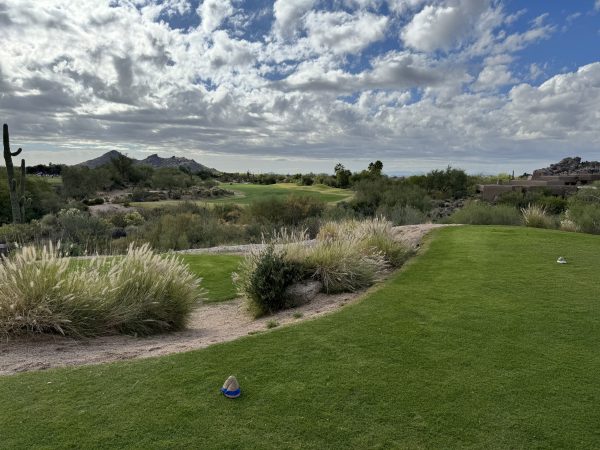
Number one tee- Boulders North
The North course tips out at 6,959 yards but can play as short as 4900 from the red tees. There are six tee box options in total, which helps on a desert course like this because between the frequently watered green grass come many different varieties of wasteland carries and sandy ravines. With options on tees and course length, many of the challenging shots can be added or taken out depending on skill level.

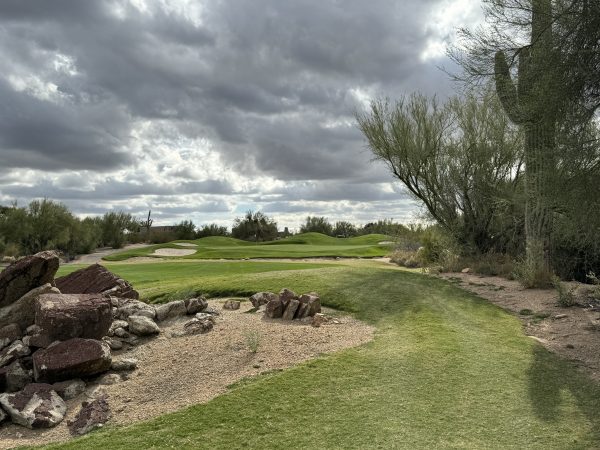
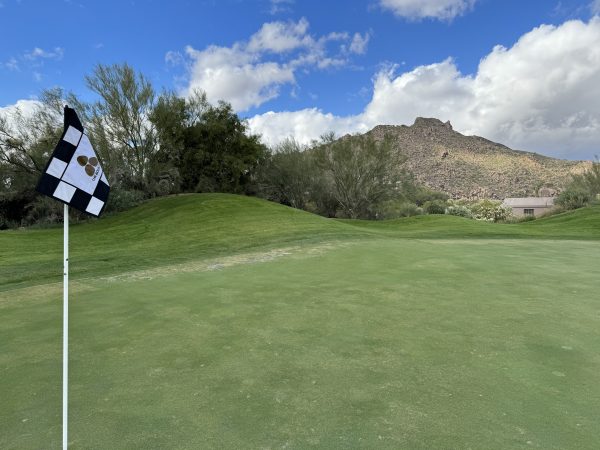
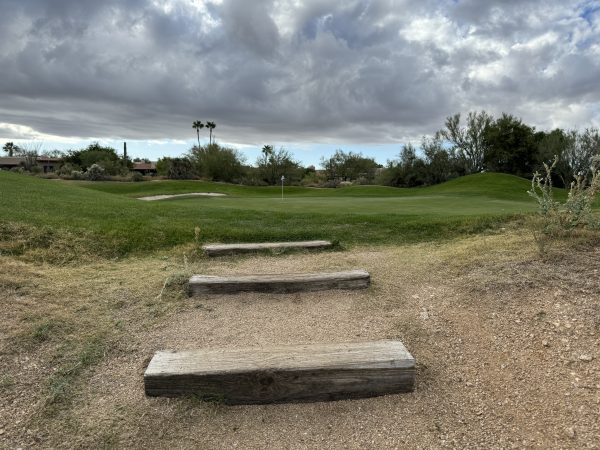
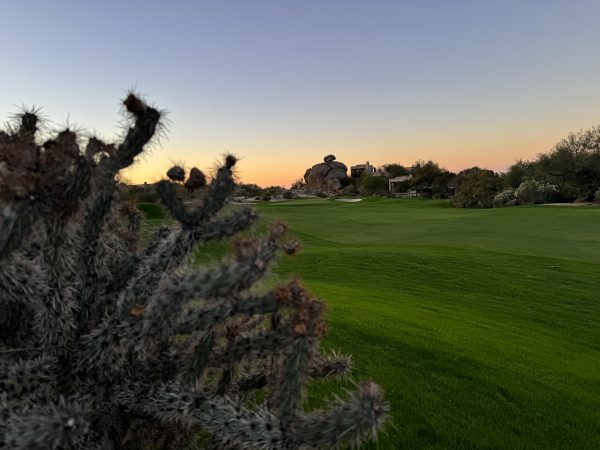
You can expect a lot of uneven lies at Boulders, as most of the fairways and playing surfaces undulate to blend right in with the surrounding mountains. Saguaro cacti are in every site line, but the predominant feature of both courses is the elephant-sized boulders on nearly every hole. Some appear to teter on their end, ready to roll down into the bunker where your ball is resting.
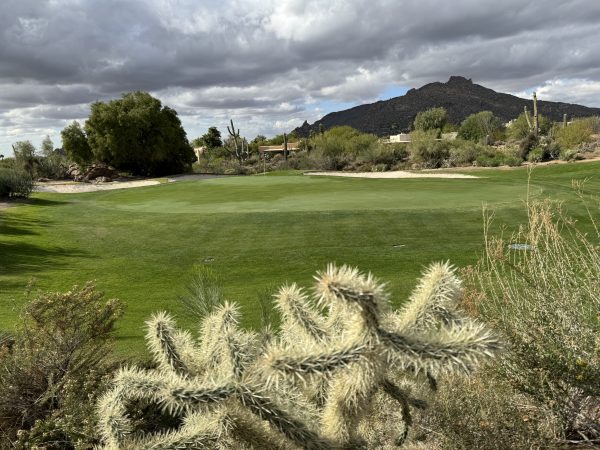
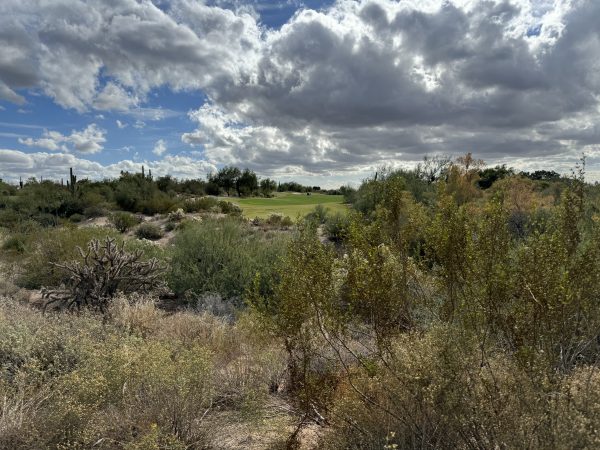
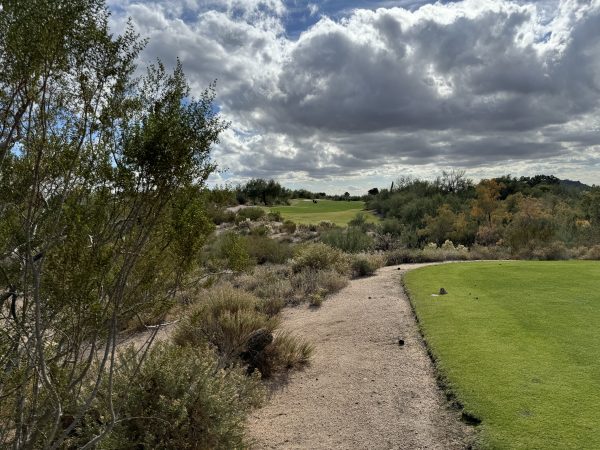
Of course, like most desert-style courses, errant shots are findable in the sandy soil, but not without risk of being pricked, poked, or bitten. My general rule is that if I can’t see it from the green grass, I’m better off not wandering too far out in search of what might be painful to find. Drop a ball and take my medicine. That proved to be true at Boulders as well. There are many thick areas just off the fairway where man should not be. And a better golfer than myself would only look in that direction to view the beauty of the Sonoran Desert.
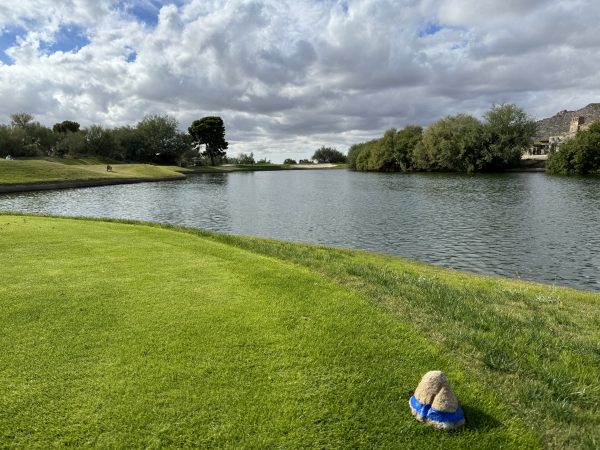
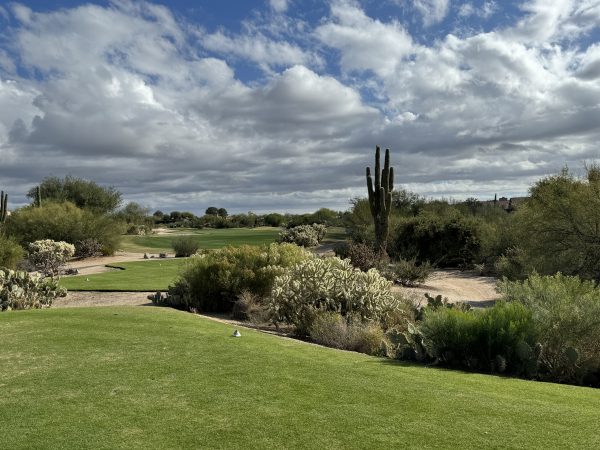
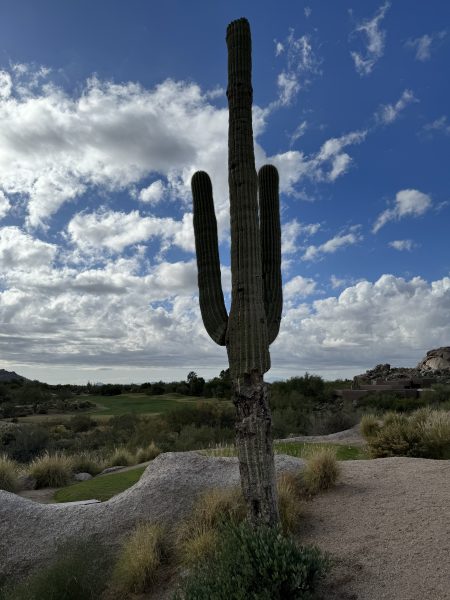
Both courses do have a few splatters of water hazards here and there. Most folks I spoke to on the property noted that the South Course has a couple more breathtaking views and elevation changes than its counterpart North, but the North Course provides a wider array of shot-making options for the more serious golfer. I thought both courses were stunning to the eye, but it wouldn’t shock me if, had I played South, I found it a bit easier and more resort-style friendly.

Non-member tee times can be booked online or through the pro shop but if you are staying at the lodge, you’re more than likely going to get a better hotel rate to play. In November, which is almost peak season, mid-week greens fees range from around $100-$200 with dynamic pricing throughout the day. Both courses are incredibly walkable and a caddie or pushcart can be available upon request.

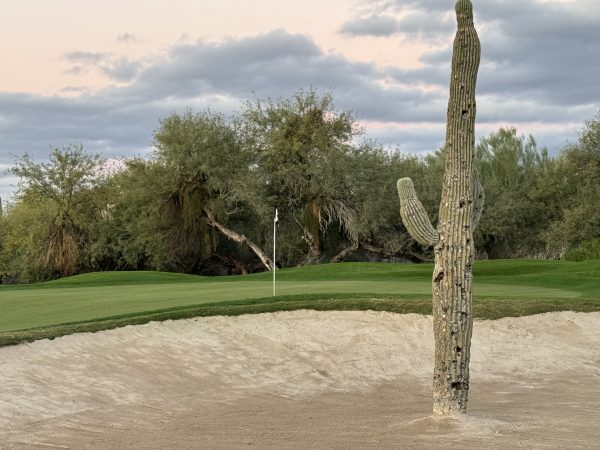
After my round, I took my son on a hike up the mountain above the lodge for some pretty stunning views of both courses. My wife escaped to the spa for a 90-minute hot stone massage, which was my way of saying thank you for another golf trip for the family. The least I could do. She said it was incredible and unlike any other massage she has ever had in her life. They even put hot stones between her toes, which I suppose feels good.
We wrapped up our stay at Boulders with a fantastic dinner at Palo Verde, located at the resort headquarters. We were able to sit outside under the stars with the help of a few closely placed heaters. With the golf, the restaurants, and the natural activities available, Boulders proved to be a wonderful spot to relax and get some swings in. If your partner is a fan of spa days and calm settings, this is the golf resort in Scottsdale to stay at. The food, drinks, and lodging are all upscale. I would say it is a perfect couples’ getaway resort. We didn’t see any other kids so there may be better places to stay if you’re bringing the little ones along, though. With kids, I’d stay closer to town (see below) and head up to Boulders for a round of golf only.
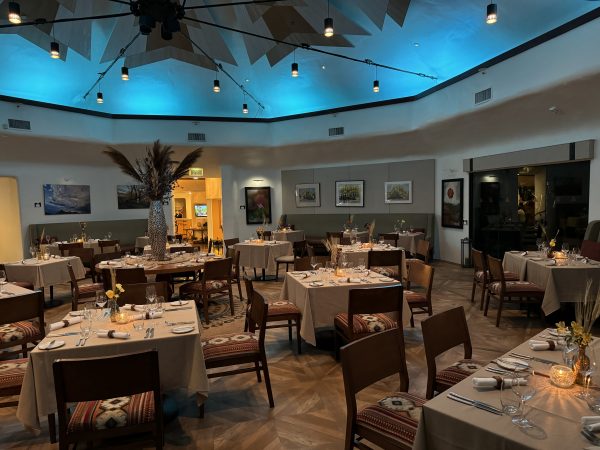
Palo Verde dining room at Boulders
TROON NORTH
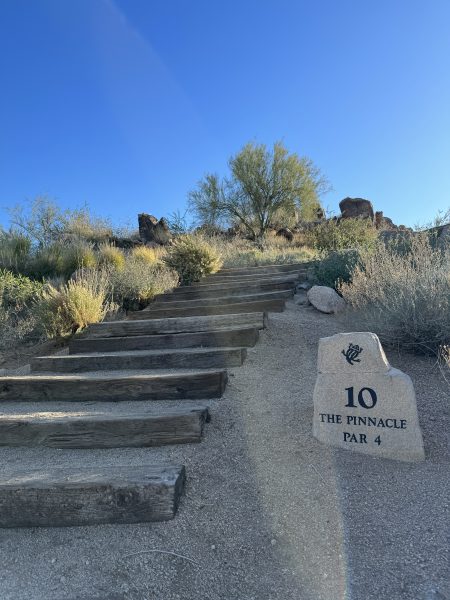
The next morning, I took an Uber just a few minutes away to the Troon North campus for a round at the Pinnacle Course. Troon North is home to two tracks, both designed by Tom Weiskopf and both immaculately maintained year round. The Pinnacle course is more links-style than its sister, the Monument Course, which is widely considered the signature course between the two.
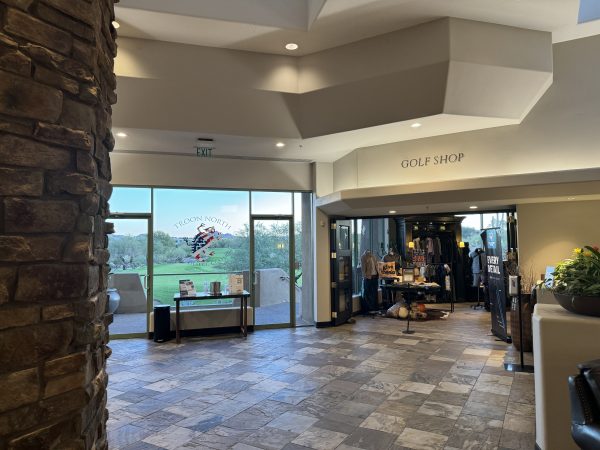
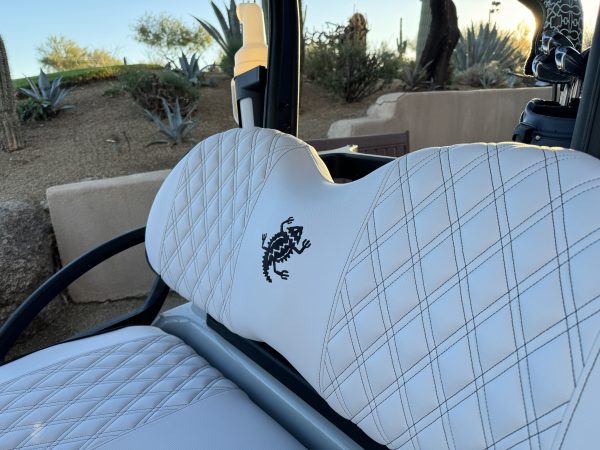
The clubhouse is first class, with a well-stocked 2,200 square foot pro shop, and a legitimate locker room for public use. And the logo is fantastic.
Troon North offers a membership plan as well as public play, and daily fees are dynamicly priced.

Pinnacle course plays over 7,000 yards from the back tees but provides seven different tee boxes allowing you to play the course as short as 4831 yards. Though more links style than Monument, the course still provides a very Sonoran desert feel and carries over thorny brush on nearly every hole.
Both courses were ranked in the “Top 10” best courses you can play in Arizona by Golfweek.
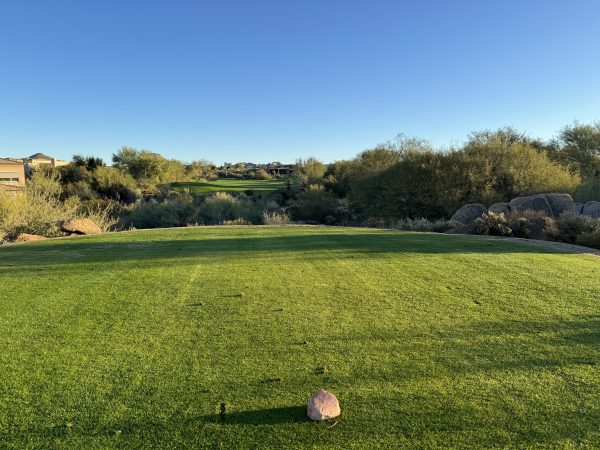
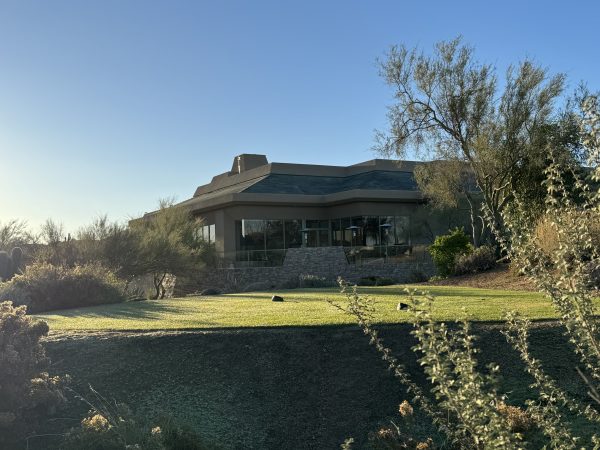
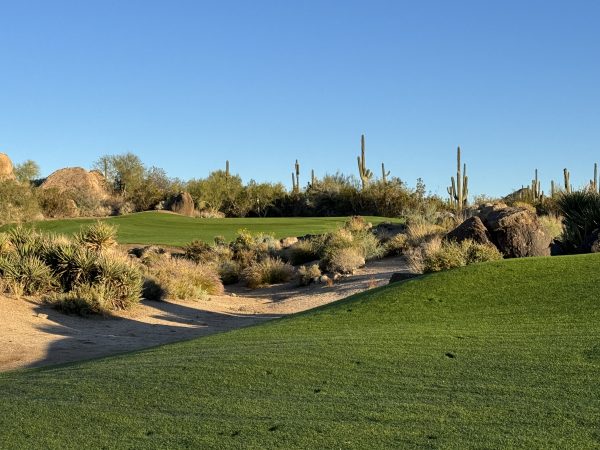
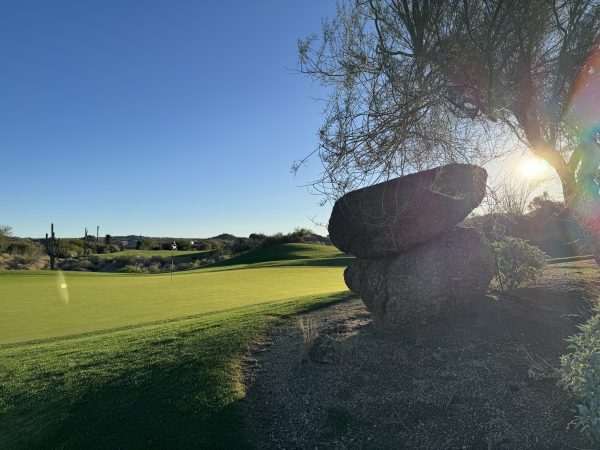
I thoroughly enjoyed my round at Troon North. The facility is about 35 minutes north of the Phoenix airport so it’s a bit closer to downtown Scottsdale than Boulders. It is also closely connected to the Four Seasons should you be looking to stay nearby.
The course felt pristine and special. You can tell the place pays attention to detail and takes great pride in the condition of the courses. The layout has some elevation changes so it may not be the easiest to walk. The routing never really brings you back to the clubhouse until the 18th hole, either, but there is a comfort station out there and beverage carts making the rounds.
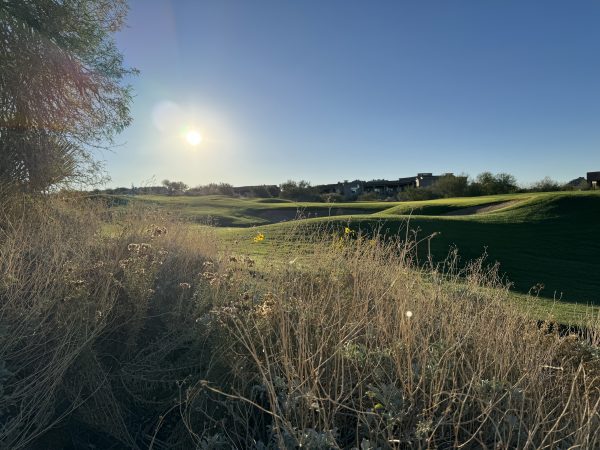
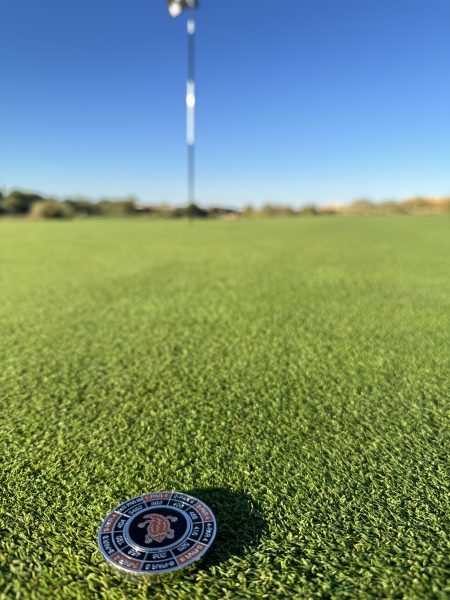
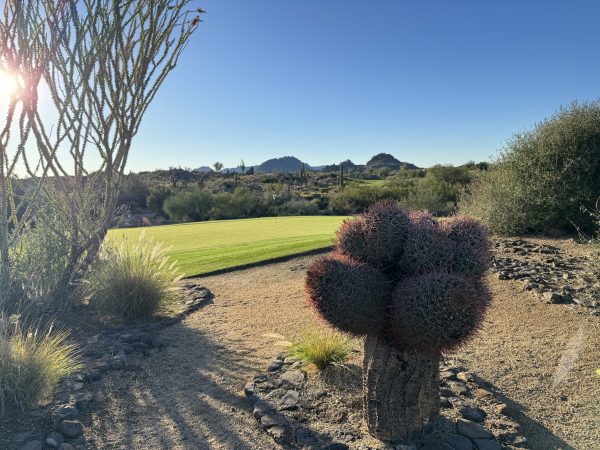
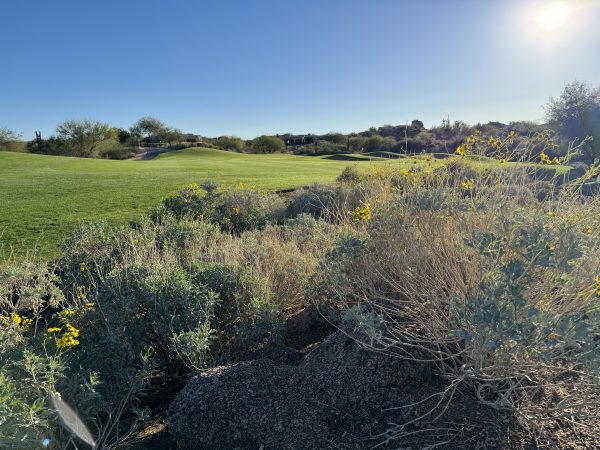
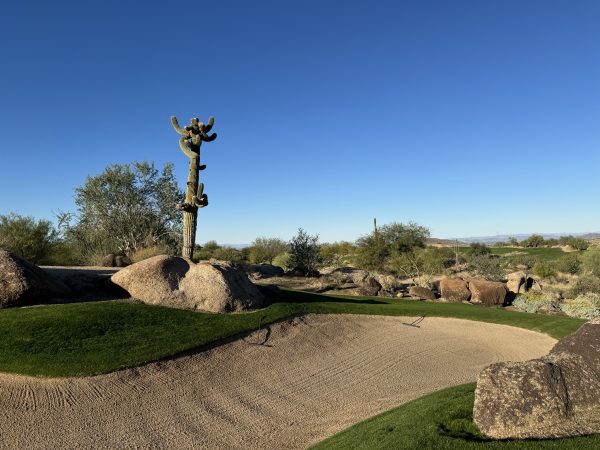
The bunkering is fair and not very deep, but they are strategically placed right where you don’t want them to be. The par 71 has only one par 5 on the front nine but boasts a 609-yarder on the back that plays every bit as long as it reads. The par threes are scenic but lengthy as well, generally playing around 200 yards from the backs except for the short 140-yard 16th.
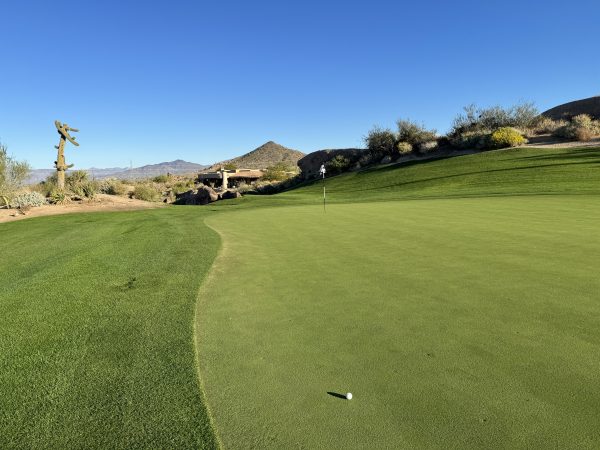
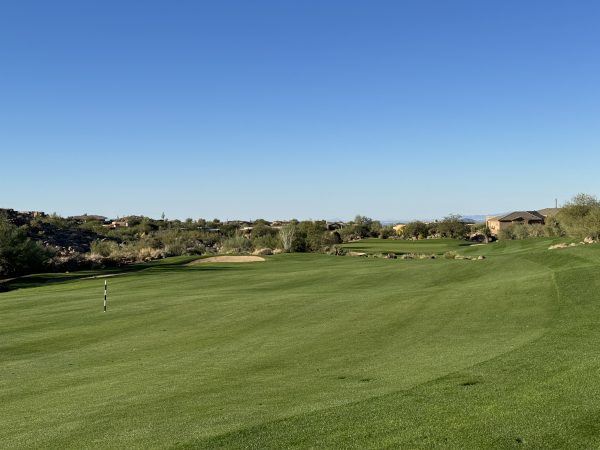
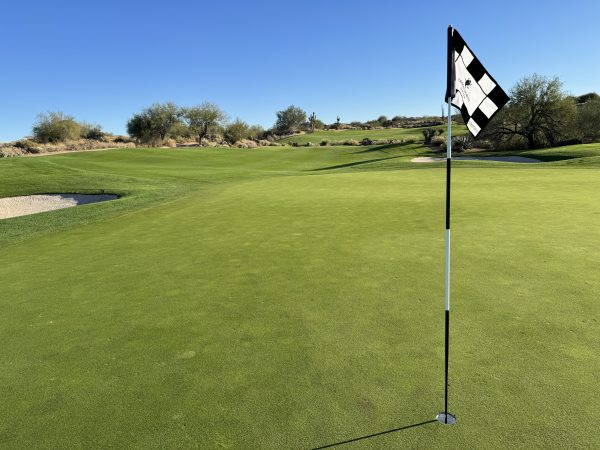
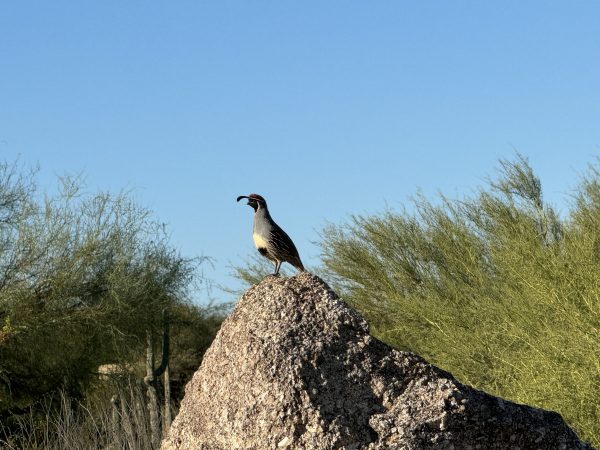
The fairways are bermuda grass and the greens are bent. Overseeding is done in the fall but the schedule is posted online to help avoid any unpleasant rounds. There are valley quail all over the course that walk in front of you on fairways and tee boxes like schools of fish.
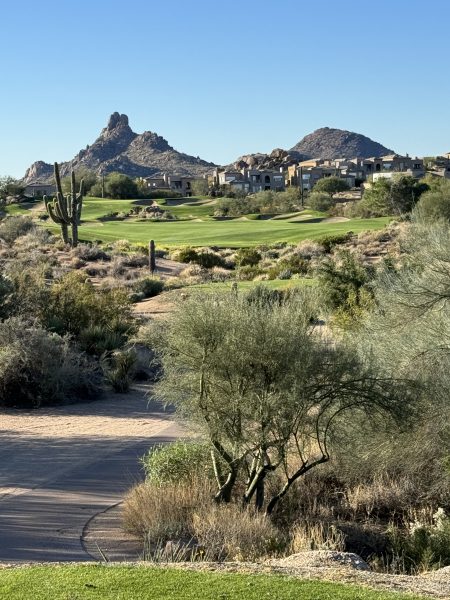
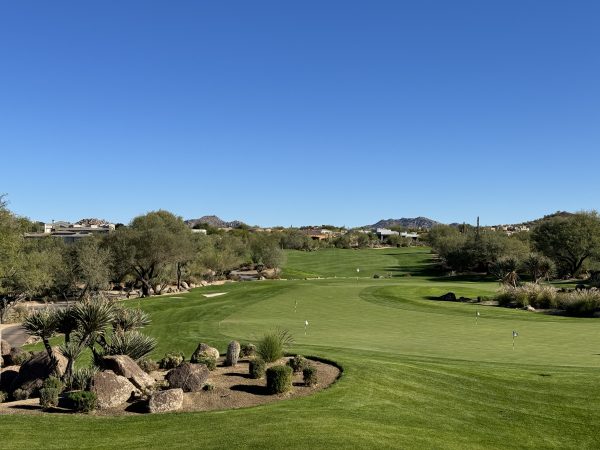
The course is just so scenic and first-class. The mountains are in view the entire time and the course provides a wide array of options and shotmaking opportunities. I played early and alone and I genuinely enjoyed my time on the course. It was my favorite round of the trip.
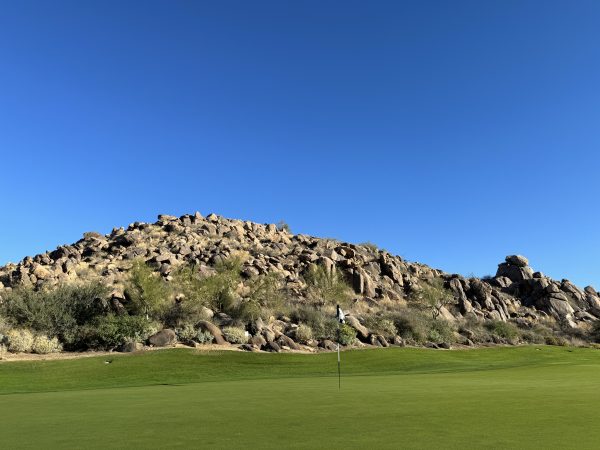
The 18th green is huge and it blends into the practice green near the clubhouse, snaking around a giant rock to protect the practice green from shots gone long. It is a very unique site from both the clubhouse and the 18th hole but adds some character to the facility.
CAMELBACK INN RESORT AND GOLF
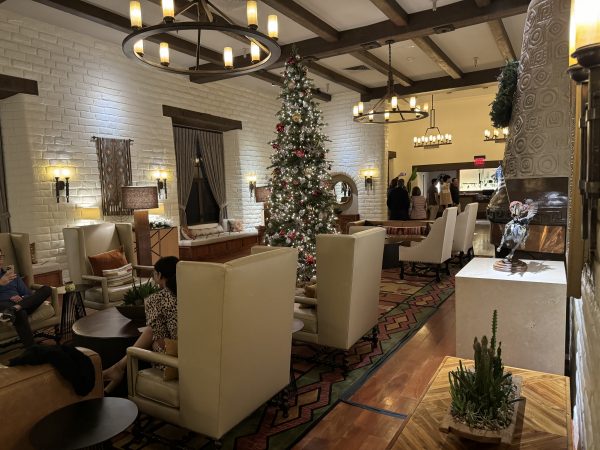
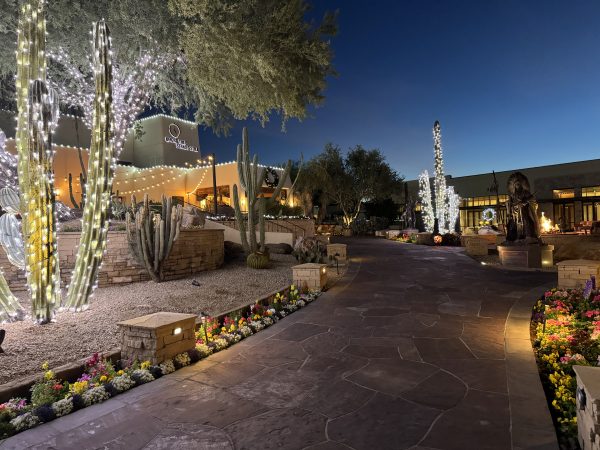
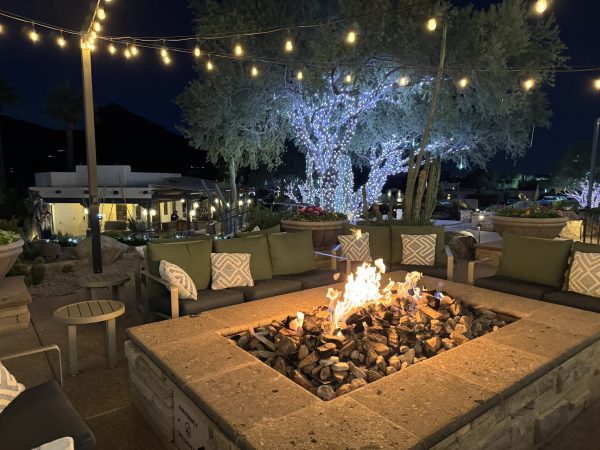
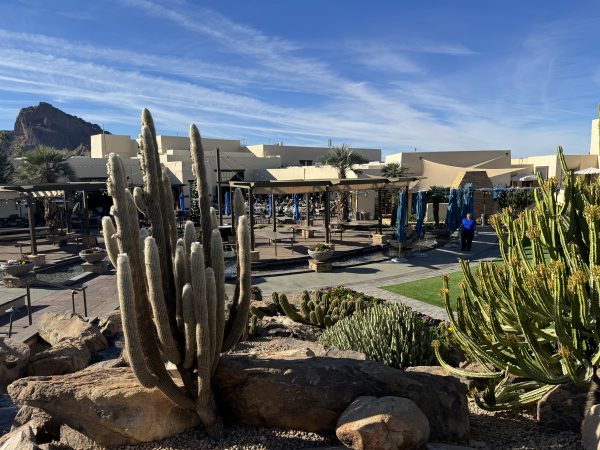
The JW Marriott Camelback Inn is an incredible hotel. I am not really sure how else to describe it. Being there feels the way an in-city Scottsdale hotel is supposed to feel. You’re surrounded by Camelback mountain on one side and Mummy Mountain on the other. The adobe buildings feel like they have been there forever and yet are still perfectly maintained. There are sitting areas near fireplaces around every turn and the landscaping is quintessentially desert floral.
We heard from more than one person that the Camelback Inn is Mr. Marriott’s favorite hotel within his entire company and he spends one month there every year. That is saying something!
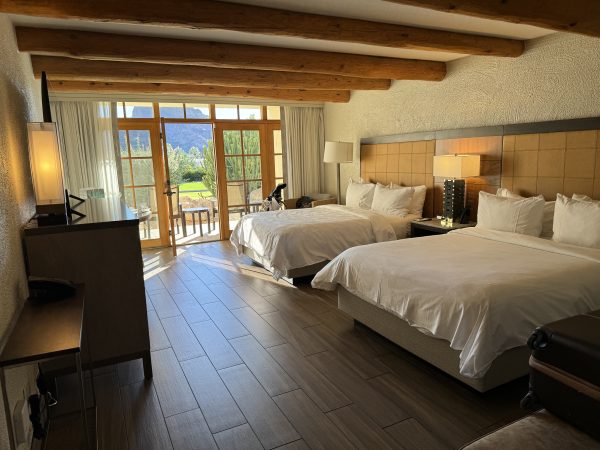
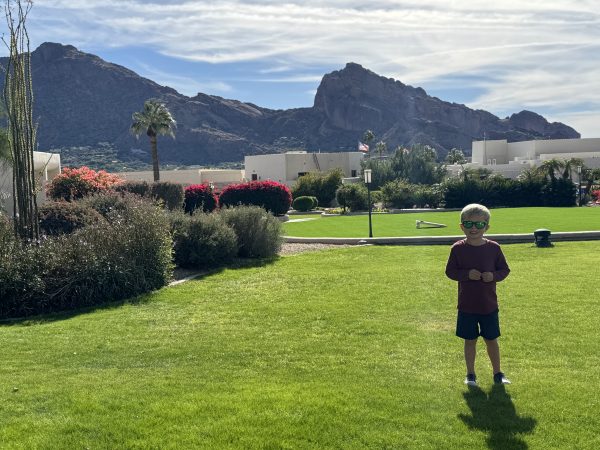
Our room was standard size but wonderfully located just a hundred yards or so away from the main lodge and restaurants. Between us was a green space with lawn activities for guests of all ages. There is a playground and putting green on site and several pools (some heated) for swimming year-round. And the views are just spectacular. To be only minutes away from Old Town while still being able to hike up multiple mountains of your choosing is one of the most special things about Scottsdale.
We ate breakfast, lunch, and dinner at Rita’s Cantina and Bar…simply because the menus change for each meal and the outside patio seating is so incredible. Hoppin’ Jacks at the pool is another dining option but the Lincoln Steakhouse and Bar is the upscale dinner spot…and the gem of the dining options.
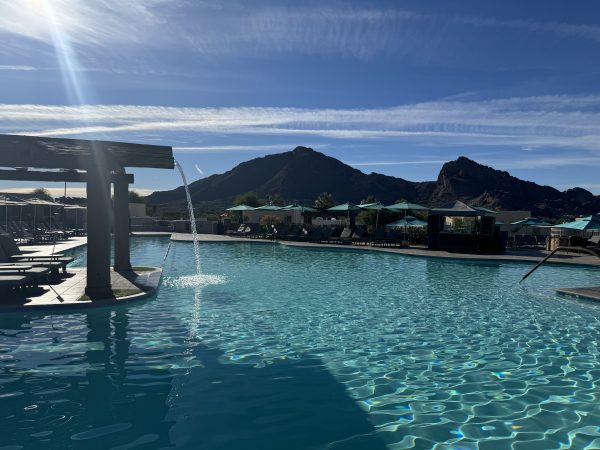
The Camelback Golf Courses, Ambiente, and Padre, are not on site, but the resort provides you with a free shuttle service for your tee time. The ride is only about five minutes and they start at 7:00 am.
The clubhouse is large with a spacious golf shop. The Camelback logo, while a bit cartoony, is pretty fantastic in a 1960s Bob Hope Classic kind of way.

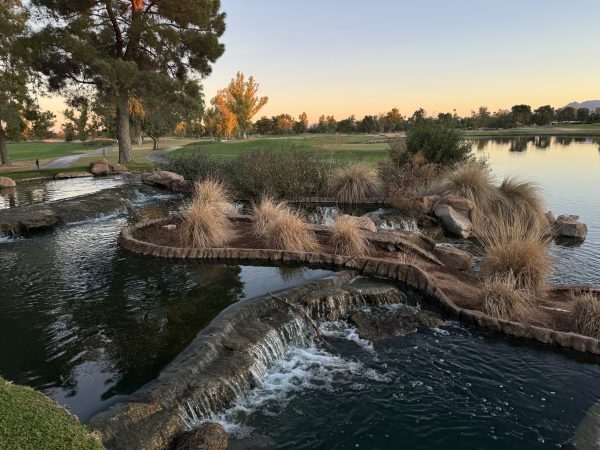

I played the Ambiente course, which I was told has a bit more character than the Padre. Ambiente goes straight out for 3 miles, following along a gulch on your right the whole way, and then turns around and comes right back to the clubhouse for the back nine. If you are walking, make sure you’re in it for an entire 18-hole round. There’s no stopping after nine if you are on foot and three miles away from the clubhouse.
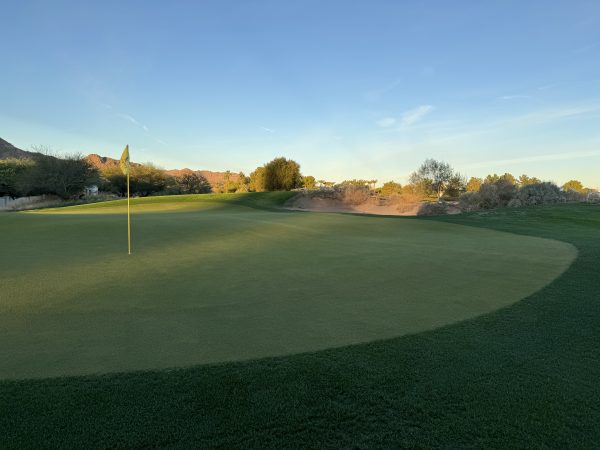
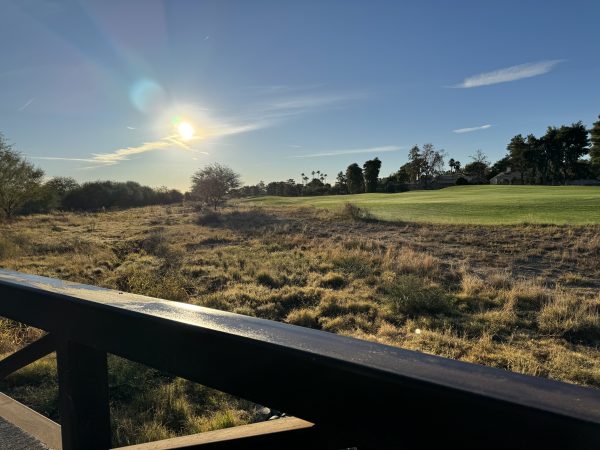
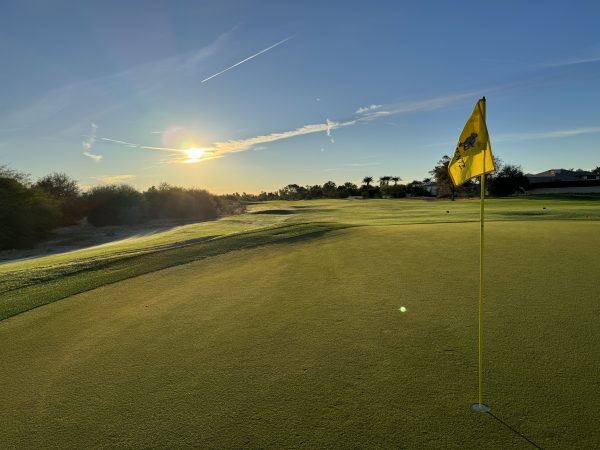
These courses are more parkland than desert. That’s especially true of the Padre course. But even Ambiente, which translates to ‘environment,’ is not very ‘deserty’ in comparison to Troon North or Boulders. There are a lot more grassy rough areas off the fairway and very little cactus. The gulch, which is seen on nearly every hole, feels more native and marshy than anything I saw in my previous rounds. It’s a gorgeous course, but not what you imagine when you think of Scottsdale golf.
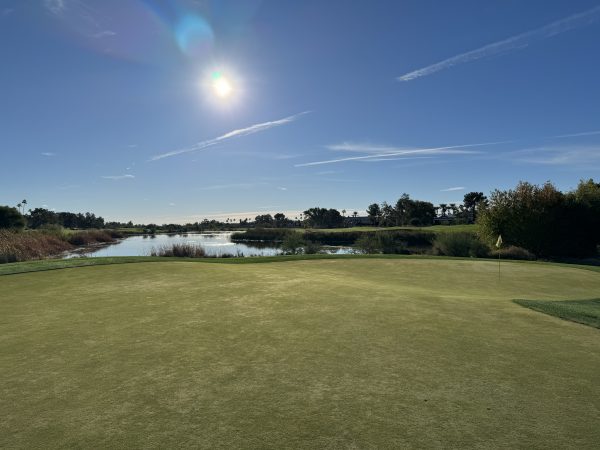
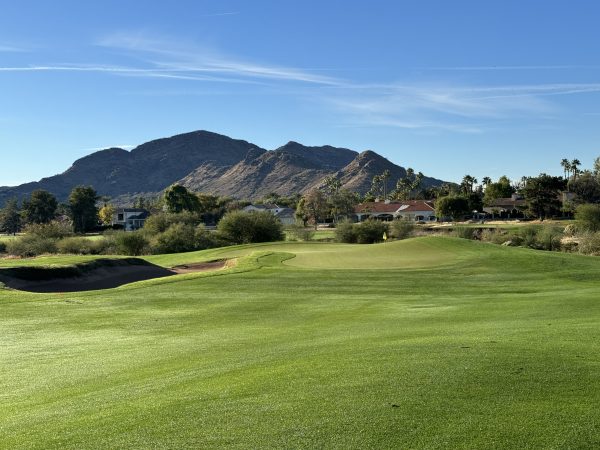
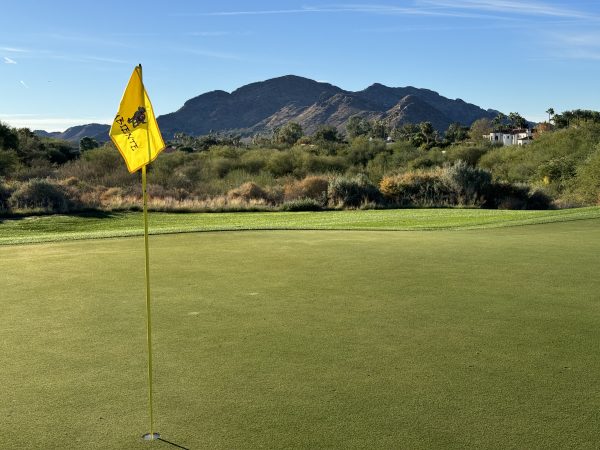
The course itself, with its unique straight-out, straight-back routing, lengthens out to 7,225 yards from the tips and 5,538 from the forward tees. The par 72 Jason Straka design is not an easy course. Many of the holes require precision tee shots and a bit of course knowledge doesn’t hurt as the driver is not always proper. The par threes play long, with the shortest being 185 from the back tees. The 8th hole can stretch back to 241 yards and then number 15 goes even longer to 245. Of course, you don’t have to hit back there unless you’re a glutton for punishment.
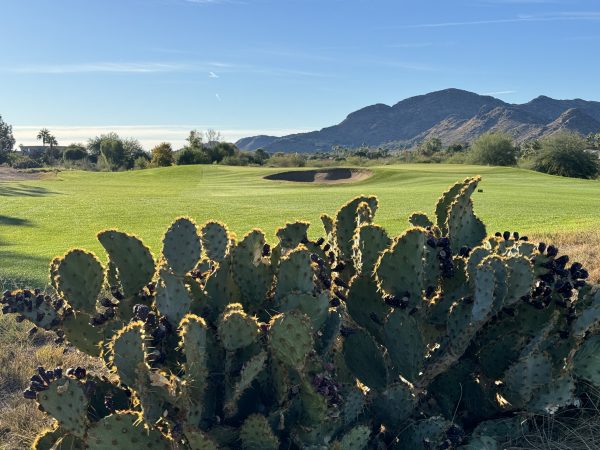
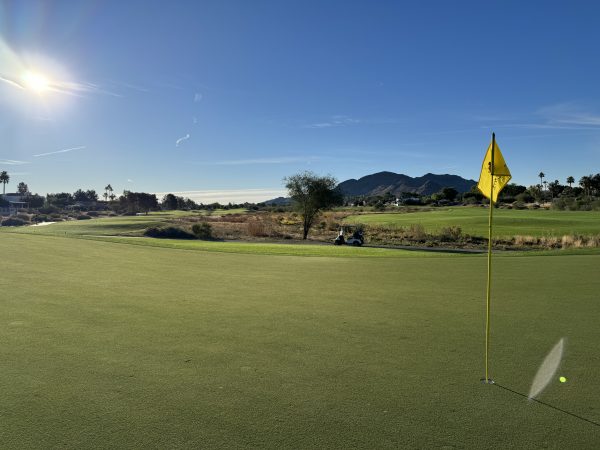
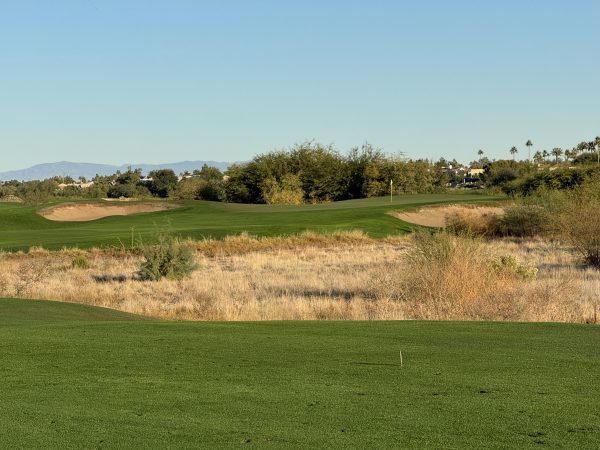
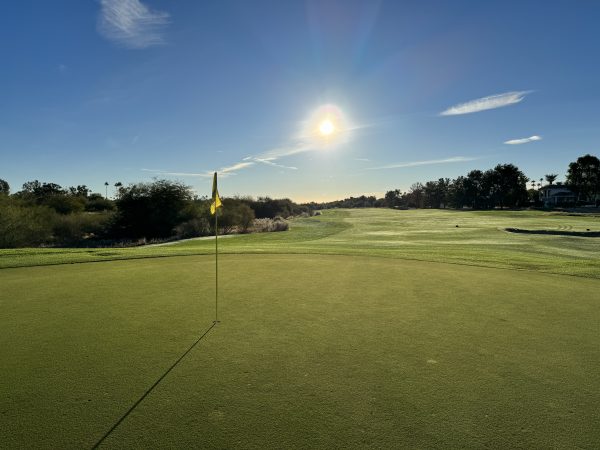
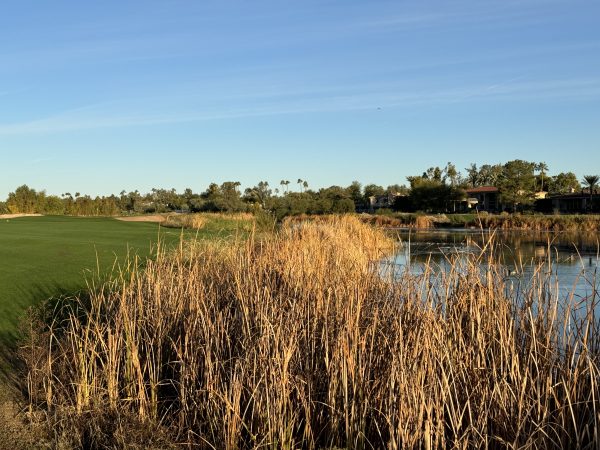
The bunkering is deep in certain areas, which you realize as early as the greenside on the first hole. Playing this course after the other desert layouts I have played made me wonder if this is the true ‘nature’ of the area and perhaps the other desert courses are a bit more…manufactured. Ambiente feels native. I think I enjoy the other desert style aesthetics of the other courses more, but from a pure golf perspective, Ambiente at Camelback is a real deal course.

SCOTTSDALE LIFE
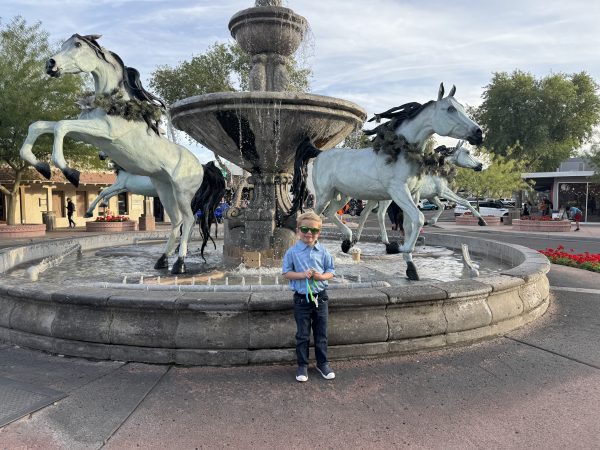
The beauty of Scottsdale as a golf destination is that no matter which courses or resorts you decide to enjoy, you are still always within 30 minutes of a fantastic city center, with great shops and world-class restaurants. Old Town is only one little pocket of what Scottsdale has to offer, but because of the neat stores for our kiddo and walkability, we spent most of our time away from the resort here.
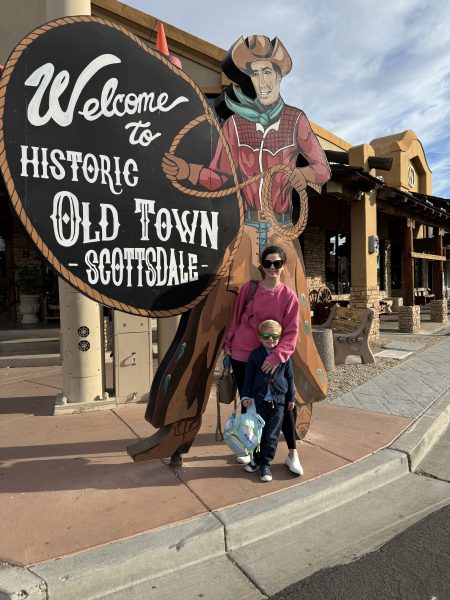
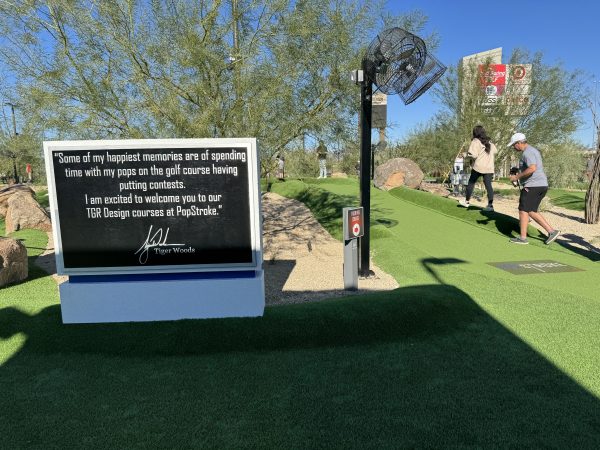
Like any great city, anyone who has visited will be able to give you a list of their favorite places to play, shop, and eat. For us, we loved going to Popstroke, the Tiger Woods-designed miniature golf course, as well as Mavrix for bowling and laser tag. When you’ve got a five-year-old, you do what makes him happy too. We also went to Isabella’s Kitchen for lunch on one of our days, which overlooks the McDowell Mountains and Grayhawk Golf Course. The food is always delicious and it’s a really fun location for the kiddo to run around while mom and dad can have a margarita.

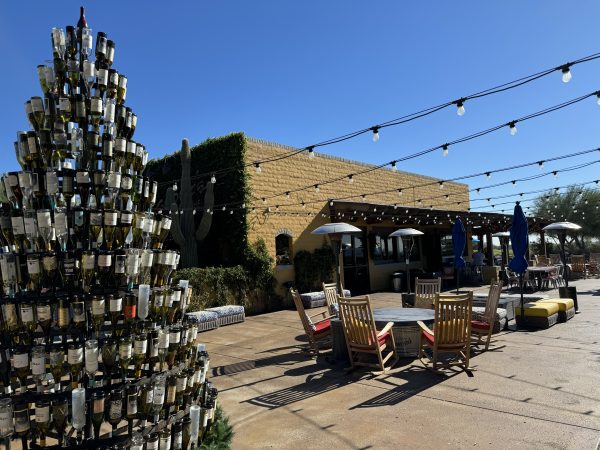
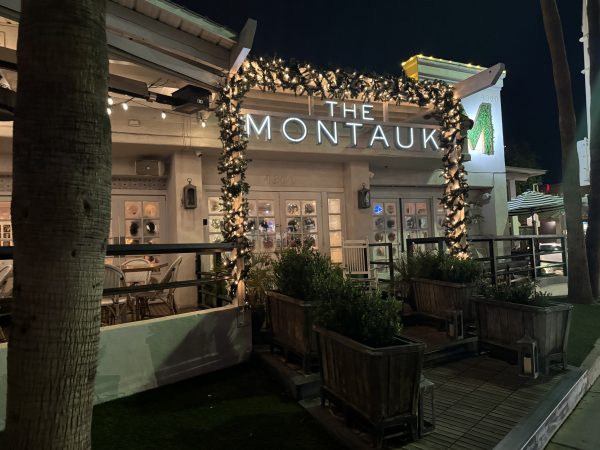
We went to The Montauk in Old Town for our only dinner outside of the resort and it did not disappoint. It’s a really neat atmosphere and the menu was a mix between The Hamptons and Southwest tastings. They had live music and friendly staff. It doesn’t get much better.
And if you find yourself out and about for breakfast, you need to stop in at the Daily Dose for some Cinamon Roll Pancakes or Breakfast Nachos. We made a quick stop here on our way to the airport and didn’t need to eat for the rest of the day!
Having been traveling for golf for some time now, people always ask my opinion on my favorite courses or favorite city to go to for a golf trip. My answer always starts with “It depends on who you are going with…”
If you are heading out for a golf trip with your family, I don’t think you can pick a better city than Scottsdale. The travel itself (airport, rental car, etc..) is always a breeze. The resort options (and spas) are plentiful and offer a variety of different setups for couples or kid-friendly atmospheres. And there are hundreds of golf courses to choose from. All the while, Scottsdale has one of the best restaurant and entertainment scenes in the United States.
I’m sure I will keep getting the question. But if you are thinking of a golf trip with the family, the answer is Scottsdale.
If you want help planning your next golf experience or just have any questions about some of mine, reach out to me on Twitter or Instagram and shoot me a message. And feel free to check out my other golf experience articles. I look forward to hearing from you!



GolfWRX readers, I need to level with you. I have a guilty pleasure beyond golf: the paranormal. Ghost stories, haunted houses, the whole deal. And this month feels like the perfect time to come clean and mash both obsessions together.
What I’ve discovered over my years in the game is that some of the world’s most beautiful golf courses have genuinely dark histories. I’m not talking about clubhouse legends someone made up after their third scotch. These are documented hauntings, some going back centuries. And whether you’re a believer or a total skeptic, there’s something deeply unsettling about these places. That creeping feeling that maybe, just maybe, you’re not playing alone.
Victoria Golf Club: The April Ghost
Golfers at Victoria Golf Club in British Columbia have been seeing the same ghost for almost 90 years. A woman in white at the seventh hole. Her name was Doris Gravlin, and she was murdered there on September 22, 1936.
Doris was 30, a nurse who’d left her husband Victor two years earlier because of his drinking. That September evening, he convinced her to meet him at the golf course. He said he wanted to reconcile. Five days later, when neither of them had been seen, a caddy searching for a lost ball found Doris’s body near the seventh tee. She’d been beaten, strangled, and dragged down to the beach. A few weeks after that, Victor’s body washed up on the same shoreline. One of Doris’s missing white shoes was tucked in his coat pocket. Police ruled it a murder-suicide.
The hauntings started almost immediately. Doris most often shows up at dusk, wearing what appears to be a white wedding dress. She’s especially active in spring (March and April), which is how she got the nickname “The April Ghost.” There’s even a local legend that if you ring the brass bell between the sixth and seventh holes three times, you’ll summon her.
And people have seen her. Walking through cars on the road beside the course. Sometimes rushing toward people with her arms outstretched. In 1977, some high school kids rang the bell and watched a glowing figure float across the grass. Decades later, that image is still “very much ingrained” in their memories, according to interviews.
The club’s made peace with it at this point. Staff joke that “Doris is playing tricks on us” when things go wrong. I mean, what else can you do?
Lincoln Park Golf Course: Playing Over 20,000 Graves
Lincoln Park Golf Course in San Francisco has killer views of the Golden Gate Bridge and the Pacific. It also has a deeply disturbing secret: you’re literally playing over the remains of up to 20,000 people who were never properly relocated.
Back in 1868, when this area was still remote, the city established Golden Gate Cemetery here. Immigrants, sailors, Civil War soldiers, the poor: they all ended up buried in this soil. But San Francisco grew fast. The living needed the space the dead were occupying. So in 1901, the city banned burials within city limits and ordered all remains moved to Colma (now known as “the city of the dead”).
Wealthy families could afford to relocate their loved ones. Poor families couldn’t. And the city flat-out refused to move its potter’s field.
Between 1914 and 1917, when they expanded the golf course, workers just built directly over thousands of forgotten graves. Historians now estimate 10,000 to 20,000 people are still down there beneath the fairways. That makes it one of the largest collections of 19th-century skeletal remains in the Western United States. During heavy rain years, bones still surface. When the Legion of Honor museum expanded in the 1990s, workers uncovered the remains of 578 adults and 173 children. They finally got properly exhumed and reburied.
The paranormal stuff here is wild. Golfers report perfectly struck balls just vanishing mid-flight or dropping straight down out of the sky for no reason. Random cold spots on calm days. That persistent feeling of being watched. The 18th hole sits right over the old cemetery and gets the most activity. Some people think the spirits are pissed about having their rest disturbed. Others think they’re just trying to get acknowledgment: proof that they lived and died in San Francisco, even if the city forgot about them.
Baltusrol Golf Club: Where “Old Balty” Still Roams
Baltusrol Golf Club in Springfield Township, New Jersey, has hosted nine U.S. Opens. Jack Nicklaus played here. Phil Mickelson. But the club’s named after a murder victim who might still be wandering the fairways.
On February 22, 1831, a farmer named Baltus Roll was dragged from his bed by two men who were convinced he had hidden treasure somewhere on his property. They beat him, tied him up, and threw him into a pool of freezing water. Then they dunked him over and over again, demanding that he tell them where the money was. His wife managed to escape and ran for help. By the time she got back, Roll was dead. Whether he refused to talk or just didn’t have any treasure to give up, nobody knows.
Sixty-four years later, in 1895, some businessmen bought the property and opened a golf club. They named it after the murdered farmer. And pretty soon after that, the hauntings started. Groundskeepers started seeing a figure in old-fashioned farming clothes walking through the morning mist, looking for something. Members began calling him “Old Balty.”
He doesn’t seem dangerous. Just sad. He shows up most often near the first tee of the Lower Course, close to where his farmhouse used to be. When he’s around, people feel this sudden, intense cold. The clubhouse has its own weirdness too: doors opening and closing by themselves, footsteps in empty hallways, occasional full-on apparitions of a guy in 1830s clothes staring out toward the course, looking absolutely heartbroken.
The activity ramps up around February 22nd, the anniversary of the murder. And because the whole tragedy is so well-documented in court records and old newspapers, Baltusrol is one of the most verifiable haunted golf courses in America.
Pasatiempo Golf Club: Where Alister Mackenzie Rests
Most golf course ghosts are tragic figures. Not this one. At Pasatiempo Golf Club in Santa Cruz, California, the ghost is someone who actively chose to spend eternity there: legendary architect Alister Mackenzie.
Dr. Mackenzie designed some of the most iconic courses in golf. Augusta National. Cypress Point. Royal Melbourne. But he considered Pasatiempo his masterpiece. When it opened in 1929, the course had these dramatic elevation changes winding through rolling hills with breathtaking views of Monterey Bay. Mackenzie loved it so much that he built his American home right along the sixth fairway.
When he died on January 6, 1934, Mackenzie had one request: scatter his ashes over the sixteenth green at Pasatiempo. He wanted to be part of his greatest creation forever. And he got his wish. More literally than anyone expected.
Within months, greenkeepers were reporting sightings of this distinguished older gentleman in old-fashioned clothing walking the course. He’d examine the contours of the sixteenth green, then just fade away. Members kept spotting someone matching Mackenzie’s description: a tall guy with a distinctive mustache, wearing knickers and a flat cap. But here’s the thing: unlike scary ghost encounters, people feel honored when they see him. Like they’ve been visited by golfing royalty.
There’s this detailed account from the 1980s about a member putting on the sixteenth green who noticed a man in vintage golf clothes watching him intently. “He was smiling, like he approved of how I was reading the break,” the golfer said. After sinking the putt, he looked up to say something. Gone. The pro shop later confirmed, based on old photographs, that it was Mackenzie.
His ghost seems totally peaceful, just checking on his course. Some people think he’s making sure renovations respect his original vision. During one major project, equipment kept breaking down on the sixteenth green. Finally, the project manager jokingly apologized out loud to “Dr. Mackenzie” and promised to honor the design. The problems stopped.
City Park Golf Course: Echoes of Tragedy
New Orleans is hands down America’s most haunted city, so, of course, its golf courses have terrifying stories, too. City Park Golf Course, one of the nation’s oldest public courses, has a haunting so vivid that golfers keep calling 911.
The legend centers on the 18th green. The details are fuzzy, but supposedly, back in the 1960s, a man shot and killed a woman while she was putting out. And the echoes of that moment have never really faded. Dozens of golfers report hearing a gunshot followed immediately by a woman’s blood-curdling scream. The sounds are so realistic that people literally abandon their rounds and call the cops, totally convinced they just witnessed a murder.
When police show up, there’s nothing. After this happened multiple times, local police started recognizing City Park calls as ghostly phenomena rather than actual emergencies. One golfer described it like this: “We heard a sharp crack like a gunshot, then this scream. Not a startled yelp, but a full-throated scream of terror and pain. It sounded maybe thirty yards away. We all just froze. There was nothing there. The ranger told us we weren’t the first people to report it. I’ve never gone back.”
Some golfers also report seeing a ghostly figure behind the eighteenth green. A woman in old-fashioned clothes, translucent or misty, appearing for a second before she fades. Theories vary. Maybe she’s the murdered woman, trapped replaying her final moments. Or maybe she’s a witness who can’t move on.
Despite all this (or maybe because of it), City Park stays popular. The course is legitimately excellent and affordable, with beautiful tree-lined fairways and challenging water hazards. But when you approach the eighteenth green, the vibe changes. People report feeling watched or sensing this unexplained tension in the air. Some golfers rush their final putts, desperate to get out of there. Others pause and pay silent respect to whoever might’ve died on that spot.
Local ghost tour companies now include City Park in their routes, especially around Halloween. They actually encourage people to stand near the eighteenth green at dusk and listen for the ghostly gunshot and scream echoing across the years.
Look, I can’t tell you whether these hauntings are real paranormal activity, psychological suggestion, or just weird natural phenomena nobody can explain. But here’s what I know for sure: these golf courses offer way more than birdies and bogeys. They’re reminders that beautiful landscapes often hide forgotten tragedies and restless spirits.
So next time you’re lining up a putt and feel this inexplicable chill, or catch movement from the corner of your eye on an empty fairway? Maybe don’t dismiss it so quickly. You might not be playing alone.
PGA Professional Brendon Elliott is an award-winning coach and golf writer. You can check out his writing work and learn more about him by visiting BEAGOLFER.golf and OneMoreRollGolf.com. Each Thursday, check out his regular column “Playing Through” on R.org.
Editor’s note: “My Take” is where Brendon shares his thoughts and opinions on various aspects of the game and industry. These are Brendon’s opinions and do not necessarily reflect those of GolfWRX, its staff, and its affiliates.


If you’re a golf equipment enthusiast, you may already know that the US, followed by Japan and Korea, are the three biggest golf markets in the world. But if you delve a little bit deeper, you’d be amazed to find out how popular golf is in Asia in general.
Golf’s popularity in Asia has never been stronger. From Japan’s long history with the game to Korea’s high-tech indoor simulators, the sport has carved out a distinct identity across the region, especially with golf tourism. For decades, Thailand and the Philippines have been popular golf travel destinations for us in the Eastern hemisphere. More recently, the golf scene in Indonesia has also seen a rapid rise. With a growing community of homegrown golf influencers and its own major golf retail chains stocked with the latest gear from around the world, the game of golf is no longer just imported — it’s thriving on its own terms.

With state-of-the-art golf stores and facilities like Asia Golf and influencers abound (@evansetiawan90lf), Indonesia golf scene is booming.

Located a stone’s throw across the strait from Singapore, Batam in Indonesia is a popular golf destination for golfers in Singapore, Malaysia, and of course, Korea.
Batam is located just a short 30-minute ferry ride from Singapore, but it also has a direct flight to and from Korea, which made the travel plans all that much easier for me. So when the chance came to experience Indonesian golf firsthand, I jumped at the opportunity to join my friends for some quality golf and sightseeing.
Below is my account of discovering Batam’s very own Palm Springs Golf & Country Club (real name!)—an under-the-radar resort that proves Asia’s growth in golf is as much about quality as it is about enthusiasm.

Not to be confused with the more famous US counterpart, Palm Springs G&CC in Batam is a great golfing experience.
The Layout
Palm Springs is a 27-hole championship course with three distinct nines—Palm, Island, and Resort—each with its own flavor. The Palm Course is the sternest test, winding between rainforest and sea with steep greens and strategic hazards. The Island Course plays through mangroves an doglegs, demanding accuracy with every swing, while the Resort Course is the most forgiving, with generous fairways, rolling elevation, and gentle greens that let you breathe a little easier.
I played all three during my trip, and what struck me most was how different each course played, yet how seamlessly they flowed together. One round I’d be battling mangrove-lined fairways, and the next I’d be standing on a tee box looking straight out at the South China Sea, across the sea towards Singapore.

One of the many “signature holes” to be enjoyed at Palm Springs. Singapore can be seen just to the left corner.

Diverse golf experience from seaside views to tropical jungle and mangrove forests can be seen.

Each golfer is paired with a caddie and power cart to roam the course and enjoy the surrounding scenery.
The Experience
The greens here surprised me. Official stimp numbers of 2.8–3.0 meters (9.2~9.8 feet) felt faster in reality, thanks to subtle undulations and deceptive slopes. Staying below the hole became essential to help with my struggling putting stats, and the mere thought of rolling into the greenside bunkers triggered an involuntary sweat response.

Don’t be fooled by “resort golf” moniker as the Palm course offers more than enough challenge for the better golfers.

Rough was no joke as the ball tended to nestle down all too snug for my taste and skills!

I couldn’t quite place the type of grass on the greens, but suffice to say it kicked my butt all three rounds.
The type of grass found here are not what I was used to in Korea and the US. I found myself thinning way more shots for fear that the club head would not be able to escape the turf. The rough was also clingier than a debtor who hasn’t been paid in months and clawed at my irons and wedges with a vengeance.
The number of bunkers also made me wary on most holes. On my first loop around the Palm Course, I think I found one on almost every hole, whether it be a huge fairway bunker or a high-lipped trap towards a pin sloping away from me. The upside was that I was getting fairly good with my sand wedge towards the end of my trip, though if it could talk I’m sure it’d ghost me.
Then there were the monkeys. Yes, monkeys. On one par-4, I stood over my ball and looked up to see a troop of them, young and old, perched in the trees, watching intently. I swear one cocked its head in disappointment as I yanked my drive into the mangroves. They make for tough critics.

Bunkers were found aplenty on all three courses.

Whether guarding the green or impeding my ball from the fairway, the bunkers added to the overall scenery of the course.

I didn’t expect monkeys to be on hand to judge my swings, but they were a fun distractions. Be careful not to leave phones and wallets unattended though.
Clubhouse & Facilities
The clubhouse feels more like a resort hotel than a golf facility—two pro shops, dual restaurants (including a dedicated Korean buffet and an Indonesian dining hall), a ballroom, VIP lockers, sauna, gym, and more.

Classic Southeast Asian architecture from the entrance and throughout the clubhouse. All walkways are covered in case of the occasional squalls that blow through unexpectedly.

The club is said to have over 200 caddies to host large scale tournaments and events, including weddings and galas.
Practice facilities are top-tier, too. The driving range points out over the water, with floating targets, and the putting green near the first tee rolls true. I warmed up with a few putts, thinking I had the pace dialed in—only to have my very first birdie attempt scream by the hole a good 10 feet. The greens here demand respect… lesson learned.

Practice facilities were quite good, and also had a practice hole for serious golfers to hit everything from drivers, irons, wedges and putts.

The practice shots can be aimed at specific targets, including floating ones.
Accommodations
I based at Batam View Beach Resort, just 10 minutes from the course and 25 minutes from the airport. A four-star property, it delivered all the essentials—ocean-view rooms, pool, fitness center, and post-round massages (though pricier than in town).

The Batam View Beach Hotel was close by to the course and accessible by a shuttle on call. Quiet and peaceful with good food, service, and a live band in the evenings made for more than a golf trip.

One detail I really appreciated was the late checkout option on weekdays. For about $30–40, I could shower, change, and relax until 10 pm before heading to the airport. On weekends, when that wasn’t possible, our operator booked us into a nearby condo suite overlooking the 9th hole. Sitting on the balcony with a cold drink, watching other groups finish their round, wasn’t a bad way to end the trip.

You can also stay at the golf condo nestled right on the course, overlooking the island course.

Private and cozy with a small kitchen, shower, and Netflix.

Golf is just a wedge away from the golf condo and apartments.
Local Flavor
Aside from championship golf, Batam’s seafood scene is worth the trip alone. At a popular restaurant recommended by our guide, we walked a good mile out onto the open sea to a restaurant perched on stilts above the water. The local delicacy of chili crabs and black pepper shrimps were amazing in taste and freshness, and the perfect complement to the local beer. Another popular delicacy I tried was gong-gong, a small sea snail delicacy that locals ate like we snack on peanuts. I wasn’t sure at first, but by the third bite I was hooked on the dipping sauce.
After dinner, we wandered through the local night markets to the sights and scents of sizzling skewers, tropical fruit stands, and chatter of locals enjoying the balmy yet slightly cool tropical evening. The scene was completely different from the greens and fairways earlier that day, but the experience on the whole was just amazing.

The walk out to a floating restaurant was as great as the food served.

The atmosphere was casual and inviting, with some actually fishing over the side of the restaurant.

The local cuisine was spot on to my taste with a diverse menu for the even the most adventurous gourmet.
Final Thoughts
Palm Springs in Batam may not yet have the global name recognition of other Asian resorts, but it checks all the boxes of strategic golf, first-class facilities, comfortable lodging, and a taste of local culture.
For me, it turned out that the trip wasn’t just about golf. While sweating over a six-foot downhill putt with monkeys judging from nearby is unforgettable, so was the delight in or cracking open a chili crab on a wooden deck in the middle of the ocean, lounging by the pool with a local beer, and the kindness shared by the locals every step of the trip.
If you’re ever headed to Singapore and want more than city lights and shopping, be sure to bring your clubs and look into a short ferry ride across the strait. Batam’s Palm Springs G&CC is a tropical golf gem that deserves a spot on your Asia travel list.


The history of the acquisition of lands for state parks and properties is a varied one across the Empire State. The first state park, Niagara Falls, was established in 1885. Many of us locals would love to have a scenic golf course located on Goat Island, with holes that ease their way next to Horseshoe, Niagara, and Bridal Veil Falls. We do understand, however, that the parkland is better suited to accessibility by and for all residents and visitors.
Work on state parks, especially the introduction of golf courses, ramped up in the 1930s, thanks to President Franklin Delano Roosevelt’s Civilian Conservation Corps and Works Progress programs. The state continues to acquire lands today, to preserve open spaces and critical habitats. For the golfing faithful, the 24 state-owned golf course properties offer affordable and accessible municipal golf.
The birth story of the 24 golf courses has the following chronology:
Battle Island – 1919
Sag Harbor – 1926
Bethpage Green (as Lenox Hill) 1923; Blue and Red – 1935; Black – 1936; Yellow – 1958
Green Lakes – 1935
Saratoga Spa – 1936
James Baird – 1948
Wellesley Island – 1960
Dinsmore – 1962 (18 hole expansion)
Sunken Meadow – 1962 (18), 1964 (third 9)
Soaring Eagles – 1963
Indian Hills – 1964
Beaver Island – 1965
Chenango Valley – 1967 (18 hole expansion)
St. Lawrence – 1967 (18 hole expansion)
Montauk Downs – 1968 (current design)
Rockland Lake – 1969
Robert Moses Pitch and Putt – 1970
Bonavista – 1970
Springbrook Greens – 1995
From the golden age of the early 1900s to the end of the last century, the courses of the New York State park system grew from one to many. Some (Lenox Hills) were adopted into the system, while others (Chenango, St. Lawrence, Dinsmore) expanded from nine to eighteen holes. What does the 21st century hold? That’s a tough question to pose, much less answer, but it concludes its first 25 years with one of the most notable golf competitions on the planet, at its flagship park.
It’s easy to divide the 19 parks that host golf courses into regions, but much more challenging to build a tour. Our second trip, to keep the disappointment to a minimum, was scuttled. Simply not enough vacation time for this working stiff to make a trip along Lake Ontario and into the Adirondacks. I’ve played enough golf in the North Country, however, to know how special those upper region layouts are.
Battle Island
From Mary Gregg and the NYS Parks website, we learn a nice amount about Battle Island. Ms. Gregg offers these insights:
“This park derived its name from a battle which took place on a nearby island on the Oswego River in the mid-1700s. In 1916 most of the land owned by F. A. Emerick was deeded to the state. Battle Island officially became a state park in 1938 when the remaining land was turned over. The popular course near Fulton lies adjacent to the Oswego River and offers golfers magnificent views from a number of its
fairways and greens. The 18-hole Battle Island State Park Golf Course is a challenging one for the budding professional and amateur player.“From my own experience working at both Green Lakes and Bethpage; Battle Island is a short course but a challenging one. We don’t have any bunkers on the course, but the greens are quite challenging, hard to find many flat areas for pin placements. The views of the Oswego River are quite manificient throughout the season and bring a variety of wilflife throughout the season as well.”
As a youth, I heard tales of Battle Island’s brief but fierce layout from an uncle, an alumnus of the city’s state university campus. Short hitters have nothing to fear at Battle Island, but the wayward driver of the ball should certainly have a long day over the golf course.


Dinsmore
Dinsmore was expanded to 18 holes in 1962. Tom Buggy penned an insightful history of the course for the Staatsburgh State Historic Site, and we are happy to link it here. The course is the northernmost state park layout along the Hudson River, located in Hyde Park, the retreat of President Franklin Delano Roosevelt.
The history of Dinsmore is an interesting, curvy one. The original nine holes on property were a collaborative affair, built on 1890s land shared by three prominent area families. Known then as the Staatsburgh golf club, the daughter of the original designer would eventually donate the land to New York State, establishing the park that includes the adjacent historic homesite. An additional nine holes were added to the property in 1962. Two years later, the original holes were rerouted to form the current back nine, along the southern portion of the property.

Rockland Lake
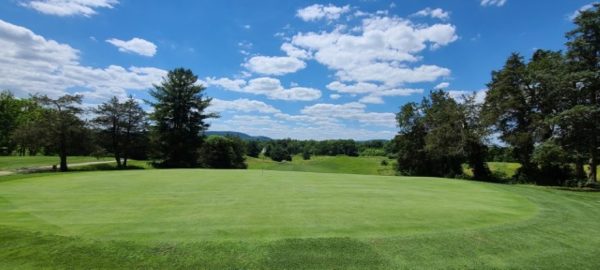
The Rockland Lake State Park golf course could be forgiven for the occasional bout of envy. It sits in a neighborhood occupied by some of the mid-Hudson River’s finer private clubs. A half mile away is Paramount Country Club, an A.W. Tillinghast design. Tilly is also credited with the majority of the design work at Bethpage Black, a credit that he shares with Joseph Burbeck. Across the great river sits Sleepy Hollow Country Club, whose lineage involves work by Tillinghast, but mainly from C.B. Macdonald and Seth Raynor. And on and on.
In its origin days, Rockland Lake was used as a natural ice factory by the Knickerbocker company. So pure was the ice that emanated from its waters that the lake supplied much of New York City in those pre-home electricity days. In this new millennium, Rockland Lake plays host in summer months to many of the area’s golfers. Despite its proximity to the waters of the lake, a pond, and the river, none of the holes is within a mighty strike of the wet stuff.
Rockland Lake’s full-size course was designed in the 1950s by David Gordon, a well-traveled, regional architect from eastern New York and Pennsylvania. The big course sits on the northern end of the park. The property also boasts an 18-hole short course, located in the shadows of Hook Mountain, south of the lake that gives the park its name.



Saratoga Spa
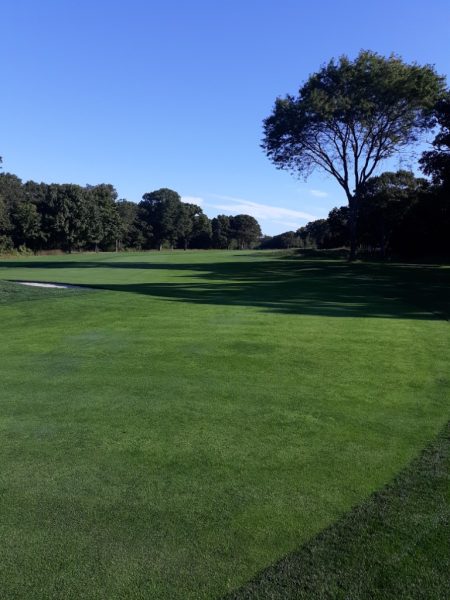
Location is often everything. When your golf course is located not only inside a state park, adjacent to a popular performing arts center within the confines of the park, and a nearby, world-famous horse racing track, you have potential for a popular spot. Saratoga Spa’s original golf holes opened in the 1930s, although no architect is given credit for the design. In the late 1950s, William Mitchell did an overhaul of the layout, expanding it to the trace that is in the ground today. During the mid-2010s, Barry Jordan, another regional architect, came in to rebuild the entire 10th green and upgrade bunker drainage throughout the golf course.
Saratoga Spa boasts a testing, 18-hole layout that stretches beyond 7,000 yards. Alongside is a short course, with seven par-three holes and two par-fours. The course features a new fleet of motorized carts with GPS monitors, ensuring that golfers know where they stand at all moments of the round. In addition to the golf course, nearly a dozen natural springs flow through the Saratoga Spa Park. A large pool complex for recreation completes the park’s offerings.

Springbrook Greens
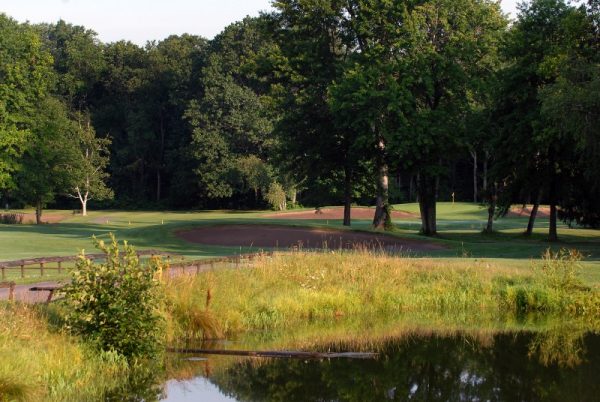
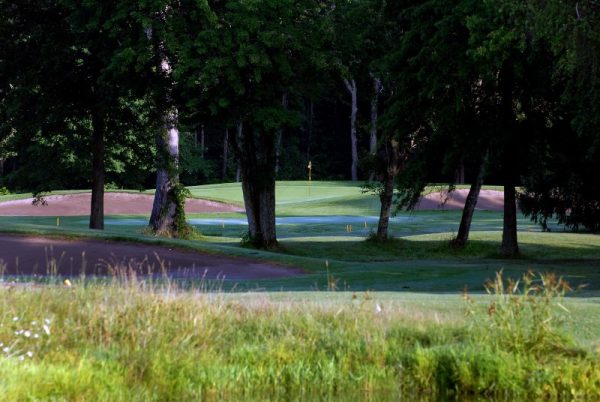
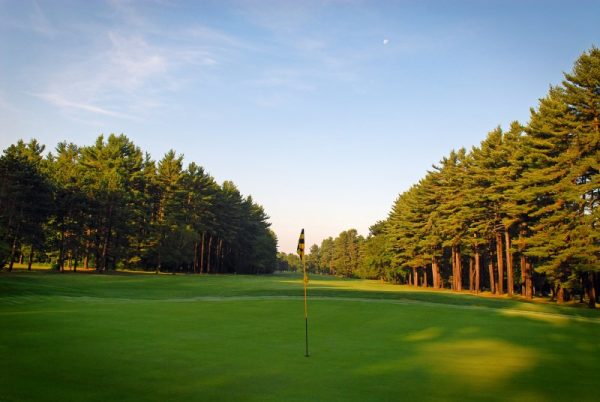
Alan Tomlinson may be the Hayden “Sidd” Finch of golf course architecture. He completed Springbrook Greens in 1995 … then disappeared. Nothing more is known about him, and no other courses bear witness to his skills as a router of golf holes. Springbrook Greens tips out at 5,800 yards and finds itself close to Lake Ontario’s southern shore. If you drew a vertical ray to the south, it would drop a bit west of Syracuse. It’s not much away from Battle Island, so there are a few state courses within a brief drive of each other, in this part of the state.
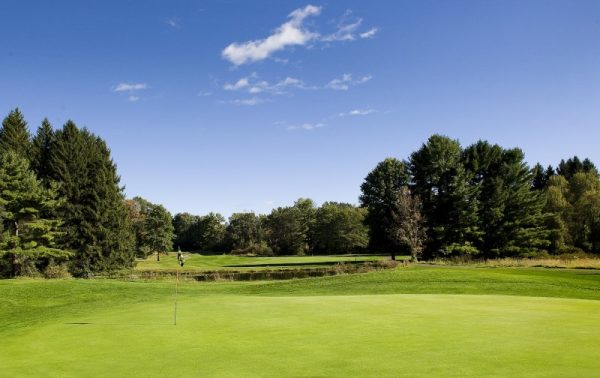
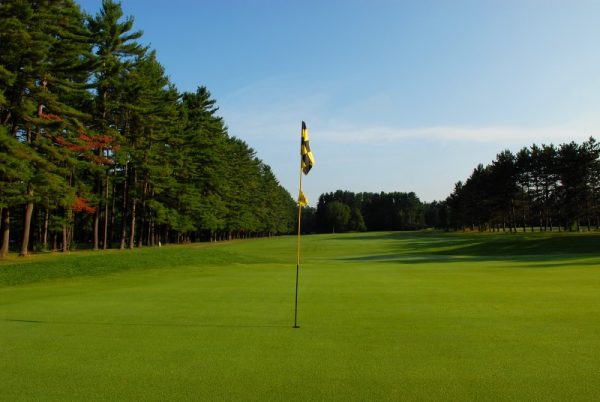
Springbrook Greens had an interesting first quarter-century of life, then COVID hit, and like many places, things went a bit off path. Fortunately for the region and its golfers, the Randall family leased the course from New York State Parks (much like Bonavista in an earlier step of this series) and brought the course back from a near-death experience. It’s pretty easy for a course to go astray, especially when basic maintenance elements break down. Among the images in the gallery, one will stand out for its lack of grass. Ron Randal tells the story like this:
“This was the 10th green in December the year before I took over. This was the worst but many had large spots that looked like this. I assumed it was a lack of proper maintenance but what I didn’t realize was that a lot of it was just irrigation heads that didn’t work or didn’t work right. This one was missing a head so the front 2 didn’t work at all and of the back 2 only one worked properly. Thank god it was a fairway head or there would have been no grass left at all.
“I assure you it looks better now.”
According to Randall, the fairways are back to what any destination course might offer. Putting surfaces have been expanded back to their original widths, offering a great many hole locations for diversity. Collars around each green and run-up areas have also been added to the course. The course spreads out over nearly 200 acres, is home to diverse, multitudinous wildlife, and amazing views.
Current projects include the rebuilding tees and the addition of back tees, to stretch the tips a bit. Trees have been pruned to allow sun to reach the most sensitive, grass-growing areas (greens and tees). If there ever was a look-at-us-now project among the panel of NYS Park golf courses, Springbrook Greens would give all others some stiff competition.


Saint Lawrence
The St. Lawrence state park course, a nine-hole affair across a wee road from the eponymous seaway, might nip Beaver Island (near Buffalo) for the Closest To Canada prize. The layout sits barely across a road adjacent to the shoreline, less than a mile from Ontario’s beaches. Since the STLS is a bit thinner than the mighty Niagara, it appears that the award goes to St. Lawrence.
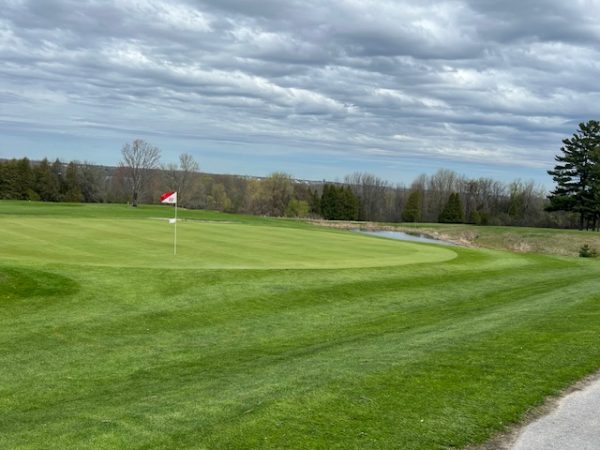
St. Lawrence State Park Golf Course is a stand-alone feature, made up simply of a golf course. It was a privately owned layout for many years, near the city of Ogdensburg. The state purchased the acreage in the 1960s and leases the course to it present owners. The St. Lawrence course is a tiny, tidy experience, essentially a series of nine, straightish holes, the fairways are interrupted by the occasional crossing appearance of a wee burn, in the Scottish tradition.
From our inside folks at the course, we received this batch of intel:
“The Ogdensburg Golf Club was started in 1919 by a group of five Ogdensburg area golfers as a private golf and social club. Stock was issued to the original five investors and golfing privileges were obtained by the payment of annual dues to the club. The 151acre golf club, which consisted of five holes along the St. Lawrence River and four holes across New York State Route 37 were sold to New York State on December 18, 1967.“The State of New York had plans to develop the remaining land into an 18-hole golf facility but those plans never came to fruition. The St. Lawrence State Park Golf Course was operated by New York State Parks until May of 2011 when it was leased to Golf Services, Inc. of Wellesley Island, NY.”




Wellesley Island
In the words of Peter McDermott, manager at the Wellesley Island State Park Golf Course, “(It) is a relatively short 9-hole course at 2,695 yards par 35 but the greens are tight and rewards the accurate shot. Some of the more notable holes are two very challenging par 4’s, two drivable par 4’s and two scenic par 3’s. For an added bonus, enjoy the captivating views of the St Lawrence River!”
Unlike its upstream neighbor at St. Lawrence State Park, Wellesley Island sits on the northern bank of the river, but still within the confines of New York State and the USA. The Wellesley course occupies a massive meadow, confined by trees but not defined by them. Rather than build a traditional, tree-lined fairway sequence common to the north country, Wellesley channelled the British Isles tradition of a wide open space for golf.


With one chapter remaining in our story of New York State Parks golf courses, we’re nearing the sad yet proud end to our journey. Still to come is the Long Island sojourn, followed by the Ryder Cup competition itself, at Bethpage Black.
Crossing to Bethpage Part One: Green Laks, Beaver Island, James Baird, the Bethpage Five
Crossing to Bethpage Part Two: Soaring Eagles, Chenango Valley, Indian Hills, Bonavista
Crossing to Bethpage Part Three: You just read it!

RBC Heritage Tour Report: More minis, course-specific setups, Spider & GTS launches

Justin Rose WITB 2026 (April): Full WITB breakdown with new McLaren irons

Best fairway woods of 2026: The most versatile fairway woods + the most forgiving fairway woods

What’s the story behind Webb Simpson’s custom-stamped irons?

Cadillac Championship Tour Report: Spieth’s sizable changes, McLaren Golf launches, and more

The 24 players who can win the Masters

Rory McIlroy’s winning WITB: 2026 Masters

Kristoffer Reitan’s winning WITB: 2026 Truist Championship

J.J. Spaun’s winning WITB: 2026 Valero Texas Open

Cameron Young’s winning WITB: 2026 Cadillac Championship


Alex Fitzpatrick WITB 2026 (May)
Driver: Ping G440 LST (9 degrees) Shaft: Fujikura Ventus Black 6 X 3-wood: TaylorMade Qi4D (15 degrees) Shaft: Fujikura Ventus...

Kristoffer Reitan’s winning WITB: 2026 Truist Championship
Driver: Ping G440 Max (9 degrees) Shaft: Mitsubishi Tensei 1K White 60 TX 3-wood: Ping G440 Max (15 degrees) Shaft:...


WITB Time Machine: Rory McIlroy’s winning WITB, 2021 Truist Championship
Rory McIlroy’s victory at the 2021 Wells Fargo Championship 2021 (now the Truist Championship) marked a significant return to form,...


Collin Morikawa WITB 2026 (May)
Driver: TaylorMade Qi4D LS (8 degrees) Shaft: Mitsubishi Diamana D+ Limited 60 TX 3-wood: TaylorMade SIM Tour (14 degrees) Shaft:...
-
 Equipment2 weeks ago
Justin Rose WITB 2026 (April): Full WITB breakdown with new McLaren irons
-
 Equipment1 week ago
What’s the story behind Webb Simpson’s custom-stamped irons?
-
 Equipment2 weeks ago
Cadillac Championship Tour Report: Spieth’s sizable changes, McLaren Golf launches, and more
-
Whats in the Bag3 days ago
Kristoffer Reitan’s winning WITB: 2026 Truist Championship
-
 Whats in the Bag1 week ago
Cameron Young’s winning WITB: 2026 Cadillac Championship
-

 Whats in the Bag3 weeks ago
Nelly Korda WITB 2026 (April)
-

 Equipment2 weeks ago
Justin Rose on the switch to McLaren Golf, learnings from previous equipment moves
-

 Tour Photo Galleries2 weeks ago
Photos from the 2026 Cadillac Championship


Todd
Jan 8, 2024 at 2:06 pm
Great write up and beautiful pics
Ed
Dec 27, 2023 at 3:50 pm
I’ve been to Scottsdale on two separate occasions (I live in UK) played Toon,Greyhawk and even got to play Whisper Rock.
geohogan
Dec 26, 2023 at 12:13 pm
Golf courses in the desert is insanity, when urban centers and farms need the water, that is in shorter supply.
Rather than promoting golf in the desert, responsible journalists will write about the systematic closing of courses.
M
Jan 2, 2024 at 10:07 pm
Subsidized cotton and citrus farming in Phoenix uses far more water than any golf course (especially with new strains of Bermuda grass).
Robert S.
Dec 22, 2023 at 6:25 pm
Great story and nice photos. We have been to Scottsdale many times and have played Troon North. Very solid summary of the experience.
Mmmerika
Dec 22, 2023 at 4:48 pm
Rich man’s game is what golf is returning to be like how ot started in Merica