
Opinion & Analysis
Read about Justin Rose’s putting coach, David Orr

In and of itself, the structure is unremarkable.
The dimensions of the building are of smallish proportion and the concrete block is in need of pressure washed scrutiny; at the base of the front awning, the numerals of the address plate hang in a casual state of limbo.
But as with most things, the exterior counts for little; for it is inside, just a step over the threshold, where some of the game’s finest players are redefining their approach to putting.
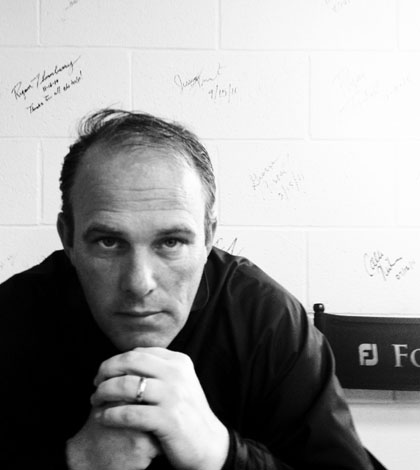
Scrawled in varying degrees of penmanship, and occupying a corner section of David Orr’s Buies Creek, N.C., putting studio, are the signatures of some of the world’s most prominent touring professionals.
More so than a novelty, they diagram the current needle position of a career arc remarkably polished, yet completely unfinished.
Rose. Molinari. Castro. Wi. Cheyenne Woods. A global consortium, if you will — one that stretches from North Carolina to Asia, and all points in between.
The wall is a unique tableau — only full-field entrants in golf’s major championships and those exempt on worldwide professional tours may leave their mark — and is the constellation matrix of Orr’s career in the game of golf. It represents 23 years of diligent research, practical application and sustained personal relationships.
He clearly laments the facility’s untidy appearance, but his students prefer it this way. “They really love it,” he explains. “I’ve been told not to change a thing.”
And whether by Gulfstream V or Ford Taurus, his students arrive to stand their post in Orr’s lifelong battle against, in his words, “being average.”
If the modern game is synonymous with cozy lifestyles, posh settings and uncommon perks, Orr’s sanctuary represents its raw antithesis. Amidst a stockade of old putter models and diagnostic tools, commitment is reaffirmed. Important decisions are made. The finite, despite his background in technical analysis, is communicated in plain language.
There are periodic notions to alter its condition, sure; but he simply does not enjoy the time required by such a task.
Class, it seems, is always in session.
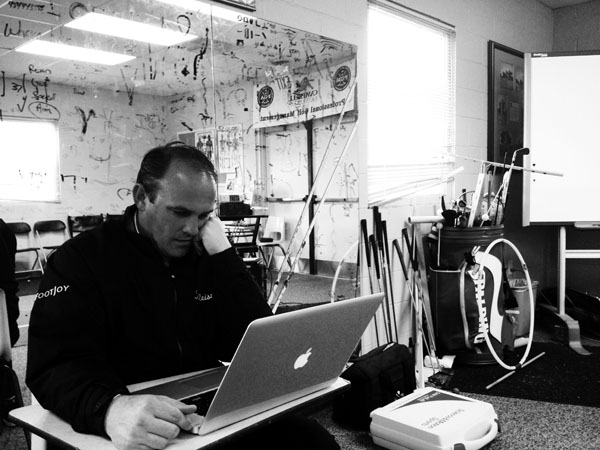
It’s 2 p.m., and a small group ambles into the studio, each dressed in the familiar patterns of a Tour player. Ranging in age from 18 to 21, they are present to discuss their individual progress against the bar of the PGA’s playing ability test.
If brevity is indeed the soul of wit, then hard data is David Orr’s deoxyribonucleic imprint.
“Is 18 inches past the hole a speed?” he asks. “No. It’s a distance. And what would make it an actual speed?”
His students, neither lost nor disengaged, ponder the question. And while their individual opinions vary, they reach the desired common ground with assistance from Orr’s guiding hand.
“It’s feet per second,” he explains, “so what’s in the denominator? Time. That’s break. That’s touch. Curve is the roll time.”
His point is ultimately quite simple — one’s level of awareness, with specific regard to personal space, must be developed in order to construct a functional cache of putting skills.
“Here’s what the golfer doesn’t realize. Let’s say we had a 10-foot putt, zero point zero slope. No break, no nothing,” he explains. “One degree open is right edge. One degree closed is left edge. Now let’s add a 2 percent slope, putting at an angle — what just happened to the capture width of the hole? The cone just shrinks.”
For lack of a more sophisticated phrase, it’s mad science.
“No. It’s measurement,” he says. “There’s a big difference in being technical and being accurate. I disagree that great putters are born. I think great putters learn their tendencies and use them; they don’t fight them.”
The hour has slipped into rear view, and Orr is now standing atop a table in a room behind the Keith Hills golf shop. At issue is the short game concept of controlling the radius — in other words, what is lengthening and shortening during a player’s chipping motion.
“The reason why the average golfer has the chip yips is because they’ve set up to hit a low shot, and in their mind they are trying to hit a high, soft shot,” he reasons.
This session, presented to a graduate level contingency of Campbell University’s Professional Golf Management (PGM) Program, is canted in the direction of real world application — paper theory, he suggests, simply does not register with everyone.
“Put a ball about a foot from the edge of a mat,” he explains, “and try to get it on the ground as quickly as possible. What is that teaching them (students) to do? The ball goes in the air because of the loft, not because of the angle of attack.”
His message, rooted in one’s ability to communicate, is equal parts Daniel Kaffee from ‘A Few Good Men’ and professor John Keating from ‘Dead Poet’s Society’ — unafraid of the truth, its potential impact on a student’s psyche, and a coach’s willingness to walk a different path to generate success.
Over the years, Orr has employed this concept to successfully transit from a full-swing coach to a specialized entity — one who helps players motivate the golf ball to disappear with increased regularity, regardless of ability, green complex or high-stakes environment.
To that end, Orr respects the sweat equity of his students. In a game full of five footers, he prefers to place more value on the person standing over the putt — or the future instructor, for that matter — than the putt itself.
“People skills,” he exclaims. By his estimation, they make or break any professional, regardless of occupation. And as his students well know, they are non-negotiable.
“What’s work?” he asks. “It’s what you actually accomplish. What’s effort? That’s putting energy toward something, right? So, work is what you actually accomplish. Do you want to be average?”
Perhaps it is John Wooden who best captures the breadth of David Orr’s substance. The iconic UCLA basketball coach, whose dynastic teams won seven consecutive NCAA Division I titles, operated on a simple premise: Failure to prepare is preparing to fail.
“Here’s the thing about it,” he explains. “The brain works off movement, plans and strategies. You react to the plan.” To further this notion, he leans forward, saying, “We don’t give tips around here. We figure out what you’re doing. This is what you need to work on; go work on it.”
For many involved in the high profile web of a Tour player’s corporation, life can become difficult. Even for the world’s most sought after instructors, the balancing act can be difficult to manage. What begins as a working relationship can quickly flash into something complex and unyielding, and ultimately, distant.
Orr, however, remains grounded in the culture he has helped define at Campbell University. For students at “The Creek,” it is solely about the work. The environment is pure — wholly devoid of ego, personalized social media presence, entitlement or the high art of resting upon one’s laurels.
Ever the perfectionist, one would be hard pressed to imagine Orr anything less than excited about passing on what he has learned from countless others over his career.
“At Wells Fargo last year, I was walking back from the short game area with TJ Yeaton — who went through the program here — and we saw this kid down in a bunker,” he says, smiling, clearly fond of the memory. “It was another one of our guys, Jorge Parada (currently the instructor for Jonas Blixt).
“That was pretty neat. Moments like that are the most rewarding. They’re the fruits of your labor.”
Any coach worth his salt will tell you that creating a running sense of leverage often means success for his players. Suffice to say, this concept has allowed Orr to forge ahead in his scaled battle of work versus a job, of success versus being average.
For many in professional golf, life is scored in the harsh ledgers of longevity and winning percentage. Orr, however, views the matter differently, and does so through the looking glass of time well spent.
“I’m very fortunate,” he explains. “I don’t want to be rich, and I don’t want to be famous. I just want to be comfortable with what I do, and grateful for the relationships I have.”
At present, he appears content; almost relaxed. But that posture does not have much of a shelf life. There is a private lesson in five minutes, and more time to be spent refining the studio.
For David Orr, the writing is clearly on the wall.








Aronimink is not a storied club, but when Donald Ross himself proclaimed it to be as good as he can design and build, one had to take notice. Jay Sigel was the pre-eminent male amateur golfer from the mid-1970s to the mid-1990s. He might have called any number of Philadelphia clubs home, but he chose Aronimink. It served him well. Gary Player won a PGA Championship here in 1962, and was followed by the 1993 winner … nobody. Aronimink gave that event away to Inverness, for reasons of which it is certainly not proud. So be it. We had to wait sixty-four years for the PGA to return to Newtown Square, but here we are. Aronimink has been neo-restored by Gil Hanse and team, to return Ross features with an eye toward defense against the dark arts, errrr, high-tech equipment.
Day one saw Rory McIlroy and Bryson DeChambeau dig big holes, to the tune of plus-four and plus-six, respectively. Since the first-round lead will be minus-three at worst, many shots will need to be made up for the power couple to reach contention. By nightfall, seven golfers held the day-one lead at three-under par 67. Shots and sticks caught our attention, and we are proud to present Five Things We Learned on Tech Thursday at the 2026 PGA Championship. Thanks to InsideTourGolfer, Today’s Golfer, and GolfWRX for initial equipment research.
First, meet Min Woo Lee
Min Woo Lee, aka Dr. Chipinski, has once again thrust himself into the conversation of Can he, will he, when will he? Lee has so much talent, wins not nearly as often as we believe that he should, and has no major near-misses (much less titles) on his wiki. The young Aussie is getting older and wiser, but is he able to avoid the scarring that holds the older and wiser back from breaking through? Philadelphia offers another opportunity. Min Woo signed for five birdies and two bogeys on day one, and grabbed a share of the opening-day lead at Aronimink. Winners transcend history and the moment, and Lee will need that sort of ascent to lift the Wannamaker on Sunday.
Second, meet Aldrich Potgeiter
The young South African golfer can rip driver with the best of them. Aronimink tips out at nearly 7400 yards, but beyond the fairway bunkers that ensnare only the mortals, Potgeiter can take his chances with wedge from the rough. On Thursday, he spent plenty of time in the spinach. Like Popeye, he used his muscles to gouge and thrash and dig his way out. Six birdies against three bogeys on the card brought AP in a three deep.
Third, meet Martin Kaymer
Not a major event takes place without a where’s he been throwback moment. We know that Martin Kaymer left the PGA and DP World tours for LIV golf, but the two-time (US Open and PGA) major winner has a lifetime exemption into at least one major event, and he seizes the opportunity each May. Kaymer joined the six-seven brigade with four birdies and a solitary bogey on day one. Kaymer was never a long hitter, and the years are kind to no golfer. The German champion will need to uncork every bottle of guile and strategy in his cabinet to remain in contention. For today, though, he occupies a rung on the ladder of Tour Tech.
Fourth, meet Scottie Scheffler
Let’s see, he’s the defending champion at the PGA, and he found his way back to the top tier with five birdies against two bogeys. To be a favorite and then play up to that stature and expectation is quite difficult. Just ask Rory, Bryson, and some of the other pre-tournament heartthrobs. Scheffler’s game is complete, and to knock him off the OWGR #1 pedestal, one needs to defeat him at the majors. Aronimink is the sort of course that fits Scheffler’s game. Better yet, it unfits the game of many of his challengers. Don’t expect Scheffler to go away anytime soon. Come Sunday, he’ll be around.
Fifth, meet Stephan Jaeger
Clocking in for the unheralded players shift are Ryo Hisatsune and Stephan Jaeger. Hisatsune logged seven birdies on day one, but gave most of them back with four bogeys. Still, he’s tied at the top for a time. Jaeger pitched five birdies against two bogeys, including a run of three consecutive, from holes four through six. Odds are that one of the two will hang around through 36 holes. Odds also suggest that both will be gone by Saturday evening. Still, the PGA Championship has historically been the major most likely to be won by an under-known. Both Hisatsune and Jaeger feature on that list, so good luck, lads!

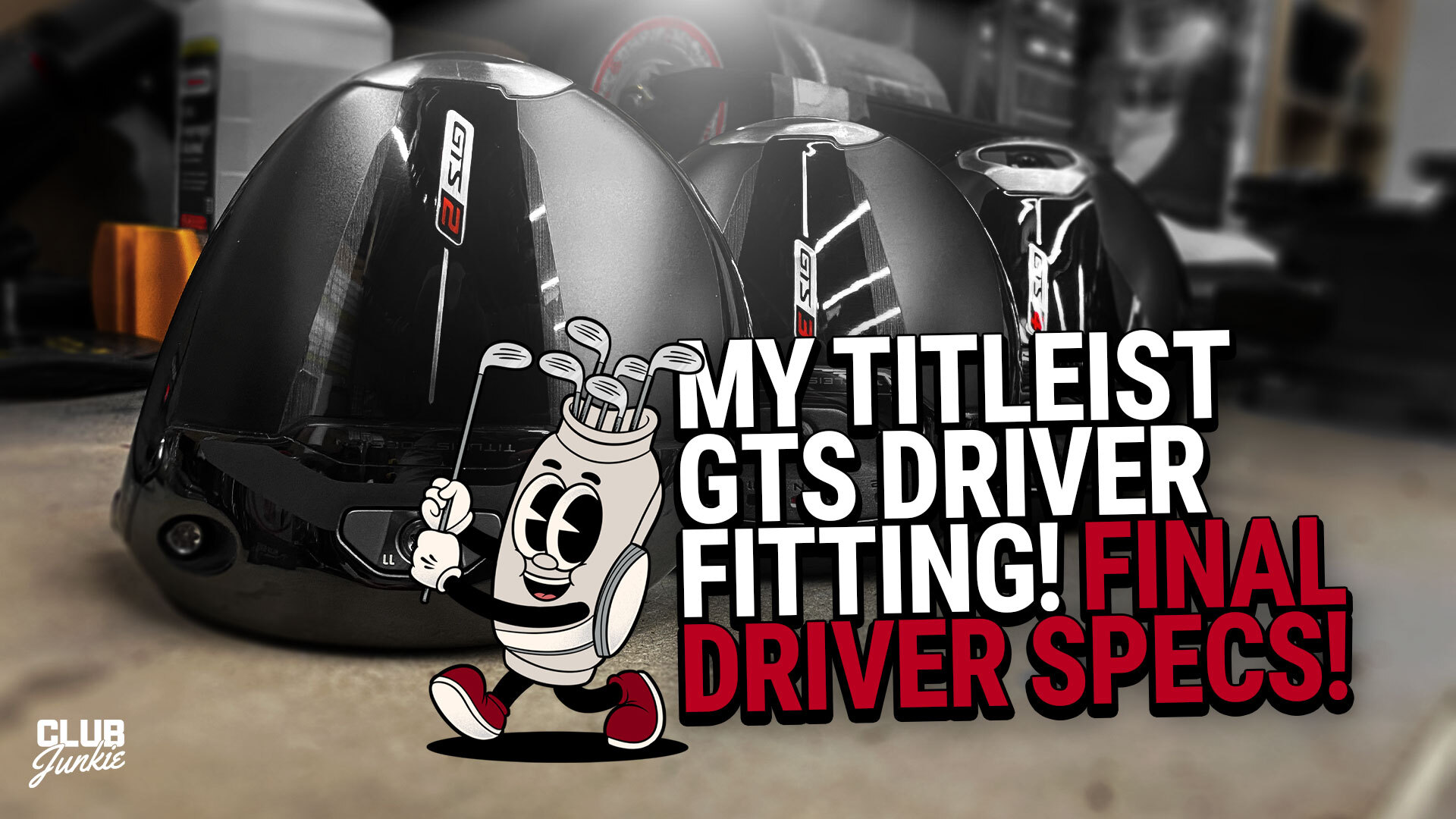
On this episode of the Club Junkie Podcast, I head to the Titleist Performance Institute for a full driver fitting with the new Titleist GTS lineup. We dive into the fitting process, talk about what made the biggest difference in performance, and break down how the different GTS heads and shaft combinations compare on the launch monitor. If you are thinking about a new driver setup for this season, there is a lot to take away from this one.
I also get into Brooks Koepka and the gear setup he brought to the PGA Championship, including the putters that caught my eye during the week. There are some interesting equipment trends showing up at the highest level right now and we break down what stands out.
To wrap things up, I talk about reshafting a few wedges, what I learned during the process, and swapping an adaptor onto a new shaft for another build project in the shop. A gear packed episode from start to finish for anyone who loves golf equipment and club building.
Follow Club Junkie everywhere:
Instagram: https://www.instagram.com/clubjunkiepod/
X: https://x.com/ClubJunkiePod
TikTok: https://www.tiktok.com/@clubjunkiepod
Threads: https://www.threads.com/@clubjunkiepod
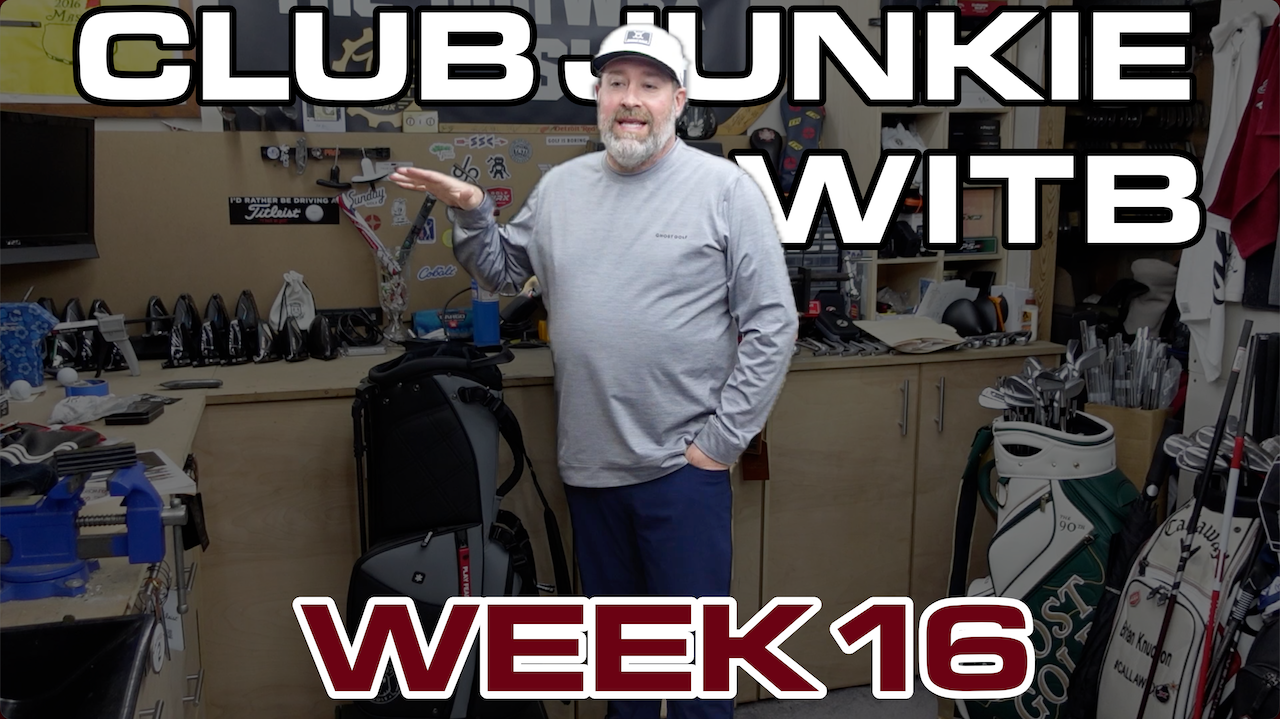
Excited for this week’s WITB as we get to add the new Titleist GTS woods to the bag! I was fit at Titleist’s TPI facility in Oceanside California a few weeks ago and my new clubs just showed up. I am also adding a cool set of irons that I built last year some wild custom wedges into a new golf bag. Speaking of the bag I have a new Ghost Anyday Black Ops stand bag that I will be using on my Motocaddy Remote M7 electric cart.
Driver: Titleist GTS3 (11 degrees @ 10.25)
Shaft: Fujikura Ventus Red 6s
3-wood: Titleist GT1 3Tour (14.5 degrees)
Shaft: Graphite Design Tour AD CQ-7s
5-wood: Titleist GTS (18 degrees)
Shaft: Fujikura Ventus Red 7s
9-wood: Titleist GT1 (24 degress)
Shaft: Fujikura Ventus Red 7s
Irons: Bettinardi CB24 (5-PW)
Shafts: KBS C-Taper Lite 110 stiff
Wedge: TaylorMade MG5 (50-09 SB)
Shaft: Mitsubishi MMT 125 Stiff
Wedge: TaylorMade MG5 (56-12 SB)
Shaft: Mitsubishi MMT 125 Stiff
Wedge: TaylorMade MG5 (60-08 LB)
Shaft: Mitsubishi MMT 125 Stiff
Putter: Dan Carraher ZT Proto
Ball: Callaway Chrome Tour
Bag: Ghost Anyday Black Ops Stand Bag

Justin Rose WITB 2026 (April): Full WITB breakdown with new McLaren irons

RBC Heritage Tour Report: More minis, course-specific setups, Spider & GTS launches

What’s the story behind Webb Simpson’s custom-stamped irons?

Cadillac Championship Tour Report: Spieth’s sizable changes, McLaren Golf launches, and more

Kristoffer Reitan’s winning WITB: 2026 Truist Championship

Cameron Young’s winning WITB: 2026 Cadillac Championship

Aaron Rai’s winning WITB: 2026 PGA Championship

Nelly Korda WITB 2026 (April)

Justin Rose on the switch to McLaren Golf, learnings from previous equipment moves

Photos from the 2026 PGA Championship


Patrick Reed WITB 2026 (May)
Driver: Titleist GT3 (9 degrees) Buy here. Shaft: Aldila Rogue Silver 130 M.S.I. 70 TX 3-wood: TaylorMade Qi35 (15 degrees)...

Aaron Rai’s winning WITB: 2026 PGA Championship
Driver: TaylorMade M6 (9 degrees) Shaft: Aldilda Synergy Blue 70 TX 3-wood: TaylorMade Qi10 (15 degrees) Shaft: Fujikura Ventus Blue...


Michael Block WITB 2026 (May)
Driver: TaylorMade Qi4D (9 degrees) Shaft: Fujikura Ventus Black VeloCore+ 5 X 3-wood: TaylorMade Qi4D (15 degrees @14.25) Shaft: Mitsubishi...


Bryson DeChambeau WITB 2026 (May)
Driver: Krank Formula Fire Pro (6 degrees) Shaft: Project X Prototype 3-wood: Krank Formula Fire (10 degrees) Shaft: LA Golf BAD...
-
 Whats in the Bag3 weeks ago
Kristoffer Reitan’s winning WITB: 2026 Truist Championship
-
Whats in the Bag2 weeks ago
Aaron Rai’s winning WITB: 2026 PGA Championship
-
 Tour Photo Galleries3 weeks ago
Photos from the 2026 PGA Championship
-
 Equipment2 weeks ago
GolfWRX Launch Report: 2026 Titleist GTS drivers
-

 Equipment2 weeks ago
PGA Championship Tour Report: Fitzpatrick, Koepka among big-name putter switches for Aronimink
-

 News2 weeks ago
WITB Time Machine: Phil Mickelson’s winning WITB, 2021 PGA Championship
-

 Equipment2 weeks ago
Which of Tiger’s major winning irons are your favorite? – GolfWRXers discuss
-

 Equipment2 weeks ago
Lead Tape Report: Adjusting the swingweight of the Wanamaker Trophy


Pingback: 2013 Goal – Visit to David Orr, Putting Guru - Game Improvement Golf
Honda Injeksi no.1 di Indonesia. Hebat, Hemat dan Mudah
Dec 15, 2013 at 2:12 am
Its like you learn my mind! You seem to understand a lot approximately this, such as you wrote the e book in it or something. I feel that you just can do with some p.c. to force the message home a bit, however instead of that, this is excellent blog. A fantastic read. I’ll definitely be back.
johnny
Mar 11, 2013 at 4:22 pm
have had the pleasure of spending a full day at the “creek”. david is a wealth of knowledge and a better man at that. one of the best experiences i have had. would love to go back in the next couple years
Pingback: 2013 Goal - Visit to David Orr, Putting Guru
Pingback: Meet putting guru David Orr | JR's site
Rufiolegacy
Mar 4, 2013 at 11:25 am
Interesting read here, and well written. I can honestly say that this is at the very lest inspiring to get back to the grind stone and practice. Off to the gym to prep for the season.
nick
Mar 3, 2013 at 6:36 pm
david orr is the truth. nuff said. he’s my coach and i wouldnt want anyone else looking at my putting stroke or full swing for that matter.
Phil Howard
Mar 2, 2013 at 7:35 pm
GREAT ARTICLE!! Thanks for sharing!!
siteseer2
Mar 2, 2013 at 10:07 am
David Orr is equal parts genius and humility…rare in the “me” golfworld in which he exists. Those who are fortunate enough to call him friend are truly blessed…
Ben Alberstadt
Mar 1, 2013 at 11:05 pm
Fabulous writing, Mr. Hayes. Glad to see this got placement on Golf Digest, as well.
Edmond Brooks IV
Mar 1, 2013 at 8:38 pm
David has helped me with putting and is a great coach easy to work with. I just hope he doesn’t get too famous or I will be waiting in line;) Way too go David and best of luck…..
munihack
Mar 1, 2013 at 9:28 am
To some extent great putters are born and made. The subtle aspects of reading a green have a lot to do with how true your vision is. I have astigmatism (sp?) in both eyes and even with correction I miss things that good green readers see. The modern, flat greens give me more trouble than the old push-up tilted greens of earlier arhitects. I simply can’t read the flat ones well. I have a friend who has qualified for USGA national events and he sees all the subtle design aspects. Grain is another issue. That is why even at the tour level some guys are “regional” putters. Most people believe Tom Watson was a good or great putter but he didn’t win in Florida until years on the Champions Tour. Putting asks the golfer to see, feel and read the ground the way the full shot maker is expected to see, feel and read the distance, wind and topography to the target. Tough greens separate putters the way wind separates ball strikers. What all great teachers do is expose the student to the perspective and tools needed to resolve the question at hand. This teacher is one of them.
Juan
Feb 28, 2013 at 10:13 pm
I have had the privilege of having David enable me to be a MUCH better putter. He is an excellent technician, but a better person. Congrats to Dave for getting some visibility
Anon.
Mar 3, 2013 at 7:49 pm
I worked with David a considerable about a number of years ago. I will lead off that he is a good person and has come a long way in life. With that being said, I was not entirely displeased with the experience.
We worked on the principles from a book known as “the golfing machine”. Shortly after I stopped working with him he flopped over to a “new school” of golf known as the stack and tilt. I was extremely displeased that I had spent considerable time and money working with him building a swing engraved in the golfing machine, and he switched mechanics mid-stream on me.
If you are an average-decent golfer or worse you cannot make a mistake with him. At this level generic advice will help you immensely. If you have a game where you bounce between a scratch and a +4 handicap, and you are trying to further your game I would not recommend him.
Golf “advice/coaching” is tailored to your game, your swing, and your physical attributes. I strongly encourage anyone seeking advice from any “teacher” to take a couple lessons with a grain of salt and really think about what the person is saying before you embrace it and start making changes.
*Disclaimer: If you are interested in taking one lesson, no matter who from, please ignore this article.
Ronnie Martin
Mar 5, 2013 at 7:36 pm
Here’s your problem bro, TGM is not a “method” but S&T is. In fact, TGM could inly help
You understand what is taught by Plummer and Bennett and help you understand why the golf ball does what it does after the collision. I had the good fortune to hang out and learn from DO at Campbell while certifying as an Authorized Instructor of the Golfing Machine. in 2009. David Orr is a pathological teacher. He just wants to help people and he would probably do it for free if he had to. It’s dissapointing that you feel the need to disparage the man just because you don’t know the difference in a catalogue of components, and a method.
Carson
Feb 28, 2013 at 8:30 pm
Great article! Thank you for sharing.
A fellow North Carolinian,
-Carson Henry