
19th Hole
Michael Kim Q&A: How off-season testing works, rookie financial pressures on the PGA Tour, and club deals explained


Michael Kim has just wrapped up one of his best seasons on the PGA Tour, narrowly missing a spot at the Tour Championship after finishing 31st in the FedEx Cup standings.
Known for his candid “behind-the-ropes” insights on social media, the world No. 62 sat down with me, Gianni Magliocco, to lift the lid on life as a tour pro — from how players really test equipment in the off-season, to the realities of club deals, and the financial pressures rookies face on their way up.
Read the full Q&A below.
Off-Season Testing & Club Selection
Gianni: Congratulations on the excellent season. You mentioned recently that driving and putting held you back from cracking the top 50 this year. In the off-season, how do you balance grinding on those areas and experimenting with equipment or setup?
Michael: Every off-season, I’ll spend a few days doing a bunch of testing. I don’t do a ton of testing during the season unless I really feel like a certain club or clubs aren’t performing. I’ve been happy with my clubs this year, so I’m not sure how much testing I’ll do, but I have some things I want to try.
Mainly with the length of my driver. I’ve used a slightly shorter driver, 44.5 inches, to try and get my accuracy up, but I’d like to try some other options this year.
As for the putter, I’m a big fan of the zero torque putters, so if I do try anything, it’ll be along those lines, I think.
Gianni: If fans could sit in on a real off-season testing session, what would surprise them most about how pros actually decide what goes in the bag?
Michael: Mainly, how important I consider the first few shots. Any shots after the first couple, I’ve subconsciously adjusted to try to make the golf ball go straighter. More often than not, after two shots, I’ll hand the club back to the fitter, telling him it’s no good if it’s not what I’m looking for.
Gianni: When your monitor numbers don’t match what you initially feel on the course, which do you trust more—and has that ever backfired?
Michael: In general, the on-course stuff is the most important. I can make almost any club work on the range. It does happen once in a while where the club feels great on the range, even on the golf course during the practice rounds, and then at the tournament, I hit it awful.
It’s happened to me twice this year, once at the WM Phoenix Open, where I had a new driver setting. I really liked it all the way to the tournament, but I hit it badly on Thursday, and I ended up switching it back to where I had it on Friday morning, right before my round.
The other time was at the Open Championship, where I added a 3-iron instead of my 7-wood on Thursday and hit one really bad shot, and went back to the 7-wood on Friday.
Gianni: How often does pure confidence at address—just liking how a club looks—override the launch monitor data?
Michael: I used to be really picky about how a club looked early in my career. Now, as I’ve gotten older, I don’t care how a club looks, and it’s only about performance. Now, club companies have become so good at ‘hiding’ the technology that it rarely looks really weird like in the way past, like a square driver or something. If the club performs, I couldn’t care less.
Equipment Deals & The Business Side
Gianni: On the business side, how common is it for agents to play OEMs against each other when it comes to equipment deals—and what’s that experience like from your side of the table?
Michael: I don’t take part in the actual negotiations between the agent and the companies. My agent, more or less, will let me know when we’re almost 90 percent to the finish line. Also, when I’ve done deals with club companies, I’m pretty committed to signing with a certain company because I really want to use their clubs.
The deal and the money are very secondary. When I’ve been a free agent, I do a lot of testing with companies that I know are interested, and out of all the ones I test, I tell my agent which one I like best, and he negotiates from there.
Gianni: Beyond the paycheck, what part of an equipment deal makes the biggest difference for you?
Michael: The driver is the most important. It has the most technology, and the driver is always a must in basically every deal these days. Most companies allow some flexibility on using other clubs, but not the driver, so you have to get that one right before signing.
Gianni: How did the equipment offers you saw as a rookie compare to what you see now, and what’s been the biggest surprise about how those deals evolve over a career?
Michael: I got a very nice deal from Titleist when I first signed. I was coming off player of the year in college, and I showed lots of promise.
There are, of course, unicorn deals that you hear rumors about, like Jordan Spieth and Bryson when they first turned pro. I obviously don’t know exactly how much they signed for, but those deals always happen every few years as companies want to be a part of the next big thing.
Money Pressures on Tour
Gianni: At what point do you think the financial strain of missed cuts starts to affect confidence or performance for players on tour, particularly for rookies?
Michael: The financial strain is a big part of 99 percent of golfers who first turn pro. I’d say trying to gain and/or keep status on tour is the number one thing on every rookie’s mind, but if a player is missing cuts, he’s losing money no matter what tour he’s on.
I had success decently early in my career, so I haven’t had to worry too much about running out of money, but many fellow players who were journeymen even on the Korn Ferry Tour were really under a lot of financial pressure.
It can make players play more conservatively when in contention and not try to lose money instead of trying to really go for the win.
Gianni: When you’ve had dips in form in the past and the money isn’t coming in, what’s the first budget line you cut?
Michael: I don’t have a big team and never did. The only one that I ended up cutting was the private physio. That was an additional cost, and with the physios who are hired by the tour that travel each week, it wasn’t too big of a change.
I was also playing both the Korn Ferry Tour and PGA Tour, so it didn’t make sense paying for a private physio. Having a private physio is great because the attention to detail changes for the better, but it is an investment.
Gianni: Looking back at your rookie year, what was the biggest financial shock that nobody warned you about?
Michael: Very early in my career, I didn’t have that many friends as I turned pro early, and I stayed at hotels by myself. I remember this crappy hotel I stayed at for the Puerto Rico Monday qualifier, and it was like $300 per day, but the guy I played with in the practice round was splitting an Airbnb with four other guys and paid less than $300 for the entire trip.
Gianni: If endorsement money vanished tomorrow, how many pros do you think could still turn a profit just on prize money alone?
Michael: The question should be whether you could be profitable if you took away prize money. The answer would be maybe the top 50 percent. No player makes more money off the course than on the course, especially with how high the prize money is these days. Endorsement deals are nice, but for the most part, they’ll cover a little more than the expenses for the year.






Rory McIlroy made it two wins in as many years at Augusta National, seeing off the challengers on a dramatic Sunday to slip on the green jacket once again. The victory earned Rory a whopping payday of $4.5 million, with Scottie Scheffler his closest challenger earning $2.43 million for his sole runner-up finish.
With a total prize purse of $22.5 million up for grabs, here’s a look at how much each player won at the 2026 Masters tournament.
For players that did not make the cut, they still earned $25k for their efforts at the year’s opening major.
- 1: Rory McIlroy, $4.5 million
- 2: Scottie Scheffler, $2.43 million
- T3: Tyrrell Hatton, $1.08 million
- T3: Russell Henley, $1.08 million
- T3: Justin Rose, $1.08 million
- T3: Cameron Young, $1.08 million
- T7: Collin Morikawa, $725,625
- T7: Sam Burns, $725,625
- T9: Xander Schauffele, $630,00
- T9: Max Homa, $630,00
- 11: Jake Knapp, $562,500
- T12: Jordan Spieth, $427,500
- T12: Brooks Koepka, $427,500
- T12: Hideki Matsuyama, $427,500
- T12: Patrick Reed, $427,500
- T12: Patrick Cantlay, $427,500
- T12: Jason Day, $427,500
- T18: Viktor Hovland, $315,000
- T18: Maverick McNealy, $315,000
- T18: Matt Fitzpatrick, $315,000
- T21: Keegan Bradley, $252,000
- T21: Ludvig Aberg, $252,000
- T21: Wyndham Clark, $252,000
- T24: Matt McCarty, $182,083
- T24: Adam Scott, $182,083
- T24: Sam Stevens, $182,083
- T24: Chris Gotterup, $182,083
- T24: Michael Brennan, $182,083
- T24: Brian Campbell, $182,083
- T30: Alex Noren, $146,250
- T30: Harris English, $146,250
- T30: Shane Lowry, $146,250
- T33: Gary Woodland, $121,500
- T33: Dustin Johnson, $121,500
- T33: Brian Harman, $121,500
- T33: Tommy Fleetwood, $121,500
- T33: Ben Griffin, $121,500
- T38: Jon Rahm, $105,750
- T38: Ryan Gerard, $101,250
- T38: Haotong Li, $96,750
- T41: Justin Thomas, $92,250
- T41: Sepp Straka, $87,750
- T41: Jacob Bridgeman, $83,250
- T41: Kristoffer Reitan, $78,750
- T41: Nick Taylor, $74,250
- 46: Sungjae Im, $69,750
- 47: Si Woo Kim, $65,250
- 48: Aaron Rai, $61,650
- T49: Corey Conners, $57,600
- T49: Marco Penge, $57,600
- 51: Kurt Kitayama, $55,250
- 52: Sergio Garcia, $54,000
- 53: Rasmus Hojgaard, $52,650
- 54: Charl Schwartzel, $51,300

While Sunday was a dramatic day at the Masters, many golf fans were left feeling frustrated by the CBS final round coverage.
There were plenty of moments that golf fans took to social media to air their frustrations on Sunday over, including a lack of shots being shown throughout the day, being behind the live action, confusion over the approach shots of the final group on 18, and providing an angle for the winning putt where the cup couldn’t be seen.
Here’s a look at some of the criticisms that were directed at the CBS coverage throughout the day on X:


This has been a brutal broadcast for CBS. When the folks from Augusta sit down with them this year, you can bet they’ll talk about this 15 seconds where we have no idea where Rory’s ball went, and Dottie moans. #TheMasters pic.twitter.com/ak3mkpIN7V
— Ryan (@PossiblyRy) April 12, 2026
It’s rare criticism coming in for CBS, who are usually heavily praised for their Masters coverage each year.

Tommy Fleetwood goes in search for the first major victory of his career again this week, with the Englishman proving to be a popular pick at Augusta National.
Fleetwood’s best showing at Augusta came back in 2024 where he finished T3, and while speaking at his pre-tournament press conference, the 35-year-old emphasized the importance of his 9-wood in his pursuit of the green jacket.
Speaking on Tuesday to media, Fleetwood said:
“It’s a great 9-wood golf course. I think it’s always been — I can’t remember when I first put like a 9-wood in or a high lofted club, but it’s a perfect like 9-wood golf course. I’ve had that in the bag for a few years.”
The Englishman continued, revealing that his strategy for the week won’t just be to hit driver off the tee as much as possible:
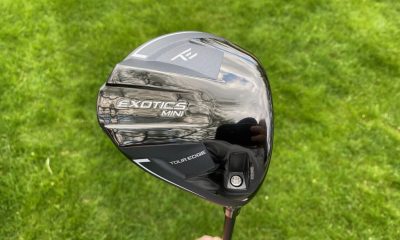
“Yeah, it’s funny really because I know Augusta is probably associated with being fairly forgiving off the tee in a way, so you think you can whale around driver a little bit. But I don’t necessarily think that’s always the play for me. I think there’s holes that set up really well where I can draw it with the mini driver if I’m feeling less comfortable with the driver and things like that.”
That strategy he believes will make his TaylorMade Qi10 9-wood extra critical this week in Georgia:
“The biggest thing is the 9-wood for me. If I can put myself in position on the par-5s or the 4th long par-3, like it — for me, I can’t really hit that high 4-iron, so 9-wood helps me a lot.”

Tommy Fleetwood WITB 2026

RBC Heritage Tour Report: More minis, course-specific setups, Spider & GTS launches

Justin Rose WITB 2026 (April): Full WITB breakdown with new McLaren irons

Best fairway woods of 2026: The most versatile fairway woods + the most forgiving fairway woods

Gary Woodland’s winning WITB: 2026 Texas Children’s Houston Open

What’s the story behind Webb Simpson’s custom-stamped irons?

Cadillac Championship Tour Report: Spieth’s sizable changes, McLaren Golf launches, and more

The 24 players who can win the Masters

Rory McIlroy’s winning WITB: 2026 Masters

Kristoffer Reitan’s winning WITB: 2026 Truist Championship

J.J. Spaun’s winning WITB: 2026 Valero Texas Open


Alex Fitzpatrick WITB 2026 (May)
Driver: Ping G440 LST (9 degrees) Shaft: Fujikura Ventus Black 6 X 3-wood: TaylorMade Qi4D (15 degrees) Shaft: Fujikura Ventus...

Kristoffer Reitan’s winning WITB: 2026 Truist Championship
Driver: Ping G440 Max (9 degrees) Shaft: Mitsubishi Tensei 1K White 60 TX 3-wood: Ping G440 Max (15 degrees) Shaft:...


WITB Time Machine: Rory McIlroy’s winning WITB, 2021 Truist Championship
Rory McIlroy’s victory at the 2021 Wells Fargo Championship 2021 (now the Truist Championship) marked a significant return to form,...


Collin Morikawa WITB 2026 (May)
Driver: TaylorMade Qi4D LS (8 degrees) Shaft: Mitsubishi Diamana D+ Limited 60 TX 3-wood: TaylorMade SIM Tour (14 degrees) Shaft:...
-
 Equipment2 weeks ago
Justin Rose WITB 2026 (April): Full WITB breakdown with new McLaren irons
-
 Equipment1 week ago
What’s the story behind Webb Simpson’s custom-stamped irons?
-
 Equipment2 weeks ago
Cadillac Championship Tour Report: Spieth’s sizable changes, McLaren Golf launches, and more
-
Whats in the Bag3 days ago
Kristoffer Reitan’s winning WITB: 2026 Truist Championship
-

 Whats in the Bag1 week ago
Cameron Young’s winning WITB: 2026 Cadillac Championship
-

 Whats in the Bag3 weeks ago
Nelly Korda WITB 2026 (April)
-

 Equipment2 weeks ago
Justin Rose on the switch to McLaren Golf, learnings from previous equipment moves
-

 Tour Photo Galleries2 weeks ago
Photos from the 2026 Cadillac Championship


Pingback: Michael Kim explains how he was taxed following French Open victory – GolfWRX
mg
Sep 2, 2025 at 6:46 am
I am one who does not trust golf writers, but this was a good interview.
Thank you.