
Equipment
True Temper releases lighter, longer XP family of shafts

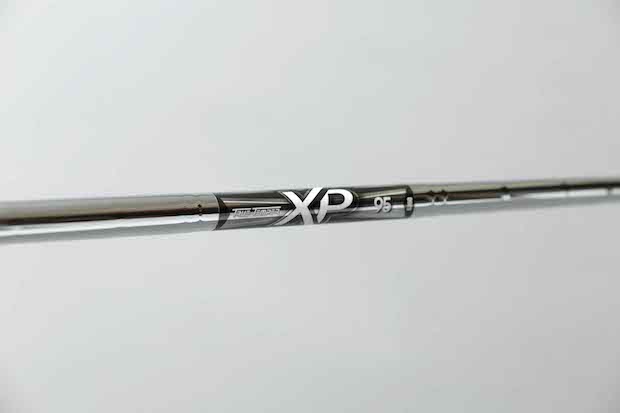
Most golfers are familiar with the advantages of today’s game-improvement irons, which are helping golfers hit the ball higher and farther than ever before. But fewer are aware of the latest crop of lightweight “game-improvement” shafts, which can further boost a golfer’s iron play.
One top-rated model is True Temper’s new XP shaft family, which was chosen by leading iron makers Callaway, Mizuno and Titleist to be the stock shaft in each company’s flagship game-improvement irons, Callaway’s Apex, Mizuno’s JPX-EZ and JPX-EZ Forged and Titleist’s AP1 irons.
Greg Cavill, vice president of alloy engineering for True Temper, credits the performance of the XP shafts to their variable wall technology, which allowed engineers to manipulate the thicknesses of certain parts of the shafts to improve distance, performance and feel.
In the butt section of the shaft, for example, the walls were made thinner, which was a key to making the XP 95 as light as 92 grams, more than 30 grams lighter than True Temper’s famed Dynamic Gold shafts. But engineers used thicker walls in the tip section of the shaft, which added weight to help stabilize the region.
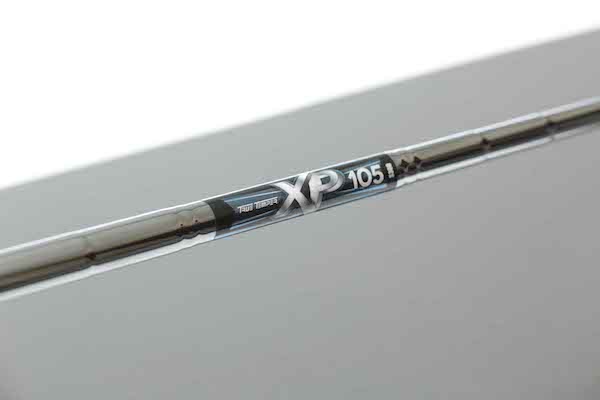
Above: True Temper’s XP 95 shaft has a butt diameter of 0.605 inches, while the 10-grams heavier XP 105 shaft has a slightly smaller butt diameter of 0.600 inches.
Engineers continued the give and take by changing the step pattern of the butt section of the shaft. Its steps were made longer than those in the tip section, making the butt section stiffer. The butt section was then further reinforced with another stiffening agent, a slightly larger outside diameter, which works with the shaft’s stiff midsection to force the tip of the shaft to “kick” at impact.
That kick is responsible for the shaft’s higher launch, which when paired with the added swing speed the lightweight shaft provides adds 6-to-8 yards more carry distance, according to True Temper robot testing.
True Temper’s XP 95 shaft, as well as the 10-grams heavier XP 105 shaft, have a balance point that allows iron sets to be built with traditional balance points. They’re available in R300 and S300 flexes, and cost $400 for a set of eight shafts (3-PW).


Equipment
Putters that never made it: Check out some of the best tour builds that didn’t make the cut

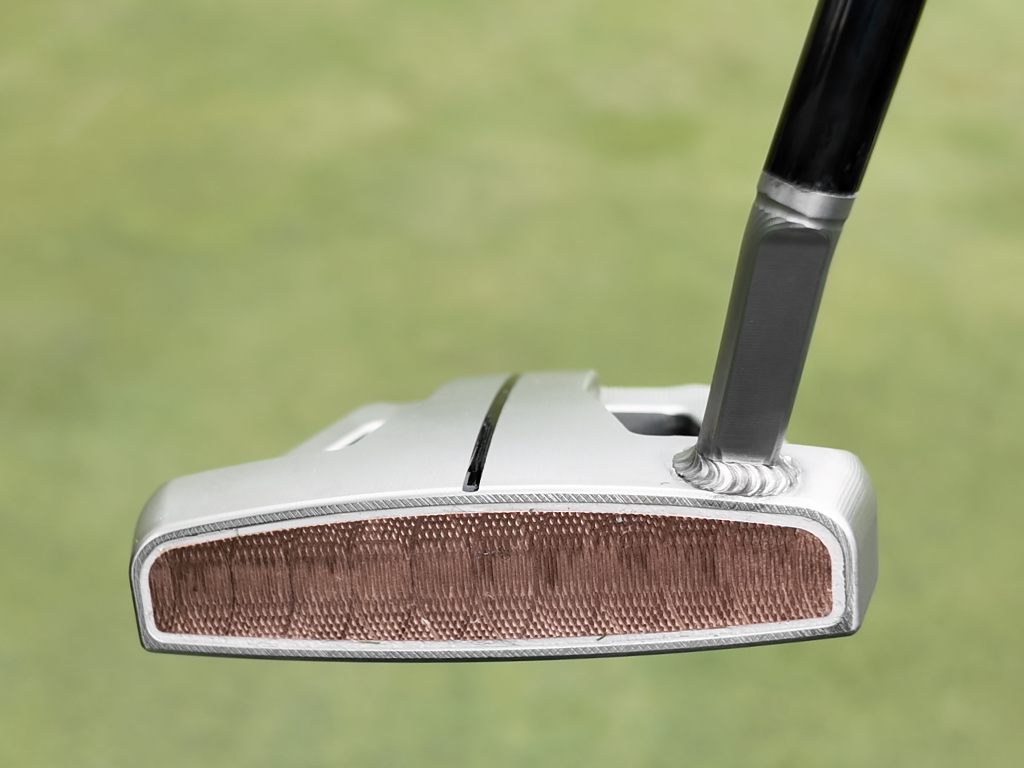
Arguably, the best perk of being a professional golfer on the PGA Tour is the ability to request or even just be handed pretty much any club you could think of. It happens more often than you think, usually with putters around the practice green from one event to the next. Come Wednesday, the Tour bags lining the edge of the putting surface become resting places for fallen flatsticks that never made the cut.
So let’s take a look at some of the best we’ve seen out on Tour this year that never made it to the competition. (You may notice none of Hideki Matsuyama’s custom Scotty Cameron putters made this list. There are too many.)
Let’s start with this custom Damascus Milled Odyssey Rossie made for Ryo Hisatsune. Featuring a single line and the short-slant hossel, we’ve seen plenty of Number 7 and jailbird heads featuring the Damascus Milled insert, but this is the first and only one we’ve spotted in a Rossie. Hisatsune primarily putts with an Odyssey Black Series iX #9, but we have seen him recently with a TaylorMade TP Collection SOTO, so there could be potential that the Damascus Milled Rossie could end up in the bag.

Everyone wants to be Cameron Young right now. We’ve had Justin Thomas and Tom Hoge both game the Scotty Cameron 9.5R prototype. Well, for the PGA Championship, Brooks Koepka nearly joined that list after requesting the same style of putter, with the full-length alignment line. But the Scotty Cameron reps took the request a step further and made one specially for Koepka with a Teryllium insert, similar to one in his previous Newport 2 gamers. The reason why this one didn’t go into play, though? Because it was too heavy.

Harry Hall was the third-best putter on Tour last year, so when Bettinardi made him a custom proto, you know it was going to be good. The custom BB28 blade features VDF face milling, a custom-welded single-bend shaft, and the owner’s initials – HH – on the sole of the putter. Hall, who usually games an Odyssey O-Works #7 W, has dabbled with a TaylorMade Spider Tour X already this year. Maybe there’s a chance this Bettinardi might make his bag.

Honestly, this one doesn’t need a description. It’s Kieth Mitchell’s custom Scotty Cameron Napa. One Scotty Cameron face stamp, two Scotty Dogs, two Scotty Cameron 7-Point Crowns and one Circle T. That is all. Oh, except for the Cashmere Cameron headcover.

Finally, and just for fun, how about we pour one out for this TaylorMade Spider Tour X made for Scottie Scheffler in its new torched finish. It’s unlikely we’ll see a putter change anytime soon from the best golfer in the world. In fact, he hit just two putts with it on the Harbour Town practice before going back to his trusty gamer.


Driver: Titleist GT3 (9 degrees) Buy here.
Shaft: Aldila Rogue Silver 130 M.S.I. 70 TX


3-wood: TaylorMade Qi35 (15 degrees)
Shaft: Fujikura Ventus Blue 7 X

7-wood: TaylorMade Qi35 (21 degrees)
Shaft: Fujikura Ventus Blue 8 X

Irons: Grindworks PR-202 (4), Grindworks PR-101A (5-PW)
Shafts: True Temper Dynamic Gold Tour Issue X100


Wedges: Cleveland RTX6 Tour Rack (52-10 Mid), Titleist Vokey Design SM10 (56-08M), SM11 (60-04T)
Shafts: True Temper Dynamic Gold Tour Issue S400


Putter: Scotty Cameron Tour Rat 1.5 Tour Prototype


Ball: Titleist Pro V1x
Grips: Golf Pride MCC


In our forums, our members have been discussing their favorite major winning irons used by Tiger Woods. WRXer ‘golferdude54’ kicks off the thread saying:
“Mizuno MP 14/29. Titleist 681T. Nike Forged Blades. TaylorMade P7TW.
Among these irons that helped Tiger win 15 majors, which is your favorite in terms of looks?”
And our members have been naming their favorites and why in response.
Here are a couple of posts from the thread, but make sure to check out the entire discussion and have your say at the link below.
- SwingBlade: “I prefer the early blades he played and the more recent TM TW’s especially because after Tiger had his major behavioral setbacks, part of Nikes support payback was making Tiger play a Nike putter and cease using his beloved uniquely customized Scotty putter.”
- ProjectX: “This (Nike Forged Blades) and there’s not even a close second.”
Entire Thread: “Which of Tiger’s major winning irons are your favorite? – GolfWRXers discuss”

Justin Rose WITB 2026 (April): Full WITB breakdown with new McLaren irons

RBC Heritage Tour Report: More minis, course-specific setups, Spider & GTS launches

What’s the story behind Webb Simpson’s custom-stamped irons?

Cadillac Championship Tour Report: Spieth’s sizable changes, McLaren Golf launches, and more

Kristoffer Reitan’s winning WITB: 2026 Truist Championship

Cameron Young’s winning WITB: 2026 Cadillac Championship

Aaron Rai’s winning WITB: 2026 PGA Championship

Nelly Korda WITB 2026 (April)

Justin Rose on the switch to McLaren Golf, learnings from previous equipment moves

Photos from the 2026 PGA Championship


Patrick Reed WITB 2026 (May)
Driver: Titleist GT3 (9 degrees) Buy here. Shaft: Aldila Rogue Silver 130 M.S.I. 70 TX 3-wood: TaylorMade Qi35 (15 degrees)...

Aaron Rai’s winning WITB: 2026 PGA Championship
Driver: TaylorMade M6 (9 degrees) Shaft: Aldilda Synergy Blue 70 TX 3-wood: TaylorMade Qi10 (15 degrees) Shaft: Fujikura Ventus Blue...


Michael Block WITB 2026 (May)
Driver: TaylorMade Qi4D (9 degrees) Shaft: Fujikura Ventus Black VeloCore+ 5 X 3-wood: TaylorMade Qi4D (15 degrees @14.25) Shaft: Mitsubishi...


Bryson DeChambeau WITB 2026 (May)
Driver: Krank Formula Fire Pro (6 degrees) Shaft: Project X Prototype 3-wood: Krank Formula Fire (10 degrees) Shaft: LA Golf BAD...
-
 Whats in the Bag3 weeks ago
Kristoffer Reitan’s winning WITB: 2026 Truist Championship
-
Whats in the Bag2 weeks ago
Aaron Rai’s winning WITB: 2026 PGA Championship
-
 Tour Photo Galleries3 weeks ago
Photos from the 2026 PGA Championship
-
 Equipment2 weeks ago
GolfWRX Launch Report: 2026 Titleist GTS drivers
-

 Equipment2 weeks ago
PGA Championship Tour Report: Fitzpatrick, Koepka among big-name putter switches for Aronimink
-

 News2 weeks ago
WITB Time Machine: Phil Mickelson’s winning WITB, 2021 PGA Championship
-

 Equipment2 weeks ago
Which of Tiger’s major winning irons are your favorite? – GolfWRXers discuss
-

 Equipment2 weeks ago
Lead Tape Report: Adjusting the swingweight of the Wanamaker Trophy


BrianK
Dec 4, 2013 at 10:09 pm
For all of the people who will read this article and be truly interesting in the shafts, you need to try them. Don’t listen to the people whining about prices and if their game will change by 10 strokes. These are really good light weight shafts. Very good feel, exceptional control, and a little added distance. I have a set of the XP 105 and I have been really impressed with the vibration reduction in them. Been playing graphite for years and this is the first set of steal shafts that haven’t caused soreness in my shoulder. Even hitting off mats was no problem for me, and that was huge. These are not your lightweight “noodle” shafts of the past, these are legitimate shafts for good players who want to go a little lighter.
Dan
Dec 1, 2013 at 3:30 pm
These shafts are only 26$ at golfsmith. Not sure where the 50$ came from.
True Temper
Dec 2, 2013 at 11:04 am
$50 per is MSRP meaning fit and installed. $25 as a component. Very much in line with other lightweight steel and far less than a lot of new graphite irons..
TTS
Pingback: Desde el tee: semana 48/2013 | Golf76.com
Andrew Cooper
Nov 29, 2013 at 4:35 am
Equipment being too expensive is a myth! Golf equipment is no more expensive now in real terms than it was 20 odd years ago, certainly in the UK., Mizuno, Ping irons e.t.c. back in early 1990s cost around £500. Callaway’s Big Bertha and GBB drivers were £200-£300 when they came out. In 2013, you can still buy a cracking set of irons for £500. New Drivers are more or less the same-and the clearance deals on older models can be half that. If you’re going for up-charge options, like these shafts, and/or always want the latest clubs, then obviously that’s going to cost.
For anyone new to the game, or short on cash, quality 2nd hand is the way to go. If you know what to look for, you could put together a great set for under £400.
Giancarlo Baxa
Nov 29, 2013 at 12:06 am
I’m so sick about hearing about all these new shafts, new models, new everything. The bottom line is players clubs have all been the same since the change from the old persimmons to metal woods. A pure ball striker can perform on the same level no matter what clubs he’s using. There is nothing else manufacturers can do within the rules of conforming clubs that will make one club play much better than another. Basically the only difference is cosmetics, as much as manufacturers want you to believe that there is for example, ” increased ball speeds, different COG’s etc, it all means nothing. Give it up people, stop changing equipment and start changing your swing.
Brian
Nov 29, 2013 at 5:11 pm
There is nothing farther from the truth than what you just said. Go spend some time reading about modern equipment and I’m willing to bet you’ll reevaluate that statement.
woot
Nov 28, 2013 at 4:11 pm
This is not a poor man’s sport, if you want to go cheap you can always buy the box sets from wal mart.
marko
Nov 29, 2013 at 1:06 am
Golf is a sport! And there fore should be affordable for ALL people.
Don’t think for one minute because you make more money than someone else that YOU are a BETTER person and that YOU deserve special treatment. There is NO place in this life for Elitestests like You!!
Really?
Nov 28, 2013 at 8:56 am
50 bucks a piece for steel shafts… I can find EVERY other steel shaft for cheaper than that… Even the KBS Customs are not 50 a piece.
Another OEM pricing themselves out of most bags.
_Hawk3y3_
Dec 1, 2013 at 8:55 pm
Anyone paying $50 per shaft for these is stupid, lazy, or both. I play XP 105 S300 in my 5-PW and found them as a set of 1-time pulls on e-bay. $35 shipped for the whole set, and I had the serial numbers verified by True Temper. They truly are wonderful shafts and play very similar to Dynamic Gold. Don’t pay MSRP…spend a little bit of time searching for a deal or two.
WP
Nov 28, 2013 at 6:42 am
On the other hand, for those ‘hacks’ that are willing to suffer the indignation of playing stock shafts, this is a good news story. I have the XP95 in my new AP2s, love them, and avoided the $25/per upcharge for PXi. A set of AP1 with XP95 could be considered a bargain.
Paul
Nov 28, 2013 at 11:46 am
Agreed, feel like I stole something after reading this article considering these are stock in the new ap1 and 2’s. I personally liked them better then any other lightweight shaft as well, pxi, steelfibres, etc. and no up charge, win-win.
John
Nov 27, 2013 at 10:34 am
The real question for me is will these $50 a piece shafts lower someone’s score or handicap! I think I know that answer – I think they are running out of real ideas to improve club performance but need a another new idea to sell us equipment we don’t need.
AJ Jensen
Nov 27, 2013 at 10:24 am
I don’t know that I want much ‘improvement’ out of my irons, in terms of distance. What I want from my irons is for them to go an exact distance and stop dead where they land.
Michael
Nov 27, 2013 at 8:18 am
50 US-Dollar für a stable lightweight steelshaft? For that money, I would opt for an Aerotech Steelfiber in the correct weight.
Kevin
Nov 27, 2013 at 2:27 am
50$ a shaft for 6-8 more yards? No thanks I’ll be back here using a 7 iron when you use an 8 for those prices
jgpl001
Nov 28, 2013 at 5:10 pm
There were many id..ts who were willing to pay $300+ when TM promised 15 yds with the RBZ, so what is the problem here?
True Temper just need to have a brass neck and marketing hype machine like TM and they could double the price
Giancarlo Baxa
Nov 29, 2013 at 12:08 am
exactly right
Marko
Nov 27, 2013 at 2:20 am
WOW! $50 bucks a shaft. This game is becoming to expensive.
Not going to grow the game at these prices.
$1000 for a set of irons?
$300-$400 for a driver?
$125 for each wedge?
$100-$300 for a putter?
$40 for a dozen balls?
Really sad.
Zach
Nov 27, 2013 at 2:52 am
Completely agree! I can see why so many are leaving the game! Add to that cost membership fees for club members or for an average hack the green fees. Really hate to see this happen to my beloved game!!!
Ross
Nov 27, 2013 at 6:34 pm
It’s always been the way of golf… I was pretty poor growing up had hand me down clubs (not good quality and went hunting for golf balls to play and sell to cover my membership) The looks you get are never of encouragement…. it 99.9% scorn and the game has an ego and will continue to pander to the rich. 400 dollar head on a 400 dollar shaft, in a 400 bag…
Buy second hand 24 months old gear… they big up the advances but its all marketing.
Longest driver i ever hit was a mp650 with a graffaloy prolaunch red shaft… 90 dollars on ebay!
Martin
Nov 27, 2013 at 8:37 am
And if you really want to get properly fitted clubs, using the clubfix for example, it starts to get really expensive. A friend of mine got fitted for a new driver in Sweden (this was a serious fitter who really checked the club after it arrived, and it was an aftermarket shaft) and he paid: 750 dollars for it… So in the US its much cheaper…
Ross
Nov 27, 2013 at 6:37 pm
Everywhere is cheaper than in rip off Britain… unfortunately where i live… we have the links though
Jack
Nov 27, 2013 at 10:08 pm
But income must be higher to offset, no?
Nick Messi
Feb 25, 2014 at 2:34 pm
Try living in Australia mate.
We get hammered left right and centre. Cars , housing , groceries , golf equipment , golf membership , green fees , private school fees ……. the list goes on and on.
Christopher Kee
Nov 27, 2013 at 2:15 pm
I agree. It’s $2,500 for clubs/bag/balls/shoes to get out on the course if you purchase new. Thank god for ebay!
Corrie-Lynn's dad
Nov 28, 2013 at 10:55 am
The game of golf has been expensive as long as I can remember.
marko
Nov 29, 2013 at 1:15 am
I can remember when $500 would get you a complete set. Not that long ago. When the tradition of golf was respected. Now they (OEM) just want to find a new way(HYPE) to seperate you and your money. Big heads,graphite shafts, and the change in the golf ball has ruined the GAME of golf. It’s no longer a game of skill. It’s just boom and gouge. Where is Payne Stewart. RIP.