
Equipment
Q&A: Aerotech Golf President Chris Hilleary

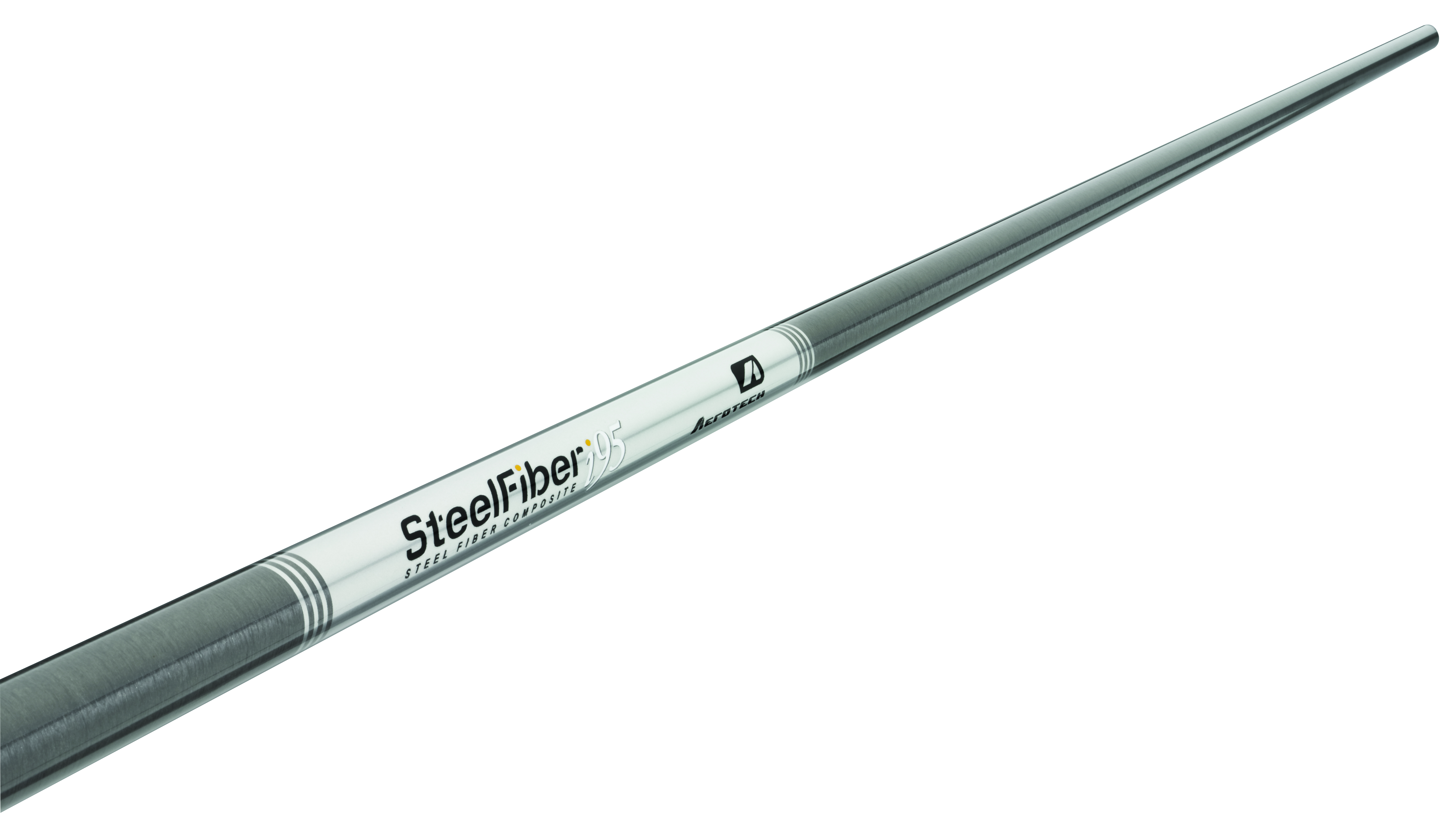
The best-case scenario for a small golf equipment company is essentially what has happened for Aerotech Golf in the last six years.
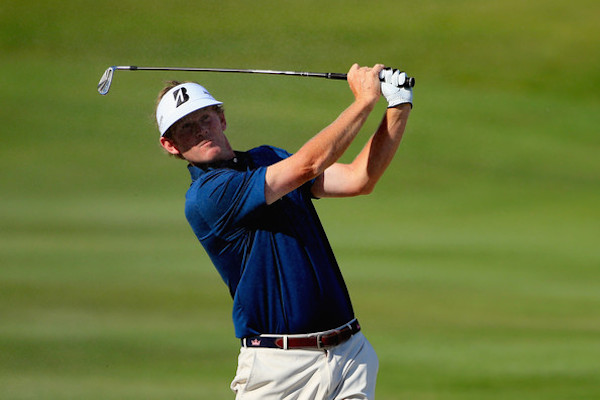
Matt Kuchar began using a set of the company’s SteelFiber composite shafts in his irons in 2008. Since the switch, he’s won five times on the PGA Tour, and along the way he convinced friend and fellow top-ranked golfer Brandt Snedeker to try the shafts. Snedeker liked them so much that he put the same model in his irons, and has used them in route to four PGA Tour wins as well as the 2012 FedEx Cup.
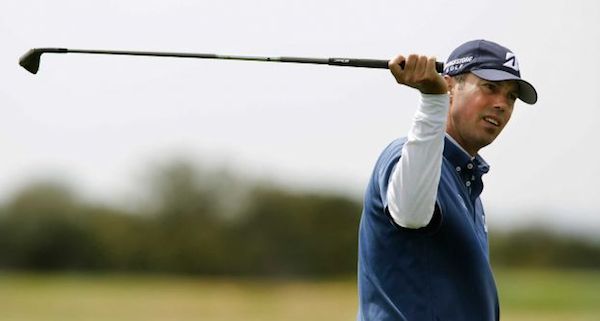
The success of Kuchar and Snedeker has led to several other PGA Tour winners using the shafts, but what seems like an overnight success actually began 17 years ago.
Aerotech Golf President Chris Hilleary joined Aerotech Sports in 1997 as the director of its golf division. The company’s main focus was the production of composite hockey sticks, however, which allowed Hilleary to purchase the golf division in October 2005.
Since that time, Hilleary has grown the Bellingham, Wash., company to an enviable spot in the industry. SteelFiber is the No. 1 graphite iron shaft on the PGA Tour, and its popularity with golfers has led to it becoming a custom iron shaft option for nearly every major equipment manufacturer.
Hilleary took the time to chat with GolfWRX Managing Editor Zak Kozuchowski about the SteelFiber shaft, his company’s success and what the future holds for Aerotech.
—————————————————————————————————————————-
ZK: Chris, you said that you strapped yourself financially to purchase Aerotech Golf in 2005. What was it that made you do that?
CH: I worked for Aerotech Sports (Aerotech Golf’s parent company) for nine years and ran its golf division. During that time, I designed the SteelFiber technology and I knew that this shaft had the potential to revolutionize the iron shaft category. When the opportunity to purchase the golf division came along, I actually had to compete against one of the largest shaft manufacturers in the world to purchase the brand. I initially looked for investors, but I decided to leverage everything I owned and was able to outbid the competition. In retrospect, it was one of the smartest decision I’ve ever made.
ZK: Tell me about the SteelFiber shaft specifically. Where did the idea come from, and why do you think that it has been so successful?
CH: Before I began designing the SteelFiber shaft, I saw a void in the market as composite shafts had not been embraced in the iron category. Over 95 percent of all drivers and fairway woods used graphite at the time and I was confident iron shafts would get there, but I needed to overcome some performance hurdles first. That’s when I set out to create a graphite iron shaft that had all the control and consistency of steel but had all the benefits of graphite as well. The SteelFiber shaft was actually an evolution of several designs over time. Early on in the development I realized that I needed to add a higher density (heavier) material into the structure to achieve the performance enhancements I was looking for. After several attempts co-mingling different materials with the graphite the real breakthrough came when I discovered the micro-thin steel fiber and applied it to the entire surface of the shaft. The unique combination of the graphite core with the full layer of steel has created an iron shaft that outperforms steel shafts that has ultimately accounted for its success.
ZK: What do golfers need to know about SteelFiber shafts if they’re considering purchasing a set? I’ve been told by top custom fitters that the shafts tend to play on the stiff side and that they have a higher balance point than a lot of iron shafts.
CH: First of all, golfers should understand that this is a composite shaft so it has all the vibration-dampening characteristic of a 100 percent graphite shaft. This lowers the risk of injury, aggravation of existing injuries and reduces the fatigue associated with swinging heavier, harsher steel shafts. Secondly, we have designed this shaft with a very stable lower quadrant and tight torque values. Combine that with the full layer of steel and it results in an extremely controllable shaft even as the butt frequencies get lower (softer). Therefore, the shaft plays on the firm side of flex as you mentioned. This is evidenced by that fact that over 80 percent of all the shafts being played on the PGA and Champions tours are our standard stiff flex. Our balance points run about 50 percent (middle of the shaft), which is not necessarily high but when using lighter weight shafts with standard head weights (designed for building steel shafted irons) a club builder may need to add a tip weight or make a slight length adjustment to hit target swing weights.
ZK: When an iron shaft becomes successful on tour, it tends to be successful for a long time. For example, True Temper’s Dynamic Gold steel shafts have been the most played iron shafts on the PGA Tour for decades. Do you think SteelFiber has that kind of staying power?
CH: The Dynamic Gold has been the benchmark in iron shafts for more than 70 years and we can only dream that the SteelFiber shaft has that kind of staying power. With that said, the Dynamic Gold shaft replaced the hickory shaft because of the performance benefits it exhibited over its predecessor. The SteelFiber has now taken iron shaft performance to the next level by adding performance characteristics that the steel shaft could not achieve. If history repeats itself, you never know, the SteelFiber shaft has a chance to become the new “gold standard.”
ZK: Some large golf equipment manufacturers have expressed their frustration with USGA rules that they say have limited innovation. Do shaft manufacturers face similar obstacles, or is there still a lot of room to innovate in the shaft space?
CH: I think the golf shaft is one area that can continue to stretch the boundaries of performance and make the game more enjoyable for everyone. As material science, manufacturing processes and the understanding of shaft performance improves, we will continue to create new innovative designs.
ZK: Tell me what’s next for Aerotech Golf.
CH: Our main focus has been managing the growth that we’ve been experiencing during the past few years and especially in the last 24 months. With that said, we continue to research new materials and expand our knowledge of shaft performance and will be adding to our product line soon. Our next product launch will be a comprehensive line of SteelFiber hybrid shafts. We have been getting several hybrid shafts in play each week out on tour and it’s time to share those designs with the golfing public.
ZK: Thanks for your time, Chris.


Equipment
Putters that never made it: Check out some of the best tour builds that didn’t make the cut

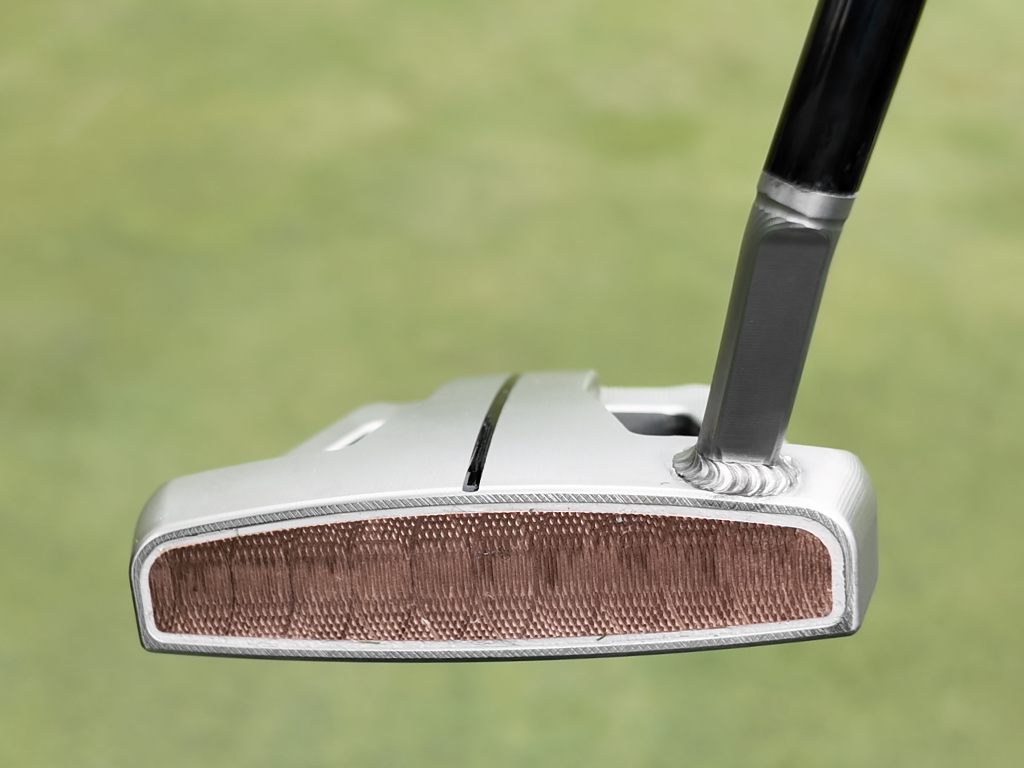
Arguably, the best perk of being a professional golfer on the PGA Tour is the ability to request or even just be handed pretty much any club you could think of. It happens more often than you think, usually with putters around the practice green from one event to the next. Come Wednesday, the Tour bags lining the edge of the putting surface become resting places for fallen flatsticks that never made the cut.
So let’s take a look at some of the best we’ve seen out on Tour this year that never made it to the competition. (You may notice none of Hideki Matsuyama’s custom Scotty Cameron putters made this list. There are too many.)
Let’s start with this custom Damascus Milled Odyssey Rossie made for Ryo Hisatsune. Featuring a single line and the short-slant hossel, we’ve seen plenty of Number 7 and jailbird heads featuring the Damascus Milled insert, but this is the first and only one we’ve spotted in a Rossie. Hisatsune primarily putts with an Odyssey Black Series iX #9, but we have seen him recently with a TaylorMade TP Collection SOTO, so there could be potential that the Damascus Milled Rossie could end up in the bag.

Everyone wants to be Cameron Young right now. We’ve had Justin Thomas and Tom Hoge both game the Scotty Cameron 9.5R prototype. Well, for the PGA Championship, Brooks Koepka nearly joined that list after requesting the same style of putter, with the full-length alignment line. But the Scotty Cameron reps took the request a step further and made one specially for Koepka with a Teryllium insert, similar to one in his previous Newport 2 gamers. The reason why this one didn’t go into play, though? Because it was too heavy.

Harry Hall was the third-best putter on Tour last year, so when Bettinardi made him a custom proto, you know it was going to be good. The custom BB28 blade features VDF face milling, a custom-welded single-bend shaft, and the owner’s initials – HH – on the sole of the putter. Hall, who usually games an Odyssey O-Works #7 W, has dabbled with a TaylorMade Spider Tour X already this year. Maybe there’s a chance this Bettinardi might make his bag.

Honestly, this one doesn’t need a description. It’s Kieth Mitchell’s custom Scotty Cameron Napa. One Scotty Cameron face stamp, two Scotty Dogs, two Scotty Cameron 7-Point Crowns and one Circle T. That is all. Oh, except for the Cashmere Cameron headcover.

Finally, and just for fun, how about we pour one out for this TaylorMade Spider Tour X made for Scottie Scheffler in its new torched finish. It’s unlikely we’ll see a putter change anytime soon from the best golfer in the world. In fact, he hit just two putts with it on the Harbour Town practice before going back to his trusty gamer.


Driver: Titleist GT3 (9 degrees) Buy here.
Shaft: Aldila Rogue Silver 130 M.S.I. 70 TX


3-wood: TaylorMade Qi35 (15 degrees)
Shaft: Fujikura Ventus Blue 7 X

7-wood: TaylorMade Qi35 (21 degrees)
Shaft: Fujikura Ventus Blue 8 X

Irons: Grindworks PR-202 (4), Grindworks PR-101A (5-PW)
Shafts: True Temper Dynamic Gold Tour Issue X100


Wedges: Cleveland RTX6 Tour Rack (52-10 Mid), Titleist Vokey Design SM10 (56-08M), SM11 (60-04T)
Shafts: True Temper Dynamic Gold Tour Issue S400


Putter: Scotty Cameron Tour Rat 1.5 Tour Prototype


Ball: Titleist Pro V1x
Grips: Golf Pride MCC


In our forums, our members have been discussing their favorite major winning irons used by Tiger Woods. WRXer ‘golferdude54’ kicks off the thread saying:
“Mizuno MP 14/29. Titleist 681T. Nike Forged Blades. TaylorMade P7TW.
Among these irons that helped Tiger win 15 majors, which is your favorite in terms of looks?”
And our members have been naming their favorites and why in response.
Here are a couple of posts from the thread, but make sure to check out the entire discussion and have your say at the link below.
- SwingBlade: “I prefer the early blades he played and the more recent TM TW’s especially because after Tiger had his major behavioral setbacks, part of Nikes support payback was making Tiger play a Nike putter and cease using his beloved uniquely customized Scotty putter.”
- ProjectX: “This (Nike Forged Blades) and there’s not even a close second.”
Entire Thread: “Which of Tiger’s major winning irons are your favorite? – GolfWRXers discuss”

Justin Rose WITB 2026 (April): Full WITB breakdown with new McLaren irons

RBC Heritage Tour Report: More minis, course-specific setups, Spider & GTS launches

What’s the story behind Webb Simpson’s custom-stamped irons?

Cadillac Championship Tour Report: Spieth’s sizable changes, McLaren Golf launches, and more

Kristoffer Reitan’s winning WITB: 2026 Truist Championship

Cameron Young’s winning WITB: 2026 Cadillac Championship

Aaron Rai’s winning WITB: 2026 PGA Championship

Nelly Korda WITB 2026 (April)

Justin Rose on the switch to McLaren Golf, learnings from previous equipment moves

Photos from the 2026 PGA Championship


Patrick Reed WITB 2026 (May)
Driver: Titleist GT3 (9 degrees) Buy here. Shaft: Aldila Rogue Silver 130 M.S.I. 70 TX 3-wood: TaylorMade Qi35 (15 degrees)...

Aaron Rai’s winning WITB: 2026 PGA Championship
Driver: TaylorMade M6 (9 degrees) Shaft: Aldilda Synergy Blue 70 TX 3-wood: TaylorMade Qi10 (15 degrees) Shaft: Fujikura Ventus Blue...


Michael Block WITB 2026 (May)
Driver: TaylorMade Qi4D (9 degrees) Shaft: Fujikura Ventus Black VeloCore+ 5 X 3-wood: TaylorMade Qi4D (15 degrees @14.25) Shaft: Mitsubishi...


Bryson DeChambeau WITB 2026 (May)
Driver: Krank Formula Fire Pro (6 degrees) Shaft: Project X Prototype 3-wood: Krank Formula Fire (10 degrees) Shaft: LA Golf BAD...
-
 Whats in the Bag3 weeks ago
Kristoffer Reitan’s winning WITB: 2026 Truist Championship
-
Whats in the Bag2 weeks ago
Aaron Rai’s winning WITB: 2026 PGA Championship
-
 Tour Photo Galleries3 weeks ago
Photos from the 2026 PGA Championship
-
 Equipment2 weeks ago
GolfWRX Launch Report: 2026 Titleist GTS drivers
-

 Equipment2 weeks ago
PGA Championship Tour Report: Fitzpatrick, Koepka among big-name putter switches for Aronimink
-

 News2 weeks ago
WITB Time Machine: Phil Mickelson’s winning WITB, 2021 PGA Championship
-

 Equipment2 weeks ago
Which of Tiger’s major winning irons are your favorite? – GolfWRXers discuss
-

 Equipment2 weeks ago
Lead Tape Report: Adjusting the swingweight of the Wanamaker Trophy


Desmond
Apr 5, 2014 at 11:00 am
My professional club maker, a Top 100 Guy, had no problems dialing in the correct flex and swing weight in my iron sets with Aerotech Steelfibers. I guess club making is an art… experimentation, talent and skill.
Chris
Dec 3, 2014 at 1:21 am
What is your expert clubfitters name, location and contact info? Thanks.
Abu Dhabi Golfer
Apr 5, 2014 at 10:40 am
After playing with an Aerotech rep by chance at Semiahmoo GC near Bellingham a couple of years ago, he encouraged me to experiment with their products through local fitters.
Even though it is the iron shafts that tour players only seem to use, I actually ended up getting a stiff 70 gram SteelFiber in my three wood.
The impact feels so stable and stays square.
It’s money.
Sean
Apr 4, 2014 at 9:29 pm
Chris helped me select the SteelFiber’s I now have in my irons. Very approachable, answered all my questions, asked me a lot of questions, and was very helpful. I am very, very happy with these golf shafts.
Chris
Apr 4, 2014 at 8:54 pm
Im sure these are fine shafts, but they just didnt work for me. Couldnt get the feel down. I even had a GD top100 fitter work with me.
Best of luck to them though!
chris
Apr 4, 2014 at 8:28 pm
I have also had issues swingweighting a set of 125’s. In fact, they still sit unbuilt in the corner of my workshop. I just picked up tungeston tip weights (10g), so im hoping thats enough added weight to make them playable.. Perhaps we need to have a “Steelfiber LB” = low balance. I’d love to have a steelfiber shaft where the last inch of the tip section is just as solid steel rod with epoxy vents,
I just hope when i finally get this issue worked out, that all the great things i hear about these shafts are true.
froneputt
Apr 4, 2014 at 8:27 pm
I love these iron shafts, and they have saved my elbows and shoulders. Their old hybrid shafts work but I want slightly more kick. Looking forward to see what they have in the new versions.
paul
Apr 4, 2014 at 6:55 pm
I love these shafts. Play them in titleist CBs. Dispersion is much better then with the DGs. First time I tried them I hit five 7 irons into a circle with a 10′ diameter (which is absurdly consistent for a 16 handicap)
paul
Apr 4, 2014 at 6:57 pm
Also I wished he would have addressed the balance point issue a bit more. I added lead tape to my 3&4 irons because I couldn’t figure where the head was.
The dude
Apr 5, 2014 at 10:47 am
Good point….so a tighter dispersion was your net gain? How can that be…when you compare them to steel?
paul
Apr 5, 2014 at 1:33 pm
Lower torque maybe? I don’t know. But my accuracy has never been so good.