
Opinion & Analysis
What I learned losing $63,700 playing professional golf


It was the spring of 2007. After two years of college, I said goodbye to my golf scholarship and my great group of teammates. I was ready to chase my dream of playing golf on the PGA Tour.
I didn’t know what my future held, but I knew that in order to succeed I’d have to fully commit myself to golf with 100 percent focus.
I moved to Tampa from Indianapolis to start preparing for the upcoming 2008 season. During the day, I worked on my golf game and at night I worked at a restaurant bussing tables to save up extra money on the side. I grew up cleaning toilets and scrubbing floors in my family’s janitorial business, so working a side job was nothing new to me, but I did have some financial help from family and friends for my first full year on the Hooters Tour. I knew playing golf professionally wasn’t cheap, but little did I know at the time how quickly things add up, even for someone as tight with money as myself.
At the time, a membership on the Hooters Tour cost around $2,000 and the entry fee for each event was around $1,100. That was only to gain entry into the one event and compete against 155 other players for a $200,000 purse, with around $34,000 going to the winner. A typical week would cost me about $1,800. If there was host-housing for the week, it was cheaper — about $1,300. Host-housing is when a family offers its home to a golfer for the week and lets you stay in an extra room. I’ve met a lot of great people through hosting, many of whom I still stay in touch with and call friends to this day.
After shooting 68 and not qualifying for the Nationwide Tour stop in Atlanta — yes, 68’s get you a one-way ticket out of town for Monday qualifiers — I headed up to Greenville, N.C. for the Touchstone Energy Open on the Hooters Tour.
Overall, I felt like my game was going in the right direction in my first year as a professional. I started off the week well with a pair of 68’s in the first two rounds. I had just made my first cut as a pro, and after a one-under par 71 on Saturday I was tied for the lead going into the last day. The forecast didn’t look great for Sunday — cold, rain and some light hail. It seemed Mother Nature didn’t want the final round to be played, and it looked as though it would be canceled numerous times.
Driving to the course, the thought crept into my head that if today’s round was cancelled, I would split the $33,500 first-place check. I immediately stopped myself from thinking about that. You don’t play for second place or hope for a particular outcome. You go out there to win no matter the situation. “Don’t worry about the weather or the outcome, focus on what you can control,” I told myself. “The shot in front of you is all that matters.”
Ten hours and multiple rain delays later, I was standing in the fairway, in the rain, on the 71st hole. I was around 270 yards from the green, faced with a decision to lay up or go for the green — birdie to take the lead going into the last, or make a safe par and likely put myself into a playoff that likely wouldn’t happen because of darkness. I remembered what I said to myself in the car on the way to the golf course, so I pulled out the driver and hit it off the deck. The ball finished up by the green. After hitting the pitch shot to 10 feet, I cleared off the hail on the green that was in my line and rolled in the putt.
I now had a one-shot lead with one hole to play. After hitting the ball in the middle of the green and two-putting on the par-3 last hole, I realized I had won the golf tournament. I couldn’t believe it! Winning at the age of 21 was the jump-start to the season I was gunning for and the ideal start to my professional golfing career. Little did I know at the time that there were going to be many peaks and valleys in the years to come. This win would be the climax.
Coming off the win my confidence was high and my bank account benefited from the $33,500 check I just deposited. The remaining part of the year was a bit of a struggle. Mixed into my schedule were Hooters Tour events, Monday qualifiers, state opens and Q-School at the end of the season.
Come August, four months after my win, I had racked up 10 consecutive missed cuts and other near misses at Monday qualifiers. Not only that, a cyst on my left wrist started to grow throughout the season and wasn’t going away. Instead of playing in Q-School, I decided it would be best to have surgery to remove the cyst to alleviate the pain. I wasn’t worried. I was only 21 and it was just one surgery, so no big deal. The surgery would open the floodgates for many more off seasons spent rehabbing, however, opposed to improving my game and getting better.
After recovering from surgery, I spent the remaining part of the off season in Tampa. Even though I had struggled in the tournaments after my win, I had a positive outlook on the upcoming season. Following the surgery, I made another big decision to switch golf coaches. After spending nine years with the same instructor, it was a difficult decision to make. During this transition I decided that my entire game needed to change to reach the level where I wanted to be as a professional golfer. The goal was to have my golf swing revolve around my short game technique and have that technique be the central part that drove lower scores. I learned that you have to be willing to risk everything in order to reach the top. To me, it’s the same reason Tiger and Hogan always strived for perfection. They wanted more out of their game, even after being on top and considered the absolute best.
I was excited about the next season with the plan I had laid out and was anxious to get things going. The results on the golf course were up and down — not alarming considering some of the changes I was making, but the results needed to get better. There were many properly executed shots and rounds played, but then the exact opposite littered with “what-were-you-thinking” moments.
Once the 2009 season wrapped up, I was looking forward to the three-month offseason where I could continue working on the changes in my game and building a solid foundation for the future. About midway through the offseason that winter, things were moving in the right direction with my game. I felt as though 2010 was going to be the year to regain my form and make some real headway. At the time, I was working at a golf course in Tampa — not the best of gigs, but it had its perks.
One day while working in the bag room, things came crashing down, literally. A golf bag fell from the top stand of the bag rack, which was about head high, and I tried saving the bag from an awkward angle with my right arm. The bag made it out unscaved but my shoulder didn’t: a torn labrum that would require surgery. Another offseason and another surgery — not exactly what I had drawn up. Looking back on the situation, saving that 30-handicapper’s bag with iron headcovers and four dozen golf balls from falling wasn’t the best idea. Sometimes, it’s best to just cut your losses, especially if it means hurting yourself. This wasn’t exactly the best timing either, as funds were getting low.
After going through with the surgery, I had a short amount of time to get my game back into shape before the season. With the unlikely change of events, I decided to change up my schedule for the summer. I was still going to play in the state opens and Monday qualifiers, but this year I was going to take my game northwest to the plains and compete on the Dakotas Tour. The definition of insanity is doing the same thing over and over again and expecting a different result. “Sometimes you have to change things up to get different results,” I told myself. “Maybe the trip out west is what you need.”
I had heard nice things about the Dakotas Tour, and you were able to play a lot of tournament rounds in a short amount of time. The events started in Iowa and then we ventured into the Dakotas. The travel was all by vehicle from one small town to the next, trying to squeeze in as many tournaments as possible. Sometimes you’d finish playing in a tournament one day and drive through the night to tee it up in another tournament the next day. The yardage books that the proshops carried were often times my best friend. I never played the courses before, so I needed all the information I could get. The yardage books helped, no doubt, but my results were more or less the same as the past season; signs of good play devoid by head-shaking shots.
My last stop on the tour was in Rapid City, which is in western South Dakota. After the completion of my round, I decided to start the 16-hour drive back to Indianapolis where my parents live. The plan was to find a hotel about halfway, somewhere around Omaha, Neb. That didn’t happen because of the Sturgis Motorcycle Rally and the Iowa State Fair. All the hotel rooms were booked everywhere I drove. I had been up since 4:30 a.m. CST and it was 1 a.m. CST the next day. I decided to finally pull off in a hotel parking lot and try to catch some sleep in the back of my two-door Honda Civic.
It couldn’t be that bad… it was only the middle of the hottest summer in quite some time.
I finally fell asleep, and about two hours later my car started shaking. I didn’t know what was happening, but in my sea of sweat I thought someone was trying to break into my car. It turned out to be a couple making out on my hood. Out of the hundred vehicles in this parking lot, they choose mine to bump and grind on. The show they were putting on was cheap entertainment, but at this point I was too tired to even reach up to the steering wheel and honk the horn to get them to leave. Instead, I laid back down and tried to fall back to sleep.
That summer concluded with a few more near misses at Monday qualifiers and another trip down to Florida for the winter. My game was really starting to take shape with the changes I had made… until I hurt myself again. Shortly before I was scheduled to leave town, I was hitting balls when my club struck something under the ground. It stopped my club dead in its tracks, which had never happened before. Pain shot up my left wrist, and the result was a torn TFCC (Triangular Fibrocartiliage Complex). I tried playing through it for the next month, but the pain was just too much to stand. A third surgery in three years was in my future.
Another stint of physical therapy and practice would get my form back to a decent level, but the problem is that “decent” doesn’t cut it when you’re trying to play golf for a living. The commercials are telling the truth — these guys are good. After three surgeries, multiple missed cuts and several near misses, I decided I had enough. I put away the clubs and stopped chasing the dream.
I had no regrets and didn’t second guess myself, but what was next? When your identity is built around being a golfer, and it’s all you’ve know and all you’ve done, what do you do?
I started to reflect on what I learned and where to go from there. I took some time to see old friends and share my experiences with others. By talking out loud and telling my story, I started looking at the bigger picture. I started asking more questions about the game of golf and what can be learned from it. After spending time thinking, I decided to go back to school and finish my degree. I realized that there’s more to my life than just golf. I took what I had learned and put it on paper. You’d be surprised what people will say when they see things like, “professional golfer” on a resume. It catches them off guard — in a good way.
Since junior golf, I had a clear picture of how everything was going to pan out on my way to being a PGA Tour player. Some said that leaving college after two years to turn professional was a bad decision.
They’d say, “What if golf doesn’t work out?”
What I ultimately learned was that when some dreams end, it’s only an opportunity for new ones. It wasn’t long after graduating that I started a job at a digital marketing agency in New York City. That was hard even for me to believe.
I still love golf and follow it closely week to week — I like to see how my friends are playing on the various tours. I find myself constantly looking back at my experiences and none of them are negative. I’m at peace with the rewards the game have given me, which are much more valuable than the $63,700 my time on tour cost me. You just can’t put a price on what professional golf taught me.
The thing that keeps popping into my mind these days is to always do what feels right. As long as you’re 100 percent committed, you give yourself the best opportunity to not only succeed, but to be at peace with your decision. You only get one chance a lot of times, so don’t do it like someone else. Go your own way and don’t doubt your path.


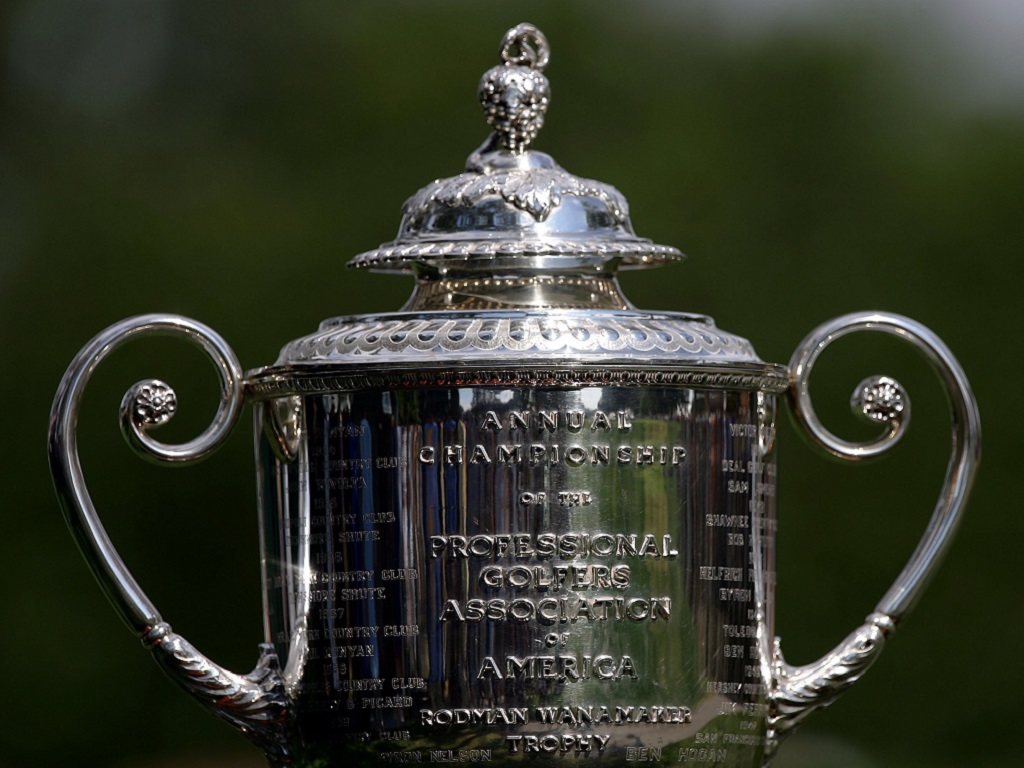
Aronimink is not a storied club, but when Donald Ross himself proclaimed it to be as good as he can design and build, one had to take notice. Jay Sigel was the pre-eminent male amateur golfer from the mid-1970s to the mid-1990s. He might have called any number of Philadelphia clubs home, but he chose Aronimink. It served him well. Gary Player won a PGA Championship here in 1962, and was followed by the 1993 winner … nobody. Aronimink gave that event away to Inverness, for reasons of which it is certainly not proud. So be it. We had to wait sixty-four years for the PGA to return to Newtown Square, but here we are. Aronimink has been neo-restored by Gil Hanse and team, to return Ross features with an eye toward defense against the dark arts, errrr, high-tech equipment.
Day one saw Rory McIlroy and Bryson DeChambeau dig big holes, to the tune of plus-four and plus-six, respectively. Since the first-round lead will be minus-three at worst, many shots will need to be made up for the power couple to reach contention. By nightfall, seven golfers held the day-one lead at three-under par 67. Shots and sticks caught our attention, and we are proud to present Five Things We Learned on Tech Thursday at the 2026 PGA Championship. Thanks to InsideTourGolfer, Today’s Golfer, and GolfWRX for initial equipment research.
First, meet Min Woo Lee
Min Woo Lee, aka Dr. Chipinski, has once again thrust himself into the conversation of Can he, will he, when will he? Lee has so much talent, wins not nearly as often as we believe that he should, and has no major near-misses (much less titles) on his wiki. The young Aussie is getting older and wiser, but is he able to avoid the scarring that holds the older and wiser back from breaking through? Philadelphia offers another opportunity. Min Woo signed for five birdies and two bogeys on day one, and grabbed a share of the opening-day lead at Aronimink. Winners transcend history and the moment, and Lee will need that sort of ascent to lift the Wannamaker on Sunday.
Second, meet Aldrich Potgeiter
The young South African golfer can rip driver with the best of them. Aronimink tips out at nearly 7400 yards, but beyond the fairway bunkers that ensnare only the mortals, Potgeiter can take his chances with wedge from the rough. On Thursday, he spent plenty of time in the spinach. Like Popeye, he used his muscles to gouge and thrash and dig his way out. Six birdies against three bogeys on the card brought AP in a three deep.
Third, meet Martin Kaymer
Not a major event takes place without a where’s he been throwback moment. We know that Martin Kaymer left the PGA and DP World tours for LIV golf, but the two-time (US Open and PGA) major winner has a lifetime exemption into at least one major event, and he seizes the opportunity each May. Kaymer joined the six-seven brigade with four birdies and a solitary bogey on day one. Kaymer was never a long hitter, and the years are kind to no golfer. The German champion will need to uncork every bottle of guile and strategy in his cabinet to remain in contention. For today, though, he occupies a rung on the ladder of Tour Tech.
Fourth, meet Scottie Scheffler
Let’s see, he’s the defending champion at the PGA, and he found his way back to the top tier with five birdies against two bogeys. To be a favorite and then play up to that stature and expectation is quite difficult. Just ask Rory, Bryson, and some of the other pre-tournament heartthrobs. Scheffler’s game is complete, and to knock him off the OWGR #1 pedestal, one needs to defeat him at the majors. Aronimink is the sort of course that fits Scheffler’s game. Better yet, it unfits the game of many of his challengers. Don’t expect Scheffler to go away anytime soon. Come Sunday, he’ll be around.
Fifth, meet Stephan Jaeger
Clocking in for the unheralded players shift are Ryo Hisatsune and Stephan Jaeger. Hisatsune logged seven birdies on day one, but gave most of them back with four bogeys. Still, he’s tied at the top for a time. Jaeger pitched five birdies against two bogeys, including a run of three consecutive, from holes four through six. Odds are that one of the two will hang around through 36 holes. Odds also suggest that both will be gone by Saturday evening. Still, the PGA Championship has historically been the major most likely to be won by an under-known. Both Hisatsune and Jaeger feature on that list, so good luck, lads!

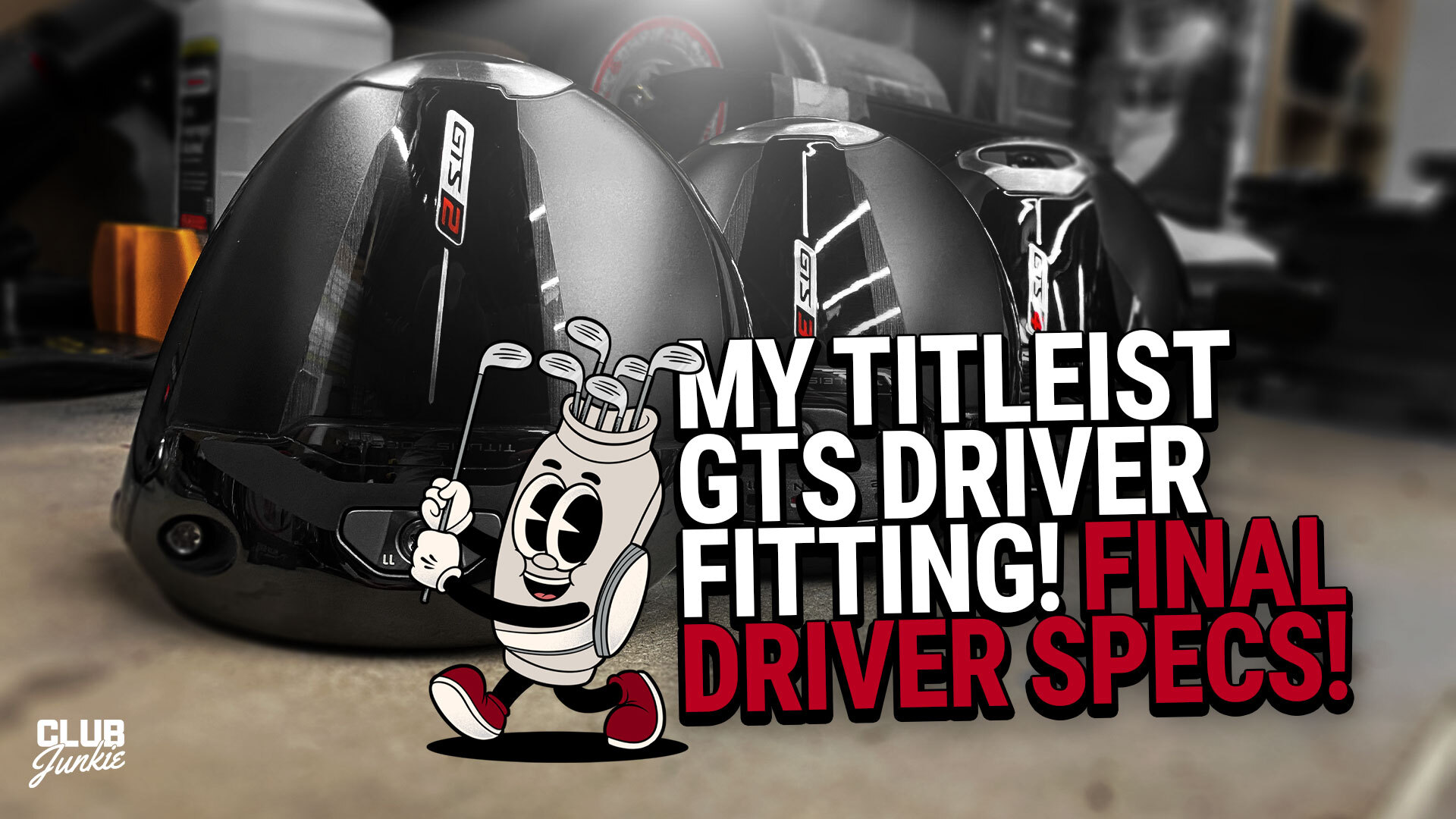
On this episode of the Club Junkie Podcast, I head to the Titleist Performance Institute for a full driver fitting with the new Titleist GTS lineup. We dive into the fitting process, talk about what made the biggest difference in performance, and break down how the different GTS heads and shaft combinations compare on the launch monitor. If you are thinking about a new driver setup for this season, there is a lot to take away from this one.
I also get into Brooks Koepka and the gear setup he brought to the PGA Championship, including the putters that caught my eye during the week. There are some interesting equipment trends showing up at the highest level right now and we break down what stands out.
To wrap things up, I talk about reshafting a few wedges, what I learned during the process, and swapping an adaptor onto a new shaft for another build project in the shop. A gear packed episode from start to finish for anyone who loves golf equipment and club building.
Follow Club Junkie everywhere:
Instagram: https://www.instagram.com/clubjunkiepod/
X: https://x.com/ClubJunkiePod
TikTok: https://www.tiktok.com/@clubjunkiepod
Threads: https://www.threads.com/@clubjunkiepod
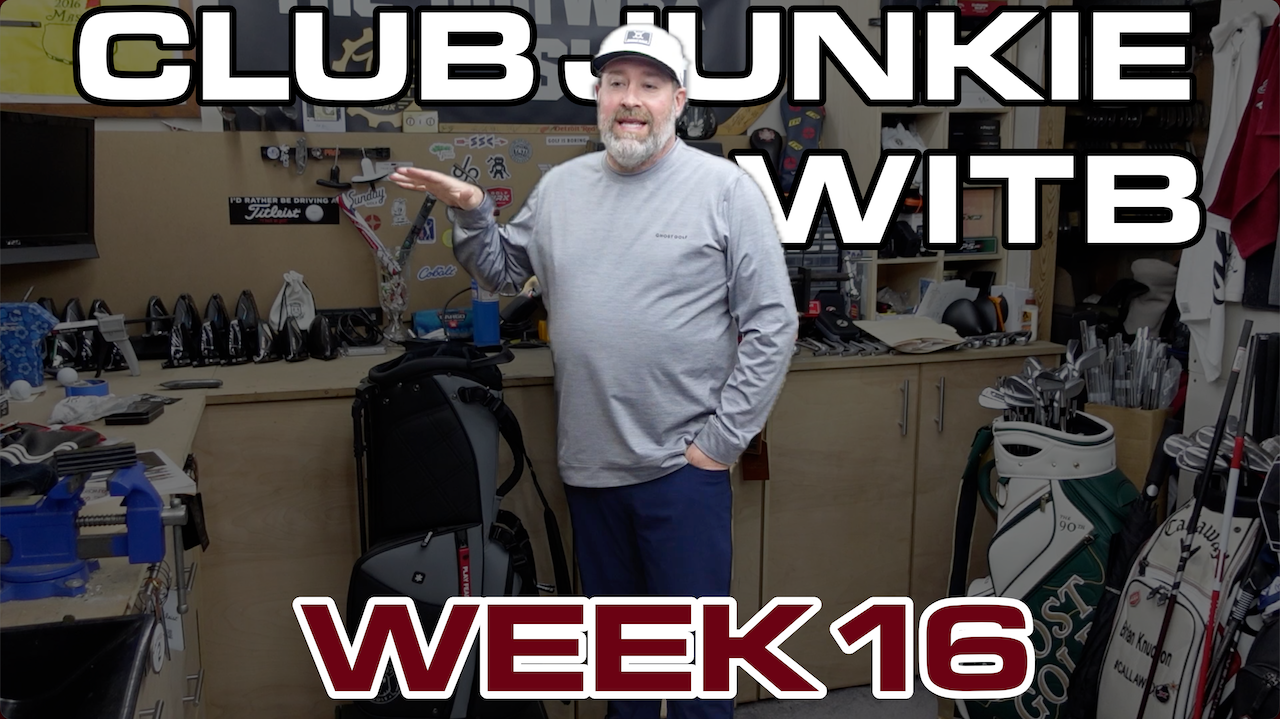
Excited for this week’s WITB as we get to add the new Titleist GTS woods to the bag! I was fit at Titleist’s TPI facility in Oceanside California a few weeks ago and my new clubs just showed up. I am also adding a cool set of irons that I built last year some wild custom wedges into a new golf bag. Speaking of the bag I have a new Ghost Anyday Black Ops stand bag that I will be using on my Motocaddy Remote M7 electric cart.
Driver: Titleist GTS3 (11 degrees @ 10.25)
Shaft: Fujikura Ventus Red 6s
3-wood: Titleist GT1 3Tour (14.5 degrees)
Shaft: Graphite Design Tour AD CQ-7s
5-wood: Titleist GTS (18 degrees)
Shaft: Fujikura Ventus Red 7s
9-wood: Titleist GT1 (24 degress)
Shaft: Fujikura Ventus Red 7s
Irons: Bettinardi CB24 (5-PW)
Shafts: KBS C-Taper Lite 110 stiff
Wedge: TaylorMade MG5 (50-09 SB)
Shaft: Mitsubishi MMT 125 Stiff
Wedge: TaylorMade MG5 (56-12 SB)
Shaft: Mitsubishi MMT 125 Stiff
Wedge: TaylorMade MG5 (60-08 LB)
Shaft: Mitsubishi MMT 125 Stiff
Putter: Dan Carraher ZT Proto
Ball: Callaway Chrome Tour
Bag: Ghost Anyday Black Ops Stand Bag

Justin Rose WITB 2026 (April): Full WITB breakdown with new McLaren irons

RBC Heritage Tour Report: More minis, course-specific setups, Spider & GTS launches

What’s the story behind Webb Simpson’s custom-stamped irons?

Cadillac Championship Tour Report: Spieth’s sizable changes, McLaren Golf launches, and more

Kristoffer Reitan’s winning WITB: 2026 Truist Championship

Cameron Young’s winning WITB: 2026 Cadillac Championship

Aaron Rai’s winning WITB: 2026 PGA Championship

Nelly Korda WITB 2026 (April)

Justin Rose on the switch to McLaren Golf, learnings from previous equipment moves

Photos from the 2026 PGA Championship


Patrick Reed WITB 2026 (May)
Driver: Titleist GT3 (9 degrees) Buy here. Shaft: Aldila Rogue Silver 130 M.S.I. 70 TX 3-wood: TaylorMade Qi35 (15 degrees)...

Aaron Rai’s winning WITB: 2026 PGA Championship
Driver: TaylorMade M6 (9 degrees) Shaft: Aldilda Synergy Blue 70 TX 3-wood: TaylorMade Qi10 (15 degrees) Shaft: Fujikura Ventus Blue...


Michael Block WITB 2026 (May)
Driver: TaylorMade Qi4D (9 degrees) Shaft: Fujikura Ventus Black VeloCore+ 5 X 3-wood: TaylorMade Qi4D (15 degrees @14.25) Shaft: Mitsubishi...


Bryson DeChambeau WITB 2026 (May)
Driver: Krank Formula Fire Pro (6 degrees) Shaft: Project X Prototype 3-wood: Krank Formula Fire (10 degrees) Shaft: LA Golf BAD...
-
 Whats in the Bag3 weeks ago
Kristoffer Reitan’s winning WITB: 2026 Truist Championship
-
Whats in the Bag2 weeks ago
Aaron Rai’s winning WITB: 2026 PGA Championship
-
 Tour Photo Galleries3 weeks ago
Photos from the 2026 PGA Championship
-
 Equipment2 weeks ago
GolfWRX Launch Report: 2026 Titleist GTS drivers
-

 Equipment2 weeks ago
PGA Championship Tour Report: Fitzpatrick, Koepka among big-name putter switches for Aronimink
-

 News2 weeks ago
WITB Time Machine: Phil Mickelson’s winning WITB, 2021 PGA Championship
-

 Equipment2 weeks ago
Which of Tiger’s major winning irons are your favorite? – GolfWRXers discuss
-

 Equipment2 weeks ago
Lead Tape Report: Adjusting the swingweight of the Wanamaker Trophy


fan
Dec 5, 2018 at 10:44 am
Team up challenge golf should be a good way to promote golf than traditional single one.
Dan Diel
May 29, 2017 at 9:08 pm
My son is giving pro golf a try for the second time! He has some sponsor money, which will help! Tough out there on the mini tours but life time dreams are within his grasp! Thanks for the great read!
derek
Jan 1, 2015 at 1:06 am
Thanks, sorry bout all the injuries.
What was your take on what the good players were doing that helped them the most make cuts ($)? was it the best putters, longest hitters, ball striking, wedge play, short game, course management? a combo of two?
Curios as to what sticks out at in your mind at that high level of competition. TIA
Derek
azorean
Dec 31, 2014 at 8:51 pm
You at least chased your dreams and for this I admire you. I’m sure you are a better person because of this.
Thanks for sharing.
Mike
Dec 31, 2014 at 8:07 pm
Great story. Do you have a communication degree? I was wondering why you selected digital marketing as a career and considering your invaluable experience as a pro golfer, whether or not you work on online marketing campaigns for golf companies?
moses
Dec 31, 2014 at 6:15 pm
Nice read. Thanks for sharing. This just goes to show how much talent there is out there and how hard it is to make it to the big show.
warrenpeace
Dec 31, 2014 at 5:04 pm
nice article….it really tells it like it is, and not as glamorous as people think.
When you play amateur events you now give the younger and older hot shots a chance to say they beat a tour winner if they can!! I wonder if the wannabes gun for you now that you are an am again?
Gary
Dec 31, 2014 at 4:31 pm
Thanks for sharing. Great story. Bummer about the bad breaks but kudos on keeping up a good attitude.
3rdgroove
Dec 31, 2014 at 3:28 pm
Great write up! Thanks for sharing your story. I’m sure when you have a corporate golf day you’ll be everybody’s favorite team partner 🙂
LY
Dec 31, 2014 at 2:37 pm
Great story. I would love to see more articles like this. Maybe some articles from PGA tour caddies on what that experience is like.
Geoffrey Holland
Dec 31, 2014 at 2:17 pm
“signs of good play devoid by head-shaking shots.”
Incorrect use of devoid.
Aside from that, an interesting look at how tough it really is to be a successful pro golfer.
Kelly
Dec 31, 2014 at 12:32 am
Great article! Did you win the Hooters Tour event at Brook Valley CC?
Josh
Dec 31, 2014 at 10:44 am
Hi Kelly — yes, the event was at Brook Valley CC.
mark d
Dec 30, 2014 at 5:03 pm
Terrific article, thank you for letting us all see a bit of what the grind is like. And, congratulations on your career. Best of luck!
J
Dec 30, 2014 at 10:25 am
Great and inspiring story. It also underscores how great Tiger and many other pros are who never had the pleasure of coming through the minor ranks.
Jafar
Dec 30, 2014 at 9:34 am
If you could do it again, would you have finished college first before trying to go pro?
Would that have lessened the weekly stress any, knowing you had other opportunities in life, and every golf shot wasnt a make or break for you?
Thank you for sharing your story.
Josh
Dec 31, 2014 at 10:47 am
Hi Jafar — thanks for the question. Looking back on it I would still have left college early. I didn’t look at it that I didn’t have other opportunities in life since I didn’t finish school. I was still very young in age and knew I could always go back to finish school. Thanks again for the question.
Brad Ingarfield
Dec 30, 2014 at 8:37 am
great story. Thanks for sharing. – Brad Ingarfield
Cody
Dec 30, 2014 at 8:31 am
This article is too negative for me, but it was an interesting read.
bradford
Dec 30, 2014 at 8:05 am
Congrats on the WIN! I’d love to check “Win a professional golf tournament” off the life-list. Cool that you did it so early. Nice article.
charles
Dec 30, 2014 at 2:37 am
one of the best things ive ever read!
Jesse graham
Dec 30, 2014 at 1:49 am
Awesome article, i wish people that were not or did not know all the hard times mini tour players go theough just to chase their dream. Most people just think its all just easy big $$$. My old golf coach who was a damn good golfer used to say he was “the Canadian Tours leading money spender”
Timbleking
Dec 30, 2014 at 1:28 am
By far the best article I’ve ever read on there. Thanks for sharing, Josh.
damian s
Dec 29, 2014 at 10:36 pm
Thanks for sharing your thoughts. I wholeheartedly agree with the last paragraph. And it is with that attitude I will be commencing a business in the new year full of hope, belief and passion.
Thanks for sharing your story!
Justin O'Neil
Dec 29, 2014 at 10:25 pm
Thank you for sharing your story. I can understand the disappointment that comes from injury having had two knee surgeries while still in high school.
I am curious about your time on the Dakota Tour and the yardage books you used there. My dad made yardage books for quite a few courses in that area in the early 90’s and I am curious if any of his books may have still been in use when you played? His name is Jack O’Neil and he specifically marked off books for the courses played on that tour as well as the course for the Quad Cities Classic and John Deere tournament.
Josh
Dec 31, 2014 at 10:49 am
Hi Justin — thanks for the question. Not sure who made the books I used on the Dakotas Tour. They could have been the books your Dad made, but not sure though.
Golfwrxer
Dec 29, 2014 at 8:05 pm
I played on the mini tours for a year. I kept hitting my approaches so pure they’d literally get stuck in the flag so I’d have to take drops. Then I realigned my trag and kept landing the ball on top of the pin. More unplayables.
3putts
Dec 29, 2014 at 4:37 pm
Good article. I played a year on the mini tour for a season 5 years ago and it was an amazing experience that has been best enjoyed a couple years down the road when the pressure of week to week high stress has passed. I would relate it to a girlfriend that you really loved but it just wasn’t working out. Still think about the what if’s but knowing at your core that I just wasn’t going to last. Haha. There was a lot of guys I ran into that were just burnt out and had drinking habits to accompany the lifestyle. ‘Happy hour’ drunk was a term I heard one guy nearing 40 labeled himself. Too long out there and no real shot at moving to the PGA tour can take its tole. Maybe it’s better we both moved on to something else. You play much anymore and is it the same for you now that’s there’s nothing on the line?
Josh
Dec 31, 2014 at 10:52 am
Hi 3putts — thanks for the question. I don’t play as much now that I live in NYC, but did play occasionally for fun while finishing school in Indianapolis on the weekends with my friends.
Tom
Dec 29, 2014 at 4:29 pm
Great read! Where were you in Tampa? This is my hometown.
Josh
Dec 31, 2014 at 10:55 am
Hi Tom — thanks for your question. When I was in the Tampa Bay area I lived in the Clearwater area, but was in Tampa often working with my coach (Rich Abele). Check him out if you need some help with your game, great person and instructor.
Jeff B
Dec 29, 2014 at 1:24 pm
very good story. Pleasure reading
Neige
Dec 29, 2014 at 12:51 pm
What a great story. Thanks for sharing. Good luck!