
Opinion & Analysis
Dustin Johnson: The Burning Questions Heading into 2015

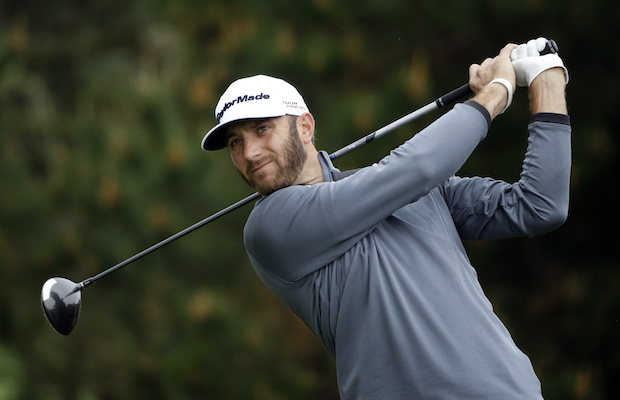
It’s been nearly five months since this happened. And then this. And then this. Oh, we can’t forget about that. Or this (unverified rumor, to be clear). And of course this.
Yep, a strange few months for Dustin Johnson and golf.
That initial period of hectic rumor-mongering is over though, and the American’s stay on his leave of absence (or whatever you believe it to be) is nearing its conclusion.
How do we unravel this power-hitting puzzle? Here is a breakdown of the most tantalizing questions about Johnson, maybe golf’s greatest enigma, heading into 2015.
When will Johnson return to competition?
For those of you who haven’t followed the 30-year-old’s whereabouts following his shocking July announcement, Tim Rosaforte has provided us the answer…or at least a well-educated guess.
The veteran golf scribe spoke with members of Johnson’s team (manager, coach and trainer) and was able to obtain that the American is planning to return to golf tentatively at the Farmers Insurance Open, which starts Feb. 5.
Tentative is the operative word. Schedules can change, and these reports also state Johnson iterating that he will wait until his fiance Paulina Gretzky gives birth to the couples’ first child before he competes again. We do not know the due date, so his return date could easily be pushed back.
When he returns, how will Johnson address the questions about his sabbatical?
Johnson has never been an expansive guy in interviews, and there’s nothing wrong with that, especially in today’s hypersensitive media age. Those are just the facts.
I assume he will start out with a statement of his own, and when it comes to media questions, I expect vague answers. Of course, he will likely get direct questions about whether he was suspended, prior drug use, etc.
Before Johnson’s leave of absence, his agent had once answered questions about whether his client had ever been suspended by the PGA Tour with a swift “no.” That response hasn’t changed, nor will it to queries on any of the topics in question.
If you expect real, meaty answers here, disappointment will ensue.
Will the players welcome him back?

Gary Van Sickle already covered this one, and I agree with his assessment. There have never been any reports of players disliking Johnson, and the PGA Tour pros tend not to be too judgmental about a colleague’s problems. I’m doubtful Johnson will receive many cold shoulders in his return.
Does Johnson appear ready to return to competition?
Well, he’s keeping his whereabouts a secret, and is by proxy seen by few people. Because of that, our only source material here is the members of team Johnson that I noted above. Clearly this is a biased group whose encouraging words must be taken with several grains of salt.
That being said, even adjusting for this healthy skepticism, the reports on Johnson’s offseason are positive.
Apparently he put up his sticks for eight weeks and then furiously got to work. According to his people, Johnson is committing to his physique like never before, completing a heavy amount of biking along with strenuous two-a-day workouts. And his practice sessions have been quite focused and pristine as well.
His course-record-setting round of 61 at Sherwood Country Club, if true, is a good touch, too. Butch Harmon, who once called out Johnson as a guy who was outworked by everybody else in the top 10, says he’s cautiously optimistic about Johnson.
Trust what you want to trust, but it doesn’t appear Johnson is lollygagging in his absence.
If Johnson slips up significantly in 2015, will sponsors treat him like a landmine as they did for Tiger in 2010?

If you remember, the 2010 season wasn’t a fond one for Woods. Three sponsors — Gatorade, Accenture and AT&T — kicked him to the curb outright within months of the scandal’s beginning. Three more would drop or mutually split with Woods by the end of 2011.
But the circumstances around Woods were just too singular for Johnson to be hit with the same exodus.
That being said, I’d keep an eye on Johnson and TaylorMade.
The two have been together since the American’s pro debut, but company CEO Ben Sharpe admitted last month that TaylorMade and Johnson have had exactly zero contact since the news of Johnson’s “leave of absence” broke.
Sharpe’s quotes don’t convey any annoyance, but being mum with a long-term main sponsor that stood by you in turbulent times isn’t exactly a recipe for a satisfied employer.
TaylorMade’s contract with Johnson ends at the close of 2015. With the deadline looming so near, wouldn’t a particularly poor on-course season or a clear lack of personal growth from Johnson at least tempt the equipment giant into axing its long-bombing bad boy?
I’m not saying a split here is probable or even that likely. It’s just something to think about considering the context of Johnson’s absence, his lack of communication and the specter of his expiring contract.
What should we expect from Johnson on-course in 2015?

Year-to-year, however, the 30-year-old is remarkably similar in performance. In his six full PGA Tour seasons following his rookie year, Johnson has averaged 1.1 wins, 6.7 top-10s and 10.2 top-25s per year, with a 82 percent made cut rate.
And basically every single year, his numbers cling close to those averages. His wins have fluctuated between 1 and 2 per season, his top-10s between 5 and 9, his top-25s between 8 and 12 and his made cut rate between 73 and 89 percent.
Those are remarkably small ranges.
My point? I know the story of a catastrophic downfall in performance or a rise to superstardom in the wake of scandal are sexy angles, but Johnson’s on-course results will probably fall somewhere in that mitigated range.
Yes, the scouting reports on Johnson’s offseason progress are excellent. But again, these comments come courtesy of a PR filter, and how often do you hear healthy athletes say, “Yeah, I only feel so-so about this upcoming season”?
On the other side, a long break from golf is least likely to hinder a guy like Johnson, a total feel player who already has one extended professional vacation on record (that 11-week hiatus in 2012).
Sorry to be boring here, but I expect a quintessential Dustin Johnson season in 2015.
Is This a Professional Crossroads Year for Dustin Johnson?
It’s tempting to label this season as one where the back half of Johnson’s career is firmly at stake, with any failures sabotaging a strong ending. His lack of major championships looms large, but remember: HE’S ONLY 30 YEARS OLD.
Although we can’t always accurately predict the effects of aging on any one golfer, the average pro tends to have a near decade of prime years from age 30 on. According to the norm, we are really at the front end of Johnson’s prime.
You can see why I’m skeptical about this “crossroads” thing then. A bad season for a 30-year-old is just that: A bad season. It’s difficult to envision a downward spiral when Johnson’s physical talent is near the peak and likely not set to decline for a couple of presidential election cycles.
Short of Johnson suddenly gaining 10 years in age in the next month, crossroads is an inaccurate way to describe his professional status in 2015.
Will Johnson finally win a major championship this season?

I actually like his odds here. As I already mentioned, I don’t think Johnson will really be hindered at all by his extended absence. His chances at a major won’t be dinged then by a drop in performance.
And the set of courses at the final three majors of 2015 suits him extremely well.
For the U.S. Open, Chambers Bay is expected to be a track with wide landing areas on the drive, and at 7,585 yards, it is a long one too. It seems that big hitters and great approach players, both of which describe Johnson, are especially encouraged to excel there. And those same profiles mesh with players most attractive to St. Andrews for the British Open and Whistling Straits for the PGA (if you don’t trust me, the 21st century major champion winners at these venues are Tiger Woods, Vijay Singh, Louis Oosthuizen and Martin Kaymer, all of whom fit the longer hitter-approach player profile).
The caveat for some is that a major championship is the next step in Johnson’s evolution as a golfer, and he isn’t ready for that leap. But we’re misplacing the “next step” concept. Not to diminish the difficulty of winning a major, but all that entails is getting hot at a big event with a great field. The 30-year-old already did that twice in the FedEx Cup Playoffs and another time in winning a World Golf Championships last year. He’s actually done it at majors too, with the victory crown barely eluding him. Those crunch time major championship moments are likely to turn in his favor at least once at some point.
Johnson’s real next step is consistently putting together multiple-win, double digit top-10 seasons. As lovely as it is to put up his current averages year-after-year, he seems to be stuck on those numbers.
All in all then, I’m optimistic that Johnson finally bags that elusive major in 2015. Such a victory doesn’t imply that his season will be above his norm or that the American has finally transformed into the golfer we believe his talent merits.
If he wins one of the Big Four, he remains the same old Dustin. And the old Dustin should triumph at a major in 2015.


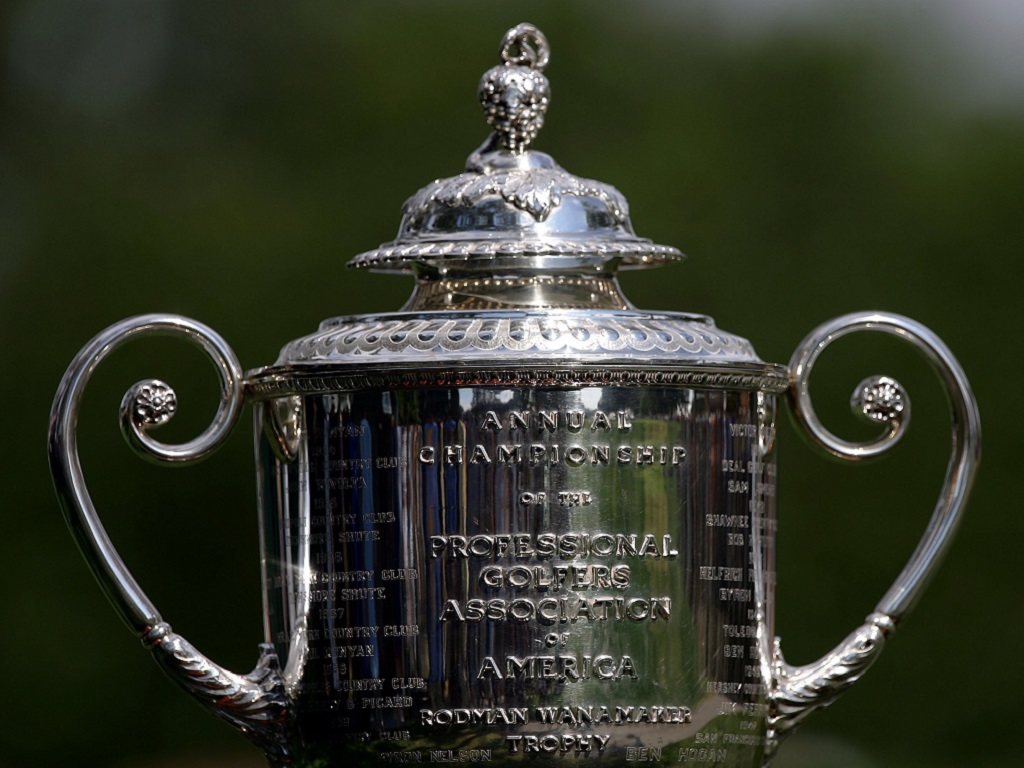
Aronimink is not a storied club, but when Donald Ross himself proclaimed it to be as good as he can design and build, one had to take notice. Jay Sigel was the pre-eminent male amateur golfer from the mid-1970s to the mid-1990s. He might have called any number of Philadelphia clubs home, but he chose Aronimink. It served him well. Gary Player won a PGA Championship here in 1962, and was followed by the 1993 winner … nobody. Aronimink gave that event away to Inverness, for reasons of which it is certainly not proud. So be it. We had to wait sixty-four years for the PGA to return to Newtown Square, but here we are. Aronimink has been neo-restored by Gil Hanse and team, to return Ross features with an eye toward defense against the dark arts, errrr, high-tech equipment.
Day one saw Rory McIlroy and Bryson DeChambeau dig big holes, to the tune of plus-four and plus-six, respectively. Since the first-round lead will be minus-three at worst, many shots will need to be made up for the power couple to reach contention. By nightfall, seven golfers held the day-one lead at three-under par 67. Shots and sticks caught our attention, and we are proud to present Five Things We Learned on Tech Thursday at the 2026 PGA Championship. Thanks to InsideTourGolfer, Today’s Golfer, and GolfWRX for initial equipment research.
First, meet Min Woo Lee
Min Woo Lee, aka Dr. Chipinski, has once again thrust himself into the conversation of Can he, will he, when will he? Lee has so much talent, wins not nearly as often as we believe that he should, and has no major near-misses (much less titles) on his wiki. The young Aussie is getting older and wiser, but is he able to avoid the scarring that holds the older and wiser back from breaking through? Philadelphia offers another opportunity. Min Woo signed for five birdies and two bogeys on day one, and grabbed a share of the opening-day lead at Aronimink. Winners transcend history and the moment, and Lee will need that sort of ascent to lift the Wannamaker on Sunday.
Second, meet Aldrich Potgeiter
The young South African golfer can rip driver with the best of them. Aronimink tips out at nearly 7400 yards, but beyond the fairway bunkers that ensnare only the mortals, Potgeiter can take his chances with wedge from the rough. On Thursday, he spent plenty of time in the spinach. Like Popeye, he used his muscles to gouge and thrash and dig his way out. Six birdies against three bogeys on the card brought AP in a three deep.
Third, meet Martin Kaymer
Not a major event takes place without a where’s he been throwback moment. We know that Martin Kaymer left the PGA and DP World tours for LIV golf, but the two-time (US Open and PGA) major winner has a lifetime exemption into at least one major event, and he seizes the opportunity each May. Kaymer joined the six-seven brigade with four birdies and a solitary bogey on day one. Kaymer was never a long hitter, and the years are kind to no golfer. The German champion will need to uncork every bottle of guile and strategy in his cabinet to remain in contention. For today, though, he occupies a rung on the ladder of Tour Tech.
Fourth, meet Scottie Scheffler
Let’s see, he’s the defending champion at the PGA, and he found his way back to the top tier with five birdies against two bogeys. To be a favorite and then play up to that stature and expectation is quite difficult. Just ask Rory, Bryson, and some of the other pre-tournament heartthrobs. Scheffler’s game is complete, and to knock him off the OWGR #1 pedestal, one needs to defeat him at the majors. Aronimink is the sort of course that fits Scheffler’s game. Better yet, it unfits the game of many of his challengers. Don’t expect Scheffler to go away anytime soon. Come Sunday, he’ll be around.
Fifth, meet Stephan Jaeger
Clocking in for the unheralded players shift are Ryo Hisatsune and Stephan Jaeger. Hisatsune logged seven birdies on day one, but gave most of them back with four bogeys. Still, he’s tied at the top for a time. Jaeger pitched five birdies against two bogeys, including a run of three consecutive, from holes four through six. Odds are that one of the two will hang around through 36 holes. Odds also suggest that both will be gone by Saturday evening. Still, the PGA Championship has historically been the major most likely to be won by an under-known. Both Hisatsune and Jaeger feature on that list, so good luck, lads!

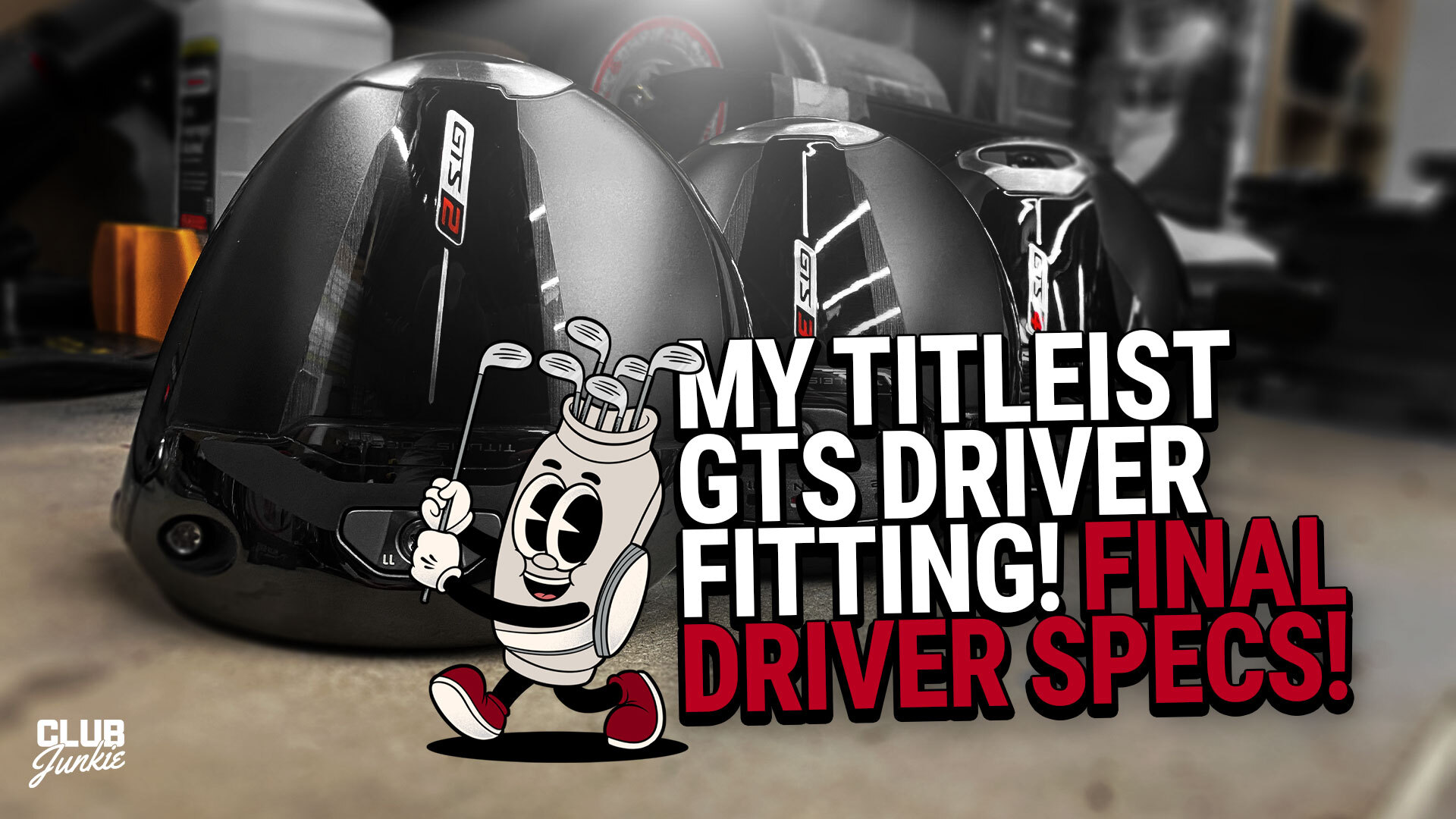
On this episode of the Club Junkie Podcast, I head to the Titleist Performance Institute for a full driver fitting with the new Titleist GTS lineup. We dive into the fitting process, talk about what made the biggest difference in performance, and break down how the different GTS heads and shaft combinations compare on the launch monitor. If you are thinking about a new driver setup for this season, there is a lot to take away from this one.
I also get into Brooks Koepka and the gear setup he brought to the PGA Championship, including the putters that caught my eye during the week. There are some interesting equipment trends showing up at the highest level right now and we break down what stands out.
To wrap things up, I talk about reshafting a few wedges, what I learned during the process, and swapping an adaptor onto a new shaft for another build project in the shop. A gear packed episode from start to finish for anyone who loves golf equipment and club building.
Follow Club Junkie everywhere:
Instagram: https://www.instagram.com/clubjunkiepod/
X: https://x.com/ClubJunkiePod
TikTok: https://www.tiktok.com/@clubjunkiepod
Threads: https://www.threads.com/@clubjunkiepod
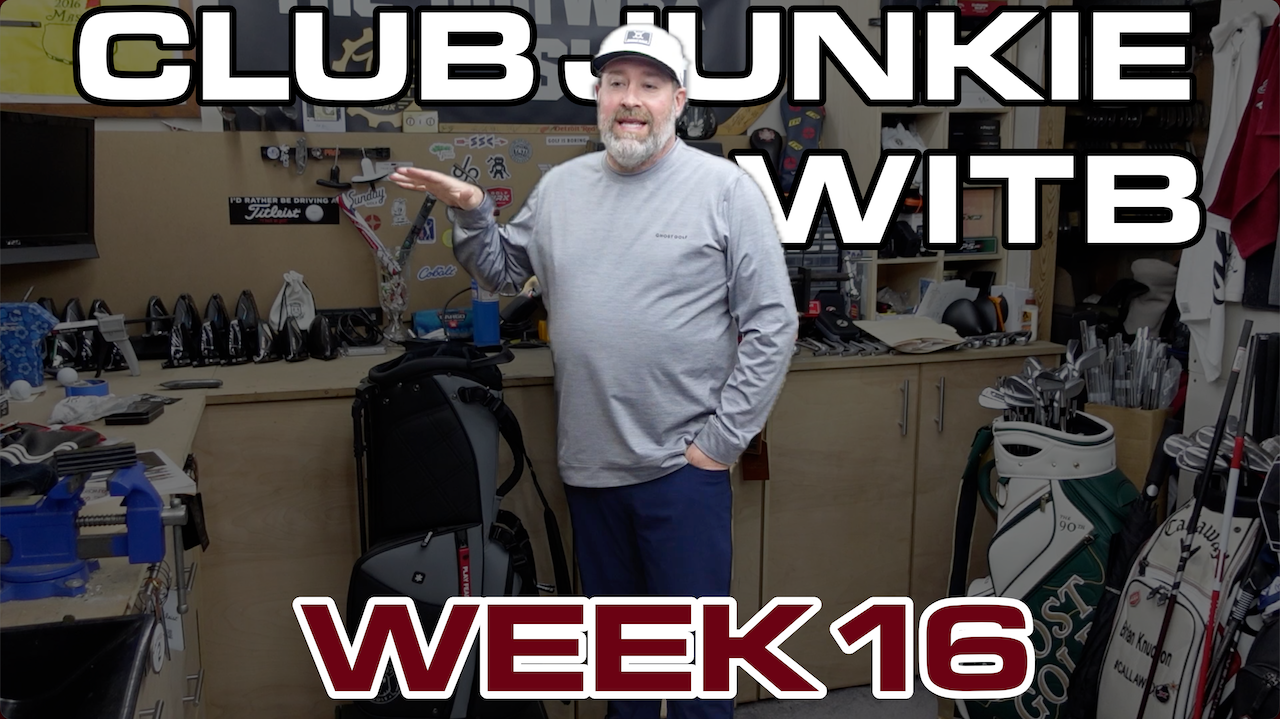
Excited for this week’s WITB as we get to add the new Titleist GTS woods to the bag! I was fit at Titleist’s TPI facility in Oceanside California a few weeks ago and my new clubs just showed up. I am also adding a cool set of irons that I built last year some wild custom wedges into a new golf bag. Speaking of the bag I have a new Ghost Anyday Black Ops stand bag that I will be using on my Motocaddy Remote M7 electric cart.
Driver: Titleist GTS3 (11 degrees @ 10.25)
Shaft: Fujikura Ventus Red 6s
3-wood: Titleist GT1 3Tour (14.5 degrees)
Shaft: Graphite Design Tour AD CQ-7s
5-wood: Titleist GTS (18 degrees)
Shaft: Fujikura Ventus Red 7s
9-wood: Titleist GT1 (24 degress)
Shaft: Fujikura Ventus Red 7s
Irons: Bettinardi CB24 (5-PW)
Shafts: KBS C-Taper Lite 110 stiff
Wedge: TaylorMade MG5 (50-09 SB)
Shaft: Mitsubishi MMT 125 Stiff
Wedge: TaylorMade MG5 (56-12 SB)
Shaft: Mitsubishi MMT 125 Stiff
Wedge: TaylorMade MG5 (60-08 LB)
Shaft: Mitsubishi MMT 125 Stiff
Putter: Dan Carraher ZT Proto
Ball: Callaway Chrome Tour
Bag: Ghost Anyday Black Ops Stand Bag

Justin Rose WITB 2026 (April): Full WITB breakdown with new McLaren irons

RBC Heritage Tour Report: More minis, course-specific setups, Spider & GTS launches

What’s the story behind Webb Simpson’s custom-stamped irons?

Cadillac Championship Tour Report: Spieth’s sizable changes, McLaren Golf launches, and more

Kristoffer Reitan’s winning WITB: 2026 Truist Championship

Cameron Young’s winning WITB: 2026 Cadillac Championship

Aaron Rai’s winning WITB: 2026 PGA Championship

Nelly Korda WITB 2026 (April)

Justin Rose on the switch to McLaren Golf, learnings from previous equipment moves

Photos from the 2026 PGA Championship


Patrick Reed WITB 2026 (May)
Driver: Titleist GT3 (9 degrees) Buy here. Shaft: Aldila Rogue Silver 130 M.S.I. 70 TX 3-wood: TaylorMade Qi35 (15 degrees)...

Aaron Rai’s winning WITB: 2026 PGA Championship
Driver: TaylorMade M6 (9 degrees) Shaft: Aldilda Synergy Blue 70 TX 3-wood: TaylorMade Qi10 (15 degrees) Shaft: Fujikura Ventus Blue...


Michael Block WITB 2026 (May)
Driver: TaylorMade Qi4D (9 degrees) Shaft: Fujikura Ventus Black VeloCore+ 5 X 3-wood: TaylorMade Qi4D (15 degrees @14.25) Shaft: Mitsubishi...


Bryson DeChambeau WITB 2026 (May)
Driver: Krank Formula Fire Pro (6 degrees) Shaft: Project X Prototype 3-wood: Krank Formula Fire (10 degrees) Shaft: LA Golf BAD...
-
 Whats in the Bag3 weeks ago
Kristoffer Reitan’s winning WITB: 2026 Truist Championship
-
Whats in the Bag2 weeks ago
Aaron Rai’s winning WITB: 2026 PGA Championship
-
 Tour Photo Galleries3 weeks ago
Photos from the 2026 PGA Championship
-
 Equipment2 weeks ago
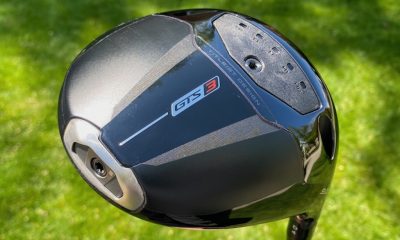
GolfWRX Launch Report: 2026 Titleist GTS drivers
-

 Equipment2 weeks ago
PGA Championship Tour Report: Fitzpatrick, Koepka among big-name putter switches for Aronimink
-

 News2 weeks ago
WITB Time Machine: Phil Mickelson’s winning WITB, 2021 PGA Championship
-

 Equipment2 weeks ago
Which of Tiger’s major winning irons are your favorite? – GolfWRXers discuss
-

 Equipment2 weeks ago
Lead Tape Report: Adjusting the swingweight of the Wanamaker Trophy


Batman
Jan 7, 2015 at 2:38 pm
Kind of ironic to use “burning” in the headline.
Just remember, in PGA Tour lingo… “Out with injury” = “serving suspension for positive drug test(s)”
tom
Jan 7, 2015 at 1:40 pm
I know you have to fill pages so you have eyeballs returning to your website, but seriously? i read the first paragraph, hit Ctrl + End and filled out this comment field…
who cares who DJ is banging or what he’s doing in his life. the only thing that matters to this community is how far he’s hitting it and is it still in play. oh yeah, and when is he confirmed to return. yawn…
Jeff Smith
Jan 7, 2015 at 12:38 pm
This is why golf in this day and age sucks. …… and who cares!
Denis
Jan 6, 2015 at 4:23 pm
Why do we need transparency? He is an adult and can do whatever he chooses as long as it is legal and doesn’t hurt other people.
chris franklin
Jan 6, 2015 at 6:11 am
The only burning question that I can see is why the PGA Tour didn’t have the guts to throw him out completely for flaunting their code of ethics and behaviour?
Johnson appears to be a man with no moral scruples and is not fit to represent anyone or anything,if he can’t be honest about his situation how can he be honest about anything?
His tour card should be revoked and a ban imposed.
Pingback: Dustin Johnson Questions Answered! - The Golf Shop Online Blog - The Golf Shop Online Blog
Barry S.
Jan 6, 2015 at 12:48 am
Looking forward to Dustin coming back strong. He’s very popular and sells lots of tickets for Tim Finchem.
Matthew Carter
Jan 5, 2015 at 11:19 pm
Transparency evidently isn’t part of the PGA process.
MLB/NBA/NHL/NFL …..Straight forward on suspentions including the “Root” cause of the suspension.
farmer
Jan 5, 2015 at 11:31 am
Did DJ just like to party too much or does he have an addiction problem? That is the question. Quitting the party circuit that surrounds tour stops will be relatively easy, dealing with addiction is a whole different level of difficulty. For his sake, I hope it’s just that he liked the parties.
Mccance79
Jan 5, 2015 at 11:10 am
I am a Big DJ fan… but why are golf journalist so afraid to say WHY he has taken this time away from golf? I am NOT a Tiger fan and everyone was first to say why he took his time off!! Gentlemen he had a substance abuse problem and had failed 3 drug test!! Taking a look at golf from the outside lets get tight to the root of the issue and ask the hard hitting questions so that we can control the media and not leave it to a low level outlet like tmz
Pat
Jan 5, 2015 at 12:40 pm
I suspect Tiger was suspended for his repeated painkiller and sedative use as well as steroids and hgh. The only reason why the USGA is so hesitant about putting the truth out there is because Tiger is their cash cow, and if they relay to the public that he has a drug problem, sponsors would pull out, their image would be tainted and less money will go into the pockets of the executives. There is no transparency in golf which is very sad.
Prut
Jan 5, 2015 at 12:45 pm
It’d be my guess he did not get sidelined for drug use, but for banging other players’ wives. He crossed the line there.
Jonny B
Jan 5, 2015 at 3:55 pm
This is the first I’ve heard of Tiger being suspended. Please elaborate…
kevorkan
Jan 5, 2015 at 10:33 am
l erreure est humaine donnez lui la chance de prouver son talent en 2015
gunmetal
Jan 5, 2015 at 12:07 pm
Exactly!
Robeli
Jan 5, 2015 at 2:50 pm
was zum Teufel redest du da?
Steve
Jan 5, 2015 at 10:01 am
I should there will lines waiting for his return
Roy
Jan 5, 2015 at 9:41 am
They will accept him with open arms and wide open legs
Steve
Jan 5, 2015 at 10:02 am
*will be