
Opinion & Analysis
Hole 2: Gene says “Let’s go see Ben”

After my train wreck with Mr. Hogan in locker room at Shady Oaks, I knew I had better get some coaching before I was near him again. A few days after the debacle, I gathered myself enough to tell Gene in detail how I had introduced myself to him. Gene sat and listened to my story. I was embarrassed, but also knew if there was anyone that could coach me up it was Gene.
When I finished telling him what happened, I saw Gene roll his eyes and cover his face with an expression that wordlessly said, “Tom you are our new department dumb a**.” After he was sure his lesson was fully absorbed, Gene could not help but to chuckle as he fully savored his new boss’ colossal failure with the man. I was hoping Gene would offer me up a scrap of comfort and tell me things would get better, but on that day he gave me nothing but grief.
A few weeks later, Gene shared with me his cunning plan.
[quote_box_center]“So here is what we are going to do,” Gene told me. “The next time I go see Ben, I will take you with me.”[/quote_box_center]
Gene is the only man I’ve known who could actually call Mr. Hogan “Ben” without it sounding fake. I’ve heard others try to use only his first name, but something about it just sours the ears. I promise that if you were ever around Mr. Hogan for real, you would understand what I mean with that “Mr.” thing. Even now when I hear someone call him “Ben” without “Hogan” within range of my gun blast-damaged and 70’s rock music-depleted hearing, you might as well say “Ben bla, bla, bla.” I’m not going to hear anything you say.
Back to Gene’s cunning plan. One spring morning, months after the Shady Oaks experience, I was working in my drab, windowless Pafford Street office. Gene stuck his head halfway way through the door. His throat was scarred by smoker’s cancer, and when he spoke it was with the roughest pitched voice on the planet. He blew a “Phisssssh” at me to get my attention, a mouth sound only he could do. It sounded like something between a leaking tire and a full mouth spit.
[quote_box_center]“Let’s go see Ben, but keep your mouth shut while we are in there,” Gene said. [/quote_box_center]
Gene was holding a prototype wedge that Mr. Hogan would take later in the day to Shady Oaks. I was nervous as I followed behind Gene as he walked to the West End offices of the factory, marching past Mr. Hogan’s guard dogs, Pat and Sharon. They were very sweet office administrators, but they could and would become armor-plated pit bulls if you had no business in that part of the building. They eyed me as if to say, “Who are you,” and Gene told them we were were going in to see “Ben.” Did he say we? It was impossible for me at that moment to get my head around the fact I was actually walking into Mr. Hogan’s office.
I heard that he always wore a tie. Yep, there it is, I thought. It was the first time I had seen his Windsor knot in person. I knew his business dress code was enforced on all managers, and we were expected to always wear slacks, a button-up shirt and a tie at the office. I and many of the younger golf geeks wanted our threads to say “golf,” but Hogan insisted on business attire. “Dinosaur,” I thought at the time.
As we walked in, I noticed that he had a map of West Texas oil fields on his desk and he was peering over a huge black magnifying glass. I later learned he had interests in a number of Texas oil wells. Gene greeted Mr. Hogan, but within a microsecond he was firing his intense blue eyes toward me. I’m sure he remembered my stupid ambush at Shady Oaks. There were no words from him though.
Gene went around the edge of his desk with the prototype wedge and into Mr. Hogan’s personal space. That was a space I would never enter lightly again. I stayed two steps behind and in front of the huge desk. Hogan looked at me again. “Why are you here?” was what I inferred from his stare. I was thinking, “How does he do that?” He just changed all the air in the room. My arms just fell limp at my side and digestion ceased (except that I felt like I was crapping bricks).
Mr. Hogan stayed in his seat as Gene showed him the shafted wedge. Hogan then reached out, grabbed it and put it on the floor next to his chair. He golf gripped it and held it out and down to approximate the playing lie angle and club position. Over the next several years I would see him take his first look at every prototype golf club this way. If it was the first time he had seen a specific prototype, he would consider at length the bounce and juncture. I heard him once say the juncture, which is the transition area from the flat face of the club to the cylinder of the hosel, was the hardest part of a club to get right.
“Building a club is like building a house,” Mr. Hogan said on one of my trips into his office. “Get the foundation (the sole of the club) right first, and then the rest of the house can be right.”
On that day, however, he didn’t say much. I was a new person in his office, and his eyes bounced from me to the wedge, and then to Gene and me again. I winced each time he looked my way. After a few cycles of Mr. Hogan’s eyes, I was relieved that he started to ignore me and I became invisible again. Only then did normal lower-track digestion kick back in and I started to breathe.
All the time we were in there, Gene was telling Mr. Hogan with his raspy voice what had been welded, brazed and done back in the model shop to the wedge per Mr. Hogan’s directives. The boys had fixed it and Gene told him why it was now perfect, just like he ordered. Mr. Hogan nodded his head at Gene. “OK” he said. With that, Mr. Hogan leaned the wedge against the side wall of his desk and picked up his magnifying glass again.
We had been in his office a total of two minutes, maybe.
Without a word, Gene looked at me and rolled his index finger in a circle to tell me to turn around and leave. We were done, and were long past Mr. Hogan’s office door before anything was said.
“Is that the way it goes with him,” I asked. “Yes,” Gene said. “Never go see him or approach him without doing your work first. He does not like fools or loafers. Have a purpose, be brief, be all business and be prepared.”
That morning was the second time I was in the same air and room with Mr. Hogan. It was intense, but some better than my first crash-and-burn encounter at Shady Oaks. Gene showed me how it should and could be done. I would (with my mouth shut) go again and watch Gene and Mr. Hogan conduct that ritual a couple of times each month. Sometimes there was a bit more talk, but not much. There were different prototypes and music, but the same dance. It was priceless to observe. Slowly, Gene kept putting me out there with Mr. Hogan. And slowly, Mr. Hogan would tolerate me a bit more each time.
It would, however, be a full year before I would utter a single word in the presence of Mr. Ben Hogan.
Related


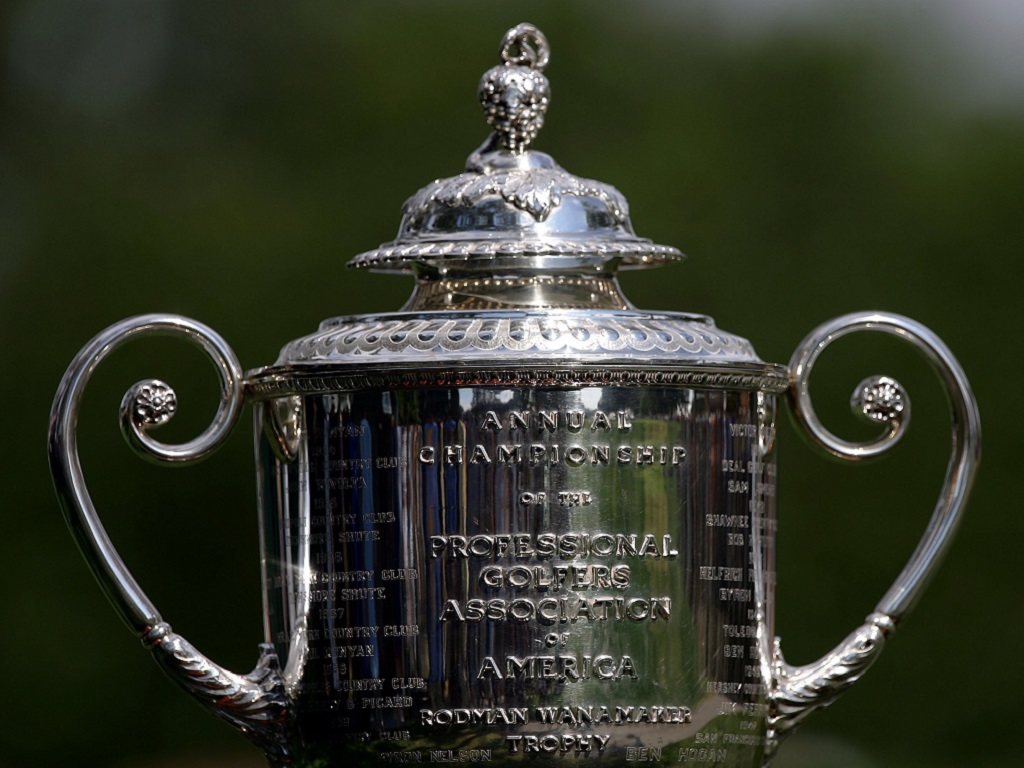
Aronimink is not a storied club, but when Donald Ross himself proclaimed it to be as good as he can design and build, one had to take notice. Jay Sigel was the pre-eminent male amateur golfer from the mid-1970s to the mid-1990s. He might have called any number of Philadelphia clubs home, but he chose Aronimink. It served him well. Gary Player won a PGA Championship here in 1962, and was followed by the 1993 winner … nobody. Aronimink gave that event away to Inverness, for reasons of which it is certainly not proud. So be it. We had to wait sixty-four years for the PGA to return to Newtown Square, but here we are. Aronimink has been neo-restored by Gil Hanse and team, to return Ross features with an eye toward defense against the dark arts, errrr, high-tech equipment.
Day one saw Rory McIlroy and Bryson DeChambeau dig big holes, to the tune of plus-four and plus-six, respectively. Since the first-round lead will be minus-three at worst, many shots will need to be made up for the power couple to reach contention. By nightfall, seven golfers held the day-one lead at three-under par 67. Shots and sticks caught our attention, and we are proud to present Five Things We Learned on Tech Thursday at the 2026 PGA Championship. Thanks to InsideTourGolfer, Today’s Golfer, and GolfWRX for initial equipment research.
First, meet Min Woo Lee
Min Woo Lee, aka Dr. Chipinski, has once again thrust himself into the conversation of Can he, will he, when will he? Lee has so much talent, wins not nearly as often as we believe that he should, and has no major near-misses (much less titles) on his wiki. The young Aussie is getting older and wiser, but is he able to avoid the scarring that holds the older and wiser back from breaking through? Philadelphia offers another opportunity. Min Woo signed for five birdies and two bogeys on day one, and grabbed a share of the opening-day lead at Aronimink. Winners transcend history and the moment, and Lee will need that sort of ascent to lift the Wannamaker on Sunday.
Second, meet Aldrich Potgeiter
The young South African golfer can rip driver with the best of them. Aronimink tips out at nearly 7400 yards, but beyond the fairway bunkers that ensnare only the mortals, Potgeiter can take his chances with wedge from the rough. On Thursday, he spent plenty of time in the spinach. Like Popeye, he used his muscles to gouge and thrash and dig his way out. Six birdies against three bogeys on the card brought AP in a three deep.
Third, meet Martin Kaymer
Not a major event takes place without a where’s he been throwback moment. We know that Martin Kaymer left the PGA and DP World tours for LIV golf, but the two-time (US Open and PGA) major winner has a lifetime exemption into at least one major event, and he seizes the opportunity each May. Kaymer joined the six-seven brigade with four birdies and a solitary bogey on day one. Kaymer was never a long hitter, and the years are kind to no golfer. The German champion will need to uncork every bottle of guile and strategy in his cabinet to remain in contention. For today, though, he occupies a rung on the ladder of Tour Tech.
Fourth, meet Scottie Scheffler
Let’s see, he’s the defending champion at the PGA, and he found his way back to the top tier with five birdies against two bogeys. To be a favorite and then play up to that stature and expectation is quite difficult. Just ask Rory, Bryson, and some of the other pre-tournament heartthrobs. Scheffler’s game is complete, and to knock him off the OWGR #1 pedestal, one needs to defeat him at the majors. Aronimink is the sort of course that fits Scheffler’s game. Better yet, it unfits the game of many of his challengers. Don’t expect Scheffler to go away anytime soon. Come Sunday, he’ll be around.
Fifth, meet Stephan Jaeger
Clocking in for the unheralded players shift are Ryo Hisatsune and Stephan Jaeger. Hisatsune logged seven birdies on day one, but gave most of them back with four bogeys. Still, he’s tied at the top for a time. Jaeger pitched five birdies against two bogeys, including a run of three consecutive, from holes four through six. Odds are that one of the two will hang around through 36 holes. Odds also suggest that both will be gone by Saturday evening. Still, the PGA Championship has historically been the major most likely to be won by an under-known. Both Hisatsune and Jaeger feature on that list, so good luck, lads!

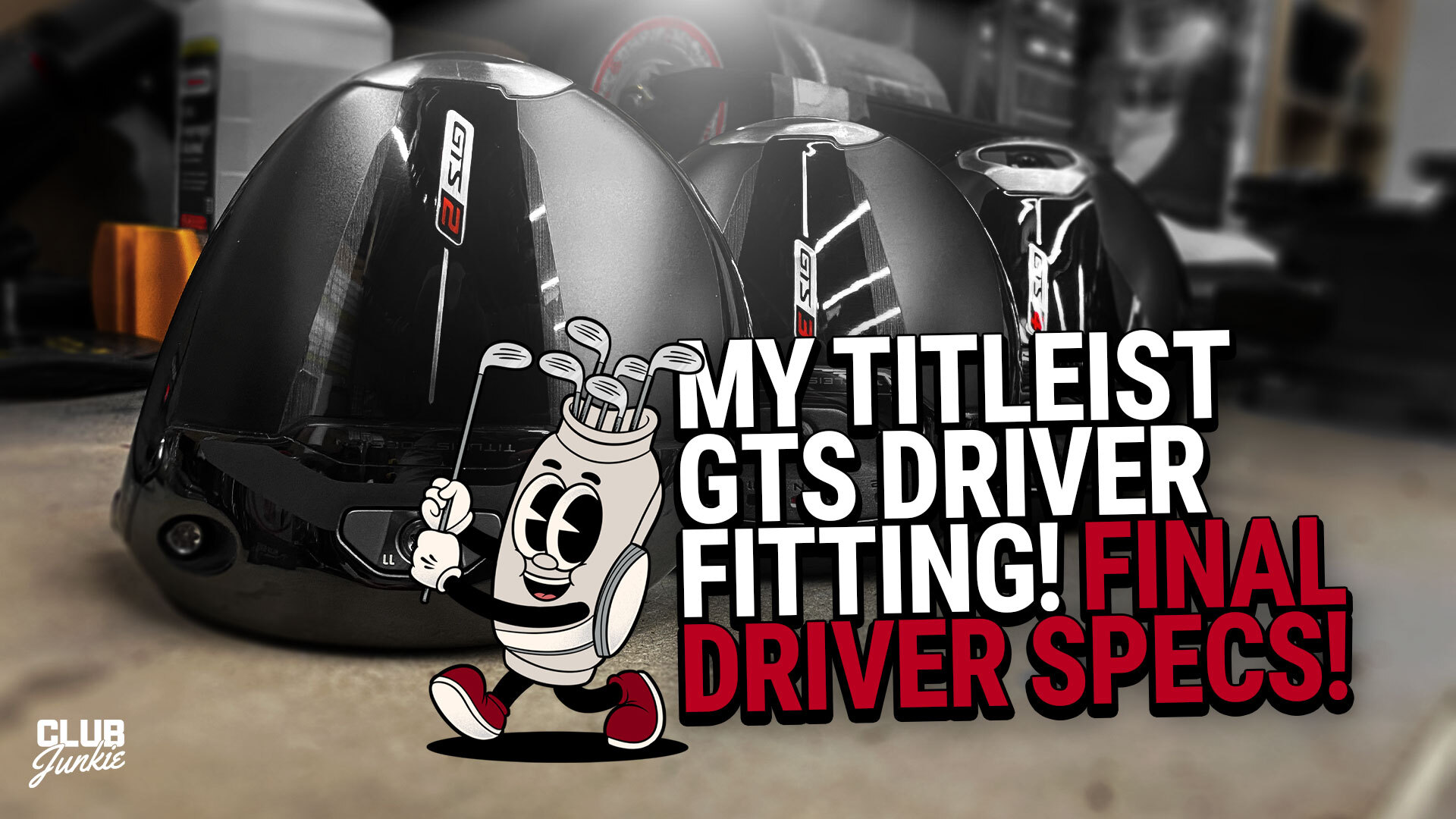
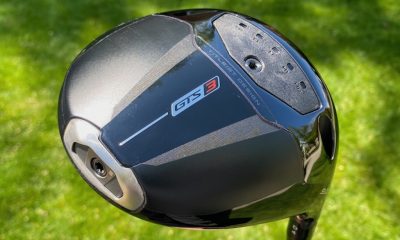
On this episode of the Club Junkie Podcast, I head to the Titleist Performance Institute for a full driver fitting with the new Titleist GTS lineup. We dive into the fitting process, talk about what made the biggest difference in performance, and break down how the different GTS heads and shaft combinations compare on the launch monitor. If you are thinking about a new driver setup for this season, there is a lot to take away from this one.
I also get into Brooks Koepka and the gear setup he brought to the PGA Championship, including the putters that caught my eye during the week. There are some interesting equipment trends showing up at the highest level right now and we break down what stands out.
To wrap things up, I talk about reshafting a few wedges, what I learned during the process, and swapping an adaptor onto a new shaft for another build project in the shop. A gear packed episode from start to finish for anyone who loves golf equipment and club building.
Follow Club Junkie everywhere:
Instagram: https://www.instagram.com/clubjunkiepod/
X: https://x.com/ClubJunkiePod
TikTok: https://www.tiktok.com/@clubjunkiepod
Threads: https://www.threads.com/@clubjunkiepod
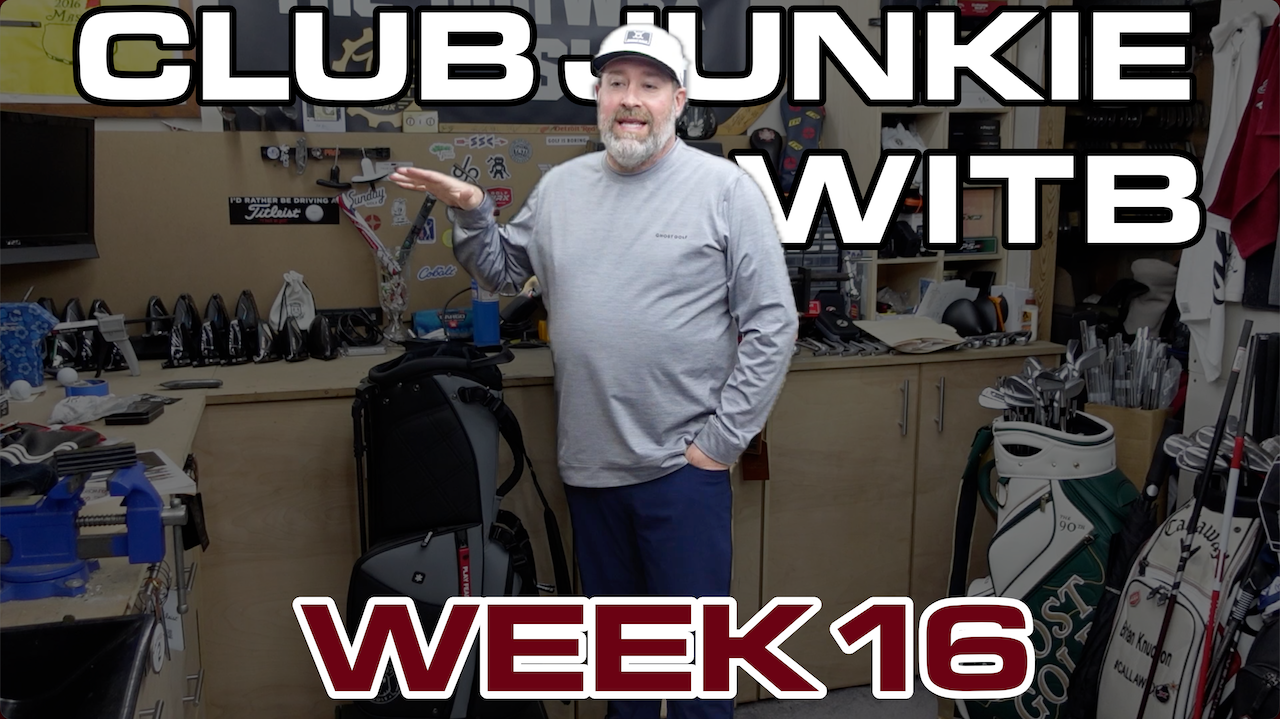
Excited for this week’s WITB as we get to add the new Titleist GTS woods to the bag! I was fit at Titleist’s TPI facility in Oceanside California a few weeks ago and my new clubs just showed up. I am also adding a cool set of irons that I built last year some wild custom wedges into a new golf bag. Speaking of the bag I have a new Ghost Anyday Black Ops stand bag that I will be using on my Motocaddy Remote M7 electric cart.
Driver: Titleist GTS3 (11 degrees @ 10.25)
Shaft: Fujikura Ventus Red 6s
3-wood: Titleist GT1 3Tour (14.5 degrees)
Shaft: Graphite Design Tour AD CQ-7s
5-wood: Titleist GTS (18 degrees)
Shaft: Fujikura Ventus Red 7s
9-wood: Titleist GT1 (24 degress)
Shaft: Fujikura Ventus Red 7s
Irons: Bettinardi CB24 (5-PW)
Shafts: KBS C-Taper Lite 110 stiff
Wedge: TaylorMade MG5 (50-09 SB)
Shaft: Mitsubishi MMT 125 Stiff
Wedge: TaylorMade MG5 (56-12 SB)
Shaft: Mitsubishi MMT 125 Stiff
Wedge: TaylorMade MG5 (60-08 LB)
Shaft: Mitsubishi MMT 125 Stiff
Putter: Dan Carraher ZT Proto
Ball: Callaway Chrome Tour
Bag: Ghost Anyday Black Ops Stand Bag

Justin Rose WITB 2026 (April): Full WITB breakdown with new McLaren irons

RBC Heritage Tour Report: More minis, course-specific setups, Spider & GTS launches

What’s the story behind Webb Simpson’s custom-stamped irons?

Cadillac Championship Tour Report: Spieth’s sizable changes, McLaren Golf launches, and more

Kristoffer Reitan’s winning WITB: 2026 Truist Championship

Cameron Young’s winning WITB: 2026 Cadillac Championship

Aaron Rai’s winning WITB: 2026 PGA Championship

Nelly Korda WITB 2026 (April)

Justin Rose on the switch to McLaren Golf, learnings from previous equipment moves

Photos from the 2026 PGA Championship


Patrick Reed WITB 2026 (May)
Driver: Titleist GT3 (9 degrees) Buy here. Shaft: Aldila Rogue Silver 130 M.S.I. 70 TX 3-wood: TaylorMade Qi35 (15 degrees)...

Aaron Rai’s winning WITB: 2026 PGA Championship
Driver: TaylorMade M6 (9 degrees) Shaft: Aldilda Synergy Blue 70 TX 3-wood: TaylorMade Qi10 (15 degrees) Shaft: Fujikura Ventus Blue...


Michael Block WITB 2026 (May)
Driver: TaylorMade Qi4D (9 degrees) Shaft: Fujikura Ventus Black VeloCore+ 5 X 3-wood: TaylorMade Qi4D (15 degrees @14.25) Shaft: Mitsubishi...


Bryson DeChambeau WITB 2026 (May)
Driver: Krank Formula Fire Pro (6 degrees) Shaft: Project X Prototype 3-wood: Krank Formula Fire (10 degrees) Shaft: LA Golf BAD...
-
 Whats in the Bag3 weeks ago
Kristoffer Reitan’s winning WITB: 2026 Truist Championship
-
Whats in the Bag2 weeks ago
Aaron Rai’s winning WITB: 2026 PGA Championship
-
 Tour Photo Galleries3 weeks ago
Photos from the 2026 PGA Championship
-
 Equipment2 weeks ago
GolfWRX Launch Report: 2026 Titleist GTS drivers
-

 Equipment2 weeks ago
PGA Championship Tour Report: Fitzpatrick, Koepka among big-name putter switches for Aronimink
-

 News2 weeks ago
WITB Time Machine: Phil Mickelson’s winning WITB, 2021 PGA Championship
-

 Equipment2 weeks ago
Which of Tiger’s major winning irons are your favorite? – GolfWRXers discuss
-

 Equipment2 weeks ago
Lead Tape Report: Adjusting the swingweight of the Wanamaker Trophy


Nolanski
Jul 8, 2015 at 4:15 pm
I love Hogan stories. I dont know why some people get offended by his sternness. It was a different generation that had to fight for everything. They didnt have the safety nets my generation(born 1984) has. It was sink or swim everyday back then.
Hogan Fan
Jul 1, 2015 at 10:23 pm
please read Tim Scott’s novel Ben Hogan The Myths Everyone Know and The Man No One Knew….it will change your negative perception of one of the greatest icons in American history
cody
Jun 25, 2015 at 1:16 pm
You know, i used to be in love with this guy. that was until I started to read about what a total jerk he was. Typical napoleon small man syndrome. All the Mr Hogan BS is starting to wear on me as well. The dude is the paul bunyan of golf. !40 mph swing speed. could tell if a club was an once to heavy, could a hit a wedge onto a tea plate from 160, and that was with traditional lofts. blah blah blah. i am kinda done with it all.
Daniel
Jun 25, 2015 at 10:50 am
My hope is that after some time getting to know Mr. Hogan and him getting to know you Mr Stites, that the relationship warmed up. I can’t see how you would continue to hold a man in such high esteem after being continually treated this way. I look forward to seeing all the articles to see if Mr Hogan eventually became a more friendly figure.
Slimeone
Jun 25, 2015 at 7:38 am
Sounds like Mr Hogan would have been ripe for a good bit of trolling! Unfortunately it hadn’t been invented yet!
Barry Switzer
Jun 24, 2015 at 11:19 pm
Ben. And I’m not affraid to say BEN was just a man.! The competitions and courses back than were beyond easy. Heck, many of us on here could’ve beat BEN. I respect his accomplishments, but his era was full of hack golf pro’s. He had it too easy and would be a wash up in today’s tour
Me Nunya
Jun 25, 2015 at 12:50 pm
Oh, you….
Gary
Jun 26, 2015 at 2:47 am
You, my friend, have no clue what so ever. Have you ever even seen pictures of Oakmont, Riviera Country Club, Congressional. I doubt that you could break a leg there under tournament conditions, let alone PAR. And for you to think you could even measure up to Ben Hogan with a golf club, I would like to see you hit 6 balls in a row on the same trajectory!!!!!!!!!!!!!!!!!!!!!
Bob
Jun 24, 2015 at 10:43 pm
What a ridiculous work environment and overwrought reverence. No wonder they went bust.
MichaelColo
Jun 24, 2015 at 7:15 pm
I think what allot of the posters may be missing is Mr. Hogan was protecting what he had built. It was the Ben Hogan Golf company and it was his name on each and every club that went out the door. Mr. Hogan came from humble beginnings and what he had, he had “dug out of the dirt”. He held his employees to a high standard in an effort to produce golf clubs of the highest quality, golf equipment symbolic with his name and the reputation he had built. Everything I have read and heard was Mr. Hogan’s employees loved him.
Christosterone
Jun 24, 2015 at 10:13 pm
Byron Nelson and Lee Trevino came from equally, if not more hardscrabble beginnings.
Yet neither of them treated SO many with profound disdain and an air of hubris laden dismissal.
This is the hallmark of a narcissist….many greats posses this quality but as Byron Nelson proved in his lifelong dismantling of Mr Hogan on the course at every level, it was not a prerequisite to succeed.
I do not allow someone’s childhood hardships to excuse boorish behaviors as an adult. It is indicative of a personality flaw at worst, bad self control at best…
-Christosterone
May be typos
Jun 25, 2015 at 1:00 pm
Lee was only nice when the cameras were on him.
Christosterone
Jun 26, 2015 at 10:02 am
As a lifelong Texan I have had the pleasure of meeting Lee…he was and has always been an absolute joy.
Heck, we even chatted at baggage claim in Palm Springs a few years back.
I asked him mostly about his charge at the 72 open which IMHO is the greatest display of Links golf ever…take a look at the link below…lee was a god on the links and I promise you was and is nice in person.
http://youtu.be/urdUwammrEM
His membership at Royal Oaks through the 80s furthers this as my wife’s family was a member and my father in law had dozens of interactions with Lee. All extremely positive,
Christosterone
Jun 26, 2015 at 10:18 am
Possibly the coolest story in 60s golf lore…
http://youtu.be/9sojAI7s160
SBoss
Jun 26, 2015 at 9:47 pm
I knew the clubhouse guys at an annual tour event and they told me that Lee Trevino was the biggest fraud on the tour. He was completely rude and dismissive of anyone that he deemed “below” him….
He complained CONSTANTLY about anything that he came across in the clubhouse area. They despised Trevino.
When I see how animated and “fun” he is when the cameras are on him? I know the truth. BTW, Jack Nicklaus wasn’t as bad as Lee Trevino but he wasn’t the best either.
Arnold Palmer? Now that’s a guy who treated people fabulously and he treated everyone the same. He’s the genuine article…and then some.
Christosterone
Jun 28, 2015 at 10:04 am
I can only speak to my experiences and Lee was a consummate gentleman in our interactions.
This is not second hand, it is how he treated me…
As for my father in laws interactions, I trust those more than anything.
But I concede that I am not a friend of Trevinos so do not truly know his heart…all I know is how he treated me and how he treated people when televised…which seemed absolutely congenial…
But my point remains that with Hogan there seems to be zero stories of positive interactions with him…
Heck, if I was Nicklaus I would’ve punched him after what he said about Jacks cherry hills final round and his “stupidity”….yet Mr. Hogan gets a pass…
Kevin
Jun 24, 2015 at 6:58 pm
Not sure if we are supposed to like Ben Hogan after reading these articles or if we are supposed to come to realize he was kind of a grump with a huge stick up his bum.
Double Mocha Man
Jun 24, 2015 at 6:13 pm
An aside: I was once involved in a Kohler/urinal encounter that breaks your Dad’s men’s room advice. But the other gentleman, at the Eaglemont Golf Course, dressed in blue suit and red tie made the first move. He was there after giving a speech to the local Chamber of Commerce. He was running for the office of Governor of Washington state. We exchanged pleasantries and I wished him luck in the upcoming election. Then, as planned, I voted for the other guy.
Double Mocha Man
Jun 24, 2015 at 6:05 pm
Tom, I love a good story. Well-written. Keep ’em coming.
talljohn777
Jun 24, 2015 at 4:47 pm
When you are at the top it takes very little effort to be kind and magnanimous and it costs nothing.
Seth
Jun 24, 2015 at 4:35 pm
Mr. Hogan… Deserves respect for his accomplishments and dedication the the game but your article is just sad dude. He wasn’t God. He was just a man. Have respect, learn from him, appreciate his legacy. I’m sure he was more uncomfortable with you around because of how you put him on a pedestal for worship.
Christosterone
Jun 24, 2015 at 3:42 pm
Tom,
First off, great articles.
I am not a fan of Ben Hogan, the man…but want to be!!!
My main issue with him is his almost sociopathic behavior towards fellow pros he deemed to be “below” him…Arnold Palmer, Johnny Miller, and Lee Trevino to name a few…
It was not necessary to be so rude to be great.
As I recall, one of the kindest men in the history of golf routinely curb stomped Ben Hogan until his 60s….Byron Nelson….
Please continue to write these as I love them and hope to slowly change my disdain for Mr. Hogan though it’s not looking good so far 🙂
May be typos
Jun 24, 2015 at 1:48 pm
Thanks to these articles I have found someone I like less than moe…I imagine hitler was a more approachable person
Sprcoop
Jun 24, 2015 at 1:04 pm
Holy sphincter cramp Batman! That sounds like a lot of fun. Not!