
Opinion & Analysis
The benefits of public and private golf


I’ve always been both awed and intimidated by private golf clubs.
In general, the members of private courses aren’t better golfers – or better people – than those of us who play at public courses. But there’s something about that exclusivity – the fact that they can tee it up on their course whenever they want, while I can tee it up on their course, well, never, unless I’m invited. That is intimidating to me, the public golfer.
I’m impressed by the facilities they have: the magnificent clubhouse; the locker room with its attendants and its shoe shining and showers; the grill-room with its oak-wood card tables and its member’s buffet; the caddy shack with its, well, caddies.
Against the disadvantages we have: the local muni with its bathroom, two stalls and four urinals plus a state-of-the-art baby changing table; the coffee shop with its Formica-topped tables, underpaid waitresses and undercooked breakfast burritos; and the cart barn, with its, well, carts.
As the member warms up and prepares to tee off, the private country club experience offers range balls included on mats or grass, a nice chipping and sand shot practice area and an expansive putting green that stimps 10.5. My local public course has a range where the grass has disappeared from overuse and under-planting, and they charge $7 for 30 dirty and damaged range balls. There’s a practice green that’s yet to be mowed today and a chipping area, if I use my imagination, that’s really a tree on a hillside.
The golfers are similar, though: people, it turns out, are people everywhere, and most golfers are even better than that – private club, resort, high-end daily fee, or low-wrung municipal course. Every real golfer I know will happily play a round with any other golfer, as long as there’s no likelihood they’ll have to be paired with each other ever again. But there are major differences between public golf and private. And much of it is based on price, not personality.
My father-in-law’s club in the heart of Long Island has 400 members and an initiation fee around $40,000. That’s the equivalent of 1,000 rounds of golf at $40 per, and that doesn’t include monthly dues, food and beverage requirements, locker fees, mandatory caddies, tips and lost bets. But for many with money, it’s worth it.
[quote_box_center]“I love my club,” Craig told me at Old Flag’s Head, “because I can get a game anytime and play in three hours or less.”[/quote_box_center]
“It looks like a nice course,” I told him.
“With what we pay in dues and assessments,” he answered, “it had better look nice. Seriously though, it’s my home away from home, and work.”
And that’s part of the attraction. For many members, a private club is not just an escape for a quick 18, it’s a readily accepted hide-out, a get-away from the daily grind.
“I tell my wife I’m going to the club,” explains Marty in the member’s lounge at Feather Stone CC. “That sounds so much better than telling her I’m going out for a beer.”
“I come out here for either breakfast or lunch a couple of days a week, and I’m here with my wife and son at some point most Saturdays and Sundays. He takes lessons from the assistant pro,” said Dr. Dave, a local radiologist. “I don’t always play, sometimes I chip or putt or hit balls, sometimes I just read and eat, or sit and talk. It’s my club, it’s where I belong.”
Private clubs are pricey. They can range anywhere from a few thousand dollars a year to even six-figure initiation fees and hundreds, sometimes thousands a month in golf and food/beverage charges. It all depends on the club. And the more you pay, the more options there are: from grass tennis courts to valet parking to lawn bowling and seafood buffets. And the higher the price, the more exclusive the golf and the company usually is.

Pacific Dunes at Bandon Dunes was named the No. 2 public course by Golf Digest.
“The people I know, the people I play with, the couples my wife and I go out with, they’re all members here. We’ve become a community. We know each other’s kids, wives, we even know each other’s – shh, I didn’t say that,” Stan said with a laugh and wink at Old Ivorystone.
“It’s a money thing, I guess I’ll admit that,” Reece told me at the local county course. He said that he’d thought about joining one of the area’s private clubs a few years ago, he had a sponsor, but he decided against it.
“They had child care and a great social program and I knew a bunch of members already, but I didn’t love the course and I certainly didn’t want to play it exclusively for the rest of my life.”
“But wouldn’t you have reciprocity at other private clubs?” I probed.
“I only play once or twice a week at the most,” he answered. “It’s not worth it. It just doesn’t make sense from a cost/benefit standpoint. Tell you the truth, even if I had all the money in the world, I wouldn’t join.”
“Not even Augusta National?” I asked Reece.
He laughed. “That I’d join I guess. I might even invite you as a guest. But you’d have to wear better shoes.”
“There’s a course not too far away where I live in Canada,” Wendell told me in Palm Springs. “I get a summer family membership there for unlimited weekday golf, cart and range use for $1,200 Canadian for the summer. It’s the only course within half an hour’s drive so I play there all summer.”
“Living in the Inland Empire [east of L.A.] I have something like 40 golf courses within 30 minutes,” Randy told me at a golf shop in Rancho Cucamonga. “It would be crazy to have to play all my golf at just one course [a private club] when there are so many other great options for golf.”
There are private club golfers and then there are public course golfers. In the end, they all can make a 10-footer for par just as easily as they can miss a three-footer for bogey. They can shoot 70 and they can shoot 90, and they can be pissed off doing it or they can laugh their way around the course.
Golfers play golf. Public, private, resort, municipal, hell, even executive golf courses… the venue is just where they ended up and how they chose to spend their money.
Do you play at a private club or public courses? Let us know in the comments section below. And check out the inspirational story of one golfer trying to shoot the round of his life at 7-ironpress.com. The book is called A Perfect Lie – The Hole Truth and you can get free shipping on the paperback with the code GOLFWRX, or $4 off the e-book when you enter the code GOLFWRX1 at check-out.


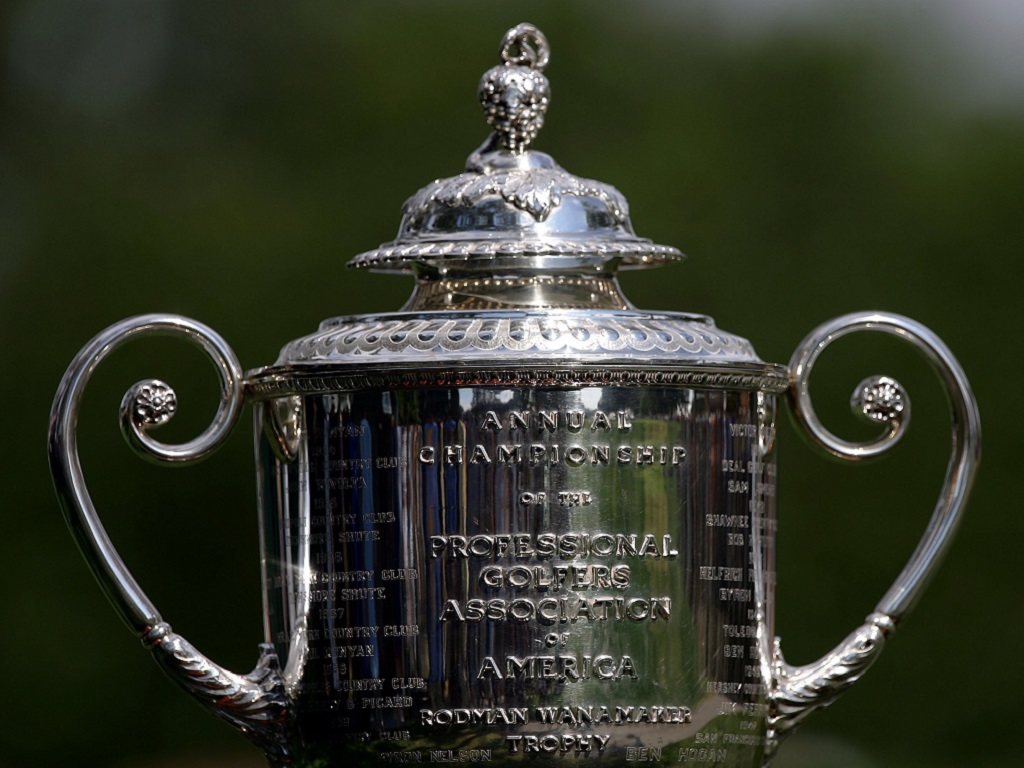
Aronimink is not a storied club, but when Donald Ross himself proclaimed it to be as good as he can design and build, one had to take notice. Jay Sigel was the pre-eminent male amateur golfer from the mid-1970s to the mid-1990s. He might have called any number of Philadelphia clubs home, but he chose Aronimink. It served him well. Gary Player won a PGA Championship here in 1962, and was followed by the 1993 winner … nobody. Aronimink gave that event away to Inverness, for reasons of which it is certainly not proud. So be it. We had to wait sixty-four years for the PGA to return to Newtown Square, but here we are. Aronimink has been neo-restored by Gil Hanse and team, to return Ross features with an eye toward defense against the dark arts, errrr, high-tech equipment.
Day one saw Rory McIlroy and Bryson DeChambeau dig big holes, to the tune of plus-four and plus-six, respectively. Since the first-round lead will be minus-three at worst, many shots will need to be made up for the power couple to reach contention. By nightfall, seven golfers held the day-one lead at three-under par 67. Shots and sticks caught our attention, and we are proud to present Five Things We Learned on Tech Thursday at the 2026 PGA Championship. Thanks to InsideTourGolfer, Today’s Golfer, and GolfWRX for initial equipment research.
First, meet Min Woo Lee
Min Woo Lee, aka Dr. Chipinski, has once again thrust himself into the conversation of Can he, will he, when will he? Lee has so much talent, wins not nearly as often as we believe that he should, and has no major near-misses (much less titles) on his wiki. The young Aussie is getting older and wiser, but is he able to avoid the scarring that holds the older and wiser back from breaking through? Philadelphia offers another opportunity. Min Woo signed for five birdies and two bogeys on day one, and grabbed a share of the opening-day lead at Aronimink. Winners transcend history and the moment, and Lee will need that sort of ascent to lift the Wannamaker on Sunday.
Second, meet Aldrich Potgeiter
The young South African golfer can rip driver with the best of them. Aronimink tips out at nearly 7400 yards, but beyond the fairway bunkers that ensnare only the mortals, Potgeiter can take his chances with wedge from the rough. On Thursday, he spent plenty of time in the spinach. Like Popeye, he used his muscles to gouge and thrash and dig his way out. Six birdies against three bogeys on the card brought AP in a three deep.
Third, meet Martin Kaymer
Not a major event takes place without a where’s he been throwback moment. We know that Martin Kaymer left the PGA and DP World tours for LIV golf, but the two-time (US Open and PGA) major winner has a lifetime exemption into at least one major event, and he seizes the opportunity each May. Kaymer joined the six-seven brigade with four birdies and a solitary bogey on day one. Kaymer was never a long hitter, and the years are kind to no golfer. The German champion will need to uncork every bottle of guile and strategy in his cabinet to remain in contention. For today, though, he occupies a rung on the ladder of Tour Tech.
Fourth, meet Scottie Scheffler
Let’s see, he’s the defending champion at the PGA, and he found his way back to the top tier with five birdies against two bogeys. To be a favorite and then play up to that stature and expectation is quite difficult. Just ask Rory, Bryson, and some of the other pre-tournament heartthrobs. Scheffler’s game is complete, and to knock him off the OWGR #1 pedestal, one needs to defeat him at the majors. Aronimink is the sort of course that fits Scheffler’s game. Better yet, it unfits the game of many of his challengers. Don’t expect Scheffler to go away anytime soon. Come Sunday, he’ll be around.
Fifth, meet Stephan Jaeger
Clocking in for the unheralded players shift are Ryo Hisatsune and Stephan Jaeger. Hisatsune logged seven birdies on day one, but gave most of them back with four bogeys. Still, he’s tied at the top for a time. Jaeger pitched five birdies against two bogeys, including a run of three consecutive, from holes four through six. Odds are that one of the two will hang around through 36 holes. Odds also suggest that both will be gone by Saturday evening. Still, the PGA Championship has historically been the major most likely to be won by an under-known. Both Hisatsune and Jaeger feature on that list, so good luck, lads!


On this episode of the Club Junkie Podcast, I head to the Titleist Performance Institute for a full driver fitting with the new Titleist GTS lineup. We dive into the fitting process, talk about what made the biggest difference in performance, and break down how the different GTS heads and shaft combinations compare on the launch monitor. If you are thinking about a new driver setup for this season, there is a lot to take away from this one.
I also get into Brooks Koepka and the gear setup he brought to the PGA Championship, including the putters that caught my eye during the week. There are some interesting equipment trends showing up at the highest level right now and we break down what stands out.
To wrap things up, I talk about reshafting a few wedges, what I learned during the process, and swapping an adaptor onto a new shaft for another build project in the shop. A gear packed episode from start to finish for anyone who loves golf equipment and club building.
Follow Club Junkie everywhere:
Instagram: https://www.instagram.com/clubjunkiepod/
X: https://x.com/ClubJunkiePod
TikTok: https://www.tiktok.com/@clubjunkiepod
Threads: https://www.threads.com/@clubjunkiepod

Excited for this week’s WITB as we get to add the new Titleist GTS woods to the bag! I was fit at Titleist’s TPI facility in Oceanside California a few weeks ago and my new clubs just showed up. I am also adding a cool set of irons that I built last year some wild custom wedges into a new golf bag. Speaking of the bag I have a new Ghost Anyday Black Ops stand bag that I will be using on my Motocaddy Remote M7 electric cart.
Driver: Titleist GTS3 (11 degrees @ 10.25)
Shaft: Fujikura Ventus Red 6s
3-wood: Titleist GT1 3Tour (14.5 degrees)
Shaft: Graphite Design Tour AD CQ-7s
5-wood: Titleist GTS (18 degrees)
Shaft: Fujikura Ventus Red 7s
9-wood: Titleist GT1 (24 degress)
Shaft: Fujikura Ventus Red 7s
Irons: Bettinardi CB24 (5-PW)
Shafts: KBS C-Taper Lite 110 stiff
Wedge: TaylorMade MG5 (50-09 SB)
Shaft: Mitsubishi MMT 125 Stiff
Wedge: TaylorMade MG5 (56-12 SB)
Shaft: Mitsubishi MMT 125 Stiff
Wedge: TaylorMade MG5 (60-08 LB)
Shaft: Mitsubishi MMT 125 Stiff
Putter: Dan Carraher ZT Proto
Ball: Callaway Chrome Tour
Bag: Ghost Anyday Black Ops Stand Bag

Justin Rose WITB 2026 (April): Full WITB breakdown with new McLaren irons

RBC Heritage Tour Report: More minis, course-specific setups, Spider & GTS launches

What’s the story behind Webb Simpson’s custom-stamped irons?

Cadillac Championship Tour Report: Spieth’s sizable changes, McLaren Golf launches, and more

Kristoffer Reitan’s winning WITB: 2026 Truist Championship

Cameron Young’s winning WITB: 2026 Cadillac Championship

Aaron Rai’s winning WITB: 2026 PGA Championship

Nelly Korda WITB 2026 (April)

Justin Rose on the switch to McLaren Golf, learnings from previous equipment moves

Photos from the 2026 PGA Championship


Patrick Reed WITB 2026 (May)
Driver: Titleist GT3 (9 degrees) Buy here. Shaft: Aldila Rogue Silver 130 M.S.I. 70 TX 3-wood: TaylorMade Qi35 (15 degrees)...

Aaron Rai’s winning WITB: 2026 PGA Championship
Driver: TaylorMade M6 (9 degrees) Shaft: Aldilda Synergy Blue 70 TX 3-wood: TaylorMade Qi10 (15 degrees) Shaft: Fujikura Ventus Blue...


Michael Block WITB 2026 (May)
Driver: TaylorMade Qi4D (9 degrees) Shaft: Fujikura Ventus Black VeloCore+ 5 X 3-wood: TaylorMade Qi4D (15 degrees @14.25) Shaft: Mitsubishi...


Bryson DeChambeau WITB 2026 (May)
Driver: Krank Formula Fire Pro (6 degrees) Shaft: Project X Prototype 3-wood: Krank Formula Fire (10 degrees) Shaft: LA Golf BAD...
-
 Whats in the Bag3 weeks ago
Kristoffer Reitan’s winning WITB: 2026 Truist Championship
-
Whats in the Bag2 weeks ago
Aaron Rai’s winning WITB: 2026 PGA Championship
-
 Tour Photo Galleries3 weeks ago
Photos from the 2026 PGA Championship
-
 Equipment2 weeks ago
GolfWRX Launch Report: 2026 Titleist GTS drivers
-

 Equipment2 weeks ago
PGA Championship Tour Report: Fitzpatrick, Koepka among big-name putter switches for Aronimink
-

 News2 weeks ago
WITB Time Machine: Phil Mickelson’s winning WITB, 2021 PGA Championship
-

 Equipment2 weeks ago
Which of Tiger’s major winning irons are your favorite? – GolfWRXers discuss
-

 Equipment2 weeks ago
Lead Tape Report: Adjusting the swingweight of the Wanamaker Trophy


KCCO
Jul 4, 2015 at 12:29 pm
I came across this article today, and it totally relates to my day yesterday. I am a member at a country club, and was invited to play with some old friends on a public course.
Yesterday I believe is one of if not the most busy day at golf courses public or private. (So I can’t really complain about being boxed in for a 2:45 9 holes before deciding to leave) Anyhow, before meeting my friends at the public course, I couldn’t avoid going to my CC to practice, eat lunch, and get a little heads up on the course I was going to play. There are some really well maintained public courses. This course was decent, but was very slow moving, and I find on public courses little things like lots of u repaired ball marks, condition of carts and some other little things aren’t up to snuff. I have fun golfing anywhere, but as mentioned above, I felt as if I was on a little vacation from my “home course”/lounge/restaurant/pro shop/ which is full of everyone who knows everybody by their first name including employees. I have a good amount of family members there, so cross paths with them just because of the ease of access, and it’s just s great place to be. All of that being said, I prefer the tightness of players, condition of course, and being able to do pretty much whatever I want in terms of golf whenever I want on a beautiful course that most public course unfortunately can’t offer because of the few too many that don’t care for their facility, or just aren’t into the game as much as a member who is paying high dollar for a membership at a country club. I said some, not all. I know plenty of great players who play public, know etiquette, and respect wherever they play. But if you can, and you want to play this game as much as you can, a membership at a great course can’t be beat, if it’s your cup of tea…
Jayw
Jul 3, 2015 at 5:58 am
I was in my mid 20’s when I started playing golf. Job and raising children always took priority over golf. So, needless to say I didn’t play much golf over the years before I retired 5 years ago. When I retired I joined a countrified course that isn’t in perfect condition. The fairways and greens are in very good condition. The rough all over the course is not maintained very well and is mostly dirt, tree roots, etc. And, it certainly doesn’t have all those amenities that is mentioned. The course has memberships and is also open to the public. Members can play anytime, and can start playing golf in the mornings as early as you want to. Occasionally, I start playing at sunrise. The membership is inexpensive which also makes it affordable to play other courses. I play golf about 5 days a week on my membership course. It works very well for me and I know that I am a better golfer than I would be without it. 8 handicap from the senior tees. Not great, but, not bad. When I play other courses it’s kind of like when you go on vacation, it feels great and you have a good time, but it’s good to get back home where you can relax.
Mark Littlejohn
Jul 1, 2015 at 6:37 pm
I just moved back to the USA a few months ago after four years in the United Kingdom. I wish the private clubs in America had a similar visitors program as they do…even exclusive clubs such as Royal St George, Muirfield, Sunningdale, & Walton Heath have visitors days. A golfer can call up the club directly and inquire if there are available tee times on those days and if so, tee it up. No required member escort, no getting your pro to call and grovel on your behalf (Black Diamond came to mind)…a simple phone call, a decent established handicap, and a little polite conversation go a long way. I was able to play over 70 clubs while I was there, a whole lot of big names included. It’s unfortunate that is not possible here.
Mo
Jun 29, 2015 at 9:16 pm
I’m on the private side of the discussion and like most above, like it a lot.
One benefit I can see about playing public is that you can avoid courses which are being aereated. At private courses you are stuck with lousy greens for weeks on end.
bunty
Jun 29, 2015 at 9:10 am
It is interesting to read about the big divides that can exist between public and private in the US. In Australia and the UK, joining a private club is not far out of reach for most and it is how the nations produce good golfers through its junior programs without any university golfing system.
There are some which are more exclusive/ expensive than others but the vast majority of them dont offer the extra faciities like caddies/ valet parking and free range balls. Its all about a club atmosphere and competing against other clubs during pennant season for bragging rights
Bryan
Jun 28, 2015 at 4:32 pm
Cc offer a far better experience most of the time just have to have a great course, can’t stand playing public courses after belonging to a private course. Pay 70 dollars for slow greens and a 5 hr round no thank you, cc always have a game and tourtaments
Doc Todd
Jun 26, 2015 at 7:16 am
I grew up playing muni golf, worked at a private club in HS, and now have a membership to a low-mid level private course that I live adjacent to. Do I get my money’s worth? No, I work too much for that. Where is does “pay off” is that I can drive 3 min through the neighborhood and hit golf balls if I have a spare 30-60 min, or I can stop in for a quick 9 holes if I get off of work just a bit early some random day. Those slivers of time for a quick 9, broken amounts of range time, or a last min trip to the grill for dinner because we are too tired are where I get my value. With a 14 mo kiddo, I have lost A LOT of freedom when it comes to those late afternoon 9 hole trips, but I’m counting down the days till the little one can swing a club…about 2 more years judging from the pics of me as a little one playing with my dad.
Niz
Sep 14, 2016 at 11:35 am
Very insightful. Like you, I have a young family and am deciding on a private club near my house. Being able to drive through the neighborhood for some range time or even walk a quick 9 would be huge benefits. Carry-out from the Grill once a week would easily use up our food minimum. No way I can play enough to make private cheaper than public golf but the value is definitely there.
PaulR
Jun 26, 2015 at 6:43 am
We have life membership at a course near us in Bedford (UK). The cost of it equalled about 7.5 years of annual membership fees and includes our son for free until he’s 18. The course is well kept all things considered and is a friendly place. Would like to join Woburn (Poulter is touring pro) which is around 20 mins drive but big joining fee and annual dues. Unfortunately can’t afford it although have played it 6 or 7 times over the years on corporate days. Would certainly have a good junior program which is non existent at our course. The other local courses are OK, no better than ours so we went for the deal. Our nearest muni is nothing special either. I guess as long the owner doesn’t sell out we should be OK as it’s his family business.
Chris n
Jun 25, 2015 at 10:24 pm
I second the club corp comments: I pay $250/month plus $8/round. We get a gym, nice pool, unlimited range/chipping/putting, babysitting on weekends, etc. This year I’ve played sonnenalp, gainey ranch and 4 different Houston clubs for a cart fee. Our home club has two different courses with 5 tee boxes each. My wife and son join me for family tees after 3pm on Sunday and we usually play 4-5 holes before my 3yo son gets bored. I would never take him on a public course, but here everyone knows after 3 on Sunday is family/casual time.
I know some won’t believe me, but for our family, we come out cheaper with our club then we would for daily fees, resort course fees when traveling, gym memberships, pool fees, babysitting fees, etc.
Steve
Jun 25, 2015 at 6:42 pm
Playing the same course over and over every month would bore me to tears. I rather play high quality daily fee courses of my choosing. In south Florida there are endless amounts of choices and if you know a few pros or members you will play your share of private. If muni’s are city run courses, you might have less conditioning. But here in the summer, you can play great courses for $50 or under in great shape
BJ Westner
Jun 25, 2015 at 2:59 pm
There is a whole other side to private clubs that you left out…..I’m not going to say what you wrote was not necessarily true, however, that only applies for upper end clubs (i.e. Congressional, Caves Valley, etc). I live in Maryland and am a member at Montgomery Country Club. The course is in fantastic shape but the monthly dues are less than $400 and initiation is almost nothing. The municipals in this area charge $85+ for an early weekend round. If you play 10 times a month then you are spending easily $700 plus. My bill at my club ends up costing me $550 or less and I play 3 hour rounds on a course that in fantastic shape for less money (I play about 10 times a month). While my club is nice and there are some people there that have a lot of money, it’s very accepting and accessible for the middle class. The local municipal courses lost my business when they charge more than my club charges for a guest and yet don’t control the bugs or the pace of play.
KCCO
Jul 4, 2015 at 12:43 pm
This def sums up a lot of the financial end. There are courses where a membership if you really want to make it happen, you will make it happen. There’s always gonna be something more expensive. I live 5 minutes from pine valley, and trump national Philadelphia. No, they aren’t in my price range, but there are other competitive courses in my price range, if you play a lot, as the guy said above, you could prob come out better paying by the year/month.
* and those that mention being “stuck” at on course when being a member at a CC, must be a little misinformed (not trying to sound ignorant). Most private courses will work with other private courses in area and trade off tee times or as a courtesy let you play their course for same in return for a member at their course. I’ve done this many times, and still allows you to venture off your home turf.
Will
Jun 24, 2015 at 9:36 pm
For me it is not the money, it’s the different types of golf and people you meet playing different public and semi-private courses that I prefer. You’ll have good and bad experiences and people at both, but there is already a lack of diversity in golf and I don’t want to spend my days playing the same holes with the same people who probably share the same views and experiences of the world. For my choice, variety is the spice of life.
Vtskibum
Jun 24, 2015 at 9:01 pm
This is a great writeup with excellent points of view. I live in the North East. I grew up caddying at a very private club. My parents were members. I got to know many influential people at the club. One who to this day is directly responsible for my career now. I think in todays world, it really boils down to money and lifestyle. My wife and I have no children. We don’t need a pool, tennis, paddle, golf, to bring the kids to. We just both love the game and love being together on the course. Are private courses nice, of course. Are the level of players any better than the public courses, heck no. I think it just comes down to if one can afford to join a private club. To try to justify how much money you’ll spend at a private course compared to public is a waste of time. If you want to spend your money at private, enjoy the people you are members with and have no problem playing the same course then join. Personally, right now at this point in our lives, there are simply too many public/semi private courses around us we love to play and every person we’ve played with on these courses has been outstanding. Great write-ups however here.
BOB
Jun 24, 2015 at 8:52 pm
The difference is that old people have to play by the rules too at a private club. Try getting called up by granny and grandpa on a public course, not a chance, they’re filling their score cards out in the middle of the green.
Bruce Ferguson
Jun 24, 2015 at 6:05 pm
I wish I made what I do now back when the kids were small. They would have enjoyed the pool, tennis and (dare I say-golf?). Love the course at Walnut Grove CC in Dayton, but there are so many decent public courses around here. Maybe next year.
Jason
Jun 24, 2015 at 5:55 pm
I joined a private club this year and have loved it, the facility and the employees are all excellent at their jobs and the head pro is always around for a quick tip. The major bonus is I can take my kids with me and they get to play at a pace that doesn’t make them bored and hate the game of golf and I don’t have to pay a couple of hundred dollars each time my daughter wants to join me and my son. I still take advantage of the summer rates at the public course to get a change of scenery once in a while but it’s hard not to love being able to play a 2.5-3 hour round on a challenging well maintained course anytime you want.
thbrewst
Jun 24, 2015 at 5:34 pm
The problem with a lot of the comments is that they are trying to justify the cost of the private club. Like joining is some cost reduction mechanism based on the number of rounds played per year. You can never justify the cost of a private golf club. People who join do it because they want to. They want the lifestyle, the amenities, acquaintances/associations, etc. No one ‘needs’ to join a private club, they ‘want’ to.
Compare it if you will to the guy who bought the 80″ TV versus the 42″. Both accomplished the goal of allowing him to watch games in HD, but he wanted the big one so he bought it…
Carlos Danger
Jun 25, 2015 at 10:56 pm
Im 33, have 2 kids under 4 and belong to a CC.
I live and breathe golf, its all i think about. Each of my wifes area rugs in the house has a small frayed area from me practicing my iron swing while walking around the house on conference calls. When I buy clothes…I often wonder “could I also wear this while golfing?” I have more golf shoes than dress shoes. I already have my guys golf trip planned to every last detail for NEXT May.
But I also have to be a good dad and leaving my kids on a Sat and/or Sun to drive 30 min to play a 4.5 hour round on a public course is just not realistic. Being gone for 6 hours is tough on my wife, my kids, and it turns me playing golf into a negative thing with everyone.
My CC is 6 minutes and 12 seconds from my house. I can count on one hand how many rounds I have had there over 4 hours (today played in less than 2 over my lunch break). Tee off at 7:15 on a Saturday, rinse off, meet my wife and kids at the pool at 11:00, grab a beer, and hang with family and friends. It doesnt get any better than that.
I realize not everyone has the disposable income to belong to a course…but there are people doing all kinds of things with their disposable income (“lake people”, boats, cars, travel, house stuff, etc) and its not really anyones business how they spend and enjoy that disposable income. Its how we spend ours and it makes our family very happy…
Bryan
Jun 28, 2015 at 4:40 pm
If you play enough golf it certinaly justifies itself, obvs math can tell you that, 100 rounds at 80 dollars so 8 grand at some public place or a decent club at 400 a month? No counting added benifits of jumping out whenever, pool or other amenities makes a lot of sense.
Regis
Jun 24, 2015 at 5:18 pm
I was a member at a private club here on Long Island. I played 2-3 times a week and was at the club 6 days a week, lunch, after work, bowling in the winter. If you and your family use the whole club and its facilities its great. I now play a county course and golf wise there is not much of a drop off. The course is great, and generally in good condition. The big difference is at the private club, everybody had an established handicap and you always played match play. That I miss. One misconception is accessibility. Most clubs in my area have a lot (too many??) tournaments on the weekend. If you factor in qualifying, Id say at least 50% of the summer weekends are encumbered in some way. And that’s not factoring in the “private” tournaments that seem to creep in on a Saturday morning once a month. If you want to play in every tournament its great. If you want to play in 2-3 a year, it gets frustrating.
Double Mocha Man
Jun 24, 2015 at 4:38 pm
As a junior golfer growing up in St. Louis it didn’t take long to play all of the public golf courses, over and over again. There were about 10 very exclusive private country clubs just begging to be discovered and played. I devised a scheme. It got me and and a cunning friend onto every one of those private courses. We’d amble onto the first tee, if not crowded, as if we belonged there, sons of members, never looking over our shoulder. We always dressed the part.
We were caught only about 2-3 times, but had a fail-safe story I’d dreamed up. We had met Mr. Pemberton a day earlier at a local bowling alley. Golf became a topic of discussion and he, slightly inebriated on beers, invited us to play at his private course. He said to come out at a certain time and if he wasn’t there to go ahead and tee off and he would take care of everything, and catch up with us on the back nine. Of course, there was no real Mr. Pemberton.
That made-up story worked every time we were caught. And oftentimes I swear the pro who was grilling us had a gleam in his eye knowing that he had done the same thing as a kid. We never got in trouble, worst case scenario was polite removal from the course.
I got to play a lot of great private courses and never paid a penny. Went on to play college golf and have a successful career. I now have played 25 of the top 100 courses in America. Ironically, only one of those private St. Louis courses is on that list.
I don’t recommend any teen reading this try this technique. I was naive and trusted that Mr. Pemberton. Wink. Wink. Wink.
Doc Todd
Jun 26, 2015 at 7:06 am
Nice! We did stuff like that growing up too.
RVA USMC
Jun 24, 2015 at 3:47 pm
It I was in a better financial situation, I would absolutely join a private club. I could easily afford one of the many semi-private courses in the Richmond, VA metro area, but without the luxury of being able to play during the week, it’s just not worth it. When I worked a different job and played a lot during the week, it was more cost effective to buy a discount golf book since I could play many different courses during the week. The problem with the deals for the semi-private courses is your pay a little less but still have to deal with the 5+ hour rounds when I play which is every Saturday morning. The main problem is with the courses struggling that they over book and the rounds just take way too long. My playing partner and I play different courses every Saturday and tend to go back to public/ semi-private courses that we can tee off around 8am and be done around 12pm, or sooner depending on how many tee times are booked.
me
Jun 24, 2015 at 2:21 pm
I play about 50 rounds a year and started looking at private clubs because I thought I would save money. Definitely not correct. Mostly because clubs also charge a cart fee of about $25 every time you ride. There goes 50% of your savings right there. I suppose for some people, they could see savings. But you’d have to be golfing at least 3-4 times a week all year round. That said, my in laws are at a private club and I love golfing there. I’ve never played a round more than 4.15 and the course is in impeccable shape. Plus everything this article says about the practice facilities is true and a huge plus. The only thing you really miss out on is the opportunity to golf at different places all the time. I mean you can, but then you’re just wasting money. My current golfing buddies would never fork up the $80+ guest fee and want to golf at my course every time, so that would suck. And I like playing with them all. I foresee myself joining a course. But not until I’m a bit older.
NZTYN8
Jun 24, 2015 at 2:02 pm
I was a member at a private country club in the northeast. The course was in magnificent shape, staff was great and so were the members. It was definitely a benefit playing a hole 18 in 2.5-3 hours. Hell i could fit in 36 before finishing 18 at a public course. I also was able to play alot more during the week, as i could drive (after my 9-5) and sneak in 18 before the sun completely set. My game also got better playing so much. The private pricing was ok, initiation fees were reasonable, but being in the northeast where we have more snow covered days then not, I couldn’t justify paying for golf in the winter when I wasn’t able to golf. Half the time I couldn’t even make it out to the club to use my bar tab each month. If i was someone with the means, I would definitely do it again. It was great being treated that way and not have to deal with a crotchity old man as the starter every public course i play.
May be typos
Jun 24, 2015 at 1:53 pm
The main difference is the public course is crowded and everyone at the private course acts like an entitled d**k
Dan
Jun 25, 2015 at 11:47 am
Yet I’ve seen two fistfights at public golf courses, and zero at the private clubs I’ve played. That isn’t indicative of almost all public golfers, however you do run into the occasional guy or group of guys who are only out there to tie a load on and only golf once a year (with no concept of golf etiquette) – something you most likely will never encounter at a private club.
Steve
Jun 24, 2015 at 1:41 pm
I like the comparison in this article. I live in Florida and I have an overabundance of Public and Semi-Public courses to play and have very reasonable prices, which is what I do now. But growing up here and venturing into professional life I always had a Country Club Membership, and I miss that. When I was younger my parents had a membership at a mid-tier private club (CCA) where I was able to play all afternoon after 2pm and it was a great way to work on my game and it kept me out of trouble. As I got older and graduated from college I joined a Private (member capped) golfers club and I really liked. I met more nice and like minded people, not that I haven’t playing public, in my same age group and different backgrounds. We had weekly games and like one of the other comments said, eating there was great. I had to drop my membership once the economy went south and it effected a ton of privates in our area but given the change economics in my life again, I would enjoy joining a private club again. So for now I’ll keep playing the local Muni’s.
Mark
Jun 24, 2015 at 12:18 pm
I recently joined one of my local clubs earlier this year, initially cause my regular playing partner rejoined there as they extended their maximum age for equity member’s children and to have a more accepting place for my young sons to learn the game. Prior to, I’ve played and practiced at my local muni hundreds of times and toured GolfNow when wanting to play elsewhere.
The course conditions at this club are way better than any sub-$75 muni or public course I’ve played. I can get on the course or the range 95% of the time, and jump around holes if I catch up to a slower group. At a public course, I would have to grin and bear it if the slow group doesn’t let me pass cause I always think that I didn’t get my money’s worth in greens fee if I skip a hole. At this club, I can walk 9 holes in 75mins, 18 holes in under 3hrs. The staff and most of the members have been very welcoming and friendly. And the membership is diverse for a country club, mix of races and ethnicities, young and old, Bentleys and Porsches to my Honda Pilot with 2 car seats in the rear.
I think one of the most underrated aspects of joining this club or any club is the dining and food. This past Father’s Day, our family went to a local corporate restaurant and had to wait over an hour for a table and felt rushed once we were seated. At the club, there is always a table available. The food is above average to great. And there is never any rush to turn our table around for another guest.
Am I getting my money’s worth joining this private club? It’s hard to determine. I’m getting a pretty sweet junior member deal for another 6 years, so that helps. I’ve definitely played more golf than if I hadn’t joined. My kids have been enjoying the pool once it opened for the season (and the club allows our nanny to take them without us present at no extra charge, even lets her sign off on food and beverages for all of them). Unless the economics of my household takes a turn for the worse, we’d probably will be members for the long haul (or at least till my junior membership deal expires).
Wisconsin Terrapin
Jun 24, 2015 at 12:10 pm
I belong to a local lower-priced club. The difference between it and a couple of the better maintained muni’s is I can get a tee time essentially anytime, and I can play as fast as I want. Between leagues locking up every evening and 5 hour rounds on weekends, it is hard for me to squeeze in time to play public courses. I moved here for work after my children were grown, and this also provides a way to meet people with similar interests. My co-workers are way younger and my neighbors all hang with folks that raised their children together. The lifestyle works for us. I can’t justify the cost on just the number of rounds.
TinWhistle
Jun 24, 2015 at 11:59 am
As a lifelong public golfer (generally and currently on municipal dog tracks) seeking answers to lofty questions, after reading this I ask myself ‘what is the benefit of public golf?’
Mike
Jun 24, 2015 at 11:47 am
I’m a member of 2 private clubs. One at home and one at our vacation house. I have to say it’s totally based on the person but I truly believe both are worth it. Both places are like second homes to me where the members know who you are with great staff and great courses. The one at our vacation house I pay 1500 a year and the greens constantly roll at a perfect 12 etc. I love my courses and i’d do it again in a heart beat.
Daniel
Jun 24, 2015 at 11:41 am
I joined a private club a few years ago. Mainly due to getting frustrated with 5 hour rounds. Prior to joining a private club, I had a membership to a semi-private facility which was a terrific golf course and the price was too good to pass up. If it weren’t for the 5 hour rounds (plus the 45-50 min drive) I prob wouldn’t have left.
My current club is certainly not a high end club but a nice and challenging golf course, and the deal is very good since I got in before I was 40. Weekend morning rounds are less than 4 hours, and afternoon rounds are usually around 3:15. Still, I spend 2.5x-3x what I did at the semi-private club (which allowed us to walk, had not mins, etc) that had a much better layout.
Carl
Jun 24, 2015 at 11:26 am
“I’ve always been both awed and intimated by private golf clubs.”
intimated or intimidated?
Tom Hill
Jun 25, 2015 at 11:42 am
clearly I meant intimidated…must not have had my glasses on when I typed it. Thanks for the catch.
Walter Cline
Jun 24, 2015 at 11:10 am
I’ve never joined a local country club for two reasons: I travel constantly on business, and playing the same course over and over would bore me to death. Then in 2001 the President of my company mentioned ClubCorp (he’d been a member since 1998). I joined soon after and I have never regretted the decision. They have a network of almost 300 country clubs that are available to me as I travel and entertain clients. I can book tee times up to 30 days in advance, a huge number of the country clubs provide free loaner clubs (so no airport hassles with golf clubs), I can play up to two rounds (per club, per month) for a ridiculously small “trail fee” (avg.=$15) This is in addition to the 75 or so business clubs located in convenient metropolitan locations where I can enjoy two complimentary meals (per club, per month) as part of my membership. You’re right – members aren’t better golfers or better people, but the courses are typically in better condition, the atmosphere is typically more pleasant, and the ability to play a cornucopia of beautiful clubs around the country and share that with family, friends & clients is worth every penny to me.
Private 2
Jun 24, 2015 at 10:24 am
I agree with most of this article and the comments above. You get what you pay for. I was a member of a lower tier Club Corp of America club for 3 years. I absolutely loved it and it was worth every penny to me. I spent 5 days a week out there golfing and it’s like a fraternity of sorts. I will say that since I’ve had to drop my membership due to a change in my financial situation, its made me appreciate it even more. 5 hour rounds, the race to find a decent course with an available tee time and (the part i disagree with most in this article) the amount of really crappy golfers is tough to go back to. Sure there are plenty of good golfers playing muni’s each weekend but the percentage is no where near as high as it is at a place where someone has committed to spend a lot of money to belong to a club. My game improved dramatically just from being able to play with nothing but low single and plus handicaps every day.
Pat M
Jun 24, 2015 at 10:08 am
Generally is the greens and course are in terrible shape on a private course – the head groundkeeper gets fired as soon as possible. On a public course, enough people call the mayor and they get fired. In Washington state at a certain course – horrible greens are tolerated. A certain head of a certain golfing organization who wants to “grow the game” ends up firing no one for lousy greens and horrible course.
Double Mocha Man
Jun 24, 2015 at 4:09 pm
Pat, you need to go a little easier on Chambers Bay.
Private
Jun 24, 2015 at 9:33 am
Growing up my family was fortunate enough to be members at a few different country clubs. I didn’t really understand the appeal until I finished college and moved away from home. The race to book tee times during the week, the 5+ hour rounds, questionable course conditions, etc. As I grew into my career a little bit, one of the senior folks in the office told me that clubs in the area were running a deal for people under 30. Joined a club 4 years ago and I hope to never go without one again. Instead of a place to just play golf, I can spend my entire weekend day there. Breakfast, play 18, lunch, E9, happy hour, relaxing short game practice, then come home for dinner. It is so much more than a place to play golf, it’s a place where I live life outside of work and home.
Carlos de Leon
Jun 24, 2015 at 8:38 am
I chose to become a member of the TPC San Antonio about 4 years ago because I received an offer that was hard to refuse. If I play golf 5 times a month at some of the nicer public courses, I’ll pay the same as what my member dues and 4 rounds would cost at my club. Additionally, the TPC is one of the ultimate tests in golf. Golfers play every course with the intentions of beating it. What better course to have the opportunity to beat than one of the top 5 hardest courses on the PGA tour? If I feel demoralized I just move up 2 tee boxes the next day.