
Opinion & Analysis
The 48 “essential” items every golfer has in their bag

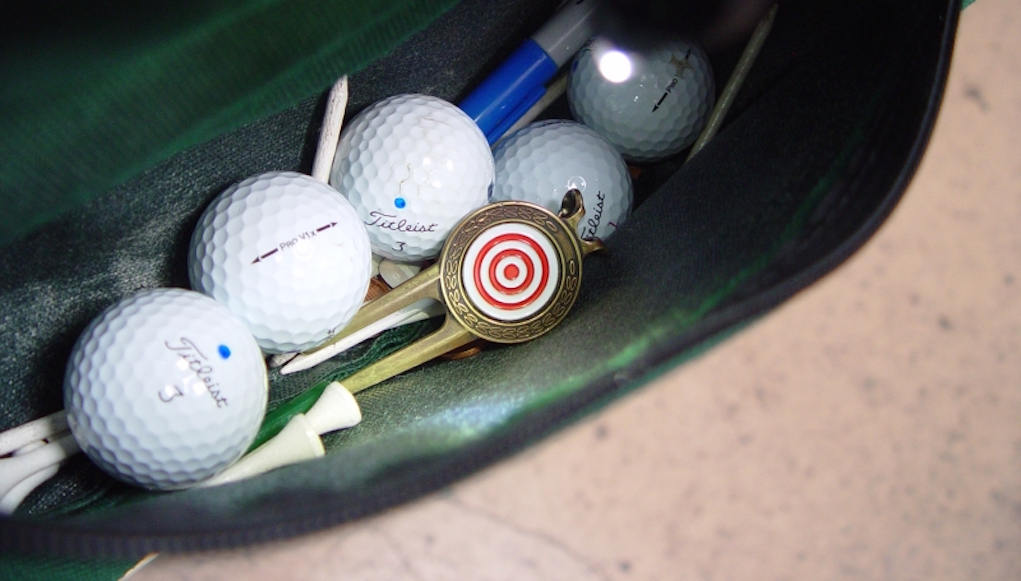
After a winter of snow and cold, golfers get excited for their emergence from golf hibernation. This thought usually peaks when we get our first glimpse of the hallowed turf at Augusta during the Masters in April. We instantly get that Pavlov’s dog, watering-in-the-mouth desire to play. So off we go to hunt out the clubs from the garage, attic or shed and get ourselves in golf mode. And with that usually comes the annual bag clean-out.
Golfers know the rules enforcing a maximum of 14 clubs in a bag, but as far as I’m aware, there is no rule as to the amount of “stuff” one can carry in his or her bag. The realization that your bag now weighs 80 pounds (and getting it from your car to you cart is a health hazard) makes you think, “Do I really need all this stuff?”
Akin to the contents of a women’s purse, the golf bag is considered personal space. It’s filled with all sorts of goodies, essentials and lucky charms that golfers needs to survive for the few hours they spend on the golf course.
You decide to do a quick stock check and start opening the multiple compartments, slots and pockets on your bag. After 15 minutes of digging around and removing these items, you’re faced with an array of stuff on the floor that could easily start a yard sale. So you resolve to declutter, archiving the non-essential items.
Here’s what you’re likely to encounter:
- Enough balls to start your own mini-range, most of which have seen better days.
- An assortment of tees, ranging from wooden to plastic to brush in different shapes, sizes and colors, including at least one naked-lady tee.
- Ball markers: a selection of coins, as well as plastic and metal discs with sponsors or club motifs. You only ever use that lucky one you’ve had since you were 11.
- Seventeen pencils, usually only half of which can write or have lead.
- At least one edition of the rules of golf, so badly ripped and dog-eared by successive soakings that it is like an Egyptian relic when you attempt to use it.
- Spare change that has accumulated each week of the previous five golfing seasons. Added up, it’s enough to send your kid through college.
- Pitch mark repairers in an assortment of designs, colors and materials including that Scotty Cameron one that cost a fortune, but still does exactly the same job.
- Those four incompatible wrenches for the multiple drivers you have consumed in the last five years.
- A rangefinder with spare batteries.
- A waterproof jacket and trousers — taken off, stuffed away and forgotten about after that last soaking you got. They now smell like a vagabond’s crotch.
- A windproof top crumpled down to the size of an orange.
- Several faded caps, beanies and visors, all displaying mold, sweat stains, or other bodily fluids.
- Winter mittens for those “cold” early-morning July tee times.
- At least 10 golf gloves, most of which either have holes or rigor mortis-like rigidity, including a right-handed one should you ever face the dilemma of trying a shot left-handed.
- Rain gloves that have developed blue mold.
- Energy and chocolate bars, most of which passed their expiration date several months ago.
- An array of bags of nuts/crackers/trail mix/beef jerky and other consumables.
- A bottle opener/cork screw.
- Either a banana or apple that has leaked into a black goo at the bottom of the bag.
- Eye drops.
- A comb that is at least 15 years old.
- Sunglasses, possibly two pairs. One wraparound and a pair that you actually use.
- Sticking plasters (Band-Aids) for cuts, grazes, blisters and other severe golfing injuries.
- Deep Heat/Mentholatum/Tiger Balm or similar witches potions to loosen those weary/arthritic bones.
- An assortment of medications ranging from mild pain killers, anti-inflammatories and anti-histamines through to hallucinogens and anti-depressants (for those tougher days on the links).
- Insect repellent.
- Baby wipes/tissues.
- Sun cream (sun screen). In Ireland, it acts as a thermal insulator in cold weather. Long-distance swimmers smear themselves in grease for the same reason.
- Lip balm in an assortment of fruit flavours and colors.
- A cigar/cigarettes and a lighter, and possibly chewing tobacco.
- Several Sharpies in an array of colors, most of which have lost their cap and are dried out.
- A small hip flask of hooch, half-filled with some cheap intoxicant, probably whiskey.
- At least one half-drunk plastic soda or energy-drink bottle.
- Amino Vital packets to add to water, which for some reason are next to a flare gun and compass.
- An array of scorecards and yardage books built up over several seasons, which you felt compelled to hold onto.
- Membership and visitor tags from at least one top-100 course that you always brag about playing.
- An umbrella, the only one the wife hasn’t “borrowed” and failed to return.
- An extra pair of socks. Maybe even clean ones!
- Alignment rods with matching impact stickers. An indication of how seriously you take your game.
- Ball retriever. Note to self: make sure to change the worn-out grip.
- Putter headcover that was an essential when you first bought that priceless flat stick, but the magnetic closure is now broken and it keeps falling off. You actually thought you had lost it.
- Iron covers (which you justify keeping for travel). Two of them were lost.
- Extra spikes and a wrench.
- A rain hood.
- A club-cleaning wire brush, on which you’ve cut yourself on several times and sworn to get rid of… but never do.
- A Swiss Army knife.
- A magic sponge for cleaning your ball, which you got as a Christmas present five years ago.
- At least one extra towel, “borrowed” from the clubhouse.
Then there’s the several mystery items and things you thought you had lost like the spare car keys. You feel like Indiana Jones recovering this stuff.
And don’t forget you need to leave that last pocket, the valuable’s pocket, with enough space for your wallet, money clip, mobile phone(s), car keys, rings and all those other essential items that you will need to safely store during your round.
Your inner self tells you to chuck half of this crap, but you are conflicted. There may well be an occasion when you need that fifth glove or you lose your 37th ball of the day. Or you will find yourself starving to death or dying of dehydration on the 7th hole.
So you resolve to buy a bigger bag.


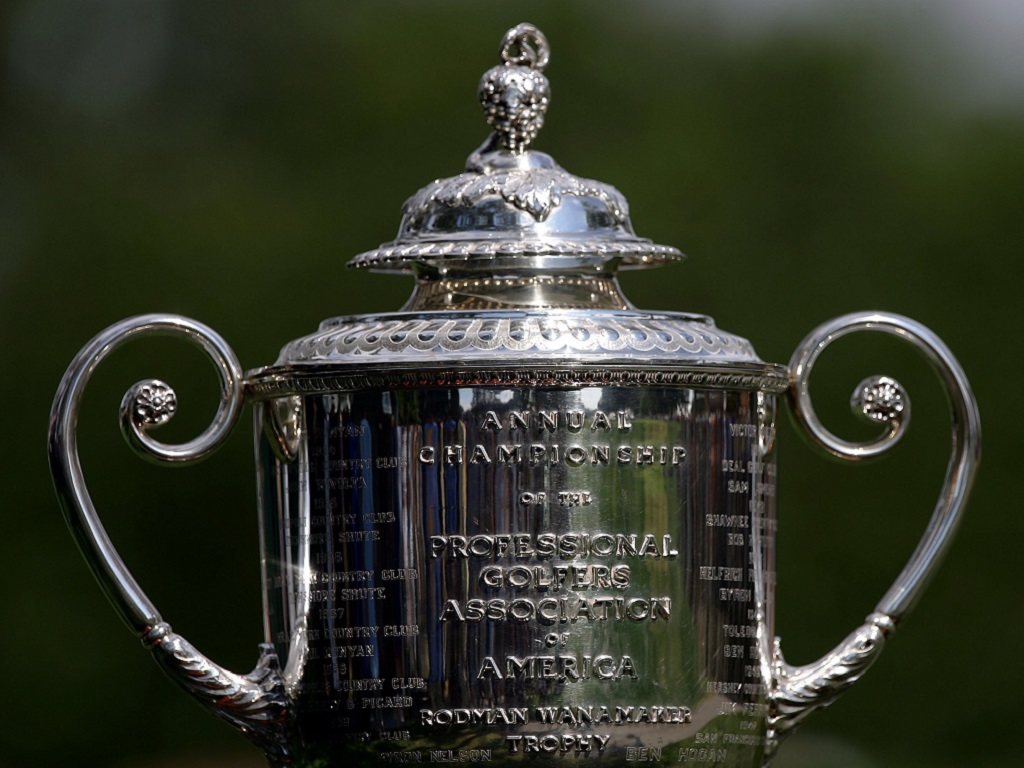
Aronimink is not a storied club, but when Donald Ross himself proclaimed it to be as good as he can design and build, one had to take notice. Jay Sigel was the pre-eminent male amateur golfer from the mid-1970s to the mid-1990s. He might have called any number of Philadelphia clubs home, but he chose Aronimink. It served him well. Gary Player won a PGA Championship here in 1962, and was followed by the 1993 winner … nobody. Aronimink gave that event away to Inverness, for reasons of which it is certainly not proud. So be it. We had to wait sixty-four years for the PGA to return to Newtown Square, but here we are. Aronimink has been neo-restored by Gil Hanse and team, to return Ross features with an eye toward defense against the dark arts, errrr, high-tech equipment.
Day one saw Rory McIlroy and Bryson DeChambeau dig big holes, to the tune of plus-four and plus-six, respectively. Since the first-round lead will be minus-three at worst, many shots will need to be made up for the power couple to reach contention. By nightfall, seven golfers held the day-one lead at three-under par 67. Shots and sticks caught our attention, and we are proud to present Five Things We Learned on Tech Thursday at the 2026 PGA Championship. Thanks to InsideTourGolfer, Today’s Golfer, and GolfWRX for initial equipment research.
First, meet Min Woo Lee
Min Woo Lee, aka Dr. Chipinski, has once again thrust himself into the conversation of Can he, will he, when will he? Lee has so much talent, wins not nearly as often as we believe that he should, and has no major near-misses (much less titles) on his wiki. The young Aussie is getting older and wiser, but is he able to avoid the scarring that holds the older and wiser back from breaking through? Philadelphia offers another opportunity. Min Woo signed for five birdies and two bogeys on day one, and grabbed a share of the opening-day lead at Aronimink. Winners transcend history and the moment, and Lee will need that sort of ascent to lift the Wannamaker on Sunday.
Second, meet Aldrich Potgeiter
The young South African golfer can rip driver with the best of them. Aronimink tips out at nearly 7400 yards, but beyond the fairway bunkers that ensnare only the mortals, Potgeiter can take his chances with wedge from the rough. On Thursday, he spent plenty of time in the spinach. Like Popeye, he used his muscles to gouge and thrash and dig his way out. Six birdies against three bogeys on the card brought AP in a three deep.
Third, meet Martin Kaymer
Not a major event takes place without a where’s he been throwback moment. We know that Martin Kaymer left the PGA and DP World tours for LIV golf, but the two-time (US Open and PGA) major winner has a lifetime exemption into at least one major event, and he seizes the opportunity each May. Kaymer joined the six-seven brigade with four birdies and a solitary bogey on day one. Kaymer was never a long hitter, and the years are kind to no golfer. The German champion will need to uncork every bottle of guile and strategy in his cabinet to remain in contention. For today, though, he occupies a rung on the ladder of Tour Tech.
Fourth, meet Scottie Scheffler
Let’s see, he’s the defending champion at the PGA, and he found his way back to the top tier with five birdies against two bogeys. To be a favorite and then play up to that stature and expectation is quite difficult. Just ask Rory, Bryson, and some of the other pre-tournament heartthrobs. Scheffler’s game is complete, and to knock him off the OWGR #1 pedestal, one needs to defeat him at the majors. Aronimink is the sort of course that fits Scheffler’s game. Better yet, it unfits the game of many of his challengers. Don’t expect Scheffler to go away anytime soon. Come Sunday, he’ll be around.
Fifth, meet Stephan Jaeger
Clocking in for the unheralded players shift are Ryo Hisatsune and Stephan Jaeger. Hisatsune logged seven birdies on day one, but gave most of them back with four bogeys. Still, he’s tied at the top for a time. Jaeger pitched five birdies against two bogeys, including a run of three consecutive, from holes four through six. Odds are that one of the two will hang around through 36 holes. Odds also suggest that both will be gone by Saturday evening. Still, the PGA Championship has historically been the major most likely to be won by an under-known. Both Hisatsune and Jaeger feature on that list, so good luck, lads!

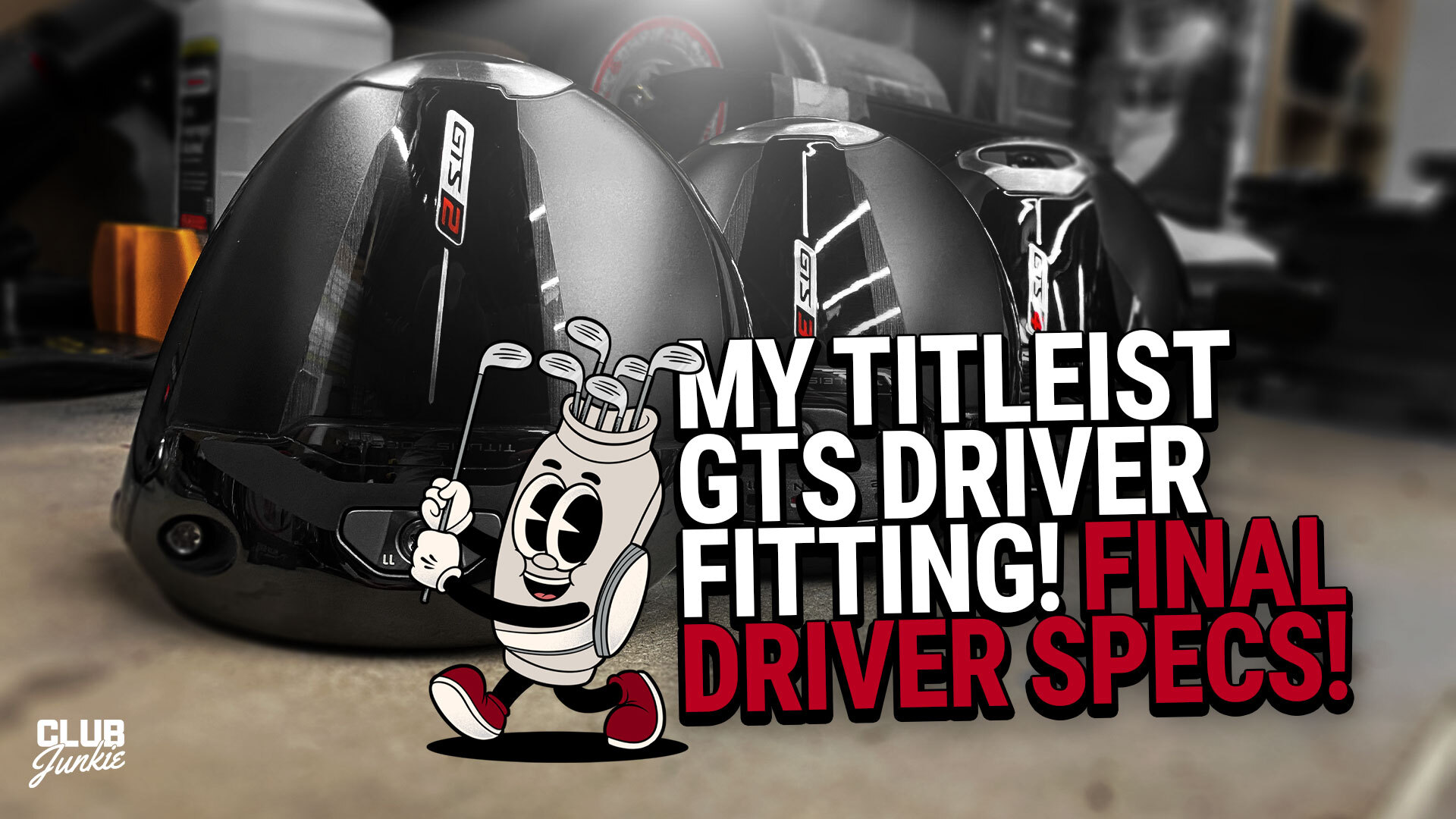
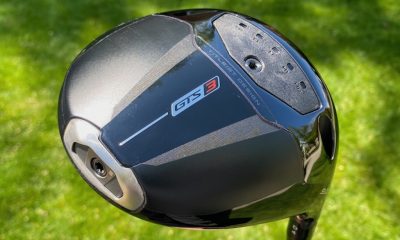
On this episode of the Club Junkie Podcast, I head to the Titleist Performance Institute for a full driver fitting with the new Titleist GTS lineup. We dive into the fitting process, talk about what made the biggest difference in performance, and break down how the different GTS heads and shaft combinations compare on the launch monitor. If you are thinking about a new driver setup for this season, there is a lot to take away from this one.
I also get into Brooks Koepka and the gear setup he brought to the PGA Championship, including the putters that caught my eye during the week. There are some interesting equipment trends showing up at the highest level right now and we break down what stands out.
To wrap things up, I talk about reshafting a few wedges, what I learned during the process, and swapping an adaptor onto a new shaft for another build project in the shop. A gear packed episode from start to finish for anyone who loves golf equipment and club building.
Follow Club Junkie everywhere:
Instagram: https://www.instagram.com/clubjunkiepod/
X: https://x.com/ClubJunkiePod
TikTok: https://www.tiktok.com/@clubjunkiepod
Threads: https://www.threads.com/@clubjunkiepod
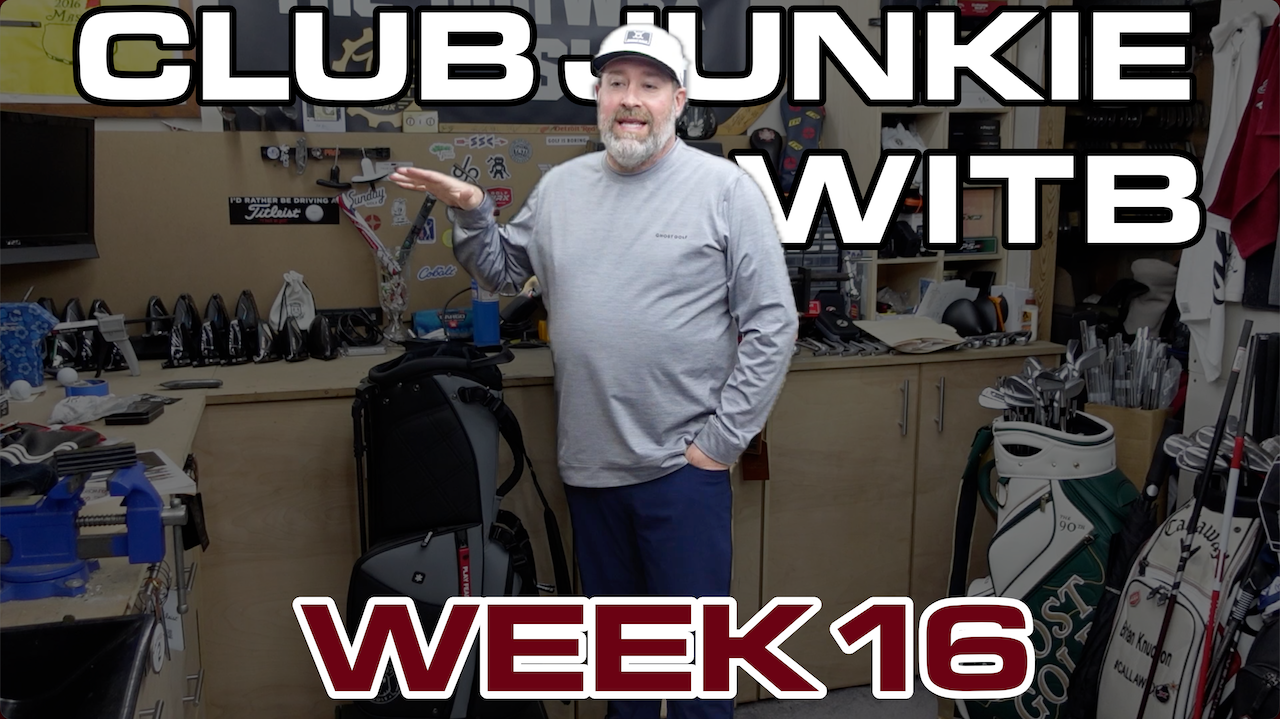
Excited for this week’s WITB as we get to add the new Titleist GTS woods to the bag! I was fit at Titleist’s TPI facility in Oceanside California a few weeks ago and my new clubs just showed up. I am also adding a cool set of irons that I built last year some wild custom wedges into a new golf bag. Speaking of the bag I have a new Ghost Anyday Black Ops stand bag that I will be using on my Motocaddy Remote M7 electric cart.
Driver: Titleist GTS3 (11 degrees @ 10.25)
Shaft: Fujikura Ventus Red 6s
3-wood: Titleist GT1 3Tour (14.5 degrees)
Shaft: Graphite Design Tour AD CQ-7s
5-wood: Titleist GTS (18 degrees)
Shaft: Fujikura Ventus Red 7s
9-wood: Titleist GT1 (24 degress)
Shaft: Fujikura Ventus Red 7s
Irons: Bettinardi CB24 (5-PW)
Shafts: KBS C-Taper Lite 110 stiff
Wedge: TaylorMade MG5 (50-09 SB)
Shaft: Mitsubishi MMT 125 Stiff
Wedge: TaylorMade MG5 (56-12 SB)
Shaft: Mitsubishi MMT 125 Stiff
Wedge: TaylorMade MG5 (60-08 LB)
Shaft: Mitsubishi MMT 125 Stiff
Putter: Dan Carraher ZT Proto
Ball: Callaway Chrome Tour
Bag: Ghost Anyday Black Ops Stand Bag

Justin Rose WITB 2026 (April): Full WITB breakdown with new McLaren irons

RBC Heritage Tour Report: More minis, course-specific setups, Spider & GTS launches

What’s the story behind Webb Simpson’s custom-stamped irons?

Cadillac Championship Tour Report: Spieth’s sizable changes, McLaren Golf launches, and more

Kristoffer Reitan’s winning WITB: 2026 Truist Championship

Cameron Young’s winning WITB: 2026 Cadillac Championship

Aaron Rai’s winning WITB: 2026 PGA Championship

Nelly Korda WITB 2026 (April)

Justin Rose on the switch to McLaren Golf, learnings from previous equipment moves

Photos from the 2026 PGA Championship


Patrick Reed WITB 2026 (May)
Driver: Titleist GT3 (9 degrees) Buy here. Shaft: Aldila Rogue Silver 130 M.S.I. 70 TX 3-wood: TaylorMade Qi35 (15 degrees)...

Aaron Rai’s winning WITB: 2026 PGA Championship
Driver: TaylorMade M6 (9 degrees) Shaft: Aldilda Synergy Blue 70 TX 3-wood: TaylorMade Qi10 (15 degrees) Shaft: Fujikura Ventus Blue...


Michael Block WITB 2026 (May)
Driver: TaylorMade Qi4D (9 degrees) Shaft: Fujikura Ventus Black VeloCore+ 5 X 3-wood: TaylorMade Qi4D (15 degrees @14.25) Shaft: Mitsubishi...


Bryson DeChambeau WITB 2026 (May)
Driver: Krank Formula Fire Pro (6 degrees) Shaft: Project X Prototype 3-wood: Krank Formula Fire (10 degrees) Shaft: LA Golf BAD...
-
 Whats in the Bag3 weeks ago
Kristoffer Reitan’s winning WITB: 2026 Truist Championship
-
Whats in the Bag2 weeks ago
Aaron Rai’s winning WITB: 2026 PGA Championship
-
 Tour Photo Galleries3 weeks ago
Photos from the 2026 PGA Championship
-
 Equipment2 weeks ago
GolfWRX Launch Report: 2026 Titleist GTS drivers
-

 Equipment2 weeks ago
PGA Championship Tour Report: Fitzpatrick, Koepka among big-name putter switches for Aronimink
-

 News2 weeks ago
WITB Time Machine: Phil Mickelson’s winning WITB, 2021 PGA Championship
-

 Equipment2 weeks ago
Which of Tiger’s major winning irons are your favorite? – GolfWRXers discuss
-

 Equipment2 weeks ago
Lead Tape Report: Adjusting the swingweight of the Wanamaker Trophy


Pingback: The Art Of Mastering Your Golf Game: A Journey From Novice To Expert
don d.
Mar 4, 2016 at 7:40 am
Reminded me of my caddy days. A member I always got stuck with actually counted his balls and gloves and went through his bag after every round. Needless to say he paid minimum for maximum effort.
steve
Mar 4, 2016 at 8:38 am
Counting his Balls! How much were you tipped
SirShives
Mar 3, 2016 at 10:01 pm
I was once paired with a fellow who for the entirety of the round continued to produce beer out of his bag. Not just a couple of cans of beer mind you, more like the entire case. Guy drank from start to finish, loads his clubs back in the car at then end of the round, and heads home. I bet any beers that weren’t drunk on the course didn’t sit around in his bag until his next round.
cb
Mar 3, 2016 at 3:22 pm
great list! i lost it when i saw the wire bush one. thats happened too many times to count
ND
Mar 3, 2016 at 10:19 am
Am I the only person who walks? No wonder America has an obesity problem.
steve
Mar 3, 2016 at 9:58 am
I know a lot of tour pros have this in their bags, weed and a onehitter
devilsadvocate
Mar 5, 2016 at 10:33 am
Actually you’d be surprised how many do
steve
Mar 6, 2016 at 9:05 am
I have a friend that’s been a tour caddy for 20 years with various players and he tells me that most do
RoGar
Mar 2, 2016 at 10:52 pm
A bag, 13 clubs, 10 tees, 5 balls, 2 gloves, and rangefinders…Period!!!
talljohn777
Mar 3, 2016 at 4:12 am
You are allowed 14 clubs.
Scooter McGavin
Mar 3, 2016 at 8:35 am
Yeah, if you’re a Sally!
Mat
Mar 2, 2016 at 8:01 pm
What? Who does this?
Clubs, dozen balls, tees, laser, marker, repair tool. I wear my gamegolf, but it stores in the bag. The bag has a hanging towel and a brush.
Man, you guys think too much!
that guy
Mar 3, 2016 at 12:07 am
1 dozen balls is 6 too many… if you need more than that to get through a round god help you
Mat
Mar 3, 2016 at 4:24 am
I didn’t say I needed them for a round… sometimes a dozen is a good amount for practice. Don’t be *that guy*.
Scooter McGavin
Mar 3, 2016 at 8:36 am
One dozen balls is 11 too many for real players…
Double Mocha Man
Mar 3, 2016 at 11:09 am
I like to carry lots of balls so I can toss ’em to the gallery after every putt out.
Navy Mustang
Mar 2, 2016 at 5:01 pm
I once had most of the necessities listed. Until I decided to go old school – walk and carry. Goodbye umbrella, ball retriever, and a whole lot of other crap. Just me against the course.
kn
Mar 2, 2016 at 4:41 pm
I don’t even have half of this stuff in my bag. Only 21 of the 48. But NO rain gear or “vagabond’s crotch” smell. I have my standards.
Butch
Mar 2, 2016 at 2:43 pm
I have all those plus a pair of “reader” glasses and some “golf mints” (motrin)!
Mike Honcho
Mar 2, 2016 at 2:19 pm
A comb? Seriously! Even if you even own a comb much less have one in your golf bag, you’d be made so much fun of in our group that by #4 you’d be asking the marshal to give you a ride back to the clubhouse.
Mark Donaghy
Mar 3, 2016 at 4:14 am
Why, are you all bald? 🙂
steve
Mar 3, 2016 at 10:08 am
Toe to Toe to Honcho. Do you know what Mike Honcho is known for?
Regis
Mar 2, 2016 at 2:07 pm
Well Done. One minor change for me. Since I enjoy a cigar on the back nine I carry two (one plus a backup) triple flame cigar lighters. They are filled with premium fuel and are tested before I set out. Nothing ruins a good round or makes a bad round worse than deciding that now is the time for my cigar (or trying to re-light it) and finding out its a no-go, usually in the snottiest weather at a point farthest from the clubhouse.
Abother Lefty
Mar 2, 2016 at 2:07 pm
Is there a nail clipper on that swiss army knife
kn
Mar 2, 2016 at 4:43 pm
I carry a separate one. Doesn’t everyone?
Tim
Mar 2, 2016 at 1:35 pm
It is amazing how much stuff accumulates in a golf bag over the course of a season. Once or twice a season I audit my stash. I have to admit I am guilty of hording ball markers. I only use one, but I have a slue of backups should my lucky one come up missing. Also, I must have 10 divot tools, but only use the same one from Crooked Tree. Golfers are very peculiar creatures. A good lot of us actually carry these bags on our backs. We must be gluttons for punishment.
Tim
John Muir
Mar 2, 2016 at 1:27 pm
Excellent, Mark. I have most of the 48 in my bag, #49 an old empty beer can with a little warm beer at the bottom of the can.
John Muir
John
Mar 2, 2016 at 12:57 pm
6 balls, 15-20 tees, glove, 2 ball markers and one pitch mark tool is all I carry… I keep it very simple!
Scott
Mar 2, 2016 at 3:44 pm
so you are the one…
mhendon
Mar 2, 2016 at 5:31 pm
No he’s not the only one. Add a range finder and subtract the two ball markers. My ball marker is part of the pitch mark tool.
Mat
Mar 2, 2016 at 8:02 pm
Definitely not the only one. Atta boy.
that guy the caddie
Mar 3, 2016 at 12:08 am
amen. you must have been under the strap at some point.
Geo
Mar 2, 2016 at 12:32 pm
Love this I have at least 20% of this stuff and now know what to collect and gather over my next 10 years.
Walker
Mar 2, 2016 at 12:12 pm
Just get a mackenzie golf bag, you wont have any pockets to put all this stuff, nor will you have any money left to buy anything to put in the bag.
Double Mocha Man
Mar 2, 2016 at 11:31 am
Funny stuff! Anyone who has a bag like this definitely needs to use a power cart. I outfit my bag light and lean for carrying or rolling. The only excess in my bag is that golf ball emblazoned with the word “Dad” that my son gave to me for Father’s Day 10 years ago. Every time I am lucky enough to play a Top 100 golf course I use it for one hole, for good luck. Currently is has Bandon Dunes, Pebble Beach and Chambers Bay DNA smeared all over it.
Steve
Mar 2, 2016 at 8:21 pm
Wow your awesome