
Opinion & Analysis
Are We Destroying Young Golfers?

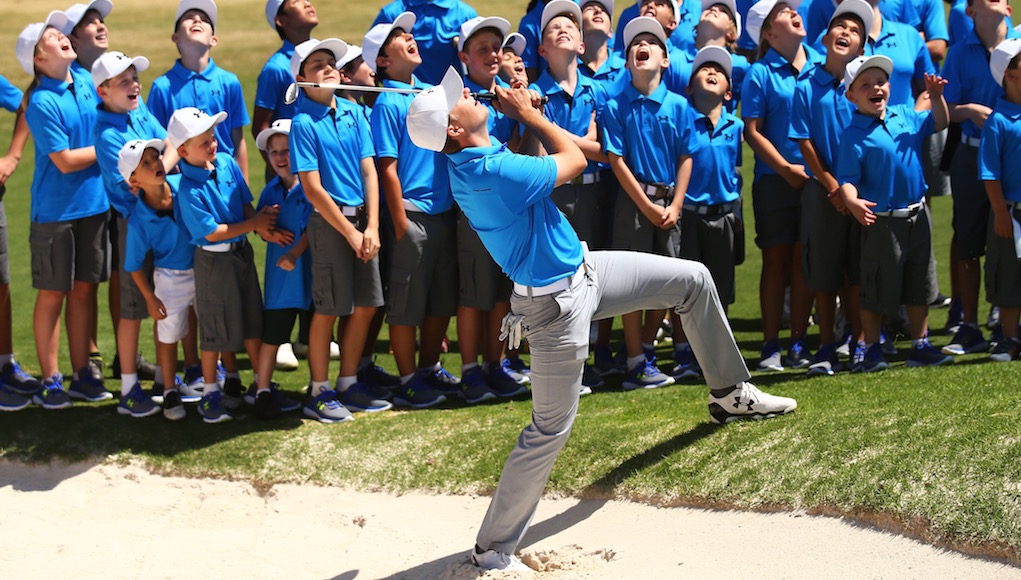
For parents and coaches alike, the logic versus the reality of junior golf development can often be two totally different things. With dropout rates so high in sports, the messages in this article need to be spread if we are to encourage lifelong participation in sport. Specifically, I will highlight three vital points that I believe all parents and coaches involved in youth golf need to understand.
No. 1: Early Specialization
Logic: “The more he or she plays one sport, the better he or she will get.”
Reality: Research shows that early specialization is one of the most cited reasons for dropouts in sport. Below are some key reasons why.
- Early Success: If a young child is only playing one sport, and playing it quite a lot, I would expect them to get better quickly and potentially become the best in the class. The reality of this, however, is that they can often then struggle with the psychological pressures that accompany this success, consequently leading to frustration and falling out of love with the game.
- High Expectations: High expectations are heavily linked with early success, as the expectations of a child, parents, family, and friends become very high. The issue here is that when a child reaches a natural performance plateau and other children catch up, the child then faces pressure. The question becomes, “You were the best two years ago. Why are you not the best now?”

- Performance Anxiety: As a child specializes in one sport, the level of competition and also the number of competitions played will inevitably increase. The issue here is that the motivation to play can change. Children often switch from playing sports to have fun with their friends to trying to make Daddy happy by playing well and winning.
- Injuries: A child has a child’s body, meaning it can be sensitive to overexertion and repeated exercise.
- Isolation: Being away from friends (as you are always at the golf club) can cause children to pay a huge social price. Children need time for Lego and Pokémon with friends and should not be at the golf course for 10 hours every day.
- Burnout: Too much of one thing and a child will burn out. There simply becomes a time when enough is enough.
The underlying issue with the above is that the motivations of a child can change from starting the game and loving it (intrinsic motivation). The game becomes more than just fun, and too many things outside of a child’s love become important (extrinsic motivation). Ultimately, maintaining a child’s intrinsic motivation is crucial for long-term participation, so why would we harm this? The tweet below from Dr. Martin Toms at the University of Birmingham sums it up perfectly.
“If your child could only study one subject at school, you’d worry about their development and the missed opportunities for them to learn new skills. So why for some sports/coaches is early specialization perceived as acceptable?”
But Tiger Woods and Rory McIlroy played loads when they were kids, right? Yes, I get that, but understand that they are the ultimate outliers. For the one or two children that followed what Rory and Tiger did and made it to the PGA Tour, there are thousands of young golfers who quit the game from the burnout that can be caused by early specialization. There are also hundreds of people who came to golf later in life — Nick Faldo being the best example, not starting the game until 13 years of age — and became highly successful.
Further Reading: Do a quick google search on Oscar Sharpe Golf. Unfortunately, Oscar no longer plays competitive golf and is a great example of how early success may not always result in long-term success.
No. 2: Instruction

Logic: “I see what’s wrong. If I tell him/her this, I’m sure they will get better.”
Reality: A young child cannot mentally process overloads of information. Also, is golf really fun for children when someone is standing there telling you what to do, shot after shot? And when did a young child ever want to listen to Mom or Dad? What top athlete ever thanked their parents for coaching them?
My thoughts on youth golf instruction are three-fold:
- Children do need golf instruction, but it must be carefully delivered at the right times. Leave it to a coach you trust.
- Growth spurts can affect coordination in such a way that any previous technical work can become worthless.
- Developing psychological tools/traits is more advantageous than technical work, as these skills will stay with a child forever.
No. 3: The Car Ride Home
Logic: “My child needs me to honestly evaluate their play so they will be more motivated to play better next time.”
Reality: Children know full well if they have performed their best, and I would urge parents and coaches to use some of the following phrases instead of criticizing:
- “I love watching you play.”
- “How did you feel about today’s game?”
- “What do think you can improve for next time?”
- “So, what do you fancy for tea tonight?” (remember, I’m from the UK).
 It can seem logical that being more critical with a child will not do any harm, and instead help them improve… but research has shown that consistent criticism can totally disengage a child. They become less focused on playing and enjoying their sport, and more focused about not being criticized on the car ride home.
The Answer
The truth is that junior sports development is highly complex and we as coaches cannot provide ONE answer to help your child succeed in his or her sport. What we can do, however, is draw upon the research and use this to guide our actions.
Here are three additional tips to pass on to fellow parents. Or better yet, pass on this article!
- Take Care with Early Specialization: Success too early, injuries, and burnout can cause many long-term problems with children, starting with a loss of passion for a sport or skill they have. If your child has a passion for golf, that’s great. And if they are good, that’s also great. Manage their expectations while helping them strike the correct balance between their passion for golf and other activities.
- Coaches: Remember that an overload of instruction is not good for a fully grown adult, so it’s certainly not good for a child. Parents need to remember that their primary responsibility is to be a parent, not a coach.
- Parents: On the car ride home, put yourself in the shoes of your child before offering any criticism or feedback. You may unintentionally pushing your child away from the game they love and put pressure on them that can lead to failure.
References: Understanding dropout and prolonged engagement in adolescent competitive sport (Jessica Fraser Thomas, Jean Cote, Janice Deaking).



Aronimink is not a storied club, but when Donald Ross himself proclaimed it to be as good as he can design and build, one had to take notice. Jay Sigel was the pre-eminent male amateur golfer from the mid-1970s to the mid-1990s. He might have called any number of Philadelphia clubs home, but he chose Aronimink. It served him well. Gary Player won a PGA Championship here in 1962, and was followed by the 1993 winner … nobody. Aronimink gave that event away to Inverness, for reasons of which it is certainly not proud. So be it. We had to wait sixty-four years for the PGA to return to Newtown Square, but here we are. Aronimink has been neo-restored by Gil Hanse and team, to return Ross features with an eye toward defense against the dark arts, errrr, high-tech equipment.
Day one saw Rory McIlroy and Bryson DeChambeau dig big holes, to the tune of plus-four and plus-six, respectively. Since the first-round lead will be minus-three at worst, many shots will need to be made up for the power couple to reach contention. By nightfall, seven golfers held the day-one lead at three-under par 67. Shots and sticks caught our attention, and we are proud to present Five Things We Learned on Tech Thursday at the 2026 PGA Championship. Thanks to InsideTourGolfer, Today’s Golfer, and GolfWRX for initial equipment research.
First, meet Min Woo Lee
Min Woo Lee, aka Dr. Chipinski, has once again thrust himself into the conversation of Can he, will he, when will he? Lee has so much talent, wins not nearly as often as we believe that he should, and has no major near-misses (much less titles) on his wiki. The young Aussie is getting older and wiser, but is he able to avoid the scarring that holds the older and wiser back from breaking through? Philadelphia offers another opportunity. Min Woo signed for five birdies and two bogeys on day one, and grabbed a share of the opening-day lead at Aronimink. Winners transcend history and the moment, and Lee will need that sort of ascent to lift the Wannamaker on Sunday.
Second, meet Aldrich Potgeiter
The young South African golfer can rip driver with the best of them. Aronimink tips out at nearly 7400 yards, but beyond the fairway bunkers that ensnare only the mortals, Potgeiter can take his chances with wedge from the rough. On Thursday, he spent plenty of time in the spinach. Like Popeye, he used his muscles to gouge and thrash and dig his way out. Six birdies against three bogeys on the card brought AP in a three deep.
Third, meet Martin Kaymer
Not a major event takes place without a where’s he been throwback moment. We know that Martin Kaymer left the PGA and DP World tours for LIV golf, but the two-time (US Open and PGA) major winner has a lifetime exemption into at least one major event, and he seizes the opportunity each May. Kaymer joined the six-seven brigade with four birdies and a solitary bogey on day one. Kaymer was never a long hitter, and the years are kind to no golfer. The German champion will need to uncork every bottle of guile and strategy in his cabinet to remain in contention. For today, though, he occupies a rung on the ladder of Tour Tech.
Fourth, meet Scottie Scheffler
Let’s see, he’s the defending champion at the PGA, and he found his way back to the top tier with five birdies against two bogeys. To be a favorite and then play up to that stature and expectation is quite difficult. Just ask Rory, Bryson, and some of the other pre-tournament heartthrobs. Scheffler’s game is complete, and to knock him off the OWGR #1 pedestal, one needs to defeat him at the majors. Aronimink is the sort of course that fits Scheffler’s game. Better yet, it unfits the game of many of his challengers. Don’t expect Scheffler to go away anytime soon. Come Sunday, he’ll be around.
Fifth, meet Stephan Jaeger
Clocking in for the unheralded players shift are Ryo Hisatsune and Stephan Jaeger. Hisatsune logged seven birdies on day one, but gave most of them back with four bogeys. Still, he’s tied at the top for a time. Jaeger pitched five birdies against two bogeys, including a run of three consecutive, from holes four through six. Odds are that one of the two will hang around through 36 holes. Odds also suggest that both will be gone by Saturday evening. Still, the PGA Championship has historically been the major most likely to be won by an under-known. Both Hisatsune and Jaeger feature on that list, so good luck, lads!

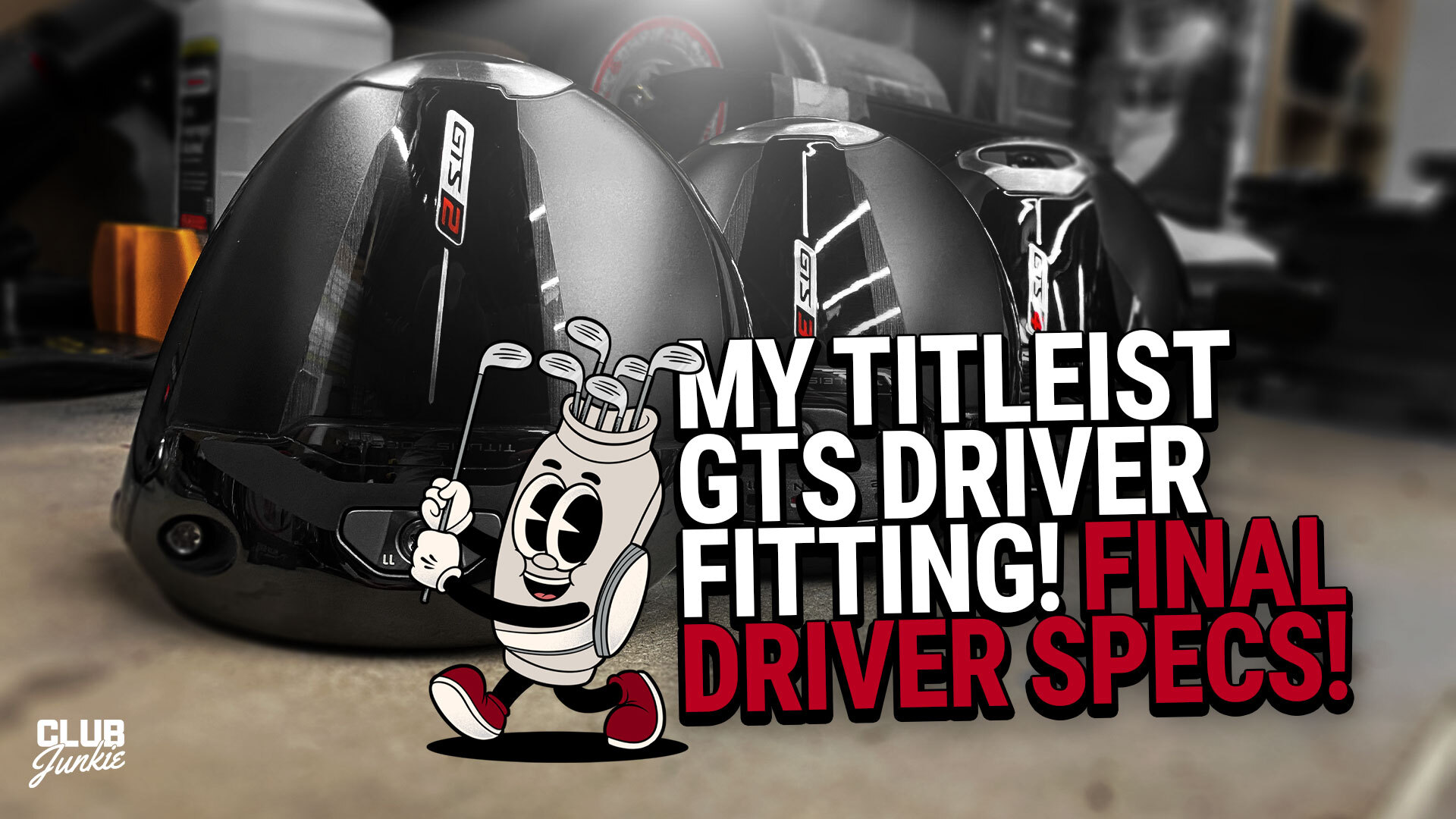
On this episode of the Club Junkie Podcast, I head to the Titleist Performance Institute for a full driver fitting with the new Titleist GTS lineup. We dive into the fitting process, talk about what made the biggest difference in performance, and break down how the different GTS heads and shaft combinations compare on the launch monitor. If you are thinking about a new driver setup for this season, there is a lot to take away from this one.
I also get into Brooks Koepka and the gear setup he brought to the PGA Championship, including the putters that caught my eye during the week. There are some interesting equipment trends showing up at the highest level right now and we break down what stands out.
To wrap things up, I talk about reshafting a few wedges, what I learned during the process, and swapping an adaptor onto a new shaft for another build project in the shop. A gear packed episode from start to finish for anyone who loves golf equipment and club building.
Follow Club Junkie everywhere:
Instagram: https://www.instagram.com/clubjunkiepod/
X: https://x.com/ClubJunkiePod
TikTok: https://www.tiktok.com/@clubjunkiepod
Threads: https://www.threads.com/@clubjunkiepod

Excited for this week’s WITB as we get to add the new Titleist GTS woods to the bag! I was fit at Titleist’s TPI facility in Oceanside California a few weeks ago and my new clubs just showed up. I am also adding a cool set of irons that I built last year some wild custom wedges into a new golf bag. Speaking of the bag I have a new Ghost Anyday Black Ops stand bag that I will be using on my Motocaddy Remote M7 electric cart.
Driver: Titleist GTS3 (11 degrees @ 10.25)
Shaft: Fujikura Ventus Red 6s
3-wood: Titleist GT1 3Tour (14.5 degrees)
Shaft: Graphite Design Tour AD CQ-7s
5-wood: Titleist GTS (18 degrees)
Shaft: Fujikura Ventus Red 7s
9-wood: Titleist GT1 (24 degress)
Shaft: Fujikura Ventus Red 7s
Irons: Bettinardi CB24 (5-PW)
Shafts: KBS C-Taper Lite 110 stiff
Wedge: TaylorMade MG5 (50-09 SB)
Shaft: Mitsubishi MMT 125 Stiff
Wedge: TaylorMade MG5 (56-12 SB)
Shaft: Mitsubishi MMT 125 Stiff
Wedge: TaylorMade MG5 (60-08 LB)
Shaft: Mitsubishi MMT 125 Stiff
Putter: Dan Carraher ZT Proto
Ball: Callaway Chrome Tour
Bag: Ghost Anyday Black Ops Stand Bag

Justin Rose WITB 2026 (April): Full WITB breakdown with new McLaren irons

RBC Heritage Tour Report: More minis, course-specific setups, Spider & GTS launches

What’s the story behind Webb Simpson’s custom-stamped irons?

Cadillac Championship Tour Report: Spieth’s sizable changes, McLaren Golf launches, and more

Kristoffer Reitan’s winning WITB: 2026 Truist Championship

Cameron Young’s winning WITB: 2026 Cadillac Championship

Aaron Rai’s winning WITB: 2026 PGA Championship

Nelly Korda WITB 2026 (April)

Justin Rose on the switch to McLaren Golf, learnings from previous equipment moves

Photos from the 2026 PGA Championship


Patrick Reed WITB 2026 (May)
Driver: Titleist GT3 (9 degrees) Buy here. Shaft: Aldila Rogue Silver 130 M.S.I. 70 TX 3-wood: TaylorMade Qi35 (15 degrees)...

Aaron Rai’s winning WITB: 2026 PGA Championship
Driver: TaylorMade M6 (9 degrees) Shaft: Aldilda Synergy Blue 70 TX 3-wood: TaylorMade Qi10 (15 degrees) Shaft: Fujikura Ventus Blue...


Michael Block WITB 2026 (May)
Driver: TaylorMade Qi4D (9 degrees) Shaft: Fujikura Ventus Black VeloCore+ 5 X 3-wood: TaylorMade Qi4D (15 degrees @14.25) Shaft: Mitsubishi...


Bryson DeChambeau WITB 2026 (May)
Driver: Krank Formula Fire Pro (6 degrees) Shaft: Project X Prototype 3-wood: Krank Formula Fire (10 degrees) Shaft: LA Golf BAD...
-
 Whats in the Bag3 weeks ago
Kristoffer Reitan’s winning WITB: 2026 Truist Championship
-
Whats in the Bag2 weeks ago
Aaron Rai’s winning WITB: 2026 PGA Championship
-
 Tour Photo Galleries3 weeks ago
Photos from the 2026 PGA Championship
-

 Equipment2 weeks ago
GolfWRX Launch Report: 2026 Titleist GTS drivers
-

 Equipment2 weeks ago
PGA Championship Tour Report: Fitzpatrick, Koepka among big-name putter switches for Aronimink
-

 News2 weeks ago
WITB Time Machine: Phil Mickelson’s winning WITB, 2021 PGA Championship
-

 Equipment2 weeks ago
Which of Tiger’s major winning irons are your favorite? – GolfWRXers discuss
-

 Equipment2 weeks ago
Lead Tape Report: Adjusting the swingweight of the Wanamaker Trophy


Rano
Aug 18, 2017 at 4:14 am
“What top athlete ever thanked their parents for coaching them?”
Tiger Woods? The Williams sisters? Andy Murray? Jamie Murray?
www.youtube.com
Jul 29, 2017 at 2:00 pm
Along with books, many games use colour in part to
make them appealing to young children while teaching
them about colour.
matt_bear
Jul 29, 2017 at 12:50 pm
When i was in middle school during the early/mid 90’s golf and tennis were laughed at. Kids who played it got picked on. Big difference from today.
There’s a ton of money and fame out there right now. Life changing amounts of money. All the high school and college kids today were born right as the Tiger era begin, because the Tiger era brought all the money, fame, and hype. Parents are “investing” in their kids because it’s a lotto ticket for a chance to get pulled out of the low/middle class and into elite status. The reality is that it’s a cut throat world, and you realize that as you get older.
It’s also “funny” how teens who play high level sports are getting bigger/faster/muscular. They 16-17 year olds out there looking like ripped 28 year old competitive body builders. It happened with football and basketball first (because there was greater amounts of money and fame), but it’s now tricking over to tennis and golf. Just makes you go “hmm”…
CM
Jul 28, 2017 at 9:57 am
Thank you for the article. As a former college athlete and the father of four multi-sport athletes, I feel like I have seen some of the best and worst of youth sports. First, I think its really a positive if kids can play at least 1 individual sport and 1 team sport. They learn responsibility to team as well as themselves. Second, no matter how much crazy parents want/need their children to excel at a sport; kids aren’t going to excel unless they are practicing/playing on their own, when no one is watching. In otherwords, are they having fun playing the sport. Personally, we are having a lot of fun as a family playing this great game together.
John
Jul 28, 2017 at 9:06 am
I have been a high school golf coach and run a junior golf program in a summer. I’m 55 and have been playing since I was ten. I played a scruffy 9 hole muni from the time we got out of school until school started again (3 months). Our parents would drop 10-12 of us off everyday and we would play 27 a day Monday-Friday. We all became pretty good players (single digits) and three became head professionals at our area clubs. But basically we played 3 months of golf then moved on to the next sport when school started.
Today the burnout factor is real. One player I watched was bigger than the other kids from the ages of 12-15. So he it the ball farther and was shooting mid 70s because of his length and wining area tournaments. Because he was “the best” he was pushed to hit balls all winter, play numerous tournaments (when he just wanted to play with his friends at his home course), and take lessons. Another boy was not very big and shot a lot of low to mid 80s from 12-15 and became frustrated he could never beat “the best” – but after golf season he went on t play hockey. A funny thing happened on the way to HS graduation. “The best” kept shooting his 73-77s, but the others kept growing and they hit it as far and also shot 73-77 as their distance improved. The “other boy” won the HS championship his senior year and went on to have an excellent college career at a D-3 school and still plays competitively today in his mid 20s. But “the best” didn’t like that he wasn’t the best any more and went to school for one semester to play golf but dropped out and has not played since. This is a true story and I have seen it over and over, again and again.
M S m i z z l e
Jul 28, 2017 at 8:20 am
Peds at an early age to hit the ball farther is destroying young golfers…..
Appears to have taken out a few older ones too
Matt
Jul 28, 2017 at 5:47 am
The support for young athletes now seems pretty amazing compared to a couple decades ago when I competed as a young guy. The question I’ve never figured out an answer to, is how big a factor specialisation plays toward kids chances of maintaining interest in the long term.
Patrick
Jul 27, 2017 at 4:55 pm
My oldest son played in the NHL and is still playing professionally in Europe. I got him into golf to get him out of rinks and the rat race associated with hockey. This article is spot on and I wanted him to play at least a couple of sports for variety and, a different set of friends. Golf’s community is far more relaxed and ethical. Plus, you get out doors and walk a ton.
I wanted a sport that we could play together along with his siblings for a long time. Unfortunately, he hardly plays because of travel and time. I’m holding on that when things settle down in his life we’ll be able to get together often in the summer.
Brian
Jul 27, 2017 at 3:58 pm
I think specialization hurts athletes in the long run, unless they’re specializing in a sport that already requires almost all levels of athleticism, like basketball (Speed, agility, strength, power, coordination, endurance, etc). There are athletic traits that carry over between sports that are better developed from other sports. Golfers, baseball players…they’ll benefit by playing other sports that help them build skills that golf alone will not.
DP
Jul 28, 2017 at 2:25 am
You’re so completely wrong about basketball in relation to other athletic activities no wonder people misunderstand golf just as much. Different skill sets mean different results – therefore different sports and different kinds of coordination. The funniest thing is watching a basketball player try to play soccer, and vice versa. So basketball is a very specialist sport, just as golf or soccer is, and therefore your example fails pretty badly. Even baseball……. the best golfers in baseball are pitchers, not batters. Figure that into your equation. Nobody will ever want to get coached by you, that’s for sure.
MJ
Jul 28, 2017 at 7:09 am
DP you are a spank for the last sentence. Troll.
Peddler
Jul 28, 2017 at 11:46 am
Is he a spank or troll? Make up your mind. Or did you sign off your name as a Troll? lmao
Brian
Jul 28, 2017 at 1:13 pm
You completely lost the entire point in my post. Nowhere did I state that in order to be good at golf, you should play basketball. Of course you need to work the most on the sport in which you wish to excel, but you’re going to develop other athletic talents that your chosen sport along might not teach. Pitchers are better golfers because they only play one out of every 5 games and have much more time to play golf than position players. Position players also don’t want to ruin their baseball swing by playing a lot of golf.
A soccer player WHO ALSO PLAYS BASKETBALL is going to develop skills that he won’t by playing soccer along.
Reading comprehension…
We
Jul 28, 2017 at 1:37 pm
Then you need to learn to express yourself and write properly. Don’t put it on others for not understanding what you so miserably fail to explain in the first place. And fix your typos before you hit the Post Comment button. Immature buffoon that youse are
Brad T
Jul 27, 2017 at 2:37 pm
As a 30 yr old looking back at my early athletic days i couldnt agree more. I would be thinking of the car ride home during the game. You dont have to overspend and re mortgage the farm, if your kids good enough they’ll find him.
GK
Jul 27, 2017 at 3:18 pm
Exactly, college scouts are really good at spotting raw potential. Mostly they are looking at raw size, speed, and power over skill level. Superior athletics can be molded into what they want. But undersized kids and kids with overdeveloped skill stands right out as ‘peaked already, pass’.
GK
Jul 27, 2017 at 1:45 pm
Save your time and money on this ‘travel ball’ special sports scam. Most of the young ‘prodigies’ are simply kids whose hormones kicked in early making them more mature. When the other kids catch up many find out they weren’t that special and quit. You have ‘coaches’ making a living off of parents whose money would have been better saved for college rather than shooting for an athletic scholarship.
jkumpire
Jul 27, 2017 at 1:38 pm
After being involved in sports for over 50 years I have to make a few comments.
BC is both right and wrong, but sadly his takedown of the article is incorrect. Some kids do quite well concentrating on one sport. On the high school level, especially if they get proper rest, time off from the sport for conditioning and rest, and have other healthy activities they do so they have a balance in life, they can be very successful in their chosen sport.
However, recent data shows pretty clearly that over-specialization in one sport is not good for almost everyone. There are more injuries from overuse than ever before, especially when kids do not take time off to rest their bodies or do activities/conditioning/other sports that strengthen other parts or even sides of the body than are heavily used in their chosen sport. Maybe not so much in golf, but in many other sports college coaches and recruiters shy away from athletes who specialize in only one sport. They want to see athletes, not just specialists, and that means succeeding in other sports than their chosen one.
The issue of burnout is becoming a problem , especially in children of middle-school and early high school age. When they play a sport from a very young age, by the time they are in later middle of early high school (i.e. 8-9 grade) many, many kids quit because of burnout. They want to do something else and have more time for other things in their high school years. Part of the problem is that more and more high school sports programs demand more and more time spent on one sport because of the pressure of winning is getting too important, forgetting that the end of HS athletics is not winning, but the physical, mental, and social growth of the participants so they become excellent, well-rounded adults who function well in society.
The things the author talks about are pretty much not in dispute, unless you are one who is able to handle the sacrifices of concentrating on one sport and has a support group to help you, Specialization, especially at a young age is not a good idea. and parents (or more often than not THE parent) these days need to understand how to treat kids, and coaches, and in some sports officials in such a way as to make the sports experience fun and part of their healthy growth and development.
Golf is a tough sport to play competitively, we all know that. It is not really a team sport and it takes a lot of time and effort to play well. And like all sports very, very few people even make it to college to play (like 2.3% of all HS athletes in all sports play in college at any level), and the percentage of college athletes who become professionals is microscopically small.
The author correctly speaks about how to make the sport or sports a kid plays a great experience for the rest their lives, not just until they are 13, 18, and out of Daddy’s house, or 21-22.
Lloyd
Jul 27, 2017 at 12:31 pm
Children should learn to run and jump and generally use their bodies before they specialize so they can have an all-round athletic body and participate in many sports. Parents should put a priority on academics, not athletics in today’s world. Earning a living in sports is like winning the big lottery; the odds are stacked against your child. If athletics is all you can offer your child, you are a failure as a parent.
OL
Jul 27, 2017 at 12:20 pm
Key word: Outliers. THAT’s the reality, actually. It’s just a matter of percentages. If you had 1 million people who wanted to get into a space of 100,000, you’ll always have 900,000 who can’t get in. That’s life. There’ll always be ones who are successful and those who aren’t. All this explanation in this article is just a load of hogwash and psychobabble. If your kid is one of those 900,000, oh well. That’s just how reality is. That’s why the ones who are successful and stay successful all the way through are seen to be amazing. But it’s not. What this article needs to look at is the same statistical analysis in sports like Gymnastics and what it takes to be on the Olympics teams, and how many get left behind and don’t make it in that career. Where do all the kids go, who don’t make it?
Biddles
Aug 4, 2017 at 2:15 pm
“All this explanation in this article is just a load of hogwash and psychobabble.”
You ENTIRELY missed the point of the article. Gosh, may as well have thrown in some snowflake references for good measure.
“What this article needs to look at is the same statistical analysis in sports like Gymnastics and what it takes to be on the Olympics teams, and how many get left behind and don’t make it in that career.”
Not once did the article mention making golf a career. It didn’t mention scholarships. It didn’t mention money.
The point of the article is in the very FIRST paragraph: “to encourage lifelong participation in sport.”
The article is about not burning out young golfers so they can continue to enjoy the sport throughout their lives.
BC
Jul 27, 2017 at 7:50 am
This is your typical modern “guilt” article. You writers are bored and frustrated with the lack of news in the golf world, so you write puff pieces like this to try and stir the pot. All of the “feel” good crybabies talking about equal rights for everything in this world. Makes me sick. Kids that play high school level sports are mostly “average” at best right now. Everything is watered down because everyone is supposed to feel like a big important champion. When my son gets cut from the golf team (which is very likely) I will tell him to not be surprised. This is a solo sport and it’s his own fault. Sounds harsh right? Truth is, he just picked up a club and starting taking it serious this summer. He is not prepared to play at a varsity level. (even a watered down version of varsity) He does not have interest in any other sports. He also started playing to be a companion on the course with me. (Not to “please” daddy… but to learn a sport that will allow him to gain a common ground in business, and pleasure.) I’m so tired of writers that were probably picked on in the past, having the outlet to vent and try to teach others how we are supposed to raise our kids. If parents would pull their kids faces out of the iPhones and social media garbage and take the time to drive them to the sports that are out there… the 3 sport kids would return. Parents are using their lack of time and energy as an excuse to keep the kids in a one sport program. Financially and availability is the biggest burdens. It’s the path of least resistance. DO YOU HAVE ANY IDEA how much money is involved if you have three kids that play three sports (travel and high school???) My kids stupid PUBLIC high school makes them pay to play!!!!!!! So let’s multiple the 3 kids and 3 sports times two! How much time and money is left???? Seriously… this article is clearly written by some bleeding heart, Prius driver that thinks the world should just be so equal and fair. Stop putting ideas into peoples heads to make them feel guilty for doing the best they can.
Jebaited
Jul 27, 2017 at 8:29 am
Are you okay?
Judge Smeills
Jul 27, 2017 at 3:16 pm
you sounds like your having a heart attack, you don’t have to read the whole article if you don’t like it.
PXG PRO
Jul 27, 2017 at 4:26 pm
Wow. That is really some harsh stuff you laid out there. I hope you never have to coach a team or are disappointed when your kid isn’t a PGA pro in exactly 18 years from birth.
Prime21
Jul 27, 2017 at 9:11 pm
Couldn’t agree more, well said! I’m sure many will find your comments harsh & throw some personal attacks your way, but I, for one, never find it wrong to call a spade a spade. For those who are going to throw shade at BC, do we not agree that everyone is entitled to their opinion? Call him an angry hater, call him whatever makes you feel better about standing up for your belief, but realize that you calling him out is NO DIFFERENT than him calling the author of this article out.
Biddles
Aug 4, 2017 at 2:26 pm
“Call him an angry hater, call him whatever makes you feel better about standing up for your belief, but realize that you calling him out is NO DIFFERENT than him calling the author of this article out.”
Well, no, not exactly. Not at all.
He wrote an idiotic missive based purely on his anecdotal experience, attacking an author who made very good points that are borne out by real world data.
Those two things are very different.
There’s so many statements that are just plain stupid in his rant, he should be roundly criticized. And that’s ignoring the ridiculous tone he took.
For example…
“Kids that play high school level sports are mostly “average” at best right now. Everything is watered down because everyone is supposed to feel like a big important champion.”
Yeah, most kids are mostly “average.” That’s how AVERAGE works. Gosh, what a genius statement! Most kids 50 years ago were “average” as well.
Now, back in the real world, youth sports are probably more elite than ever. Sure, some communities cater to losers more with participation trophies and things like that, but that whole phenomenon is way overstated. It just doesn’t happen nearly as much as conservative snowflakes like BC would have you think. It’s just that the mere thought of congratulating kids for trying triggers him, becoming the very snowflake that he no doubt rants and raves about all the time.