
Opinion & Analysis
After Professional Golf: Why I Changed the Way I Test Equipment


Even for a professional golfer, testing golf clubs can sometimes feel like a difficult task. If you keep an eye on the equipment golfers are using each week on the PGA Tour, you will notice it takes longer for certain players to switch into the newest models than others. They may put a new club in the bag for a few events, but then revert back. Think of Henrik Stenson and his seven-year-old Callaway 3 wood. New fairway woods may test better on a launch monitor, look great, and feel solid to him, but in competition it can be a different story.
I played collegiately for UCLA and then turned professional after, so I have always been lucky to have access to the latest golf equipment. Even with unlimited options, I always erred on the conservative side of switching clubs during my competitive career. Having to adjust to new courses every week, I felt like trying new equipment would overwhelm the task at hand, which was to play well. When new irons came out, I asked them to be built in the same makeup that I had before. It was the same with drivers. I would simply test the head on my gamer shaft, make sure it looked and felt great, and then I would have it built to my current specs. Years went by and I was still in the same shafts and specs even though many things had changed in the golf equipment landscape.
Most fitters and golfers agree that people can adapt to their equipment, and looking back, I can say that I did so with my clubs. I have always been a high-speed player, and I tended toward a higher ball flight with plenty of spin. As a result of that, the iron shafts I played continued to get stiffer and stiffer, and I used the stoutest driver shafts trimmed as much as 1.5 inches. I began to notice that under pressure, I struggled with two main things:
- Misses to the right with my driver.
- Partial shots with irons where I simply couldn’t feel the club load.
If I was having an off day, it was brutal to feel the club and control the face. I really had to go all out to load the club properly, and if I didn’t the club felt harsh. That harsh feeling became my norm, what I thought I liked, and what I compared things to.
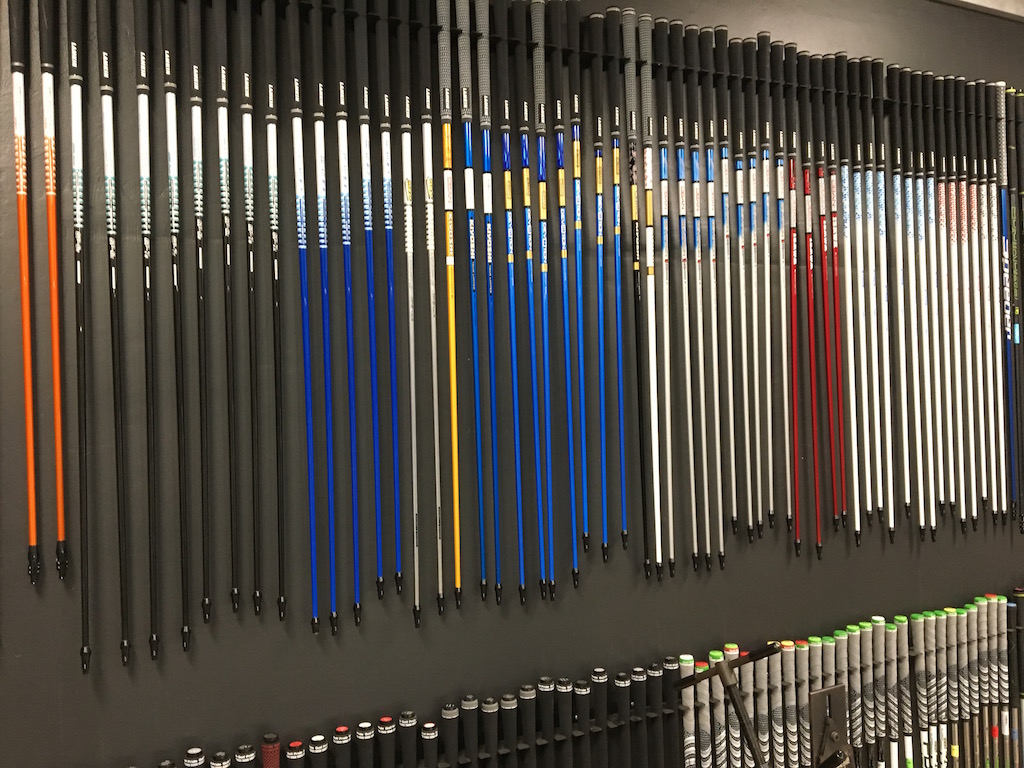
Yep, I’ve hit each of these shafts on my shaft wall.
It was only after becoming a club fitter and running a club fitting and testing facility that I really started to test equipment at another level. I began personally testing all the products from golf equipment and shaft manufacturers to get a feel for what a player might sense in each product. I also want to see if the products were actually doing what the companies said they should do. That’s why when new irons are released, I will match specs across the board from all the brands so I can isolate the performance of the club heads.
In my personal testing process, I am demanding of the looks of a club, as many experienced golfers are. I really want impact to have a certain feel and for the ball flight to be precise. My miss is on the toe slightly, so when testing for myself I pay particular attention to how different heads perform on toe hits and how that changes launch, spin, and overall dispersion.
Once I start understanding how certain club heads perform, I run through a few different shaft combinations to see how things change. When I think I’ve found a winner, then I really dive into the shaft options. The variety and quality of shafts is now better than ever before, but they can by tricky to test and change because once a player finds a club that feels a certain way, they get used to it. That feel becomes the norm, and that norm is not necessarily what is best.
Since focusing on club fitting, I have also embraced modern technologies more than I did as a player. When I was competing full time, I used technology to occasionally check my ball flight metrics, but I didn’t want to overwhelm myself with numbers. I now realize how impactful and helpful technology can be in optimizing a set makeup. From Trackman to Foresight to GEARS, which I use at my facility, I believe embracing modern testing protocols and learning more about the cause and effect of ball flight can really help players. I personally saw it in my game.
There are things even the most experienced eye can sometime miss, and gathering some solid data on your game can really help you gain more confidence that your game and clubs are moving in the right direction. As a result of changing my testing protocols, I have gradually switched pretty much every specification in my set. I switched iron and wedge lofts, lie angle, and club length, as well as brand, weight and profile of all my shafts. None of it was necessarily done on purpose. It was the end result of doing more rigorous testing than ever before. I slowly started piecing together a new set makeup that not only improved my ball flight, but also improved and helped me achieve positions in my swing I always struggled to accomplish.
I also now realize that changing golf equipment is an ever-evolving process. I wouldn’t be surprised if next year I change a couple more specs in my set makeup if I am trying to achieve something different in my ball flight. Club heads and shafts are designed for different goals and made of different materials, and the launch and spin of the golf ball is ever changing. Equipment companies are constantly trying to improve performance, and I think it helps if golfers are open to the possibility of change. I never was while I was playing, and now that look back and I wish I was more open to the idea.

Gears is key to my fitting sessions, both in my personal testing and client fittings.
For golfers who like technology and equipment, it is certainly an exciting time. Gone are the club fitting days of just beating balls off mats and having someone watch the ball flight and check lie angles on a lie board. Technology should help a player understand why a certain product might produce a different ball fight. Will switching shafts change the angle of attack or loft I present at impact due to different amounts of deflection? Will changing a shaft profile alter the droop pattern and thus the lie angle and where the face points at impact? What causes certain players to experience a shaft as stout and the next player who swings slower to experience it as whippy? And does that feel make them swing a club differently?
Golf equipment innovation and our ability to more accurately measure performance will continue to improve, and this technology will only help coaches and fitters while helping golfers find more answers and improve. That’s why I believe one of the best things a golfer can do to improve their game is go put their equipment to the test. Measure your current set and its performance, and then try a few new options out there, ideally with the help of a knowledgeable and experienced fitter. It will give you a better understanding of what your patterns and tendencies are, and the end result will be more confidence. You’ll know if you have the best clubs for your game, and if you don’t, you’ll learn what your weaknesses are and what you can do to get the absolute best performance.



Aronimink is not a storied club, but when Donald Ross himself proclaimed it to be as good as he can design and build, one had to take notice. Jay Sigel was the pre-eminent male amateur golfer from the mid-1970s to the mid-1990s. He might have called any number of Philadelphia clubs home, but he chose Aronimink. It served him well. Gary Player won a PGA Championship here in 1962, and was followed by the 1993 winner … nobody. Aronimink gave that event away to Inverness, for reasons of which it is certainly not proud. So be it. We had to wait sixty-four years for the PGA to return to Newtown Square, but here we are. Aronimink has been neo-restored by Gil Hanse and team, to return Ross features with an eye toward defense against the dark arts, errrr, high-tech equipment.
Day one saw Rory McIlroy and Bryson DeChambeau dig big holes, to the tune of plus-four and plus-six, respectively. Since the first-round lead will be minus-three at worst, many shots will need to be made up for the power couple to reach contention. By nightfall, seven golfers held the day-one lead at three-under par 67. Shots and sticks caught our attention, and we are proud to present Five Things We Learned on Tech Thursday at the 2026 PGA Championship. Thanks to InsideTourGolfer, Today’s Golfer, and GolfWRX for initial equipment research.
First, meet Min Woo Lee
Min Woo Lee, aka Dr. Chipinski, has once again thrust himself into the conversation of Can he, will he, when will he? Lee has so much talent, wins not nearly as often as we believe that he should, and has no major near-misses (much less titles) on his wiki. The young Aussie is getting older and wiser, but is he able to avoid the scarring that holds the older and wiser back from breaking through? Philadelphia offers another opportunity. Min Woo signed for five birdies and two bogeys on day one, and grabbed a share of the opening-day lead at Aronimink. Winners transcend history and the moment, and Lee will need that sort of ascent to lift the Wannamaker on Sunday.
Second, meet Aldrich Potgeiter
The young South African golfer can rip driver with the best of them. Aronimink tips out at nearly 7400 yards, but beyond the fairway bunkers that ensnare only the mortals, Potgeiter can take his chances with wedge from the rough. On Thursday, he spent plenty of time in the spinach. Like Popeye, he used his muscles to gouge and thrash and dig his way out. Six birdies against three bogeys on the card brought AP in a three deep.
Third, meet Martin Kaymer
Not a major event takes place without a where’s he been throwback moment. We know that Martin Kaymer left the PGA and DP World tours for LIV golf, but the two-time (US Open and PGA) major winner has a lifetime exemption into at least one major event, and he seizes the opportunity each May. Kaymer joined the six-seven brigade with four birdies and a solitary bogey on day one. Kaymer was never a long hitter, and the years are kind to no golfer. The German champion will need to uncork every bottle of guile and strategy in his cabinet to remain in contention. For today, though, he occupies a rung on the ladder of Tour Tech.
Fourth, meet Scottie Scheffler
Let’s see, he’s the defending champion at the PGA, and he found his way back to the top tier with five birdies against two bogeys. To be a favorite and then play up to that stature and expectation is quite difficult. Just ask Rory, Bryson, and some of the other pre-tournament heartthrobs. Scheffler’s game is complete, and to knock him off the OWGR #1 pedestal, one needs to defeat him at the majors. Aronimink is the sort of course that fits Scheffler’s game. Better yet, it unfits the game of many of his challengers. Don’t expect Scheffler to go away anytime soon. Come Sunday, he’ll be around.
Fifth, meet Stephan Jaeger
Clocking in for the unheralded players shift are Ryo Hisatsune and Stephan Jaeger. Hisatsune logged seven birdies on day one, but gave most of them back with four bogeys. Still, he’s tied at the top for a time. Jaeger pitched five birdies against two bogeys, including a run of three consecutive, from holes four through six. Odds are that one of the two will hang around through 36 holes. Odds also suggest that both will be gone by Saturday evening. Still, the PGA Championship has historically been the major most likely to be won by an under-known. Both Hisatsune and Jaeger feature on that list, so good luck, lads!

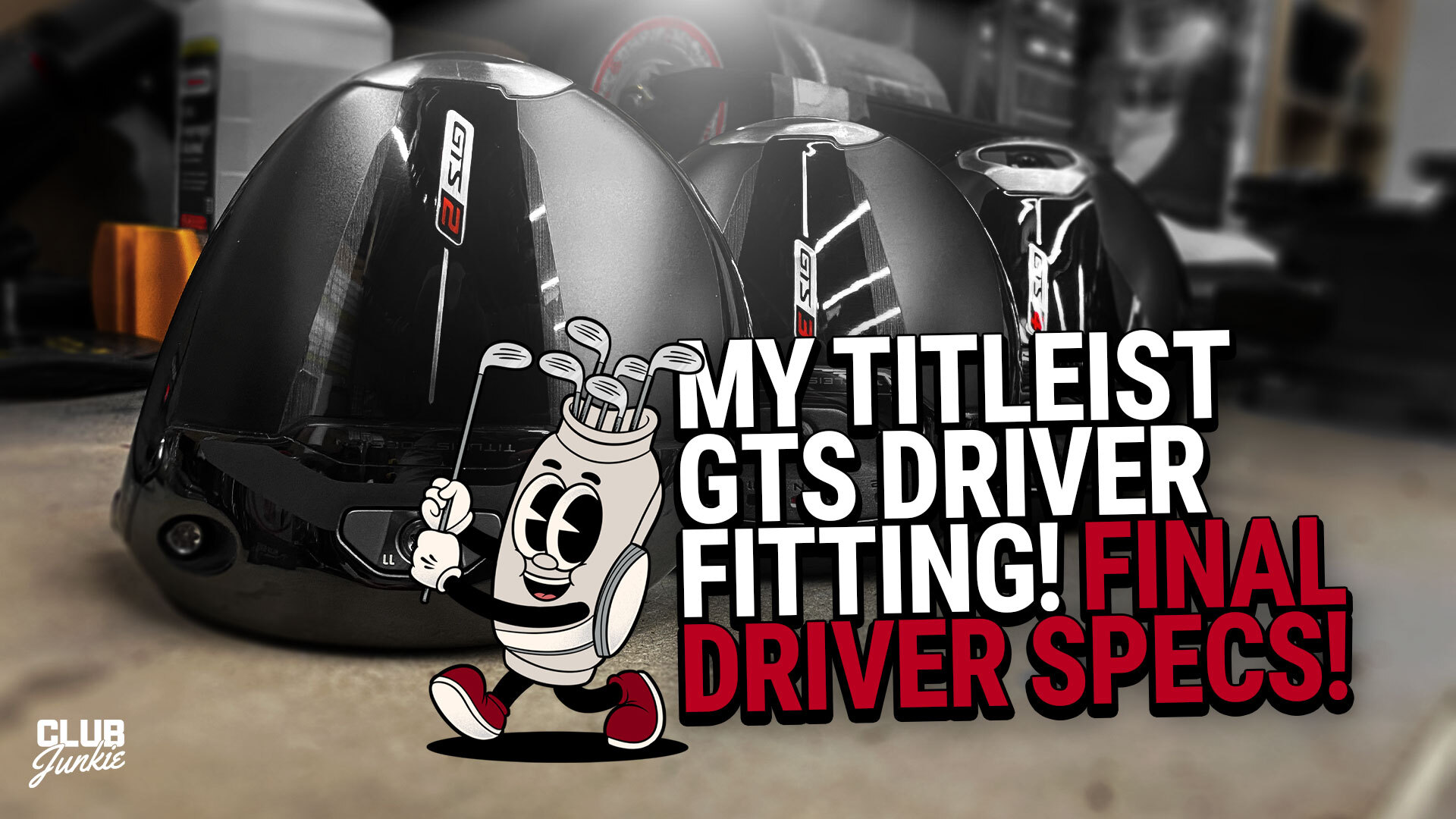
On this episode of the Club Junkie Podcast, I head to the Titleist Performance Institute for a full driver fitting with the new Titleist GTS lineup. We dive into the fitting process, talk about what made the biggest difference in performance, and break down how the different GTS heads and shaft combinations compare on the launch monitor. If you are thinking about a new driver setup for this season, there is a lot to take away from this one.
I also get into Brooks Koepka and the gear setup he brought to the PGA Championship, including the putters that caught my eye during the week. There are some interesting equipment trends showing up at the highest level right now and we break down what stands out.
To wrap things up, I talk about reshafting a few wedges, what I learned during the process, and swapping an adaptor onto a new shaft for another build project in the shop. A gear packed episode from start to finish for anyone who loves golf equipment and club building.
Follow Club Junkie everywhere:
Instagram: https://www.instagram.com/clubjunkiepod/
X: https://x.com/ClubJunkiePod
TikTok: https://www.tiktok.com/@clubjunkiepod
Threads: https://www.threads.com/@clubjunkiepod

Excited for this week’s WITB as we get to add the new Titleist GTS woods to the bag! I was fit at Titleist’s TPI facility in Oceanside California a few weeks ago and my new clubs just showed up. I am also adding a cool set of irons that I built last year some wild custom wedges into a new golf bag. Speaking of the bag I have a new Ghost Anyday Black Ops stand bag that I will be using on my Motocaddy Remote M7 electric cart.
Driver: Titleist GTS3 (11 degrees @ 10.25)
Shaft: Fujikura Ventus Red 6s
3-wood: Titleist GT1 3Tour (14.5 degrees)
Shaft: Graphite Design Tour AD CQ-7s
5-wood: Titleist GTS (18 degrees)
Shaft: Fujikura Ventus Red 7s
9-wood: Titleist GT1 (24 degress)
Shaft: Fujikura Ventus Red 7s
Irons: Bettinardi CB24 (5-PW)
Shafts: KBS C-Taper Lite 110 stiff
Wedge: TaylorMade MG5 (50-09 SB)
Shaft: Mitsubishi MMT 125 Stiff
Wedge: TaylorMade MG5 (56-12 SB)
Shaft: Mitsubishi MMT 125 Stiff
Wedge: TaylorMade MG5 (60-08 LB)
Shaft: Mitsubishi MMT 125 Stiff
Putter: Dan Carraher ZT Proto
Ball: Callaway Chrome Tour
Bag: Ghost Anyday Black Ops Stand Bag

Justin Rose WITB 2026 (April): Full WITB breakdown with new McLaren irons

RBC Heritage Tour Report: More minis, course-specific setups, Spider & GTS launches

What’s the story behind Webb Simpson’s custom-stamped irons?

Cadillac Championship Tour Report: Spieth’s sizable changes, McLaren Golf launches, and more

Kristoffer Reitan’s winning WITB: 2026 Truist Championship

Cameron Young’s winning WITB: 2026 Cadillac Championship

Aaron Rai’s winning WITB: 2026 PGA Championship

Nelly Korda WITB 2026 (April)

Justin Rose on the switch to McLaren Golf, learnings from previous equipment moves

Photos from the 2026 PGA Championship


Patrick Reed WITB 2026 (May)
Driver: Titleist GT3 (9 degrees) Buy here. Shaft: Aldila Rogue Silver 130 M.S.I. 70 TX 3-wood: TaylorMade Qi35 (15 degrees)...

Aaron Rai’s winning WITB: 2026 PGA Championship
Driver: TaylorMade M6 (9 degrees) Shaft: Aldilda Synergy Blue 70 TX 3-wood: TaylorMade Qi10 (15 degrees) Shaft: Fujikura Ventus Blue...


Michael Block WITB 2026 (May)
Driver: TaylorMade Qi4D (9 degrees) Shaft: Fujikura Ventus Black VeloCore+ 5 X 3-wood: TaylorMade Qi4D (15 degrees @14.25) Shaft: Mitsubishi...


Bryson DeChambeau WITB 2026 (May)
Driver: Krank Formula Fire Pro (6 degrees) Shaft: Project X Prototype 3-wood: Krank Formula Fire (10 degrees) Shaft: LA Golf BAD...
-
 Whats in the Bag3 weeks ago
Kristoffer Reitan’s winning WITB: 2026 Truist Championship
-
Whats in the Bag2 weeks ago
Aaron Rai’s winning WITB: 2026 PGA Championship
-
 Tour Photo Galleries3 weeks ago
Photos from the 2026 PGA Championship
-
 Equipment2 weeks ago
GolfWRX Launch Report: 2026 Titleist GTS drivers
-

 Equipment2 weeks ago
PGA Championship Tour Report: Fitzpatrick, Koepka among big-name putter switches for Aronimink
-

 News2 weeks ago
WITB Time Machine: Phil Mickelson’s winning WITB, 2021 PGA Championship
-

 Equipment2 weeks ago
Which of Tiger’s major winning irons are your favorite? – GolfWRXers discuss
-

 Equipment2 weeks ago
Lead Tape Report: Adjusting the swingweight of the Wanamaker Trophy


Deadeye
Jul 27, 2017 at 11:15 am
The ultimate tinkerer, Arnold Palmer. I wonder if he ever got fitted? Did well though.
Bob Pegram
Jul 27, 2017 at 1:33 am
The ability to play well even when playing infrequently is a good indicator of how well your clubs fit. There shouldn’t be a need to practice uncomfortable or unnatural swing mechanics to play well.
I experimented a lot with different specs in my own clubs. Working for a clubfitter and doing some of the fittings myself helped a lot. I became a good fitter. I still fit clubs and often see immediate improvement in my students.
For my own use I finally ended up with a set WAY out of the norm – all very long and stiff. Now I play well without a lot of practice. I became more accurate and consistent. I don’t have to alter my basic swing at all to use the clubs. A little warm up and I am ready to play. They even eliminated my big miss.
Bobalu
Jul 26, 2017 at 8:26 pm
Great article- you nailed it. Keep up the good work!
Golfandpuff
Jul 26, 2017 at 11:15 am
I would certainly enjoy the chance to delve into a club fitting world. If only there were a way for me to make it affordable! I also look at guys like Langer who don’t change much year after year vs. other big names that are always looking, testing, playing, new equipment. Is Freddie still hitting that r9?
I did email a fancy place near me in Atlanta for a fitting and a few upfront questions. I never received a reply. I certainly appreciate articles like these as well as golf wrx for keeping me informed.
Peter Campbell
Jul 26, 2017 at 10:48 am
Cant’t lie…Ive been on the site quite a few times. Great content on it!
Tommy
Jul 26, 2017 at 10:47 am
Exactly…..time and money is the commodity in question here, not the endless options. Most barely have time to even play much less to spend that precious time in a fitting bay with someone who might not even know what they’re doing. If we could fly to Carlsbad, now that we know of SOMEONE who knows, and spend a couple grand for your time and upgrades, that would be great. What happens when we get home and find that we don’t feel comfortable with our new $$$$ setup? Very few swing as consistently as a former touring pro. It’s a real conundrum.
Peter Campbell
Jul 26, 2017 at 11:48 am
Thanks for the comment Tommy. It is tricky, equipment costs keep increasing every year it seems like. One company ups their price, then the rest follow suit. And there is no denying certain fitting and build shops have had a tendency to always push people into expensive aftermarket products even when not much gain is realized. Nobody wants to get fit for clubs then get a huge bill One comment i will make that you mentioned and we see almost daily is that the thought the average player isn’t consistent. We see quite the opposite a lot of the time. Even high handicap players, who have really inconsistent start lines and ball flights, have more consistent swings than they realize some of the time. Their path, aoa, impact locations, speed, while maybe not the best or desirable motion, is actually pretty consistent for many high handicap players. The one thing that isn’t, and is unfortunately the most important piece of the puzzle, is where the club face is in relation to the path. So there are many ways fitting wise to help a player achieve a more consistent face angle at impact, or at least help bias one direction. Hope that makes sense. Appreciate the read!
birdie
Jul 26, 2017 at 1:20 pm
i think a major misconception is how many amateurs think just because they don’t have a perfect repeatable swing that they don’t have repeatable features of their swing that would allow a fitter to best find equipment that suits them.
whether its tempo, transition, release, or one of the many many aspects of the swing, even if you are high handicap and not hitting center of face consistently you are in fact making a similar swing. And even as you improve, your changes are probably less drastic than you might imagine.
BigBoy
Jul 25, 2017 at 9:16 pm
It’s why i still play my 10yr old Orlimar 3 wood.
Lloyd
Jul 25, 2017 at 9:52 pm
… and I still play with my 20+ y.o. Powerbilt TPS 180cc 15º 3 wood… with a bore-thru steel shaft too.
Peter Campbell
Jul 26, 2017 at 3:51 pm
too funny you mention that. I occasionally bring in old school products to test against that brands newest release and see how they stack up. I brought in my old orlimar strong 3 wood to see how it does and will be testing it this week. I loved that thing. I personally still game a burner 2.0 driving iron i had built up years ago. A 3 iron bent really strong basically…I simply cant find anything that beats its numbers, let alone the confidence i have with it having relied on so many times in tournaments on tight tee shots.
Anthony
Jul 25, 2017 at 6:26 pm
This is exactly what I have done for the past 17 years and have constantly worked with the tech (not when I was playing, like you) and found that my entire bag make up is completely different to when I was at the top of my game!!! This is a great article and many should take note and improve their game with all the tech possible to get the greater understanding of what actually works, not what they think works….
Well done Peter.
Peter Campbell
Jul 25, 2017 at 7:57 pm
Thanks Anthony, appreciate it!
AJ
Jul 25, 2017 at 10:34 am
New equipment is fun and I know thats what WRX is all about, but I think people take their tinkering way too far. The difference between 1 product and 1000 others is so small it is actually more about how you we swinging during the test than what the clubs did. Golf is about consistency to shoot lower scores… so regularly changing variables will not improve consistentcy. Manufacturers want you to think their new products are game changers but really the only game changer is hard practice every day. You can shoot lower scores with the equipment in your bag now if you put the time into your game and take the doubt out of your “specs”. Adapt and evolve.
Someone
Jul 25, 2017 at 10:47 am
i think it’s a mix of the two. at some point you need to get fitted. and then play that equipment long enough, say at least 2-4 years before getting fitted for anything new.
Noob
Jul 25, 2017 at 11:24 am
AJ, did you not read any of the article? He said, he would build sets to the same specs all across the board (shaft, weight, flex, etc) so that the only variables would be the design-look of the head and materials used in it. Then, you know how each one performs according to how you swing, and can eliminate the head you didn’t like, etc. Yeah we can all adapt, but you can’t be adapting to every club in the club all the time and every shot, if every club in the bag were all different from each other and expecting great results. You should get dialed in to what works for your swing the best and have a whole set matched and built to that
The_Sad_Reality
Jul 25, 2017 at 6:31 pm
But the sad reality is that most of these fitters are NOT using science to fit golfers and are not truly building clubs to the same specs (as stated in the article). That’s because they are not using MOI measurements and they are not taking into account the weight distribution of the components across the build. They use trial-and-error and the resulting measurements in their fitting approach rather than hard science that eliminates the many variables that are introduced by the variation in golfers’ inconsistent swings. Today’s fitters can never be sure that they have actually fit a golfer with the most optimal setup. All they might be able to say is, of the equipment tested, that it was the build that produced the best numbers on that day. Be wary of fitters who are not versed in MOI (and MBI) and preach swingweight and use lie boards for lie angle adjustments.
Peter Campbell
Jul 25, 2017 at 8:03 pm
Hey Noob, appreciate the comment. It never hurts to test and see whats out there. So many different looks and feels, and of course Lots of marketing and hype, but it helps to truly do solid testing or fitting to see what is helping our game or not worth the time or money. Many times it may be the current set, then at least we now that!
AJ
Jul 25, 2017 at 9:10 pm
Not discounting a good fitting, He certainly does his dillegence to make testing fair. I posed the question why spend so much effort regularly testing everything when what you have can produce lower scores if you practice vs tinker. There is no holy grail of equipment and no one makes the same swing twice so what works slightly better today doesn’t tomorrow. Swings evolve so eliminate the variable of rapidly changing equipment. You are not gonna get another 50 yards or double your accuracy with a new stick. Familiarity develops feel. Same reason why gaming the same putter for a decade makes sense, the more you practice with it the more in tune you are with it.
Peter Campbell
Jul 25, 2017 at 9:39 pm
Completely agree with your point AJ. Once we know what setup works best, whether it is their current set or something different, putting time in to practice and play is crucial. Its tough to say it in an article, but i guess my point was to not be afraid to try to new things when the landscape changes. Such as just going and buying a new driver with your same specs. As the materials and golf balls change, simply staying in the same shaft or setup simply because it feels comfortable and good might not be the best idea. But i totally agree with what your saying, most players don’t need to be over thinking or over tinkering. There will always be certain players that love that aspect of the game, and thats fine, but for most players quality practice time cant be beaten to improve your scores. Thanks for the read and comments, much appreciated!
Noob
Jul 25, 2017 at 11:39 pm
But here we are, on WRX! A tinkerer’s paradise of tinkering information! So why not tinker? Tinker with it all till death. It’s never ending with so much stuff out there.
Peter Campbell
Jul 25, 2017 at 11:53 pm
haha so true! Can’t lie, since I’ve embraced it…it sure is fun!!
Josh
Jul 25, 2017 at 8:16 am
$5000/yr in new golf equipment. Easy enough.