
Opinion & Analysis
Women: The Real Answer to Golf’s “Grail Quest”

I know, I know, you’ve heard just about enough about what we need to do to grow, or even save the game of golf. You’re tired of hearing about slow play, the short attention span of millennials, the aging baby-boomers, the consequences of overdevelopment, or the aftermath of the Great Recession. And you just can’t stomach one more pundit claiming all we need is for Tiger to start winning (or even playing) again, and/or how we really just need the next Tiger to come along and save us.
If it isn’t obvious by now that pinning our hopes on either of those scenarios is a fool’s errand I don’t know what is, but then what’s left? Well, maybe there is one thing you haven’t heard discussed, and when it comes to the health of the game, that one thing might just turn out to be the “Holy Grail” of player development and retention.
Sigmund Freud once said, “The great question that has never been answered, and which I have not yet been able to answer, despite my 30 years of research into the feminine soul, is ‘What does a woman want?'” Now I’m no Freud, so for me to suggest that I have the answer to that eternal question would be, at the very least, a bold supposition. I have, however, been at this close to 30 years, and as the chairman of one of the PGA’s Player Development Committee’s, I am particularly invested in the answers to that age-old conundrum, at least from a golfing standpoint. And that is why myself and others working to grow this great game find ourselves on a proverbial “Grail Quest” to find these answers, and maybe even some new questions.
The game of golf in the U.S. has been attracting new participants of both genders at roughly the same rate for close to 40 years. Unfortunately, the glaring differences in numbers when it comes to retention would make it truly appear that once introduced, women very often find the existing golf landscape much closer to Mars than that of Venus. So as the game’s participation numbers began to dip in the past decade, its stewards began investing more than ever to find out what could be done differently. And as a group, women specifically were targeted, and questions that go more than skin-deep began being asked to find out what is truly behind golf’s historical inability to retain women players at the same rates as men.
Studies done by the PGA of America have isolated where we can start pointing fingers, and as it turns out, there are a myriad of issues that collectively conspire to keep women from progressing from the enthusiastic beginner to the core golfer that supports the game long-term. Shorter courses, more relaxed dress codes, available day-care, a focus on fitness, less time commitment, and less expensive equipment are all among the reasons most often cited by women who either don’t play or who don’t play more. And when you combine those issues with the fact that the U.S. doesn’t have a nationally funded overriding organization charged with the growth of the sport as you do in many other countries, it’s no small wonder that many other countries see women participating at much higher rates. And while these are all critical pieces to the puzzle, they are absent one rather central piece to solving it. But before I disclose that missing link, I need to relate the quick story of how I almost accidentally discovered the ultimate answer to this all-important question.
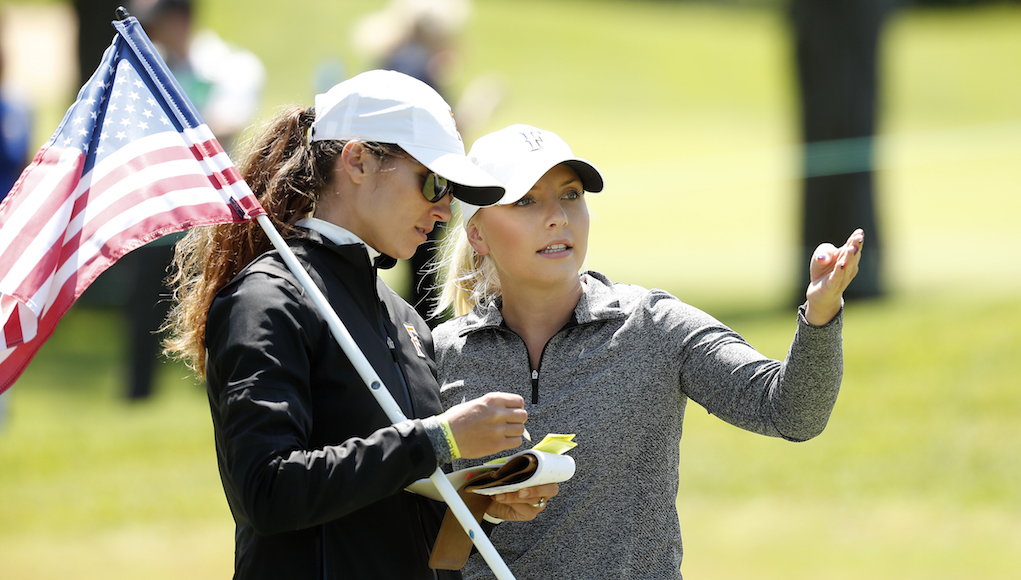
A few years ago I had a vacancy amongst my staff of professionals and began to search for a candidate. During that time, numerous ladies at my facility suggested I hire a woman. I said that I would love to, and in truth had already contacted the LPGA and our local women’s division of the PGA, but as the resumes began pouring in they all had one thing in common. They were all from men, a fact that didn’t surprise me considering how few women club professionals there are. A month went by, and I was already in the interview process when I was finally and unexpectedly contacted by an LPGA Member who was moving back to the area and looking for a club to call home. And while reasons both legal and political obligate me to mention she was not just a woman, but also the most qualified candidate, I would be remiss if I didn’t add that many of our members were thrilled about the fact that she was. Now, we already had a robust women’s program, and an active ladies’ membership, both of which I felt she would augment, but as much as I had expected when I hired her, I wasn’t quite expecting what happened next.
Women who had never taken a lesson started signing up for them, including many whom I had never even seen at the club. Participation in our ladies’ programs, the same programs we had been running for years, jumped overnight, and the perception of my skill as a buyer seemed magically transformed. I was even approached at off-premise social functions by members from other clubs asking about instruction once it became known that I had hired a woman professional. Now most of us in the industry have at least a tacit understanding of what is known as the “intimidation factor,” but even as a three-term member of the PGA’s Board of Directors, I had obviously underestimated how powerful it really is.
The comedienne Phyllis Diller used to say, “You know why the pro tells you to keep your head down don’t you? It’s so you can’t see him laughing.” A funny line from a funny lady, but when this process brought to light the fact that some ladies had been traveling almost 30 miles for lessons at another facility who already employed a woman professional, it really started to hit home how much the him in that joke is the biggest part of our problem. So I stopped laughing, because it really got me to thinking.
As an industry, we are asking why women account for only 20 percent of golf’s players in the U.S., but if we really want to change that shouldn’t we rather be questioning why they comprise less than 5 percent of our nation’s golf professionals? Membership in the LPGA’s Teaching and Club Professional Division stands at roughly 1,500. The PGA of America counts roughly 27,000 members nationally, and while some of those are women, it is still a very small percentage. Thanks to Title IX in the U.S., there are now almost as many women as men playing golf at the high school and collegiate levels, the most common early training ground for men club professionals, yet for some reason those women largely aren’t looking to the industry as a potential career path. And while I know that my having a woman on staff is somewhat unique in the industry, I know the benefits of it wouldn’t be unique to my facility.
In the end, finding that “Holy Grail” entails more than just answering the questions of what women say they want. It means listening with the goal of answering questions they didn’t even think to ask. If we want to make a serious impact on women’s participation, the PGA of America and LPGA need to start aggressively recruiting more women into the business with the long-term goal of having at least the same percentage of women who play the game in our professional ranks. More women in the business is not just good business, it is the answer to our “Grail Quest.” It will bring (and keep) more women in the game, and with those women will come the girls (and boys) of our next generation.
It’s time to stop looking to Tiger, or even for the next Tiger, if we’re looking to make the golf healthy again. Because the real next Tiger more than likely calls herself something like Cheyenne… at least that’s my bold supposition.



Aronimink is not a storied club, but when Donald Ross himself proclaimed it to be as good as he can design and build, one had to take notice. Jay Sigel was the pre-eminent male amateur golfer from the mid-1970s to the mid-1990s. He might have called any number of Philadelphia clubs home, but he chose Aronimink. It served him well. Gary Player won a PGA Championship here in 1962, and was followed by the 1993 winner … nobody. Aronimink gave that event away to Inverness, for reasons of which it is certainly not proud. So be it. We had to wait sixty-four years for the PGA to return to Newtown Square, but here we are. Aronimink has been neo-restored by Gil Hanse and team, to return Ross features with an eye toward defense against the dark arts, errrr, high-tech equipment.
Day one saw Rory McIlroy and Bryson DeChambeau dig big holes, to the tune of plus-four and plus-six, respectively. Since the first-round lead will be minus-three at worst, many shots will need to be made up for the power couple to reach contention. By nightfall, seven golfers held the day-one lead at three-under par 67. Shots and sticks caught our attention, and we are proud to present Five Things We Learned on Tech Thursday at the 2026 PGA Championship. Thanks to InsideTourGolfer, Today’s Golfer, and GolfWRX for initial equipment research.
First, meet Min Woo Lee
Min Woo Lee, aka Dr. Chipinski, has once again thrust himself into the conversation of Can he, will he, when will he? Lee has so much talent, wins not nearly as often as we believe that he should, and has no major near-misses (much less titles) on his wiki. The young Aussie is getting older and wiser, but is he able to avoid the scarring that holds the older and wiser back from breaking through? Philadelphia offers another opportunity. Min Woo signed for five birdies and two bogeys on day one, and grabbed a share of the opening-day lead at Aronimink. Winners transcend history and the moment, and Lee will need that sort of ascent to lift the Wannamaker on Sunday.
Second, meet Aldrich Potgeiter
The young South African golfer can rip driver with the best of them. Aronimink tips out at nearly 7400 yards, but beyond the fairway bunkers that ensnare only the mortals, Potgeiter can take his chances with wedge from the rough. On Thursday, he spent plenty of time in the spinach. Like Popeye, he used his muscles to gouge and thrash and dig his way out. Six birdies against three bogeys on the card brought AP in a three deep.
Third, meet Martin Kaymer
Not a major event takes place without a where’s he been throwback moment. We know that Martin Kaymer left the PGA and DP World tours for LIV golf, but the two-time (US Open and PGA) major winner has a lifetime exemption into at least one major event, and he seizes the opportunity each May. Kaymer joined the six-seven brigade with four birdies and a solitary bogey on day one. Kaymer was never a long hitter, and the years are kind to no golfer. The German champion will need to uncork every bottle of guile and strategy in his cabinet to remain in contention. For today, though, he occupies a rung on the ladder of Tour Tech.
Fourth, meet Scottie Scheffler
Let’s see, he’s the defending champion at the PGA, and he found his way back to the top tier with five birdies against two bogeys. To be a favorite and then play up to that stature and expectation is quite difficult. Just ask Rory, Bryson, and some of the other pre-tournament heartthrobs. Scheffler’s game is complete, and to knock him off the OWGR #1 pedestal, one needs to defeat him at the majors. Aronimink is the sort of course that fits Scheffler’s game. Better yet, it unfits the game of many of his challengers. Don’t expect Scheffler to go away anytime soon. Come Sunday, he’ll be around.
Fifth, meet Stephan Jaeger
Clocking in for the unheralded players shift are Ryo Hisatsune and Stephan Jaeger. Hisatsune logged seven birdies on day one, but gave most of them back with four bogeys. Still, he’s tied at the top for a time. Jaeger pitched five birdies against two bogeys, including a run of three consecutive, from holes four through six. Odds are that one of the two will hang around through 36 holes. Odds also suggest that both will be gone by Saturday evening. Still, the PGA Championship has historically been the major most likely to be won by an under-known. Both Hisatsune and Jaeger feature on that list, so good luck, lads!

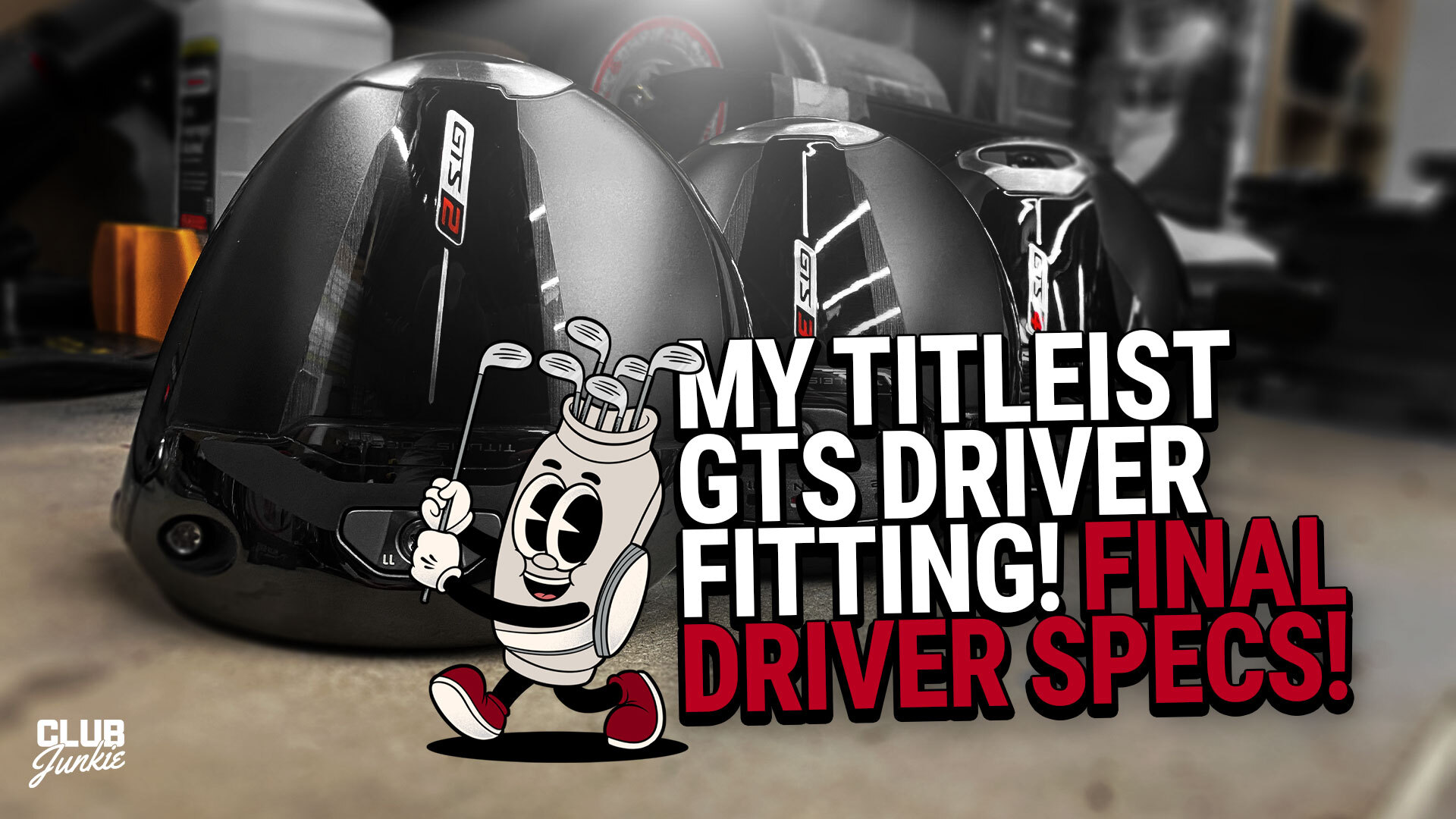
On this episode of the Club Junkie Podcast, I head to the Titleist Performance Institute for a full driver fitting with the new Titleist GTS lineup. We dive into the fitting process, talk about what made the biggest difference in performance, and break down how the different GTS heads and shaft combinations compare on the launch monitor. If you are thinking about a new driver setup for this season, there is a lot to take away from this one.
I also get into Brooks Koepka and the gear setup he brought to the PGA Championship, including the putters that caught my eye during the week. There are some interesting equipment trends showing up at the highest level right now and we break down what stands out.
To wrap things up, I talk about reshafting a few wedges, what I learned during the process, and swapping an adaptor onto a new shaft for another build project in the shop. A gear packed episode from start to finish for anyone who loves golf equipment and club building.
Follow Club Junkie everywhere:
Instagram: https://www.instagram.com/clubjunkiepod/
X: https://x.com/ClubJunkiePod
TikTok: https://www.tiktok.com/@clubjunkiepod
Threads: https://www.threads.com/@clubjunkiepod

Excited for this week’s WITB as we get to add the new Titleist GTS woods to the bag! I was fit at Titleist’s TPI facility in Oceanside California a few weeks ago and my new clubs just showed up. I am also adding a cool set of irons that I built last year some wild custom wedges into a new golf bag. Speaking of the bag I have a new Ghost Anyday Black Ops stand bag that I will be using on my Motocaddy Remote M7 electric cart.
Driver: Titleist GTS3 (11 degrees @ 10.25)
Shaft: Fujikura Ventus Red 6s
3-wood: Titleist GT1 3Tour (14.5 degrees)
Shaft: Graphite Design Tour AD CQ-7s
5-wood: Titleist GTS (18 degrees)
Shaft: Fujikura Ventus Red 7s
9-wood: Titleist GT1 (24 degress)
Shaft: Fujikura Ventus Red 7s
Irons: Bettinardi CB24 (5-PW)
Shafts: KBS C-Taper Lite 110 stiff
Wedge: TaylorMade MG5 (50-09 SB)
Shaft: Mitsubishi MMT 125 Stiff
Wedge: TaylorMade MG5 (56-12 SB)
Shaft: Mitsubishi MMT 125 Stiff
Wedge: TaylorMade MG5 (60-08 LB)
Shaft: Mitsubishi MMT 125 Stiff
Putter: Dan Carraher ZT Proto
Ball: Callaway Chrome Tour
Bag: Ghost Anyday Black Ops Stand Bag

Justin Rose WITB 2026 (April): Full WITB breakdown with new McLaren irons

RBC Heritage Tour Report: More minis, course-specific setups, Spider & GTS launches

What’s the story behind Webb Simpson’s custom-stamped irons?

Cadillac Championship Tour Report: Spieth’s sizable changes, McLaren Golf launches, and more

Kristoffer Reitan’s winning WITB: 2026 Truist Championship

Cameron Young’s winning WITB: 2026 Cadillac Championship

Aaron Rai’s winning WITB: 2026 PGA Championship

Nelly Korda WITB 2026 (April)

Justin Rose on the switch to McLaren Golf, learnings from previous equipment moves

Photos from the 2026 PGA Championship


Patrick Reed WITB 2026 (May)
Driver: Titleist GT3 (9 degrees) Buy here. Shaft: Aldila Rogue Silver 130 M.S.I. 70 TX 3-wood: TaylorMade Qi35 (15 degrees)...

Aaron Rai’s winning WITB: 2026 PGA Championship
Driver: TaylorMade M6 (9 degrees) Shaft: Aldilda Synergy Blue 70 TX 3-wood: TaylorMade Qi10 (15 degrees) Shaft: Fujikura Ventus Blue...


Michael Block WITB 2026 (May)
Driver: TaylorMade Qi4D (9 degrees) Shaft: Fujikura Ventus Black VeloCore+ 5 X 3-wood: TaylorMade Qi4D (15 degrees @14.25) Shaft: Mitsubishi...


Bryson DeChambeau WITB 2026 (May)
Driver: Krank Formula Fire Pro (6 degrees) Shaft: Project X Prototype 3-wood: Krank Formula Fire (10 degrees) Shaft: LA Golf BAD...
-
 Whats in the Bag3 weeks ago
Kristoffer Reitan’s winning WITB: 2026 Truist Championship
-
Whats in the Bag2 weeks ago
Aaron Rai’s winning WITB: 2026 PGA Championship
-
 Tour Photo Galleries3 weeks ago
Photos from the 2026 PGA Championship
-

 Equipment2 weeks ago
GolfWRX Launch Report: 2026 Titleist GTS drivers
-

 Equipment2 weeks ago
PGA Championship Tour Report: Fitzpatrick, Koepka among big-name putter switches for Aronimink
-

 News2 weeks ago
WITB Time Machine: Phil Mickelson’s winning WITB, 2021 PGA Championship
-

 Equipment2 weeks ago
Which of Tiger’s major winning irons are your favorite? – GolfWRXers discuss
-

 Equipment2 weeks ago
Lead Tape Report: Adjusting the swingweight of the Wanamaker Trophy


Brains a golfer
Jul 22, 2017 at 1:03 pm
I would agree that having more Women PGA club professionals and assistants would grow the game. Most young players, juniors and older men ( me ) should strive to hit the ball like an LPGA player. I watched the US women’s open, and almost every drive was in the fairway – Isn’t Fairways and greens the goal? I suppose every man dreams of the 300 yard drive and a sand wedge to the green- but how likely is that? Maybe playing the right set of tees, and hitting a smooth driver and 8 iron (like the Ladies) is the way to both get better AND have more fun.
After playing golf for 30 years, i realize that for 20 of those years i was trying to swing like the PGA pros or scratch golfers. Now that i am older i take MY swing.
Tom54
Jul 5, 2017 at 8:56 pm
I agree a mixed team event with a decent purse would definitely get the gals attention since their paydays are pale compared to the men. Those of you that dismiss their quality of play have not seen a LPGA event. They can flat out play!! Yes they can’t bomb 350 us tee balls routinely like the big boys but I’d be willing to bet they would impress even the skeptics. I know this sounds sexist but there is nothing wrong with watching pretty ladies play this game we all love. Next time one of their events is nearby do yourself a favor and check these gals out. You’ll be impressed for sure.
ctmanic
Jul 5, 2017 at 4:43 pm
Yup, good article. All great points. Female golf pros and just let them wear more normal clothes that aren’t designed for a freaking cheerleader are great starting points. But a clubful of entitled men acting like lewd teenagers, just sucks. Women are safer in a biker bar… …and that is not a freaking joke.
asugrad1988
Jul 5, 2017 at 2:16 pm
This past weekend there was the European tour golf tournament, the Senior Open, the PGA tournament and the LPGA’s KPMG major. How many people are going to watch the LPGA over the other three tournaments. That’s four tournaments on the weekend and I would bet the farm that the LPGA was the least viewed.
My solution would be to have LPGA tournaments during the week, say Tuesday, Wednesday, Thursday and Friday if it’s a four day tournament. I think a lot of people would watch the LPGA if it was the only golf on television.I don’t think it would matter much if the golf came on at 2:00 pm or 5:00 pm if it’s on the west coast. I don’t know anyone at my club that watches any tournament live anyway regardless of what tour it is. Way to many commercials. If the Golf Channel is doing the broadcast like they do almost all of them, then they have the weekend to travel to the next tournament.
I think the LPGA should try 2 or 3 tournaments in the middle of the week and see how it goes.
Za
Jul 6, 2017 at 2:19 am
You know the majority of the world still work Mon thru Fri, bud. LPGA already don’t get enough money through selling tickets to their events. So how are they going to bring in that money during the week? It’s not all about television, although it is already hard enough to get sponsors commercials to get the events to even get on TV.
I think you should shut up for a year and see how it goes.
setter02
Jul 7, 2017 at 8:19 am
LPGA isn’t a gate driven Tour, if it was, it would have folded up long ago. Its actually not a bad idea given it would have coverage time that wouldn’t compete with other Tours, and not much other sports are on in the mornings and early afternoon (save some mid day baseball). I think you should shut up for a year and see how that goes…
Za
Jul 7, 2017 at 8:05 pm
I work in TV. You don’t know how it works. Every sporting event at this level is majorly viewer-oriented, and that includes tickets. If it didn’t have problems with viewership even on TV, then you wouldn’t be addressing this issue with the above suggestions.
It’s bad enough that day-time TV during the week is driven by commercial moneys of home-products for the housewives who stay at home. Golf can’t support itself with just those kinds of sponsors of home products.
I think you should sit on a bicycle without a seat and swivel
Laff
Jul 7, 2017 at 8:47 pm
lol swivel
setter02
Jul 8, 2017 at 2:14 pm
Awww poor baby got his feelings hurt. You have a potential captive target market that is trying to get more females into this game. Good thing crazy ideas never pan out or are tried, I mean where would this world be with all the beige people like you running it pro? Maybe try and use your supposed ‘expertise’ to solve a problem rather than continue to be a part of it, I mean you are that good aren’t you pro?
ders
Jul 5, 2017 at 2:06 pm
Vancouver BC has 3 municpal short par 3 courses, neighbouring Burnaby has 2, West Vancouver has 1, Ricmond has 1. They are less than $15 for 18 holes, most are hazard free and are always packed anytime it isn’t raining. Midweek during the day is all seniors, evenings and weekends are drunken teens and twenty-somethings – most are male but you do see a lot of female players.. Make golf cheap, fun and relaxed and people will come and the game will live on. This won’t “save golf” if by “saving golf” you mean supporting a bloated golf industry, exclusive clubs and 7000+ yd courses but people will play golf if its available to them.
Mat
Jul 14, 2017 at 7:25 pm
Excellent point.
Big Wally
Jul 5, 2017 at 1:31 pm
This is a never ending argument. Every time it is a “problem” that is the fault of men and patronizingly the responsibility of men to fix it. Women aren’t stupid. They can decide for themselves what they want to do and with whom and they do.
If there was such a great opportunity for women teachers- where are they? Couldn’t the LPGA and PGA of America let them know they are in such huge demand? Or is the truth closer to supply meets demand?
Bruce Ferguson
Jul 4, 2017 at 10:04 pm
I think more network (non-Golf Channel) weekend coverage of LPGA events would give more exposure of the game to women. Alternate LPGA/PGA Tour coverage on the networks. GC will re-run PGA Tour coverage later, anyway. Practically all tour coverage on network television is men’s golf. No wonder most women have a preconceived notion that golf is a man’s sport. Golf is a perfect sport for women.
Mb
Jul 5, 2017 at 3:44 am
But the attendance figures and the sheer TV viewer ratings doesn’t support financially what women’s golf bring in to justify more coverage. No major channel is going to spend money on things nobody watches. That’s why shows get cancelled. In the case of golf, the tournaments go on, just not with TV coverage. Advertisers won’t cough up the dollars if nobody is going to watch their commercials.
Jesus Woods
Jul 4, 2017 at 3:55 pm
Put a bunch of old women on the course hitting 40 yd drives (when they don’t completely miss the ball) and putting out for a 16 and see how much it “grows”
BlubberButt
Jul 5, 2017 at 10:39 am
How is that different than a bunch of old men hitting 40 yard drives and putting for 16?
Kevin
Jul 24, 2017 at 2:44 pm
Because the women’s drives would find the fairway
Matt
Jul 4, 2017 at 1:30 pm
How about a world tour of US, Europe and Asia’s premier men’s tournaments? We need a global tour for golf to grow. The regional PGA tours could be more grassroots, combining q-school, web.com, and some of the smaller events currently in each regional PGA Tour.
Jacked_Loft
Jul 4, 2017 at 7:55 am
Mike, I think you make a viable point.
At my home course there are 4 (from 10 pros or 40%) fully quailifed female professionals, and they’re always booked out. The number of female players here accounts for about 30% of the total membership, and women from the surrounding clubs use us as their practice grounds.
Nath
Jul 4, 2017 at 3:44 am
I clicked on this article to look at the pictures, hmm dissapointed. Just like my local course nothing to see there either, yea golf sucks when its soo dry.
Mat
Jul 4, 2017 at 1:55 am
This is absolutely true. I’ve gone out of my way to find women instructors for my wife because the simple fact is that women play a more efficient and less power driven game. They also have boobs, and that can be an uncomfortable subject. So can hips. And if you think this is overblown, how’s Curves (and other female only gyms) doing? Why do you see women playing those exec courses more? And usually from the mens tees?
I would love nothing more than to get my wife playing more. She caddies for me far more than she plays, and I really love and hate it at the same time. And guys, at least the ones that aren’t sexist jerks, understand that they have a lot to learn from the women’s game wrt efficient body motion and swing control.
Great article, and absolutely true.
Alex
Jul 3, 2017 at 8:50 pm
Sexism of any kind is not the answer.
Dec
Jul 4, 2017 at 1:14 pm
“yer blind or neutered or religiously suppressed…. or a politically correct leftist post-modernist liberal troll.”
You really don’t know anything have no decency, huh? You’re so clueless you probably wonder how Obama won the election, don’t you? SO sad.
Rex
Jul 3, 2017 at 8:36 pm
Sigmund Freud. Isn’t that the guy who got attacked by the lion in vegas?
ooffa
Jul 3, 2017 at 8:19 pm
OMG, you’re scary. Not in a good way.
Ude
Jul 3, 2017 at 9:40 pm
NO its you who is {{{{scary}}}} and ^^^^sick^^^^
S
Jul 3, 2017 at 5:47 pm
Ohhhhhh you’re one of them Seinfeld losers! Figures
Traj
Jul 3, 2017 at 7:22 pm
You’re the biggest juvenile here who can’t resist bashing the geargeads here who actually have fun with the equipment designs. How pathetic do you want to be? A loser who quotes stupid things from a stupid show like Seinfeld, that’s who.
ooffa
Jul 6, 2017 at 9:59 am
You know what he meant. Please do not admit you are not smart enough to recognize a typo.
Shallowface
Jul 3, 2017 at 5:37 pm
It has never ceased to amaze me how poorly the business of golf has treated women players. When a course ‘s original design has become too long for the average lady due to a poor original design or the fact that it is maintained much wetter than it used to be, do they build a new forward tee box? No. They just drop a couple of tee markers someplace down the fairway, often presenting a sidehill lie. Overly deep rough is another issue. If it’s too deep for me, it’s WAY too deep for a lady. Last, but certainly not least, is the lack of decent restroom facilities. Often times there is NOTHING on either nine, not even a port-a-let. A lady can’t sidle up to a tree like a guy can, and in this day where everything is subject to being videoed a guy has to be careful where he marks his territory. Nothing says “don’t play here” to women like not having decent facilities, and a course developer who was so short sighted that he didn’t include that in his planning deserves to fail. It’s just one more example of how the game is dying by its own hand. If the management of the game wants to know why it is failing, the answer is in the mirror.
freowho
Jul 4, 2017 at 5:34 am
Good post. Golf courses are still built for the top 1% of golfers and everyone else has to adapt. Having a handicap doesn’t help you get out of a 6 foot deep bunker, stop the ball rolling off the other side of the green or replace the 6 golf balls you have lost. Players are willing to accept that I played bad and deserve to have a bad score but they don’t accept that because I’m a bad golfer I should have to spend all day raking bunkers, looking for my ball, holding everyone up and embarrassing myself. You also don’t 10 bunkers per hole to seperate good and bad golf. 1 well placed bunker or a well designed green will seperate good and bad golf.
The clubs that survive will be those that understand how to keep the majority coming back for another game.
setter02
Jul 4, 2017 at 7:22 am
Yeah I hate people who know their basic target market and serve them, but didn’t figure out how to appease the finicky unicorn golfers… Personally I’d hate to have to design a course where the vast majority of female players still hit driver into 120y par 3’s, and come up short… You design a course from the back up, not the other way around, a 4k set of tees is always going to be a complete after thought, as it should.
Shallowface
Jul 4, 2017 at 5:03 pm
If your “target market” is 1% of any group (and I am in that 1%, by the way), you are doomed to fail. You don’t design a course from the back up if you are designing for recreational players. From what I see, it’s the 7000 plus tees that are the complete after thought, as they are being added to existing designs today due to the USGA’s total failure to regulate equipment. But when they are added, they are level and actually look like tee boxes, unlike what is often done for ladies.
With your mindset, you must be in the golf business. I love women and love seeing them on the golf course. It’s interesting to say the least how many men I’ve run into over the years who don’t feel that way.
ooffa
Jul 5, 2017 at 7:14 am
WHAT is wrong with you? You should consider not posting if you are going to continually say inappropriate or foolish things. Let someone else read your posts before hitting enter. Hopefully that person will help prevent you further embarrassing yourself.
Tom Duckworth
Jul 3, 2017 at 4:59 pm
Great read I would really like to see some events on TV with men and women golfers playing as teams it would be great TV, make it almost a Ryder Cup type of event with teams playing for their countries. There also needs to be a women’s Masters. I have a granddaughter that loves playing and is on the cusp of being a very good golfer but only sees men on TV and her friends tell her golf is an old mans game. She plays in a summer league and she is about the only girl playing.
I have found a a LPGA teacher in my town and plan to take her to meet her for lessons.