
Opinion & Analysis
The 24 players who can win The 2018 Masters

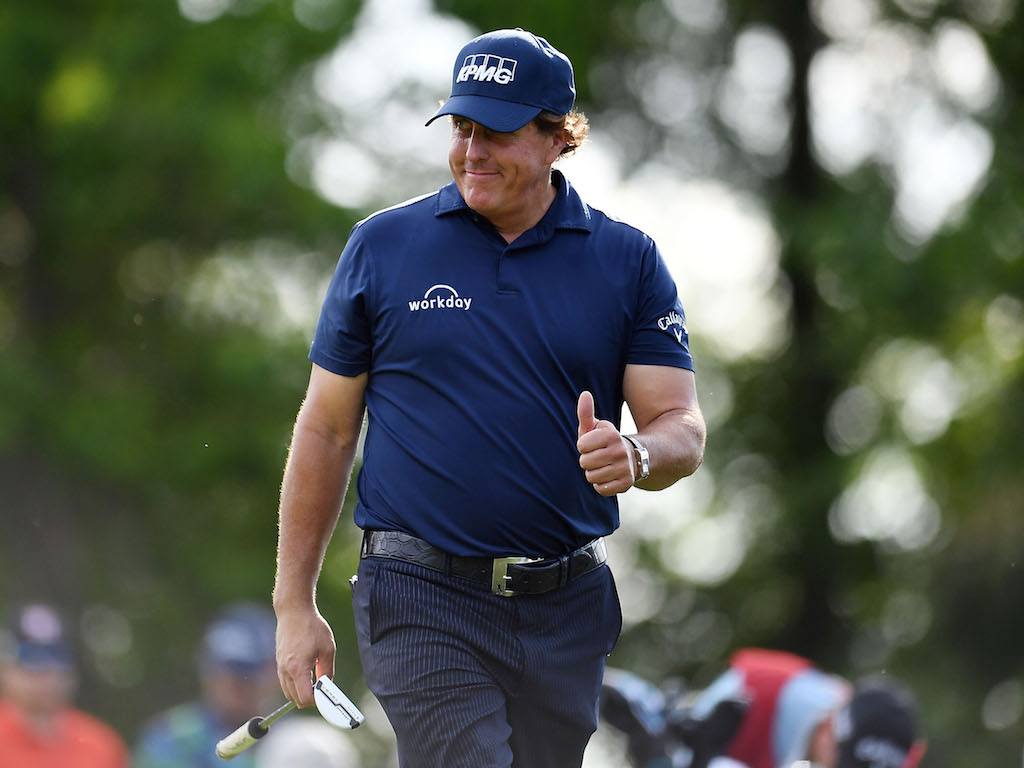
Each year for the Masters, I create a filtering process to help determine the players that are most likely to win the Green Jacket based on criteria that has strongly predicted outcomes at Augusta. I usually get the list down to roughly 23 players. Last year, I had Sergio Garcia as one of my 20 players that could win the Masters. Despite Sergio’s lack of success at Augusta, he came away with the Green Jacket.
Before I discuss my picks for this year’s Masters, I want to go over what I call the “critical holes” for Augusta National. The critical holes in any tournament are the ones where the top finishers typically gain the most strokes on the field, as well as where the greatest deviation in scores exist. One of the interesting aspects about critical holes is that they often change over time due to changes in the course conditions, course design or a change in player strategy, which can create a smaller deviation in scores. This year the projected Critical Holes are Nos. 3, 13, 14 and 15.
Moving on to the tournament, I filtered out the amateurs and all first-time professional attendees. The Masters has only been won once by a first-time attendee: Fuzzy Zoeller in 1979.
Filtered Out: Amateurs and First-Time Attendees
- Wesley Bryan
- Austin Cook
- Harry Ellis (a)
- Tony Finau
- Dylan Frittelli
- Doug Ghim (a)
- Patton Kizzire
- Satoshin Kodaira
- Haotong Li
- Yuxin Lin (a)
- Yusaku Miyazato
- Joaquin Niemann (a)
- Matt Parziale (a)
- Doc Redman (a)
- Xander Schauffele
- Shubhankar Sharma
These first-time invitees are a little less battle tested on the big stage than the previous years’ first time invitees, although Finau, Schauffele and Li show some real promise in the future at Augusta. I also filtered out 11 past champions that I do not believe can compete at Augusta National anymore.
Filtered Out: Improbable Past Champions
- Angel Cabrera
- Fred Couples
- Trevor Immelman
- Bernhard Langer
- Sandy Lyle
- Larry Mize
- Mark O’Meara
- Jose Maria Olazabal
- Vijay Singh
- Mike Weir
- Ian Woosnam
The Zach Johnson Debate
Every year I do my Masters picks, it’s always get pointed out that I do not pick former Masters Champion Zach Johnson due to his lack of length off the tee. Augusta National greatly favors long-ball hitters. They can play the par-5s more like par-4s, and typically the longer hitters can also hit the ball higher so they can get their long approach shots to hold the green more easily.
When Johnson won the Masters in 2007, the event featured record-low temperatures in the mid-40s and wind gusts of 33 mph. This made it very hard for any player to reach the par-5s in two shots and allowed Johnson to get into a wedge contest on the par-5’s, his strength. The temperatures are predicted to be in the mid-70s this year. Unless that changes by 30+ degrees and the wind gusts double, I don’t see Johnson having a very good chance to win the event. Along with Johnson, I would also eliminate these shorter hitters:
Filtered-Out: Short Hitters
- Adam Hadwin
- Brian Harman
- Kevin Kisner
- Matt Kuchar
- Ryan Moore
- Pat Perez
- Ted Potter, Jr.
- Chez Reavie
- Webb Simpson
- Kyle Stanley
- Si Woo Kim
A part of the game that is just as critical as distance is the trajectory height a player can create. Last year, I filtered out nine players for hitting the ball too low. Four of the nine missed the cut. One of the picks, Paul Casey, finished T6. His instructor, Peter Kostis, recommended that I not just look solely at the Apex Height metric, but also look at carry distance when it comes to the trajectory the player puts on the ball. I have done that for this year’s Masters picks and have eliminated four players.
Filtered Out: Low-Ball Hitters
- Jason Dufner
- Branden Grace
- Russell Henley
- Ian Poulter
Since the inauguration of the event, there have only been two winners of the Masters that have previously never made the cut: Fuzzy Zoeller in 1979 and Gene Sarazen in 1936. Let’s filter them out as well.
Filtered Out: Never Made the Cut at Augusta
- Tommy Fleetwood
- Tyrrell Hatton
- Alex Noren
- Jhonattan Vegas
I will also filter out the players that missed the cut at the Houston Open. Missing the cut the week prior to an event greatly reduces the likelihood of the player winning, finishing in the top-10, finishing in the top-25 and even making the cut regardless of the event.
Filtered Out: Missed the Cut in Houston
- Rafa Cabrera-Bello
- Yuta Ikeda
- Martin Kaymer
Lastly, I have filtered out the weak performers from the “Red Zone,” approach shots from 175-225 yards. While Augusta is known for its greens, the winners are determined mostly by the quality of their approach shots throughout the event. In fact, nine of the last 10 champions have hit at least 49 Greens in Regulation during the week.
The key shots where the most strokes are gained/lost at Augusta National are from the Red Zone. Last year, I had 17 players filtered out for poor Red Zone play. Outside of Kevin Chappell (T7), almost all of those players performed poorly.
Filtered Out: Weak from 175-225 Yards
- Kiradech Aphibarnrat
- Patrick Cantlay
- Jason Day
- Ross Fisher
- Matthew Fitzpatrick
- Billy Horschel
- Dustin Johnson
- Francesco Molinari
- Charl Schwartzel
- Brendan Steele
- Bernd Wiesberger
- Danny Willett
Perhaps the biggest surprise here is Dustin Johnson. He currently ranks 176th from the Red Zone despite historically being an excellent Red Zone performer. At his current rate, he would like need to dominate Augusta off the tee with his prodigious length and putt very well to win the Green Jacket. But the numbers don’t like a player’s odds of being able to do that on such an approach shot oriented course.
That leaves us with 24 players that can win the Masters. Their Vegas Odds, which are subject to change, are in parentheses. My personal top-10 picks are just below.
The 24 players who can win the 2018 Masters
- Paul Casey (22/1)
- Kevin Chappell (100/1)
- Bryson DeChambeau (66/1)
- Rickie Fowler (18/1)
- Sergio Garcia (28/1)
- Charley Hoffman (80/1)
- Mark Leishman (66/1)
- Hideki Matsuyama (25/1)
- Rory McIlroy (9/1)
- Phil Mickelson (16/1)
- Louis Oosthuizen (50/1)
- Thomas Pieters (66/1)
- Jon Rahm (18/1)
- Patrick Reed (40/1)
- Justin Rose (20/1)
- Adam Scott (33/1)
- Cameron Smith (150/1)
- Jordan Spieth (10/1)
- Henrik Stenson (40/1)
- Justin Thomas (10/1)
- Jimmy Walker (150/1)
- Bubba Watson (14/1)
- Gary Woodland (150/1)
- Tiger Woods (11/1)
My Personal Top-10 Picks
- Paul Casey (22/1)
- Rory McIlroy (9/1)
- Phil Mickelson (16/1)
- Louis Oosthuizen (50/1)
- Jon Rahm (18/1)
- Patrick Reed (40/1)
- Justin Rose (20/1)
- Jordan Spieth (10/1)
- Justin Thomas (10/1)
- Bubba Watson (14/1)


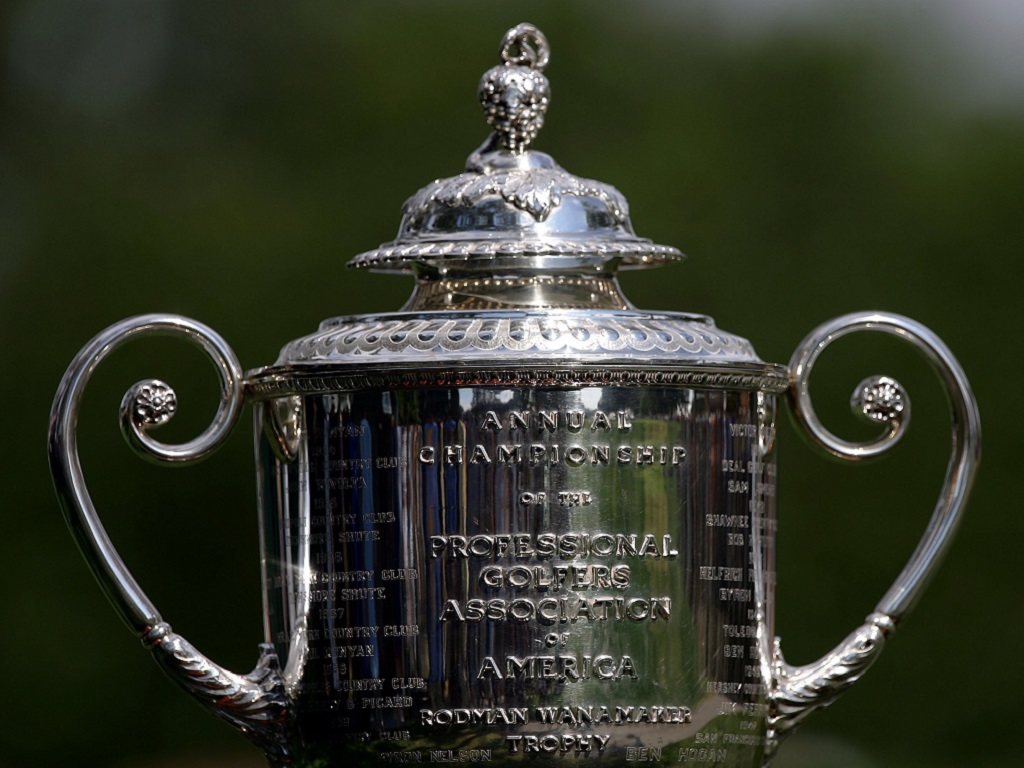
Aronimink is not a storied club, but when Donald Ross himself proclaimed it to be as good as he can design and build, one had to take notice. Jay Sigel was the pre-eminent male amateur golfer from the mid-1970s to the mid-1990s. He might have called any number of Philadelphia clubs home, but he chose Aronimink. It served him well. Gary Player won a PGA Championship here in 1962, and was followed by the 1993 winner … nobody. Aronimink gave that event away to Inverness, for reasons of which it is certainly not proud. So be it. We had to wait sixty-four years for the PGA to return to Newtown Square, but here we are. Aronimink has been neo-restored by Gil Hanse and team, to return Ross features with an eye toward defense against the dark arts, errrr, high-tech equipment.
Day one saw Rory McIlroy and Bryson DeChambeau dig big holes, to the tune of plus-four and plus-six, respectively. Since the first-round lead will be minus-three at worst, many shots will need to be made up for the power couple to reach contention. By nightfall, seven golfers held the day-one lead at three-under par 67. Shots and sticks caught our attention, and we are proud to present Five Things We Learned on Tech Thursday at the 2026 PGA Championship. Thanks to InsideTourGolfer, Today’s Golfer, and GolfWRX for initial equipment research.
First, meet Min Woo Lee
Min Woo Lee, aka Dr. Chipinski, has once again thrust himself into the conversation of Can he, will he, when will he? Lee has so much talent, wins not nearly as often as we believe that he should, and has no major near-misses (much less titles) on his wiki. The young Aussie is getting older and wiser, but is he able to avoid the scarring that holds the older and wiser back from breaking through? Philadelphia offers another opportunity. Min Woo signed for five birdies and two bogeys on day one, and grabbed a share of the opening-day lead at Aronimink. Winners transcend history and the moment, and Lee will need that sort of ascent to lift the Wannamaker on Sunday.
Second, meet Aldrich Potgeiter
The young South African golfer can rip driver with the best of them. Aronimink tips out at nearly 7400 yards, but beyond the fairway bunkers that ensnare only the mortals, Potgeiter can take his chances with wedge from the rough. On Thursday, he spent plenty of time in the spinach. Like Popeye, he used his muscles to gouge and thrash and dig his way out. Six birdies against three bogeys on the card brought AP in a three deep.
Third, meet Martin Kaymer
Not a major event takes place without a where’s he been throwback moment. We know that Martin Kaymer left the PGA and DP World tours for LIV golf, but the two-time (US Open and PGA) major winner has a lifetime exemption into at least one major event, and he seizes the opportunity each May. Kaymer joined the six-seven brigade with four birdies and a solitary bogey on day one. Kaymer was never a long hitter, and the years are kind to no golfer. The German champion will need to uncork every bottle of guile and strategy in his cabinet to remain in contention. For today, though, he occupies a rung on the ladder of Tour Tech.
Fourth, meet Scottie Scheffler
Let’s see, he’s the defending champion at the PGA, and he found his way back to the top tier with five birdies against two bogeys. To be a favorite and then play up to that stature and expectation is quite difficult. Just ask Rory, Bryson, and some of the other pre-tournament heartthrobs. Scheffler’s game is complete, and to knock him off the OWGR #1 pedestal, one needs to defeat him at the majors. Aronimink is the sort of course that fits Scheffler’s game. Better yet, it unfits the game of many of his challengers. Don’t expect Scheffler to go away anytime soon. Come Sunday, he’ll be around.
Fifth, meet Stephan Jaeger
Clocking in for the unheralded players shift are Ryo Hisatsune and Stephan Jaeger. Hisatsune logged seven birdies on day one, but gave most of them back with four bogeys. Still, he’s tied at the top for a time. Jaeger pitched five birdies against two bogeys, including a run of three consecutive, from holes four through six. Odds are that one of the two will hang around through 36 holes. Odds also suggest that both will be gone by Saturday evening. Still, the PGA Championship has historically been the major most likely to be won by an under-known. Both Hisatsune and Jaeger feature on that list, so good luck, lads!

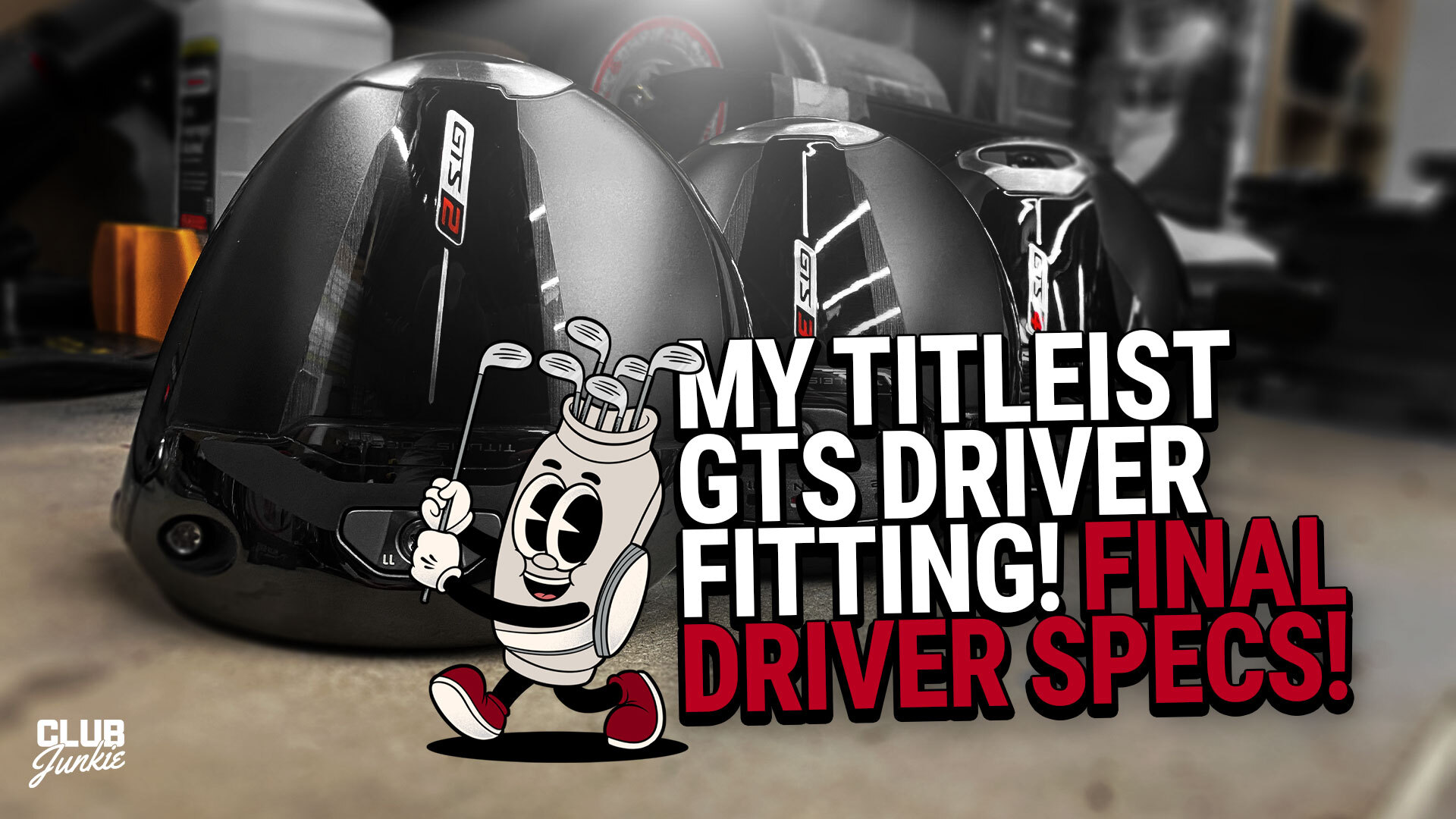
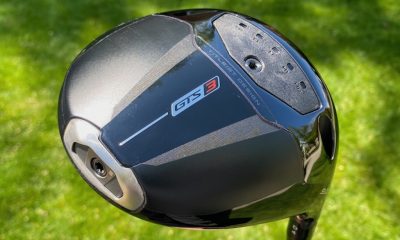
On this episode of the Club Junkie Podcast, I head to the Titleist Performance Institute for a full driver fitting with the new Titleist GTS lineup. We dive into the fitting process, talk about what made the biggest difference in performance, and break down how the different GTS heads and shaft combinations compare on the launch monitor. If you are thinking about a new driver setup for this season, there is a lot to take away from this one.
I also get into Brooks Koepka and the gear setup he brought to the PGA Championship, including the putters that caught my eye during the week. There are some interesting equipment trends showing up at the highest level right now and we break down what stands out.
To wrap things up, I talk about reshafting a few wedges, what I learned during the process, and swapping an adaptor onto a new shaft for another build project in the shop. A gear packed episode from start to finish for anyone who loves golf equipment and club building.
Follow Club Junkie everywhere:
Instagram: https://www.instagram.com/clubjunkiepod/
X: https://x.com/ClubJunkiePod
TikTok: https://www.tiktok.com/@clubjunkiepod
Threads: https://www.threads.com/@clubjunkiepod
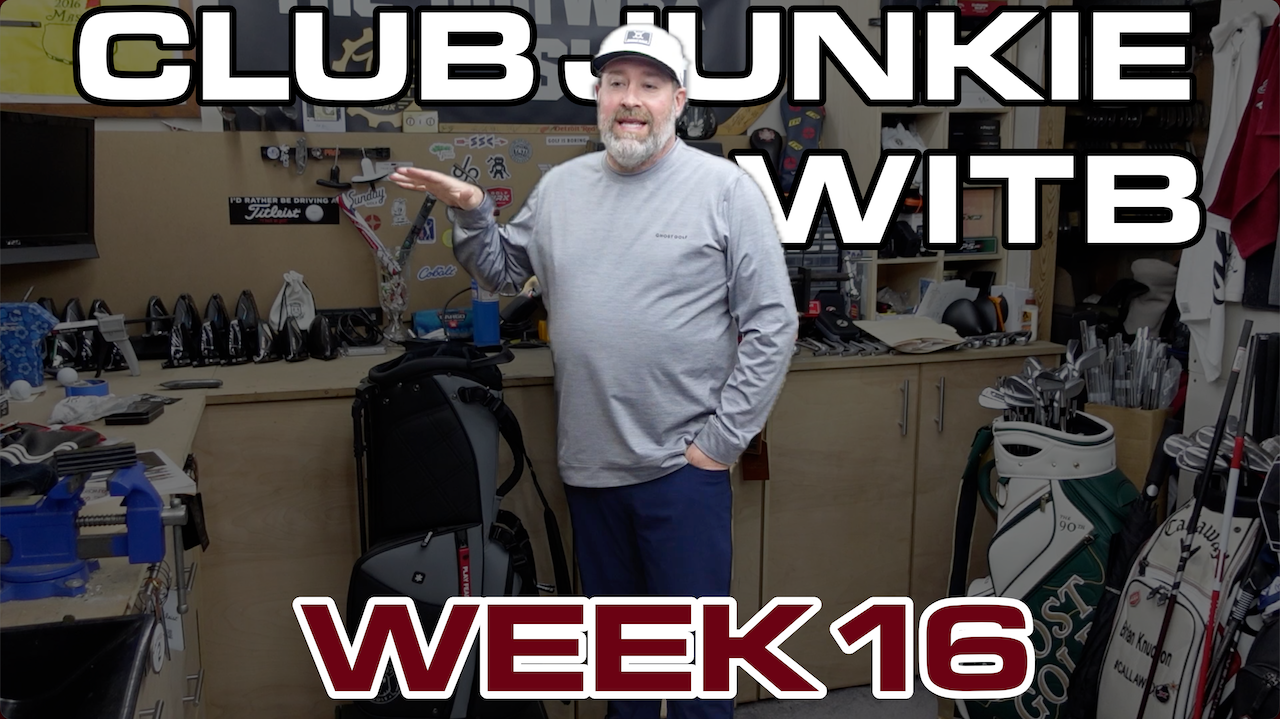
Excited for this week’s WITB as we get to add the new Titleist GTS woods to the bag! I was fit at Titleist’s TPI facility in Oceanside California a few weeks ago and my new clubs just showed up. I am also adding a cool set of irons that I built last year some wild custom wedges into a new golf bag. Speaking of the bag I have a new Ghost Anyday Black Ops stand bag that I will be using on my Motocaddy Remote M7 electric cart.
Driver: Titleist GTS3 (11 degrees @ 10.25)
Shaft: Fujikura Ventus Red 6s
3-wood: Titleist GT1 3Tour (14.5 degrees)
Shaft: Graphite Design Tour AD CQ-7s
5-wood: Titleist GTS (18 degrees)
Shaft: Fujikura Ventus Red 7s
9-wood: Titleist GT1 (24 degress)
Shaft: Fujikura Ventus Red 7s
Irons: Bettinardi CB24 (5-PW)
Shafts: KBS C-Taper Lite 110 stiff
Wedge: TaylorMade MG5 (50-09 SB)
Shaft: Mitsubishi MMT 125 Stiff
Wedge: TaylorMade MG5 (56-12 SB)
Shaft: Mitsubishi MMT 125 Stiff
Wedge: TaylorMade MG5 (60-08 LB)
Shaft: Mitsubishi MMT 125 Stiff
Putter: Dan Carraher ZT Proto
Ball: Callaway Chrome Tour
Bag: Ghost Anyday Black Ops Stand Bag

Justin Rose WITB 2026 (April): Full WITB breakdown with new McLaren irons

RBC Heritage Tour Report: More minis, course-specific setups, Spider & GTS launches

What’s the story behind Webb Simpson’s custom-stamped irons?

Cadillac Championship Tour Report: Spieth’s sizable changes, McLaren Golf launches, and more

Kristoffer Reitan’s winning WITB: 2026 Truist Championship

Cameron Young’s winning WITB: 2026 Cadillac Championship

Aaron Rai’s winning WITB: 2026 PGA Championship

Nelly Korda WITB 2026 (April)

Justin Rose on the switch to McLaren Golf, learnings from previous equipment moves

Photos from the 2026 PGA Championship


Patrick Reed WITB 2026 (May)
Driver: Titleist GT3 (9 degrees) Buy here. Shaft: Aldila Rogue Silver 130 M.S.I. 70 TX 3-wood: TaylorMade Qi35 (15 degrees)...

Aaron Rai’s winning WITB: 2026 PGA Championship
Driver: TaylorMade M6 (9 degrees) Shaft: Aldilda Synergy Blue 70 TX 3-wood: TaylorMade Qi10 (15 degrees) Shaft: Fujikura Ventus Blue...


Michael Block WITB 2026 (May)
Driver: TaylorMade Qi4D (9 degrees) Shaft: Fujikura Ventus Black VeloCore+ 5 X 3-wood: TaylorMade Qi4D (15 degrees @14.25) Shaft: Mitsubishi...


Bryson DeChambeau WITB 2026 (May)
Driver: Krank Formula Fire Pro (6 degrees) Shaft: Project X Prototype 3-wood: Krank Formula Fire (10 degrees) Shaft: LA Golf BAD...
-
 Whats in the Bag3 weeks ago
Kristoffer Reitan’s winning WITB: 2026 Truist Championship
-
Whats in the Bag2 weeks ago
Aaron Rai’s winning WITB: 2026 PGA Championship
-
 Tour Photo Galleries3 weeks ago
Photos from the 2026 PGA Championship
-
 Equipment2 weeks ago
GolfWRX Launch Report: 2026 Titleist GTS drivers
-

 Equipment2 weeks ago
PGA Championship Tour Report: Fitzpatrick, Koepka among big-name putter switches for Aronimink
-

 News2 weeks ago
WITB Time Machine: Phil Mickelson’s winning WITB, 2021 PGA Championship
-

 Equipment2 weeks ago
Which of Tiger’s major winning irons are your favorite? – GolfWRXers discuss
-

 Equipment2 weeks ago
Lead Tape Report: Adjusting the swingweight of the Wanamaker Trophy


DrRob1963
Apr 12, 2018 at 8:34 am
You should add a “Can’t Putt” catagory
Grant
Apr 11, 2018 at 1:39 pm
Hey Rich,
Nice job on this! Wondering if you do this for the other majors as well?
Tal
Apr 9, 2018 at 3:21 am
Great job on this! You picked the winner again.
Woody
Apr 8, 2018 at 9:50 pm
Hey man, I give you props. You had Reed in your top 10..expert proved right.
Eddie Von Eric
Apr 4, 2018 at 10:58 am
Richies expert analysis is equivalent to that big deuce I dropped this morning in the IHOP bathroom.
Kris
Apr 3, 2018 at 9:10 pm
Great article. Fun to read.
Jack Nicholas
Apr 3, 2018 at 2:05 pm
RG, mathematical probabilities are scary, huh. You should sharpen your pin and just stick away and leave the real analysis to the brainier ones of the species. Go bet some of your benjamins on Woosnam, Mize et al and see how far you get.
kevin
Apr 3, 2018 at 1:08 pm
every stat i see has DJ in top 20 relative to approach shots within 175-200yds.
https://www.pgatour.com/stats/stat.337.html
Rich Hunt
Apr 3, 2018 at 6:26 pm
But, he’s also 207th from 200-225 yards:
https://www.pgatour.com/stats/stat.02358.html
J
Apr 3, 2018 at 11:57 am
Any of the field you see that can place top 10 or 20 outside of your top 24 to win?
Richie Hunt
Apr 4, 2018 at 10:18 am
I could see Dustin winning. If he can get his Red Zone play back to its old self, it can happen. Otherwise, he has to drive the ball ridiculously well and putt well to make up for it. It can happen, just a tall task. Kuchar is playing well right now and if the conditions start to favor him he could do something. Russell Henley is currently ranked #1 from the Red Zone. If the conditions work out for him, he could contend.
Cliff Hartman
Apr 3, 2018 at 10:15 am
I don’t see where you have accounted for Daniel Berger???
Charles Aspinal
Apr 3, 2018 at 1:04 pm
You beat me to it; I have same question.
Dan
Apr 3, 2018 at 7:15 am
Cameron Smith is a first timer right? He’s on the list of 24 though. Correct me if I’m wrong.
Rich Hunt
Apr 3, 2018 at 8:39 am
No, Smith played in 2016 and finished t-55th.
Undershooter30
Apr 2, 2018 at 11:26 pm
Reed doesn’t hit it high enough to win. He has the right to left ball flight but his shot height is very low.
Richie Hunt
Apr 8, 2018 at 7:02 pm
You were saying? 🙂
Trevor Heathers
Apr 2, 2018 at 9:37 pm
LOL that picture of Rich is from 20 years ago! Check out his video on Bebettergolf. He’s fat too.
Liam Pierce
Apr 3, 2018 at 3:05 pm
I know its hilarious. Guy is such an egomaniac that he has to post a picture of when he was young.
Liz Murray
Apr 2, 2018 at 8:22 pm
Love your predictions every year! My question is do you think Matsuyama‘s recent injury will affect his playing this weekend?
Rich Hunt
Apr 3, 2018 at 8:43 am
Thank you.
Tough to say as it’s difficult to predict if the injury and his game heals in time or not. That’s why I put him in the top-24, but not in the top-10.
Michaele11111
Apr 2, 2018 at 5:34 pm
Pretty lame stuff. Very full of holes.
Joel
Apr 2, 2018 at 9:45 pm
Boo, this comment. Just, booooooo.
This is a fun article every year.
nyguy
Apr 2, 2018 at 4:46 pm
The #1 Player in the world doesn’t have a chance?? lol ridiculous.
Jack Nicholas
Apr 3, 2018 at 1:11 pm
Number 1 never wins The Masters. Hasn’t ever happened so it’s mathematically less likely.
Kris
Apr 3, 2018 at 9:01 pm
Yes. He was disqualified because of his 200-225 accuracy this year. Lmao.
Robert
Apr 2, 2018 at 3:32 pm
Rich please elaborate as to how is Jason Day weak from 175 yards when he is T33 according to pgatour.com?
Richie Hunt
Apr 2, 2018 at 3:58 pm
I am not sure what metrics you are looking at. For instance, just take a look at his play from 175-200 yards from the fairway where he ranks 199th: https://www.pgatour.com/stats/stat.337.html
Generally, Day’s largest weakness in his game over the years has been from 150-200 yards. He uses his driving, short game play and great putting to overcome that. But that is a tall task to do at Augusta.
kevin
Apr 2, 2018 at 3:12 pm
Really enjoy this column. ignore the haters! Thanks Rich
Zac
Apr 2, 2018 at 1:24 pm
Since when is Kyle Stanley a short hitter?!?!
Nate
Apr 2, 2018 at 1:52 pm
never. dude’s a beast
Richie Hunt
Apr 2, 2018 at 4:01 pm
Kyle ranks 140th in driving distance and 114th in club speed. He altered his swing a few years ago to drop his club speed from 117 mph to about 112 mph. Still strikes it great, but the numbers indicate that unless the wind picks up, winning at Augusta isn’t likely. In fact, it’s supposed to rain at ANGC which would only favor the longer hitters.
Kris
Apr 3, 2018 at 9:04 pm
Rain helps the shorter players. See Johnson Z. And Weir M.
Makes the greens easier to hold. Which is a way bigger advantage than distance.
Richie Hunt
Apr 4, 2018 at 10:12 am
Zach didn’t have rain. He had record low temperatures and high wind gusts. Even the bombers had trouble going for the par-5’s in two shots when Zach won.
Generally on Tour, rain helps the bombers. But since there is no rough to really speak of at ANGC, I can see it helping shorter hitters a little. The time that Weir won, Weir was one of the very best in the world from inside 200 yards, so it wasn’t like he couldn’t play.
Matt
Apr 2, 2018 at 4:53 pm
My sediments exactly!
kevin
Apr 3, 2018 at 1:00 pm
He’s 140th in driving distance in 2018.
c’mon people…these stats aren’t that hard to look up.
Megabill
Apr 2, 2018 at 1:22 pm
How can you filter based on 175-225 performance? Doesn’t 100 to 175 have more influence on the winner?
Does the 175-225 stat really influence who becomes champion?
Also many filtered by that stat hit it so far that they rarely have to hit in from that distance.
Richie Hunt
Apr 2, 2018 at 4:03 pm
Shots from 100-175 yards do not have more ‘influence’ on the winner. And Tour players on average hit more shots per round from 150-200 yards than they do from 75-150 yards. It’s also not all about the frequency of shots. But it’s about the deviation in results. Combine those two at ANGC and that’s why you see players that perform well from there on top of the leaderboard.
brad
Apr 2, 2018 at 1:17 pm
Xander Schauffele will make the cut, and Daniel Berger will be in the mix.
Dan
Apr 2, 2018 at 12:06 pm
Not a perfect system because none is but would anyone seriously take the rest of the field over Richies 24?
I’d say DJ and Jason Day are tough ones but his list looks pretty good…. Fleetwood, Carera Bello, Noren maybe?
List looks good to me
Ryan Schmidlin
Apr 2, 2018 at 11:58 am
Where is Daniel Berger on this list????
Max
Apr 2, 2018 at 11:52 am
I mean, if you look at last year’s results, many of the guys you filtered out finished in the top 10 and were probably a lucky bounce/bad break away from being in contention. Let’s also not forget guys like Bernhard Langer and Soren Kjeldsen were in contention a few years ago.
I like the analysis, though, and the winner is more likely to be on your list than not.
Tal
Apr 2, 2018 at 6:49 pm
He’s not trying to predict the top 10, he’s trying to predict a single winner as as you say, they’re most likely on that list. I believe Rich has shortlisted the winner for the last 2 years, if I’m not mistaken.
Rich Hunt
Apr 2, 2018 at 11:01 pm
I’ve shortlisted the winner every year that I’ve done this going back to 2013.
juststeve
Apr 2, 2018 at 11:35 am
Very bold to rule out Dustin Johnson. Lets see if you’re right.
Kris
Apr 3, 2018 at 9:07 pm
Not really bold, actually. If he doesn’t win the tournament Rich is right.
Courtney (not female)
Apr 2, 2018 at 11:32 am
What a backwards way of thinking, thoughts on Tiger getting to tee it up?
dat
Apr 2, 2018 at 11:26 am
A fair assessment, but you forgot about whoever wins the par 3 contest automatically being out of the running based on past data.
Tim Braun
Apr 2, 2018 at 11:21 am
Jason Day would be the one that I would question not being on your list. With his driving ability and his top putting that outweighs the approach shot debate. I’m not saying he is going to win, but Gary Woodland or Cameron Smith??? Certainly we can make a substitution.
Robert
Apr 2, 2018 at 3:25 pm
I just checked pgatour.com and JD is T33 in approaches from 175-200. So I’d like to know how in the world is that weak?
Richie Hunt
Apr 2, 2018 at 4:05 pm
I do not know where you are getting that metric from. He’s 199th from 175-200 yards from the fairway:
https://www.pgatour.com/stats/stat.337.html
And he’s 168th from 200-225 yards from fairway:
https://www.pgatour.com/stats/stat.02358.html
Kobie Pieterse
Apr 3, 2018 at 9:35 am
Rich, not sure where you get your data from, I just checked again now, Jason Day was ranked T33 last week and T41 this week for 175-200 (https://www.pgatour.com/stats/stat.327.html)
Travis R
Apr 3, 2018 at 11:46 am
Your stat is only GIR, Richie’s takes into account proximity to the hole from that distance and score. So apparently Jason is hitting the green often from that distance, he just isnt getting it particularly close or making the birdie putt.
Ray Bennett
Apr 2, 2018 at 6:15 pm
Cam is currently the best Aussie in the field (on form), great chance in this field.
Mikec
Apr 2, 2018 at 11:21 am
No filter is perfect, but this system seems to be a very logical way to get down to a set of names to wager — from there it is old fashioned gut and handicapping based on form etc — but I like the approach of thinning the field
Oscar
Apr 2, 2018 at 11:20 am
what about Daniel Berger?
RG
Apr 2, 2018 at 11:03 am
You filtered out a guy (Danny Willett) whose already shown he can win. This shows the inherent problem in your prediction filter. Oh, and statistically speaking any of those players CAN win the Master’s and I reject the null hypothesis that you present.
Al Czervik
Apr 2, 2018 at 11:36 am
He is talking about the 2018 Masters. Dude is 296th in the world.
Al Czervik
Apr 2, 2018 at 11:41 am
The real problem is that his Improbable Past Champions filter didn’t catch him. I would be far more shocked if Willett made a run than say Cabrera or even Langer.
Josh
Apr 2, 2018 at 5:19 pm
I made a lot of money on Danny Willett two years ago, but I wouldn’t bet one red cent that he’ll ever win another Masters. Dude was a fluke who only won cause Jordan blew it. For the record I also had a stake in Spieth so it was a good weekend.