
Opinion & Analysis
Teaching professionals, take a seat (literally)

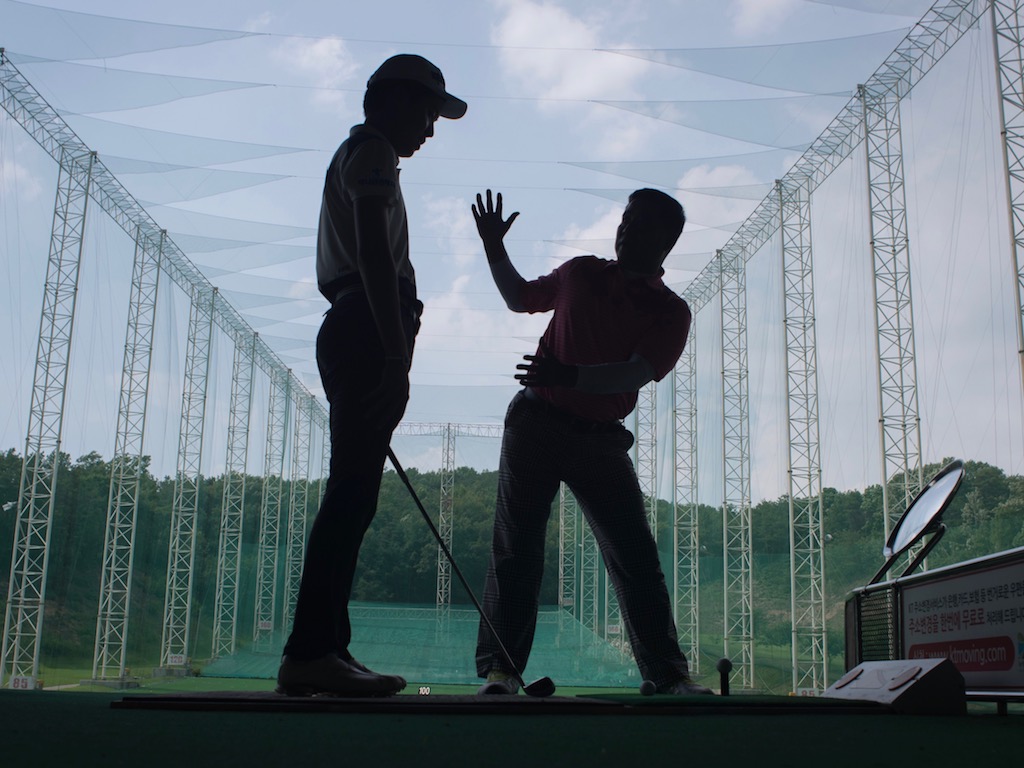
I’ve had the opportunity over the years to watch hundreds of teaching professionals give lessons — generally from a distance so as not to disturb them or their students. What I’ve observed is that they are always standing as if they were a waiter in a restaurant taking a dinner order.
I have to ask: Why?
Where is it written that a teaching professional must stand when giving a lesson? And yet I would venture that this is the standard protocol for virtually 100 percent of them. As a teacher, I think it is essential that we understand the great teachers that have gone before us, and so I’ve made a point to research each and every one of them dating back to Harry Vardon. In my research I found an accounting of John Jacobs’ life written by author Laddie Lucas in 1987. What he reported was that Jacobs, Europe’s preeminent teaching professional, had an advanced case of varicose veins because he had always stood while working with students during the course of his entire career.
I wish he could have read this article early in his career; it could have saved him a good deal of discomfort and pain. That said, before discussing this issue further, I think it is important to make a distinction between two different types of teaching professionals:
- Those that spend most of their time in the golf shop. When requested, they give a lesson here and there. They may not give more than 10-15 lessons per week, and in many cases these lessons are of a “touch-up” nature lasting no longer than 30 minutes.
- Those who are career teaching professionals and may give 40-50 lessons a week. They might be at a country club, a public course or a driving range. For the most part, their lessons are an hour in length. They may spend between 8-10 hours a day on the lesson tee teaching — on some occasions, seven days a week.
You might imagine standing for that long on your feet day after day, week after week, year after year. In what other profession would you be required to withstand that level of punishment. And for what? I was hired as the Teaching Professional at Interlachen Country Club in Edina, Minnesota in 1977. This was of course where Bobby Jones won the third leg of his Grand Slam in 1930. The very exclusive club is steeped in history, having held every possible USGA championship at one time or another. The invitation fee in 1977 was $50,000 and there was a two-year waiting list.
How did those members react back then when they saw two chairs sitting behind my teaching station? They were initially surprised, but when I explained the purpose of the chairs they understood completely. And those members who took lessons found how much they enjoyed the opportunity to sit down and relax between shots.
Here was the routine that I followed.
- At the beginning of the lesson, the student and I would sit down and talk about what had transpired since their last session.
- In the event they were a new student, I wanted to hear their story. I would, during this first session, ask them a few probing questions while identifying their goals and objectives — all the while in a relaxed and comfortable atmosphere.
- I would then ask them to hit a few shots with a variety of clubs. I would sit and watch. After they were done, I’d ask them to sit down. I would then stand, and move to the practice station, where I would explain what changes were necessary for them to improve. I would demonstrate the right and wrong way if I thought it would be helpful.
- The student would then stand and join me. I would then adjust their grip or setup if necessary. And then when advantageous, I would physically guide them through the correct backswing or downswing movements to provide them with the correct feel.
Through this process, I had armed the student with:
- An intellectual understanding of the problem.
- A visual picture of the correct position or desired movements.
- A physical feel for the required changes.
I would then sit down again as they began hitting shots, while at the same time giving them feedback from one shot to another. After they’d hit several shots, I would have them join me in sitting again. I would then have them state the changes they were to work on for two reasons:
- I wanted to make sure what they heard was what I had said, because I’d found over the years that often times the two accounts were different. This step avoided any possible confusion.
- I was of the opinion that if the student was not able to articulate what they’d learned, they likely didn’t really understand it. And in that case, I would clarify it for them.
In most cases, my next student would be warming up just as I was finishing with the first. I would slide over and repeat the entire process again with a fresh diagnosis and a custom-designed remedy.
I have not varied from this routine for more than 40 years. The only exception has been on some occasions that I have utilized a bench or a pair of stools while achieving the same effect. And what I’ve found through this process is that my students are not only more refreshed between shots, but they enjoy their lessons more because they are not so fatigued. You might be wondering, have I ever been chided by a student for sitting down? The answer is “No, never.” Whenever you visit the doctor, he enters the room what does he do? He sits down. Exactly.
Teachers around the country, I would like you to look at yourself in a mirror and repeat these words after me until you come to believe them as if they were gospel: “I am a highly trained and experienced professional, and for that reason there is no need for me to perpetually stand in front of my students as if I was hoping for a tip.” Once you have convinced yourself of that fact, find yourself two comfortable chairs, stools or a bench and start using them as I’ve described on the lesson tee.
And now that we’ve established that, let’s sit down and have a talk.




Aronimink is not a storied club, but when Donald Ross himself proclaimed it to be as good as he can design and build, one had to take notice. Jay Sigel was the pre-eminent male amateur golfer from the mid-1970s to the mid-1990s. He might have called any number of Philadelphia clubs home, but he chose Aronimink. It served him well. Gary Player won a PGA Championship here in 1962, and was followed by the 1993 winner … nobody. Aronimink gave that event away to Inverness, for reasons of which it is certainly not proud. So be it. We had to wait sixty-four years for the PGA to return to Newtown Square, but here we are. Aronimink has been neo-restored by Gil Hanse and team, to return Ross features with an eye toward defense against the dark arts, errrr, high-tech equipment.
Day one saw Rory McIlroy and Bryson DeChambeau dig big holes, to the tune of plus-four and plus-six, respectively. Since the first-round lead will be minus-three at worst, many shots will need to be made up for the power couple to reach contention. By nightfall, seven golfers held the day-one lead at three-under par 67. Shots and sticks caught our attention, and we are proud to present Five Things We Learned on Tech Thursday at the 2026 PGA Championship. Thanks to InsideTourGolfer, Today’s Golfer, and GolfWRX for initial equipment research.
First, meet Min Woo Lee
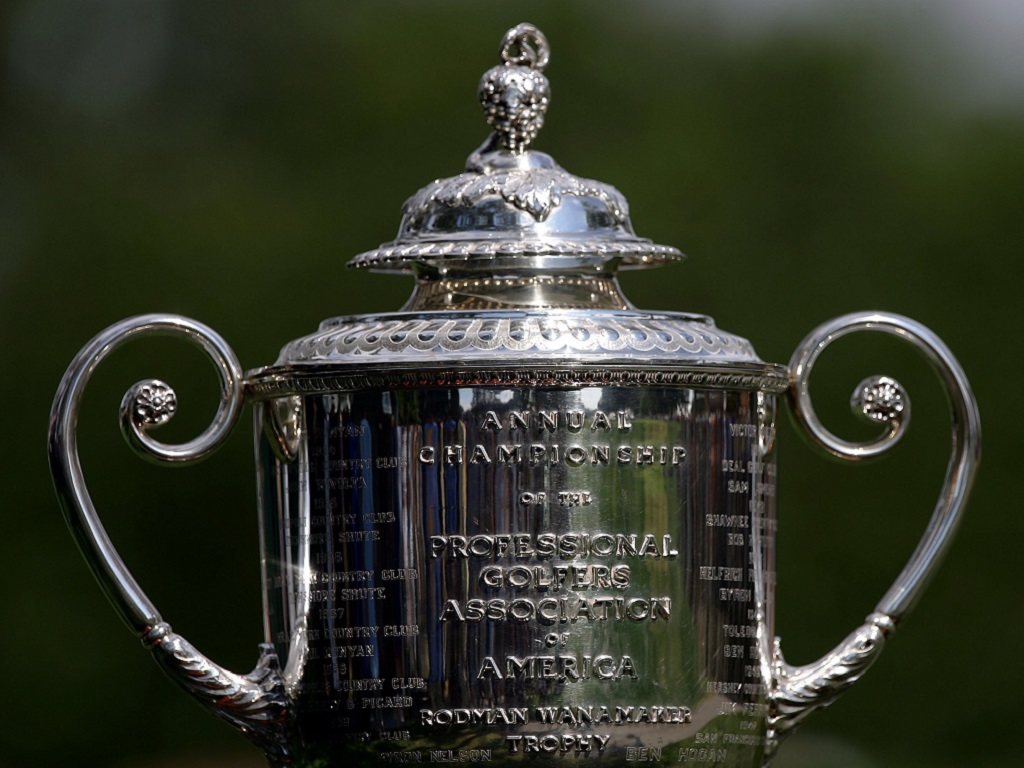
Min Woo Lee, aka Dr. Chipinski, has once again thrust himself into the conversation of Can he, will he, when will he? Lee has so much talent, wins not nearly as often as we believe that he should, and has no major near-misses (much less titles) on his wiki. The young Aussie is getting older and wiser, but is he able to avoid the scarring that holds the older and wiser back from breaking through? Philadelphia offers another opportunity. Min Woo signed for five birdies and two bogeys on day one, and grabbed a share of the opening-day lead at Aronimink. Winners transcend history and the moment, and Lee will need that sort of ascent to lift the Wannamaker on Sunday.
Second, meet Aldrich Potgeiter
The young South African golfer can rip driver with the best of them. Aronimink tips out at nearly 7400 yards, but beyond the fairway bunkers that ensnare only the mortals, Potgeiter can take his chances with wedge from the rough. On Thursday, he spent plenty of time in the spinach. Like Popeye, he used his muscles to gouge and thrash and dig his way out. Six birdies against three bogeys on the card brought AP in a three deep.
Third, meet Martin Kaymer
Not a major event takes place without a where’s he been throwback moment. We know that Martin Kaymer left the PGA and DP World tours for LIV golf, but the two-time (US Open and PGA) major winner has a lifetime exemption into at least one major event, and he seizes the opportunity each May. Kaymer joined the six-seven brigade with four birdies and a solitary bogey on day one. Kaymer was never a long hitter, and the years are kind to no golfer. The German champion will need to uncork every bottle of guile and strategy in his cabinet to remain in contention. For today, though, he occupies a rung on the ladder of Tour Tech.
Fourth, meet Scottie Scheffler
Let’s see, he’s the defending champion at the PGA, and he found his way back to the top tier with five birdies against two bogeys. To be a favorite and then play up to that stature and expectation is quite difficult. Just ask Rory, Bryson, and some of the other pre-tournament heartthrobs. Scheffler’s game is complete, and to knock him off the OWGR #1 pedestal, one needs to defeat him at the majors. Aronimink is the sort of course that fits Scheffler’s game. Better yet, it unfits the game of many of his challengers. Don’t expect Scheffler to go away anytime soon. Come Sunday, he’ll be around.
Fifth, meet Stephan Jaeger
Clocking in for the unheralded players shift are Ryo Hisatsune and Stephan Jaeger. Hisatsune logged seven birdies on day one, but gave most of them back with four bogeys. Still, he’s tied at the top for a time. Jaeger pitched five birdies against two bogeys, including a run of three consecutive, from holes four through six. Odds are that one of the two will hang around through 36 holes. Odds also suggest that both will be gone by Saturday evening. Still, the PGA Championship has historically been the major most likely to be won by an under-known. Both Hisatsune and Jaeger feature on that list, so good luck, lads!

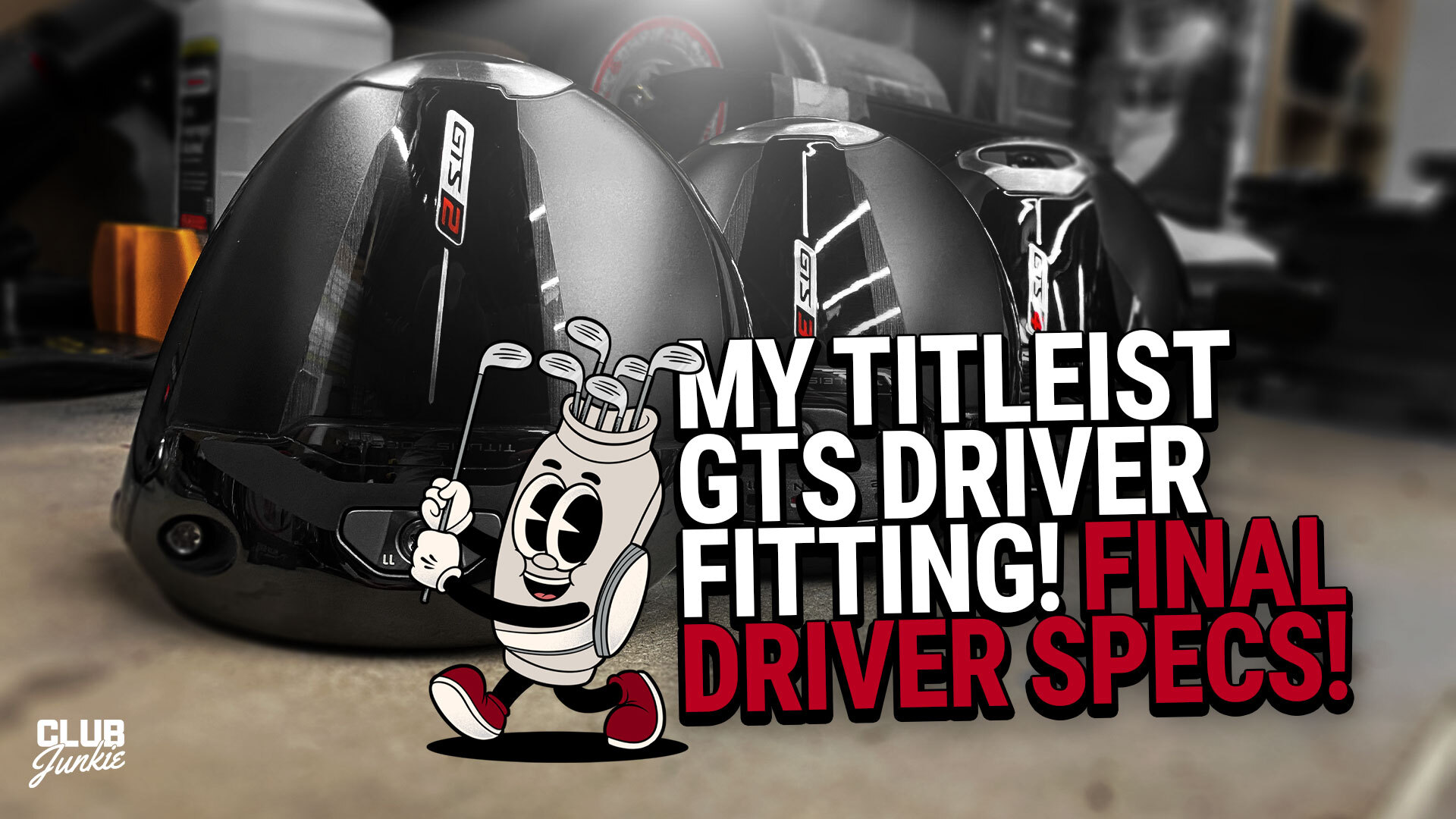
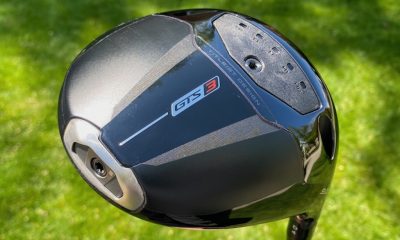
On this episode of the Club Junkie Podcast, I head to the Titleist Performance Institute for a full driver fitting with the new Titleist GTS lineup. We dive into the fitting process, talk about what made the biggest difference in performance, and break down how the different GTS heads and shaft combinations compare on the launch monitor. If you are thinking about a new driver setup for this season, there is a lot to take away from this one.
I also get into Brooks Koepka and the gear setup he brought to the PGA Championship, including the putters that caught my eye during the week. There are some interesting equipment trends showing up at the highest level right now and we break down what stands out.
To wrap things up, I talk about reshafting a few wedges, what I learned during the process, and swapping an adaptor onto a new shaft for another build project in the shop. A gear packed episode from start to finish for anyone who loves golf equipment and club building.
Follow Club Junkie everywhere:
Instagram: https://www.instagram.com/clubjunkiepod/
X: https://x.com/ClubJunkiePod
TikTok: https://www.tiktok.com/@clubjunkiepod
Threads: https://www.threads.com/@clubjunkiepod

Excited for this week’s WITB as we get to add the new Titleist GTS woods to the bag! I was fit at Titleist’s TPI facility in Oceanside California a few weeks ago and my new clubs just showed up. I am also adding a cool set of irons that I built last year some wild custom wedges into a new golf bag. Speaking of the bag I have a new Ghost Anyday Black Ops stand bag that I will be using on my Motocaddy Remote M7 electric cart.
Driver: Titleist GTS3 (11 degrees @ 10.25)
Shaft: Fujikura Ventus Red 6s
3-wood: Titleist GT1 3Tour (14.5 degrees)
Shaft: Graphite Design Tour AD CQ-7s
5-wood: Titleist GTS (18 degrees)
Shaft: Fujikura Ventus Red 7s
9-wood: Titleist GT1 (24 degress)
Shaft: Fujikura Ventus Red 7s
Irons: Bettinardi CB24 (5-PW)
Shafts: KBS C-Taper Lite 110 stiff
Wedge: TaylorMade MG5 (50-09 SB)
Shaft: Mitsubishi MMT 125 Stiff
Wedge: TaylorMade MG5 (56-12 SB)
Shaft: Mitsubishi MMT 125 Stiff
Wedge: TaylorMade MG5 (60-08 LB)
Shaft: Mitsubishi MMT 125 Stiff
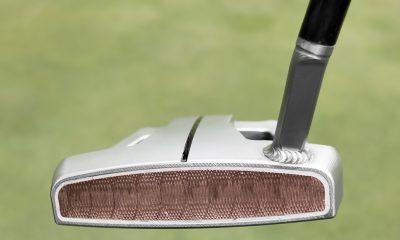
Putter: Dan Carraher ZT Proto
Ball: Callaway Chrome Tour
Bag: Ghost Anyday Black Ops Stand Bag

Justin Rose WITB 2026 (April): Full WITB breakdown with new McLaren irons

RBC Heritage Tour Report: More minis, course-specific setups, Spider & GTS launches

What’s the story behind Webb Simpson’s custom-stamped irons?

Cadillac Championship Tour Report: Spieth’s sizable changes, McLaren Golf launches, and more

Kristoffer Reitan’s winning WITB: 2026 Truist Championship

Cameron Young’s winning WITB: 2026 Cadillac Championship

Aaron Rai’s winning WITB: 2026 PGA Championship

Nelly Korda WITB 2026 (April)

Justin Rose on the switch to McLaren Golf, learnings from previous equipment moves

Photos from the 2026 PGA Championship


Patrick Reed WITB 2026 (May)
Driver: Titleist GT3 (9 degrees) Buy here. Shaft: Aldila Rogue Silver 130 M.S.I. 70 TX 3-wood: TaylorMade Qi35 (15 degrees)...

Aaron Rai’s winning WITB: 2026 PGA Championship
Driver: TaylorMade M6 (9 degrees) Shaft: Aldilda Synergy Blue 70 TX 3-wood: TaylorMade Qi10 (15 degrees) Shaft: Fujikura Ventus Blue...


Michael Block WITB 2026 (May)
Driver: TaylorMade Qi4D (9 degrees) Shaft: Fujikura Ventus Black VeloCore+ 5 X 3-wood: TaylorMade Qi4D (15 degrees @14.25) Shaft: Mitsubishi...


Bryson DeChambeau WITB 2026 (May)
Driver: Krank Formula Fire Pro (6 degrees) Shaft: Project X Prototype 3-wood: Krank Formula Fire (10 degrees) Shaft: LA Golf BAD...
-
 Whats in the Bag3 weeks ago
Kristoffer Reitan’s winning WITB: 2026 Truist Championship
-
Whats in the Bag2 weeks ago
Aaron Rai’s winning WITB: 2026 PGA Championship
-
 Tour Photo Galleries3 weeks ago
Photos from the 2026 PGA Championship
-
 Equipment2 weeks ago
GolfWRX Launch Report: 2026 Titleist GTS drivers
-

 Equipment2 weeks ago
PGA Championship Tour Report: Fitzpatrick, Koepka among big-name putter switches for Aronimink
-

 News2 weeks ago
WITB Time Machine: Phil Mickelson’s winning WITB, 2021 PGA Championship
-

 Equipment2 weeks ago
Which of Tiger’s major winning irons are your favorite? – GolfWRXers discuss
-

 Equipment2 weeks ago
Lead Tape Report: Adjusting the swingweight of the Wanamaker Trophy


One Day At A Time
May 10, 2018 at 1:49 am
I want to point out a chronological pattern I’ve observed. Working carts, we sat down for a few minutes twice a day. Working the driving range, the picker was considered a bit of a break. Working the counter, we met customers standing, face to face. Teaching juniors, we often were kneeling and moving up and down the line. Observing from down the line and moving to face on in doing a diagnosis. Standing in front of mirrors demonstrating an adjustment to an address position. Moving from an inside setting to an outside setting. Taking payment, face to face, with a handshake and a “Thank You for coming out”.
The trend is, it’s an active job when done in this linear fashion.
Dave r
May 5, 2018 at 11:08 pm
Hey. He’s giving you the lesson I’m not paying some pro $150.00 an hour to sit and watch sorry. I go for a reason for him to tell me what I’m doing wrong I shouldn’t have to ask .
Rev G
May 4, 2018 at 11:53 am
Another nice thing about sitting while practicing or taking a lesson is it gives you a chance to slow down and collect your thoughts. Also, physically it stretches out your back and relaxes your shoulders. If you just sit there and bang balls standing up for an hour straight, it’s often difficult to stay mentally and physically ready to hit balls in a manner like you want to on the course.
larrybud
May 3, 2018 at 10:54 pm
I quit an instructor because he would sit the entire lesson. He would say “do this” and never show me. So it depends on the student and what you’re working on. If you’re trying to get me into a certain position, or tell me a certain drill, you better show me.
PGA Coach
May 4, 2018 at 9:19 am
Did you ever say “I’m not sure understand, can you show me?”
Radim Pavlicek
May 5, 2018 at 6:31 am
Did you tell him?
ViagrGolfer
May 3, 2018 at 12:27 pm
A new set of golf clubs will do wonders for your swing and your game. It did for mine.. PXG.