
Opinion & Analysis
How much does it cost to chase the dream of playing pro golf?

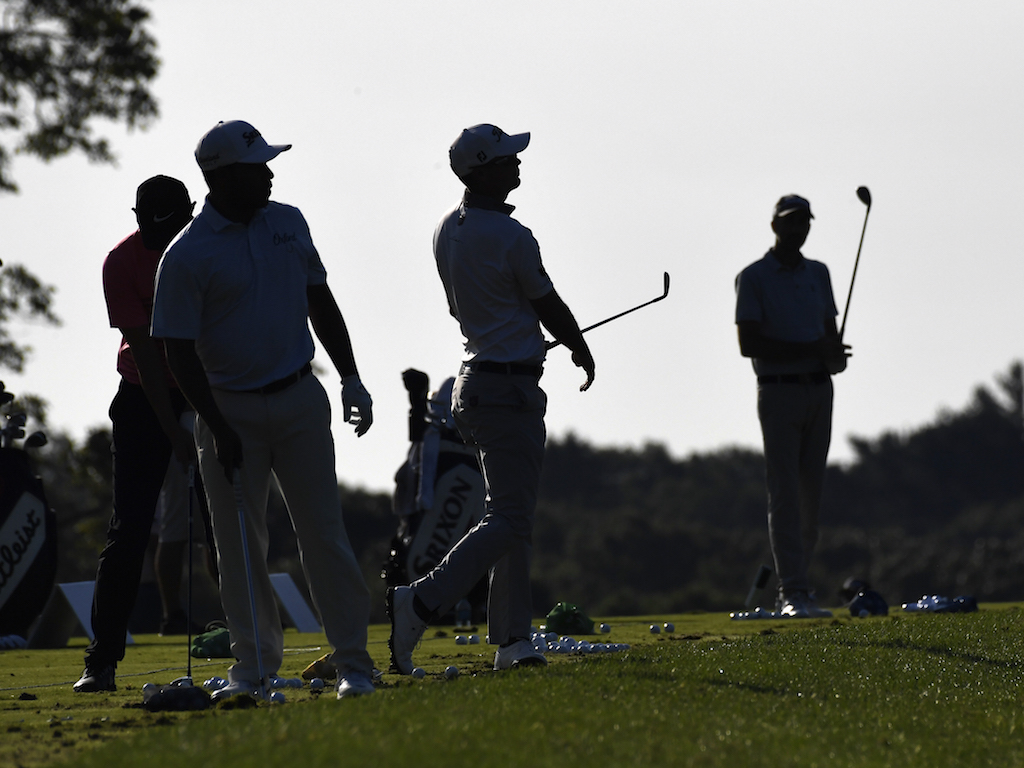
The 30-and-under crowd is taking over a sport which once represented a very different demographic.
This particular age group, also affectionately referred to as millennials, tend to show a strong enthusiasm for the occupation of “entrepreneur.” Could this be why so many golfers are now pursuing the dream of playing professionally? The lifestyle closely mimics that of a budding startup–though instead of laying the groundwork for a business, you are marketing a more personal product: your own game.
Not unlike the life of an entrepreneur, there are many expenses associated with the first few years of growth. Life on the mini tour is expensive and doesn’t guarantee returns; if your score isn’t in the red, your bank account most definitely will be. So how much must a player invest in order to chase their dream? The odds are slim, but for those who achieve status as a professional player, the rewards are abundant.
One example of this is Boris Stantchev, a California native who began his professional golf career in 2014. Finances are often a source of anxiety, especially when your income relies heavily on consistent performance in a game that is so often unpredictable.
“I’m currently looking for a sponsor,” Stantchev said. “It’s important to be around the right people when chasing your dream, but those that don’t have a sponsor do what they can to play in as many events as they can afford. I work outside service at the golf course down the street and rely on tip money to help pay for tournaments. It’s a decent way to save money and play some events in the summer months, but it’s not enough income to fund a full schedule.”
Let’s assume our player has a 30-week schedule planned, as well as Qualifying School. We have to factor in memberships to each mini tour that she (or he) plans to join–membership isn’t required, but the price break per tournament is significant. With that in mind, we’ll account for a tournament every other week within our 30-week calendar. Tournament fees range from $250-$850, so 15 tournaments at about $550 a pop sets our budget at $8,250.
Tack on Pre-qualifying, which is the first phase of Q-school. This costs between $2,700 and $3,500 depending on when you sign up, so we’ll be optimistic and plan for the former fee. This brings our total to $10,950. If our player isn’t one of the three percent that will advance through all four stages this year, s/he’ll have to pay the same entry fee on his/her next attempt (ouch).
We’ve paid for our schedule at this point, but what about other living expenses? Rent, food, and access to a gym are a given; so at about $1,000 a month, these bump our budget to $18,450.
Let’s assume that our player gets to practice at a facility free of expense–we need to factor in flights to and from each event, as well as travel fees while they are there. About $250 per flight, plus a car to and from the course, adds up to $5,250. If you have a couch to crash on for half of your events, you need a hotel for the other half — toss in $1,500 for that as well.
When all is said and done, we’ve reached $25,200 for the minimal expenses. Making the cut at most events gets you a check for about $1,400–so your scores need to be consistently solid to break even. The high cost of tour golf doesn’t stop players from pursuing the dream, even if only for a short time. In 2013, 420 players attempted the first stage, and that number continues to grow.
Not to be forgotten are the expenses that are measured through intangible currency: the sacrifice of a life on the road, the emotional stressors that come along with professional athletics, and the choice to be absent for many a family event. Though this paints a rather pessimistic portrait of chasing the tour, there are still many who join in hopes of becoming the next big player.
The beginning of Boris’s journey reflected this dynamic.
“First year was rough, a good wake up call,” Stantchev said. “I was playing my best but what really got me was how competitive it is even out here in the mini tours. I definitely felt underprepared compared to the guys that were constantly around the lead.”
The opportunity to play with the best comes with just as many opportunities for disappointment. According to Boris, the players who succeed are the ones who look past those obstacles and have a short memory of the difficulties they encounter.
“You can shoot 69-70 and miss the cut by a couple of shots in some of these events, that’s just the way it goes,” Stantchev said. “The patient guys are the ones that have the best chance at success…You just never know with this game. If you play well at the right time, it can change your life. It’s important to trust your practice and just go out and keep it simple.”


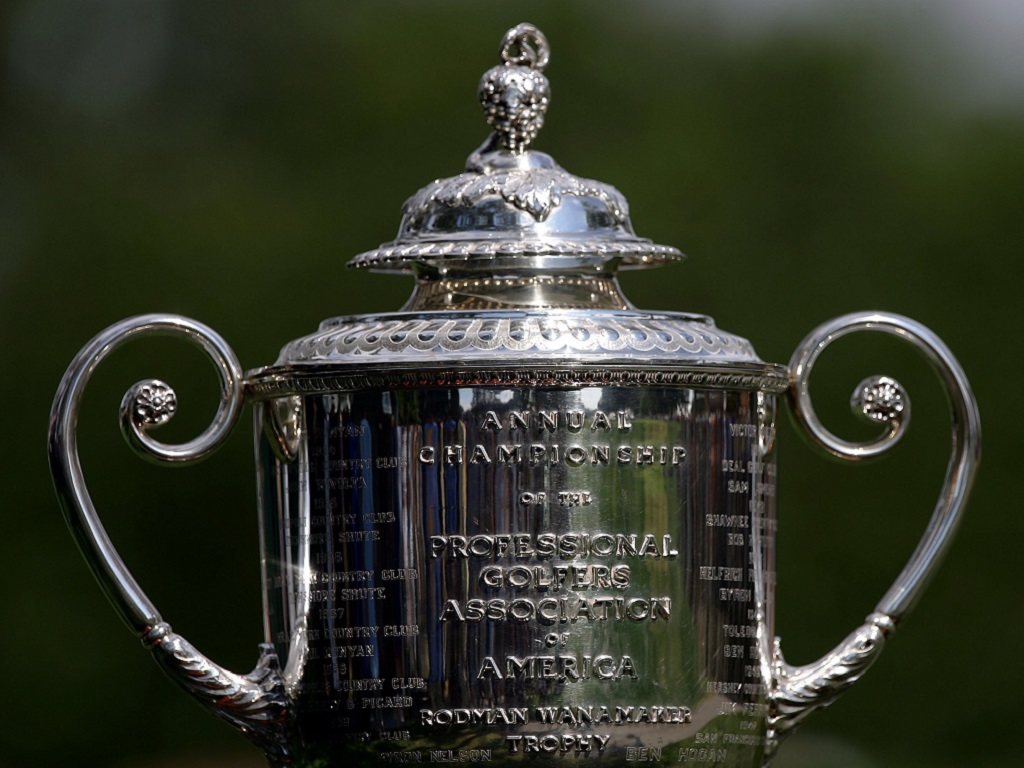
Aronimink is not a storied club, but when Donald Ross himself proclaimed it to be as good as he can design and build, one had to take notice. Jay Sigel was the pre-eminent male amateur golfer from the mid-1970s to the mid-1990s. He might have called any number of Philadelphia clubs home, but he chose Aronimink. It served him well. Gary Player won a PGA Championship here in 1962, and was followed by the 1993 winner … nobody. Aronimink gave that event away to Inverness, for reasons of which it is certainly not proud. So be it. We had to wait sixty-four years for the PGA to return to Newtown Square, but here we are. Aronimink has been neo-restored by Gil Hanse and team, to return Ross features with an eye toward defense against the dark arts, errrr, high-tech equipment.
Day one saw Rory McIlroy and Bryson DeChambeau dig big holes, to the tune of plus-four and plus-six, respectively. Since the first-round lead will be minus-three at worst, many shots will need to be made up for the power couple to reach contention. By nightfall, seven golfers held the day-one lead at three-under par 67. Shots and sticks caught our attention, and we are proud to present Five Things We Learned on Tech Thursday at the 2026 PGA Championship. Thanks to InsideTourGolfer, Today’s Golfer, and GolfWRX for initial equipment research.
First, meet Min Woo Lee
Min Woo Lee, aka Dr. Chipinski, has once again thrust himself into the conversation of Can he, will he, when will he? Lee has so much talent, wins not nearly as often as we believe that he should, and has no major near-misses (much less titles) on his wiki. The young Aussie is getting older and wiser, but is he able to avoid the scarring that holds the older and wiser back from breaking through? Philadelphia offers another opportunity. Min Woo signed for five birdies and two bogeys on day one, and grabbed a share of the opening-day lead at Aronimink. Winners transcend history and the moment, and Lee will need that sort of ascent to lift the Wannamaker on Sunday.
Second, meet Aldrich Potgeiter
The young South African golfer can rip driver with the best of them. Aronimink tips out at nearly 7400 yards, but beyond the fairway bunkers that ensnare only the mortals, Potgeiter can take his chances with wedge from the rough. On Thursday, he spent plenty of time in the spinach. Like Popeye, he used his muscles to gouge and thrash and dig his way out. Six birdies against three bogeys on the card brought AP in a three deep.
Third, meet Martin Kaymer
Not a major event takes place without a where’s he been throwback moment. We know that Martin Kaymer left the PGA and DP World tours for LIV golf, but the two-time (US Open and PGA) major winner has a lifetime exemption into at least one major event, and he seizes the opportunity each May. Kaymer joined the six-seven brigade with four birdies and a solitary bogey on day one. Kaymer was never a long hitter, and the years are kind to no golfer. The German champion will need to uncork every bottle of guile and strategy in his cabinet to remain in contention. For today, though, he occupies a rung on the ladder of Tour Tech.
Fourth, meet Scottie Scheffler
Let’s see, he’s the defending champion at the PGA, and he found his way back to the top tier with five birdies against two bogeys. To be a favorite and then play up to that stature and expectation is quite difficult. Just ask Rory, Bryson, and some of the other pre-tournament heartthrobs. Scheffler’s game is complete, and to knock him off the OWGR #1 pedestal, one needs to defeat him at the majors. Aronimink is the sort of course that fits Scheffler’s game. Better yet, it unfits the game of many of his challengers. Don’t expect Scheffler to go away anytime soon. Come Sunday, he’ll be around.
Fifth, meet Stephan Jaeger
Clocking in for the unheralded players shift are Ryo Hisatsune and Stephan Jaeger. Hisatsune logged seven birdies on day one, but gave most of them back with four bogeys. Still, he’s tied at the top for a time. Jaeger pitched five birdies against two bogeys, including a run of three consecutive, from holes four through six. Odds are that one of the two will hang around through 36 holes. Odds also suggest that both will be gone by Saturday evening. Still, the PGA Championship has historically been the major most likely to be won by an under-known. Both Hisatsune and Jaeger feature on that list, so good luck, lads!


On this episode of the Club Junkie Podcast, I head to the Titleist Performance Institute for a full driver fitting with the new Titleist GTS lineup. We dive into the fitting process, talk about what made the biggest difference in performance, and break down how the different GTS heads and shaft combinations compare on the launch monitor. If you are thinking about a new driver setup for this season, there is a lot to take away from this one.
I also get into Brooks Koepka and the gear setup he brought to the PGA Championship, including the putters that caught my eye during the week. There are some interesting equipment trends showing up at the highest level right now and we break down what stands out.
To wrap things up, I talk about reshafting a few wedges, what I learned during the process, and swapping an adaptor onto a new shaft for another build project in the shop. A gear packed episode from start to finish for anyone who loves golf equipment and club building.
Follow Club Junkie everywhere:
Instagram: https://www.instagram.com/clubjunkiepod/
X: https://x.com/ClubJunkiePod
TikTok: https://www.tiktok.com/@clubjunkiepod
Threads: https://www.threads.com/@clubjunkiepod
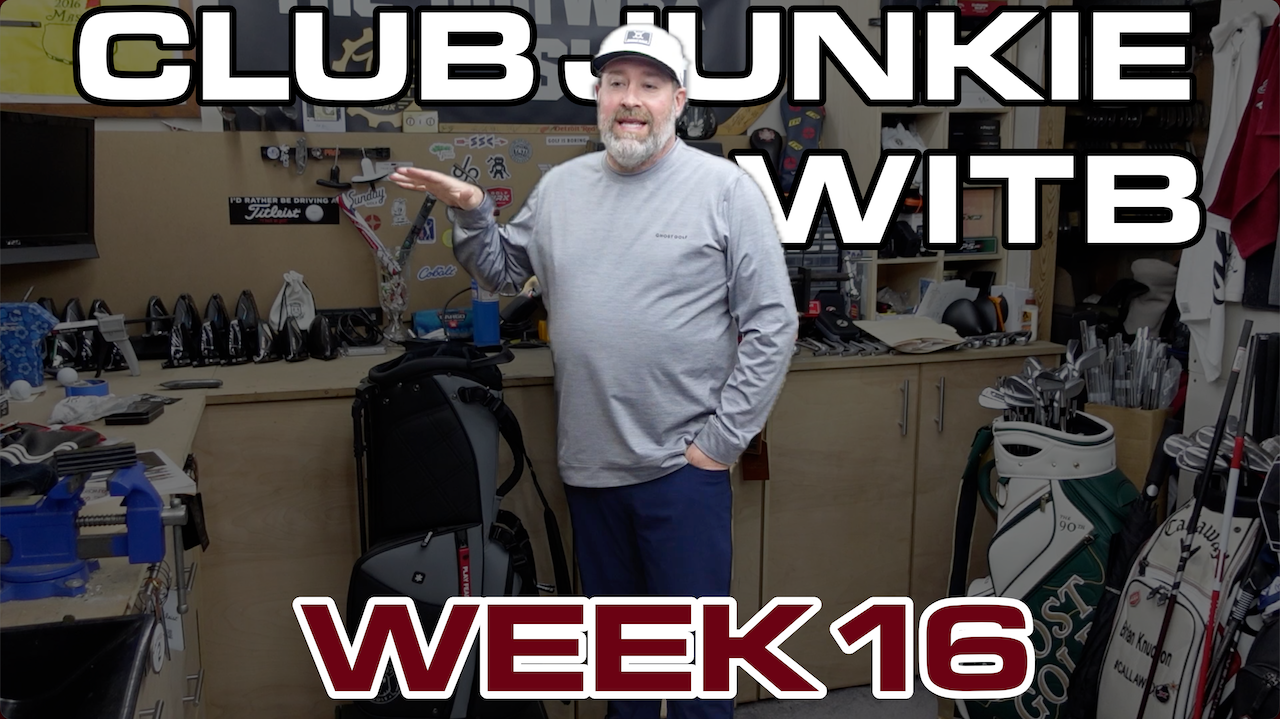
Excited for this week’s WITB as we get to add the new Titleist GTS woods to the bag! I was fit at Titleist’s TPI facility in Oceanside California a few weeks ago and my new clubs just showed up. I am also adding a cool set of irons that I built last year some wild custom wedges into a new golf bag. Speaking of the bag I have a new Ghost Anyday Black Ops stand bag that I will be using on my Motocaddy Remote M7 electric cart.
Driver: Titleist GTS3 (11 degrees @ 10.25)
Shaft: Fujikura Ventus Red 6s
3-wood: Titleist GT1 3Tour (14.5 degrees)
Shaft: Graphite Design Tour AD CQ-7s
5-wood: Titleist GTS (18 degrees)
Shaft: Fujikura Ventus Red 7s
9-wood: Titleist GT1 (24 degress)
Shaft: Fujikura Ventus Red 7s
Irons: Bettinardi CB24 (5-PW)
Shafts: KBS C-Taper Lite 110 stiff
Wedge: TaylorMade MG5 (50-09 SB)
Shaft: Mitsubishi MMT 125 Stiff
Wedge: TaylorMade MG5 (56-12 SB)
Shaft: Mitsubishi MMT 125 Stiff
Wedge: TaylorMade MG5 (60-08 LB)
Shaft: Mitsubishi MMT 125 Stiff
Putter: Dan Carraher ZT Proto
Ball: Callaway Chrome Tour
Bag: Ghost Anyday Black Ops Stand Bag

Justin Rose WITB 2026 (April): Full WITB breakdown with new McLaren irons

RBC Heritage Tour Report: More minis, course-specific setups, Spider & GTS launches

What’s the story behind Webb Simpson’s custom-stamped irons?

Cadillac Championship Tour Report: Spieth’s sizable changes, McLaren Golf launches, and more

Kristoffer Reitan’s winning WITB: 2026 Truist Championship

Cameron Young’s winning WITB: 2026 Cadillac Championship

Aaron Rai’s winning WITB: 2026 PGA Championship

Nelly Korda WITB 2026 (April)

Justin Rose on the switch to McLaren Golf, learnings from previous equipment moves

Photos from the 2026 PGA Championship


Patrick Reed WITB 2026 (May)
Driver: Titleist GT3 (9 degrees) Buy here. Shaft: Aldila Rogue Silver 130 M.S.I. 70 TX 3-wood: TaylorMade Qi35 (15 degrees)...

Aaron Rai’s winning WITB: 2026 PGA Championship
Driver: TaylorMade M6 (9 degrees) Shaft: Aldilda Synergy Blue 70 TX 3-wood: TaylorMade Qi10 (15 degrees) Shaft: Fujikura Ventus Blue...


Michael Block WITB 2026 (May)
Driver: TaylorMade Qi4D (9 degrees) Shaft: Fujikura Ventus Black VeloCore+ 5 X 3-wood: TaylorMade Qi4D (15 degrees @14.25) Shaft: Mitsubishi...


Bryson DeChambeau WITB 2026 (May)
Driver: Krank Formula Fire Pro (6 degrees) Shaft: Project X Prototype 3-wood: Krank Formula Fire (10 degrees) Shaft: LA Golf BAD...
-
 Whats in the Bag3 weeks ago
Kristoffer Reitan’s winning WITB: 2026 Truist Championship
-
Whats in the Bag2 weeks ago
Aaron Rai’s winning WITB: 2026 PGA Championship
-
 Tour Photo Galleries3 weeks ago
Photos from the 2026 PGA Championship
-
 Equipment2 weeks ago
GolfWRX Launch Report: 2026 Titleist GTS drivers
-

 Equipment2 weeks ago
PGA Championship Tour Report: Fitzpatrick, Koepka among big-name putter switches for Aronimink
-

 News2 weeks ago
WITB Time Machine: Phil Mickelson’s winning WITB, 2021 PGA Championship
-

 Equipment2 weeks ago
Which of Tiger’s major winning irons are your favorite? – GolfWRXers discuss
-

 Equipment2 weeks ago
Lead Tape Report: Adjusting the swingweight of the Wanamaker Trophy


Pingback: Former LPGA pro shares detailed breakdown of expenses for a year on Symetra Tour – GolfWRX
Pingback: Symetra pro opens up on the harsh financial realities of life on Tour – GolfWRX
D
Mar 28, 2018 at 12:24 pm
Not even in the ballpark with a ~$25k estimate. You need have at least ~$50k to start each year and that’s if you can keep living costs at an absolute minimum by living with family etc. Which could add another $20k onto your costs.
DW
Mar 28, 2018 at 12:09 pm
7 years mini-tour experience
50k-60k minimum costs. Anything less is a pipe dream.
leo vincent
Mar 26, 2018 at 5:42 pm
The expenses in the article were for a 15 tournament schedule.Not really enough to be fully prepared.Fought this grind for many years back when the Hooter’s tour was big.Throw in some monday tour and Web.com qualifiers and expenses $5000 a month bare minimum living with 3 other guys in a cheap house.A lot of fun and adventure but no fortunes were being made.There is still Champions tour q school to look forward to. Some dreams never die they just run out of time
Ben
Mar 23, 2018 at 6:32 pm
I need to know where this guy is living in California if he’s getting living expenses etc for $1k
Michael
Mar 22, 2018 at 6:17 am
In my job, I meet guys from mini tours once in a while trying to help them with their equipment. Most of the time, it takes just one session to know, if they can make it or not. In Europe, the expenses for playing the Pro Tour (Mini Tour compareable to e.g. Latina America Tour) are already pretty high, since travel cost will kill you. You have to fly to different countries, get used to different food, and you make next to nothing, even if you make the cut. Only top 5 finishers make a reasonable amount and only top 2 will have enough to cover their expenses for the tournament week.
It’s a tough life and you better be prepared to go that route. It can be rewarding in the end, but you need talent, mental sanity and money to cover you.
Best of luck to all of those who give it a shot.
Todd Richards
Mar 19, 2018 at 1:20 pm
Who’s getting rent, food and living expenses for $1,000 a month? lol Not in California for sure…and not even in the sticks of central Florida I can vouch for that!!
stephenf
Mar 10, 2018 at 8:56 pm
I wasn’t aware that anybody really did this without a sponsor or group of sponsors. Without that, and without a good player-sponsor agreement to allow for significant time out there — how could that be less than at least two or three years? — I don’t know how anybody does this.
ual to airfare estimated.
Mar 10, 2018 at 11:52 am
First off, you left out the cost for a caddy throughout the timeframe you based the costs on. Also, the estimated costs for travel and travelre=lated expenses are very low. I would guess the real number is close to double even being conservative. Even if a person drives to events during the off week there would be expenses much higher than your low airfare estimate.
Gary
Mar 10, 2018 at 8:46 am
Money isn’t what stops dreams of PGA Tour level golf, it’s skill. What is the lowest score you ever posted on a course without a clown’s mouth? If it isn’t in the low 60s you must get better. Golf becomes your job so your enjoyment of it will go down and the frustration it causes will explode. Add in the financial pressures and there better be some success just to keep your sanity. Playing in the best amateur events you can will help you see where the top talent is. I’m too old now but 20-25-30 years ago my handicap was low single digit and about once a year I entered one of those serious amateur events and got my butt kicked. It’s the guy who wins the state amateur tournament who has a shot. It’s the guy who shoots 66 on a course set up for tough tournament golf who has a shot. My opinion, chase the dream when you’re young and work at it but be realistic about your chances. You will need to win events, not just be top 10, win. Every sport tells players if they can make it as a pro. Golf is no exception.
stephenf
Mar 12, 2018 at 10:30 pm
You’re right in most cases, but to see this as absolute would’ve kept Tom Kite off the tour, and at one point he was the leading money-winner in history.
It has to do with type of game as much as how many times you’ve shot in the low 60s. Some, like Kite, didn’t shoot a lot of mega-low scores but had the kind of 69s and 68s that would travel. And boy, did they.
But your overall point about it having to do with skill rather than money is mostly true. It’s hard to find examples of guys who were legitimately good enough but who never got a chance because the money wasn’t there. It’s all about sponsors. I don’t think anybody really does it even at minor-league level for any amount of time without sponsors.
Craig
Mar 18, 2018 at 7:41 pm
While the ability to shoot low/mid 60’s is a prerequisite, there are a lot of players who could do that and have been chewed up and spat out. There are so many factors, from opportunity, luck, work ethic, mental toughness.
tim
Mar 9, 2018 at 9:15 pm
knew an instructor in Florida that spent 70k a year on the mini tours and after 2 years had to call it quits with 140k in debt.
Axel
Mar 9, 2018 at 6:56 pm
You’re unfortunately way conservative in your estimates. I had to make 60 grand per year to cover myself. I never had a sponsor, but if I did, I would have needed much more than 50 grand per year. You don’t need this pile of money at once, but you’ll spend that much by December. If you want to live with your parents forever, then maybe a bit less. Meek some cuts and build up that bankroll.
GolfCodeWeekly.com
Mar 9, 2018 at 5:00 pm
It must be seriously hard to give up
I play golf still and think tomorrow I will play just a little better, for these guys just a little better could mean their lives taking a totally different trajectory if they can build on it. Fact is most cannot, there is simply not enough room at the top.
I am glad I have never been good enough to be as close to the PGA Tour as peope who you are writing about, their lives must suck telling people no i am not rich each time they say they play golf for a living
Please let me know what you think of our blog (30 days old~)
Jon
Mar 9, 2018 at 11:18 am
Also, many of those mini tour players are playing in many Web.com Monday qualifyiers at $500 a pop
Jon
Mar 9, 2018 at 11:16 am
Most mini tour events (that you are making $1400 if you make the cut) are $1000 to $1600 entry fees. I think your numbers are way off
JM
Mar 9, 2018 at 6:01 am
You also forgetting the additional $2,500 after you make it past pre-qualifying. You can’t go to first stage without paying the other half of Q-school.
Zac
Mar 8, 2018 at 4:15 pm
Adams tour events are $1,000. And $1,300 if you’re not a member of that tour. I think $850 for winter series events.
baddomes
Mar 8, 2018 at 10:42 am
Where is Rent/Food/Gym membership only $1,000/month?
Rick
Mar 8, 2018 at 11:56 pm
if you dont have to commute locally for work you can get a cheap one bedroom apartment way out in a suburb or just a standalone small town for very cheap. There is also no requirement to live in an expensive state if, again, your “job” is all over the place. $1000 is easily doable, but you won’t be living in a luxury loft on main street.
emil
Mar 8, 2018 at 8:16 am
Playing the game of golf full time stunts one’s intelligence. It is not an activity that will grow your brain for a real job. We see all the successes earning million$$$, but not the many who have failed and remain childish and empty.
Axel
Mar 9, 2018 at 7:01 pm
Sounds like someone’s jealous of others. If you have the balls, tee one of them up. You never know what’s on the other side.
James T
Mar 7, 2018 at 4:35 pm
Way to ruin the dream Hannah! Actually a good, realistic article. You’d better be dam good and mentally mature at the same time to even consider a pro tour golf career. When I was a kid in St. Louis and the #1 player on my high school golf team I had this same dream. After graduation I picked up and moved to Miami so I could play year ’round. I played or practiced every day, hooked up with some very good players, lost some bets. Discovered my limitations. But at least I can say, when I become old, that I gave it a shot. Nobody can take that away from me. Nevertheless I went on to play college golf on a full athletic scholarship and am now an amateur with a 2.8 handicap. Life is good.
kevin
Mar 9, 2018 at 9:38 am
i think a large majority of guys trying to make it know deep down they’ll never make it and it doesn’t take long for them to figure it out, but they simply want to be able to say they gave it a shot. no regrets.