
Opinion & Analysis
Two physical tests every golfer should ace

The golf swing is a reflection of how your body moves. If you are generally a tight and stiff person, your golf swing is most likely tight and stiff as well. Amateur golfers love to buy new golf equipment and spend money on swing lessons. Neither of these things are bad by any means, but golfers tend to neglect to work on the way their body moves to improve golf performance.
When I work with golfers, I run them through an extensive screening process to determine their physical limitations and how they manifest in their golf swing. The screening process includes looking at trunk rotational mobility, hip rotational mobility, shoulder mobility, core stability and strength, glute strength, forearm/wrist mobility, and more.
There are two specific tests that every golfer should ace. These two tests have been shown to be correlated to some pretty serious swing faults, causing a leakage of power, decreased accuracy, and poor consistency. These swing faults can also contribute to experiencing low back pain by placing excessive stress on the lumbar spine with each swing.
There is no new golf club out there that can promise you pain-free golf. There are few golf coaches out there that can coach you into a good position if your body physically cannot get into that position. Therefore, a high priority should be placed on improving your movement quality.
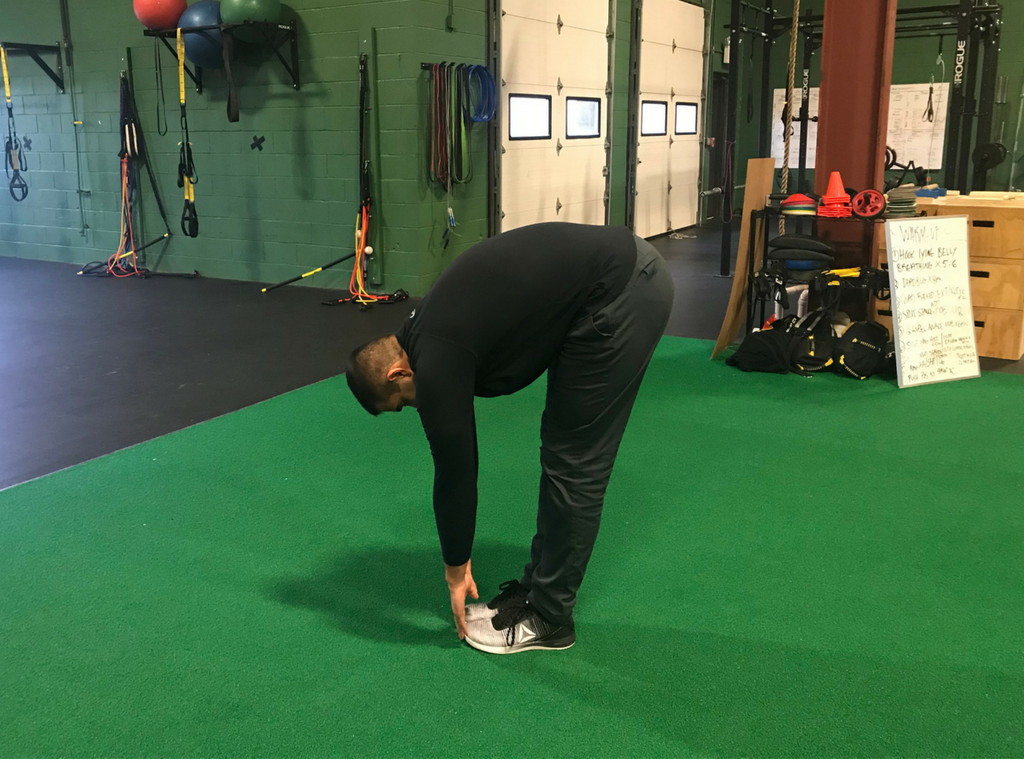
The Toe Touch Test

The test is simple: Can you touch your toes?
Keys to a passing score:
- Finger tips at least to your toes
- Knees stay straight
- Feet stay together
- No pain or discomfort
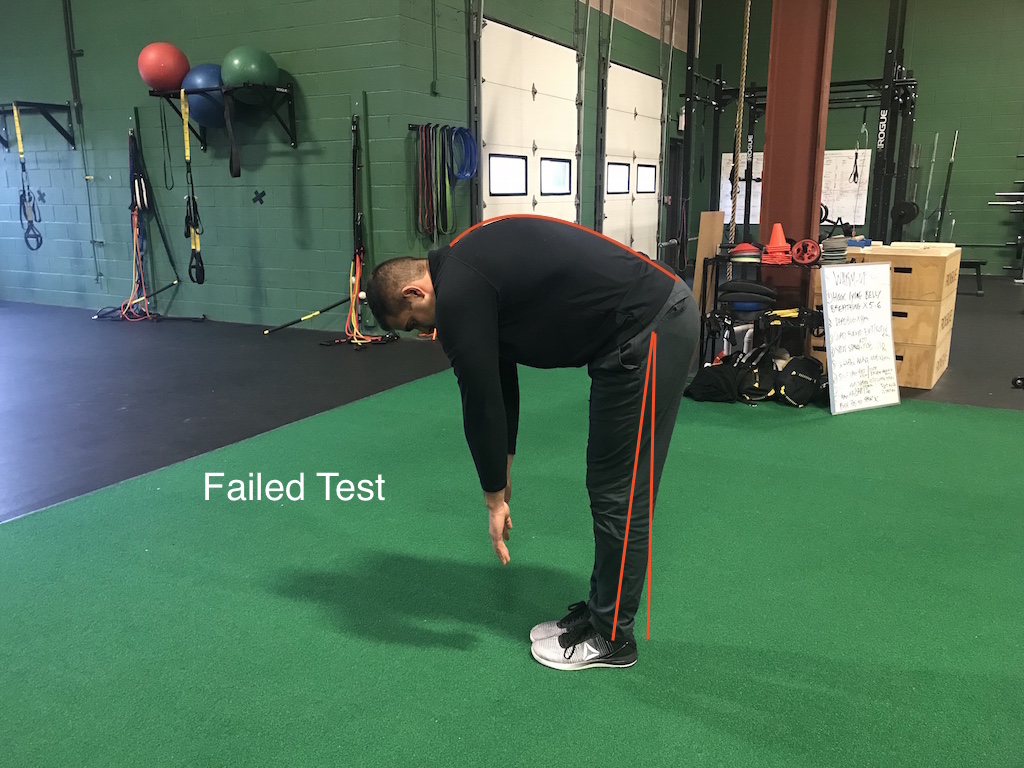
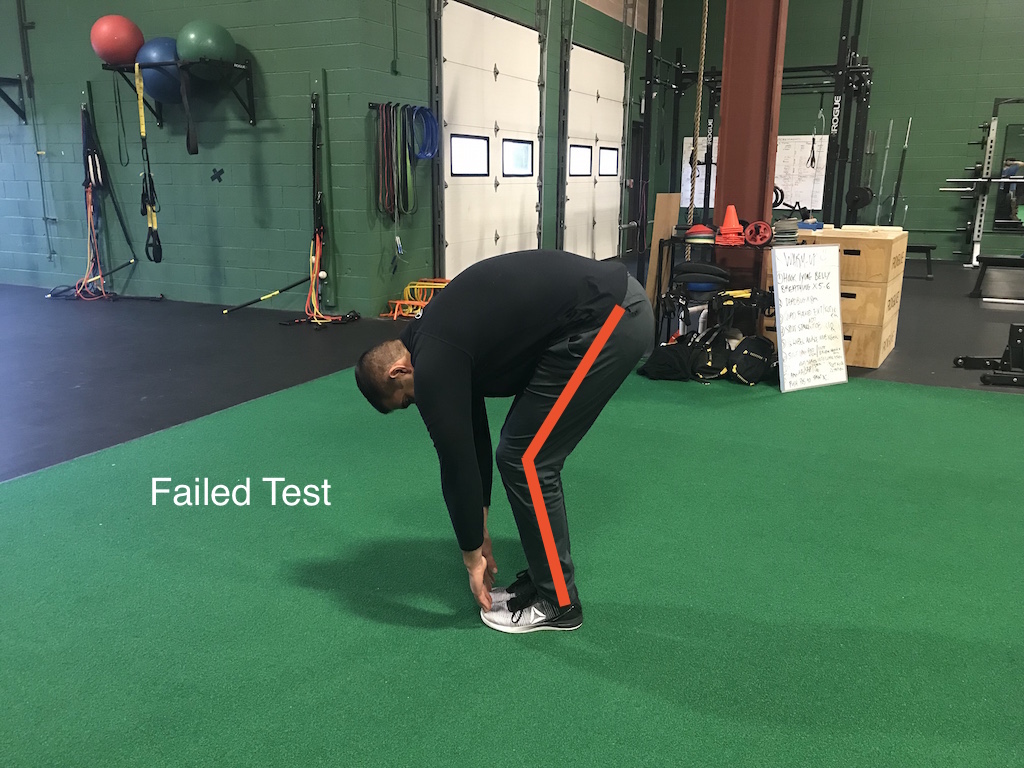
Failing the toe touch test can have many contributing factors. The most common limiting factors include:
- Limited hamstring flexibility and/or length
- Impaired lumbo-pelvic control
- Decreased core stability and strength
- Inadequate ability to shift weight posteriorly
- Increased neural tension
How Does This Impact Your Golf Game?
What we are essentially looking at is your ability to hip hinge. Most golfers set up in a bit of a hinged position, bending at the hips with their shoulders over the balls of their feet. In order to maintain posture throughout the swing, golfers must be able to maintain a hip-hinged position. If not, golfers will tend to lose posture and stand up in the backswing or in the downswing. This can lead to some serious compensations on the downswing, and make it difficult to generate clubhead speed, strike the ball well, and have consistent accuracy. A research study by Gulgin et al showed that a failed toe-touch test is strongly correlated to early extension in the downswing.
Single Leg Bridge Test
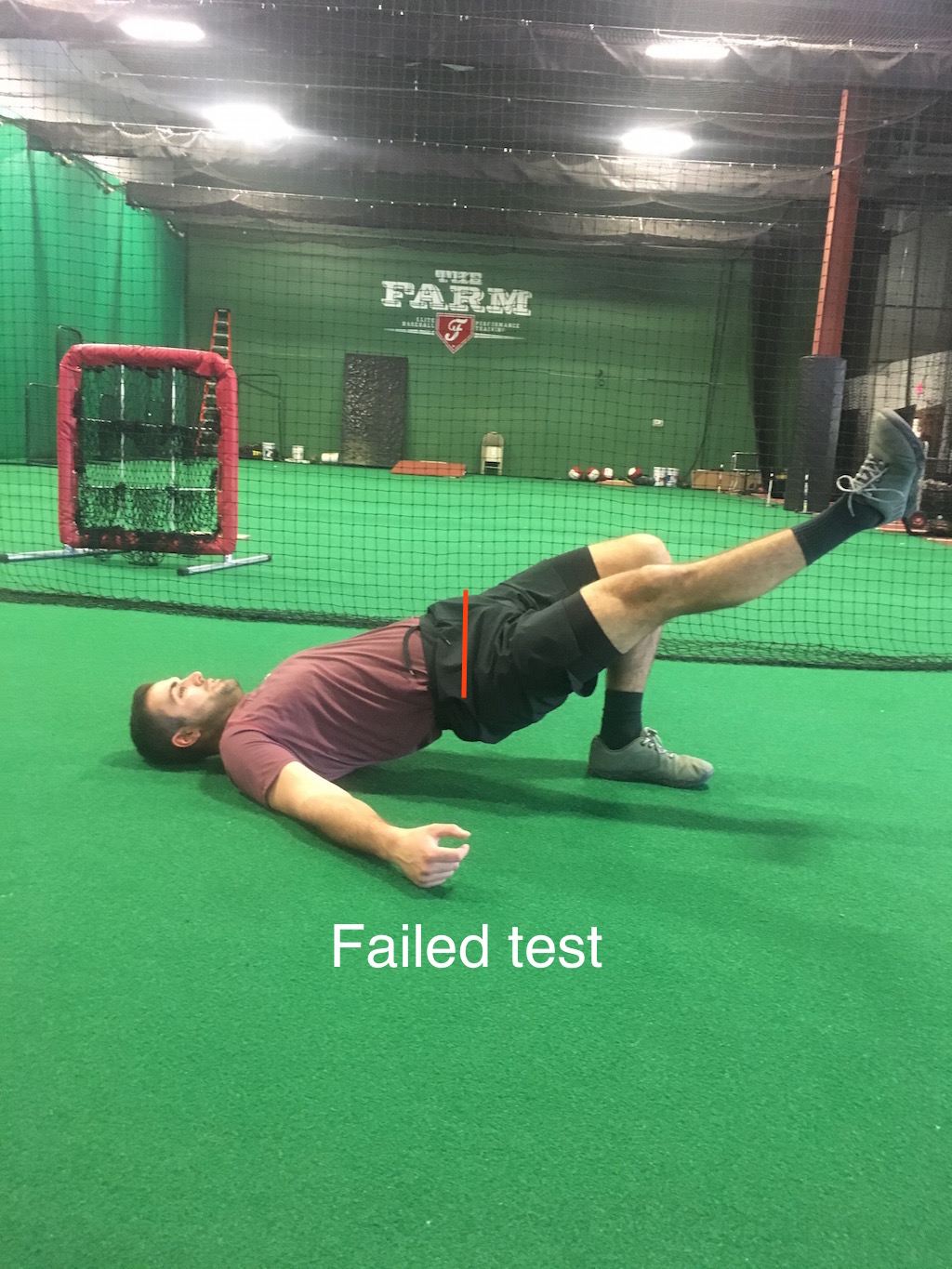
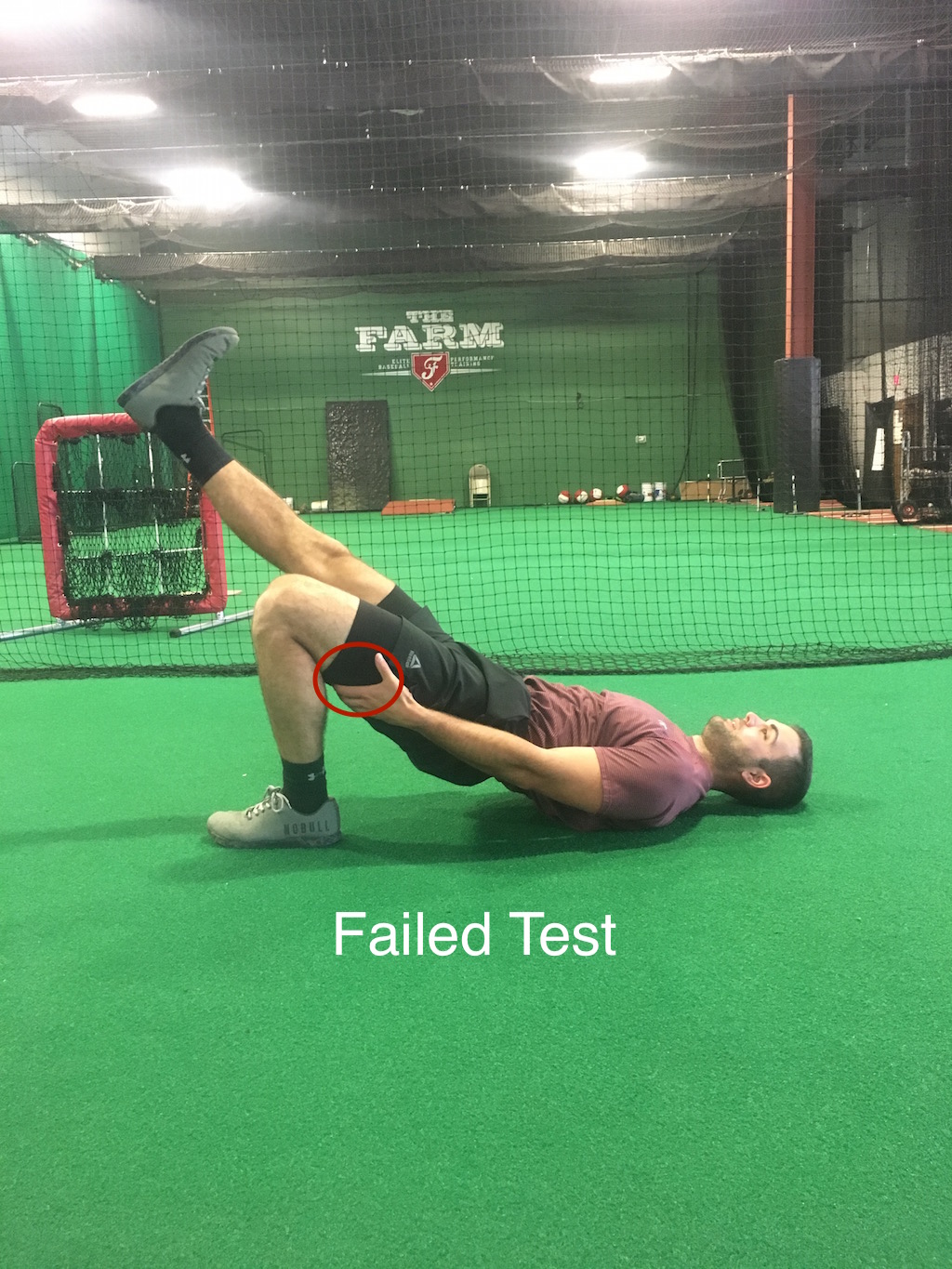
The single-leg bridge test looks at the ability of a golfer to extend through the hip by activating and maintain a contraction of the gluteus maximus muscle.
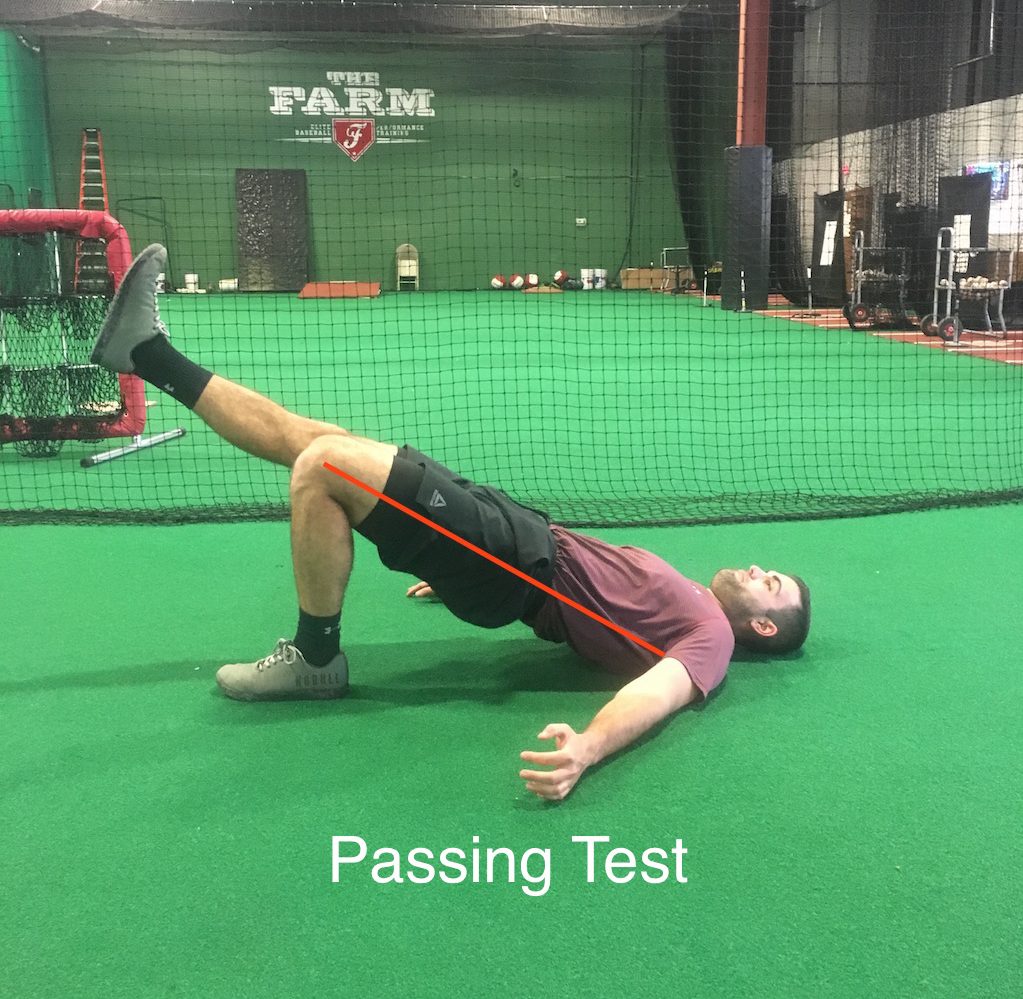
Keys to a Passing Score:
- Hips remain off the ground for 10-15 seconds
- Hips remain level to the ground
- Minimal compensation through the lower back
- No feeling of hamstring cramping
Failing the single leg bridge test can have many contributing factors. The most common limiting factors include:
- Lack of hip extension mobility
- Lack of hip extensor strength
- Motor control/ability to isolate glutes vs hamstrings
How Does This Impact Your Golf Game?
The glutes are probably the most important muscle group for golfers. Collectively, they act to extend the hip, stabilize the pelvis, and generate club head speed through pelvic rotation. Weakness or difficulty controlling the glutes has been shown to be correlated to early extension. Other faults that are related to weak or inactive glutes during the swing are swaying in the backswing and sliding through the downswing. Overall, the glutes enable a golfer to create power by stabilizing the pelvis and allowing for dissociation of the upper body and lower body. This helps generate torque and leads to increased club head speed.
How to Improve These Two Movements
Toe Touch/Hip Hinge
Touching your toes is such a basic movement that nearly every person was able to do at one point in their life. I often see middle-aged amateur golfers who work 40+ hours a week sitting at a desk fail the toe touch test. They certainly aren’t the only ones who fail this test, but I would say it is the majority in my experience.
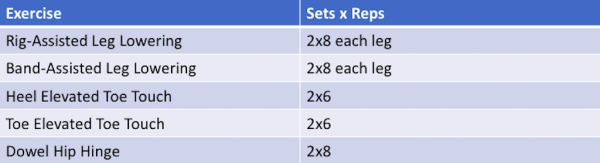
In order to improve this movement, we need to work on a few things including hamstring flexibility, core control, and allowing for a posterior weight shift. The following drills utilize components of each of these principles to help a golfer improve their toe touch.
Single Leg Bridge/Glute Strength
Initiating and maintaining a contraction of your glute max muscle is another seemingly simple movement that I see many golfers fail. In most cases, it isn’t a pure strength issue that leads to a failed test. Typically, it is a combination of a lack of strength and difficulty isolating a contraction of the glutes.
That being said, we typically have to “retrain the brain” to use the glutes to produce the desired movement. The following exercises are meant to be a progression, so if you have difficulty with the first two, master those before moving on to the rest.
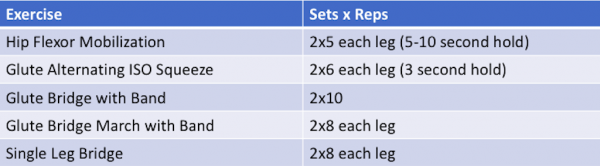
Perform these exercises 3-4 times per week for 2-4 weeks and you should start to see some noticeable improvement in these two screening scores.
Once the movement dysfunction has improved, it is time to start working on getting into better positions in your golf swing. Working with a golf instructor on improving your particular swing faults is the best way to see significant results. Again, you can’t put the cart before the horse when it comes to physical restrictions. Working with a golf coach will be most successful once the movement dysfunctions have already been cleared and your movement quality improves.
If you’ve been struggling to see any improvement in your golf game in the past, do yourself a favor and work on any current physical restrictions you may have. When golfers invest in their body first, they often find that they spend less money on lessons because they have more meaningful lessons and are able to make the changes the coach is asking them to. By improving your movement you will also begin to feel better and play better, more consistent golf!



Aronimink is not a storied club, but when Donald Ross himself proclaimed it to be as good as he can design and build, one had to take notice. Jay Sigel was the pre-eminent male amateur golfer from the mid-1970s to the mid-1990s. He might have called any number of Philadelphia clubs home, but he chose Aronimink. It served him well. Gary Player won a PGA Championship here in 1962, and was followed by the 1993 winner … nobody. Aronimink gave that event away to Inverness, for reasons of which it is certainly not proud. So be it. We had to wait sixty-four years for the PGA to return to Newtown Square, but here we are. Aronimink has been neo-restored by Gil Hanse and team, to return Ross features with an eye toward defense against the dark arts, errrr, high-tech equipment.
Day one saw Rory McIlroy and Bryson DeChambeau dig big holes, to the tune of plus-four and plus-six, respectively. Since the first-round lead will be minus-three at worst, many shots will need to be made up for the power couple to reach contention. By nightfall, seven golfers held the day-one lead at three-under par 67. Shots and sticks caught our attention, and we are proud to present Five Things We Learned on Tech Thursday at the 2026 PGA Championship. Thanks to InsideTourGolfer, Today’s Golfer, and GolfWRX for initial equipment research.
First, meet Min Woo Lee
Min Woo Lee, aka Dr. Chipinski, has once again thrust himself into the conversation of Can he, will he, when will he? Lee has so much talent, wins not nearly as often as we believe that he should, and has no major near-misses (much less titles) on his wiki. The young Aussie is getting older and wiser, but is he able to avoid the scarring that holds the older and wiser back from breaking through? Philadelphia offers another opportunity. Min Woo signed for five birdies and two bogeys on day one, and grabbed a share of the opening-day lead at Aronimink. Winners transcend history and the moment, and Lee will need that sort of ascent to lift the Wannamaker on Sunday.
Second, meet Aldrich Potgeiter
The young South African golfer can rip driver with the best of them. Aronimink tips out at nearly 7400 yards, but beyond the fairway bunkers that ensnare only the mortals, Potgeiter can take his chances with wedge from the rough. On Thursday, he spent plenty of time in the spinach. Like Popeye, he used his muscles to gouge and thrash and dig his way out. Six birdies against three bogeys on the card brought AP in a three deep.
Third, meet Martin Kaymer
Not a major event takes place without a where’s he been throwback moment. We know that Martin Kaymer left the PGA and DP World tours for LIV golf, but the two-time (US Open and PGA) major winner has a lifetime exemption into at least one major event, and he seizes the opportunity each May. Kaymer joined the six-seven brigade with four birdies and a solitary bogey on day one. Kaymer was never a long hitter, and the years are kind to no golfer. The German champion will need to uncork every bottle of guile and strategy in his cabinet to remain in contention. For today, though, he occupies a rung on the ladder of Tour Tech.
Fourth, meet Scottie Scheffler
Let’s see, he’s the defending champion at the PGA, and he found his way back to the top tier with five birdies against two bogeys. To be a favorite and then play up to that stature and expectation is quite difficult. Just ask Rory, Bryson, and some of the other pre-tournament heartthrobs. Scheffler’s game is complete, and to knock him off the OWGR #1 pedestal, one needs to defeat him at the majors. Aronimink is the sort of course that fits Scheffler’s game. Better yet, it unfits the game of many of his challengers. Don’t expect Scheffler to go away anytime soon. Come Sunday, he’ll be around.
Fifth, meet Stephan Jaeger
Clocking in for the unheralded players shift are Ryo Hisatsune and Stephan Jaeger. Hisatsune logged seven birdies on day one, but gave most of them back with four bogeys. Still, he’s tied at the top for a time. Jaeger pitched five birdies against two bogeys, including a run of three consecutive, from holes four through six. Odds are that one of the two will hang around through 36 holes. Odds also suggest that both will be gone by Saturday evening. Still, the PGA Championship has historically been the major most likely to be won by an under-known. Both Hisatsune and Jaeger feature on that list, so good luck, lads!

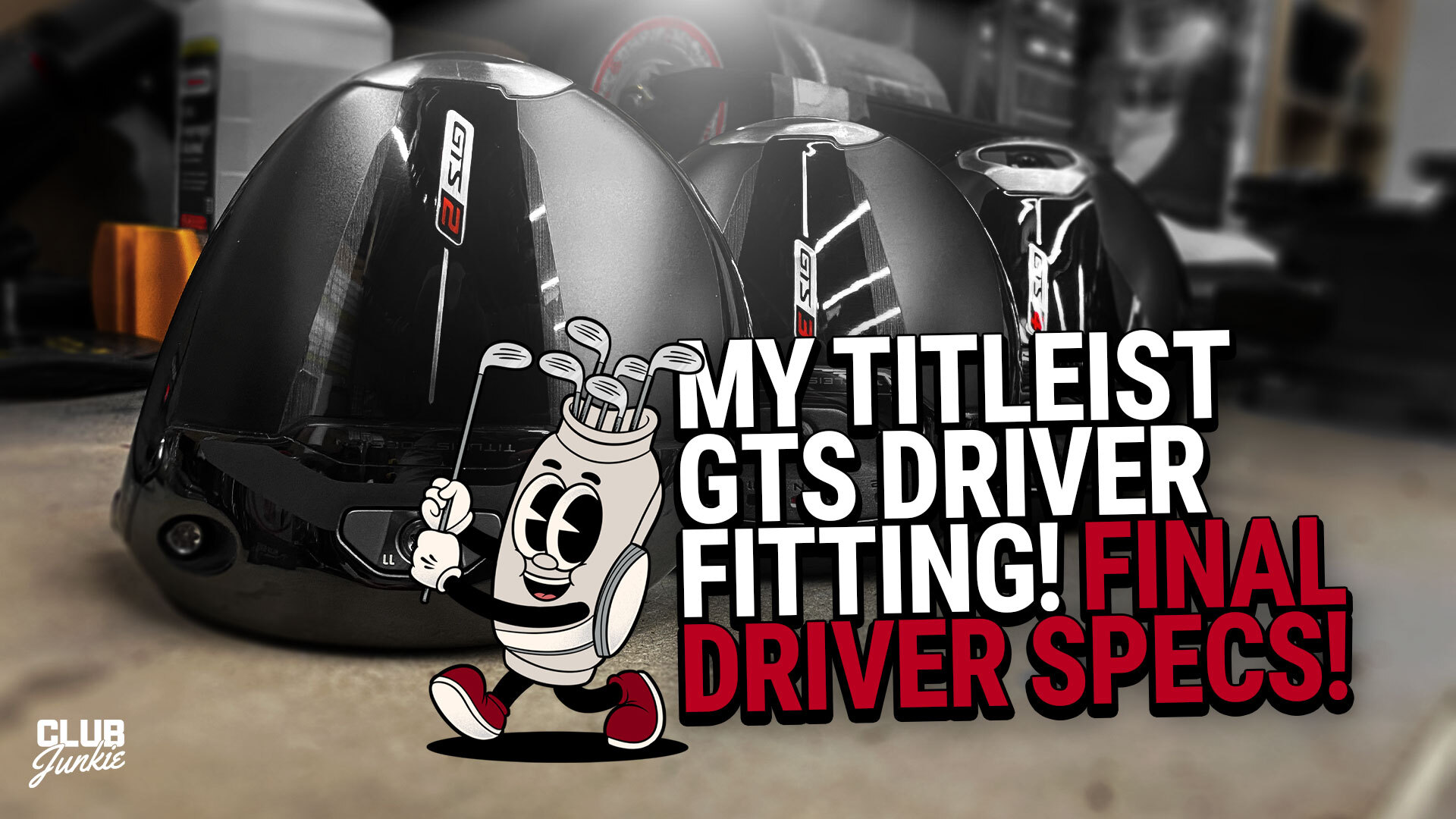
On this episode of the Club Junkie Podcast, I head to the Titleist Performance Institute for a full driver fitting with the new Titleist GTS lineup. We dive into the fitting process, talk about what made the biggest difference in performance, and break down how the different GTS heads and shaft combinations compare on the launch monitor. If you are thinking about a new driver setup for this season, there is a lot to take away from this one.
I also get into Brooks Koepka and the gear setup he brought to the PGA Championship, including the putters that caught my eye during the week. There are some interesting equipment trends showing up at the highest level right now and we break down what stands out.
To wrap things up, I talk about reshafting a few wedges, what I learned during the process, and swapping an adaptor onto a new shaft for another build project in the shop. A gear packed episode from start to finish for anyone who loves golf equipment and club building.
Follow Club Junkie everywhere:
Instagram: https://www.instagram.com/clubjunkiepod/
X: https://x.com/ClubJunkiePod
TikTok: https://www.tiktok.com/@clubjunkiepod
Threads: https://www.threads.com/@clubjunkiepod
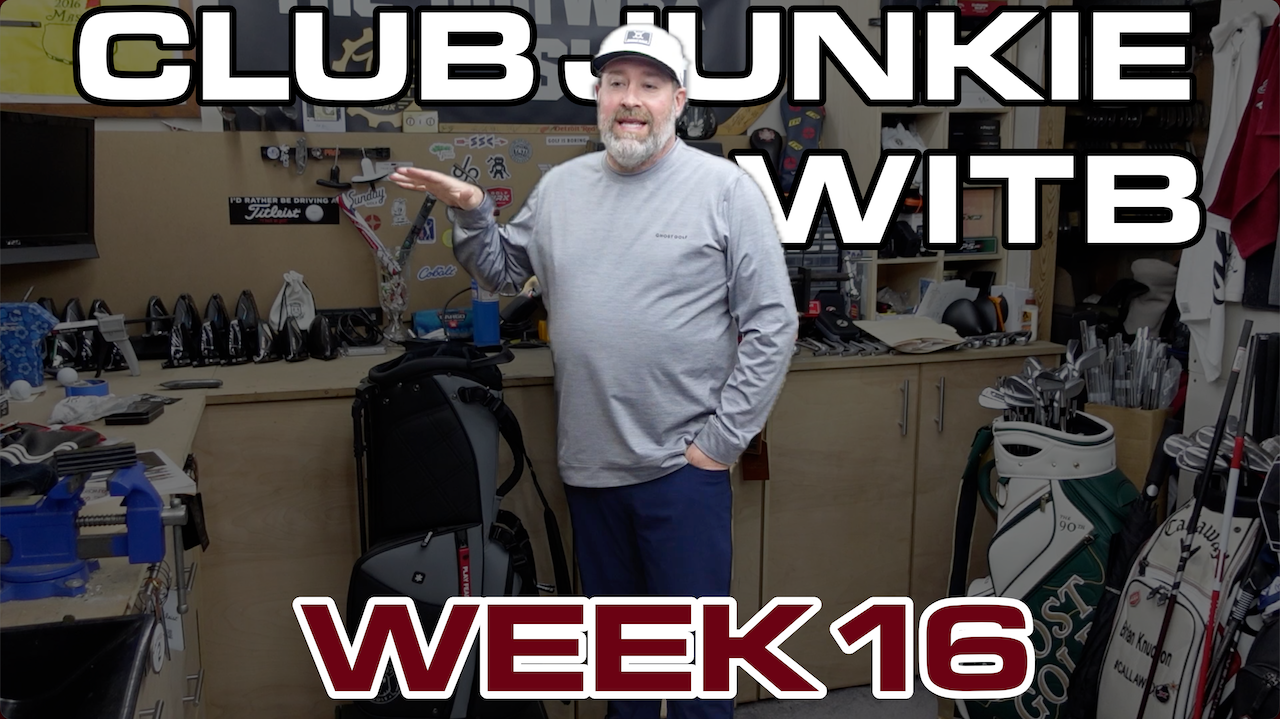
Excited for this week’s WITB as we get to add the new Titleist GTS woods to the bag! I was fit at Titleist’s TPI facility in Oceanside California a few weeks ago and my new clubs just showed up. I am also adding a cool set of irons that I built last year some wild custom wedges into a new golf bag. Speaking of the bag I have a new Ghost Anyday Black Ops stand bag that I will be using on my Motocaddy Remote M7 electric cart.
Driver: Titleist GTS3 (11 degrees @ 10.25)
Shaft: Fujikura Ventus Red 6s
3-wood: Titleist GT1 3Tour (14.5 degrees)
Shaft: Graphite Design Tour AD CQ-7s
5-wood: Titleist GTS (18 degrees)
Shaft: Fujikura Ventus Red 7s
9-wood: Titleist GT1 (24 degress)
Shaft: Fujikura Ventus Red 7s
Irons: Bettinardi CB24 (5-PW)
Shafts: KBS C-Taper Lite 110 stiff
Wedge: TaylorMade MG5 (50-09 SB)
Shaft: Mitsubishi MMT 125 Stiff
Wedge: TaylorMade MG5 (56-12 SB)
Shaft: Mitsubishi MMT 125 Stiff
Wedge: TaylorMade MG5 (60-08 LB)
Shaft: Mitsubishi MMT 125 Stiff
Putter: Dan Carraher ZT Proto
Ball: Callaway Chrome Tour
Bag: Ghost Anyday Black Ops Stand Bag

Justin Rose WITB 2026 (April): Full WITB breakdown with new McLaren irons

RBC Heritage Tour Report: More minis, course-specific setups, Spider & GTS launches

What’s the story behind Webb Simpson’s custom-stamped irons?

Cadillac Championship Tour Report: Spieth’s sizable changes, McLaren Golf launches, and more

Kristoffer Reitan’s winning WITB: 2026 Truist Championship

Cameron Young’s winning WITB: 2026 Cadillac Championship

Aaron Rai’s winning WITB: 2026 PGA Championship

Nelly Korda WITB 2026 (April)

Justin Rose on the switch to McLaren Golf, learnings from previous equipment moves

Photos from the 2026 PGA Championship


Patrick Reed WITB 2026 (May)
Driver: Titleist GT3 (9 degrees) Buy here. Shaft: Aldila Rogue Silver 130 M.S.I. 70 TX 3-wood: TaylorMade Qi35 (15 degrees)...

Aaron Rai’s winning WITB: 2026 PGA Championship
Driver: TaylorMade M6 (9 degrees) Shaft: Aldilda Synergy Blue 70 TX 3-wood: TaylorMade Qi10 (15 degrees) Shaft: Fujikura Ventus Blue...


Michael Block WITB 2026 (May)
Driver: TaylorMade Qi4D (9 degrees) Shaft: Fujikura Ventus Black VeloCore+ 5 X 3-wood: TaylorMade Qi4D (15 degrees @14.25) Shaft: Mitsubishi...


Bryson DeChambeau WITB 2026 (May)
Driver: Krank Formula Fire Pro (6 degrees) Shaft: Project X Prototype 3-wood: Krank Formula Fire (10 degrees) Shaft: LA Golf BAD...
-
 Whats in the Bag3 weeks ago
Kristoffer Reitan’s winning WITB: 2026 Truist Championship
-
Whats in the Bag2 weeks ago
Aaron Rai’s winning WITB: 2026 PGA Championship
-
 Tour Photo Galleries3 weeks ago
Photos from the 2026 PGA Championship
-
 Equipment2 weeks ago
GolfWRX Launch Report: 2026 Titleist GTS drivers
-

 Equipment2 weeks ago
PGA Championship Tour Report: Fitzpatrick, Koepka among big-name putter switches for Aronimink
-

 News2 weeks ago
WITB Time Machine: Phil Mickelson’s winning WITB, 2021 PGA Championship
-

 Equipment2 weeks ago
Which of Tiger’s major winning irons are your favorite? – GolfWRXers discuss
-

 Equipment2 weeks ago
Lead Tape Report: Adjusting the swingweight of the Wanamaker Trophy


TommyMaysHayes
Jul 5, 2018 at 3:18 am
Mike,
Kudos for presenting so.e useful metrics and solutions. Also for putting up with some snide comments with good humor. I hope you aren’t dissuaded from future contributions!
Mike Scaduto
Jul 5, 2018 at 7:20 am
Thank you Tommy! i will definitely be contributing more in the future!
Frank Xavier
Jul 3, 2018 at 8:00 pm
Thank you for the excellent article. You have got to the core of many/most golfers swing issues in a very targeted, thoughtful and constructive manner. Look forward to more like this.
Mike Scaduto
Jul 5, 2018 at 7:21 am
Thank you Frank! All swing “issues” are typically multi-factorial but I think working on movement quality is a fantastic place to start, especially for the amateur golfer.
JJD
Jul 3, 2018 at 7:10 pm
Doing a simple 5×5 program (my current favorite is ICF 5×5 [side note: blaha is an idiot but this program that he essentially stole is solid]) is a great way to be in shape for golf. I’m not a subscriber to the philosophy that amateurs need to do “sports-specific” programs. In fact, I think most would benefit more so from doing a generalized total-body program when considering the lack of any kind of fitness of the majority of the public.
Mike Scaduto
Jul 5, 2018 at 7:24 am
JJD– I totally agree. The majority of amateur golfers would see tremendous benefit from a “general” strength and conditioning program. Focusing on movement quality, strength, power, speed, agility, etc is a great way to feel better and improve your game. Exercises in the gym do not need to mimic the golf swing, sticking to fundamental movement patterns is typically the way to go for amateurs!
Bob
Jul 2, 2018 at 1:21 am
the test was failed when you chose to wear high black socks to the gym… My God what were you thinking.
Mike Scaduto
Jul 2, 2018 at 2:50 pm
Thanks for the feedback! I’ll be sure to where socks that you approve next time!
Jamie
Jul 1, 2018 at 4:35 pm
So golf is doomed then. Tip to the author: Suggest these exercises as a means of making an athletic and comfortable swing rather than saying someone will never succeed at the game unless …..
ogo
Jul 1, 2018 at 4:40 pm
Yup… 99.5% of all 50 million golfers worldwide will fail these tests. Why? Because maintaining fitness ain’t ffuunn …. 😛
Mike Scaduto
Jul 2, 2018 at 8:14 pm
Thanks for your feedback. I’m sorry that you didn’t find this article helpful.
Mike Scaduto
Jul 5, 2018 at 10:28 am
OGO– playing better golf is surely a lot more fun than struggling around the course though 🙂
Mike Scaduto
Jul 2, 2018 at 8:05 pm
Jamie– thanks for the comment. I’m sorry that that was your take away from this article, it wasn’t my intention.
The purpose of the article was to highlight that physical restrictions may impact your golf swing. I’m not sure where I made it seem like golf is doomed because of this? Plenty of golfers can be successful even if they can’t touch their toes or hold a glute bridge. There are also plenty (maybe even more) golfers who are trying to improve their game but are frustrated by their progress. My intention was to show that for some people, working on their movement quality may lead to more meaningful improvement and better play.
I’d be happy to discuss this further if you have any questions!
Mike
Sean
Jul 1, 2018 at 3:57 pm
I know scratch golfers that can’t do any of those things
Ryan
Jul 1, 2018 at 4:03 pm
I know about 5 guys that cant do either and shoot par easily
Mike Scaduto
Jul 2, 2018 at 8:13 pm
Sean–
No doubt. I’m sure there are millions of golfers who are scratch or better who can’t pass these tests. These tests are in no way meant to be predictive of a golfers handicap or skill level.
The article is written for golfers who are looking to improve their game but are frustrated by their lack of progress. The goal was to educate golfers that working on movement quality can have a positive impact on their game. Also, even scratch golfers (and professional golfers) are constantly trying to get better. This may be a great way for these great golfers to improve their game and take it to the next level.
I’d love to hear your opinion on this. I think we could have a great discussion on this.
David
Jul 12, 2018 at 12:11 pm
That would be me. LOL
Jay
Jul 1, 2018 at 12:41 pm
Mike, I haven’t been able to touch my toes since forever. I think I couldn’t do it even back in high school.
Do you think the drill will help, or should I start taking Yoga classes to increase basic flexibility first instead?
Mike Scaduto
Jul 2, 2018 at 8:25 pm
Hey Jay– Thank you for the comment.
Without knowing much about you, I would suggest that you find a qualified physical therapist, etc who can fully assess your particular situation and come up with a game plan tailored to your needs.
I’d be happy to connect via email or phone if you’d like to discuss this further!
-Mike