
Travel
Ari’s Course Reviews: Seminole Golf Club


Like all of us, I am excited for the return of golf to TV on Sunday as DJ, Rory, Rickie, and Matt Wolff tee it up at Seminole for a charity match. Seminole is a very special place and one that most don’t get a chance to see, so it’s very exciting that they have opened their doors for this match and allowed the whole world to watch.
Seminole Golf Club opened in 1929 and was designed by Donald Ross. The course is consistently ranked as the best course in Florida and one of the best in the country. It is generally considered to be Ross’ best course along with Pinehurst No. 2.
The course is situated on a squarish 140-acre piece of land that sits in between Ocean Ave. on the west and the Atlantic Ocean on the east. There are two large north-south running dune ridges—a 40-foot dune to the west side of the property and a smaller dune on the east edge along the ocean—that define the property. Ross uses these dunes to great effect in shaping the holes. In fact, 13 of 18 holes are directly influenced by these dunes.
The lower elevation parts of the property are actually below sea level and feature a few drainage ponds and canals to shuttle water away from the turf. The routing is quite exceptional in its variety and uses every inch of this small property to its advantage. Each hole runs a slightly different direction which makes it difficult on this very windy site to always determine the exact direction of the wind.
A recent restoration by Bill Coore and Ben Crenshaw has returned the bunkering to its original Ross glory as well as opened up old sandy waste areas on the dunes that had been lost to time. The course was also worked on in the mid-late 1940s by Dick Wilson, who brought the course back after WW2. Despite being worked on by these other architects, Seminole is considered very true to its original Donald Ross design and one of the most authentic Ross courses left in the country.
The course is famously difficult despite its moderately short length, though new back tees now stretch it to over 7,300 yards. The main defense of the course is its small, contoured greens and its many bunkers, often deep and treacherous, especially around the greens. Ben Hogan famously used to practice here to get ready for The Masters. Similar to Augusta, this is largely a second-shot golf course where positioning on the greens relative to the hole location is key for success.
Like a lot of older, classic courses, and typical of Ross, it’s always best to be below the hole and anyone who finds themselves past the hole or especially over the green are in for a very tough next shot or lag putt. This is made more difficult by the firm and fast greens that are hard to hold on all but the best-struck shots. It has a reasonable mix of shot requirements into the greens with many requiring an aerial shot and a few holes where you can use the typically firm turf to run the ball up onto the green.
The course is a real treat to play, especially if you like windy, firm, and fast golf.

Official Seminole scorecard. The pros will play from championship tees beyond the gold.
Seminole Golf Club: Hole by hole
The 1st hole is a mid-length par 4 that starts down in the low area by the clubhouse and is a gentle handshake of a start. The fairway is flat with bunkers staggered on both sides and the green tilts away from the line of play with bunkers left and right but open in the front.
The 2nd is a longer par 4 that gives you your first introduction to the dune ridge to the west. A new back tee makes the carry over the water about 240 yards. The fairway is flanked by bunkers and the first sandy waste area up on the left. The real fun is at the green, which is set up into the dune ridge, is surrounded by bunkers and is extremely difficult.
The 3rd is a dogleg-right par 5 that’s reachable for long hitters. The tee sits up on the dune ridge and the tee shot drops down back to the flat part of the property. The tee shot is over the sandy waste area and a set of bunkers set into the fairway. The green is set back on top of the dune and slopes hard back to front. I once watched a player who has won multiple amateur major championships hit this green in two and then putt off the green into the front bunker.
The 4th is a par 4 that plays along the top of the dune ridge to a fairway that serpents through fairway bunkers and sandy waste area set on both sides. The green is slightly elevated and slopes off on all sides.
The 5th is the first par 3. It is typically a mid-iron to a small, rounded green that is completely surrounded by six deep bunkers. Always a tough target to hit and hold.
The 6th is a hole that was singled out by Hogan as one of his favorites. A shorter par 4 of a little under 400 yards, the fairway is squeezed between the out of bounds property line of trees on the right and a sandy waste area on the left and is flanked by bunkers on both sides. A line of three bunkers coming off the right side of the green cut into the middle of the fairway short of the green to about 75 yards. The slightly uphill, hourglass-shaped green tilts to the left and away from the line of play and is very hard to judge and hold.

6th hole. VERY difficult up and down from that bunker. Will do well just to hold the green from there.
The 7th plays from an elevated tee on the dune ridge down to a flatter fairway flanked by bunkers on both sides. There’s water fronting the green which is also flanked on both sides by bunkers.
The 8th is a long par 3 that plays slightly uphill to a large green that is open in front allowing a run-up shot if hit towards the middle of the green. A longer shot to one of the bigger greens on the course. Four bunkers around the green catch any stray stray balls hit in their direction.
The 9th is a par 5 that is pretty straight playing along the boundary line of the property. There is a little water canal that creeps in on the left side and then pinches the fairway. There are bunkers on both sides staggered up the fairway from tee to green. The green itself is small, flanked by a single bunker on both sides, and extremely contoured, especially on the front—another hole where you can run the ball onto the green.
The 10th heads back away from the clubhouse and is back down on the lower, flatter land. A classic cape hole, there’s water left off the tee that also wraps around the front and left of the small, contoured green. It’s the third hole in a row where you can use the firm turf and contours to run the ball onto the green, though I doubt you will see anyone do that Sunday!
The 11th is a long, tough par 4. The tee shot is over a water hazard that also wraps around the right side of the fairway. The approach shot is uphill and partially blind to a narrow green surrounded by trouble. One of the harder holes on the course.

Heading up the hill towards the difficult 11th green.
The 12th is a very interesting, mid-length par 4. The tee shot is downhill off the dune ridge to a fairway with a little canal of water left and a couple of bunkers towards the end of the fairway to make the longer hitters think a bit. This green is just diabolical with a very narrow front section and six bunkers surrounding it. This is my personal favorite green on the course.

The diabolical 12th green. My favorite on the course.
The 13th is a fantastic par 3 that plays directly at the ocean. Another small target to hit especially with a lot of wind, the green tilts left to right and the green is surrounded by nine bunkers. The green sits on top of the eastern dune ridge and is set right at the edge of the beach. This is Seminole’s version of a reverse redan.

The reverse redan 13th. Hitting directly at the ocean and usually into a stiff breeze.
The 14th is the first of two par 5s in a row and is very reachable for the longer hitter. The fairway landing area is flanked by bunkers on both sides and there’s water left of the bunkers that rides the left side as well as another water hazard on the right near the landing area for many players layup shot. The green is small and surrounded by bunkers. It is set up back up on the dune ridge again.
The 15th is a hole that I really like. It is a mid-length par 5 with two different fairway options off the tee. The right fairway is more narrow, requires a longer carry over water and has a row of trees and bunkers on the left side. The water you have to carry off the tee also wraps around the right side of the fairway. Hitting it here makes the hole play shorter and provides a better, more open angle into the green for the player trying to reach in two. The left side is a much shorter carry over the water and has a little more room but provides a longer next shot with a worse angle. A very interesting and strategic hole that plays very different day to day based on different wind direction and intensity.
The 16th is mid-length, dogleg-right par 4 that plays to a fairway with a sharp right bend to it. The inside of the dogleg has five bunkers to catch the aggressive long hitter who takes the better line into the green. The green is again small and very hard to hold with 4 deep bunkers to penalize misses.

The approach shot into the 16th green. The first of a great stretch of 3 finishing holes.
The 17th is an all-world, short to mid-length par 3 where you are happy just to hit and hold the green. The tee is set next to the beach and offers one of the best views on the course. The green is extremely narrow and surrounded by seven deep bunkers that make par very difficult. The green is very hard to hold even with a short club in your hands. Par feels like an accomplishment on this one especially when the wind is up.

The 17th green. One of the hardest greens to hit in golf with a short to mid-iron in your hands.
The 18th tee also offers a great view of the ocean. The hole is a mid-length, dogleg-left par 4. The tee shot plays downhill to a fairway that slopes and bounces right and is once again flanked by bunkers on both sides. The approach shot is back uphill to a green sitting on the dune ridge that is surrounded by deep bunkers and generally slopes back to front and left to right. A great finishing hole.
A day playing golf at Seminole is not one to be missed. It’s one of the best golf experiences in the country and easily my favorite course in Florida. The facilities are top-notch and it has my favorite locker room in golf. The diagram of Claude Harmon’s course record round is one of the coolest things I’ve ever seen and it’s a testament to the course and its lasting challenge that his course record still stands.
I’ve been lucky enough to play the course a number of times over the years, and I can say that the work that Coore/Crenshaw and the club have done here is fantastic. The bunkers are much better than ever before and I absolutely love the look of the sandy waste areas that have been brought back as well as all the new, long views from up on the dune ridge where you can nearly see the whole course.
I am extremely excited to watch these four guys on Sunday take on this course in a way that most of us never could. I’m sure they will pull off some amazing shots and moments, but I’ll bet that Seminole proves once again it cannot simply be overpowered with length. Cheers to the club for opening their doors to all of us for this event, and let’s all enjoy golf being back on TV this Sunday!


If you’re a golf equipment enthusiast, you may already know that the US, followed by Japan and Korea, are the three biggest golf markets in the world. But if you delve a little bit deeper, you’d be amazed to find out how popular golf is in Asia in general.
Golf’s popularity in Asia has never been stronger. From Japan’s long history with the game to Korea’s high-tech indoor simulators, the sport has carved out a distinct identity across the region, especially with golf tourism. For decades, Thailand and the Philippines have been popular golf travel destinations for us in the Eastern hemisphere. More recently, the golf scene in Indonesia has also seen a rapid rise. With a growing community of homegrown golf influencers and its own major golf retail chains stocked with the latest gear from around the world, the game of golf is no longer just imported — it’s thriving on its own terms.

With state-of-the-art golf stores and facilities like Asia Golf and influencers abound (@evansetiawan90lf), Indonesia golf scene is booming.

Located a stone’s throw across the strait from Singapore, Batam in Indonesia is a popular golf destination for golfers in Singapore, Malaysia, and of course, Korea.
Batam is located just a short 30-minute ferry ride from Singapore, but it also has a direct flight to and from Korea, which made the travel plans all that much easier for me. So when the chance came to experience Indonesian golf firsthand, I jumped at the opportunity to join my friends for some quality golf and sightseeing.
Below is my account of discovering Batam’s very own Palm Springs Golf & Country Club (real name!)—an under-the-radar resort that proves Asia’s growth in golf is as much about quality as it is about enthusiasm.

Not to be confused with the more famous US counterpart, Palm Springs G&CC in Batam is a great golfing experience.
The Layout
Palm Springs is a 27-hole championship course with three distinct nines—Palm, Island, and Resort—each with its own flavor. The Palm Course is the sternest test, winding between rainforest and sea with steep greens and strategic hazards. The Island Course plays through mangroves an doglegs, demanding accuracy with every swing, while the Resort Course is the most forgiving, with generous fairways, rolling elevation, and gentle greens that let you breathe a little easier.
I played all three during my trip, and what struck me most was how different each course played, yet how seamlessly they flowed together. One round I’d be battling mangrove-lined fairways, and the next I’d be standing on a tee box looking straight out at the South China Sea, across the sea towards Singapore.

One of the many “signature holes” to be enjoyed at Palm Springs. Singapore can be seen just to the left corner.

Diverse golf experience from seaside views to tropical jungle and mangrove forests can be seen.

Each golfer is paired with a caddie and power cart to roam the course and enjoy the surrounding scenery.
The Experience
The greens here surprised me. Official stimp numbers of 2.8–3.0 meters (9.2~9.8 feet) felt faster in reality, thanks to subtle undulations and deceptive slopes. Staying below the hole became essential to help with my struggling putting stats, and the mere thought of rolling into the greenside bunkers triggered an involuntary sweat response.

Don’t be fooled by “resort golf” moniker as the Palm course offers more than enough challenge for the better golfers.

Rough was no joke as the ball tended to nestle down all too snug for my taste and skills!

I couldn’t quite place the type of grass on the greens, but suffice to say it kicked my butt all three rounds.
The type of grass found here are not what I was used to in Korea and the US. I found myself thinning way more shots for fear that the club head would not be able to escape the turf. The rough was also clingier than a debtor who hasn’t been paid in months and clawed at my irons and wedges with a vengeance.
The number of bunkers also made me wary on most holes. On my first loop around the Palm Course, I think I found one on almost every hole, whether it be a huge fairway bunker or a high-lipped trap towards a pin sloping away from me. The upside was that I was getting fairly good with my sand wedge towards the end of my trip, though if it could talk I’m sure it’d ghost me.
Then there were the monkeys. Yes, monkeys. On one par-4, I stood over my ball and looked up to see a troop of them, young and old, perched in the trees, watching intently. I swear one cocked its head in disappointment as I yanked my drive into the mangroves. They make for tough critics.

Bunkers were found aplenty on all three courses.

Whether guarding the green or impeding my ball from the fairway, the bunkers added to the overall scenery of the course.

I didn’t expect monkeys to be on hand to judge my swings, but they were a fun distractions. Be careful not to leave phones and wallets unattended though.
Clubhouse & Facilities
The clubhouse feels more like a resort hotel than a golf facility—two pro shops, dual restaurants (including a dedicated Korean buffet and an Indonesian dining hall), a ballroom, VIP lockers, sauna, gym, and more.

Classic Southeast Asian architecture from the entrance and throughout the clubhouse. All walkways are covered in case of the occasional squalls that blow through unexpectedly.

The club is said to have over 200 caddies to host large scale tournaments and events, including weddings and galas.
Practice facilities are top-tier, too. The driving range points out over the water, with floating targets, and the putting green near the first tee rolls true. I warmed up with a few putts, thinking I had the pace dialed in—only to have my very first birdie attempt scream by the hole a good 10 feet. The greens here demand respect… lesson learned.

Practice facilities were quite good, and also had a practice hole for serious golfers to hit everything from drivers, irons, wedges and putts.

The practice shots can be aimed at specific targets, including floating ones.
Accommodations
I based at Batam View Beach Resort, just 10 minutes from the course and 25 minutes from the airport. A four-star property, it delivered all the essentials—ocean-view rooms, pool, fitness center, and post-round massages (though pricier than in town).

The Batam View Beach Hotel was close by to the course and accessible by a shuttle on call. Quiet and peaceful with good food, service, and a live band in the evenings made for more than a golf trip.

One detail I really appreciated was the late checkout option on weekdays. For about $30–40, I could shower, change, and relax until 10 pm before heading to the airport. On weekends, when that wasn’t possible, our operator booked us into a nearby condo suite overlooking the 9th hole. Sitting on the balcony with a cold drink, watching other groups finish their round, wasn’t a bad way to end the trip.

You can also stay at the golf condo nestled right on the course, overlooking the island course.

Private and cozy with a small kitchen, shower, and Netflix.

Golf is just a wedge away from the golf condo and apartments.
Local Flavor
Aside from championship golf, Batam’s seafood scene is worth the trip alone. At a popular restaurant recommended by our guide, we walked a good mile out onto the open sea to a restaurant perched on stilts above the water. The local delicacy of chili crabs and black pepper shrimps were amazing in taste and freshness, and the perfect complement to the local beer. Another popular delicacy I tried was gong-gong, a small sea snail delicacy that locals ate like we snack on peanuts. I wasn’t sure at first, but by the third bite I was hooked on the dipping sauce.
After dinner, we wandered through the local night markets to the sights and scents of sizzling skewers, tropical fruit stands, and chatter of locals enjoying the balmy yet slightly cool tropical evening. The scene was completely different from the greens and fairways earlier that day, but the experience on the whole was just amazing.

The walk out to a floating restaurant was as great as the food served.

The atmosphere was casual and inviting, with some actually fishing over the side of the restaurant.

The local cuisine was spot on to my taste with a diverse menu for the even the most adventurous gourmet.
Final Thoughts
Palm Springs in Batam may not yet have the global name recognition of other Asian resorts, but it checks all the boxes of strategic golf, first-class facilities, comfortable lodging, and a taste of local culture.
For me, it turned out that the trip wasn’t just about golf. While sweating over a six-foot downhill putt with monkeys judging from nearby is unforgettable, so was the delight in or cracking open a chili crab on a wooden deck in the middle of the ocean, lounging by the pool with a local beer, and the kindness shared by the locals every step of the trip.
If you’re ever headed to Singapore and want more than city lights and shopping, be sure to bring your clubs and look into a short ferry ride across the strait. Batam’s Palm Springs G&CC is a tropical golf gem that deserves a spot on your Asia travel list.


When it comes to saving money on your golf trip, there are no shortage of suggestions. We’re leveraging our expertise to present you with a trio.
- Travel during the off-season
- Choose the right destination
- Book a rental home/villa
Travel during the off-season
Every golfer enjoys playing in ideal weather and course conditions: sunny and warm with manicured fairways and rolling greens. However, playing in such conditions can come at a premium price which is why you should consider booking your golf trip during the off-season. Off-season golf trips give golfers the opportunity to play amazing courses without the high price tag of peak season and courses are usually quieter so you will be able to enjoy your round without feeling rushed!
Here’s a quick breakdown of the off-season by destination:
Florida, Scottsdale, Vegas, and Palm Springs. If you can take the heat, you will get the lowest prices of the year when you travel during the summer months (June – September). Make sure to book your tee times early so you can enjoy your round before the heat of the day and enjoy an afternoon to chill by the pool or explore the local attractions!

North Carolina, South Carolina, and Alabama. The Southeast states usually have mild weather during the winter months (mid-November to mid-March) with temperatures in the 50s/low 60s, but you can still play great golf at a fraction of the cost.
Choose the right destination
Every golfer in the world dreams of playing bucket list golf courses like TPC Sawgrass or Pebble Beach, but it can be a sticker shock when it comes to the cost. If you’re looking to get the best bang for your buck, there are plenty of other golf destinations to choose from. Two of the best value destinations for a golf trip are Orlando, FL and Myrtle Beach, SC. Both destinations offer a wide variety of courses, hotels, and resorts so that you can play more rounds of golf and stay on budget!
Here are some customer-favorite golf itineraries from Orlando and Myrtle Beach:
Barefoot Resort – Four courses and villa accommodations all onsite

Orlando Golf Tour – Hotel stay in the middle of the action and play the area’s popular courses
Myrtle Beach Golf Tour – Oceanfront villa accommodation and your choice of over 100 courses to play
Omni Orlando at Championsgate – Beautiful resort with two courses onsite and a range of accommodation options

Book a rental home or villa
One of the lesser-known secrets to getting good value on your golf trip is to book a rental home or villa. While hotel rooms might seem more convenient, a rental home gives you more space to stretch out, the option of cooking your own meals (save money on the pricey restaurant bills), and a comfortable “home away from home.” Many of the golf resorts across the country have rental homes or villas onsite so you don’t have to leave the property to play golf. If you’re looking to go to one of the bigger golf destinations (Scottsdale, Palm Springs, Orlando, and Myrtle Beach), there is an abundance of rentals to choose from.
Here are some of the top picks for rental homes and villas:

Villas at Kiawah Island Golf Resort – From comfortable villas to luxurious homes, this fantastic resort is ideal for groups of all sizes

Encore Resort at Reunion – Centrally located to many of the courses in Orlando, you’ll have a choice of 4-13 bedroom homes — perfect for large groups
Myrtlewood Villas – With two golf courses onsite and many more a short drive away, you will have plenty of golf to choose from
Scottsdale Homes and Condos – Choose from hundreds of rentals from across the city with great golf just a short distance away
Editor’s note: This article is presented in partnership with Golfbreaks. When you make a purchase through links in this article, GolfWRX may earn an affiliate commission.

As a Korean-Canadian and an avid golfer for over 35 years, I am fortunate to have played on many beautiful golf courses in the West and the Far East. I still have a boatload of courses like Pebble Beach and St. Andrews on my bucket list, but I came to learn that Asia had plenty of such places to visit as well.
I have recently had the good fortune of playing the iconic Blackstone Golf Club at Mission Hills Resort in China, which is consistently ranked as one of the best courses in Asia. Blackstone is particularly famous for hosting the Tiger Woods vs. Rory McIlroy exhibition ‘The Match at Mission Hills’ in 2013. The event brought international attention to the sprawling luxury resort and boosted the level of interest in the game in the region.
Before delving into my amazing experience at Blackstone Golf Club, here is a little bit of information about the best golf resort you may never heard of.
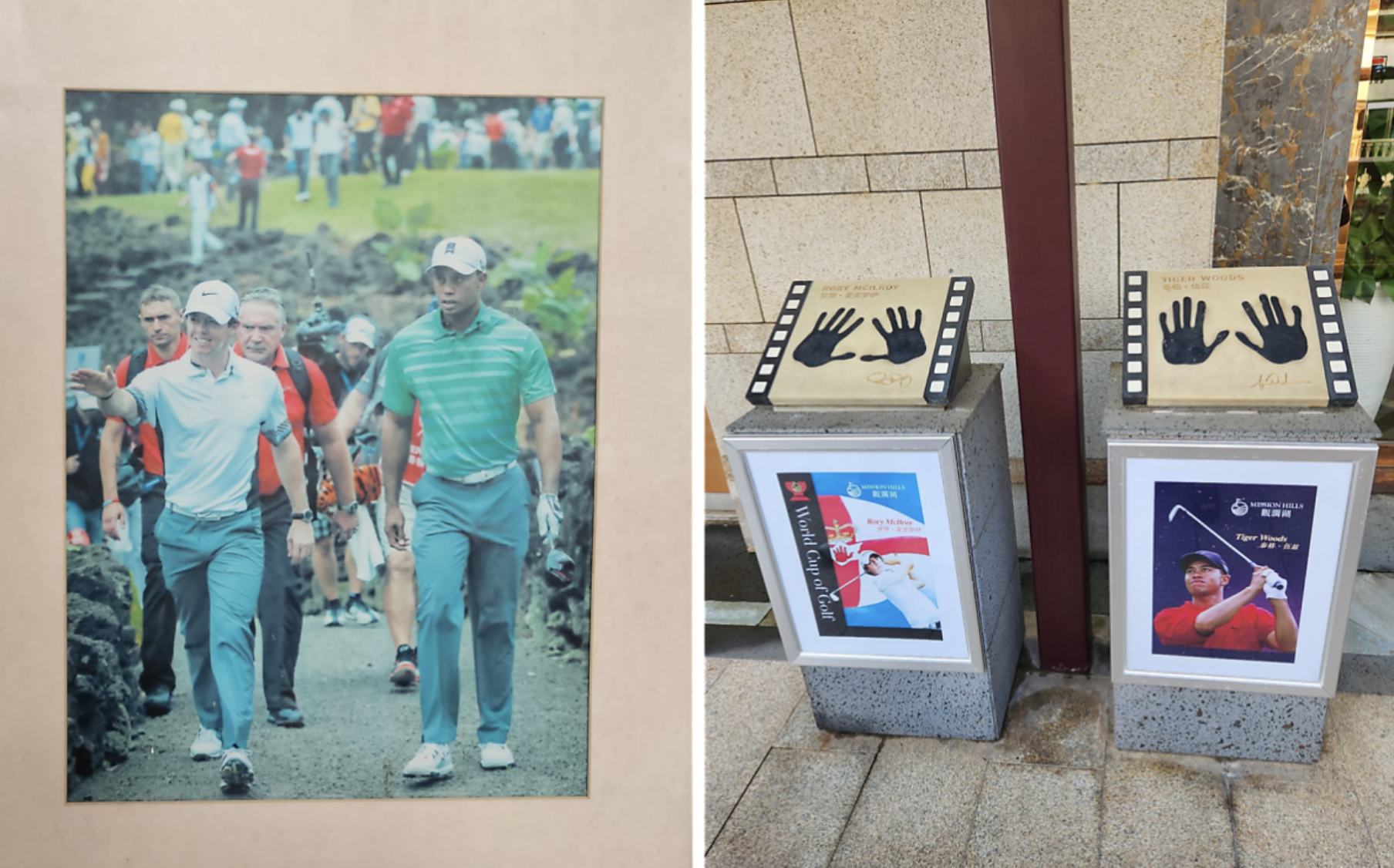
Tiger and Rory faced off at the very course I was at in 2013. Don’t worry, I won’t spoil it by telling you who won.
The Best Golf Resort in The World?
Mission Hills Golf and Resort is located in the southern part of China on Hainan Island, which is about the size of Maine. Often referred to as the Hawaii of China, its tropical location gives the island year-round sunshine with temperatures between 75~90°F in the winter and 60~75°F in the summer. Along with dozens of other notable golf resorts and courses on the Island, the resort is a popular destination for golfers from Asia, Europe, and as far away as Australia and New Zealand.
Mission Hills first opened its doors in early 2010 with the aim of becoming the best resort in the world. I’m not sure if they achieved their goal, but before you smirk at their ambitiousness, Mission Hills is currently listed in the Guinness Book of Records as the World’s largest golf resort with a total of 10 world-class golf courses. That is an astounding 180 championship-class golf holes in one resort! The courses are designed by the talented Schmidt-Curley Design team who are behind some of the best courses in Asia and around the world.
The Blackstone Golf Club is considered the “crown jewel” course at Mission Hills Resort and gets its name from the plethora of black lava rock that is found all over the course as part of its beautiful charm. But don’t be fooled by its rugged beauty, as the monster-long Blackstone has hosted several World Cup of Golf championships (guess who teamed up for the US to win in 2011?) and the annual World Ladies Championships. It also hosts the annual World Celebrity Pro-Am attended by an amazing A-list of screen stars, pro golfers, and elite athletes from around the world.
So yeah, the course is quite good.
On top of that, the resort holds another world’s best distinction, with a total of 168 different hot springs and pools within the resort. Unfortunately, I was too immersed in playing golf to take advantage of a good hot soak, but it will be on the top of my list to do with my whole family next time.
Now, let’s take a close look at what the Blackstone course was all about, and keep in mind that the course descriptions and opinions are all my own from experience and perspective.
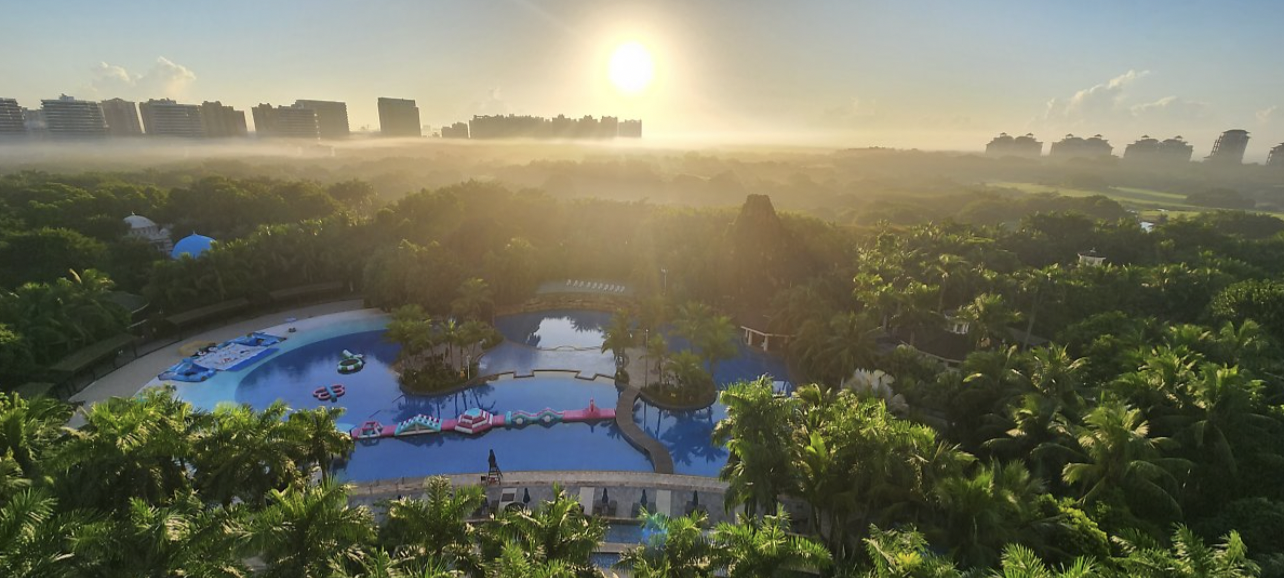
The early morning view outside the hotel room overlooking the course and resort is breathtaking
Greens
The green condition was quite superb, albeit a bit slow from Western standards. According to the caddie, the green speed was measured at about 2.9 meters, which translates to about 9.5 on the stimp meter. A speed of 7 is considered to be slow, and the average PGA Tour event is said to be about 12, so for us average folk the greens were rolling well.
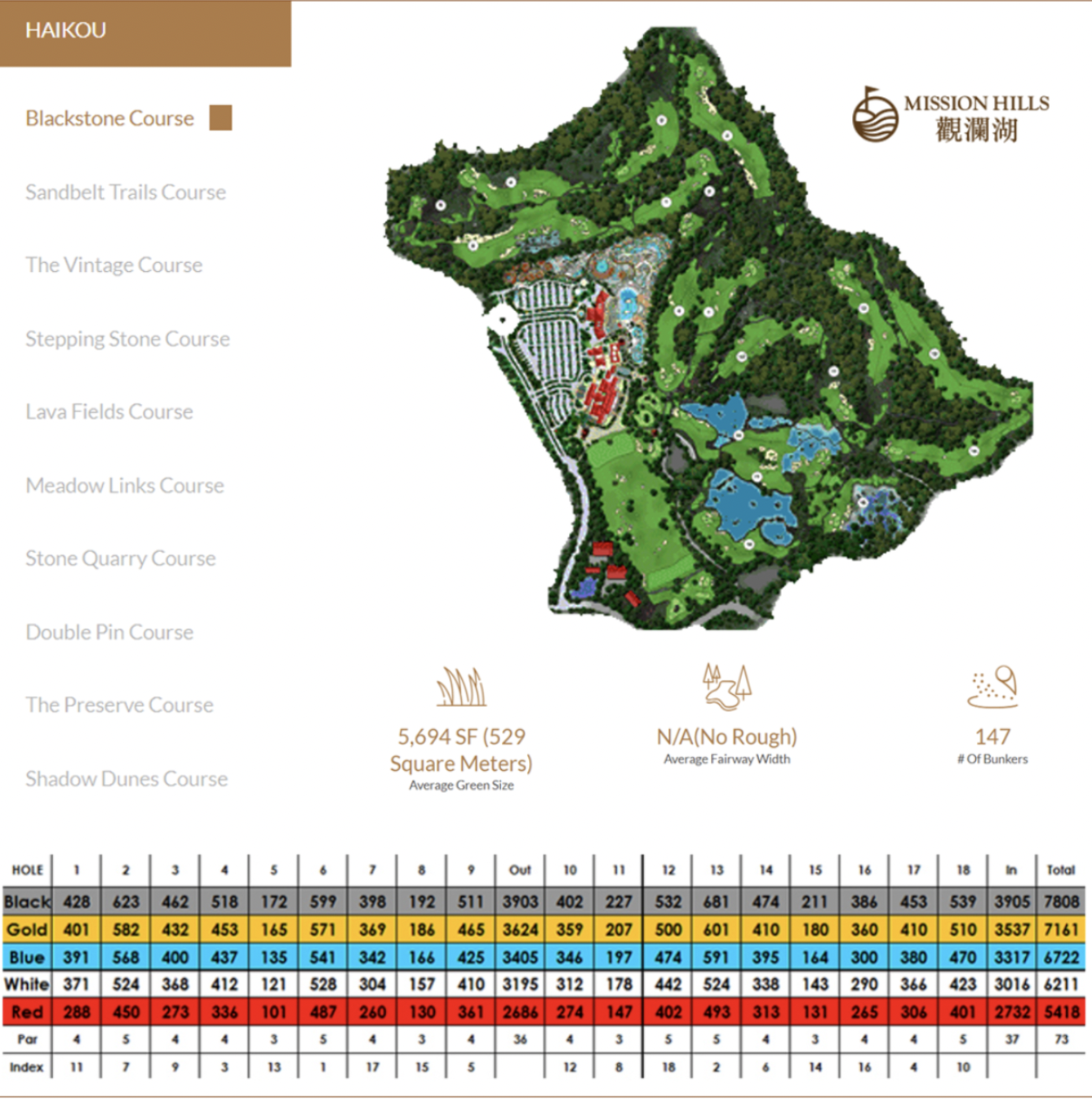
The green size is quite large with nearly 5700 square feet average in size with less-than-subtle undulations and big rolling plateaus. The pins were placed slightly towards the front left of the green this day, and the approach shots were challenging for us amateurs to stuff close. The ball rolled straight and true to where it was aimed, and I only had myself to blame for missed short putts.
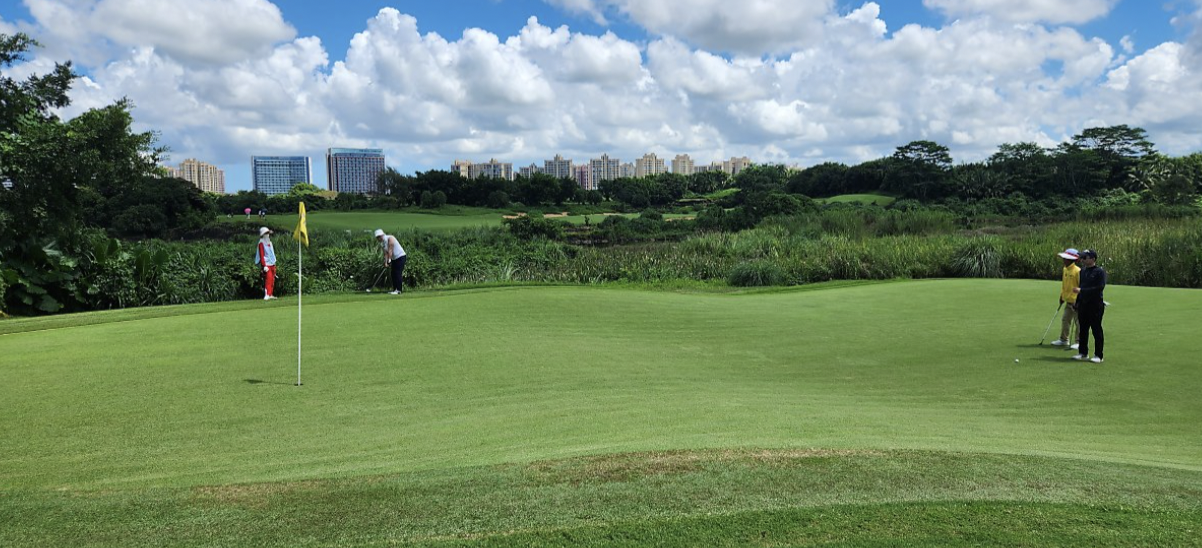
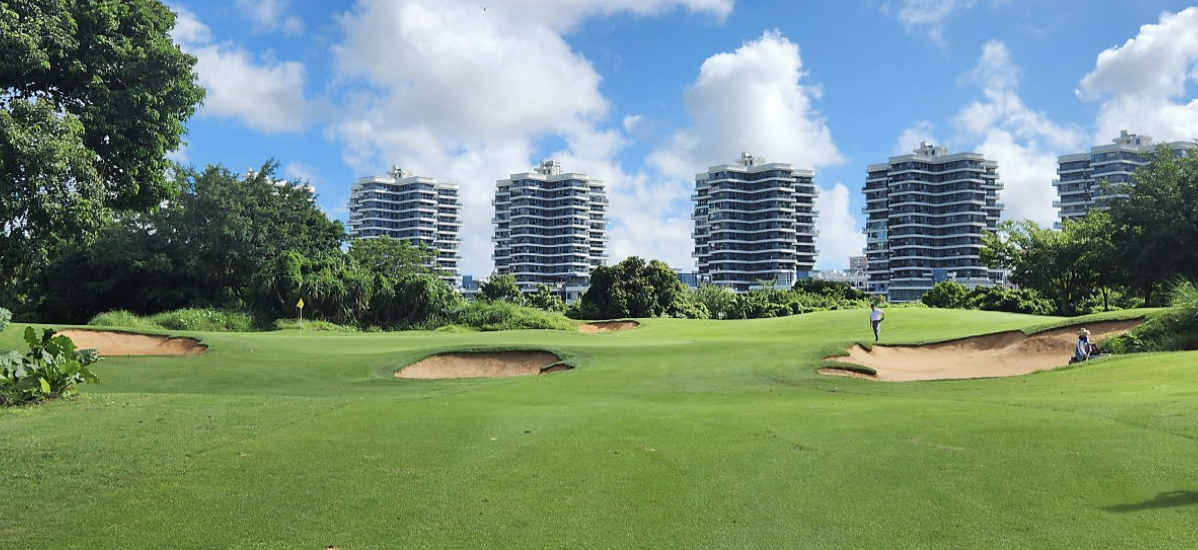
I don’t know if its an Asian thing, but we seem to have many courses with big greens and sometimes ridiculously big undulations and plateaus on them. We even have bunkers in the middle of the green, sometimes!
Fairways
Unlike many of the Korean courses I’m used to, the fairways are lush and readily yielded nice dollar-sized divots from well-struck iron shots into the greens. The course itself is huge and it was reflected in the long wide fairways stretching from tee to green.
Most of the fairways seemed to be free of readily noticeable trouble areas, meaning that what you see was what you got. However, upon close inspection, there were many subtle undulations which caused the stance to be slightly uneven at address. It wasn’t like St. Andrews level of fairway undulations, but it was there.
Also, the big prominent fairways bunkers often came into play and caused me to consciously aim away from them, which left longer approach shots into the green. We were somehow feeling confident this day and were playing from the blue tees. And for a guy who averages 240-yard drives on my best days, those small detours inevitably added 1-2 clubs more to the next shot.
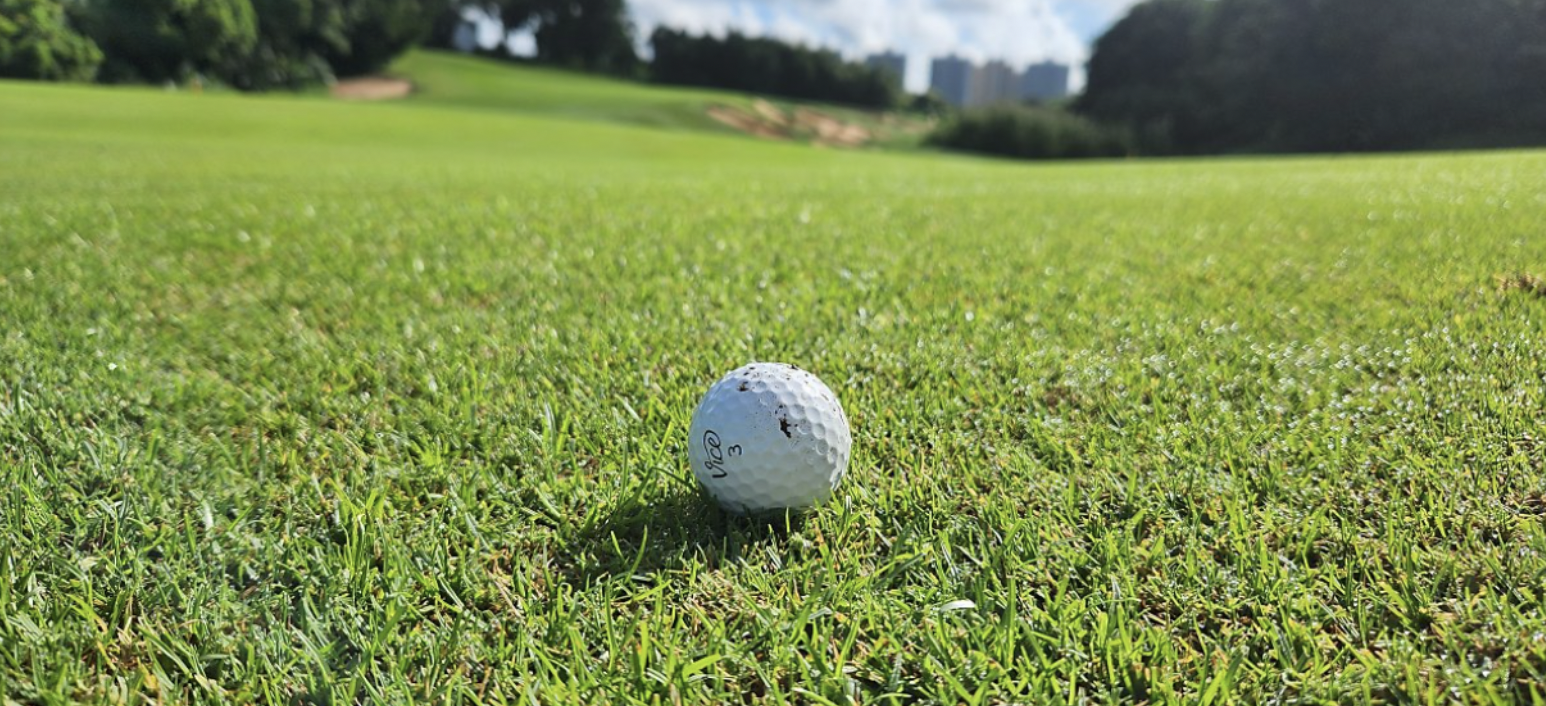
Fairways were rolling nicely but were still a bit damp due to the sporadic short rain bursts.
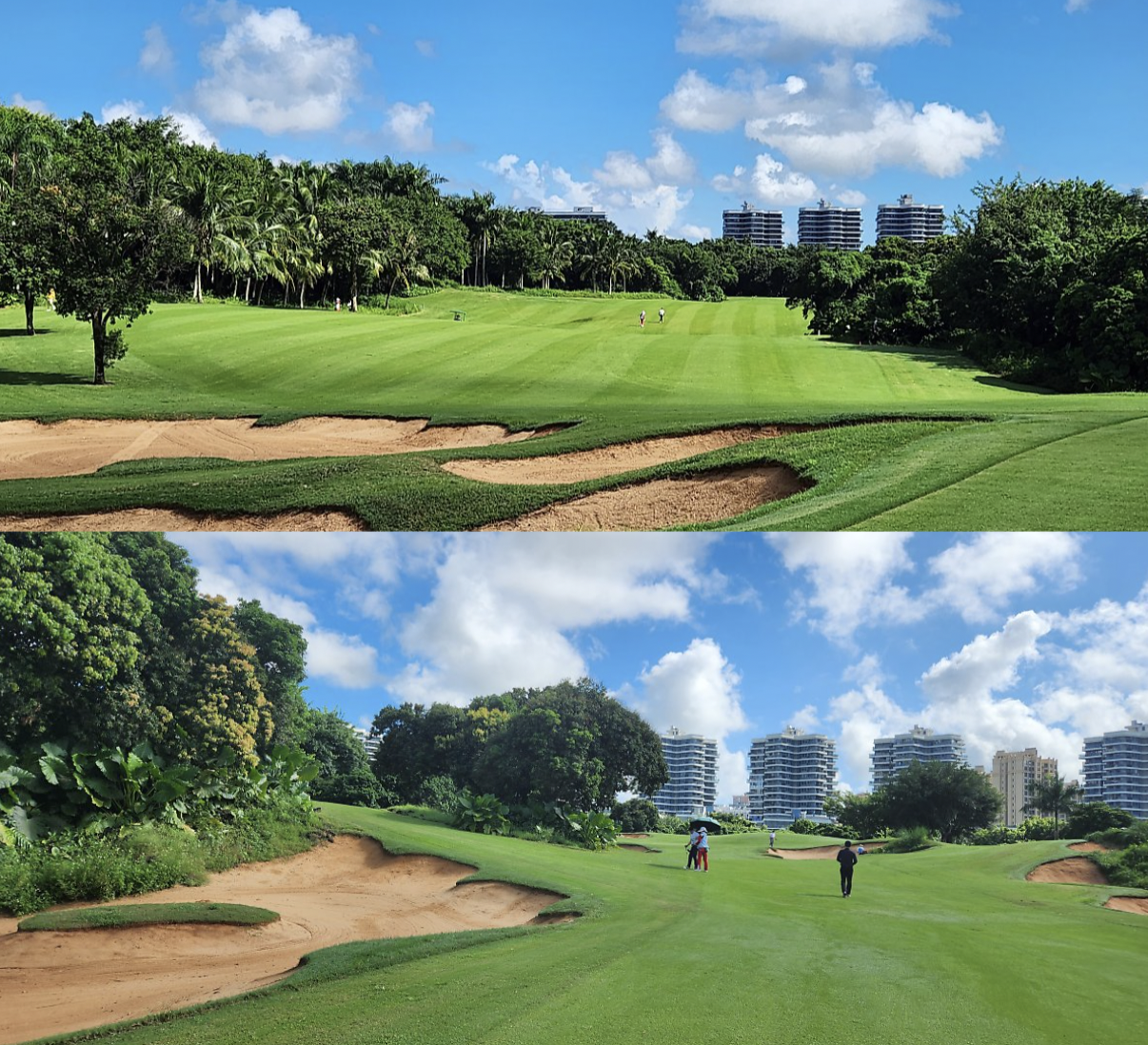
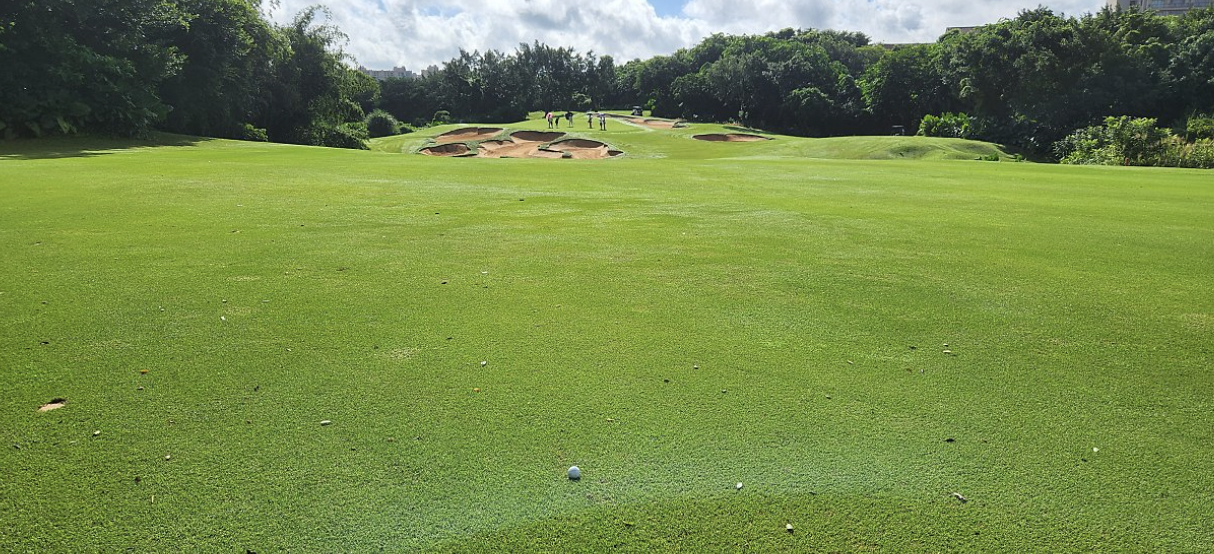
Most fairways were quite wide, though it didn’t keep our balls from escaping into the jungle.
Rough
Truth to tell, the rough wasn’t all that intimidating, as it was only modestly long, and the wide fairways pushed the rough back considerably. As it wasn’t tournament season and the course was set up to mostly cater to vacationers, it made sense not to make the rough too punishing.
Beyond the rough was mostly deep jungle-like vegetation, which made it next to impossible to hit the ball out of, let alone find it in the first place. Thanks to our amateur ball-striking abilities, however, we easily overpowered the hapless wide fairways to appease the jungle gods with our many golf balls.
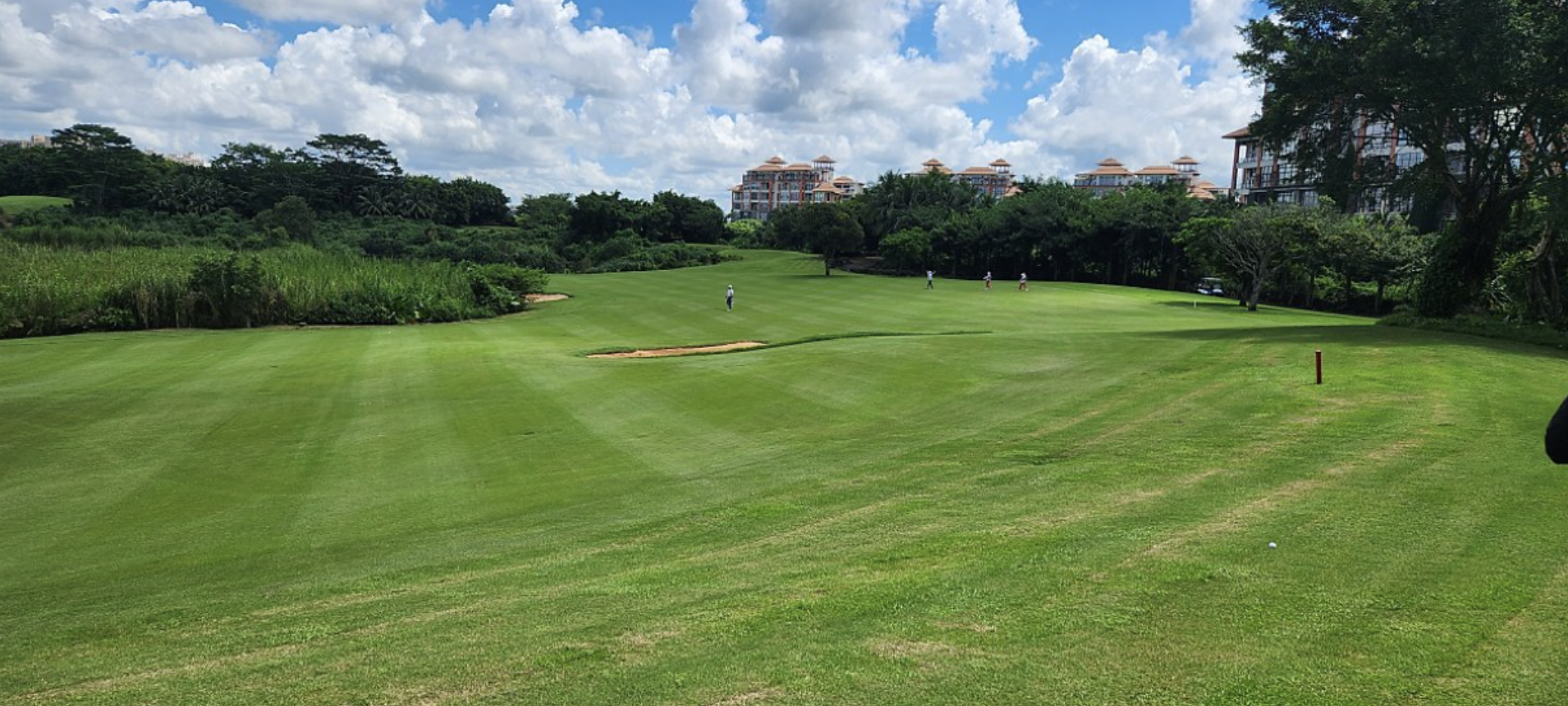
The rough is almost non-existent from tee to green, except for a little bit around the bunkers and extreme sides of the fairways. The course is very long, so I guess they want golfers to relax and not get high blood pressure?
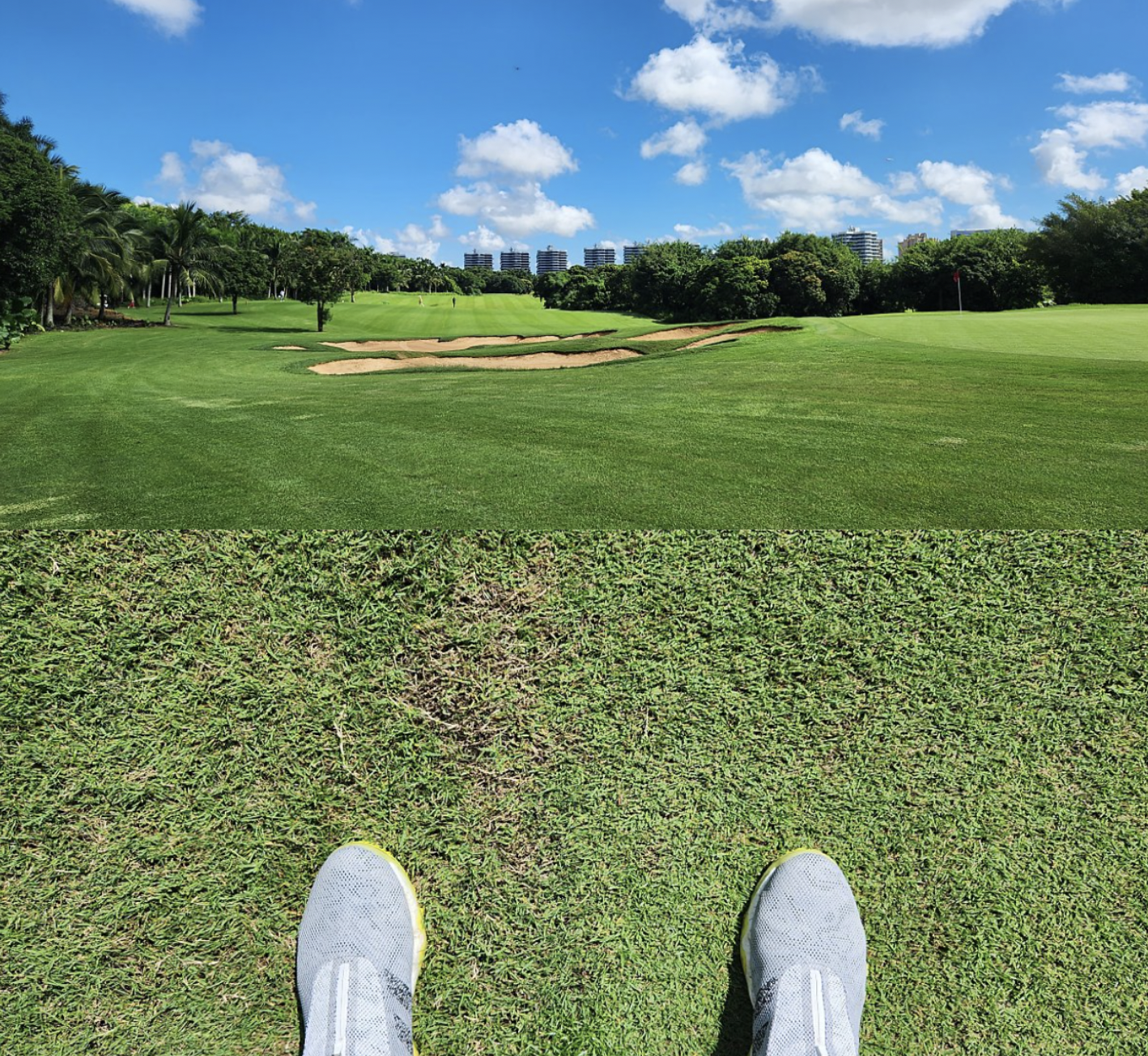
Fairway and 1st-cut rough
Bunkers
Blackstone had no shortage of fairway and greenside bunkers to daunt the average golfer. The many fairway bunkers were often quite large, and despite the mostly wide fairways, some were placed just at the right (?) places to catch drives that strayed left or right off the tee. Standing on the tees, the presence of so many bunkers was aesthetically pleasing yet intimidating at the same time.
The bunkers were meticulously raked and pristine, with the sand looking visually heavy but being very soft. Maintaining the bunkers to this level of readiness cannot be easy, as there are 10 courses at this resort! Even if there were just two bunkers per hole, that’s still 360 sand traps to rake and prep each day! Add to this the fairways and greens, not to mention the decorative foliage, the level of course maintenance at this level is quite mind-boggling.
I also don’t recall seeing any flat bunkers, as most seemed to have a healthy amount of incline at the front to make it harder to move the ball forward a long way. The greenside bunkers were also deeper and usually presented an upslope lie, and the shots had to have some climb to escape from them. If you have trouble hitting the ball straight, be sure to sharpen your bunker play when you visit Blackstone.
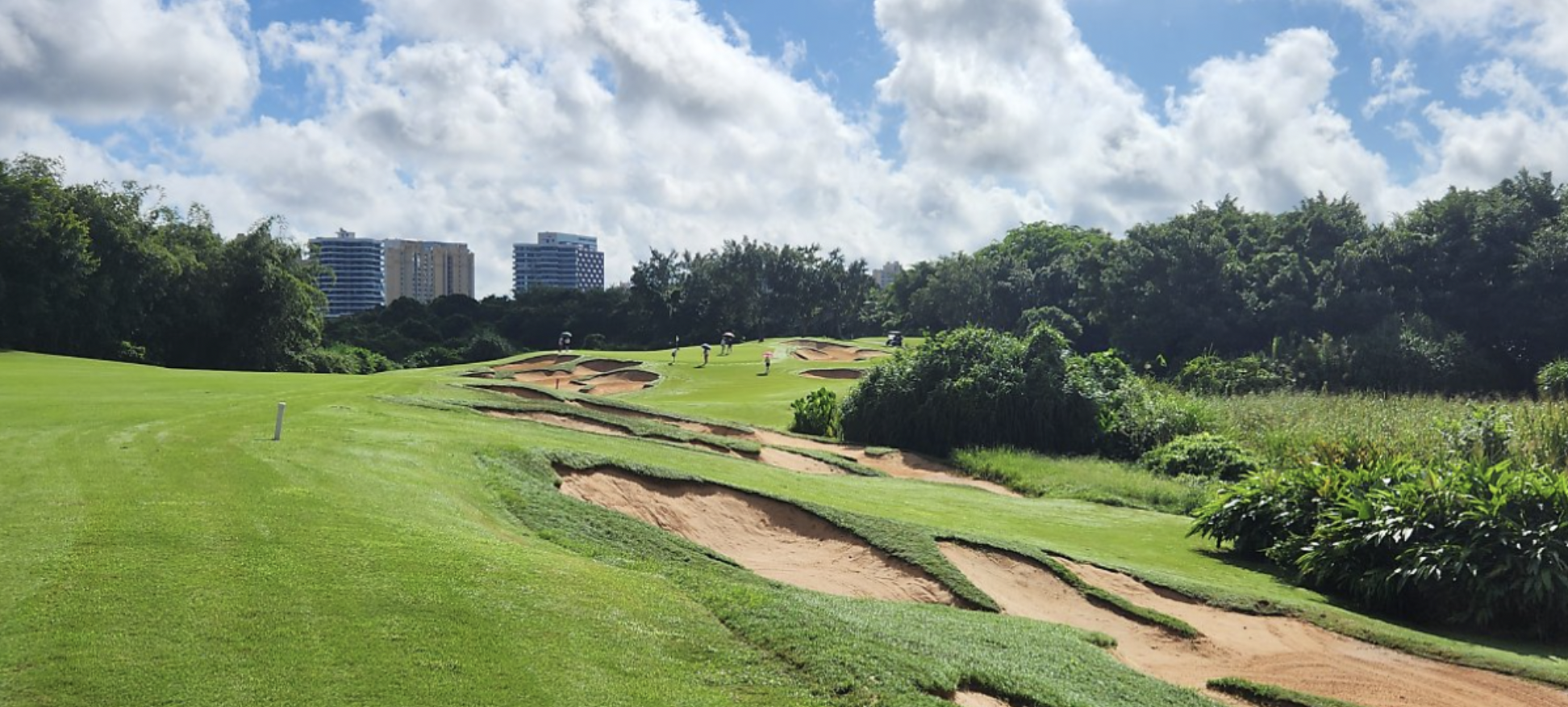
With the frightening number of bunkers at Blackstone, I only managed to get into two of them. I even managed to get up and down on one of them.
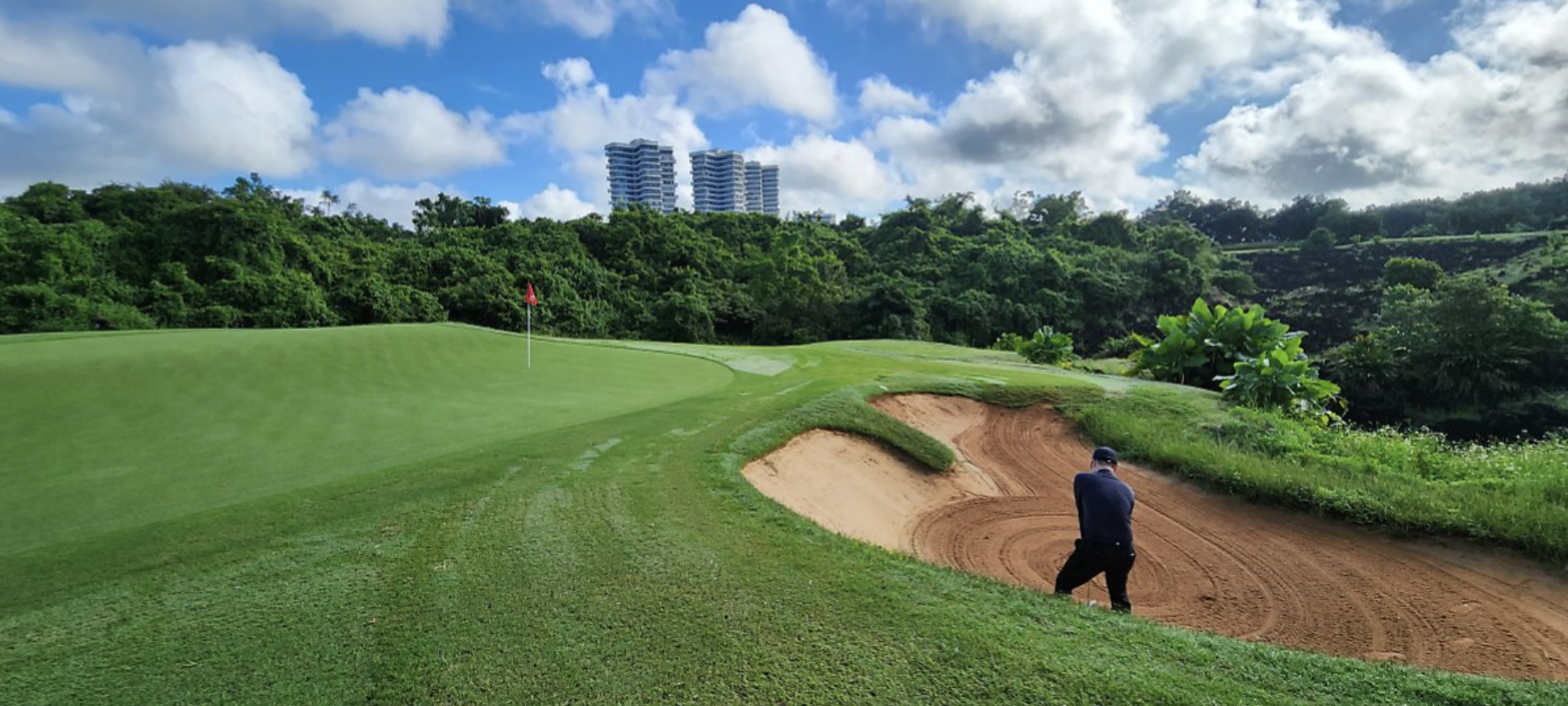
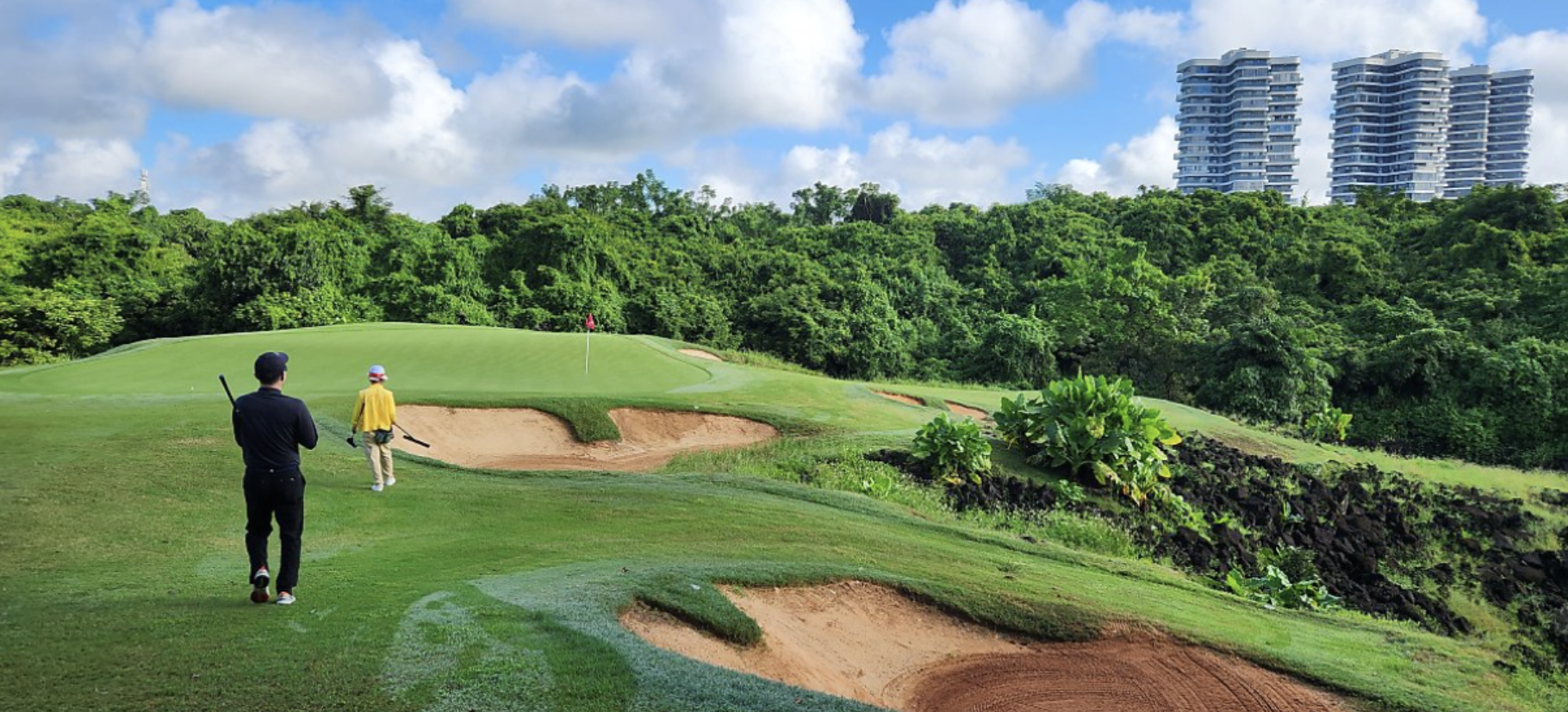
Bunkers and blackstones aplenty.
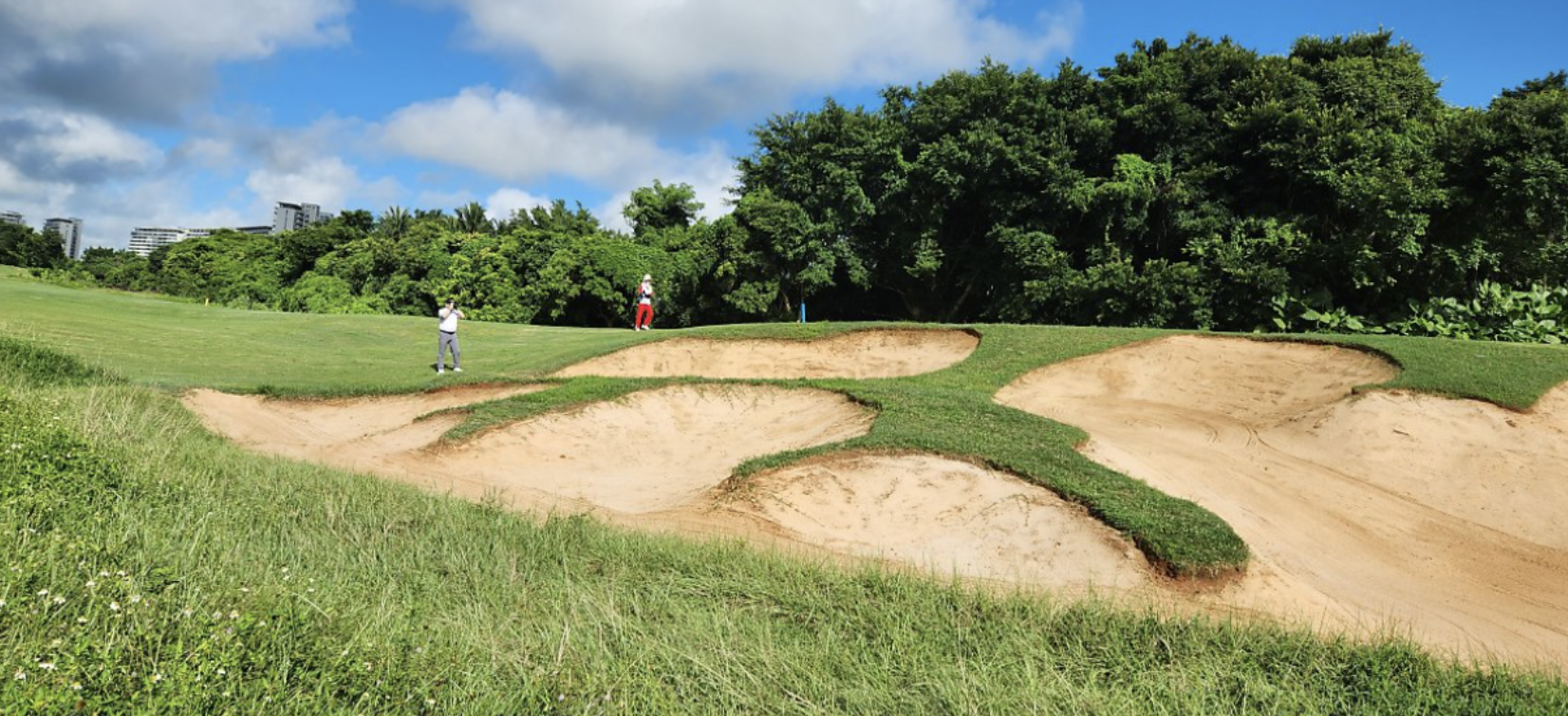
Despite being only the second time in a bunker, this one on the 18th cost me a devastating double bogey.
Tee To Green
Blackstone’s monstrous 7808 yards should satisfy most golfers’ urge to go all out on their shots. From the blues, it was still a challenging 6722 yards, and I don’t mind saying it felt longer than that all day.
Most of the pins can be seen from the tee box, and despite some slightly rolling fairways, Blackstone is a mostly-level parkland course without any significant drop or rise in elevation. Sprawling over a huge area of land, the holes do not double back in parallel but stretch forward through dense foliage, making for a scenic ride in the golf cart. One thing I also appreciated was the leisurely pace of play. The group ahead and behind were not visible for nearly the entire round, despite our less-than-quick pace of play.
From tee to green in its entirety, the course was in amazing shape and condition. The unexpected tropical golf experience was nothing short of amazing, and if I had to make a comparison to some of the other memorable tracks I’ve visited, the Hoakalei Country Club and Turtle Bay Resort (Palmer design) in Hawaii come to mind, along with Korea’s own Haesley Nine Bridge Club, which consistently ranks as one of the best courses in Asia.
The pictures below don’t do justice to the course, but I’m sure you’ll get the idea.
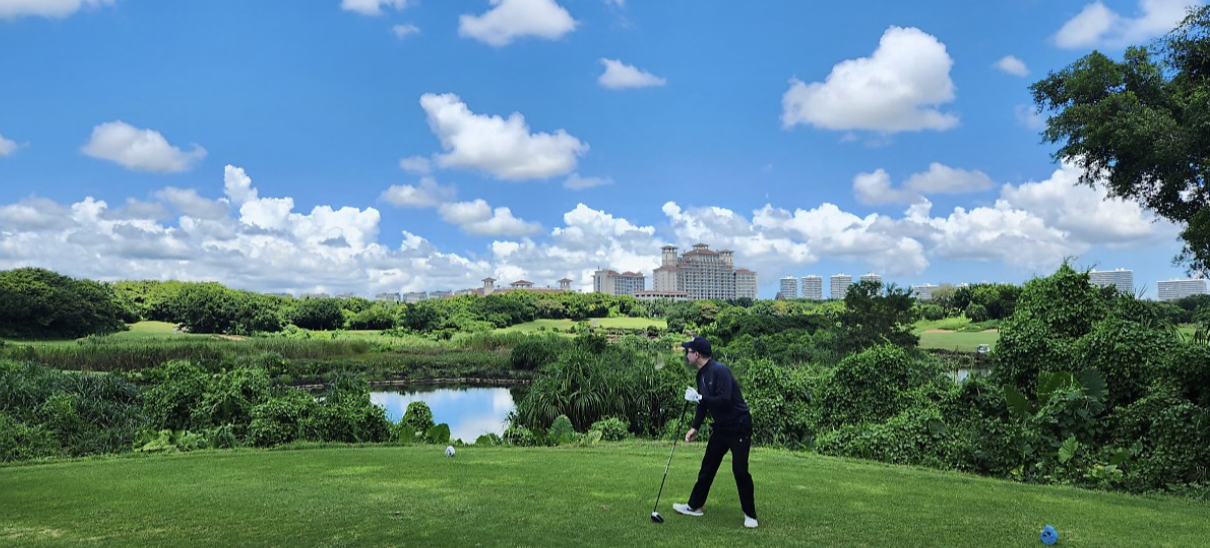
The sky was particularly blue and the course beautiful; so much so that my foursome didn’t seem to mind carding doubles and triples over and over again. What a joy.
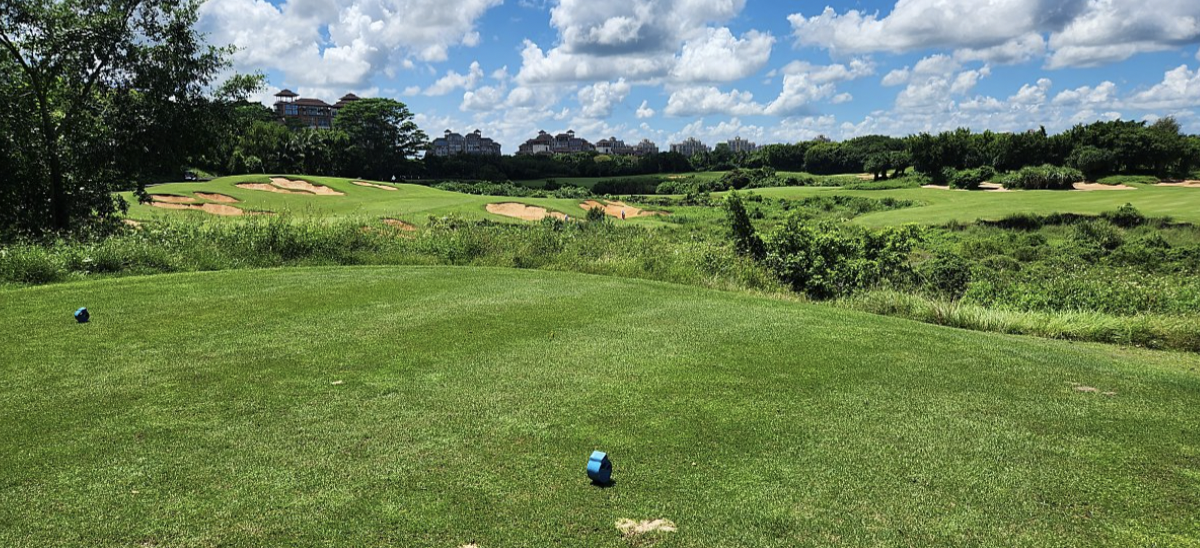
For us short-hitters, we had to aim for the middle of the many bunkers and hope for the best.
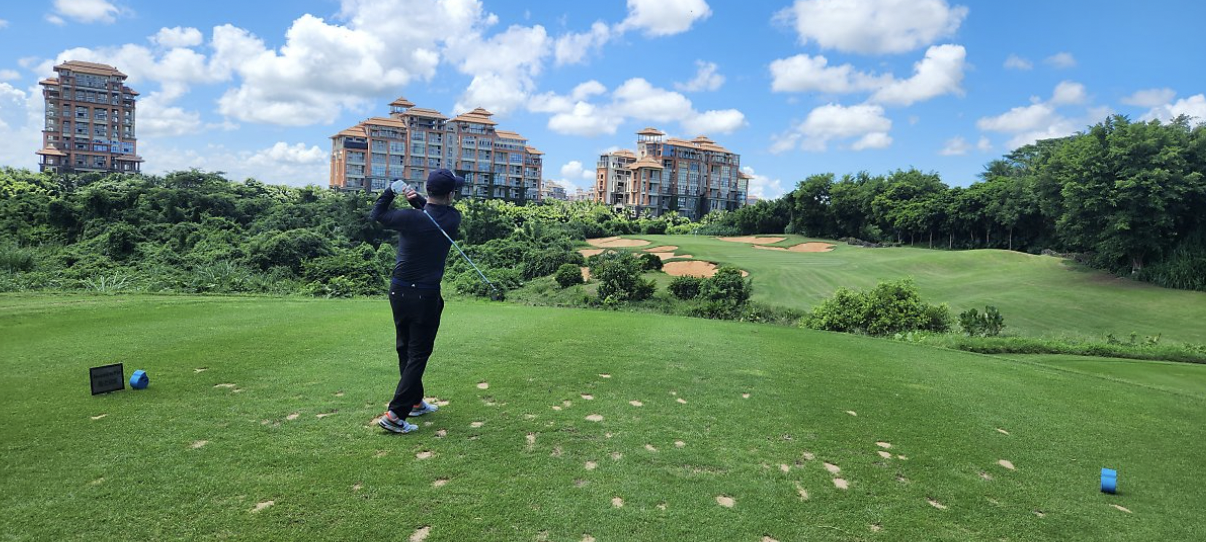
If I had a dollar for every time one of us wished we owned a penthouse in one of the many condos dotting the resort…
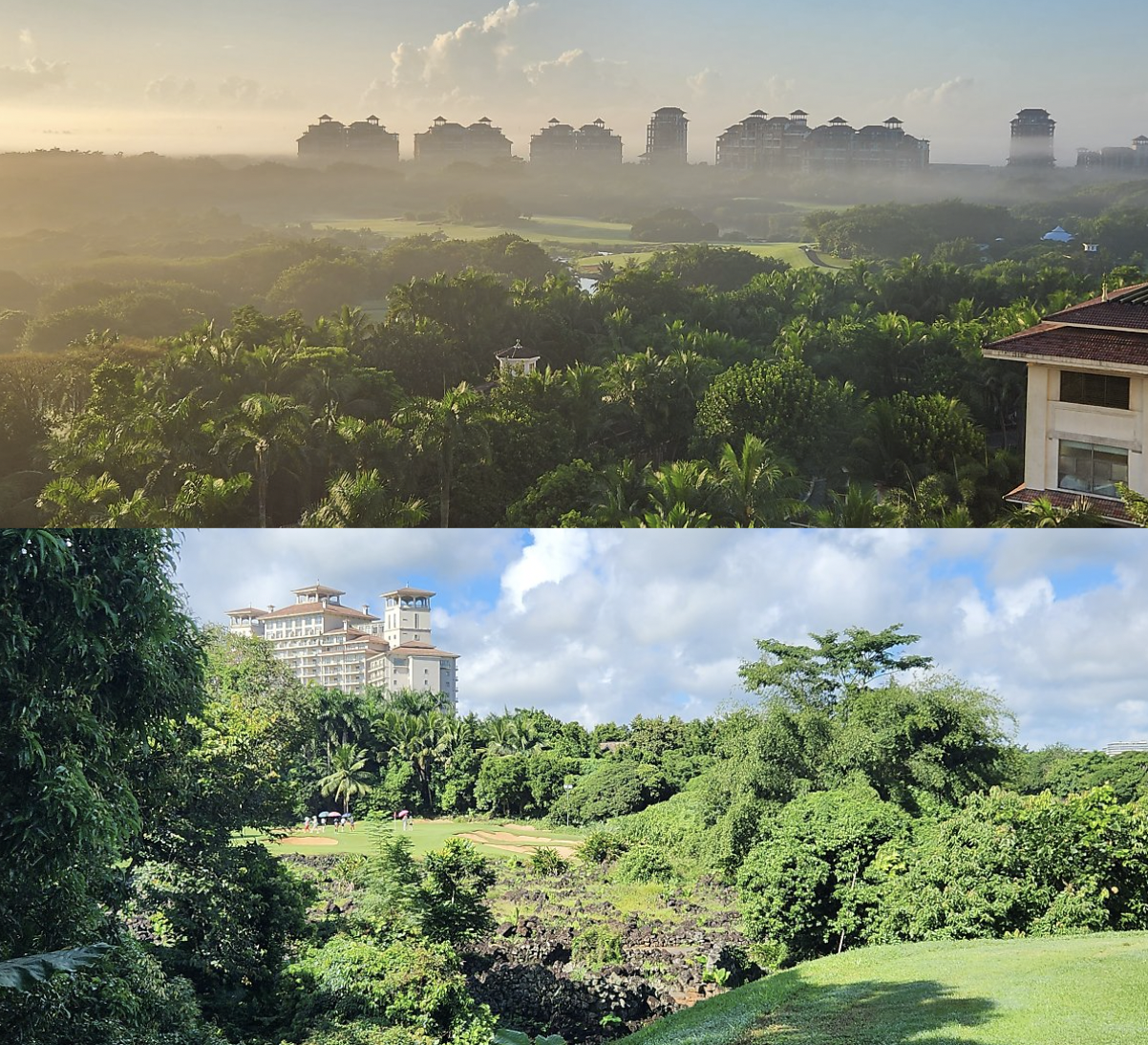
Many holes are carved right through a lush jungle with a huge modern condo looming in the background.
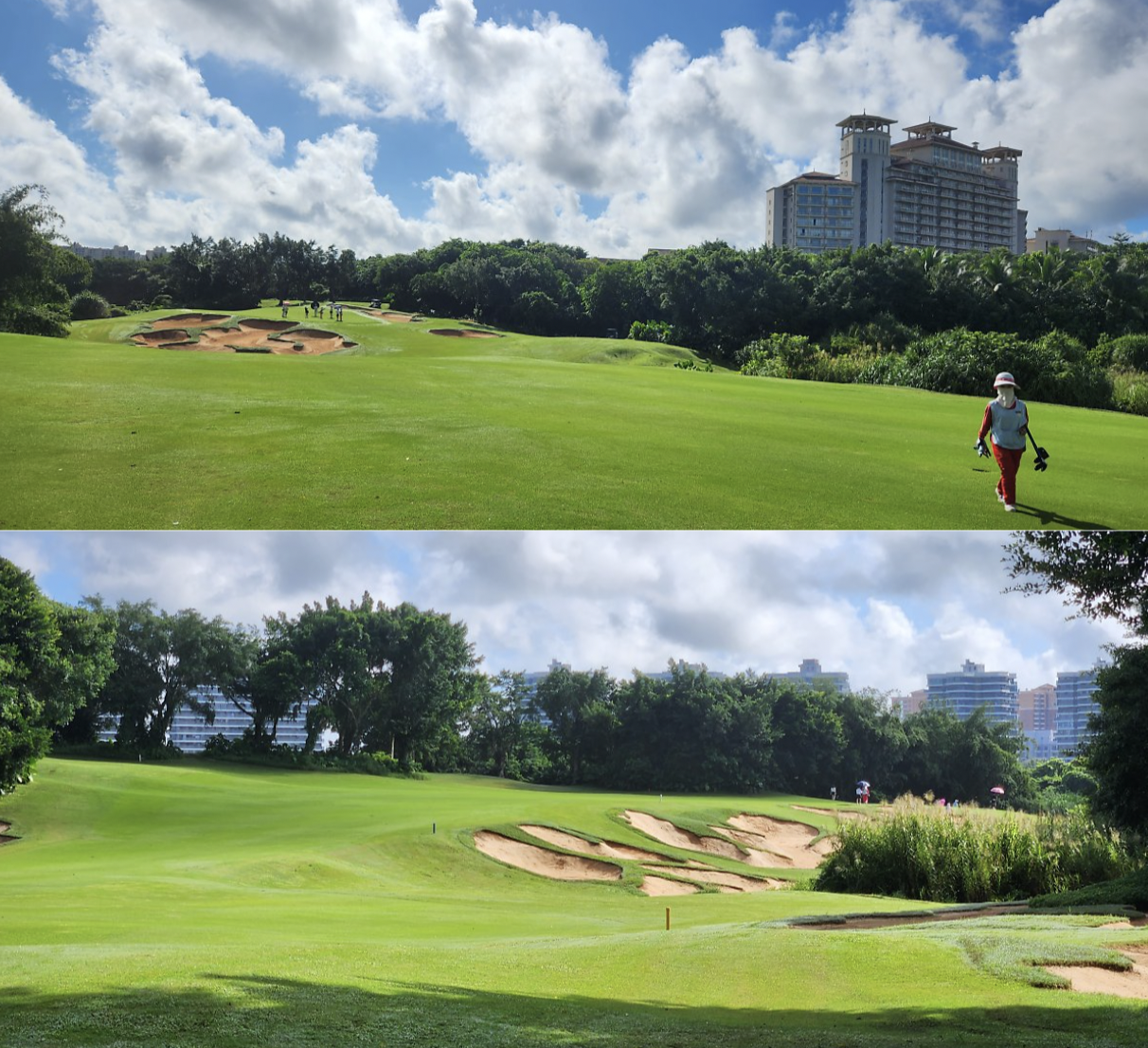
Cluster bunkers are to be avoided at all costs.
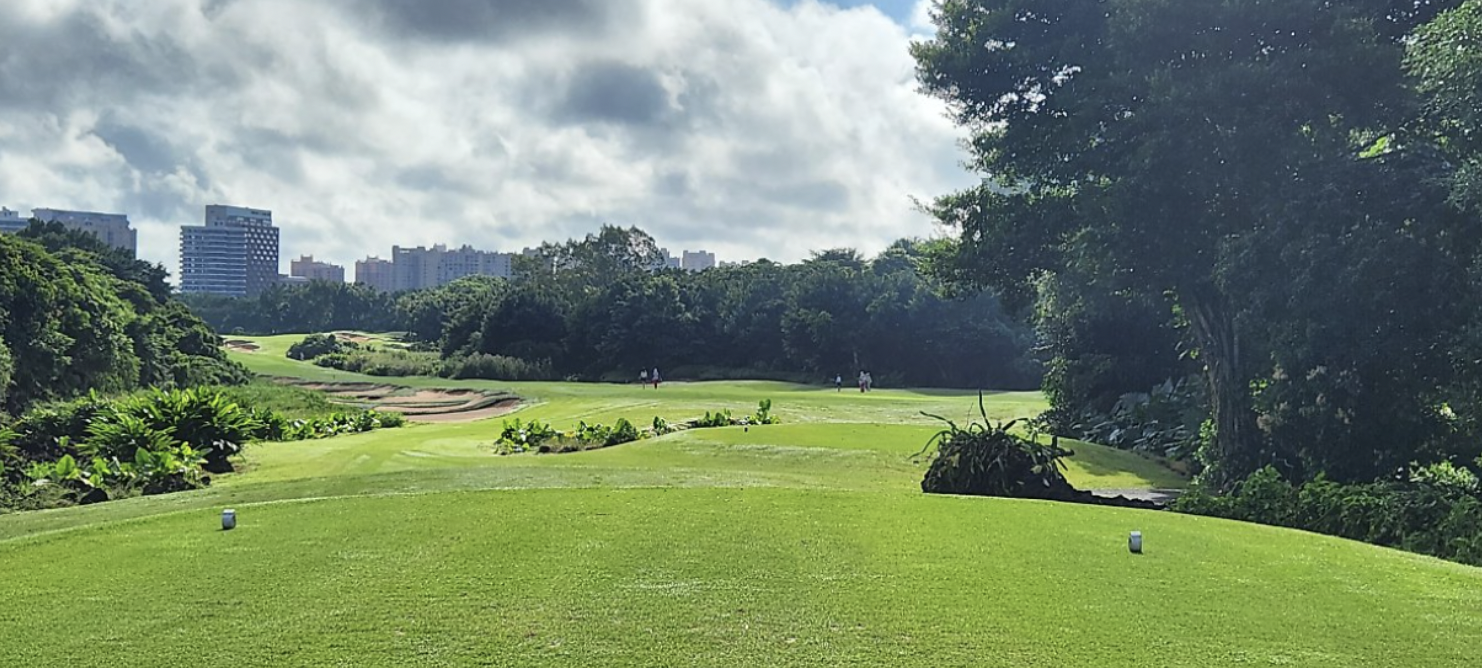
The view from the 1st hole tee at Blackstone.
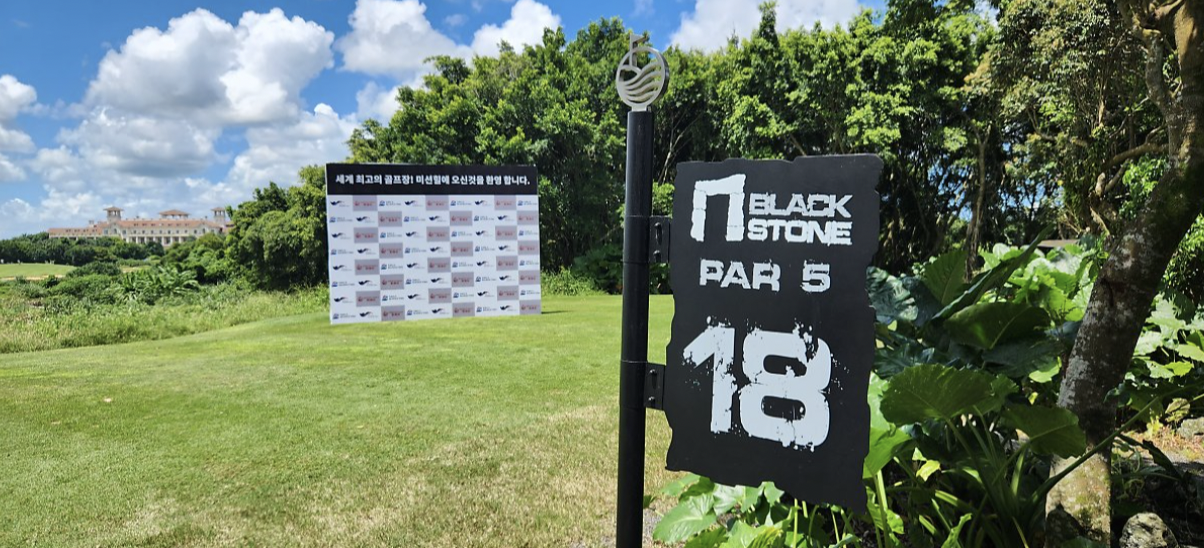
Looking like a pro in front of the picture board at the 18th tee… then promptly topping a drive 100 yards out. At least I looked good on camera.
Caddies & Carts
Unlike most courses in the West, golf clubs in Asia require each golfer to play with a mandatory caddie and golf cart. Also, if you each decide to have an additional caddie to help hold the umbrella, it can make for a sizeable group of 12 (greens keepers would be tossing in their beds in the west)! So how do the caddies move if you’re driving a power cart, you ask? They simply hop onboard the back of the buggy.
On this day, we ‘only’ had four caddies to attend our play, and they were fantastic. Despite my initial concerns, the language barrier was not an issue as they were conversant in all the needed terminology in English and Korean. This was a pleasant surprise, as I was able to ask more about the course to help my play, and there was always Google Translate.
The caddie fee was 500 yuan each, which is about $70 US. They were highly professional and quick on their feet, and I could tell that the resort had gone to good lengths in training the caddies (said to be 2000 in number!) to make the golfing experience enjoyable for their international guests.
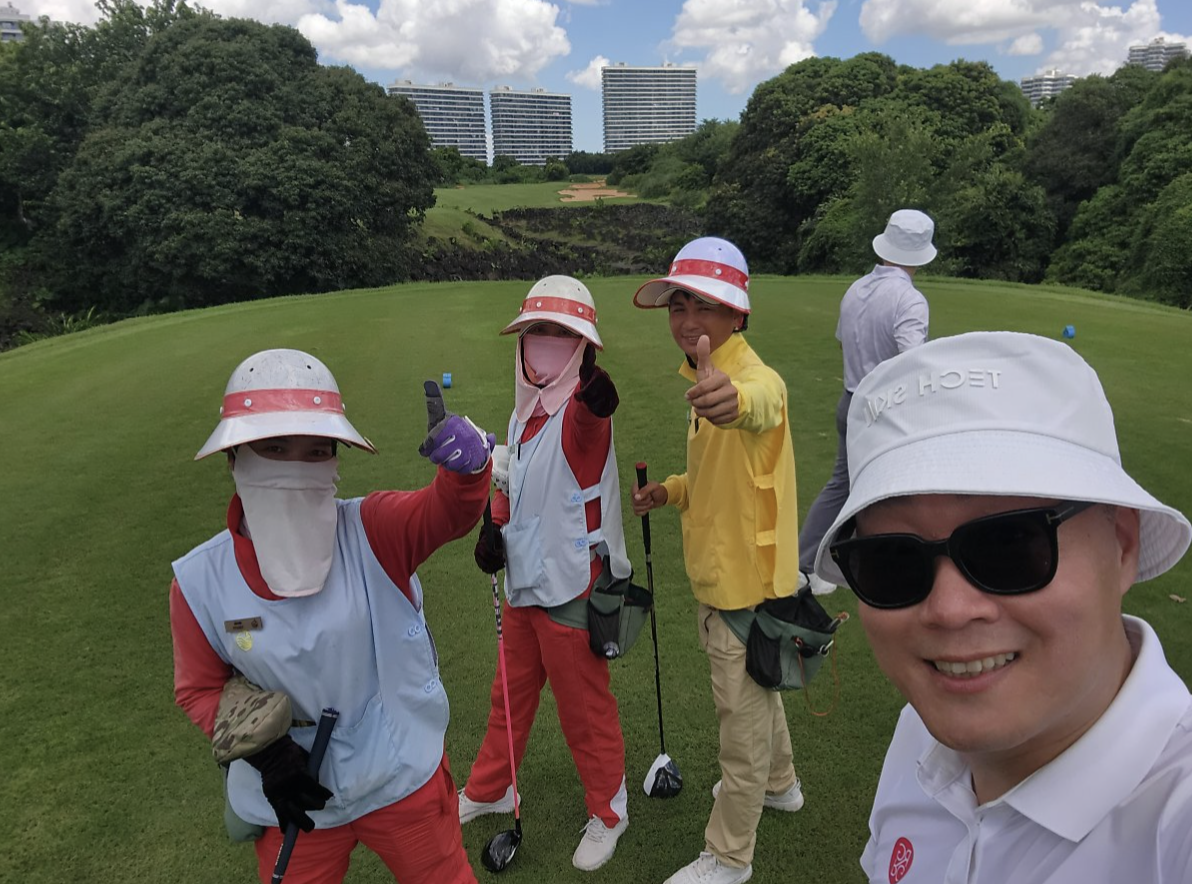
Each foursome of caddies had a ‘master caddie’ that led the other three and acted to translate longer dialogues as needed. They had a good knowledge of the course and general breaks on greens. But don’t expect them to be like the actual caddies like for the pros. They are mostly for offering simple advice on reading greens, cleaning and handing over your clubs, and helping you to find your balls.
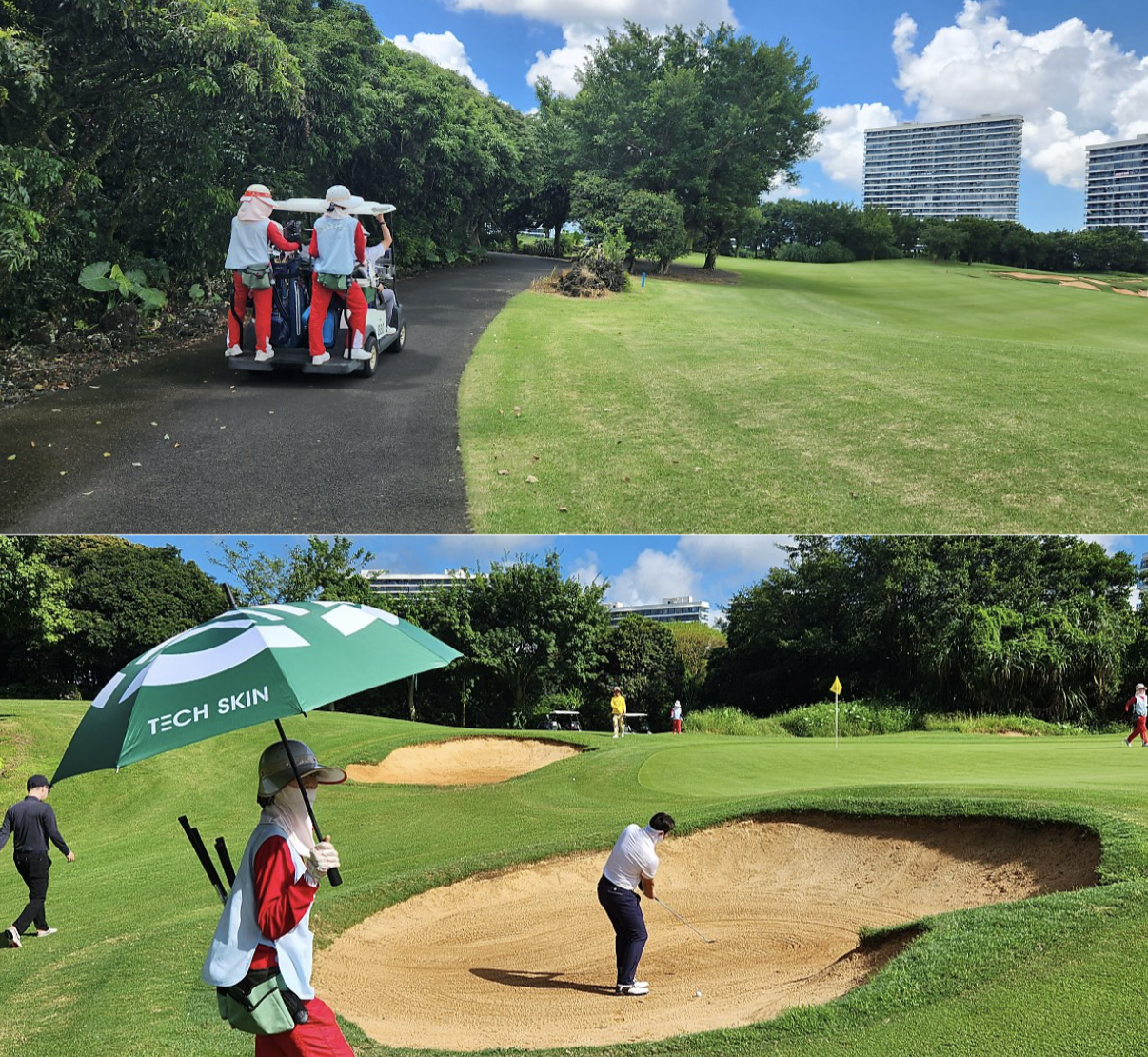
Not gonna lie… having a personal caddie wait on your every shot was nerve-wracking at first.
Resort & Facilities
Mission Hills Haikou has a 500-room hotel with several fine-dining restaurants and high-end boutiques within the main wing and the adjoining annex. They also have a shopping mall within the hotel featuring global brands like Taylormade, Adidas, and Skechers, along with a slew of high-end golf brands to luxury watches and whiskies.
The view from my room on the 9th floor was something to write home about, along with the impeccable services. Truth to tell, I had previously heard several horror stories of less-than-friendly services which led me to refrain from visiting China prior. That must’ve been a different country, as Mission Hills pulled out all the stops to impress and awe its visitors, and it certainly worked on me. We were treated like kings on and off the course, and the hotel personnel was on hand to assist us everywhere we went.
The entire resort complex was like a huge labyrinth of spas, pools, shops, and golf courses. They nearly had everything, including an incredible hotel buffet and several ethnic cuisines, a nightclub and karaoke, and an entire museum-like wing dedicated to the many celebrities and pro golfers that have played here. I could have stayed for hours simply looking at their vast collection of golf memorabilia. My golf buddy called it a golf heaven on earth, and I couldn’t agree more.
Again, the pics won’t be able to fully capture the experience, but they’ll give you an idea of the enormous size and quality of the place.
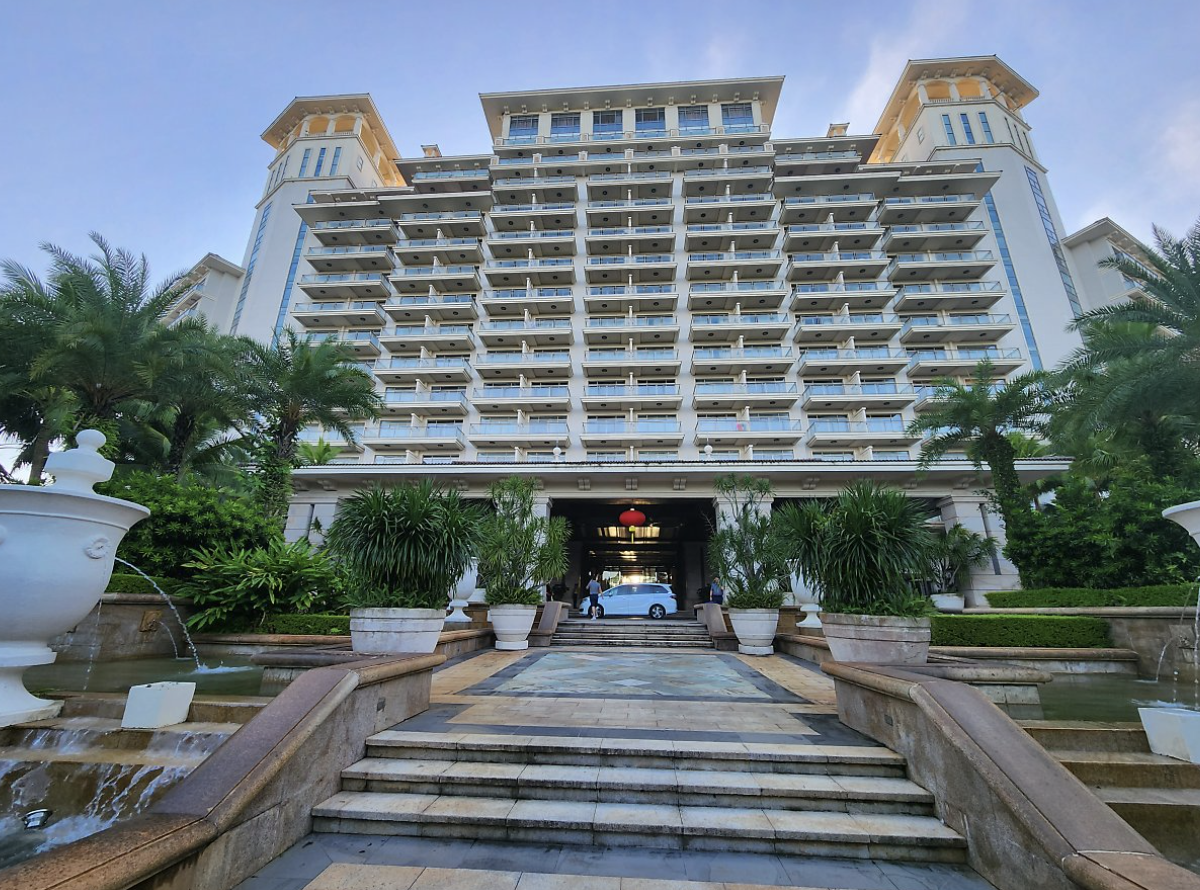
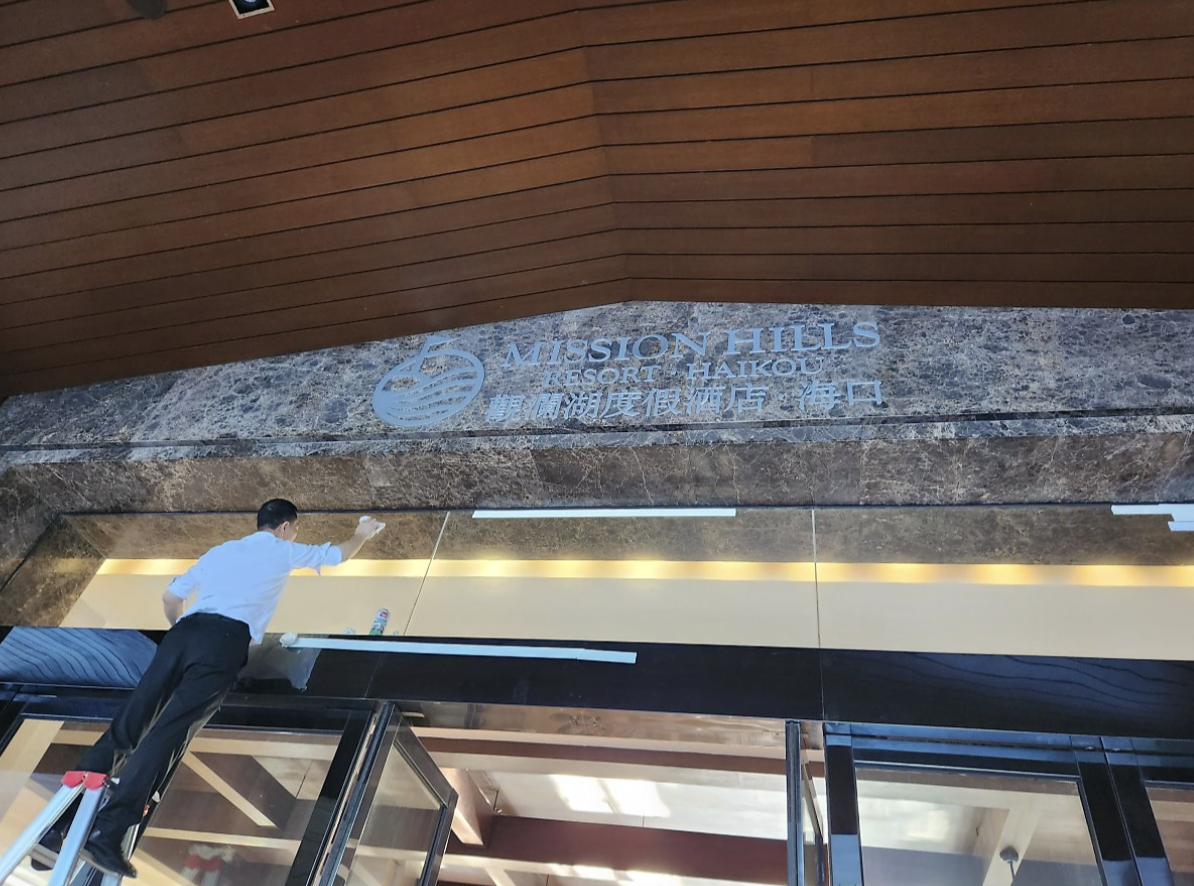
Spic and span to receive guests after a long hiatus during COVID-19, I bet.
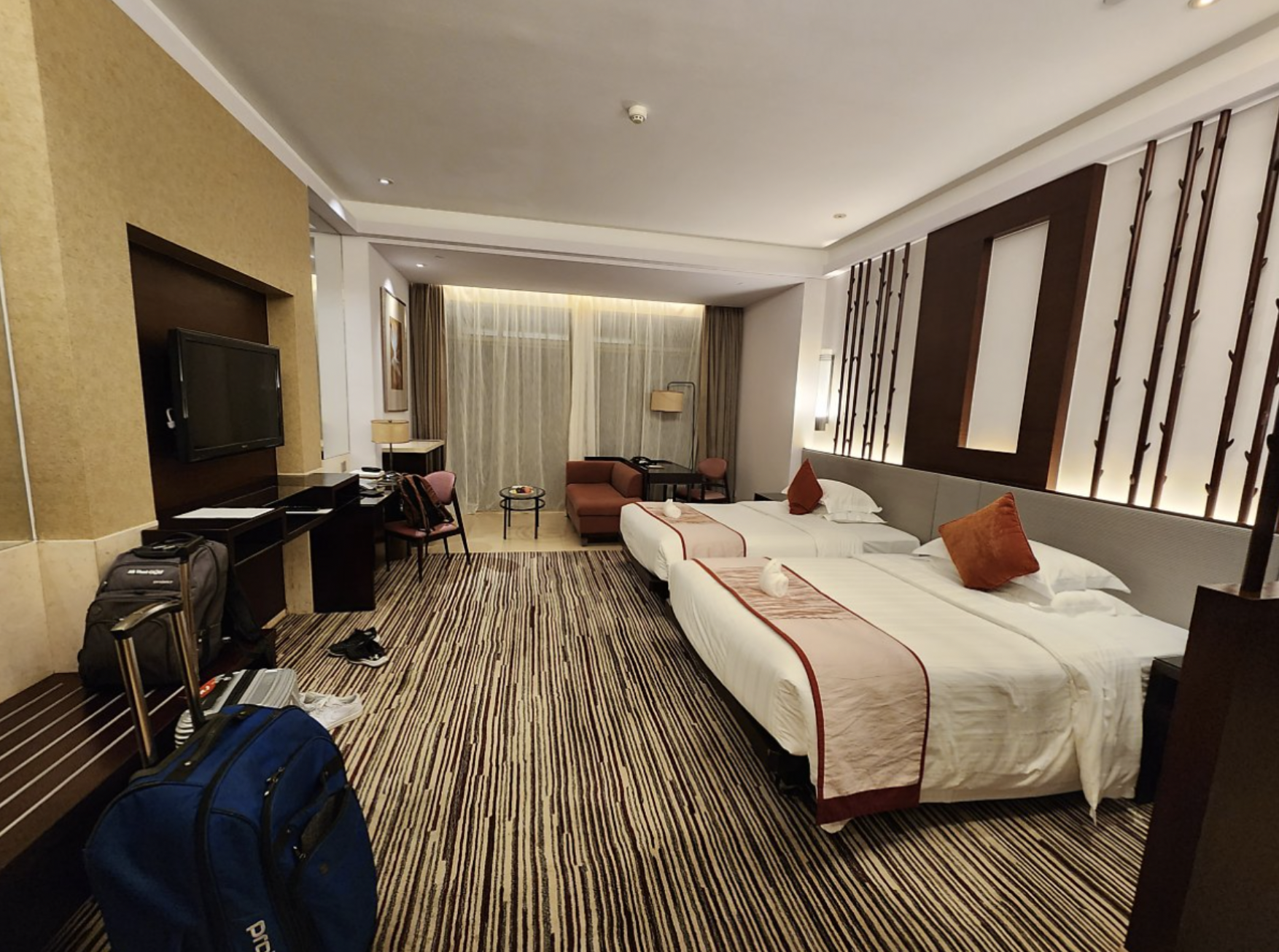
I stayed in a nice-sized suite on the 9th floor with a good view overlooking the resort and course.
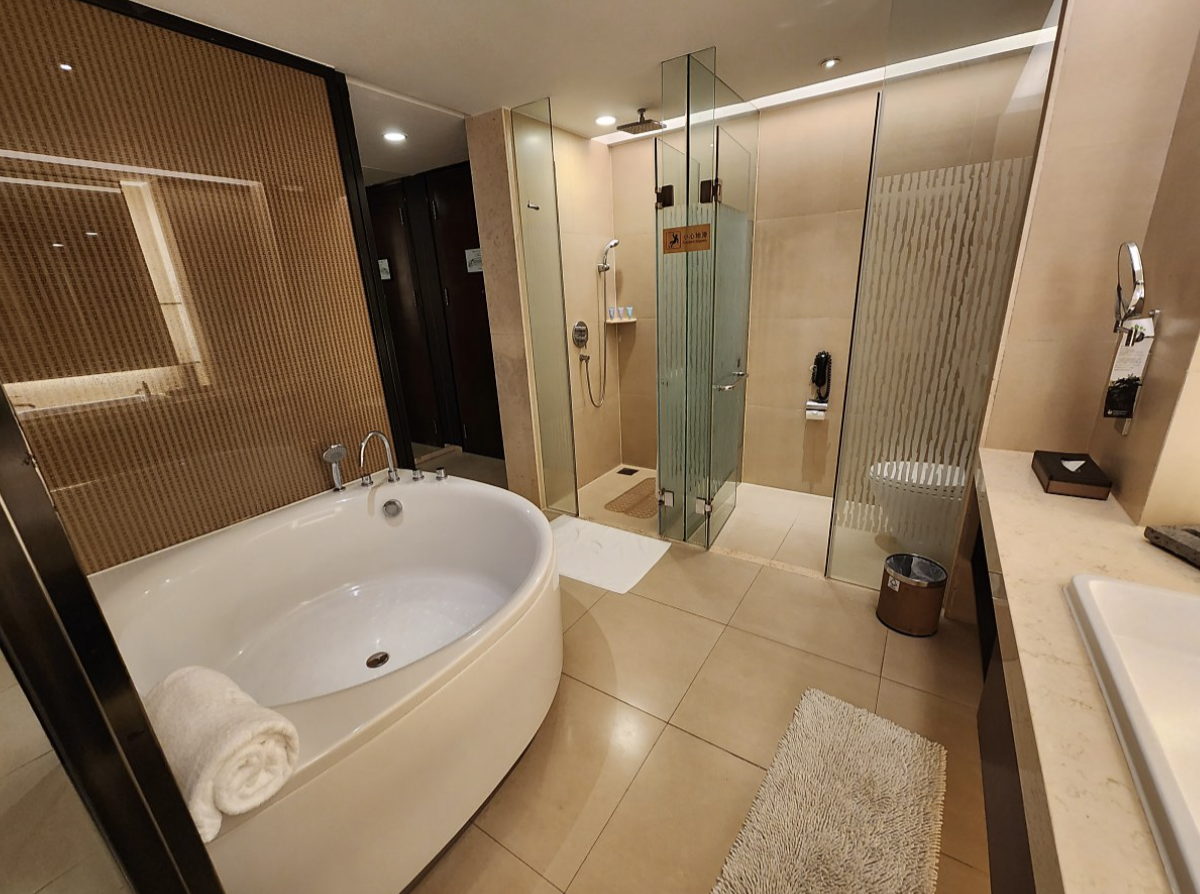
The tub is actually quite big and probably could fit three of me in it comfy.
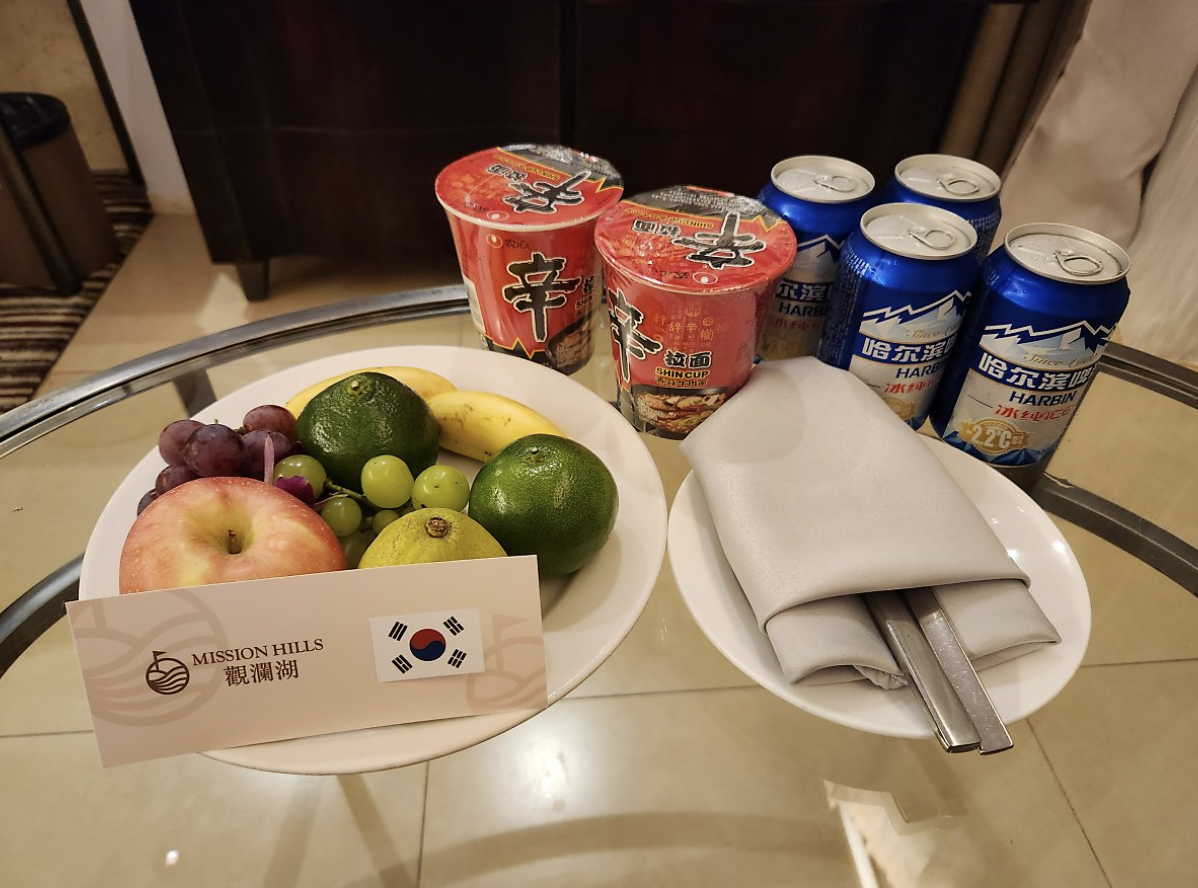
The hotel service had complimentary ramen and beers, along with the local fruit.
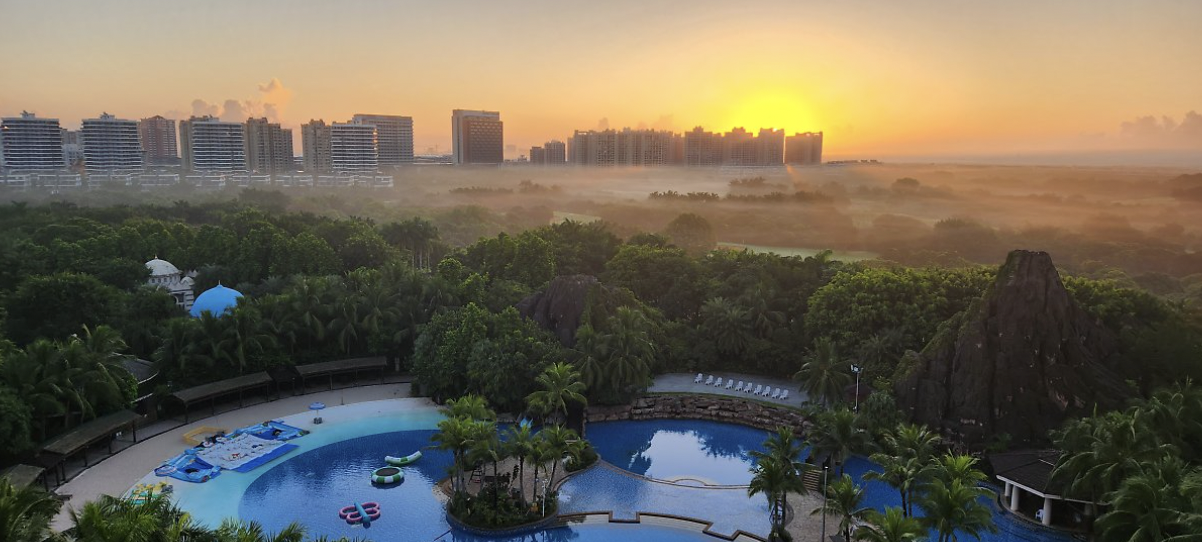
Early morning view out the window showed the course shrouded in ground fog.
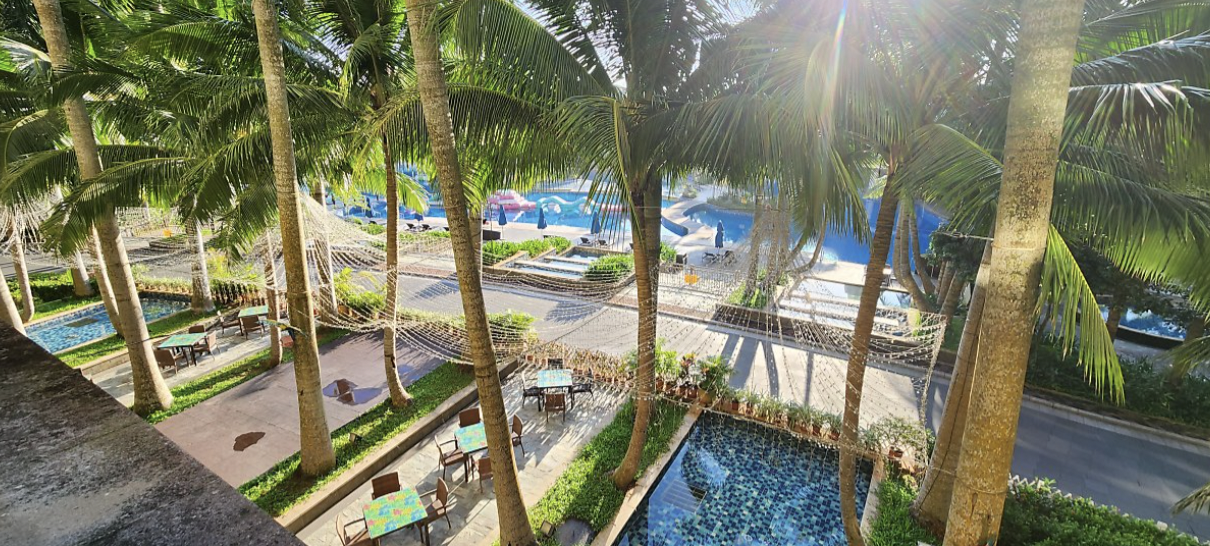
I wasn’t planning to do any swimming when I initially packed for the trip. Next time.
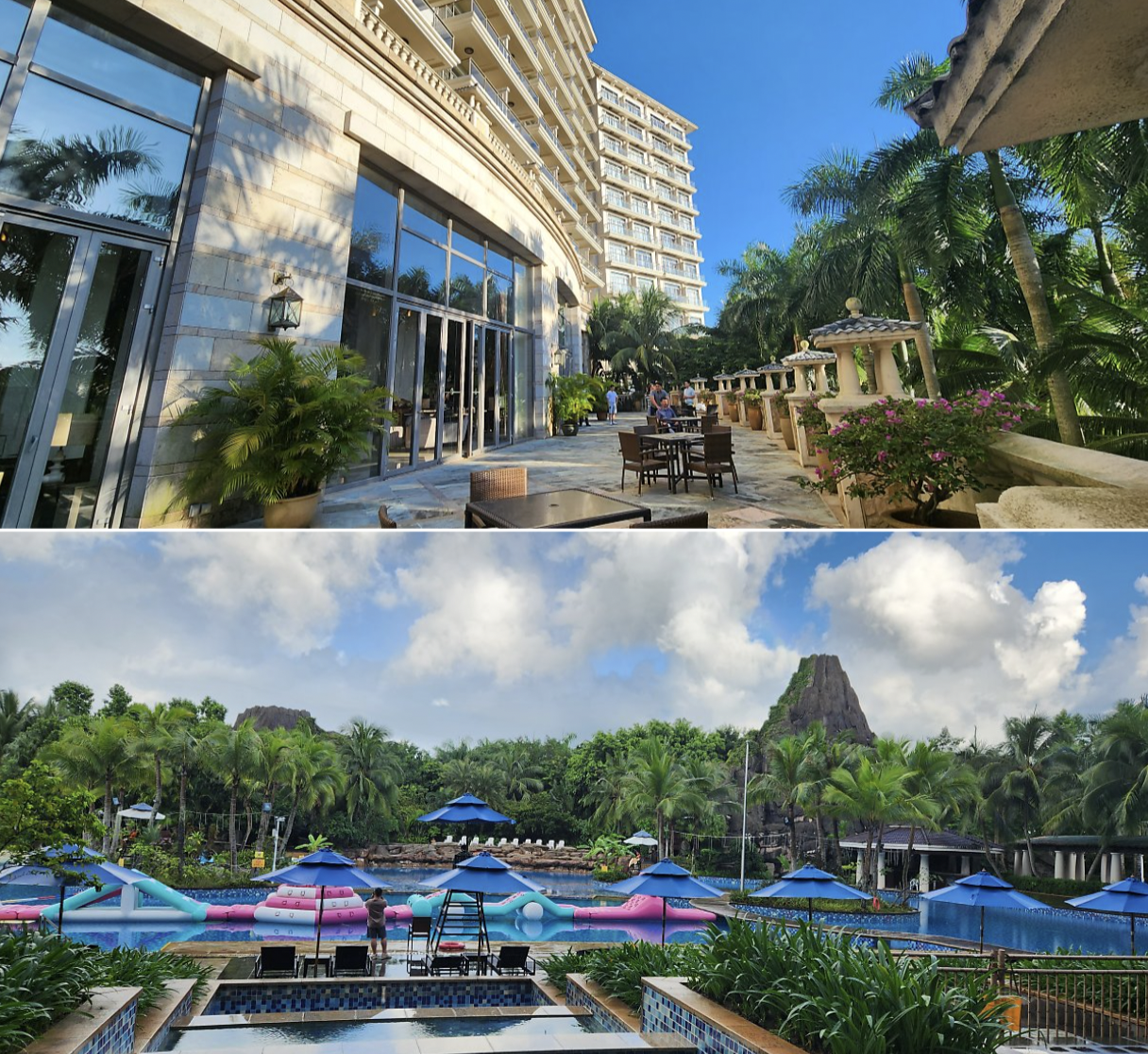
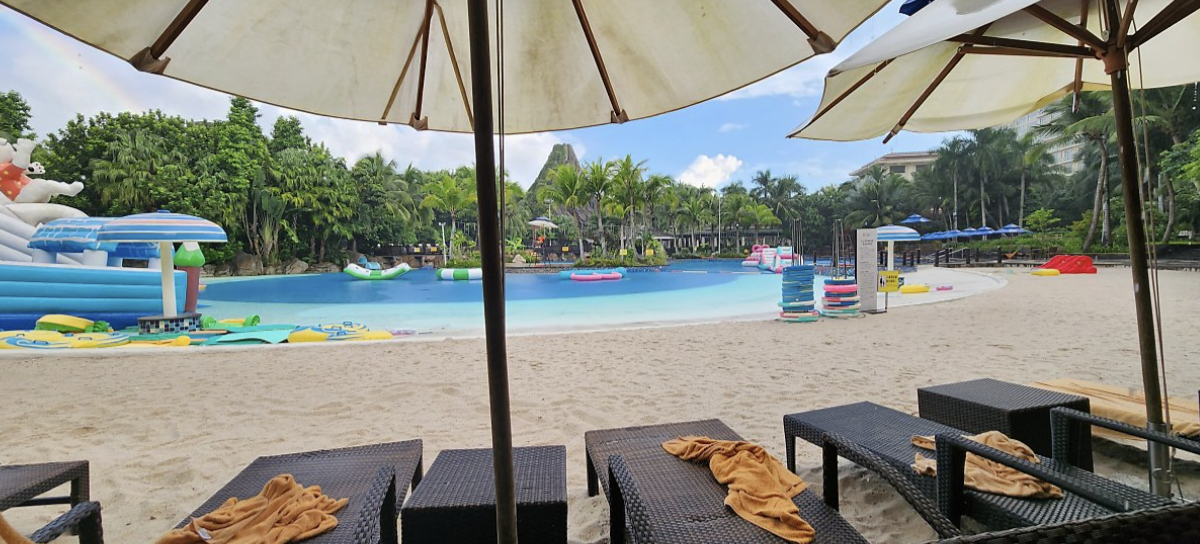
The pool behind the main hotel had sandy beaches!
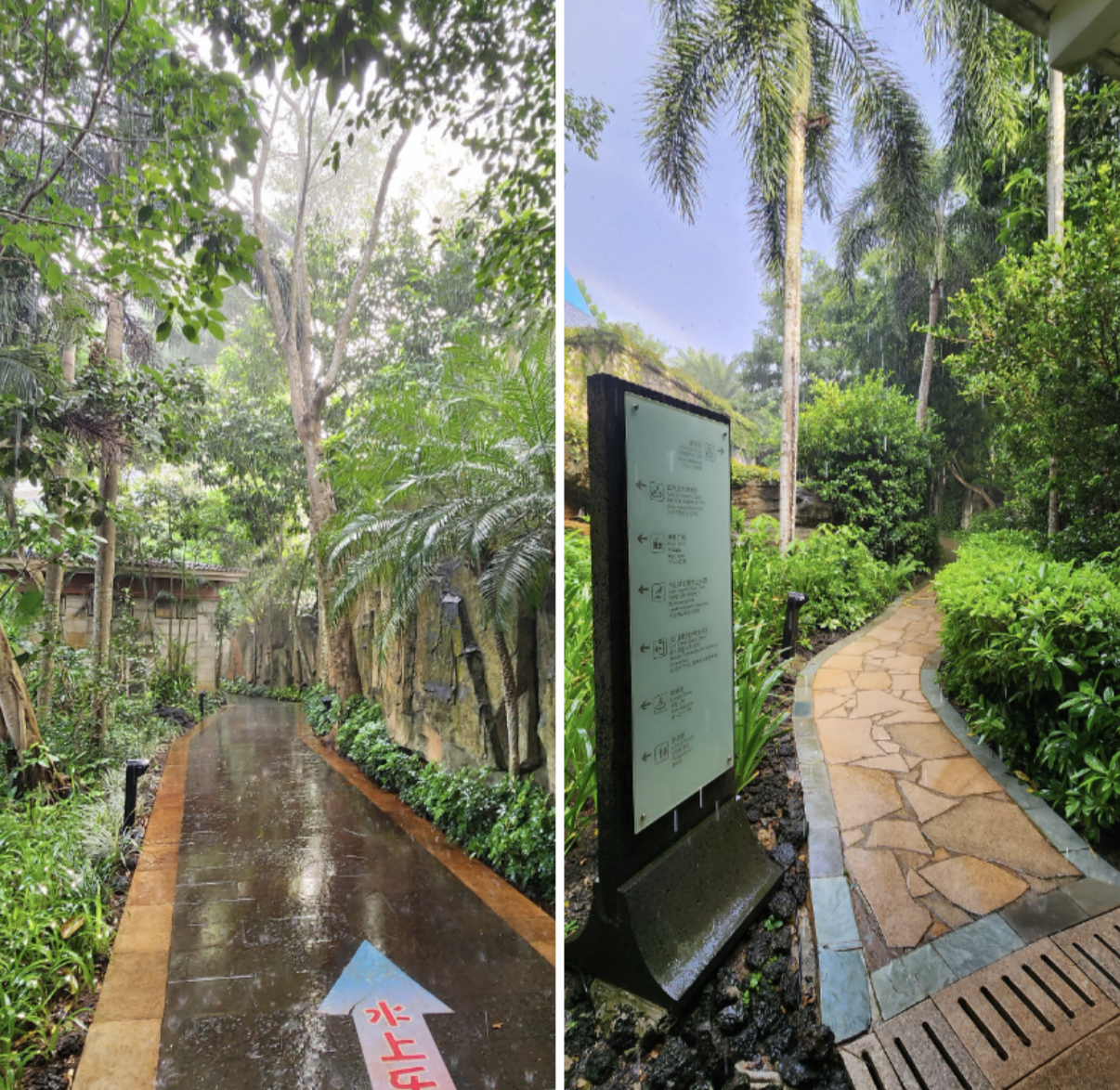
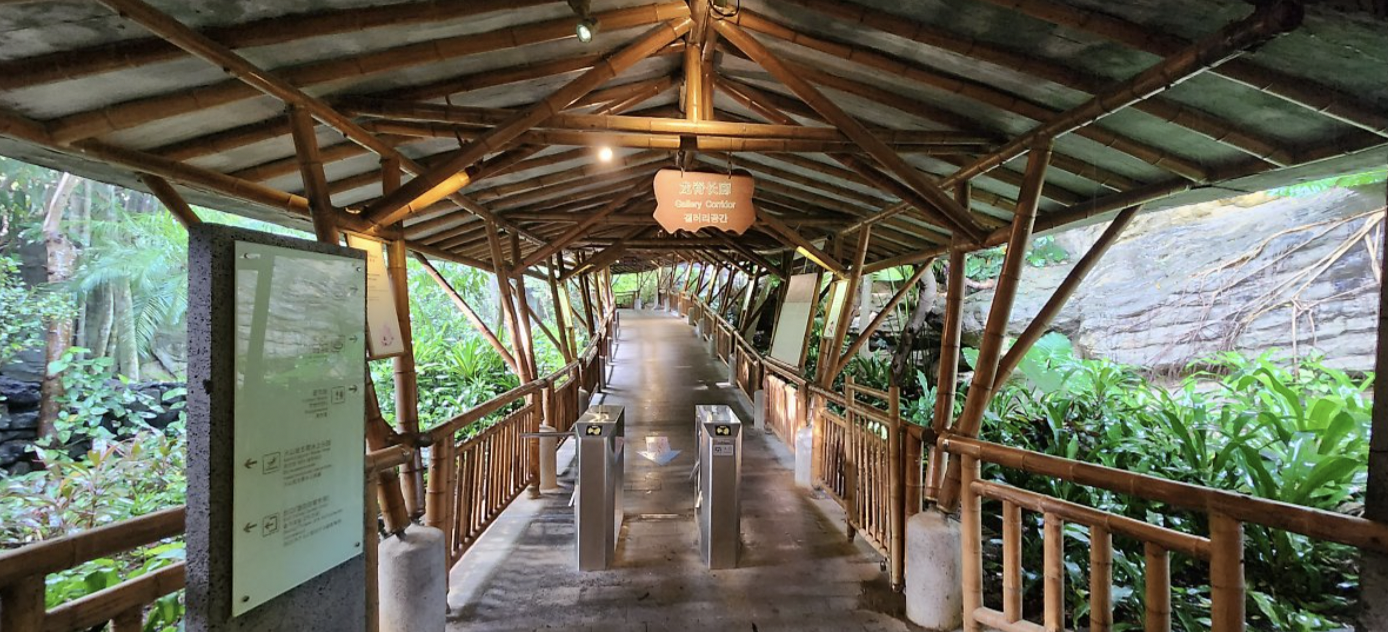
A huge maze of trails and covered walkways branching off to a vast number of pools, hot springs, and saunas.
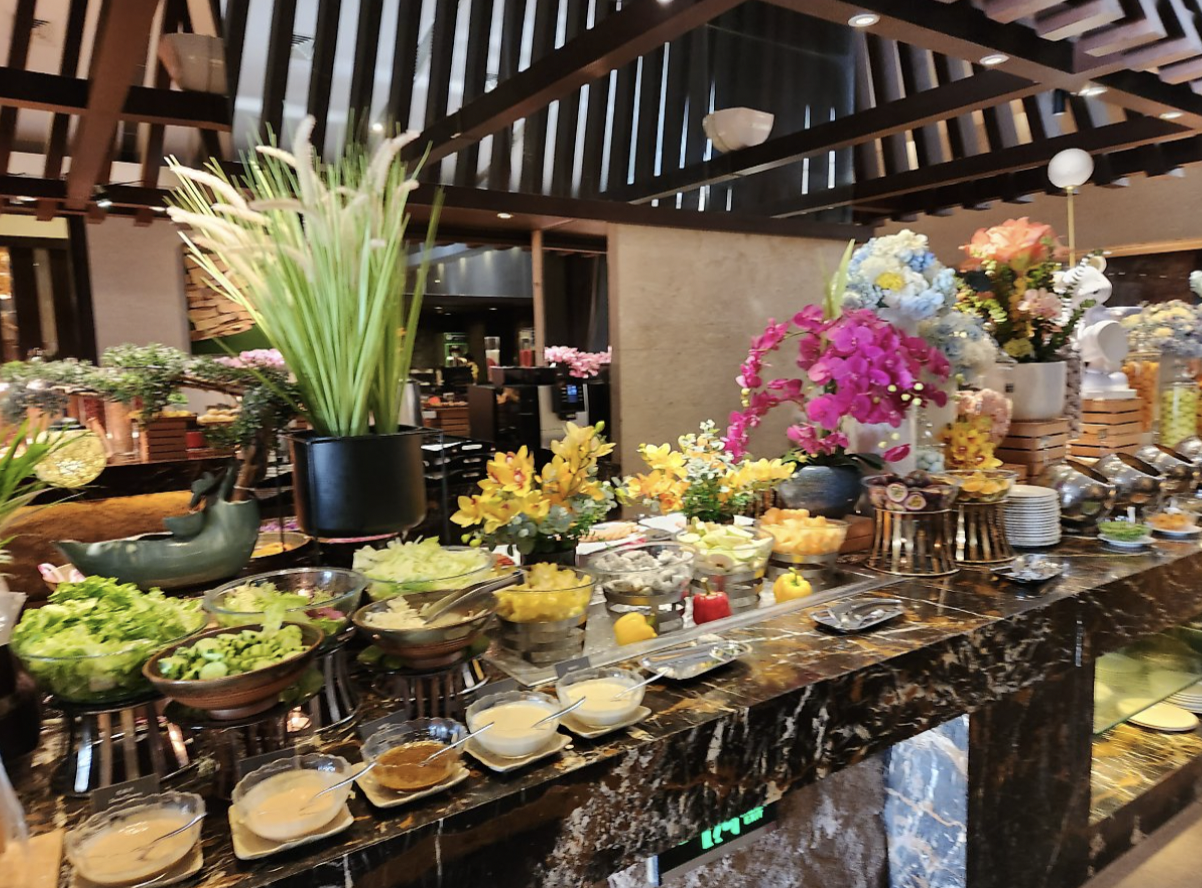
The morning buffet was one of the best I had in a while, with a full line up of both Asian and Western foods.
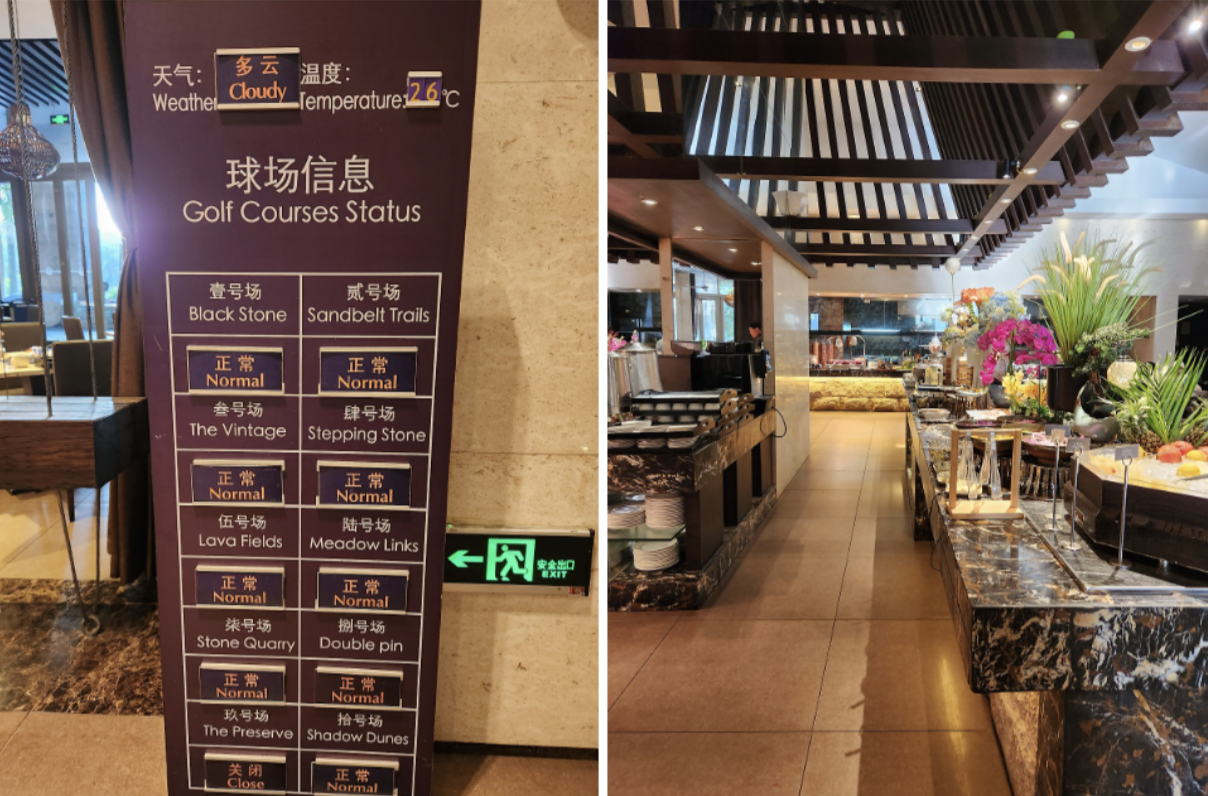
A sign at the entrance of the buffet showed the daily condition of the 10 golf courses.
Hotel Shops & Amenities
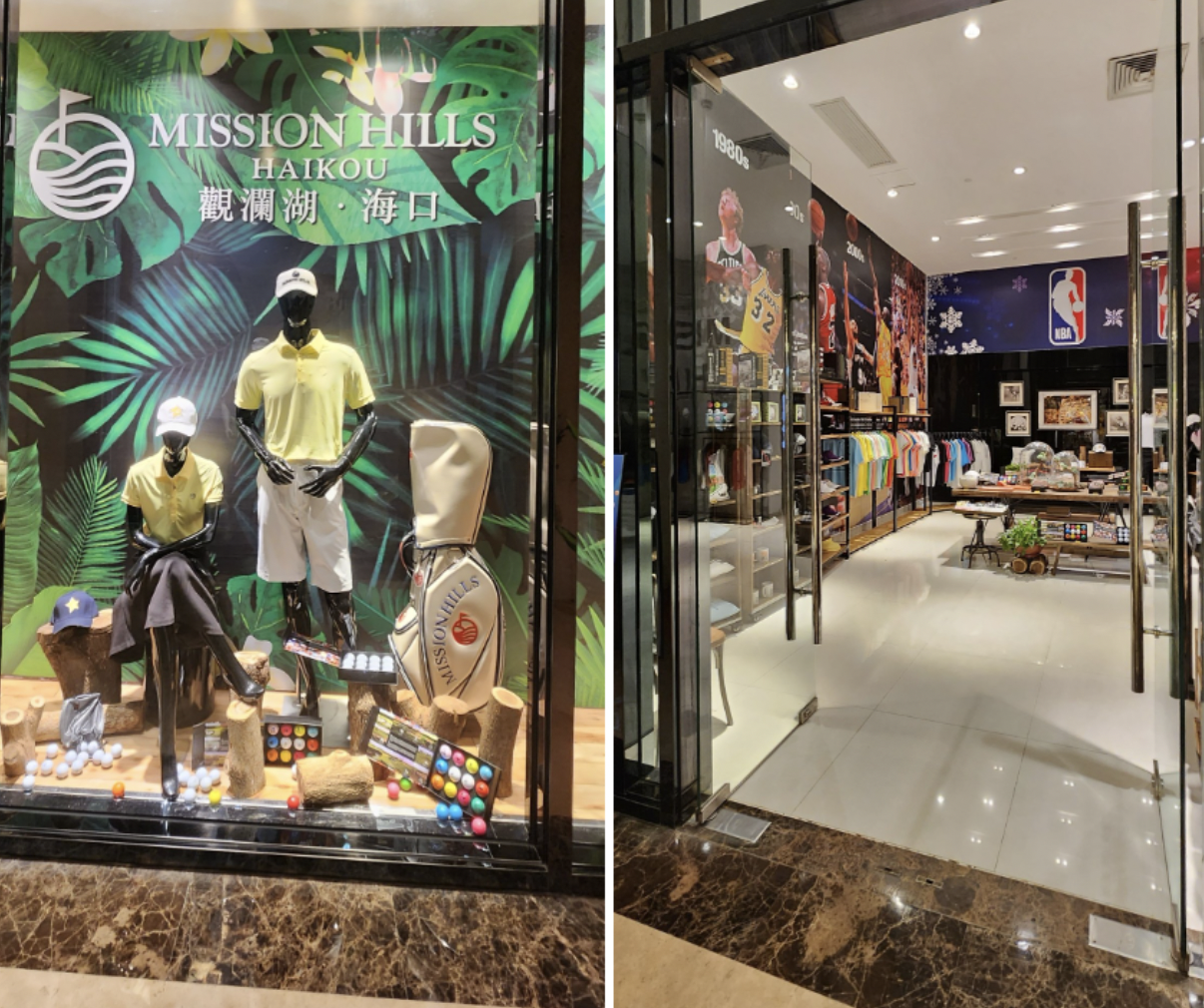
The shops inside the lobby were all high-end as well as ones I didn’t think to expect like the NBA-themed shop, Hennessy whiskey and Tabasco hot sauce shops!
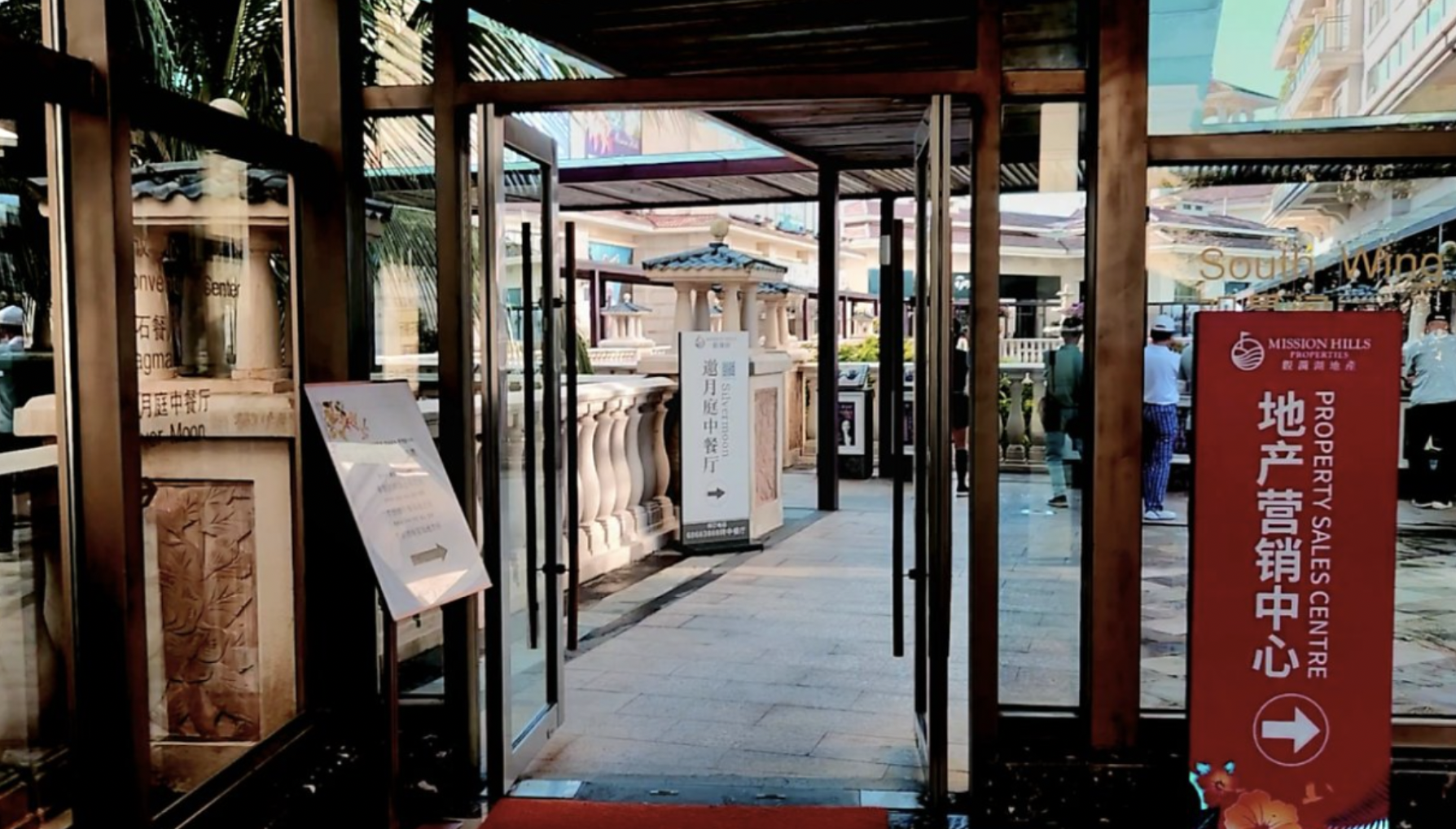
Then there were dozens more shops in a whole other building next to the hotel, lined with the palm prints of celebrities and stars. The sheer size and scale of Mission Hills was outrageous.
Trip Overview
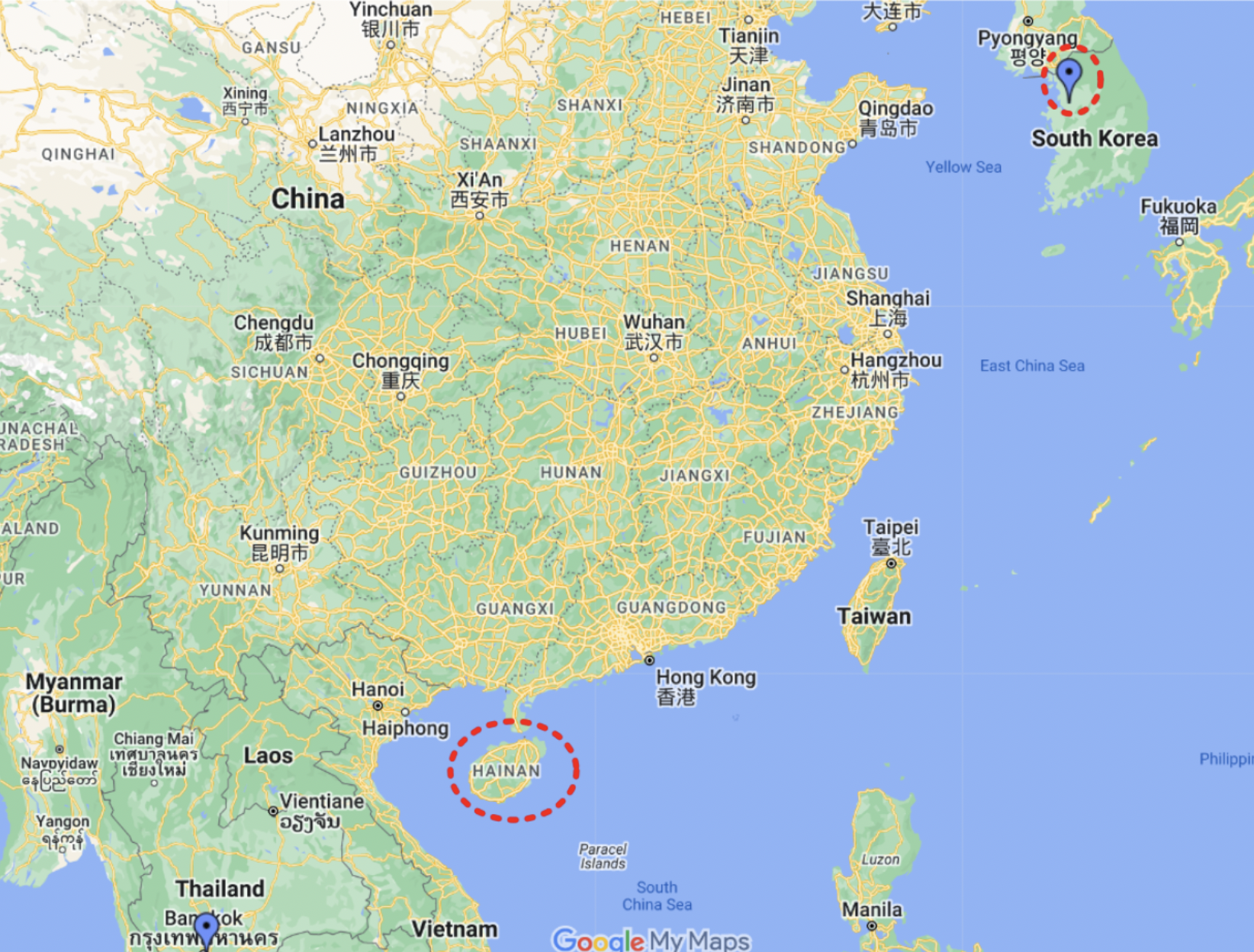
Hainan is a tropical Island in the South China Sea and can get quite hot and humid during the summer monsoon season. By plane, it took 4.5 hours from Korea to Hainan.

Interestingly, Hainan Island is designated as a tourist zone by the Chinese government and does not require a visa prior to arrival. It is issued when you arrive at the airport and go through customs.
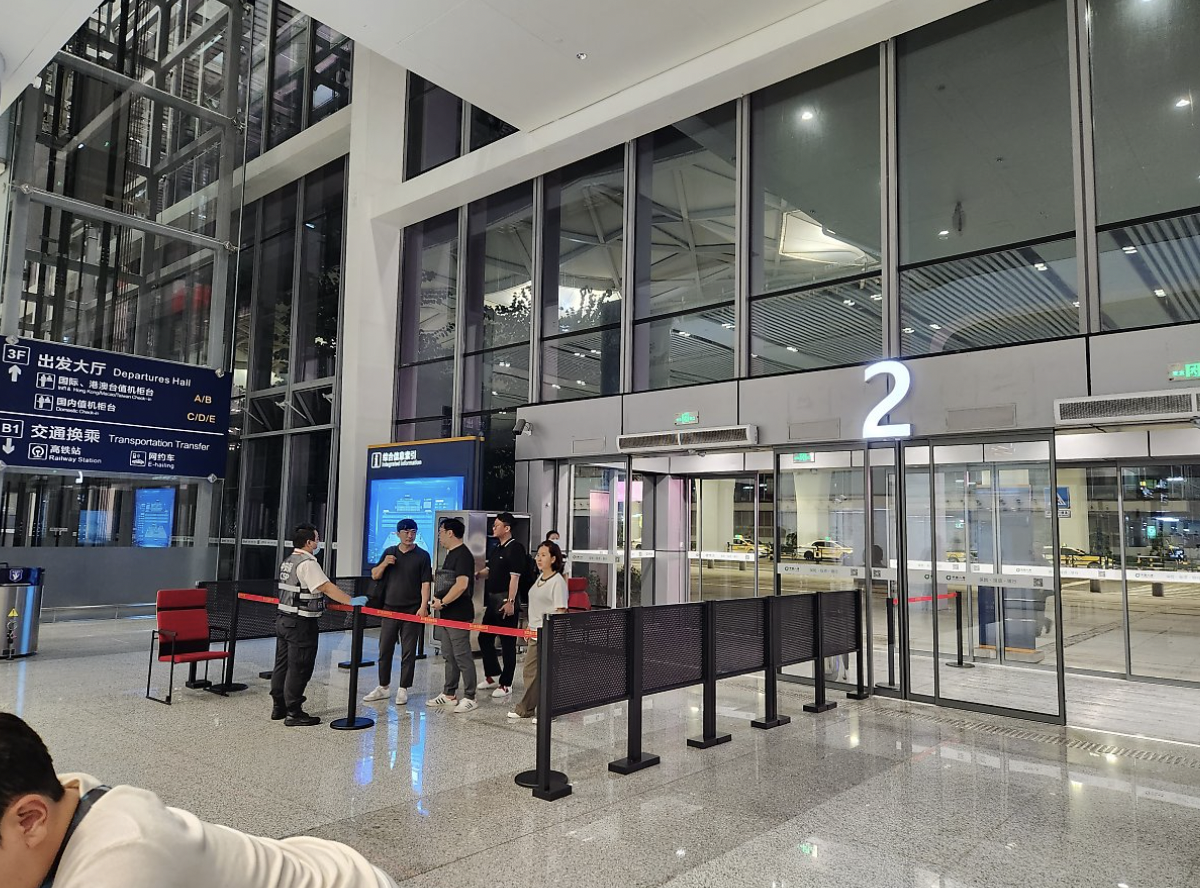
During the end of 2023 when the trip took place, COVID-19 restrictions were largely over and there were the simplest of checks (1-2 minutes) using a machine to detect any virus before entering and exiting the airport.
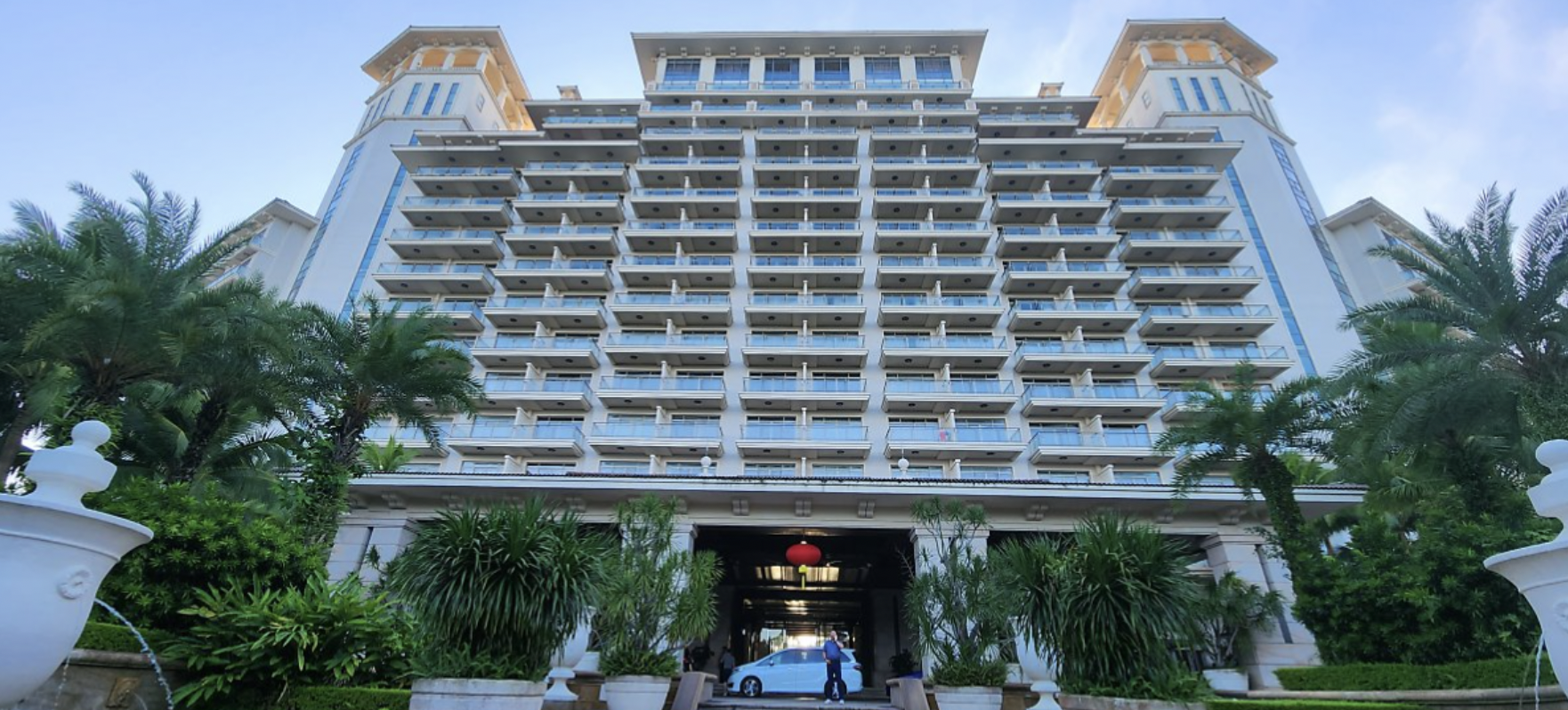
The resort itself was only about a 15-minute bus ride from the airport. For those who travel often to Asia, they’ll know that courses and resorts can be up to two hours from the airport.
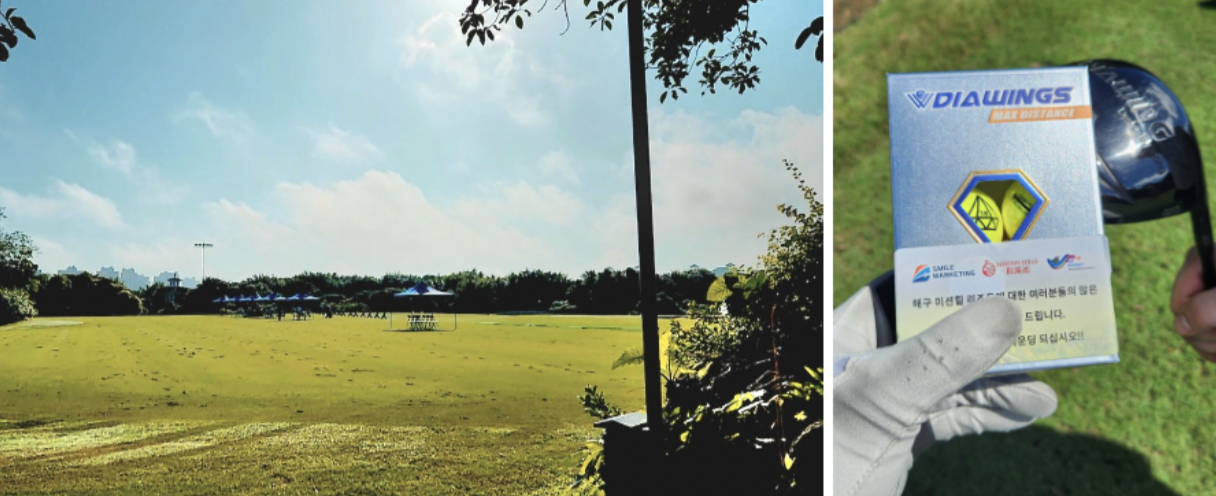
A brief warm-up on the range and armed with complimentary golf balls, we were off to the first tee.
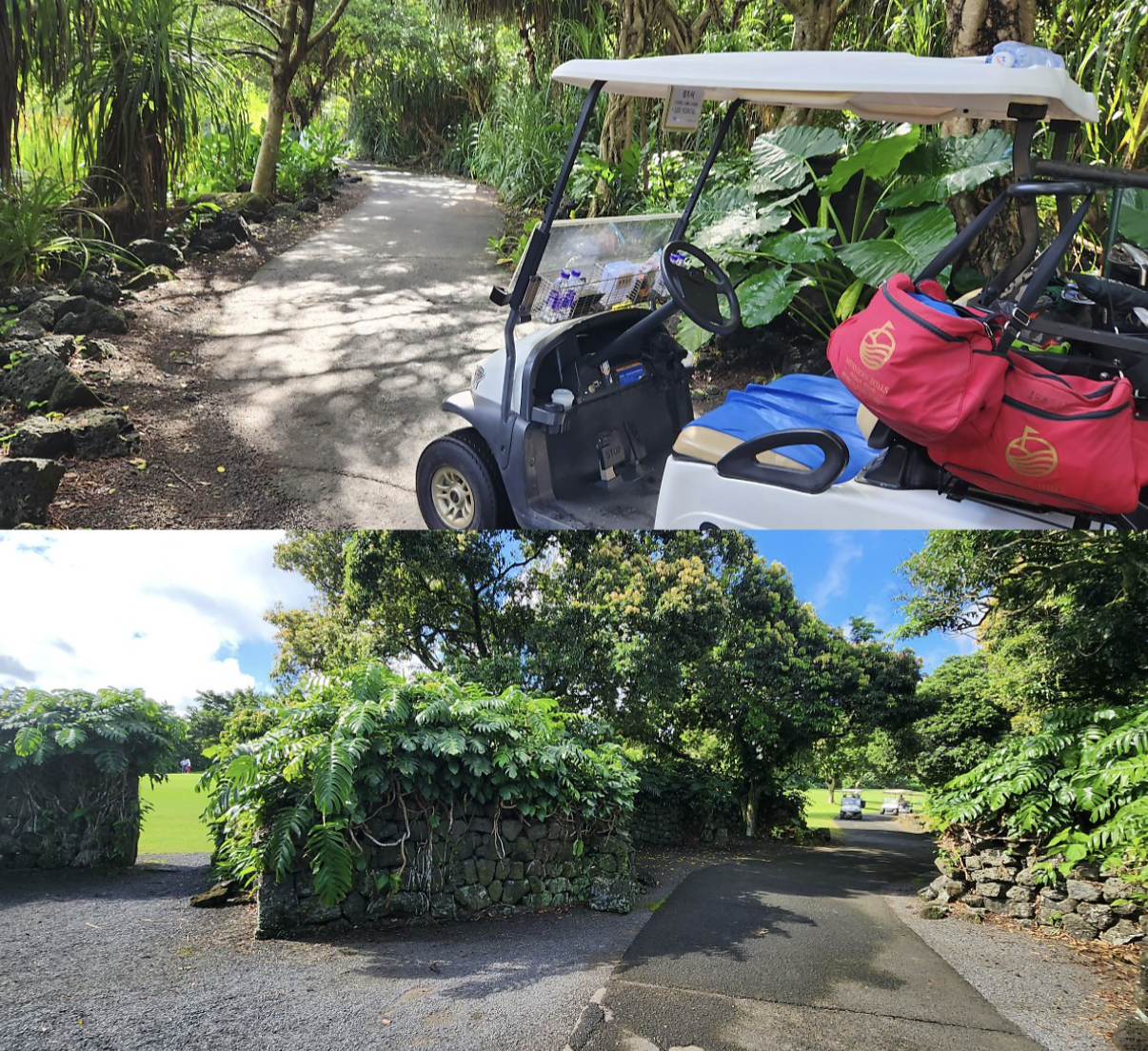
True to its name, the course had stone walls and fences made from the igneous black lava rock.
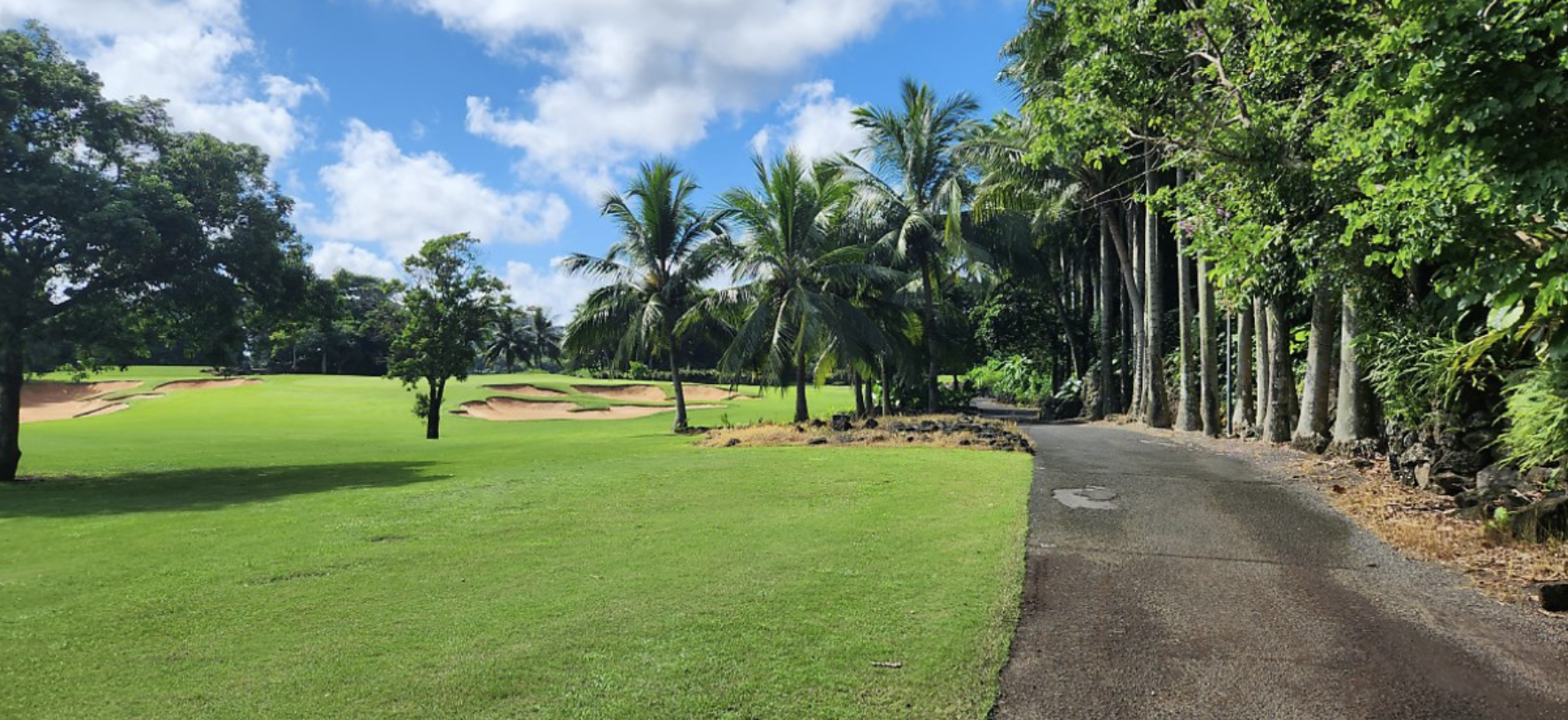
Except for the absence of the sound of waves, the ambiance reminded me of courses in Hawaii.
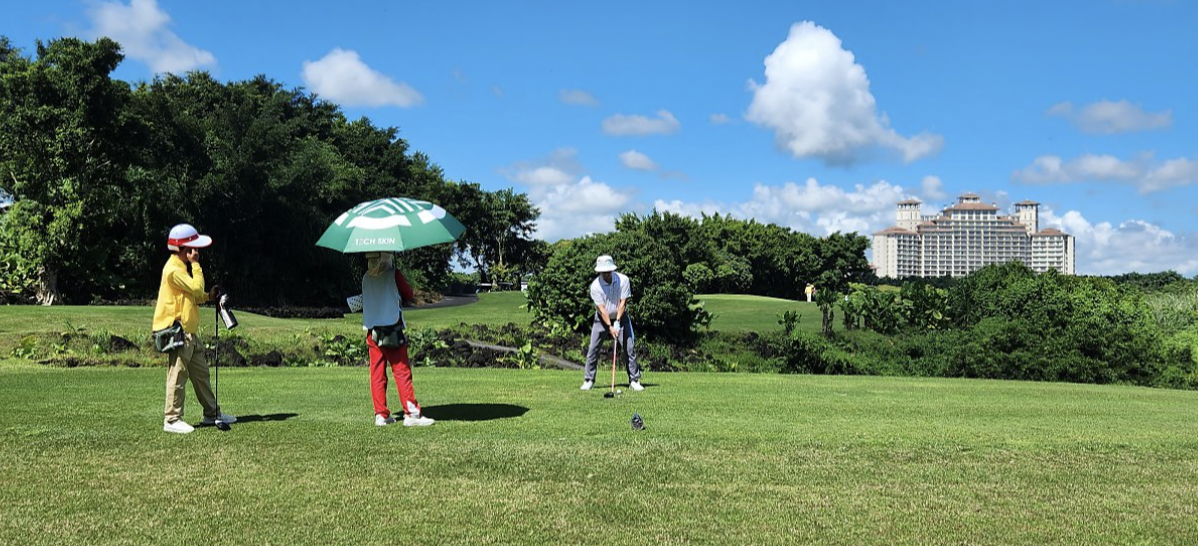
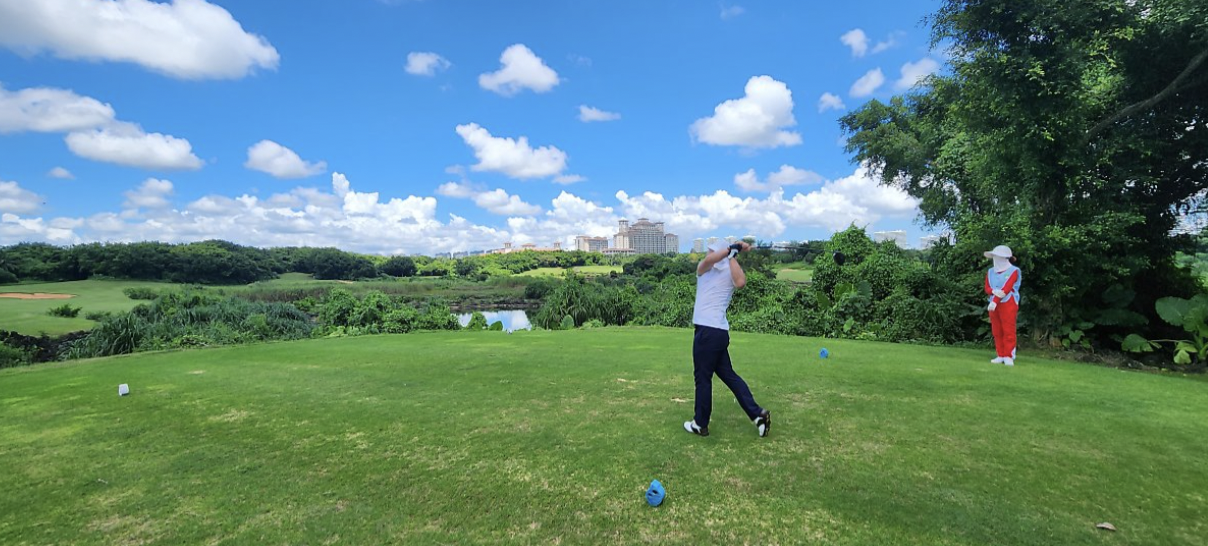
Loved the open skies and the awesome panoramic views!
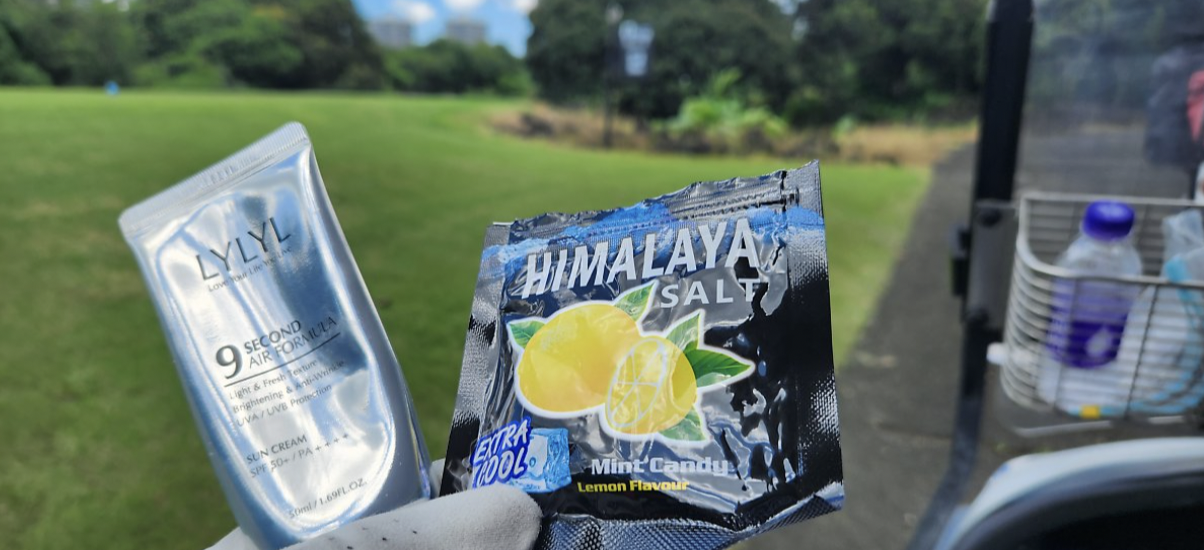
Be sure to pack some strong sunscreen and sports drinks or salt candy. The tropical climate can get quite hot and humid at midday.
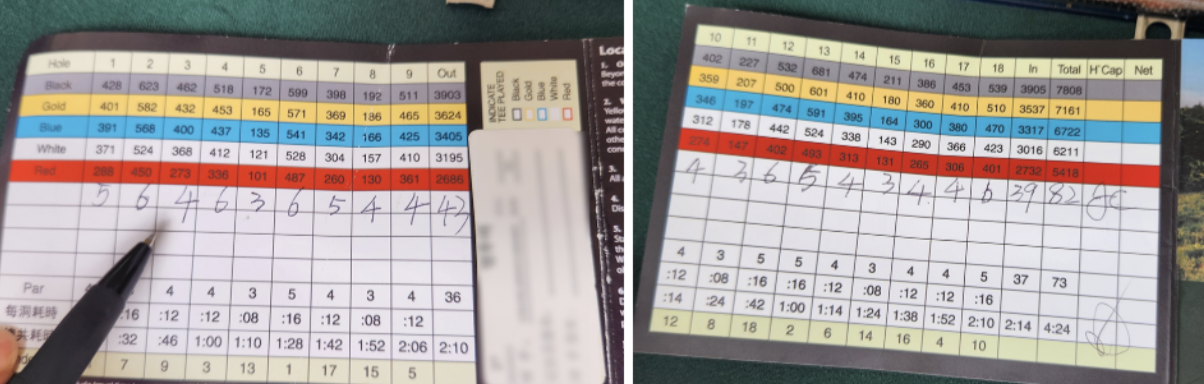
Blackstone plays to par 73 and 6722 yards from the blue. I was happy with the score especially when the caddies told me it was the best they’ve seen in a while, LOL!!!
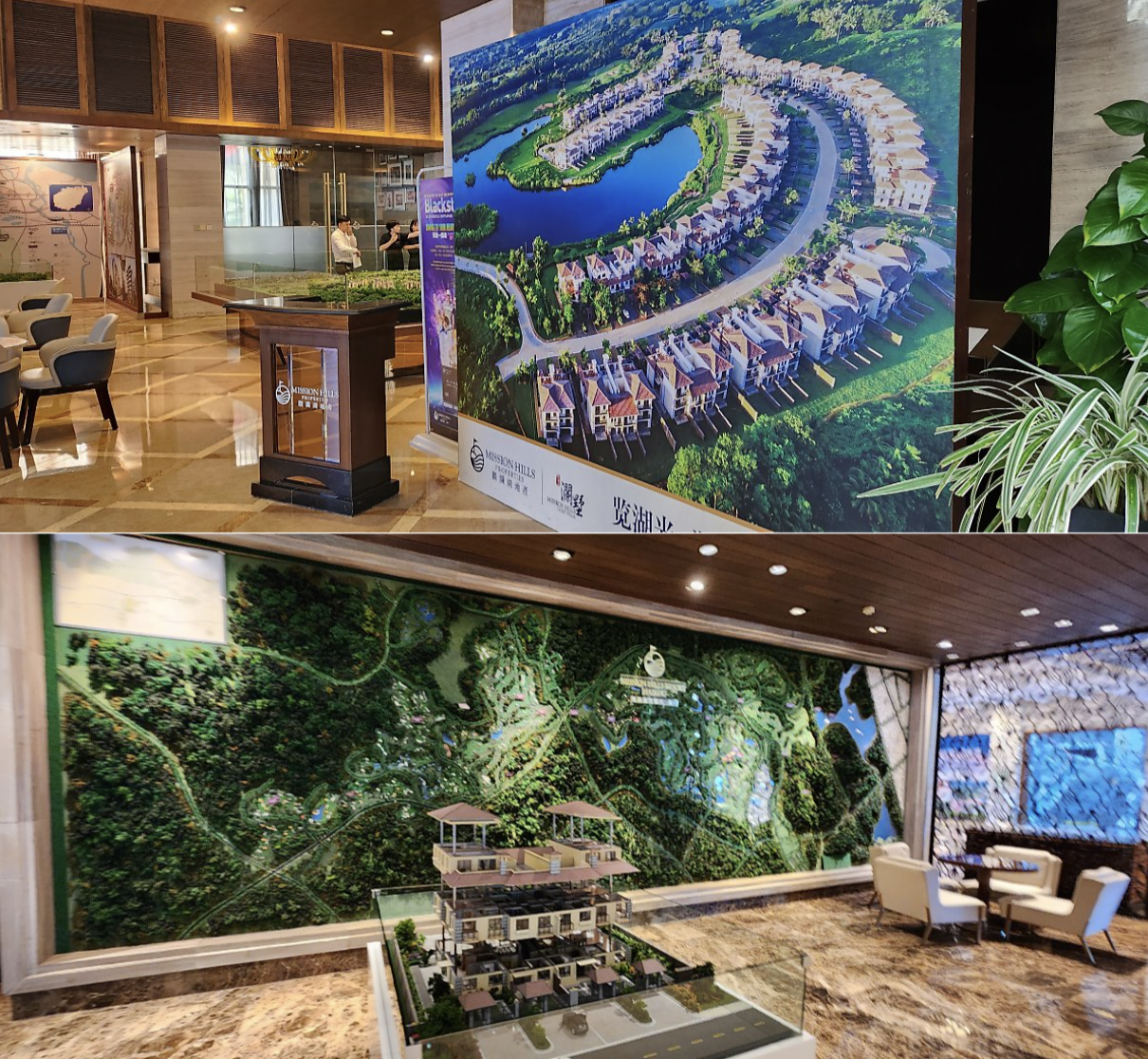
It looked like they were planning to build even more courses and condos. These folks sure like to think big.
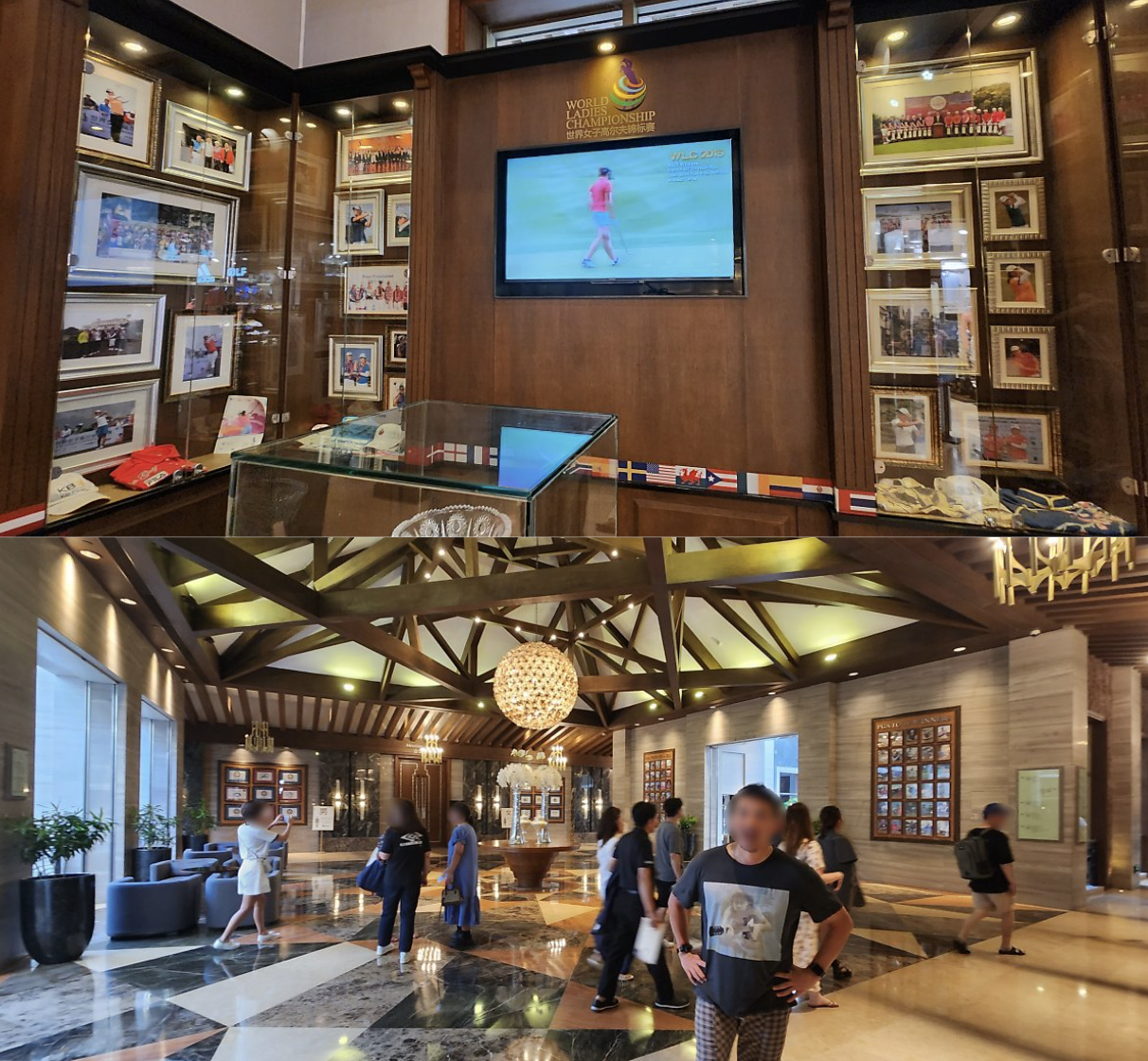
Wall-to-wall memorabilia on display from past majors, champions, and legends of the game. So this is where all those signed Masters flags were!
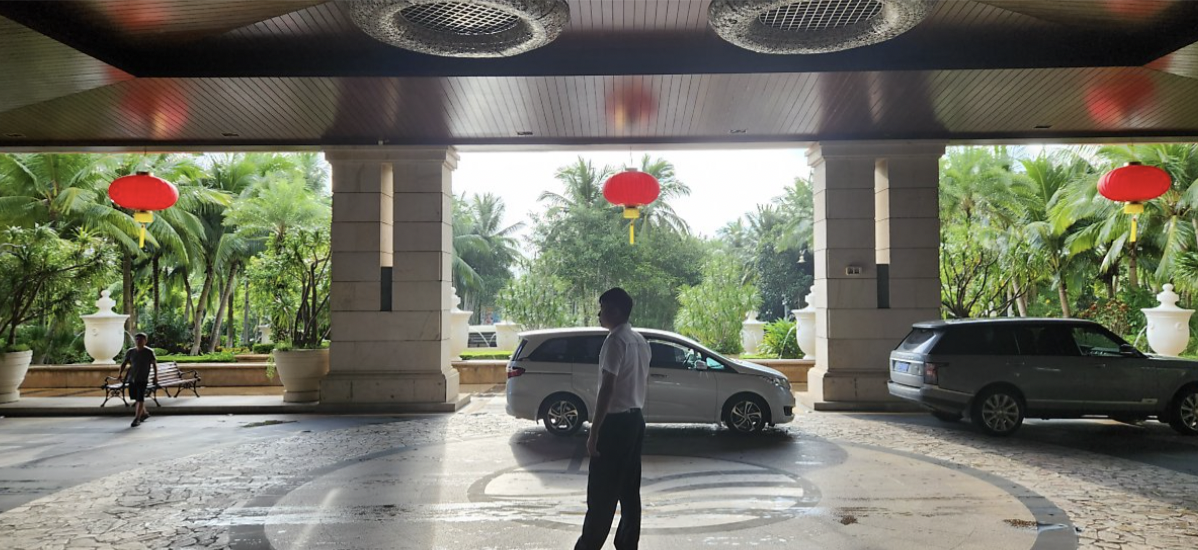
The three-day stay went by all too fast… (T^T)
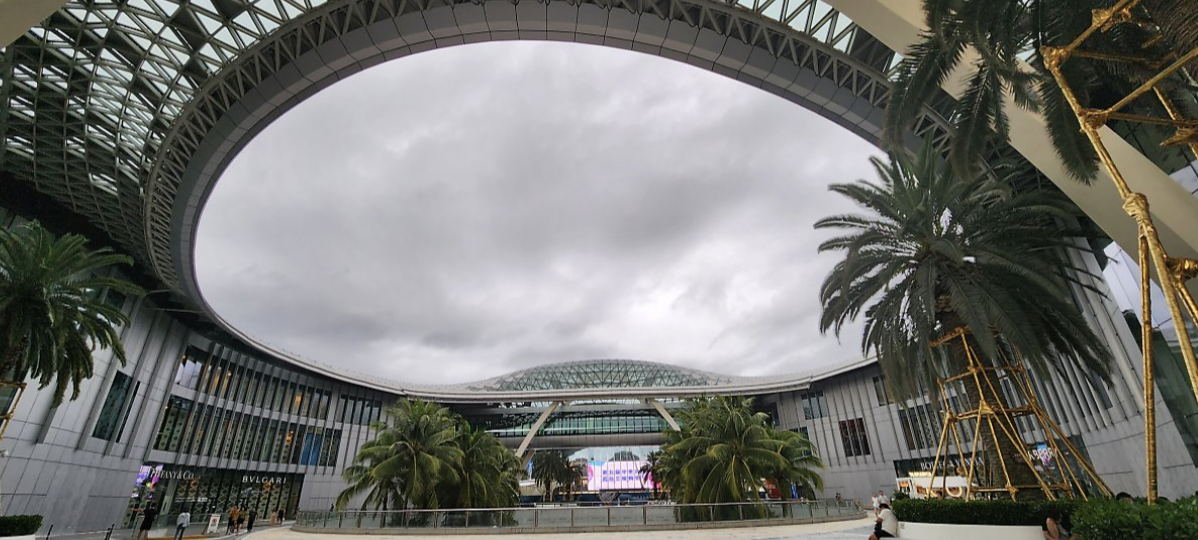
As part of the package, we were also shown to the largest duty-free shop in Asia. These guys have a thing for being the biggest, grandest, and most opulent; and it was awesome.
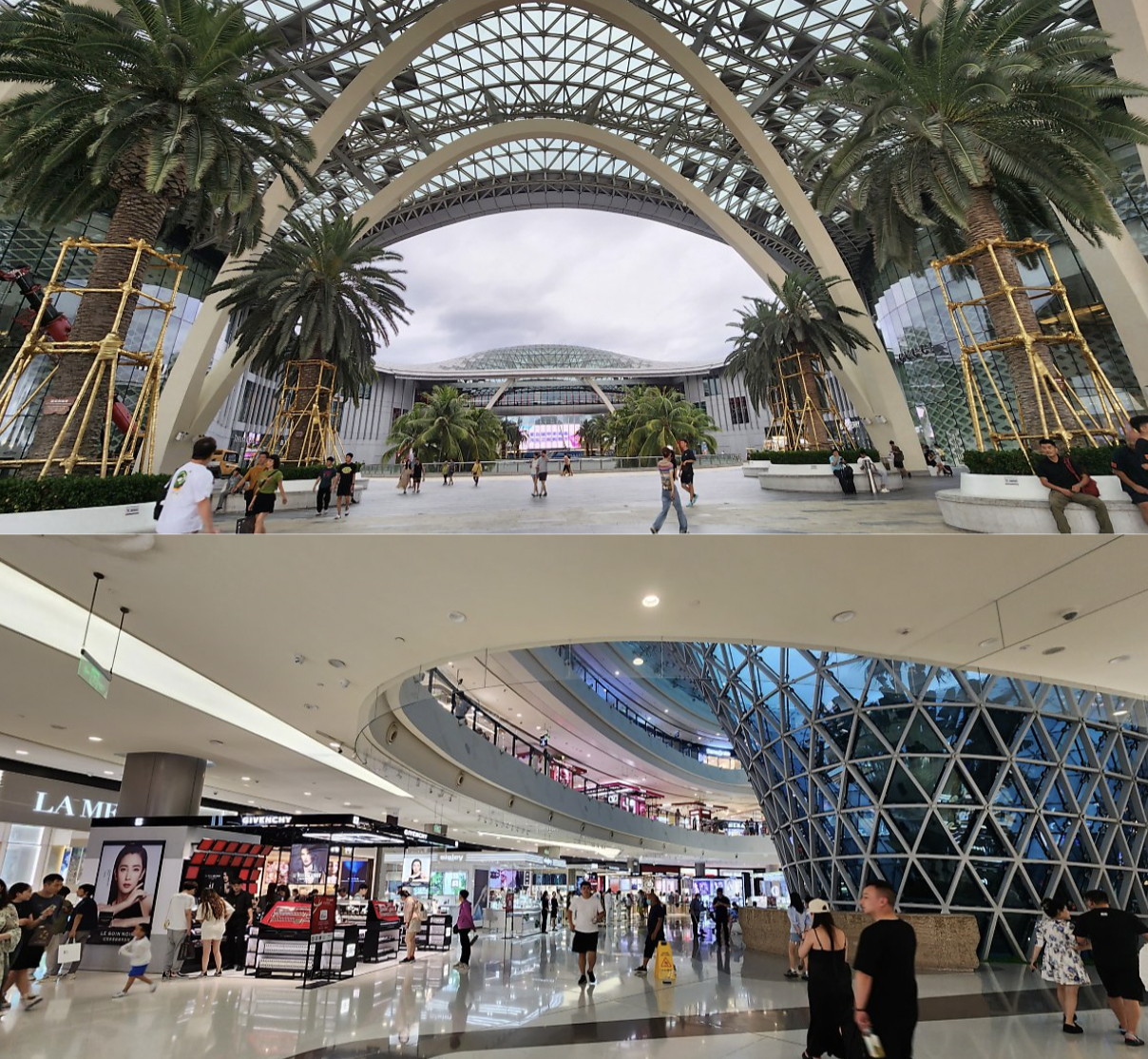
It seemed as if every brand of luxury was represented here, and it would’ve taken hours to see it all. If your partner is into this kind of stuff, leave them at home in case they get in the way of your golf.
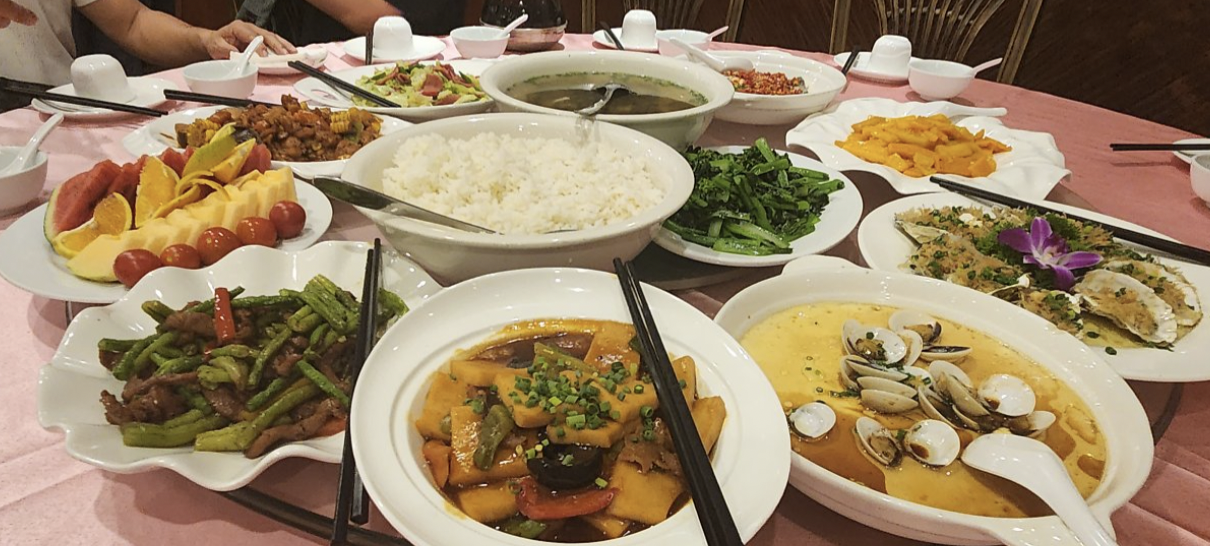
A final meal at a popular restaurant before heading to the airport. Can you guess the menu? Yup, Chinese, but like nothing you see in the West. It was all delicious to boot.
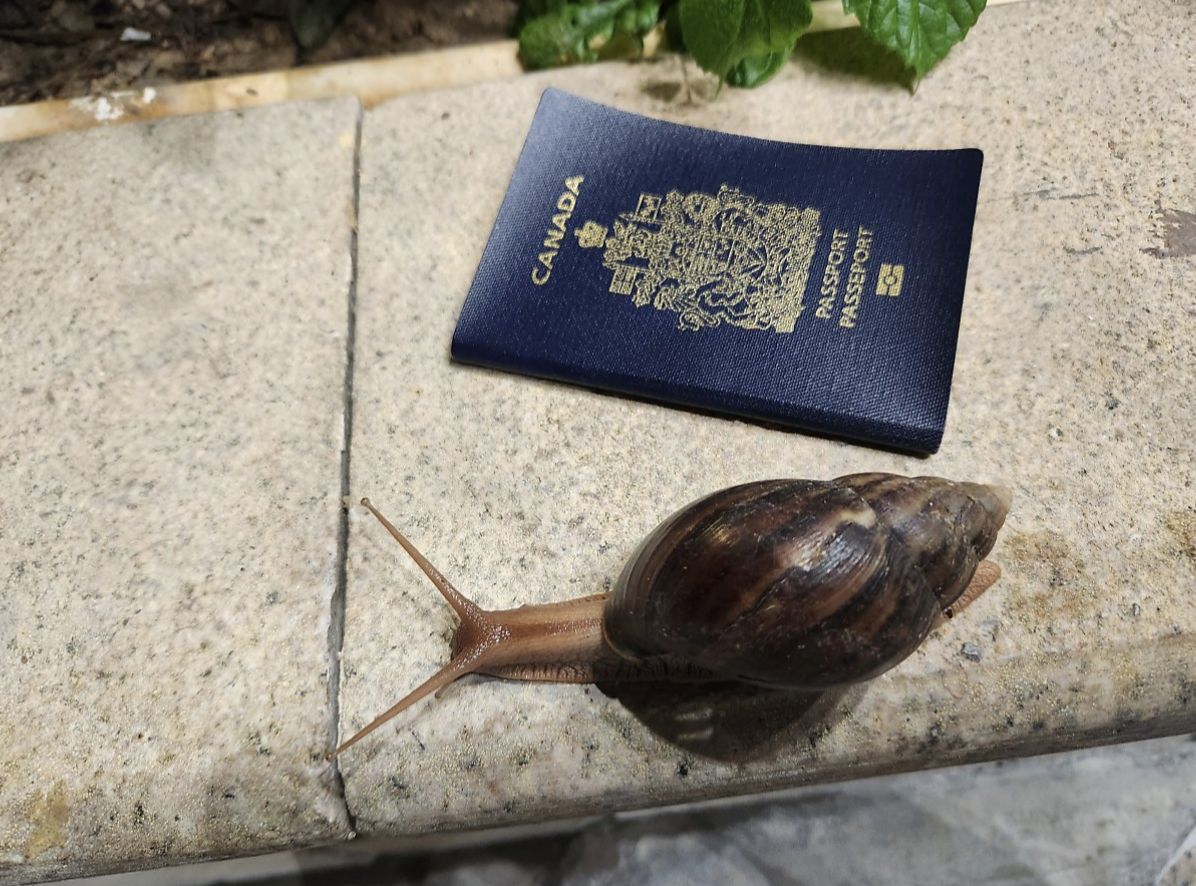
Met a new friend while waiting for the limousine bus to take us the rest of the way. Even these guys were BIG.
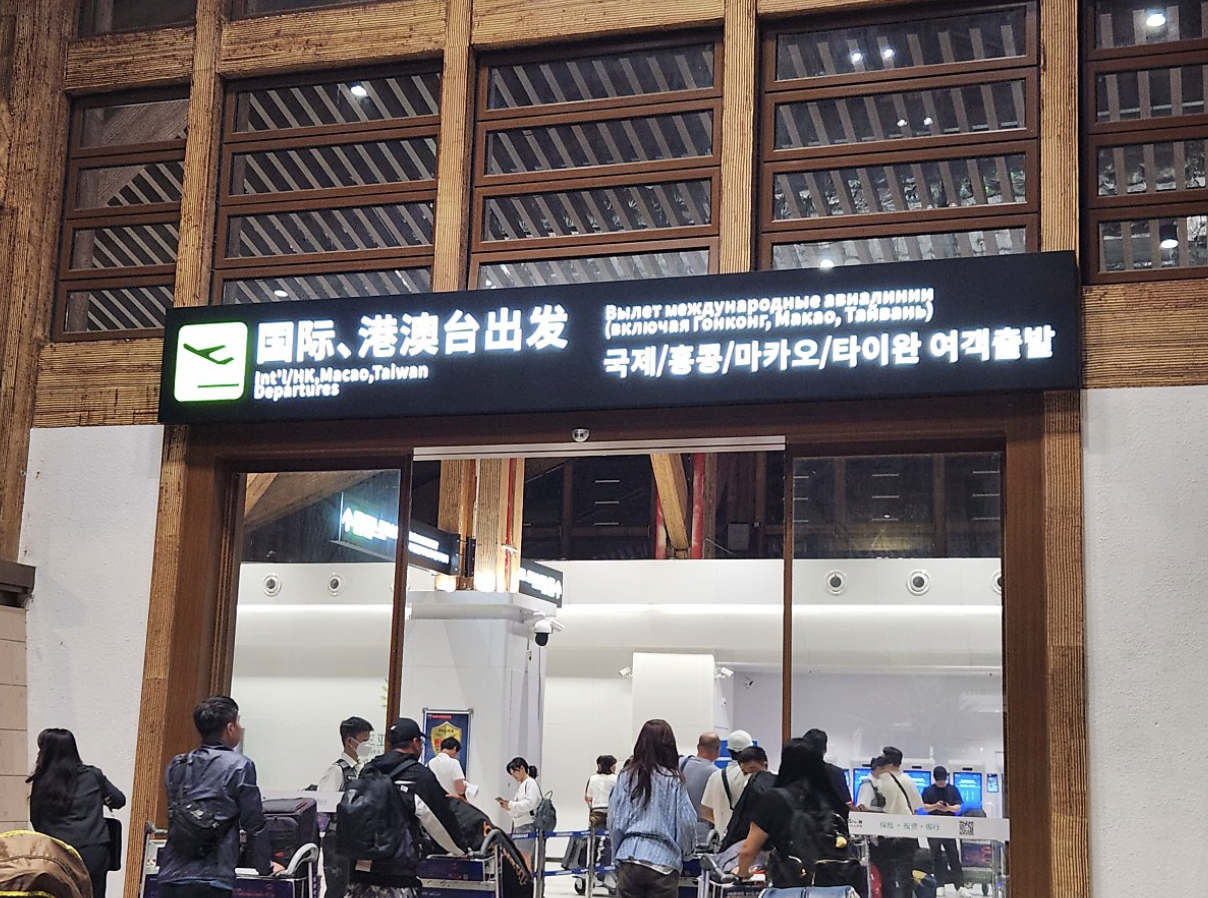
After a rather simple and quick immigration and boarding process, we were safely on our way home to Korea. I have to give credit to the authorities for making the immigration/airport customs process simple and quick. Sometimes everything can be great, only to be ruined by a last-minute glitch or hold-up at the airport, and there were none.
A short nap and back in Seoul. I can’t wait to go back again soon with the whole family to jump in the hot springs. Now if I can only find a way to go visit Pebble Beach and St. Andrews similarly, I’m set. Wish me luck.

RBC Heritage Tour Report: More minis, course-specific setups, Spider & GTS launches

Justin Rose WITB 2026 (April): Full WITB breakdown with new McLaren irons

Best fairway woods of 2026: The most versatile fairway woods + the most forgiving fairway woods

What’s the story behind Webb Simpson’s custom-stamped irons?

Cadillac Championship Tour Report: Spieth’s sizable changes, McLaren Golf launches, and more

The 24 players who can win the Masters

Rory McIlroy’s winning WITB: 2026 Masters

Kristoffer Reitan’s winning WITB: 2026 Truist Championship

J.J. Spaun’s winning WITB: 2026 Valero Texas Open

Cameron Young’s winning WITB: 2026 Cadillac Championship


Alex Fitzpatrick WITB 2026 (May)
Driver: Ping G440 LST (9 degrees) Shaft: Fujikura Ventus Black 6 X 3-wood: TaylorMade Qi4D (15 degrees) Shaft: Fujikura Ventus...

Kristoffer Reitan’s winning WITB: 2026 Truist Championship
Driver: Ping G440 Max (9 degrees) Shaft: Mitsubishi Tensei 1K White 60 TX 3-wood: Ping G440 Max (15 degrees) Shaft:...


WITB Time Machine: Rory McIlroy’s winning WITB, 2021 Truist Championship
Rory McIlroy’s victory at the 2021 Wells Fargo Championship 2021 (now the Truist Championship) marked a significant return to form,...


Collin Morikawa WITB 2026 (May)
Driver: TaylorMade Qi4D LS (8 degrees) Shaft: Mitsubishi Diamana D+ Limited 60 TX 3-wood: TaylorMade SIM Tour (14 degrees) Shaft:...
-
 Equipment2 weeks ago
Justin Rose WITB 2026 (April): Full WITB breakdown with new McLaren irons
-
 Equipment1 week ago
What’s the story behind Webb Simpson’s custom-stamped irons?
-
 Equipment2 weeks ago
Cadillac Championship Tour Report: Spieth’s sizable changes, McLaren Golf launches, and more
-
Whats in the Bag4 days ago
Kristoffer Reitan’s winning WITB: 2026 Truist Championship
-
 Whats in the Bag2 weeks ago
Cameron Young’s winning WITB: 2026 Cadillac Championship
-

 Whats in the Bag3 weeks ago
Nelly Korda WITB 2026 (April)
-

 Equipment2 weeks ago
Justin Rose on the switch to McLaren Golf, learnings from previous equipment moves
-

 Tour Photo Galleries2 weeks ago
Photos from the 2026 Cadillac Championship


Bladehunter
May 18, 2020 at 4:17 pm
Agree. Was looking forward to seeing Seminole on TV and 30 minutes in I said “ I hope it plays better than it looks like it plays “.
It does however make sense that Hogan loved it. Why you ask ? You cannot make a putt , so that helped him defend against great putters I’m sure. As he famously despised that part of the game. Turtle back greens like that produce very boring golf in my opinion. Par par par bogey par par par bogey par….. you get the idea.
John Krug
May 18, 2020 at 12:03 pm
I would be more interested in knowing if Seminole has exclusionary policies for membership.
Nick
May 18, 2020 at 10:28 am
I agree, the course looked like a big open field. Very overrated
Pee Wee Herman
May 17, 2020 at 10:35 pm
Course looks like s h it just like #2 at Pinehurst. Talk about overated. This place is not Pine valley or Augusta National that’s for sure. Reminds me of Munis around Daytona and Cocoa Beach.