
Opinion & Analysis
Korea’s answer to help grow the game


When the golfing world was first introduced to Mark Broadie’s Strokes Gained Index (SGI) in 2011, it forever changed the way we look at the game. In direct contrast to legendary Bobby Locke’s iconic phrase “drive for show, putt for dough,” the new method showed that driving the ball well was actually the bigger factor in lowering scores.
At first, I recall thinking that it couldn’t be right. After all, the longest drive and the shortest putt each count the same one stroke, right? But then again, where are you more likely to make a birdie from if your ball is 50 yards and 150 yards from the pin, respectively?

Should the new saying be “Putt for show, Drive for dough?”
Even before Broadie’s method showed the advantages of longer drives, nearly all club and ball manufacturers have been focused on marketing distance. In response, many golf courses tried to lengthen the course to keep the game challenging. But no matter how long golf courses became, long bombers like Bryson and Dustin continued to make short work of them reaching “monstrous” par 5s in two with an 8- iron. It was only a matter of time before golf’s governing bodies declared that things had gone too far.
- Related: Golf in Korea during COVID-19
I understand where the USGA is coming from. But surely there are other ways to make professional golf more challenging than limiting golf ball distance for everyone. After all, why penalize average Joes like me who can barely drive 250? Instead, let’s make the course set up more difficult for professional tournaments and let the rest of us continue our valiant struggle with all the help we can get.
With all the heated online arguments for and against USGA’s stance on distance, however, I found it odd that it has never been an issue here in Korea. In fact, whenever I tried to discuss the topic and how it's dividing golfers in the West, no one here seemed to bat an eye. I too soon came to dismiss it as a non-issue, but after subconsciously mulling about it for a while, I came up with an interesting theory.
Could it be that the courses here are already hard enough without having to add extra sandbags around our ankles?
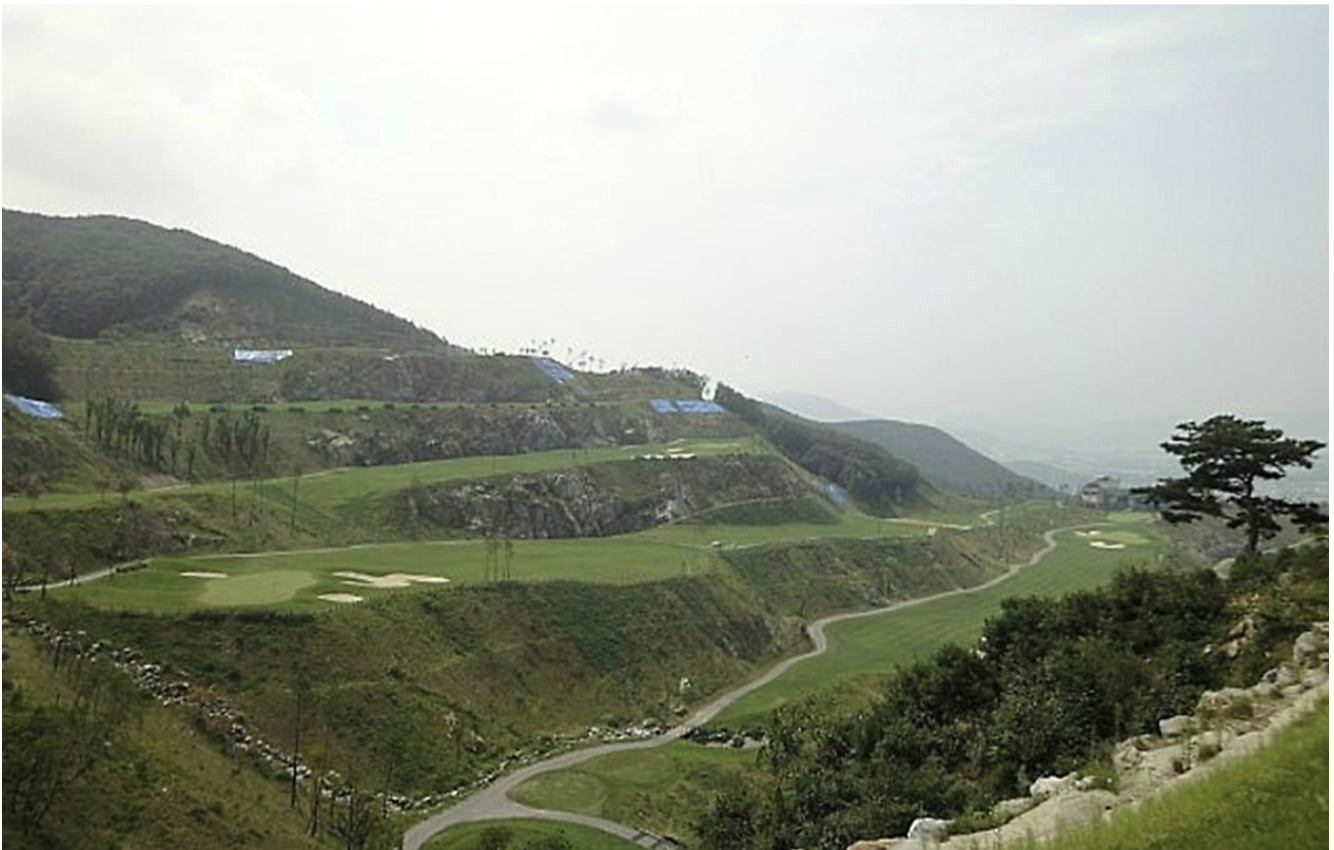
Flat land for building a golf course is rare in Korea
To be sure, I’m not trying to compare Korean courses to beasts like Bethpage Black or Whistling straits. However, it is my contention that most Korean courses have very narrow fairways and an over-abundance of penalty areas in comparison to their Western counterparts. As such, Korean courses support my claim that difficult setups can make the game plenty challenging without limiting equipment distance. Plus, some of the course features and local rules here also act to help grow the game by speeding up play considerably.
Size Matters
To give you some perspective on size, South Korea is a small peninsula about the size of Indiana with mountains covering 70 percent of the country. As a result, the majority of 550+ golf courses here are carved out on top or steep sides of mountains. A typical golf hole here features a hill along one side of the hole and a steep drop-off on the other side. So if a tee shot happens to stray a little off the narrow fairway, the ball is usually declared to be out of bounds or lost.
When I first began playing here in 2001, my first impression was that the courses seemed relatively short and easy. Back in Canada, if a tee shot strays onto the adjacent hole or under a tree, it would simply make for a fun and challenging attempt to scramble for par, right? Nope. Not here. Uh-uh. With almost every hole lined on both sides with OB or hazard stakes, I realized quickly that golf here required a very different approach than what I was used to.

Most of Korea’s 550+ golf courses are carved on top or sides of mountains.
At first, there seemed to be no reason or rhyme as to why the courses had so many penalty areas. In particular, what frustrated me most was having an easy wedge over relatively short trees from an adjacent hole; only to be told it was out of bounds. What good is the ability to pull off amazing Seve-esque recovery shots if I’m not even given a chance to attempt them in the first place?
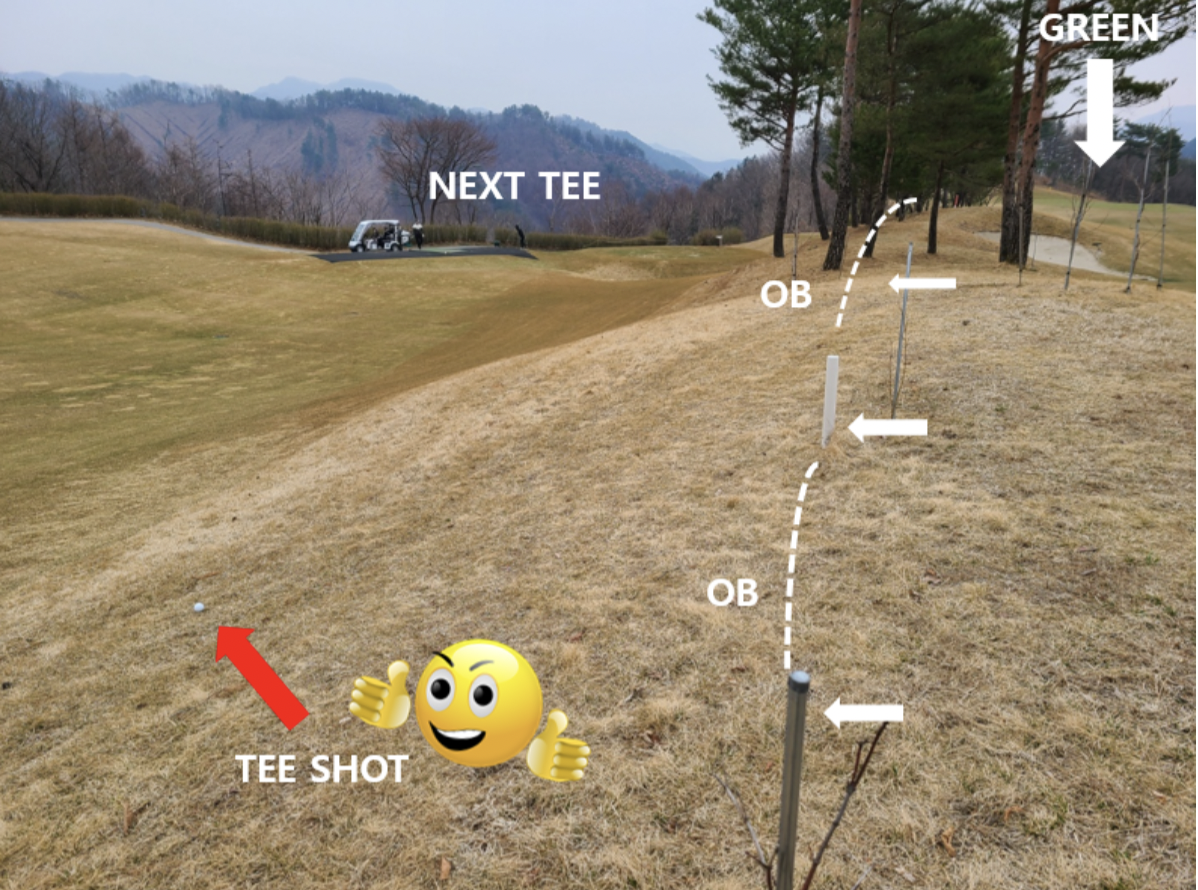
Easy 9 iron to the green? Nope. OB for D-bogey or worse.
Inevitably, I soon developed a severe case of the driver yips in trying to keep my ball in play. No matter how I tried, every round would have at least two or three balls out of bounds. My handicap quickly grew from being a toddler to the legal drinking age, and my foursome began to doubt I had ever broken 80 before. Likewise, my preference for long-distance quickly took a backseat in favor of accurate shot-making.
To be sure, I’m not suggesting a dozen new penalty areas be added or your golf courses are built on the sides of mountains. I’m just saying that before any definitive decision is made on the equipment side of golf, I hope the powers that be can first explore diverse course setups at iconic tournament courses to challenge the best players in the world. After all, there are so many more amateur golfers than professionals, and we certainly need all the help we can get.

Just your typical tee shot with 90 meter drop, OB on both sides to a sloping fairway. No pressure.
Course setup to grow the game?
Aside from an abundance of OB stakes, Korean courses also have several features and local rules which may baffle newcomers. Even though some of them may not be welcomed in all parts of the world, and are certainly not practiced for pro tournament play here, they have undeniably helped the game grow in Korea by speeding up play immensely.

OB tees to save time and ego.
Your home course probably has a drop area on par 3s where hazards come into play. The same applies here but with one big difference in that, we also have a designated drop area for par 4s and par 5s. You see, when a tee shot’s fate is in question, amateur golfers are urged to play from a special set of tees 220~250 yards ahead. So, rather than playing a provisional ball, the golfer would be playing their 3rd or 4th shot from these forward tees, depending on whether the ball landed in a
hazard or out of bounds.
Although it took a bit of getting used to, I have found this common local rule to help in two ways here. One, it speeds up the pace of play considerably; and two, it helps to preserve the sanity of golfers from having to re-tee with the potential to hit multiple balls out of bounds.
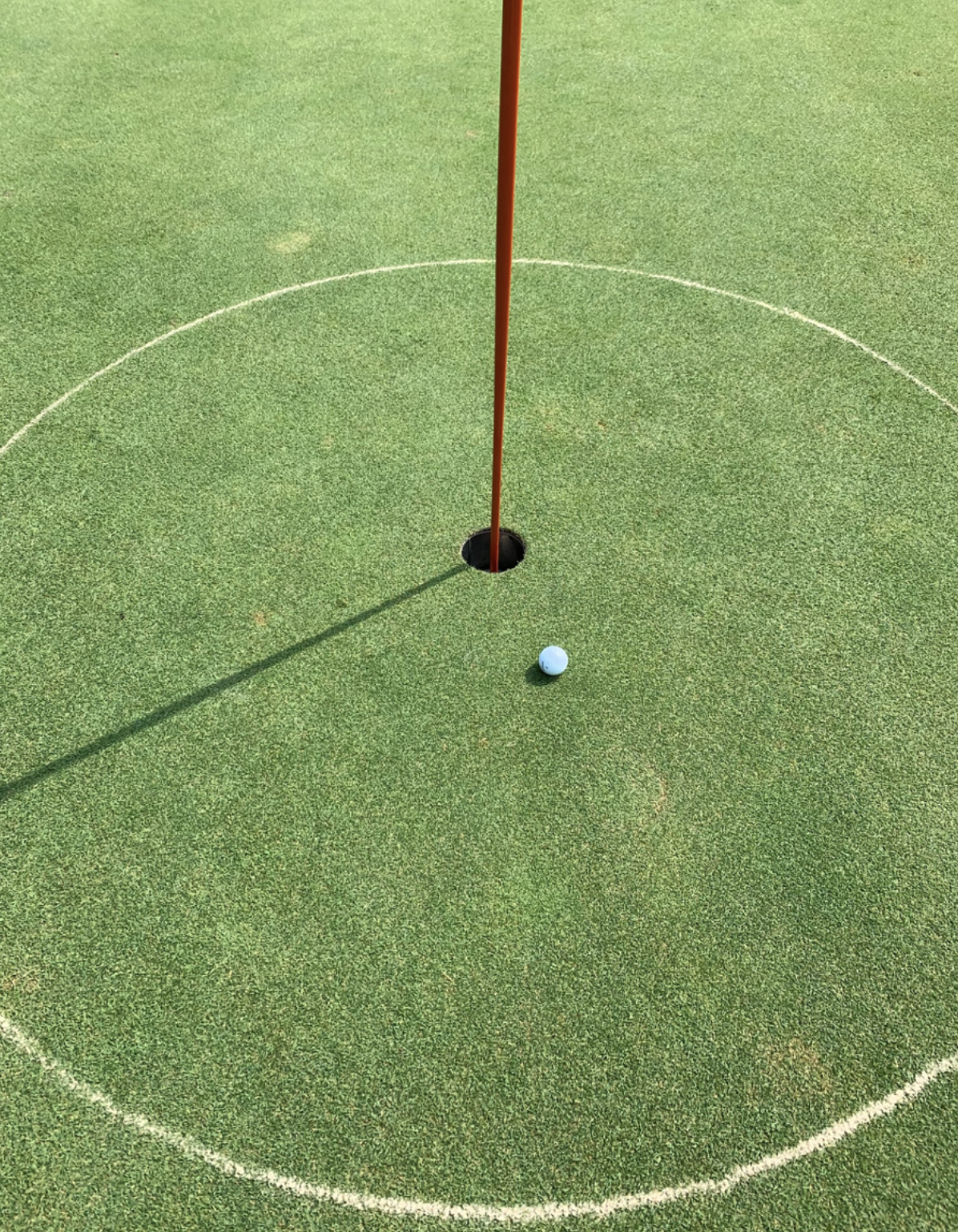
Not gonna lie. These look great with hard breaking downhill putts.
I can’t recall if I’ve ever encountered an actual gimme circle back when growing up in Canada, but more often than not, golfers here will see a circle drawn around the hole cup ranging in radius from 1~1.5m. The obvious intent is that if the ball ends up inside the circle, the next putt is considered a gimme, and the golfer can pick up the ball. At the start of a round, the foursome can decide whether they will put the circle in play or hole out each time.
For the purist, the length of the gimme circle may seem absurd, but I can attest that it does wonders for one’s ego and score, and keeps arguments to a minimum. Of course, it also helps to speed up play.
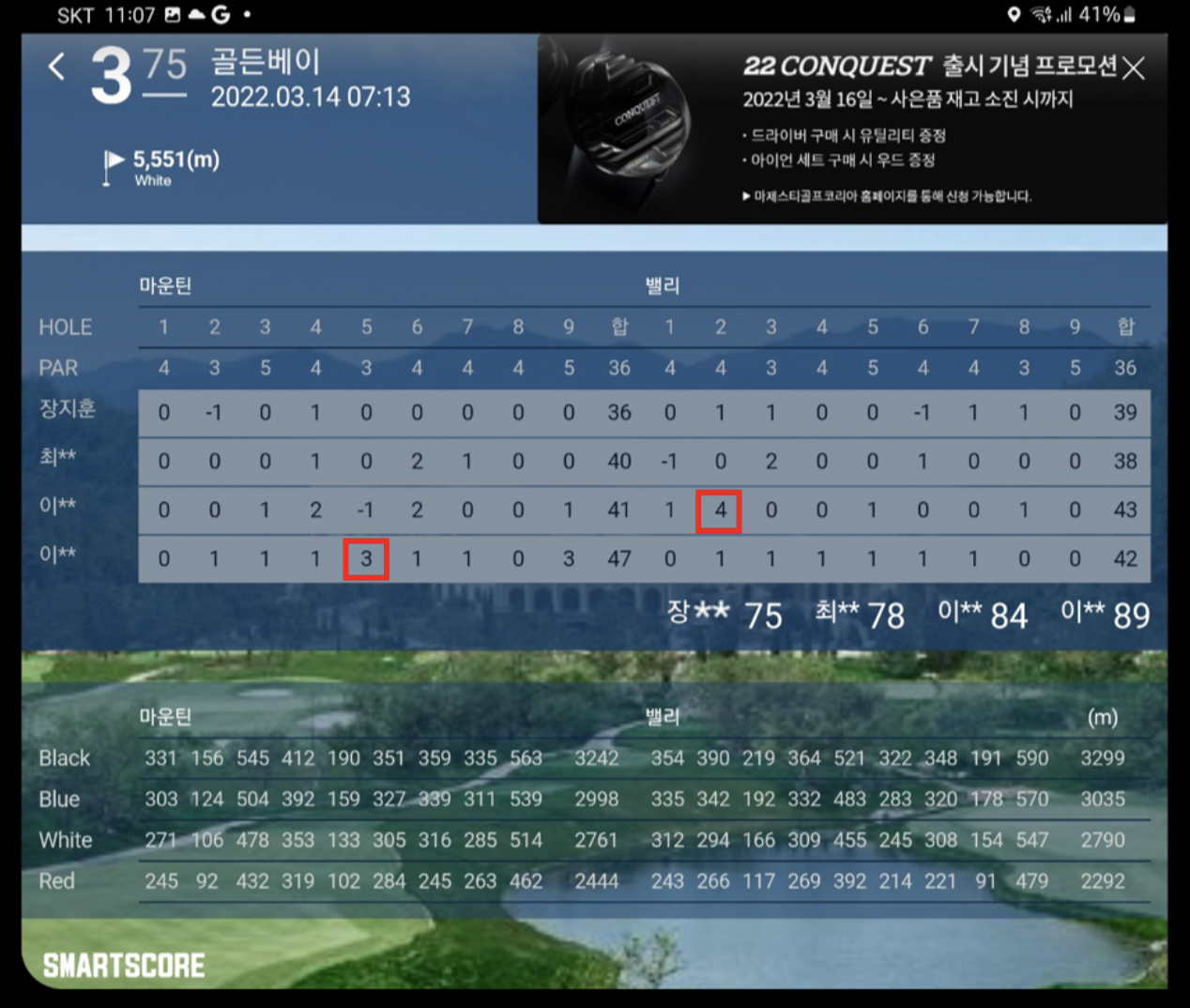
Notice something with the first and last holes too? That’s for another time.
Another aspect of golf that may raise some eyebrows out there is our concept of “double par”. It is common practice here for strokes to be counted only up to double the par of the hole played. For example, the maximum score on a par 3 would be a triple, a quadruple for a par 4, and a quintuple bogey for a par 5.
So even if you were to dunk three balls at the treacherous 17th hole at Sawgrass, the maximum score would be a six (provided that the course was in Korea). Wild stuff, huh? Can you imagine how many pros would love to settle for a triple at that hole during the Players Championship this year?
Again, the main idea for this practice is to speed up play, save some golf balls, and keep one’s handicap comfortably vague for sandbagging purposes.
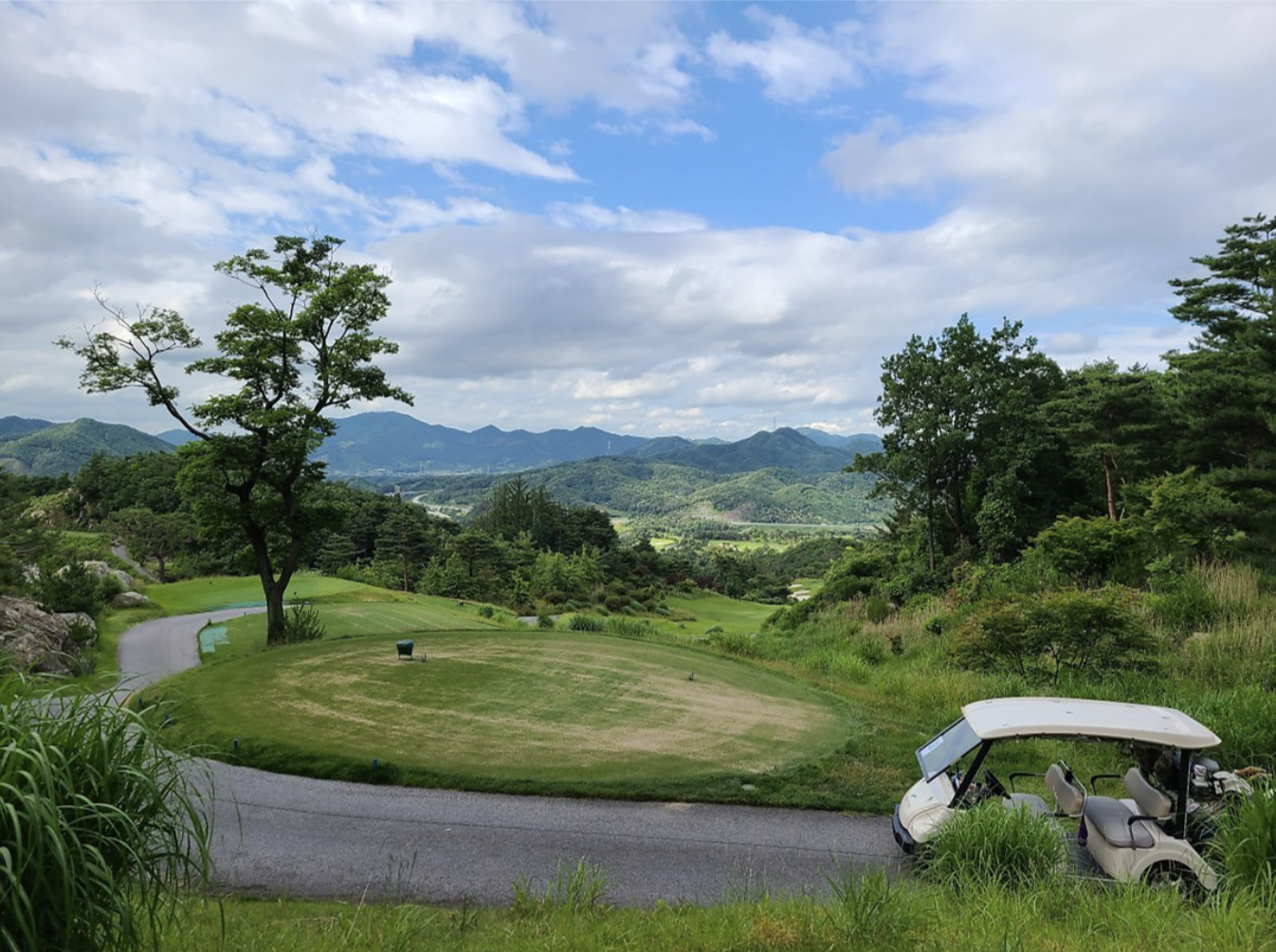
Carts prevent cardiac arrest.
Last but not least, over 90% of Korea’s public and private courses require golfers to ride a 5-person power cart and employ a caddie with the cost shared among the foursome. What if one doesn't want to ride a cart, or use the services of a caddie?
Unfortunately, it is not a choice at these courses but there are some darn good reasons too.
First, the mountainous topography of Korean courses makes it incredibly hard to walk and play18 holes. The distance between holes can literally be a mile over incredibly steep hills or winding paths down a side of a mountain. So unless you are training for the Iron Man triathlon, there is no shame in riding the cart here. Even for a professional tournament, I understand that special measures are taken to protect the players and caddies in case such a course is played.
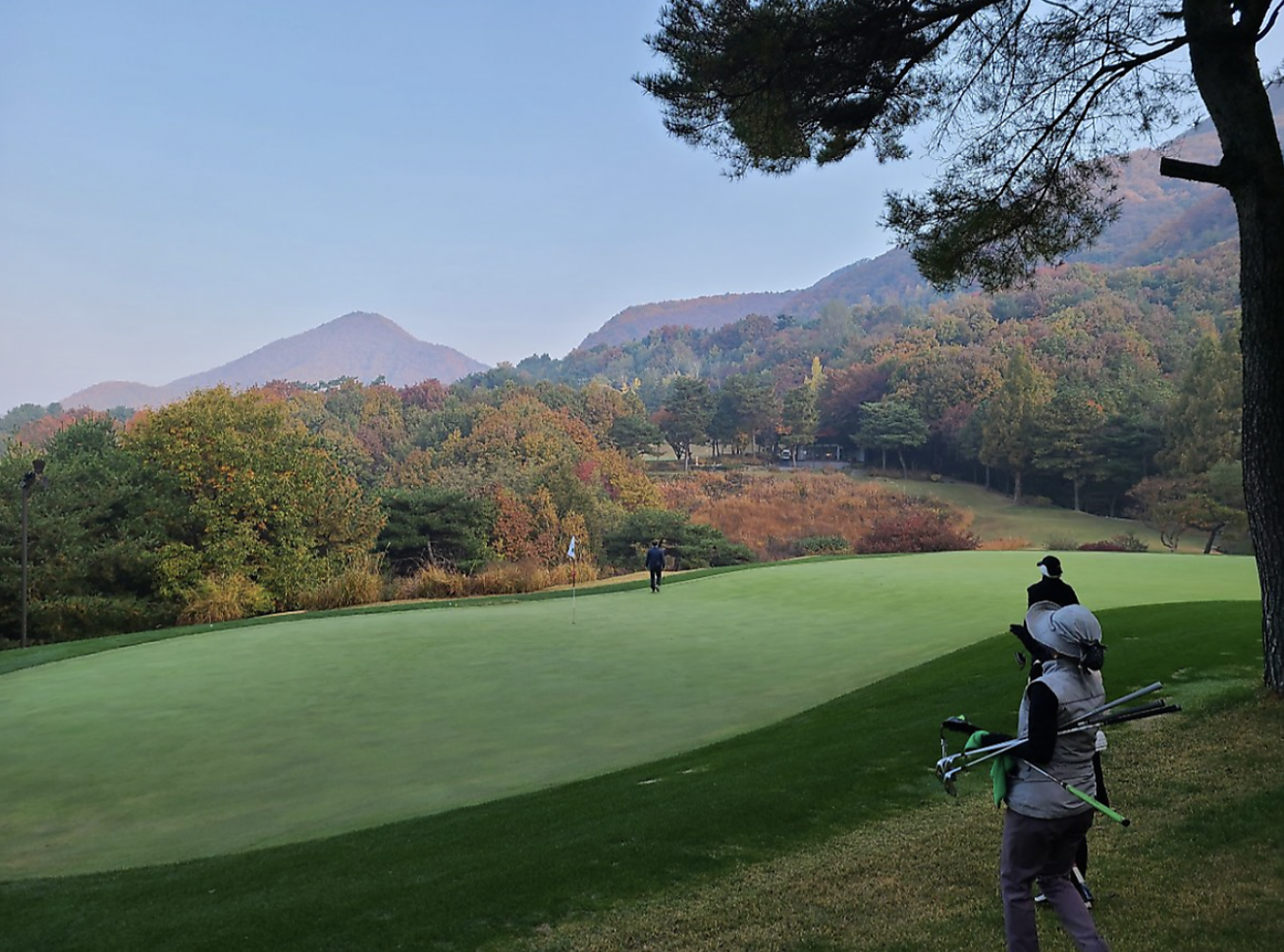
Super caddie in action. Not only does she memorize who uses which clubs and wedges for what
shots, she carries up to 12 clubs at a time for your convenience. Bravo.
Caddies also play a pivotal role in Korean golf culture. Usually, a lone caddie is assigned to a foursome at the start of the round. They driving the cart, cleaning and fetching clubs for all four players, explaining the layout and potential dangers at each hole, and providing yardages, and reading the greens.
It is not an easy task to say the least, but that’s not nearly all. The caddies are also responsible for the safety of the golfers while on the course, and to ensure that the pace of play is maintained in a polite and professional manner (I’m sure they were the most ecstatic when the rule to tend the pin was eliminated). Without a doubt, the caddies here are the true unsung heroes behind the recent growth spurt of golf in Korea. If it were not for them, I know that most of us would be either lost on course
or stuck behind first-timers struggling to play 18 under 6-hours. They deserve every penny they earn.
So there you have it. If speeding up play really helps to grow the game of golf, then the local rules that I have described above will definitely make a difference.
Which one would you be willing to try? Which ones will you fight to your dying breath as a golfer? Please comment below!
For a detailed look at a round of Korean style golf, check out my previous article: “A typical day of Korean golf, Gangnam style”





Aronimink is not a storied club, but when Donald Ross himself proclaimed it to be as good as he can design and build, one had to take notice. Jay Sigel was the pre-eminent male amateur golfer from the mid-1970s to the mid-1990s. He might have called any number of Philadelphia clubs home, but he chose Aronimink. It served him well. Gary Player won a PGA Championship here in 1962, and was followed by the 1993 winner … nobody. Aronimink gave that event away to Inverness, for reasons of which it is certainly not proud. So be it. We had to wait sixty-four years for the PGA to return to Newtown Square, but here we are. Aronimink has been neo-restored by Gil Hanse and team, to return Ross features with an eye toward defense against the dark arts, errrr, high-tech equipment.
Day one saw Rory McIlroy and Bryson DeChambeau dig big holes, to the tune of plus-four and plus-six, respectively. Since the first-round lead will be minus-three at worst, many shots will need to be made up for the power couple to reach contention. By nightfall, seven golfers held the day-one lead at three-under par 67. Shots and sticks caught our attention, and we are proud to present Five Things We Learned on Tech Thursday at the 2026 PGA Championship. Thanks to InsideTourGolfer, Today’s Golfer, and GolfWRX for initial equipment research.
First, meet Min Woo Lee
Min Woo Lee, aka Dr. Chipinski, has once again thrust himself into the conversation of Can he, will he, when will he? Lee has so much talent, wins not nearly as often as we believe that he should, and has no major near-misses (much less titles) on his wiki. The young Aussie is getting older and wiser, but is he able to avoid the scarring that holds the older and wiser back from breaking through? Philadelphia offers another opportunity. Min Woo signed for five birdies and two bogeys on day one, and grabbed a share of the opening-day lead at Aronimink. Winners transcend history and the moment, and Lee will need that sort of ascent to lift the Wannamaker on Sunday.
Second, meet Aldrich Potgeiter
The young South African golfer can rip driver with the best of them. Aronimink tips out at nearly 7400 yards, but beyond the fairway bunkers that ensnare only the mortals, Potgeiter can take his chances with wedge from the rough. On Thursday, he spent plenty of time in the spinach. Like Popeye, he used his muscles to gouge and thrash and dig his way out. Six birdies against three bogeys on the card brought AP in a three deep.
Third, meet Martin Kaymer
Not a major event takes place without a where’s he been throwback moment. We know that Martin Kaymer left the PGA and DP World tours for LIV golf, but the two-time (US Open and PGA) major winner has a lifetime exemption into at least one major event, and he seizes the opportunity each May. Kaymer joined the six-seven brigade with four birdies and a solitary bogey on day one. Kaymer was never a long hitter, and the years are kind to no golfer. The German champion will need to uncork every bottle of guile and strategy in his cabinet to remain in contention. For today, though, he occupies a rung on the ladder of Tour Tech.
Fourth, meet Scottie Scheffler
Let’s see, he’s the defending champion at the PGA, and he found his way back to the top tier with five birdies against two bogeys. To be a favorite and then play up to that stature and expectation is quite difficult. Just ask Rory, Bryson, and some of the other pre-tournament heartthrobs. Scheffler’s game is complete, and to knock him off the OWGR #1 pedestal, one needs to defeat him at the majors. Aronimink is the sort of course that fits Scheffler’s game. Better yet, it unfits the game of many of his challengers. Don’t expect Scheffler to go away anytime soon. Come Sunday, he’ll be around.
Fifth, meet Stephan Jaeger
Clocking in for the unheralded players shift are Ryo Hisatsune and Stephan Jaeger. Hisatsune logged seven birdies on day one, but gave most of them back with four bogeys. Still, he’s tied at the top for a time. Jaeger pitched five birdies against two bogeys, including a run of three consecutive, from holes four through six. Odds are that one of the two will hang around through 36 holes. Odds also suggest that both will be gone by Saturday evening. Still, the PGA Championship has historically been the major most likely to be won by an under-known. Both Hisatsune and Jaeger feature on that list, so good luck, lads!

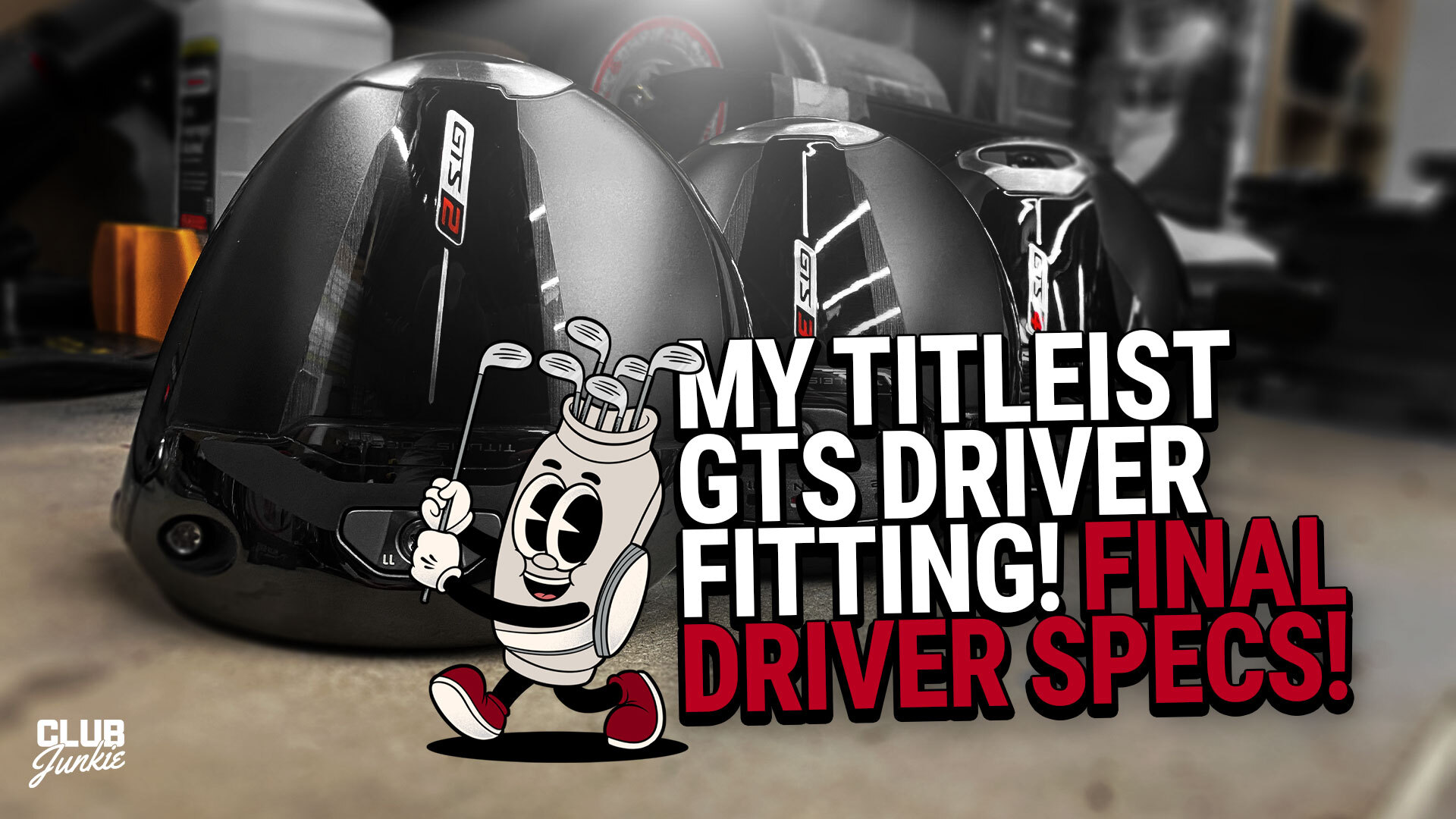
On this episode of the Club Junkie Podcast, I head to the Titleist Performance Institute for a full driver fitting with the new Titleist GTS lineup. We dive into the fitting process, talk about what made the biggest difference in performance, and break down how the different GTS heads and shaft combinations compare on the launch monitor. If you are thinking about a new driver setup for this season, there is a lot to take away from this one.
I also get into Brooks Koepka and the gear setup he brought to the PGA Championship, including the putters that caught my eye during the week. There are some interesting equipment trends showing up at the highest level right now and we break down what stands out.
To wrap things up, I talk about reshafting a few wedges, what I learned during the process, and swapping an adaptor onto a new shaft for another build project in the shop. A gear packed episode from start to finish for anyone who loves golf equipment and club building.
Follow Club Junkie everywhere:
Instagram: https://www.instagram.com/clubjunkiepod/
X: https://x.com/ClubJunkiePod
TikTok: https://www.tiktok.com/@clubjunkiepod
Threads: https://www.threads.com/@clubjunkiepod

Excited for this week’s WITB as we get to add the new Titleist GTS woods to the bag! I was fit at Titleist’s TPI facility in Oceanside California a few weeks ago and my new clubs just showed up. I am also adding a cool set of irons that I built last year some wild custom wedges into a new golf bag. Speaking of the bag I have a new Ghost Anyday Black Ops stand bag that I will be using on my Motocaddy Remote M7 electric cart.
Driver: Titleist GTS3 (11 degrees @ 10.25)
Shaft: Fujikura Ventus Red 6s
3-wood: Titleist GT1 3Tour (14.5 degrees)
Shaft: Graphite Design Tour AD CQ-7s
5-wood: Titleist GTS (18 degrees)
Shaft: Fujikura Ventus Red 7s
9-wood: Titleist GT1 (24 degress)
Shaft: Fujikura Ventus Red 7s
Irons: Bettinardi CB24 (5-PW)
Shafts: KBS C-Taper Lite 110 stiff
Wedge: TaylorMade MG5 (50-09 SB)
Shaft: Mitsubishi MMT 125 Stiff
Wedge: TaylorMade MG5 (56-12 SB)
Shaft: Mitsubishi MMT 125 Stiff
Wedge: TaylorMade MG5 (60-08 LB)
Shaft: Mitsubishi MMT 125 Stiff
Putter: Dan Carraher ZT Proto
Ball: Callaway Chrome Tour
Bag: Ghost Anyday Black Ops Stand Bag

Justin Rose WITB 2026 (April): Full WITB breakdown with new McLaren irons

RBC Heritage Tour Report: More minis, course-specific setups, Spider & GTS launches

What’s the story behind Webb Simpson’s custom-stamped irons?

Cadillac Championship Tour Report: Spieth’s sizable changes, McLaren Golf launches, and more

Kristoffer Reitan’s winning WITB: 2026 Truist Championship

Cameron Young’s winning WITB: 2026 Cadillac Championship

Aaron Rai’s winning WITB: 2026 PGA Championship

Nelly Korda WITB 2026 (April)

Justin Rose on the switch to McLaren Golf, learnings from previous equipment moves

Photos from the 2026 PGA Championship


Patrick Reed WITB 2026 (May)
Driver: Titleist GT3 (9 degrees) Buy here. Shaft: Aldila Rogue Silver 130 M.S.I. 70 TX 3-wood: TaylorMade Qi35 (15 degrees)...

Aaron Rai’s winning WITB: 2026 PGA Championship
Driver: TaylorMade M6 (9 degrees) Shaft: Aldilda Synergy Blue 70 TX 3-wood: TaylorMade Qi10 (15 degrees) Shaft: Fujikura Ventus Blue...


Michael Block WITB 2026 (May)
Driver: TaylorMade Qi4D (9 degrees) Shaft: Fujikura Ventus Black VeloCore+ 5 X 3-wood: TaylorMade Qi4D (15 degrees @14.25) Shaft: Mitsubishi...


Bryson DeChambeau WITB 2026 (May)
Driver: Krank Formula Fire Pro (6 degrees) Shaft: Project X Prototype 3-wood: Krank Formula Fire (10 degrees) Shaft: LA Golf BAD...
-
 Whats in the Bag3 weeks ago
Kristoffer Reitan’s winning WITB: 2026 Truist Championship
-
Whats in the Bag2 weeks ago
Aaron Rai’s winning WITB: 2026 PGA Championship
-
 Tour Photo Galleries3 weeks ago
Photos from the 2026 PGA Championship
-
 Equipment2 weeks ago
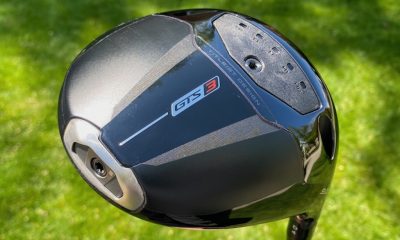
GolfWRX Launch Report: 2026 Titleist GTS drivers
-

 Equipment2 weeks ago
PGA Championship Tour Report: Fitzpatrick, Koepka among big-name putter switches for Aronimink
-

 News2 weeks ago
WITB Time Machine: Phil Mickelson’s winning WITB, 2021 PGA Championship
-

 Equipment2 weeks ago
Which of Tiger’s major winning irons are your favorite? – GolfWRXers discuss
-

 Equipment2 weeks ago
Lead Tape Report: Adjusting the swingweight of the Wanamaker Trophy


Daddygreen
Apr 24, 2022 at 5:28 pm
Grow the game=make more money. That’s all you care about…even if it’s watered down.
L
Apr 22, 2022 at 3:54 pm
Keep that game there, don’t let them export to the rest of the world. Gimme circle? Ridiculous. Can’t walk in a reasonable amount of time? Don’t build courses there. Sheesh
JL
Apr 22, 2022 at 3:52 pm
Everything at the Korean golf courses were copied from Japan, practically. Same mountain terrains, multi-person cart. Wicked OBs and tight fairways. The gimme circle was tested but scrapped because people wanted to get better at actually playing than be given something. Though it’s a great idea for pace of play, especially when the greens have wicked slopes and can lead to multiple putts, but people need to be allowed to play the game too.
Growing the game? Not like this, just to pump people out there with quick pace just so that the club and industry can make money? No way! Ridiculous.
But yeah accuracy of your shots is important and should be encouraged. lol
geohogan
Apr 21, 2022 at 12:36 pm
If these are the types of golf courses Korean pros grew up playing, then
maybe this help explains oeverwhelming dominance /success on the LPGA tour.
blackbd
Apr 20, 2022 at 2:53 pm
I found this article interesting but not sure if the author is trying to address the distance debate, speed of play or growing the game or all 3? I presume all 3 but not sure how it was all tied together? Also, that kind of super narrow and penal golf seems not fun. Not even sure I want to watch pros play that style other than once or twice a year.
CrashTestDummy
Apr 20, 2022 at 10:25 am
Interesting article. It always interests me how other countries play golf differently. I have played a few times in Asia before and the experience is totally different than the US.
From what I have seen, Korean golf courses look very tough and narrow. I watch a lot of Korean golf shows and you can tell the good player’s ball striking is very accurate, but you have to in order to score on Korean courses. Not like most of the “grip it and rip” it type courses in the US. The gimme circle makes up a little for the toughness of the courses. But definitely not enough. Lol.
neil
Apr 20, 2022 at 12:31 pm
lived in Korea 4 years
weather is great at least for a scotsman.basically 2 seasons warm and cold
Can be 40f one day 70 or higher the next until November then cold again..
we played through the winter down south near Busan.cold but comfortable miles better than a scottish winter
DaeGunn
Apr 20, 2022 at 10:10 am
Golf becomes No.1 sport in Korea. People in general can actually play (not just watch) and enjoy golf, compared with other watching-only sports. Fast growing golf related businesses in Korea may affect the acquisition of big name golf companies by Korean related funds or companies.
As a Korean-American, I heard a lot about Korean’s unique golf course settings nicely summarized in this article. At first, I thought those are very absurd. But as this article explained, I now understand that those are understandable and necessary.
It would be good to know each region’s or country’s different or unique golf cultures.
JungleJimbo
Apr 20, 2022 at 9:28 am
Hi James Chang: Thank you, for your Fabulously-written article that i enjoyed immensely! The Korean approach to golf is intriguing, and GolfWRX is all the better for your series of articles (and unique, i.e. i don’t see this Korean perspective on many other mainstream golf publications). “?????”!
James
Feb 11, 2025 at 12:34 am
Thanks for the encouraging comment!!
Jub
Apr 20, 2022 at 8:55 am
No! Stop growing the game!
MhtLion
Apr 20, 2022 at 12:51 pm
That’s what I’m saying.
Garrett
Apr 22, 2022 at 12:48 pm
Im with you on that. not enough golf courses or CC around me to even get decent times. STOP GROWING THE GAME
Rascal
Apr 22, 2022 at 1:49 pm
Me! Me! Me!!!!
Waaaaaahh!