
News
The Wedge Guy: Musings on the golf ball rollback


By now, you have likely read and heard endless anguish and musings about the recent decision by the USGA and R&A to tweak the testing for golf ball distance conformity in an effort to roll back golf ball performance for the game’s elite players. Whether you think this is a good idea or not is beside the point, as it appears to be a “done deal.” So, I’d like to offer some musings from my perspective as a 40-year veteran of the golf equipment industry and over 60 years of playing this game at a reasonably serious level.
My perspective covers a lot of ground as I have personally experienced the technology of our industry as an accomplished scratch or near-scratch player. I’ve seen most all of it in those six decades. From learning and developing my game into my 30s with persimmon drivers, pure muscle-back blades and balata balls . . . to what I find in my bag today. I’ve seen the quantum leaps in driving distance for golfers of all levels with each new development, with huge leaps in performance delivered by the first metal woods (thanks TaylorMade), then to the Big Bertha and all its copies and on to the continuing advancements in size, COR, shafts and other driver performance technologies.
You simply cannot discuss distance and focus only on the golf ball, when you have this amazing run of technology in the driver category. And besides those advancements in head designs, driver shafts also made great strides in both weight and performance. I can share that the driver in my bag today is right at 30-percent lighter than the overall weight of my steel-shafted persimmon drivers from back then. I’m sure my clubhead speed at 71 years old is likely close to what I had in my 30s and 40s because of that.
And because of the great strides in driver technologies and the forgiveness of off-center hits, golfers began to get bigger and fitter in pursuit of swinging ever faster. I agree with Adam Scott’s assessment that the distance gains are much more about driver technologies than the golf ball. In case you didn’t experience real “woods,” with these big drivers, a perfect strike is much less important than it was in the days of persimmon or even early oversized metal drivers.
But let’s get back to the golf ball and what I think is going to happen over the next five to seven years . . .
Up until the mid-1990s, the “state of the art” was that old rubber-band-wound and balata-covered ball that spun like crazy but went out of round if you looked at it wrong. While many give Titleist and its Pro V1 franchise credit for the revolution to multi-piece ball construction and technologies, history shows that Spalding was ahead of them in this area with their early work with the Top Flite and Tour Edition lines. But it was Mark O’Meara winning both the Masters and U.S. Open in 1998 playing the revolutionary Strata ball that triggered the entire ball industry to abandon the old rubber band ball and pursue these new multi-piece technologies.
Since then, there is no question that continual strides have been made in golf ball technologies, as these rocket scientist engineers explore and optimize every element of the ball, from core properties to cover properties to dimple aerodynamics. I’ll be the first to admit that the most brilliant and technologically advanced engineers are plying their craft in the ball segment of the industry.
That’s why I believe what we’ll see come out of this next half-decade of research and development is an approach to golf ball performance that will surprise us all. It seems totally realistic that these brainiacs will figure out how to make golf balls that optimize distance performance at various clubhead speeds. I have complete confidence they can figure out how to make a ball that meets the new standards at the highest swing speeds, while not causing the 90-95 mph clubhead player to lose even a yard.
In fact, it wouldn’t surprise me at all to see the ball brands come up with a fitting matrix to fit the golf ball to your exact swing speed, so that instead of the average golfers losing distance, we would actually gain some. Those major brands’ line-ups could be as thorough in fitting the exact ball to your swing speed as we find the fitting bays doing so with shafts.
It will be fun and interesting to watch, that’s for sure.


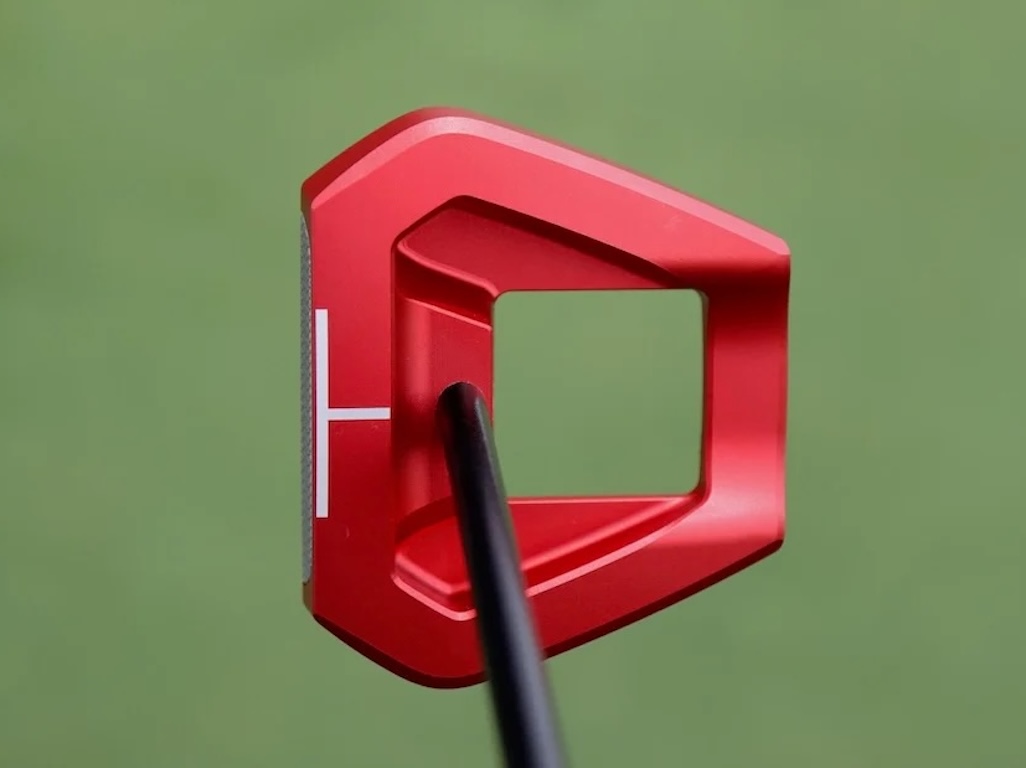
With the second major of 2026 now behind us, the PGA Tour arrives in Texas for the CJ Cup Byron Nelson.
GolfWRX Tour Photographer, Greg Moore, is on site at TPC Craig Ranch in McKinney, Texas, and he’s already captured several WITBs and a look at some new colorways of just-spotted L.A.B. Golf VZN.1i putters.
Check out links to all our photos below.

General Albums
- 2026 CJ Cup Byron Nelson – Monday #1
- 2026 CJ Cup Byron Nelson – Monday #2
- 2026 CJ Cup Byron Nelson – Monday #3
WITB Albums
- Brennan Little (Gary Woodland’s caddy) – WITB – 2026 CJ Cup Byron Nelson
- Adam Svensson – WITB – 2026 CJ Cup Byron Nelson
- Martin Laird – WITB – 2026 CJ Cup Byron Nelson
- Lee Hodges – WITB – 2026 CJ Cup Byron Nelson
- Aaron Wise – WITB – 2026 CJ Cup Byron Nelson
- Dylan Wu – WITB – 2026 CJ Cup Byron Nelson
- AJ Ewart – WITB – 2026 CJ Cup Byron Nelson
Pullout Albums
- New Graphite Design Tour AD shafts – 2026 CJ Cup Byron Nelson
- L.A.B. Golf VZN.1i putters (new colors) – 2026 CJ Cup Byron Nelson

See what GolfWRXers are saying and join the discussion in the forums.


Aaron Rai upset the odds to win his first major championship on Sunday at Aronimink, firing a final round of 5-under par to see off his competitors and claim the winner’s check for $3,690,000.
Jon Rahm and Alex Smalley were the best of the chasing pack, with both men sharing runner-up spot which was good enough for each to receive a check for $1,804,000.
With a total prize purse of $20.5 million up for grabs, here’s a look at how much each player won at the 2026 PGA Championship.
Players who missed the PGA Championship cut each received $4,300 each.
1: Aaron Rai, $3,690,000
T2 : Jon Rahm, $1,804,000
T2 : Alex Smalley, $1,804,000
T4: Justin Thomas, $843,866
T4: Ludvig Aberg, $843,866
T4: Matti Schmid, $843,866
T7: Cameron Smith, $637,050
T7: Rory McIlroy, $637,050
T7: Xander Schauffele, $637,050
T10: Kurt Kitayama, $496,707
T10: Chris Gotterup, $496,707
T10: Justin Rose, $496,707
T10: Patrick Reed, $496,707
T14: Matt Fitzpatrick, $364,762
T14: Scottie Scheffler, $364,762
T14: Max Greyserman, $364,762
T14: Ben Griffin, $364,762
T18: Maverick McNealy, $229,128
T18: Jordan Spieth, $229,128
T18: Stephan Jaeger, $229,128
T18: Padraigh Harrington, $229,128
T18: David Puig, $229,128
T18: Harris English, $229,128
T18: Min Woo Lee, $229,128
T18: Joaquin Niemann, $229,128
T26: Nick Taylor, $125,523
T26: Alex Noren, $125,523
T26: Cameron Young, $125,523
T26: Andrew Novak, $125,523
T-26: Daniel Hiller, $125,523
T26: Tom Hoge, $125,523
T26: Sam Burns, $125,523
T26: Hideki Matsuyama, $125,523
T26: Bud Cauley, $125,523
T35: Christiaan Bezuidenhout, $78,805
T35: Patrick Cantlay, $78,805
T35: Ryo Hisatsune, $78,805
T35: Daniel Berger, $78,805
T35: Ryan Fox, $78,805
T35: Haotong Li, $78,805
T35: Aldrich Potgieter, $78,805
T35: Si Woo Kim, $78,805
T35: Martin Kaymer, $78,805
T44: Chris Kirk, $53,743
T44: Matt Wallace, $53,743
T44: Shane Lowry, $53,743
T44: Jhonattan Vegas, $53,743
T44: Denny McCarthy, $53,743
T44: Chandler Blachet, $53,743
T44: Taylor Pendrith, $53,743
T44: Dustin Johnson, $53,743
T44: Nicolai Hojgaard, $53,743
T44: Michael Kim, $53,743
T44: Kristoffer Reitan, $53,743
T55: Collin Morikawa, $34,186
T55: Corey Conners, $34,186
T55: Andrew Putnam, $34,186
T55: Brooks Koepka, $34,186
T55: Mikael Lindberg, $34,186
T60: Sami Valimaki, $29,218
T60: Sahith Theegala, $29,218
T60: Rico Hoey, $29,218
T60: Rickie Fowler, $29,218
T60: Brian Harman, $29,218
T65: Casey Jarvis, $26,900
T65: Jason Day, $26,900
T65: Rasmus Hojgaard, $26,900
T65: Keith Mitchell, $26,900
T65: Sam Stevens, $26,900

Justin Rose WITB 2026 (April): Full WITB breakdown with new McLaren irons

RBC Heritage Tour Report: More minis, course-specific setups, Spider & GTS launches

What’s the story behind Webb Simpson’s custom-stamped irons?

Cadillac Championship Tour Report: Spieth’s sizable changes, McLaren Golf launches, and more

Kristoffer Reitan’s winning WITB: 2026 Truist Championship

Cameron Young’s winning WITB: 2026 Cadillac Championship

Aaron Rai’s winning WITB: 2026 PGA Championship

Nelly Korda WITB 2026 (April)

Justin Rose on the switch to McLaren Golf, learnings from previous equipment moves

Photos from the 2026 PGA Championship


Patrick Reed WITB 2026 (May)
Driver: Titleist GT3 (9 degrees) Buy here. Shaft: Aldila Rogue Silver 130 M.S.I. 70 TX 3-wood: TaylorMade Qi35 (15 degrees)...

Aaron Rai’s winning WITB: 2026 PGA Championship
Driver: TaylorMade M6 (9 degrees) Shaft: Aldilda Synergy Blue 70 TX 3-wood: TaylorMade Qi10 (15 degrees) Shaft: Fujikura Ventus Blue...


Michael Block WITB 2026 (May)
Driver: TaylorMade Qi4D (9 degrees) Shaft: Fujikura Ventus Black VeloCore+ 5 X 3-wood: TaylorMade Qi4D (15 degrees @14.25) Shaft: Mitsubishi...


Bryson DeChambeau WITB 2026 (May)
Driver: Krank Formula Fire Pro (6 degrees) Shaft: Project X Prototype 3-wood: Krank Formula Fire (10 degrees) Shaft: LA Golf BAD...
-
 Whats in the Bag3 weeks ago
Kristoffer Reitan’s winning WITB: 2026 Truist Championship
-
Whats in the Bag2 weeks ago
Aaron Rai’s winning WITB: 2026 PGA Championship
-
 Tour Photo Galleries3 weeks ago
Photos from the 2026 PGA Championship
-
 Equipment2 weeks ago
GolfWRX Launch Report: 2026 Titleist GTS drivers
-

 Equipment2 weeks ago
PGA Championship Tour Report: Fitzpatrick, Koepka among big-name putter switches for Aronimink
-

 News2 weeks ago
WITB Time Machine: Phil Mickelson’s winning WITB, 2021 PGA Championship
-

 Equipment2 weeks ago
Which of Tiger’s major winning irons are your favorite? – GolfWRXers discuss
-

 Equipment2 weeks ago
Lead Tape Report: Adjusting the swingweight of the Wanamaker Trophy


William
Dec 17, 2023 at 9:48 am
I have complete confidence they can figure out how to make a ball that meets the new standards at the highest swing speeds, while not causing the 90-95 mph clubhead player to lose even a yard
I have every confidence that this will happen.
I spent my youth working in rubber and plastic technology.
Edawrd Mahle
Dec 15, 2023 at 12:45 pm
i’m 90 yr old male, play mostly 9 holes from forward tee, swing speed around 80-85 with driver, i play in 2 golf leagues and other non league rounds, driver distance is around 170 yds, on 350 yd hole i need 3 shots to get to the green, so in my case even 5yd decrease in distance would be significant, i’d use a non conforming ball if it provided 10 yds more distance
Bob Jones
Dec 15, 2023 at 11:41 am
Let’s hope so.
Bob
Dec 14, 2023 at 1:40 pm
Please cut out the resume and repost, Terry.
With all your experience, tell us what your solution is. I got bored before I found the musings.