
Opinion & Analysis
More Distance for Golf (Part 2): Long-Drive Equipment

In Part 1, I wrote about some of the technical aspects of the swing you can employ for more distance in your golf game from a professional long driver point of view. In Part 2, I get in to the equipment aspect.
As a visitor of GolfWRX, you probably have an interest in golf equipment… and I assume you are also likely aware of the importance of club fitting. To hit the longest drives possible, club fitting is an absolute must. No top long driver skips this component of distance, because advancing or not advancing can come down to only a yard or two.
Equipment optimization can be the thing that makes the difference.
Check Out the Optimizers
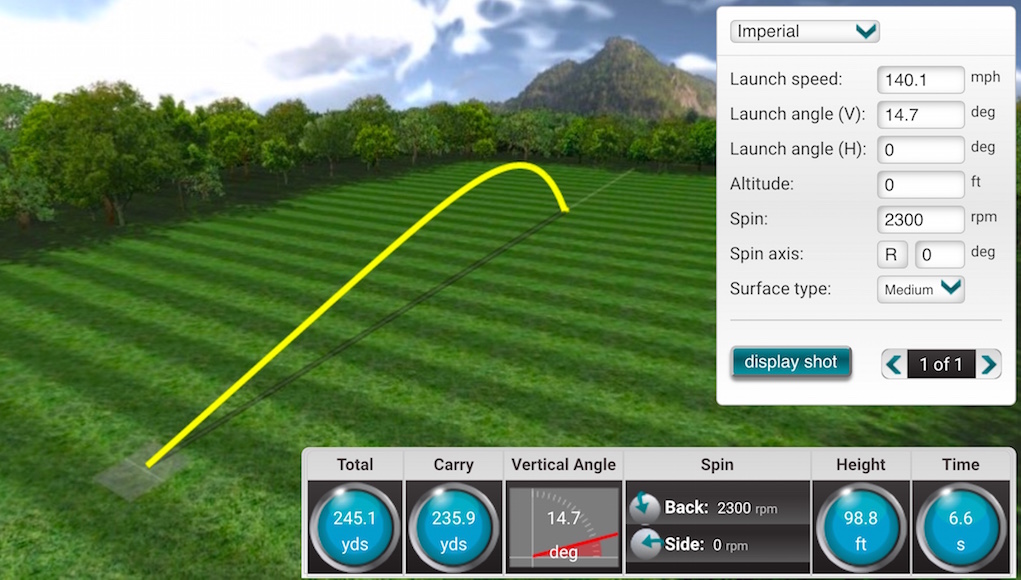
Both Trackman and FlightScope have free optimizer tools on their websites that you can play around with to input your club head speed and find out what kind of launch angle and spin rate will optimize either your carry or total distance. What you optimize for with regular golf, however, depends a little bit on your needs.
If you play hard and dry fairways where the golf course is right out in front of you, there aren’t many ground obstacles in your line of flight/roll, and the rough isn’t too penal, you might optimize for total distance.
If you play different types of courses that require forced carry, have soft/wet fairways, or where it’s a problem if you roll through the fairway on a dogleg, it may be better to optimize for carry.
Move Toward a Positive Angle of Attack
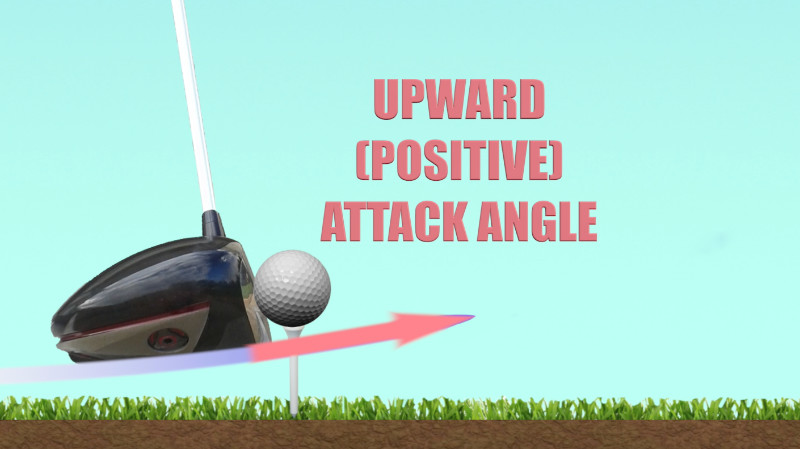
Image Courtesy of Adam Young.
When you play with the optimizers, notice that, all other things being equal, a positive angle of attack (hitting up on the ball) will generally hit the ball farther than a negative angle of attack (hitting down on the ball).
PGA Tour players average an angle of attack of about 1.3 degrees down. Although they hit the ball far compared to the average amateur, they are not nearly as efficient as a professional long driver (they often swing more than 5 degrees up). The highest AoA I’ve ever been able to achieve is +15 on a FlightScope with a 4-inch tee that stood on the ground.
So although this is not really an equipment thing, it may be worth it to transition your driver swing to one that catches the ball on the upswing. As they say, tee it high and let it fly!
Get Custom Fit
Using the optimizers mentioned above, or if you know your optimal/desired launch angle and spin rate numbers, you can use that information to dial in your equipment to match those optimums. Here are a few other things to keep in mind.
Balls
A good club fitter can help guide you in to a ball that best fits your game, but when doing your club fitting, try to use the same ball you will play with on the course. It doesn’t have to break the bank.
As a fellow equipment junkie, you are probably already aware of some high-quality, low-cost balls from companies like Vice Golf, Costco, or Snell Golf, which is what I currently play. Using your favorite ball may mean you need to get a portable net on the driving range to hit into for testing, like what my PGA and Swing Man Golf Swing Speed Training Certified friend Darren deMaille does with his Trackman outdoors, but it can make a difference in optimization. Top long drivers will do their testing using their competition balls, which presently are made by Volvik.
Shafts
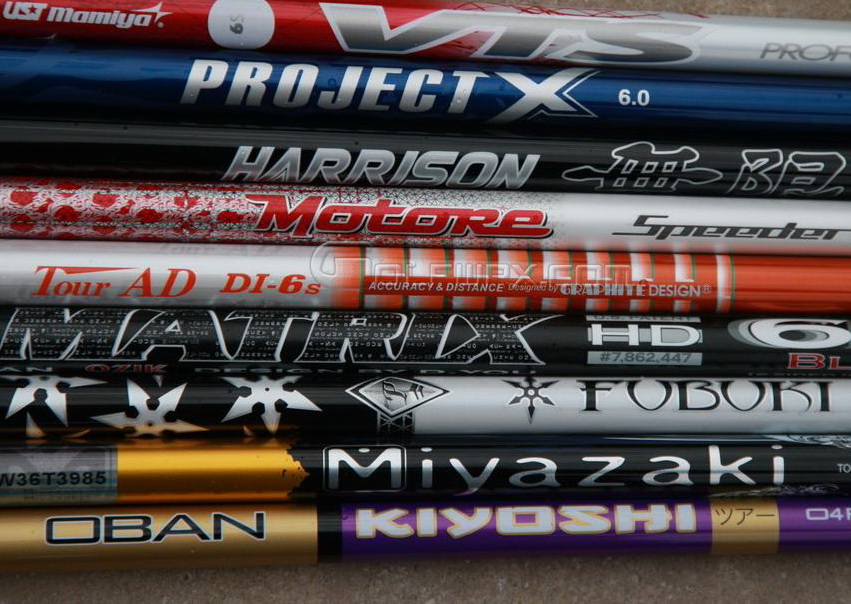
As a generalization, the long drive guys generally use 48-inch drivers… not all, but most. Drivers that length can be more difficult to hit in the center of the face (which causes a loss of distance), but they often can be swung faster (but not always). So if you do catch it on the sweet spot, you can really bomb one out there.
On the other hand, long-drive guys get eights balls to score one in the grid. For regular golf, accuracy is more important and it can take some testing to determine what length might be best for you to get the best mix of distance and accuracy.
If you can handle a long shaft (get higher club head speed and also hit the sweet spot) and your golf course is wide open with no rough, by all means go for something long. But for many of you going shorter (Ricky Fowler is using a 43.5-inch driver) means hitting the sweet spot more often. Your longest drive might not be as long, but your average drive might be longer. The added consistency of strike can also mean more predictability (and thus confidence off the tee) and accuracy. As long as you’re not giving up too much distance, playing from the fairway in most cases will also make it easier to get your approaches closer to the flag and shoot lower scores.
As for the flex and weight of the shaft that are best for you, getting the right one of those can be a combination of personal feel, individual strength/tempo, and downswing force. For more info about shafts, my fellow co-creator of Sterling Irons single-length irons and contributing Swing Man Golf equipment expert Tom Wishon has a lot of great articles right here on GolfWRX. Give them a read here.
Loft
The loft of the head is important because it can really affect launch angle and spin rate. For example, one time I had student switch to a driver that was 2 degrees different in loft. That simple change helped add 14 yards to his drives.
Most long drive professionals that you see on Golf Channel will be using really low-lofted heads in the 1-8-degree range (yes, 1 degrees!) by companies like Krank or Callaway. The average long driver swings around 135 mph, however, and the average champion swings about 146 mph. They need a driver that low-lofted to keep them from hitting high-spinning moon balls that don’t go anywhere.
The average golfer swings about 93 mph, so a driver with a loft in the 8-14-degree range made by virtually any reputable driver manufacturer is more appropriate. Don’t be afraid to go even higher if you need it, though. I’ve seen 20-degree drivers by Bang Golf perform well. For some people, that’s what it takes.
Grips
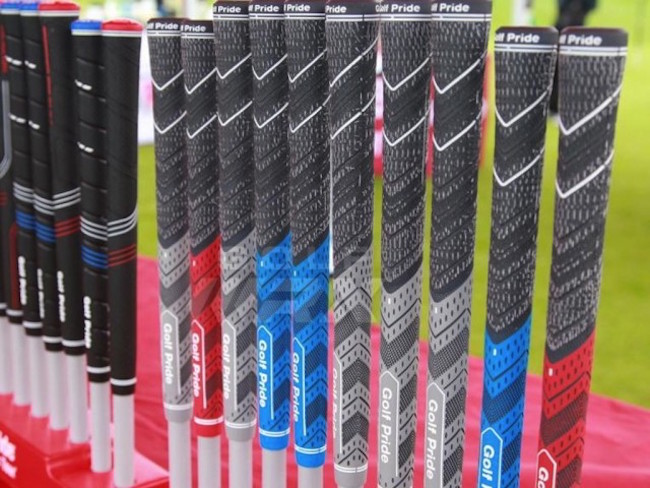
You might think that the behemoths of long drive all use big oversize grips. Many of them are over 6-feet tall and weigh more than 200 pounds, and 2007 World Long Drive Champion Mike Dobbyn is 6-feet 8-inches and 300 pounds. This isn’t necessarily the case, though. Some use the smallest and lightest grips possible for extra speed and help with club release.
Multiple Drivers
It’s a bit unconventional, but it might be worth it to play multiple drivers. You may not need an entire staff bag full of drivers like you see with many professional long drivers, but it could be useful to have a draw-biased driver and a fade-biased driver. You could also have a driver for max total distance and one for max carry, or a long-drive-type driver for distance and a shorter one for accuracy. I’ve used all those combinations to my competitive advantage in various tournaments over the years.
As mentioned in the first article of this series, I do recommend working with someone who has the real-life experiences and tools to help you. To find someone reputable, check out the Top-100 lists that are available online. The AGCP (Association of Golf Clubfitting Professionals) and ICG (International Clubmakers’ Guild) are also good resources.
In any case, I would recommend a brand-agnostic fitting and someone with a good inventory who is not going to push a certain brand on you because they have too much skin in selling a specific brand. I’ve heard good things about places like Club Champion and Hot Stix. My buddy, Doug Emma at True Spec Golf in New York, is also a great club fitting guy. Just pay attention to who you are working with for your equipment fittings, bag analysis, etc., and you’ll be fine.



Aronimink is not a storied club, but when Donald Ross himself proclaimed it to be as good as he can design and build, one had to take notice. Jay Sigel was the pre-eminent male amateur golfer from the mid-1970s to the mid-1990s. He might have called any number of Philadelphia clubs home, but he chose Aronimink. It served him well. Gary Player won a PGA Championship here in 1962, and was followed by the 1993 winner … nobody. Aronimink gave that event away to Inverness, for reasons of which it is certainly not proud. So be it. We had to wait sixty-four years for the PGA to return to Newtown Square, but here we are. Aronimink has been neo-restored by Gil Hanse and team, to return Ross features with an eye toward defense against the dark arts, errrr, high-tech equipment.
Day one saw Rory McIlroy and Bryson DeChambeau dig big holes, to the tune of plus-four and plus-six, respectively. Since the first-round lead will be minus-three at worst, many shots will need to be made up for the power couple to reach contention. By nightfall, seven golfers held the day-one lead at three-under par 67. Shots and sticks caught our attention, and we are proud to present Five Things We Learned on Tech Thursday at the 2026 PGA Championship. Thanks to InsideTourGolfer, Today’s Golfer, and GolfWRX for initial equipment research.
First, meet Min Woo Lee
Min Woo Lee, aka Dr. Chipinski, has once again thrust himself into the conversation of Can he, will he, when will he? Lee has so much talent, wins not nearly as often as we believe that he should, and has no major near-misses (much less titles) on his wiki. The young Aussie is getting older and wiser, but is he able to avoid the scarring that holds the older and wiser back from breaking through? Philadelphia offers another opportunity. Min Woo signed for five birdies and two bogeys on day one, and grabbed a share of the opening-day lead at Aronimink. Winners transcend history and the moment, and Lee will need that sort of ascent to lift the Wannamaker on Sunday.
Second, meet Aldrich Potgeiter
The young South African golfer can rip driver with the best of them. Aronimink tips out at nearly 7400 yards, but beyond the fairway bunkers that ensnare only the mortals, Potgeiter can take his chances with wedge from the rough. On Thursday, he spent plenty of time in the spinach. Like Popeye, he used his muscles to gouge and thrash and dig his way out. Six birdies against three bogeys on the card brought AP in a three deep.
Third, meet Martin Kaymer
Not a major event takes place without a where’s he been throwback moment. We know that Martin Kaymer left the PGA and DP World tours for LIV golf, but the two-time (US Open and PGA) major winner has a lifetime exemption into at least one major event, and he seizes the opportunity each May. Kaymer joined the six-seven brigade with four birdies and a solitary bogey on day one. Kaymer was never a long hitter, and the years are kind to no golfer. The German champion will need to uncork every bottle of guile and strategy in his cabinet to remain in contention. For today, though, he occupies a rung on the ladder of Tour Tech.
Fourth, meet Scottie Scheffler
Let’s see, he’s the defending champion at the PGA, and he found his way back to the top tier with five birdies against two bogeys. To be a favorite and then play up to that stature and expectation is quite difficult. Just ask Rory, Bryson, and some of the other pre-tournament heartthrobs. Scheffler’s game is complete, and to knock him off the OWGR #1 pedestal, one needs to defeat him at the majors. Aronimink is the sort of course that fits Scheffler’s game. Better yet, it unfits the game of many of his challengers. Don’t expect Scheffler to go away anytime soon. Come Sunday, he’ll be around.
Fifth, meet Stephan Jaeger
Clocking in for the unheralded players shift are Ryo Hisatsune and Stephan Jaeger. Hisatsune logged seven birdies on day one, but gave most of them back with four bogeys. Still, he’s tied at the top for a time. Jaeger pitched five birdies against two bogeys, including a run of three consecutive, from holes four through six. Odds are that one of the two will hang around through 36 holes. Odds also suggest that both will be gone by Saturday evening. Still, the PGA Championship has historically been the major most likely to be won by an under-known. Both Hisatsune and Jaeger feature on that list, so good luck, lads!

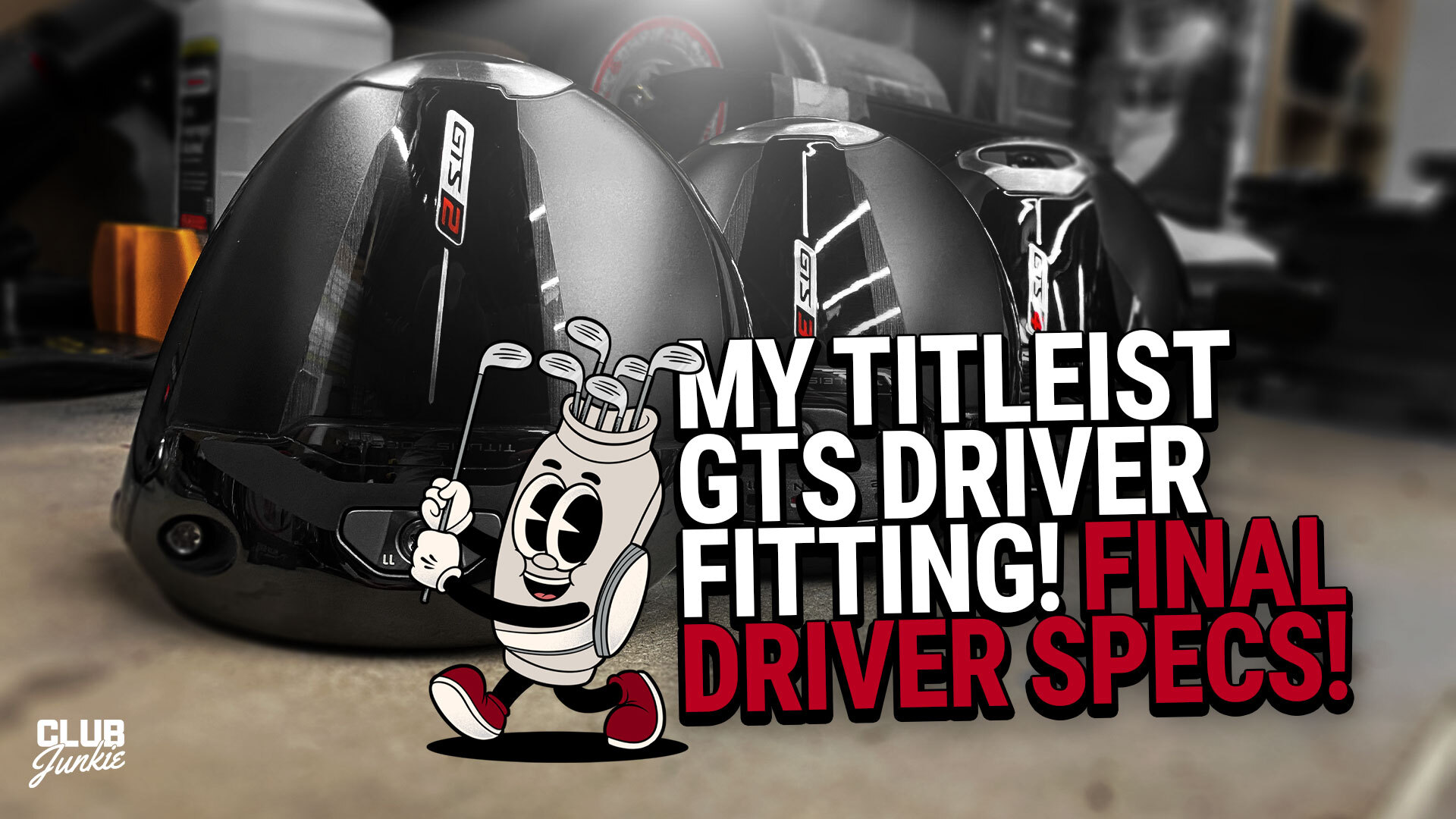
On this episode of the Club Junkie Podcast, I head to the Titleist Performance Institute for a full driver fitting with the new Titleist GTS lineup. We dive into the fitting process, talk about what made the biggest difference in performance, and break down how the different GTS heads and shaft combinations compare on the launch monitor. If you are thinking about a new driver setup for this season, there is a lot to take away from this one.
I also get into Brooks Koepka and the gear setup he brought to the PGA Championship, including the putters that caught my eye during the week. There are some interesting equipment trends showing up at the highest level right now and we break down what stands out.
To wrap things up, I talk about reshafting a few wedges, what I learned during the process, and swapping an adaptor onto a new shaft for another build project in the shop. A gear packed episode from start to finish for anyone who loves golf equipment and club building.
Follow Club Junkie everywhere:
Instagram: https://www.instagram.com/clubjunkiepod/
X: https://x.com/ClubJunkiePod
TikTok: https://www.tiktok.com/@clubjunkiepod
Threads: https://www.threads.com/@clubjunkiepod
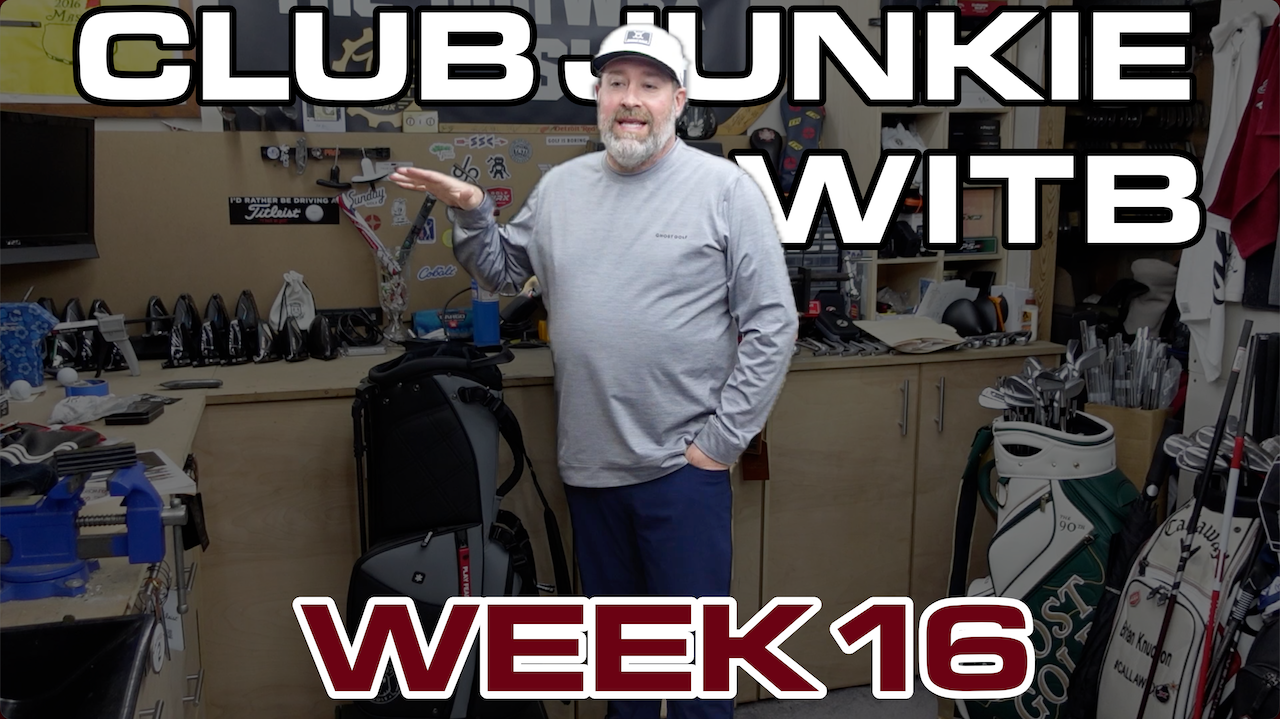
Excited for this week’s WITB as we get to add the new Titleist GTS woods to the bag! I was fit at Titleist’s TPI facility in Oceanside California a few weeks ago and my new clubs just showed up. I am also adding a cool set of irons that I built last year some wild custom wedges into a new golf bag. Speaking of the bag I have a new Ghost Anyday Black Ops stand bag that I will be using on my Motocaddy Remote M7 electric cart.
Driver: Titleist GTS3 (11 degrees @ 10.25)
Shaft: Fujikura Ventus Red 6s
3-wood: Titleist GT1 3Tour (14.5 degrees)
Shaft: Graphite Design Tour AD CQ-7s
5-wood: Titleist GTS (18 degrees)
Shaft: Fujikura Ventus Red 7s
9-wood: Titleist GT1 (24 degress)
Shaft: Fujikura Ventus Red 7s
Irons: Bettinardi CB24 (5-PW)
Shafts: KBS C-Taper Lite 110 stiff
Wedge: TaylorMade MG5 (50-09 SB)
Shaft: Mitsubishi MMT 125 Stiff
Wedge: TaylorMade MG5 (56-12 SB)
Shaft: Mitsubishi MMT 125 Stiff
Wedge: TaylorMade MG5 (60-08 LB)
Shaft: Mitsubishi MMT 125 Stiff
Putter: Dan Carraher ZT Proto
Ball: Callaway Chrome Tour
Bag: Ghost Anyday Black Ops Stand Bag

Justin Rose WITB 2026 (April): Full WITB breakdown with new McLaren irons

RBC Heritage Tour Report: More minis, course-specific setups, Spider & GTS launches

What’s the story behind Webb Simpson’s custom-stamped irons?

Cadillac Championship Tour Report: Spieth’s sizable changes, McLaren Golf launches, and more

Kristoffer Reitan’s winning WITB: 2026 Truist Championship

Cameron Young’s winning WITB: 2026 Cadillac Championship

Aaron Rai’s winning WITB: 2026 PGA Championship

Nelly Korda WITB 2026 (April)

Justin Rose on the switch to McLaren Golf, learnings from previous equipment moves

Photos from the 2026 PGA Championship


Patrick Reed WITB 2026 (May)
Driver: Titleist GT3 (9 degrees) Buy here. Shaft: Aldila Rogue Silver 130 M.S.I. 70 TX 3-wood: TaylorMade Qi35 (15 degrees)...

Aaron Rai’s winning WITB: 2026 PGA Championship
Driver: TaylorMade M6 (9 degrees) Shaft: Aldilda Synergy Blue 70 TX 3-wood: TaylorMade Qi10 (15 degrees) Shaft: Fujikura Ventus Blue...


Michael Block WITB 2026 (May)
Driver: TaylorMade Qi4D (9 degrees) Shaft: Fujikura Ventus Black VeloCore+ 5 X 3-wood: TaylorMade Qi4D (15 degrees @14.25) Shaft: Mitsubishi...


Bryson DeChambeau WITB 2026 (May)
Driver: Krank Formula Fire Pro (6 degrees) Shaft: Project X Prototype 3-wood: Krank Formula Fire (10 degrees) Shaft: LA Golf BAD...
-
 Whats in the Bag3 weeks ago
Kristoffer Reitan’s winning WITB: 2026 Truist Championship
-
Whats in the Bag2 weeks ago
Aaron Rai’s winning WITB: 2026 PGA Championship
-
 Tour Photo Galleries3 weeks ago
Photos from the 2026 PGA Championship
-
 Equipment2 weeks ago
GolfWRX Launch Report: 2026 Titleist GTS drivers
-

 Equipment2 weeks ago
PGA Championship Tour Report: Fitzpatrick, Koepka among big-name putter switches for Aronimink
-

 News2 weeks ago
WITB Time Machine: Phil Mickelson’s winning WITB, 2021 PGA Championship
-

 Equipment2 weeks ago
Which of Tiger’s major winning irons are your favorite? – GolfWRXers discuss
-

 Equipment2 weeks ago
Lead Tape Report: Adjusting the swingweight of the Wanamaker Trophy


Old Gaffer
Sep 14, 2017 at 2:25 pm
I have a 300+ yard ‘drive’! Well, it’s more of a combo-drive because I don’t carry a driver and just one fairway 5-wood. I hit my 5-wood 175 yards and then an iron for the remaining 125+ yards. Sometimes I push it to 350 yards! Straight and narrow, and I use the same ball for a month.
After that I have developed a great short game for my approach shots, and two putts later I’m playing sub-bogey golf. Bogey golf is my “par” (89).
I don’t assault the golf course, I caress my way straight down the middle and into the hole. Meanwhile all the macho guys are playing out of the rough, the water or just lost. I don’t help anybody to search for their banana slice drive lost ball. I just tell them to drop another ball and play from where their ball went OB. I’ve seen macho duffers waste 12 ProV1s and then laugh it off as they brag about their useless WITB costly club set.
Funkaholic
Mar 25, 2019 at 6:04 pm
You are bragging about being short and broke, you don’t belong on WRX.
The Dude
Sep 12, 2017 at 8:08 pm
What is the optimal launch condition??…..I was told it was 14* and 1,400 rpm (which I know is not achievable under normal conditions…..simply science). any truth behind this??
Jaacob Bowden
Sep 13, 2017 at 9:34 am
Depending on who you ask, there is variation as to what is said to be optimal launch conditions…but you can ball park it. Most of what I have seen indicates that the faster your club head speed the lower your launch and spin need to be, but it also depends. For example, for maximum distance downwind you’d want a higher launch and more spin to ride the wind. Whether or not you optimize for carry or total distance makes a difference as well. Lots of variables! Play around with the Trackman and Flightscope optimizer tools mentioned in the article and you’ll get an idea of your own personal optimal numbers.
Orville
Sep 12, 2017 at 2:08 pm
Thanks too, and I still don’t understand how driver axial rotation coming into impact can increase ball speed on a toe hit. The driver head essentially disconnects when the shaft tip flexes and torques through clubhead droop. The driver face also closes as centrifugal torque aligns the driver head CG with the swing axial rotation axis which is above the shaft axis.
Assuming the toe does close into impact, how do you know whether the toe is open or closing resulting in an impact tangent that will either push or pull the ball?
Impact is a complex event, and there is a Science & Golf paper on driver head kickback effect lasting microseconds. Something just doesn’t add up.
Funkaholic
Mar 25, 2019 at 6:06 pm
The answer to your question is, 42
Boss
Sep 11, 2017 at 7:01 pm
48 inches
Prime21
Sep 11, 2017 at 4:46 pm
Thanks for the info. Great insight into some of the components that could help 1 increase driving distance and/or accuracy. I have had the privilege of working w/ Doug Emma, & simply put, his abilities are second 2 none. If you want to identify which equipment works best for your game, do yourself a favor & line up a session w/ Doug!
JimW
Sep 11, 2017 at 4:27 pm
Several years ago, Ping were advocating to hit the ball higher up on their driver face, not the geometric center. This not only creates a slightly higher face loft due to bulge and roll, it apparently creates a “vertical gear effect” that results in longer distances due to better “smash factor”.
What do you think about the Ping test results for driver distance?
Orville
Sep 12, 2017 at 12:41 am
Apparently not! This article on a Titleist patent application indicates that hitting toe-ward of the geometric center will give you an extra 7 mph of ball speed. Their patent application also shows the design of an optimal toe weighted golf club. Looks goofy.
http://golf-patents.com/20140926/
Jaacob Bowden
Sep 12, 2017 at 11:08 am
Yeah, when you hit higher on the face, it can increase the launch angle because the direction of the club face at the point of impact primarily determines the start direction of the ball. Since we have a vertically convex driver club face, higher hits on the face launch higher than lower face hits. The vertical gear effect you mentioned also can lower spin on hits higher on the club face. It’s the old high launch and low spin thing.
With the Ping thing, it’s not everyone of course, but I think such advocacy would come about from a block of tested golfers who have a downward angle of attack with the driver. They would conceivably need a higher lofted driver to get the ball up in the air sufficiently, particularly the slower their club head speed. That higher lofted driver increases launch but also increases spin. In such cases, they may still be launching too low and with too much spin to optimize for distance, so with a fairly conventionally lofted driver, advocating a higher face hit helps get the ball launched even higher while bringing down spin, potentially bringing those golfers closer to the ideal launch conditions that would help maximize their distance.
Personally, if you are talking achieving maximum distance like in long drive, you don’t want to be as general as simply launching with high launch and low spin though. You’d want to find your ideal specific numbers and try to marry your swing and equipment to get the impact conditions you need per your individual club head speed. If you need to go with a lower lofted head than what most places offer to do that, there are companies like Krank Golf or Callaway Golf who produce drivers with lofts under the typical 8 or 9 degrees.
From a maximum distance standpoint, I’d try to optimize for an on-center hit with a very slight toe miss bias). The toe typically moves faster than the heel, so even though you are “mishitting” it by having impact out to the toe (and losing ball speed from a glancing blow), it evens out with the extra toe club head speed (thus re-gaining the lost ball speed). Depending on the person and how they move the driver through impact, perhaps you might even achieve a slightly higher ball speed with an ever so slight toe-ward strike. On something like a Trackman, this would read as a higher smash factor because you get a little bit more ball speed but the Trackman is still calculating club speed at the center of the club face versus the point of impact out towards the toe. The lower club head speed calculation with the higher ball speed reads out as a higher smash factor.
JimW
Sep 12, 2017 at 1:11 pm
Thank you Jaacob for your very thorough explanations on my and Orville’s comments. Now it all makes sense to me, but without the Trackman numbers it would all be trial and error and error and error before you could get what is assumed to be ‘optimal’.
In the era of launch monitors you can ‘engineer’ an optimal solution for each long driver. Can you imagine what life would be like without launch monitors? Engineers like you (and me) would still be swinging in the dark.
And thank you Dr. Jorgensen and your D-Plane (Descriptive-Plane) physics enlightenment.
I still can’t understand why anybody would want to have a driver downward angle of attack. Is it an anatomical or mental thing, or is it just teeing too low?
Jaacob Bowden
Sep 12, 2017 at 5:40 pm
I think there’s a consistency argument that can be made for a downward angle of attack with the driver. If you play all the clubs in the same ball position, the driver would end up being a downward angle of attack. You won’t max out on distance, which may hurt your scoring potential if you give up too much distance…but you might be more consistent.
Tour players, in particular, also have to be careful about breaking what got them on tour. Many have enough club head speed they can get away with hitting down and being less efficient with a driver.
JimW
Sep 12, 2017 at 8:05 pm
So, hitting slightly down with the driver is less distance and more accuracy.
Hitting up with the driver is more distance and less accuracy.
______________________________
I hit up with my 10.5º (11.5º actual) driver at 95 mph max and drifting down to 85+ mph into the back nine. My normal shot is a high ‘power’ fade for 220-230 yard carry, and occasionally a straight drive.
I carry a 12-13º smaller 2-wood when attempting a draw. No 3-wood and go into a 4 and 7-wood. That optimizes my drive/fairway game.
Oh, and I use a 3″ tee for the 1-wood and a lower tee for my 2-wood.
This is the result of 15 years of recreational optimizing and searching the scientific golf literature for answers.
Thank you for your scientific and practical contribution to this fine forum and I recommend all your websites for viewing and study.
Jaacob Bowden
Sep 13, 2017 at 9:39 am
Hehe, that might be true for some but it’s not an absolute. For instance, I’m more accurate hitting up than down. So it depends on the person.
Glad to hear you’ve found a setup for your drive/fairway game that works well for your game!
Orville
Sep 12, 2017 at 3:08 pm
Opps, please see my reply posted at the top of the topic thread, my bad.