
Opinion & Analysis
TrackMan: Zeroed Out and No Place To Go

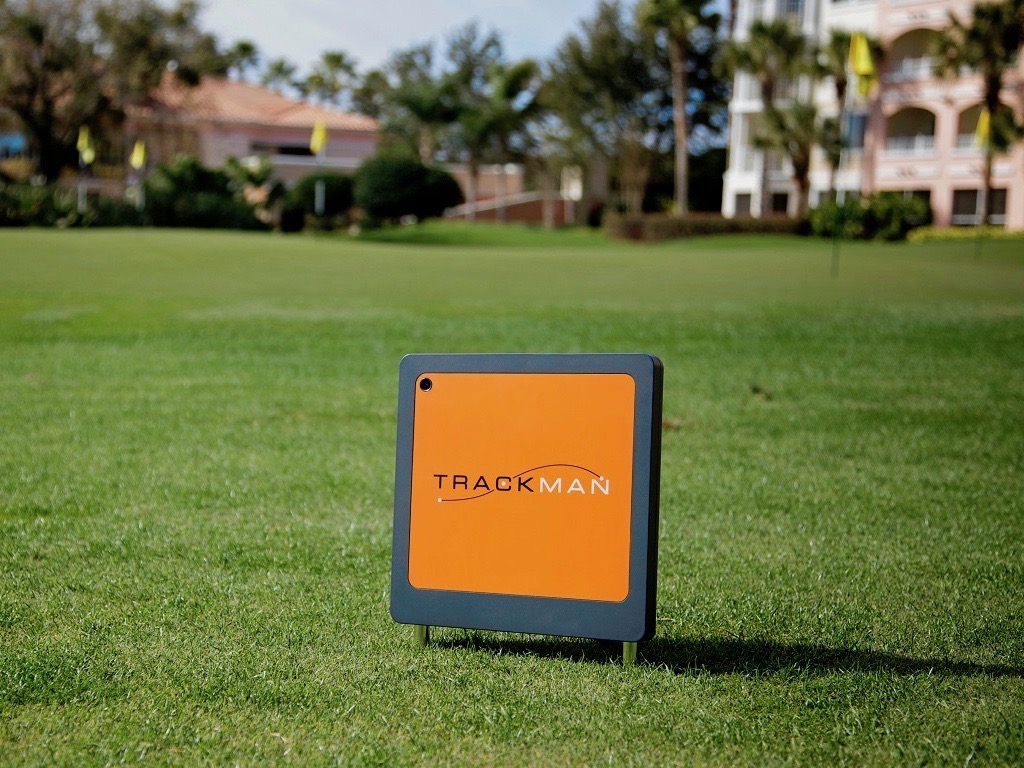
I was looking forward to hearing Brandel Chamblee speak at the Golf Magazine Annual Summit for “Top 100” Teachers and their guests, which was held in 2016. He had made a second career for himself on the Golf Channel criticizing other PGA Tour players, and in the process, making himself a polarizing figure. I found myself agreeing with him some of the time, and then other times, not so much.
What I had observed was that he was not one to back down, and he seemed to enjoy a “healthy discussion,” which often would turn heated. He was in these discussions a formidable opponent, being both intelligent and quick witted — a deadly combination when debating any issue. Brandel was at that time on the verge of launching his new book, “The Anatomy of Greatness.” He planned on sharing some of the conclusions that he had reached with the group that evening. What he must have known going in was that he was entering the lion’s den. And for that reason alone, Chamblee deserves a good deal of credit for accepting the invitation knowing that he’d be under fire for some of the remarks he had made in the past.
On my end, I did some research prior to his presentation, wanting to be prepared in the event that I had an opportunity to ask him a question. As a teacher, I was especially interested in what he might have said up to that point about the role of technology in learning and performance — and more specifically, his view on the use of TrackMan.
***
Golf Channel, May 12, 2015
I found a clip on the internet dated May 12, 2015. Chamblee was at the Golf Channel desk during the Players Championship sitting with Frank Nobilo and David Duval. The topic was TrackMan: the pros and cons of gathering information. The other two announcers, at least for the 2 minutes and six seconds of the clip, had given the floor to Chamblee. Brandel, an outspoken critic of technology, began by criticizing the inaccuracies found in TrackMan’s numbers, citing a series of reports that he had consulted:
- That the machine is incapable of finding the center of mass but rather locates the geometric center of the club, which is more toward the heel.
- The machine under-reports clubhead speed because the club is swinging on an arc, and as a consequence, over-reports smash factor.
- The machine will often register a smash factor above 1.50 when measuring a tour player, which is impossible because the highest achievable number is 1.49.
- The machine doesn’t accurately measure where the ball is impacted on the face of the club because of various spin factors.
He found these facts disturbing. The one issue that concerned him the most, however, was that early adopters could not transfer their TrackMan numbers from the range to the golf course. In other words, they had one swing on the driving range and another swing on the golf course. To Chamblee, that made the use of TrackMan to improve player performance “counter-productive.”
He had a final point to make. It was that teachers ultimately had to transfer the cost of this new and expensive technology on to their students in a time when the game was getting more and more expensive to play. This was of concern to him as well.
***
That evening in 2016, Chamblee addressed some of the problems that in his opinion were associated with how TrackMan was being used. In this debate, there are two central issues:
- How TrackMan is being utilized by teachers.
- How Trackman is being utilized by players.
I listened closely to what he had to say, and on some of the issues we agreed. That said, I have my own concerns with regards to this debate. What I see happening is what I saw occur with the use of video many years ago, but on a smaller scale because of Trackman’s $20,000 price tag.
In the past, as the cost of cameras with slow-motion capability continued to drop from thousands of dollars to hundreds, they became more affordable. This made it possible for anyone to potentially become an expert. What evolved was that many run-of-the-mill teachers, using a video camera, would simply compare a student’s swing to a model and then point out the differences. This was without concern for the player’s individual biomechanics or if they were even physically capable of swinging in the prescribed manner.
For this reason, many top teachers have now either abandoned the use of video-analysis as part of their instruction or use it very little. They would prefer to spend their time connecting with their students on a more intimate one-on-one basis. This is the way that I now approach teaching after having worked with thousands of students over the past 45 years.
The nature of technology is that it will never take the place of human interaction between the teacher and his student. A central problem that is occurring in some quarters is that the machine is giving the lesson while the teacher simply reads off the numbers. This approach serves to undermine the establishment of a human connection between teacher and student.
In a Golf World article written by Matthew Rudy, dated April 19, 2017, he wrote that one of the common criticisms of modern instructors is that they’re helpless without information on a screen. I agree. I’m familiar with teachers who approach a lesson this way, caring only about the numbers without ever relating to the student.
Further, I have to agree with Hank Haney when he said in that same article “Information is great, and every teacher should be trying to get as much of it as possible. But that’s not the only piece.”
Randy Smith is of a similar opinion when talking about the use of TrackMan to coach a player: “Should a student want a sterile, perfect golf swing to work on in a room somewhere we can do that… but being efficient? Hitting different shots under different situations, different lies and pressure? That’s a different thing.”
Claude Harmon III who utilizes TrackMan on a limited basis was quoted in the same article with regards to younger players over dependence on the machine: “I have students come to me and quote their TrackMan combine numbers, and they can’t even tell me if they hit a fade or a draw. “
I’m not implying that TrackMan does not have a place in golf instruction or for use by players on a limited basis. As David Duval echoed at the very end of the Golf Channel clip, it should be used only “to check a few numbers.” As for teaching, what I am saying is that Trackman should be used only as a doctor would use an x-ray machine, which is to verify his diagnosis at times when he is unsure of the facts.
That said, is there a place for launch monitors?
Absolutely. They are invaluable, especially when it comes to driver fittings, where knowing the launch angle and the spin rate of the ball, is essential to maximizing distance through both carry and roll. And in terms of playing, knowing the carry distance of each club makes for more precise approach shots. But there are other launch monitors, aside from TrackMan, that can provide that same information at a much lesser cost.
The reality is that TrackMan is more than just a launch monitor, having the capability of providing detailed information about player performance—not just the ball. And for that reason, it’s easy for players to become obsessed with the numbers by seeking absolute perfection. They strive to, in TrackMan language, “zero-out” their swing. This is when the path and the face numbers are in perfect alignment with each other, both bracketed between the numbers +1 and -1. This state of being is considered by devotees to be the equivalent of finding the Holy Grail. The problem is that this type of perfectionism is not transferable to the course as noted earlier. And we know from our own experience as players that an attempt to be perfect can be a curse when it comes to this game, which at best is one of managed imperfection.
What can be concluded? I’m going to give Brandel the final word on this issue, as it was his name that ushered in the story. The opinion that he shared with Matthew Rudy, and I would like to share with you, was that he believed that modern players are both over analyzed and over coached.
“And as a consequence, they are not better for it, but they are worse,” Chamblee said.
My opinion? This time, I think Brandel got it right.




Aronimink is not a storied club, but when Donald Ross himself proclaimed it to be as good as he can design and build, one had to take notice. Jay Sigel was the pre-eminent male amateur golfer from the mid-1970s to the mid-1990s. He might have called any number of Philadelphia clubs home, but he chose Aronimink. It served him well. Gary Player won a PGA Championship here in 1962, and was followed by the 1993 winner … nobody. Aronimink gave that event away to Inverness, for reasons of which it is certainly not proud. So be it. We had to wait sixty-four years for the PGA to return to Newtown Square, but here we are. Aronimink has been neo-restored by Gil Hanse and team, to return Ross features with an eye toward defense against the dark arts, errrr, high-tech equipment.
Day one saw Rory McIlroy and Bryson DeChambeau dig big holes, to the tune of plus-four and plus-six, respectively. Since the first-round lead will be minus-three at worst, many shots will need to be made up for the power couple to reach contention. By nightfall, seven golfers held the day-one lead at three-under par 67. Shots and sticks caught our attention, and we are proud to present Five Things We Learned on Tech Thursday at the 2026 PGA Championship. Thanks to InsideTourGolfer, Today’s Golfer, and GolfWRX for initial equipment research.
First, meet Min Woo Lee
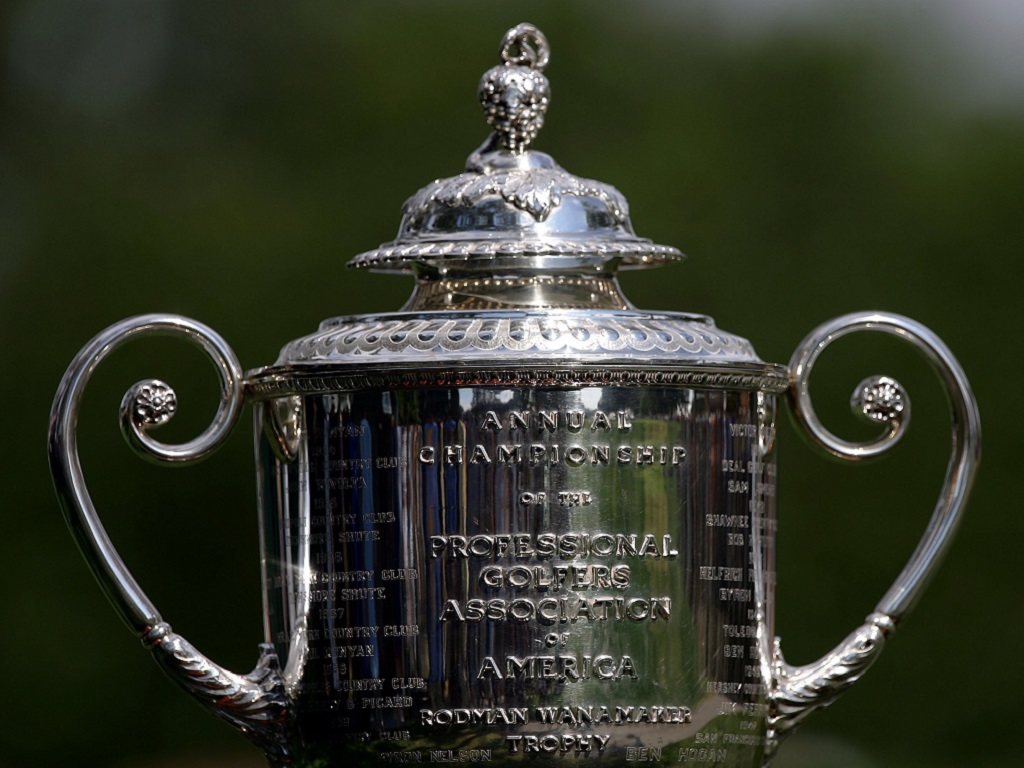
Min Woo Lee, aka Dr. Chipinski, has once again thrust himself into the conversation of Can he, will he, when will he? Lee has so much talent, wins not nearly as often as we believe that he should, and has no major near-misses (much less titles) on his wiki. The young Aussie is getting older and wiser, but is he able to avoid the scarring that holds the older and wiser back from breaking through? Philadelphia offers another opportunity. Min Woo signed for five birdies and two bogeys on day one, and grabbed a share of the opening-day lead at Aronimink. Winners transcend history and the moment, and Lee will need that sort of ascent to lift the Wannamaker on Sunday.
Second, meet Aldrich Potgeiter
The young South African golfer can rip driver with the best of them. Aronimink tips out at nearly 7400 yards, but beyond the fairway bunkers that ensnare only the mortals, Potgeiter can take his chances with wedge from the rough. On Thursday, he spent plenty of time in the spinach. Like Popeye, he used his muscles to gouge and thrash and dig his way out. Six birdies against three bogeys on the card brought AP in a three deep.
Third, meet Martin Kaymer
Not a major event takes place without a where’s he been throwback moment. We know that Martin Kaymer left the PGA and DP World tours for LIV golf, but the two-time (US Open and PGA) major winner has a lifetime exemption into at least one major event, and he seizes the opportunity each May. Kaymer joined the six-seven brigade with four birdies and a solitary bogey on day one. Kaymer was never a long hitter, and the years are kind to no golfer. The German champion will need to uncork every bottle of guile and strategy in his cabinet to remain in contention. For today, though, he occupies a rung on the ladder of Tour Tech.
Fourth, meet Scottie Scheffler
Let’s see, he’s the defending champion at the PGA, and he found his way back to the top tier with five birdies against two bogeys. To be a favorite and then play up to that stature and expectation is quite difficult. Just ask Rory, Bryson, and some of the other pre-tournament heartthrobs. Scheffler’s game is complete, and to knock him off the OWGR #1 pedestal, one needs to defeat him at the majors. Aronimink is the sort of course that fits Scheffler’s game. Better yet, it unfits the game of many of his challengers. Don’t expect Scheffler to go away anytime soon. Come Sunday, he’ll be around.
Fifth, meet Stephan Jaeger
Clocking in for the unheralded players shift are Ryo Hisatsune and Stephan Jaeger. Hisatsune logged seven birdies on day one, but gave most of them back with four bogeys. Still, he’s tied at the top for a time. Jaeger pitched five birdies against two bogeys, including a run of three consecutive, from holes four through six. Odds are that one of the two will hang around through 36 holes. Odds also suggest that both will be gone by Saturday evening. Still, the PGA Championship has historically been the major most likely to be won by an under-known. Both Hisatsune and Jaeger feature on that list, so good luck, lads!

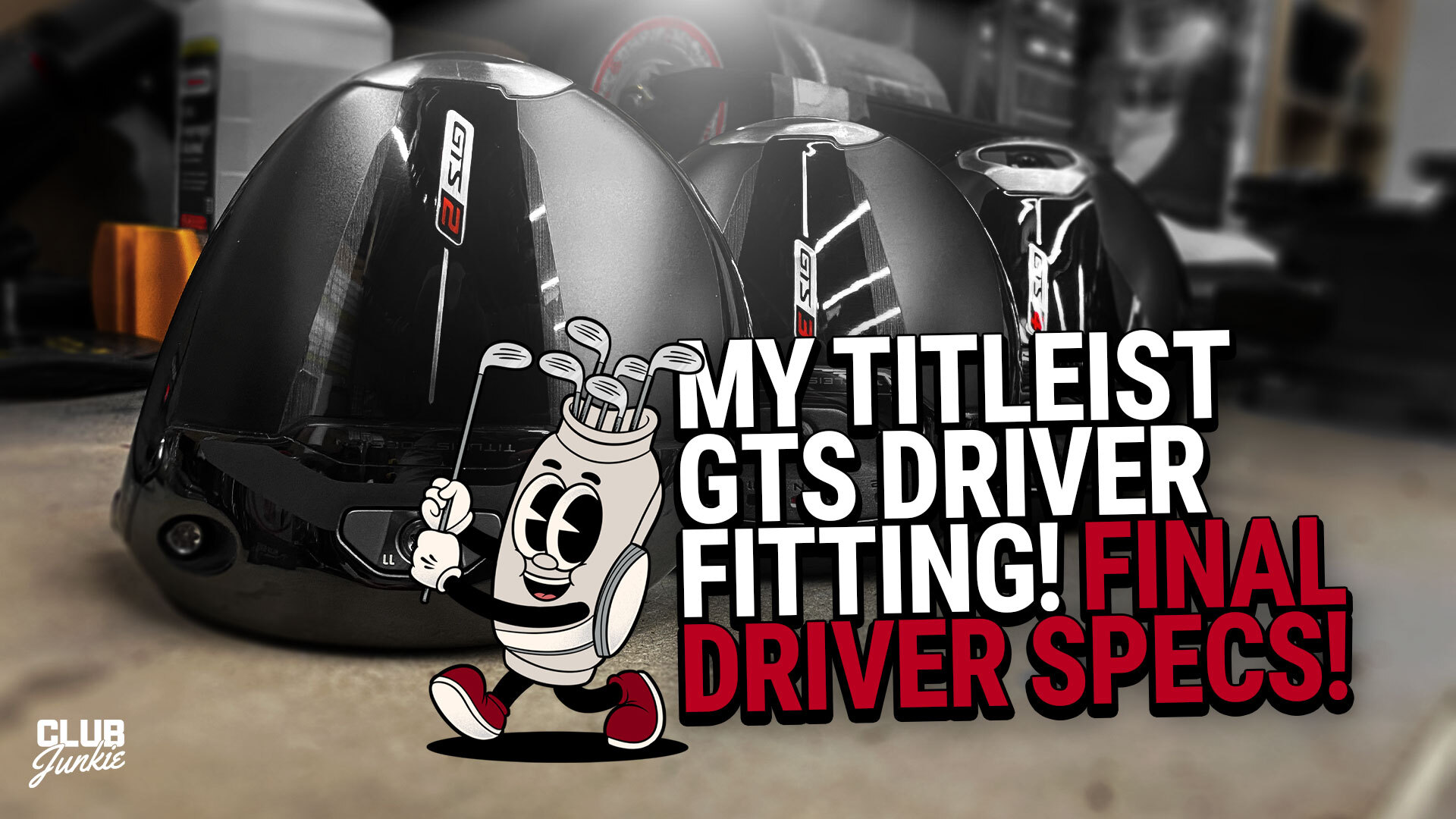
On this episode of the Club Junkie Podcast, I head to the Titleist Performance Institute for a full driver fitting with the new Titleist GTS lineup. We dive into the fitting process, talk about what made the biggest difference in performance, and break down how the different GTS heads and shaft combinations compare on the launch monitor. If you are thinking about a new driver setup for this season, there is a lot to take away from this one.
I also get into Brooks Koepka and the gear setup he brought to the PGA Championship, including the putters that caught my eye during the week. There are some interesting equipment trends showing up at the highest level right now and we break down what stands out.
To wrap things up, I talk about reshafting a few wedges, what I learned during the process, and swapping an adaptor onto a new shaft for another build project in the shop. A gear packed episode from start to finish for anyone who loves golf equipment and club building.
Follow Club Junkie everywhere:
Instagram: https://www.instagram.com/clubjunkiepod/
X: https://x.com/ClubJunkiePod
TikTok: https://www.tiktok.com/@clubjunkiepod
Threads: https://www.threads.com/@clubjunkiepod
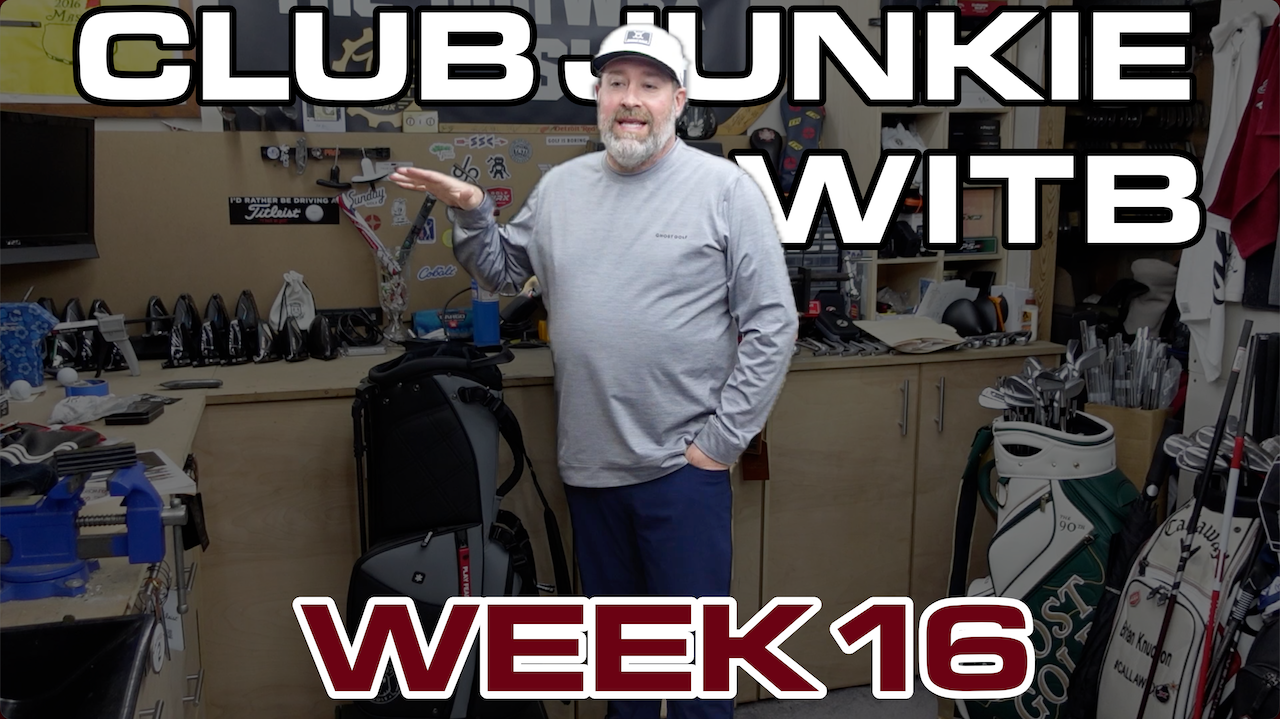
Excited for this week’s WITB as we get to add the new Titleist GTS woods to the bag! I was fit at Titleist’s TPI facility in Oceanside California a few weeks ago and my new clubs just showed up. I am also adding a cool set of irons that I built last year some wild custom wedges into a new golf bag. Speaking of the bag I have a new Ghost Anyday Black Ops stand bag that I will be using on my Motocaddy Remote M7 electric cart.
Driver: Titleist GTS3 (11 degrees @ 10.25)
Shaft: Fujikura Ventus Red 6s
3-wood: Titleist GT1 3Tour (14.5 degrees)
Shaft: Graphite Design Tour AD CQ-7s
5-wood: Titleist GTS (18 degrees)
Shaft: Fujikura Ventus Red 7s
9-wood: Titleist GT1 (24 degress)
Shaft: Fujikura Ventus Red 7s
Irons: Bettinardi CB24 (5-PW)
Shafts: KBS C-Taper Lite 110 stiff
Wedge: TaylorMade MG5 (50-09 SB)
Shaft: Mitsubishi MMT 125 Stiff
Wedge: TaylorMade MG5 (56-12 SB)
Shaft: Mitsubishi MMT 125 Stiff
Wedge: TaylorMade MG5 (60-08 LB)
Shaft: Mitsubishi MMT 125 Stiff
Putter: Dan Carraher ZT Proto
Ball: Callaway Chrome Tour
Bag: Ghost Anyday Black Ops Stand Bag

Justin Rose WITB 2026 (April): Full WITB breakdown with new McLaren irons

RBC Heritage Tour Report: More minis, course-specific setups, Spider & GTS launches

What’s the story behind Webb Simpson’s custom-stamped irons?

Cadillac Championship Tour Report: Spieth’s sizable changes, McLaren Golf launches, and more

Kristoffer Reitan’s winning WITB: 2026 Truist Championship

Cameron Young’s winning WITB: 2026 Cadillac Championship

Aaron Rai’s winning WITB: 2026 PGA Championship

Nelly Korda WITB 2026 (April)

Justin Rose on the switch to McLaren Golf, learnings from previous equipment moves

Photos from the 2026 PGA Championship


Patrick Reed WITB 2026 (May)
Driver: Titleist GT3 (9 degrees) Buy here. Shaft: Aldila Rogue Silver 130 M.S.I. 70 TX 3-wood: TaylorMade Qi35 (15 degrees)...

Aaron Rai’s winning WITB: 2026 PGA Championship
Driver: TaylorMade M6 (9 degrees) Shaft: Aldilda Synergy Blue 70 TX 3-wood: TaylorMade Qi10 (15 degrees) Shaft: Fujikura Ventus Blue...


Michael Block WITB 2026 (May)
Driver: TaylorMade Qi4D (9 degrees) Shaft: Fujikura Ventus Black VeloCore+ 5 X 3-wood: TaylorMade Qi4D (15 degrees @14.25) Shaft: Mitsubishi...


Bryson DeChambeau WITB 2026 (May)
Driver: Krank Formula Fire Pro (6 degrees) Shaft: Project X Prototype 3-wood: Krank Formula Fire (10 degrees) Shaft: LA Golf BAD...
-
 Whats in the Bag3 weeks ago
Kristoffer Reitan’s winning WITB: 2026 Truist Championship
-
Whats in the Bag2 weeks ago
Aaron Rai’s winning WITB: 2026 PGA Championship
-
 Tour Photo Galleries3 weeks ago
Photos from the 2026 PGA Championship
-
 Equipment2 weeks ago
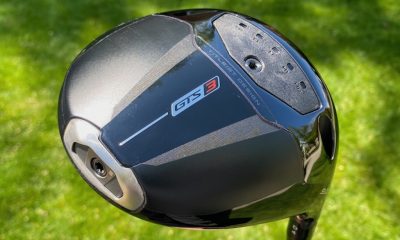
GolfWRX Launch Report: 2026 Titleist GTS drivers
-

 Equipment2 weeks ago
PGA Championship Tour Report: Fitzpatrick, Koepka among big-name putter switches for Aronimink
-

 News2 weeks ago
WITB Time Machine: Phil Mickelson’s winning WITB, 2021 PGA Championship
-

 Equipment2 weeks ago
Which of Tiger’s major winning irons are your favorite? – GolfWRXers discuss
-

 Equipment2 weeks ago
Lead Tape Report: Adjusting the swingweight of the Wanamaker Trophy


Larry
Feb 17, 2018 at 9:41 am
This guy is a terrible teacher.
Andrew Cooper
Feb 17, 2018 at 9:02 am
Excellent article Rod. Trackman is amazing technology, but I think it’s healthy to keep a sense of perspective with it. On the course, every shot is a unique one-off. The skilled players aren’t so much relying on a consistent swing with perfect numbers, rather they’re using a refined feel to make the small adjustments and tweaks required to fit each situation; varying trajectory and curvature, adjusting to uneven lies etc. They’re not playing by numbers. Then you add in coping with the mental challenges of the game, course management, putting, short game etc. and having good Trackman numbers is great but translating that into lower scores is what counts.
OB
Feb 16, 2018 at 6:38 pm
TM has it’s scientific inadequacies but at least it is an empirical baseline from which to ‘track’ the progression of the student and tour pro. To regress back to a state of BLIND FEEL for changes to a golf swing is ludicrous…!
Scarface
Feb 17, 2018 at 9:12 am
Taylormade has that? lmao
Marcus Eglseer
Feb 15, 2018 at 9:29 pm
The author of this article could not be more wrong!!!
It would take too long to explain all his mistakes/misunderstandings, so I will list only a few:
First&most important, in what world is BC any top teacher/expert-because he is talking on the GC? That is flatout ridiculous!! He has never ever worked a teaching pro, not to speak of working with a tour pro of any success. Please do ask, if Peter Kostis is working with a TM when he is with Paul Casey..
Second example, do you really think, it is coincidence that more than 90% of all tour pros have&practice with a TM?
And last but not least, the author shows his incompetence with TM technology when he admits, it worth having the numbers for driver fitting. That shows, what an tec dinosaur the author is-it is like posssing an Iphone&just doing calls with it, never using it like a smartphone.
There is way more, but I am sure, nobody would read more than this.
My hope is that these clueless tec dinosaurs will soon be gone&in less than 8-10 years, the best pros/coaches will be working with their knowledge, eyes&tec in sync!
Scarface
Feb 17, 2018 at 9:15 am
I own an iPhone and use it only to text. Is that wrong? Who uses an iPhone to make calls?
JD
Feb 15, 2018 at 12:42 pm
Moore’s Law. These guys will be irrelevant in 5 years as this technology will be available at a 10th of the cost. Hopefully some company will catch on to this and realize its a better investment for families to have a golf simulator in their homes than joining a club or paying $150 green fees for a family 3-4sum to play golf together. Trackman is like IBM in the 70s… stubborn and catering to a 0.0001% market of pro’s and teachers looking to be “Zeroed Out”… Once the tech catches up… companies like FlightScope, SkyTrack, and OptiShot that are trying to get into HOMES and not CLUBS should be a serious concern for Trackman and Foresight.
Steve Wozeniak
Feb 15, 2018 at 3:30 pm
Yep…….
Jack Nash
Feb 16, 2018 at 2:16 pm
Yup. All you need then is a new home with 10’ Ceilings to handle the new game.
Scarface
Feb 17, 2018 at 9:12 am
Why 15 years? You’re already irrelevant. lmao
dat
Feb 15, 2018 at 12:03 pm
TM LMs are all snake oil. Just hit the ball and get good instructions. The GC quad at least sees where you hit it on the face.
Steve moody
Feb 16, 2018 at 2:13 am
As does trackman from March onwards.
Jay Wonders
Feb 18, 2018 at 2:52 am
LOL and that camera technology is still inferior where only 10% of tour pros are using it. I am surprised that 10% is still using ti. If you can see the impact why is data algorithm still wrong? Because it does track the ball and does not account for aerodynamic.
Jay Wonders
Feb 18, 2018 at 2:54 am
Misspelled: it does not track the ball.
Sam
Feb 15, 2018 at 11:37 am
Like a wrench, Trackman can be a useful tool. – Useful when needed but be careful not to over-torque your nuts with it. Besides have you ever heard of a “Launch Monitor Golf Tournament” ? I haven’t. Maybe there is one. If there is, I don’t want to participate and I certainly don’t want to watch it.
Paul Booij
Feb 15, 2018 at 3:11 pm
There are virtual golf tournaments.
Dale Owens
Feb 15, 2018 at 11:09 am
Technology certainly has a place in development of the premier player. A player can marry feel and technology, to develop their own swing. Feedback provided by technology is very valuable.
TwitterBlocker
Feb 15, 2018 at 11:05 am
“I was looking forward to hearing Brandel Chamblee speak at the Golf Magazine Annual Summit for “Top 100”…” probably the only person ever looking forward to hearing BC talk.
the dude
Feb 15, 2018 at 2:25 pm
why??…he is a bright guy with plenty of knowledge…..
CW
Feb 15, 2018 at 10:48 am
Up until the past decade or so there were only a handful of guys that dominated the field. Now, it’s anybody’s game. I think the tech has helped, not hurt.